 “History does not long entrust the care of freedom to the weak or the timid.” President Dwight D. Eisenhower spoke those words in his first inaugural address, January 20, 1953. As the man who helped lead the Allies to victory in World War II, General Eisenhower knew a great deal about the high cost of victory as well as the heavy burden of freedom that always follows. British novelist Charles Kingsley rightly said, “There are two freedoms—the false, where a man is free to do what he likes; and the true, where a man is free to do what he ought.” Throughout their history, the nation of Israel struggled with both of these freedoms, just as God’s people struggle with them today.
It’s a mark of maturity when we learn that freedom is a tool to build with, not a toy to play with, and that freedom involves accepting responsibility. Israel’s exodus experience taught them that their future success lay in fulfilling three important responsibilities: following God (13:17-22), trusting God (14:1-31) and and praising God (15:12-21).
Following God (Ex. 13:17-22)
Israel’s exodus from Egypt wasn’t the end of their experience with God; it was the new beginning. “It took one night to take Israel out of Egypt, but forty years to take Egypt out of Israel,” said George Morrison. If Israel obeyed His will, God would bring them into the Promised Land and give them their inheritance. Forty years later, Moses would remind the new generation, “He [the Lord] brought you out of Egypt… to bring you in, to give you [the] land as an inheritance” (Deut. 4:37-38, nkjv).
The same thing can be said of the redemption we have in Christ: God brought us out of bondage that He might bring us into blessing. A.W. Tozer used to remind us that “we are saved to as well as saved from.” The person who trusts Jesus Christ is born again into the family of God, but that’s just the beginning of an exciting new adventure that should lead to growth and conquest. God liberates us and then leads us through the varied experiences of life, a day at a time, so that we might get to know Him better and claim by faith all that He wants us to have. At the same time, we come to know ourselves better; we discover our strengths and weaknesses, and we grow in understanding God’s will and trusting His promises.
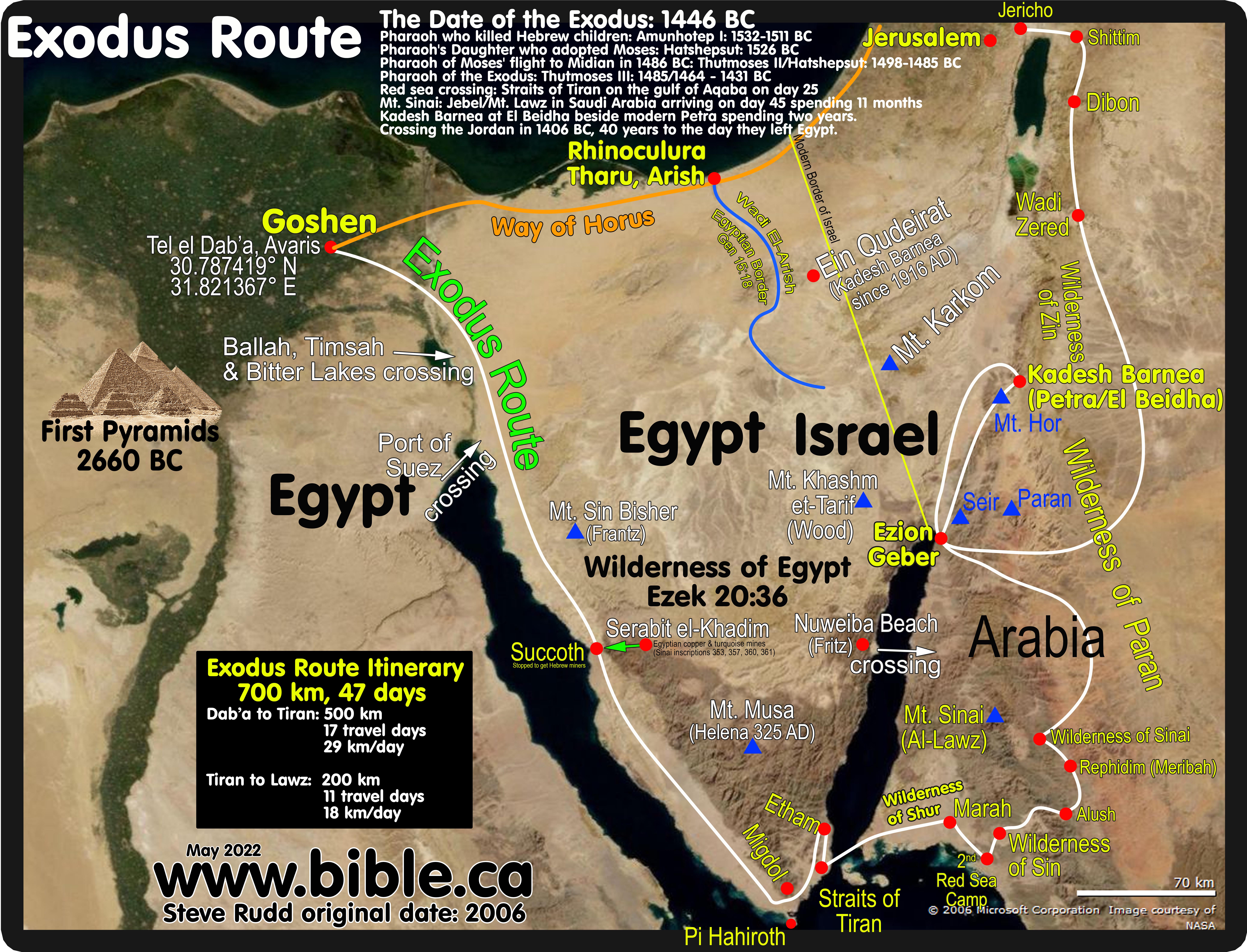 God plans the route for His people (vv. 17-18). Nothing takes God by surprise, for in His providence He plans the best way for His people to take. We may not always understand the way He chooses, or even agree with it, but His way is always the right way. We may confidently say, “He leads me in the paths of righteousness for His name’s sake” (Ps. 23:3, nkjv), and we should humbly pray, “Show me Your ways, O Lord; teach me Your paths. Lead me in Your truth and teach me” (25:4-5, nkjv).
If there had been any military strategists in Israel that night, they probably would have disagreed with the evacuation route God selected because it was too long. Israel’s immediate destination was Mount Sinai, but why take several million people the long way instead of using the shorter and easier route? The answer is: because there were Egyptian military posts along the shorter route, and the soldiers stationed there would have challenged the Jews. Furthermore, crossing the Philistine borders would have invited their army to attack, and the last thing Israel needed was a war with the neighbors. God knew what He was doing when He chose the longer way.
If you permit the Lord to direct your steps (Prov. 3:5-6), expect to be led occasionally on paths that may seem unnecessarily long and circuitous. Remind yourself that God knows what He’s doing, He isn’t in a hurry, and as long as you follow Him, you’re safe and in the place of His blessing. He may close some doors and suddenly open others, and we must be alert (Acts 16:6-10; 2 Cor. 2:12-13).
God encourages His people’s faith (v. 19). Before he died, Joseph made his brothers promise that, when God delivered Israel from Egypt, their descendants would take his coffin with them to the Promised Land (Gen. 50:24-25; Heb. 11:22). Joseph knew that God would keep His promise and rescue the Children of Israel (15:13-16). Joseph also knew that he belonged in the land of Canaan with his people (49:29-33).
What did this coffin mean to the generations of Jews who lived during the years of terrible bondage in Egypt? Certainly the Jews could look at Joseph’s coffin and be encouraged. After all, the Lord cared for Joseph during his trials, and finally delivered him, and He would care for the nation of Israel and eventually set them free. During their years in the wilderness, Israel saw Joseph’s coffin as a reminder that God has His times and keeps His promises. Joseph was dead, but he was bearing witness to the faithfulness of God. When they arrived in their land, the Jews kept their promise and buried Joseph with Abraham, Isaac, and Jacob (Josh. 24:32).
Is it idolatrous to have visible reminders of God’s faithfulness? Not necessarily, for you find several significant monuments in the Book of Joshua. When Israel crossed the Jordan River, they put up a monument of stones on the farther shore to commemorate what God had done (Josh. 4). They also put stones on Mount Ebal and Mount Gerizim to remind them of God’s law (Josh. 8:30-35). A heap of stones bore witness of Achan’s treachery (Josh. 7:25-26), and a “witness stone” was a reminder of Israel’s rededication after the conquest of the land (24:24-28). Samuel set up a stone to commemorate Israel’s victory over the Philistines and called it “Ebenezer, the stone of help” (1 Sam. 7:12).
As long as we keep obeying the Lord, such reminders can encourage our faith. The important thing is that they point to the Lord and not to a dead past, and that we continue to walk by faith and obey the Lord today.
God goes before His people to lead the way (vv. 20-22). The nation was guided by a pillar (column) of cloud by day that became a pillar of fire by night. This pillar was identified with the angel of the Lord who led the nation (14:19; 23:20-23; see Neh. 9:12). God occasionally spoke from the pillar of cloud (Num. 12:5-6; Deut. 31:15-16; Ps. 99:7), and the pillar of cloud also shielded the people from the hot sun as they journeyed by day (105:39). When the cloud moved, the camp moved; when the cloud waited, the camp waited (Ex. 40:34-38).
We don’t have this same kind of visible guidance today, but we do have the Word of God which is a light (Ps. 119:105) and a fire (Jer. 23:29). It’s interesting to note that the pillar of fire gave light to the Jews but was darkness to the Egyptians (Ex. 14:20). God’s people are enlightened by the Word (Eph. 1:15-23), but the unsaved can’t understand God’s truth (Matt. 11:25; 1 Cor. 2:11-16).
The Spirit of God, who is the Spirit of Truth, guides us by teaching us the Word (John 16:12-13). Just as God spoke to Moses from the pillar, so the Lord communicates with us from the Scriptures by making them clear to us. There are times when we aren’t sure which way God wants us to go, but if we wait on Him, He will eventually guide us.
How foolish it would have been for the Jews to pause in their march and take a vote to see which route they should take to Mount Sinai! Certainly there’s a place for community counsel and referendum (Acts 6:1-7), but when God has spoken, there’s no need for consultation. On more than one occasion in Scripture, the majority has been wrong.
Trusting God (Ex. 14:1-31)
“He [God] made known His ways to Moses, His acts to the children of Israel” (Ps. 103:7, nkjv). The Jewish people were told what God wanted them to do, but Moses was told why God was doing it. ‘The secret of the Lord is with them that fear Him” (25:14). The leadership of Moses was a key ingredient in Israel’s success.
Egypt’s pursuit (vv. 1-9). It dawned on Pharaoh and his officers that, by allowing their Jewish slaves to escape, they had threatened, if not destroyed, Egypt’s whole economy, so the logical thing was to go after the Jews and bring them back. Now we’re given another reason why the Lord selected this route: the reports would convince Pharaoh that the Jews were wandering like lost sheep in the wilderness and therefore were fair game for his army to pursue and capture. The Lord was drawing the Egyptians into His trap.
What seemed like an easy victory to Egypt would turn out to be an ignominious defeat, and the Lord would get all the glory. Once again He would triumph over Pharaoh and the gods and goddesses of Egypt. Pharaoh commandeered all the chariots of Egypt, mounted his own royal chariot, and pursued the people of Israel.
Israel’s panic (vv. 10-12). As long as the Israelites kept their eyes on the fiery pillar and followed the Lord, they were walking by faith and no enemy could touch them. But when they took their eyes off the Lord and looked back and saw the Egyptians getting nearer, they became frightened and began to complain.
These verses introduce the disappointing pattern of Israel’s behavior during their march from Egypt to Canaan. As long as everything was going well, they usually obeyed the Lord and Moses and made progress. But if there was any trial or discomfort in their circumstances, they immediately began to complain to Moses and to the Lord and asked to go back to Egypt. However, before we criticize the Jews, perhaps we’d better examine our own hearts. How much disappointment or discomfort does it take to make us unhappy with the Lord’s will so that we stop believing and start complaining? “For we walk by faith, not by sight” (2 Cor. 5:7).
When you forget God’s promises, you start to imagine the worst possible scenario. The Jews were sure that they and their children would die in the wilderness as soon as Pharaoh’s army caught up with them. The frightened people reminded Moses that they had told him to leave them alone (Ex. 5:20-23), but he had persisted in challenging Pharaoh. Israel was now in a terrible predicament, and Moses was to blame. Unbelief has a way of erasing from our memory all the demonstrations we’ve seen of God’s great power and all the instances we know of God’s faithfulness to His Word.
 What is God Showing us in the Parting of the Read Sea?
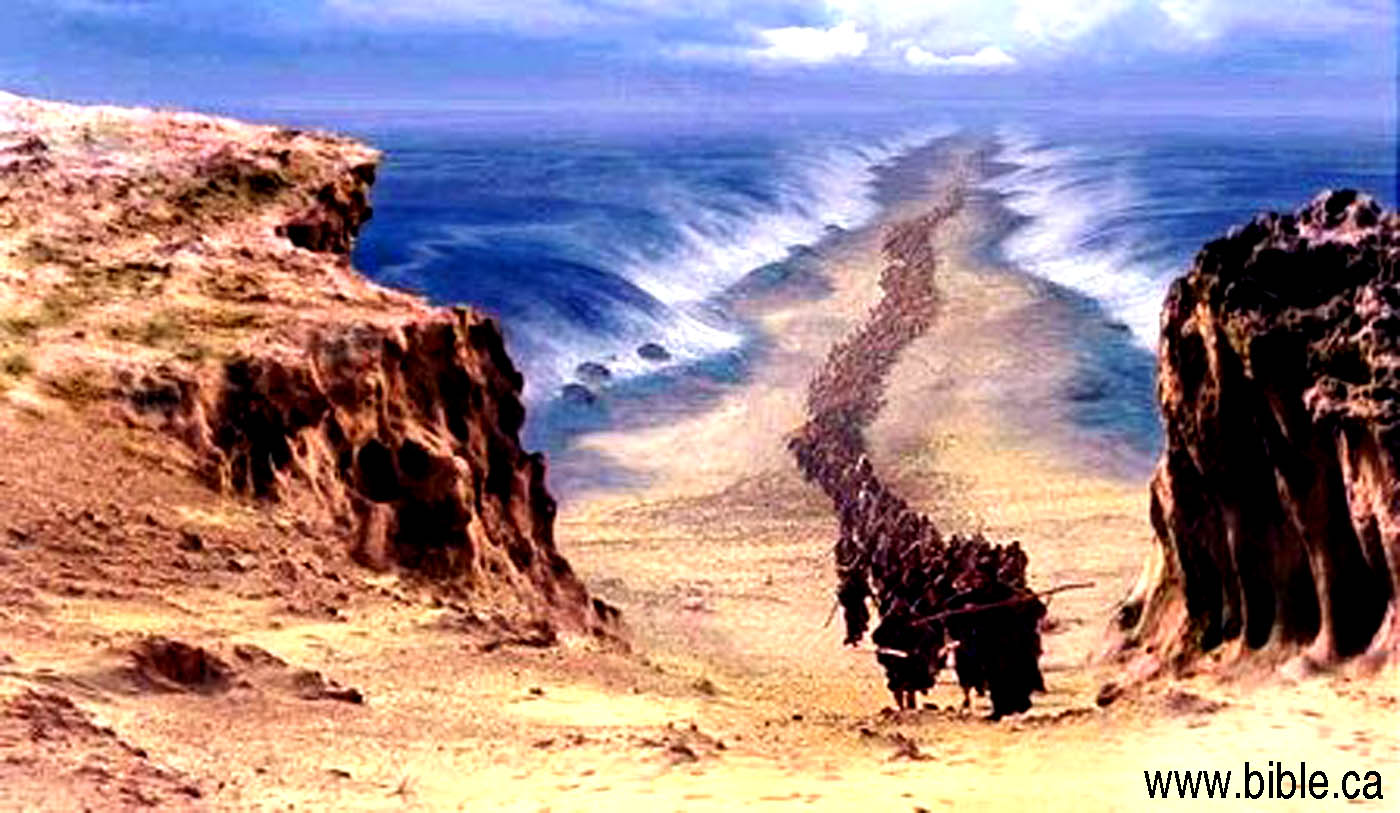
At night, when the Israelites were blocked in by the Red Sea and the attacking Egyptians, God parted the Red Sea (Exodus 14:10-21). All the people of Israel, along with their livestock, were able to cross on dry land with towering walls of water on the right and left as Moses led them (Exodus 14:21-22; Psalm 78:13).
Even though the Egyptians tried to chase after the Israelites by crossing through the sea, God enclosed the waters around them, which caused Israel’s oppressors to drown (Exodus 14:27-28). On that day, the Lord displayed His power and might through the miraculous parting of the Red Sea. Exodus 14:21-31 (NIV)
- God Delivers and Brings Salvation to His People
The parting of the Red Sea is one of the most significant events in the Old Testament. It is repeatedly mentioned to emphasize God’s amazing act of salvation in freeing the Israelites from slavery.
For 400 years, the Israelites had been enslaved and mistreated in Egypt (Acts 7:6). God had previously told Abraham: “know for certain that for four hundred years your descendants will be strangers in a country not their own and that they will be enslaved and mistreated there” (Genesis 15:13).
However, He also promised to punish Egypt and bring out Israel with an abundance of possessions (Genesis 15:14).
When the Lord heard the cries of His people, He responded by sending Moses and Aaron to the Israelites (Exodus 2:24; Exodus 3:9-10; 4:29). Through them, He pronounced judgment on Pharaoh and sent ten plagues against Egypt to show that He alone is God (Exodus 7-12; 7:5).
After the plague of the death of the firstborn son, Pharaoh allowed the Israelites to leave but then changed his mind (Exodus 12:31; 14:5). He chased after them until Israel was hemmed in by the sea. God used this situation to display His power in parting the Red Sea.
On that day, God set Israel free. They were no longer slaves to Egypt. In response to God’s act of salvation, the Israelites sang to God a song of praise: “I will sing to the Lord, for he is highly exalted. Both horse and driver he has hurled into the sea” (Exodus 15:1). They learned the importance of Following God, Trusting God and now Praising God!
Repeatedly in Israel’s years of wandering and entrance into the Promised Land, God would remind them of His miraculous act of freeing them from slavery (Exodus 20:2; Deuteronomy 5:6).
- God Has Power over Nature
Another reason the parting of the Red Sea is significant is that it displays God’s power over nature. The Israelites crossing through the sea on dry land was a miracle by the Lord.
This is a crucial point because many scholars and commentators attempt to explain the parting of the Red Sea as a natural phenomenon.
Some commentators have argued that the Red Sea mentioned in Exodus 14 refers to a reedy marsh and that the Israelites crossed through the low waters.
Other scholars have posited that a volcanic eruption caused a tidal wave to part the Red Sea. These explanations, though, dismiss the biblical account.
The Israelites did not merely wade through a shallow river. They recorded that they passed through on dry ground (Exodus 14:29; Hebrews 11:29).
God was the cause of the parting of the Red Sea when he sent a strong wind to push back the waters (Exodus 14:21-22). He is the Creator and has power over His creation to control the wind and sea (Psalm 89:9; Mark 4:39).
While it is popular for people to explain away biblical miracles with naturalistic explanations, Christians should listen to God’s Word. The parting of the Red Sea was a miracle from God and a wonderful display of His power.
- God is Faithful
In the rest of the Old Testament, we see followers of God looking back to the parting of the Red Sea to remind themselves of God’s faithfulness. When Joshua led the Israelites into the Promised Land, God parted the Jordan River to lead them into their new home (Joshua 3:17).
He did this to remind the Israelites of what He did in parting the Red Sea and freeing them from slavery.
As it is recorded in the Book of Joshua, “For the LORD your God dried up the Jordan before you until you had crossed over. The LORD your God did to the Jordan what he had done to the Red Sea when he dried it up before us until we had crossed over” (Joshua 4:23).
In Psalm 74, there is another reminder of God’s faithfulness connected to the parting of the Red Sea. Asaph talks about the enemy who ransacked God’s sanctuary (Psalm 74:4-7). Worrying about Israel’s enemy, Asaph asks if God would reject His people forever (Psalm 74:1).
In reply to his own question, Asaph reminds himself and others of God’s past deeds of faithfulness. As he wrote, “But God is my King from long ago; he brings salvation on the earth. It was you who split open the sea by your power;” (Psalm 74:12-13).
Although he goes on to describe the Lord’s power over creation (Psalm 74:16-17), Asaph specifically mentions the parting of the Red Sea to remind himself of God’s salvation. The Lord had saved them before from the enemy and He would do it again.
- God’s Salvation Today is Through Jesus
The parting of the Red Sea is also important because it provides a picture of Jesus’ act of salvation. Like the Israelites who were in slavery to Egypt, all people are in bondage to sin (John 8:34; Romans 7:14).
We have no hope of saving ourselves, which is why God did a mighty act to free us from our slavery to sin.
During the exodus, God parted the Red Sea and led Israel out of the land of their oppressors (Exodus 1:11-14). Likewise, God the Son willingly gave up his life to die on a cross (John 10:18).
Jesus paid the price for our sin, taking the punishment we deserve (2 Corinthians 5:21; 1 Peter 2:24). He died but rose to life on the third day after His burial (Romans 4:25; 2 Corinthians 5:15).
Because of what Jesus did, anyone who trusts in His death and resurrection will be saved (1 Corinthians 15:2-4).
Believers in Christ have passed from the dominion of darkness — the “land” of oppression from sin — into a new kingdom.
As Paul wrote in Colossians 1:13, God “has rescued us from the dominion of darkness and brought us into the kingdom of the Son he loves.”
We no longer live in darkness but are now children of the light, belonging to Christ (1 Thessalonians 5:5).
Furthermore, just as Israel was set free from bondage to Egypt, the chains that bind us to sin are loosed at salvation. Believers “have been set free from sin and have become slaves to righteousness” (Romans 6:18).
The Christian life consists of living free from bondage to our sinful nature and tendencies. Just as the Israelites received a new life after passing through the waters of the Red Sea, we have a new life in Christ (2 Corinthians 5:17).
Like God’s people in Exodus, we too can Follow God, Trust God and Praise God!
Darrell
Message Audio/Video and Outline: https://upwards.church/watch-now/leander-campus-videos
Watch Messages: YouTube-Upwards Church
Sources:
Warren W. Wiersbe, The Bible Exposition Commentary – Pentateuch, (Colorado Springs, CO: Victor, 2001), WORDsearch CROSS e-book, 202-204.
https://www.christianity.com/wiki/bible/what-is-the-significance-of-parting-the-red-sea.html
https://www.bible.ca/archeology/bible-archeology-exodus-route-goshen-red-sea.htm


 Upwards Church