Hope in Uncertainty – Luke 1:39-49

God knows that situations I will face in life will be difficult and often mind-boggling.  I can see even from Mary’s life that I am not alone in my circumstances.  I do not have to be strong enough.  I do not have to be wise enough.  I do not need to figure it all out.  God gives me the help I need.

Mary responded to Gabriel’s announcement with faith – yet God knew that there would probably come a million questions and doubts once she didn’t have an angel standing in front of her. Who, in the entire world, could this young teenage girl go to?  Who could understand?

Trying to explain a private angelic visit and an immaculate pregnancy even to her parents and Joseph or anyone in the small community of Nazareth would not have been a wise move.
Who would believe her when she told them? What would she do?  That’s when she thought, “Elizabeth! Of course!”  Who in the entire world could possibly accept Mary’s crazy story better than Elizabeth – who had a crazy story of her own.
With the amazing news from the angel that her cousin Elizabeth had conceived and was already 6 months pregnant when she was way past childbearing age, Mary knew instinctively that was where she was to go.

LIKE MARY I HAVE….

  • Hope From People Who Have Shared A Similar Experience

 39 At that time Mary got ready and hurried to a town in the hill country of Judea,

 We see that Mary is the type of woman who puts her faith into action. She not only says, “Lord, I am your servant”, but she also “hurries” to see God at work in the life of her relative Elizabeth. The journey to Judea that Mary undertook was not a simple drive to the next town; it was a difficult journey that would have taken at least three days at that time. Mary did not let that stop her from going to Elizabeth, rejoicing with her, and praising the Lord for fulfilling his promises.  *Next time you give an excuse like, it’s kind of far, or it’s not really convenient to go to my small group just think of Mary’ journey and time commitment.

 40 where she entered Zechariah’s home and greeted Elizabeth.

 Mary needed somebody who knew about miracles.  How many times during her journey do you think Mary practiced how she would tell Elizabeth what had happened?  As Mary had rushed off to visit her relative, she must have been wondering whether the events of the last few days were real. Elizabeth’s greeting surely strengthened her faith. Mary’s pregnancy may have seemed impossible, but her wise relative believed in the Lord’s faithfulness and rejoiced in Mary’s condition.   Imagine what it meant to Mary when Elizabeth knew that her pregnancy was real and that she was carrying the Lord in her womb! Elizabeth affirmed that what Mary had experienced was true! Elizabeth saw with the eyes of faith – and affirmed the work of God in Mary.

It’s interesting to me, that while John prepared the way for Jesus, in a real sense, Elizabeth prepared the way for Mary. Elizabeth had her own crazy and miraculous pregnancy, and so wasn’t at all skeptical of Mary’s.

In her years of barrenness, she had already experienced the disgrace and rejection of the community that Mary was likely to face when word got out. But Elizabeth had paved the way.   All her life, God had prepared her, not only to be John’s mother, but to be the example of maturity and faithfulness that Mary needed for the enormous task ahead of her.

Elizabeth extended love, acceptance, hospitality, hope and faith to a young girl in need of every bit she could offer.

The truth is this, even though Mary had a very strange circumstance, God still provided someone who had a similar circumstance for her to relate to.  What you are going through right now, is NOT unique to you, I guarantee, there is someone or several who have already gone through the same situation and they are willing to hug you, listen to you and give you encouragement.  It happens all the time in small groups.  We think we are alone in our problems only to find that someone else has been there.  Our church has small groups for this reason:  to provide you someone who will say, “Lean on Me”. But you will never have that if you do not go.  You cannot build that in one or two visits.  It takes time to build trust and friendship and relationships that matter, but get started now!  Before you find yourself in need of some encouragement but you do not know where to turn.

41 When Elizabeth heard Mary’s greeting, the baby leaped in her womb, and Elizabeth was filled with the Holy Spirit.

 Movement of a baby in its mother’s womb is certainly not abnormal in fact it’s probably one of the most exciting things to feel the baby moving before he or she is born. Almost every parent knows what it’s like to place his or her hand on the mother’s abdomen and feel the kicking and moving of the infant in the womb.   Sensing the baby’s movements is thrilling because that action indicates a new person is on the way.  But the movement of Elizabeth’s baby was far more significant than that of a normal fetus in a mother’s womb. That’s because this fetus was a prophet, and not just any prophet but the prophet who would be a forerunner for the Messiah.  His special leap was John’s first proclamation, a silent prophecy in his earliest role as prophet.  God in effect used the unborn John to make an enthusiastic prophecy of support for the coming Messiah.  God can even use the activity inside a mother’s womb to preview his plans.   Would Gabriel’s news to Mary come true? By this point in her visit to Elizabeth, an affirmative answer was coming into clearer focus.  First the testimony or encouragement of the six-month pregnant Elizabeth gave Mary confirmation of what she needed to hear.  Next came God’s miraculous evidence through the fetus leaping at the sound of Mary’s voice.  A coincidence?

  • Encouragement From People Who Care

42 In a loud voice she exclaimed: “Blessed are you among women, and blessed is the child you will bear! 43 But why am I so favored, that the mother of my Lord should come to me? 44 As soon as the sound of your greeting reached my ears, the baby in my womb leaped for joy. 45 Blessed is she who has believed that what the Lord has said to her will be accomplished!”

There are two different words in this passage that are often translated “blessed”.

In verse 42, Elizabeth tells Mary:  “Blessed are you among women, and blessed is the child you will bear!”  The word here is “eulogeo” – and you may be able to hear an English word in there: eulogy.  For us, a eulogy is a term usually reserved for funerals, but it is the time when we talk about the person’s life from as positive a perspective as possible. This isn’t the time to say, “And he never did pay me that 50 bucks he owed me, the cheapskate!” It may be true, but that’s just not what you say in a eulogy!   The word “eulogeo” is not reserved just for funerals — it means “to praise, or to speak well of, to honor.” So Elizabeth is saying, “You and that baby are just going to be the most honored people on the planet.”    In ancient Jewish culture a woman’s greatness was based on the greatness of the children she bore.  Elizabeth was telling Mary was the most blessed because she was going to give birth to the greatest child ever, the Lord Jesus.  That may not have been what this unwed pregnant teenager was feeling that moment especially after a 3 or 4 day trek through the hills of Judea.

Eventually Elizabeth’s words would come true, but they probably didn’t feel true for Mary at that moment.

The other word for blessed is used in verse 45, where Elizabeth says, 45 “Blessed is she who has believed that what the Lord has said to her will be accomplished!”  This time Luke doesn’t use “eulogeo”. He uses a word that has less to do with the words and opinions of others and more to do with being favored by God, and having the heart and attitude of one who knows that favor.

I think it indicates a lasting joy regardless of circumstances. Elizabeth is saying, “Mary, when you grab hold of God’s promises and believe them, there is a joy that is going to sustain you through this!”   Elizabeth was not speaking abstractly, but on the basis of her own experience. She’s saying, “Oh honey! I know how you may feel. I know there’s gonna’ be hard times. But when you trust Him, when you take God at His word, when you cast all your cares on Him, you’re gonna have JOY!  I’m not telling you tales, Mary, ‘cause I’ve experienced it. And you can take that to the bank.”

Again in our small groups and serving areas you will find encouragement that will be like food when you are starving, water when you are parched.   If you are not receiving encouragement then you need to go somewhere where you will.  Work may not provide it, your family will not provide it, but God has it for you. It could be a small group or a ministry.  Get plugged in somewhere and it will come.

We can see that Mary also had…

  • Comfort From A Relationship With God

 Elizabeth’s joyous affirming and encouragement to Mary released the song from Mary’s heart that has become known as “The Magnificat” from the opening words in Latin, “Magnificat anima mea Dominum,”—“My heart magnifies the Lord.”

This helps us to understand what kind of person Mary was. She truly was a special person who had a relationship with God.  She loved the Lord for he had done great things for her. She understood that she did not deserve this special privilege of being the mother of the Messiah, for she said, “He has been mindful of the humble state of his servant.” (Luke 1:48)

46 And Mary said: “My soul glorifies the Lord 47 and my spirit rejoices in God my Savior, 48 for he has been mindful of the humble state of his servant.

She says, “My spirit rejoices in God my Savior.   She had been faithful in her obedience and love for God, but still she needed a Savior. The Roman Catholic Church talks about the “immaculate conception,” and by that they are not talking about the birth of Christ, but rather the birth of Mary. They believe that she was born without original sin. They also believe that she lived a sinless life. And while we respect our Roman Catholic brothers and sisters, we believe that Mary needed a Savior like the rest of us. She did not say, “My spirit rejoices in God the Savior;” she said, “God, my Savior.” Sinless people do not need a Savior. And in spite of the fact she was just like the rest of us, God not only became her Savior, but bestowed on her the unparalleled privilege of being the one who would bring God’s Son into the world. He would not just be her Savior, but the Savior of the world. He would bring forgiveness to the human family.

Her song continues from verse 46-55 and is made up of images and references to Scriptures from Genesis, from Job, from the Psalms, and from Isaiah and highlights how steeped her thinking was in the Word of God.   Mary’s psalm of praise reveals a repeated use of the terminology and theology of the Old Testament. Virtually every commentator agrees that Mary’s song is dripping with Old Testament allusions and references.  She is quite the theologian. She really knows her scriptures.  Some may question how a simple peasant-girl may have such a grasp of the Old Testament. All Israelites from their childhood days knew by heart much of the Old Testament.  Mary was steeped in the poetical literature of her nation, and accordingly her song also bears the unmistakable signs of it.

Now the Pharisees and Sadducees were also steeped in the study of the Scriptures but Jesus later pointed out that though they studied the Scriptures that spoke about Him they refused to come to Him – instead they rejected and killed the very One they claimed to love and follow.  It reminds us that it is altogether possible to study the scriptures purely as an academic exercise as one might any other book of literature or history and completely miss the heart of the message.

Mary studied the Scriptures as a lover would passionately memorize and consume the letters from her beloved – they not only stimulated her thinking but also transformed her heart and mind and soul.   She had comfort from her relationship with God.

This song of Mary celebrates her relationship with God – it is worship.  Worship takes the attention off of us and focuses it on God – on His might, on His power, on His mercy and grace. And that environment is perfect for strengthening and deepening faith – because faith keeps its vision focused on the word and promises of God and not on the surrounding or prevailing circumstances.

We see in verse 56 that Mary stayed with Elizabeth for 3 months.  Because travel was not easy, long visits were customary. Mary must have been a great help to Elizabeth, who was experiencing the discomforts of being pregnant in her old age. In addition, Elizabeth certainly helped Mary. During these three months, Mary surely discussed with Elizabeth how to handle what would be an extremely difficult social predicament. She would have to return home and explain her pregnancy to her family and her fiancé. Hopefully, when Mary went back to her own home, three months pregnant, she was even more strengthened in her faith by Elizabeth’s faith ready to face all that the future would hold.

Like Mary, you too can have hope in uncertainty.

Darrell

www.Upwards.Church

Message Audio/Video and Outline: https://upwards.church/leander-campus/watch-now-message-videos

Watch Messages: YouTube-Upwards Church

Facebook: Upwards Church

Read Along Daily Bible Reading: You Version
Posted in The Christ Hope of the World Luke 1-2 | Tagged , , , , , , , , , | Leave a comment

Hope in the Impossible – Luke 1:27-38

When God shows up in unexpected places, changes our plans and asks us to do something difficult, what do we do?  Here’s three truths to remember:

  1. God’s Plans for Us are Greater than our own.

28 Gabriel appeared to her and said, “Greetings, favored woman! The Lord is with you! ”29 Confused and disturbed, Mary tried to think what the angel could mean.30 “Don’t be afraid, Mary,” the angel told her, “for you have found favor with God!

When Gabriel appeared to Mary, he called her a favored woman. The Latin Vulgate translate this, as “Hail Mary, full of Grace.”  No problems in this translation unless you begin to say that she has so much grace that she gives it to you when you pray to her.  Mary is blessed, she has God’s favor but she is not our mediator; nor is she co-redemptory with her divine Son. Paul tells Timothy, “There is only one God and one Mediator who can reconcile God and people. He is the man Christ Jesus” (2:5)  We shouldn’t pray to Mary, but she is worthy of honor, and we should not take her willingness to serve God lightly.

Now think about this, wouldn’t it be great to have an angel bearing a message from God come and visit you and give a message similar to v.28? Here you are confirmation, that there is a God, all questions about God answered, as you have the attention of an angel. After all, you have just being notified that you are specially chosen by God, and not just favored but “highly favored” isn’t that awesome?

  • This word “favored” or “grace” is used only twice in the New Testament, here and in Ephesians 1:6.  “We praise God for the glorious grace he has poured out on us who belong to his dear Son.
  • The same favor or grace that God showed Mary is the same favor or grace He has freely given us.
  • In order to face life’s unexpected turns, we must know we have God’s favor

Perhaps this Christmas, like Mary, you too find it surprising to believe you are favored of God. Perhaps you have endured some tremendous losses, this year, you had a rough year, and you say how can God understand my world. Perhaps you feel misled, misguided by God, let down in a big way, betrayed, how can I be favored by God, loved by Him with so much that’s wrong with my life, there isn’t much hope on the horizon?

God’s favor does not automatically bring instant success or fame. His blessing on Mary, the honor of being the mother of the Messiah, would lead to much pain: her peers would ridicule her; her fiancé would consider leaving her; her son would be rejected and murdered. But through her son would come the world’s only hope, and this is why Mary has been praised by countless generations as the young girl who “found favor with God.” Mary’s submission was part of God’s plan to bring about salvation. If sorrow weighs you down and dims your hope, think of Mary and wait patiently for God to finish working out his plan.

The central figure in our story is not Mary and not even the angel Gabriel. The central figure in our story is the gracious and loving God who gave us his Son, Jesus, whose birth is the promise of God’s redeeming love – Emmanuel – “God With Us.” And Mary was favored, chosen by God, to play a role in this redemption process.
So are we! God favors us, to tell the impossible story that God loves the world that He gave His Son to be born of a woman. Remember this as we live in this difficult world.

  1. God’s Plan is greater than we can imagine. 

31 You will conceive and give birth to a son, and you will name him Jesus.32 He will be very great and will be called the Son of the Most High. The Lord God will give him the throne of his ancestor David.33 And he will reign over Israel forever; his Kingdom will never end!”34 Mary asked the angel, “But how can this happen? I am a virgin.” 35 The angel replied…. 37 “For nothing is impossible with God.

 Mary was young, poor, female—all characteristics that, to the people of her day, would make her seem unusable by God for any major task. But God chose Mary for one of the most important acts of obedience he has ever demanded of anyone. You may feel that your ability, experience, or education makes you an unlikely candidate for God’s service. Don’t limit God’s choices. He can use you if you trust him. Take him at his word.

  • God has great things to do in us and for us. The question is never, “Can He do it?” but “Will we believe and cooperate with Him?”

3. God’s Plan calls for a Response

A young unmarried girl who became pregnant risked disaster. Unless the father of the child agreed to marry her, she would probably remain unmarried for life. If her own father rejected her, she could be forced into begging or prostitution in order to earn her living. She risked losing Joseph, her family, and her reputation. And her story about being made pregnant by the Holy Spirit risked her being considered crazy as well.   When Mary said, “Ok, God, I’m going to cooperate with your plan.  Use me.”  Do you think that was easy?”  No.  It wasn’t easy for Mary to say, “Ok, I will be an unwed mother.”  Can you imagine the gossip that went on in those days?  And whose going to believe her story?  “It’s God!”  Would you believe that?  Try having this one put on your shoulders.  Try it as an uneducated 15 year old girl betrothed to another man, knowing full well that the consequences of agreeing to this is almost certain death.  This is anything but a happy holiday for Mary.  Still Mary said, despite the risks, ”Let it be with me according to your word.” When Mary said that, she didn’t know about the tremendous opportunity she would have. She took the risk of faith; she didn’t consult with anyone else; she didn’t take time to weigh the pros and cons. She only knew that God was asking her to serve him, and she willingly obeyed. Believers need Mary’s kind of trust and responsiveness. Too many wait to see the bottom line before offering themselves to God. God wants willing servants.

 38 Mary responded, “I am the Lord’s servant. May everything you have said about me come true.” And then the angel left her.

  • Human nature is to take the easy way, to slide through life, to take the course of least resistance. Mary’s life reminds us that choosing to serve God is not the easiest way.  Serving God is difficult.  I may have to wait for the rewards.

In the last post I asked you to imagine yourself at fifteen. Who were you? What were you doing? What did your life look like?  Now imagine this angel standing before you asking you to bring the Hope of the entire earth into the world.  You know that the consequences will certainly mean being ostracized from your family, perhaps even bring about your death… How would you answer?

Would you find yourself questioning if this was possible? Would you find yourself asking why God would choose you to be the instrument of salvation for the world?

If God were to tell you that the eternity of others hung in the balance of your willingness to carry Jesus Christ, the Son of God, and share him with others, how would you answer?

This is exactly the question that God is asking us today.

It was just asked of a fifteen year old Hebrew girl first, and her task was much more difficult than any of us are likely to experience.  But the question he asks remains the same.  God has been asking people to share his Son for 2000 years now.  It started with Mary.  But the question is still the same… Are you willing to share Jesus with the world?

That hope rests today on us – will we be like her?  Will we give birth to Christ in our actions and thoughts, and deeds?  Will we obey the Lord, and walk in his ways?  Will we care enough about our neighbors to pray for them?

Will we share Christ with the world?  A survey was taken that asked the question,
“What is your greatest hindrance to sharing your faith?”  The largest groups were the 51 percent whose biggest problem was the fear of how others would react.

Why? Because no one likes to be rejected, ridiculed, or regarded as an oddball.  Sure there is some risk… But, the stakes we gamble in sharing our faith, our hope, our salvation is nothing compared to what God asked of Mary.

In bringing Christ to the world, Mary risked being shunned, an object of scorn even a public stoning.  In sharing Christ, we risk upsetting someone or being embarrassed.  They may take the invite card in your bulletin and throw it away, think you are a religious fanatic. So what?

I thank God that there was someone willing to take this risk for my sake. Thank God for my parents who set and example for me… the church I went to, taking time to teach and model for me.  Thank God there were people who thought it was worth the risk of being rejected for the sake of my salvation.  I could be dead, addicted to drugs or in jail.

I was no altar boy, but somebody cared enough to share the Gospel with me anyway.
And, it changed my life.  How about you?  Who was willing to take that risk for you?

For the last 2000 years, that is how the Gospel has been shared. One person, to another, starting with a fifteen-year-old girl on the other side of the world who spoke the words…I am the Lord’s servant. May it be to me as you have said.”  People of God, God is relying on you to continue the invitation to his table.  It is up to us now to share with others the Good News.

You know, there are a 1001 reasons each and every one of us can come up with on how someone else is better qualified, and maybe that is “reasonable,” but look who God chose to be the example, an uneducated, 15 year old girl 2000 years ago.  Those are some pretty slim qualifications if you ask me. But look what God accomplished through her just because she was willing.

Our call to share Christ is the same.  Will we trust Christ to use unlikely people from unlikely places to have unbelievable impact on the world?

Darrell

www.Upwards.Church

Message Audio/Video and Outline: https://upwards.church/leander-campus/watch-now-message-videos

Watch Messages: YouTube-Upwards Church

Facebook: Upwards Church

Read Along Daily Bible Reading: You Version

Posted in The Christ Hope of the World Luke 1-2 | Tagged , , , | Leave a comment

Hope in Unexpected Places – Luke 1:26

Can you remember what it was like to be fifteen? Fifteen. It’s an awkward time. Your body is somewhere between childhood and adulthood, Hormones are doing all sorts of weird things to your body and to your voice. And there is this great race to grow up.

Still, at fifteen you are not old enough to drive a car, vote, stay out late, or live on your own. At fifteen, there are a lot of things that you are not allowed to do. You are in High School, interested in things fifteen year olds are interested in. You are still a child living in your parent’s home.

Then, one night, there is a disturbance in another room of your house. You get up to investigate and there, In the middle of your living room stands this supernatural, and absolutely terrifying angelic presence that speaks these words to you…“You will bring the son of God into this world!” What would you do? What would be going through your mind? Would you also be wondering how fast you could get out the back door and down the street?  Would you say, “sure, no problem, I am ready for that!”

Keep this thought in mind as we examine the text today (Luke 1:26-38)

Scholars tell us that the betrothal age was between 13 and 15.  Mary was about this age.

Beginning in verse 26, we have the familiar story of the Annunciation.  The angel announces to Mary that she’s going to have a baby.

Look at verse 26, “Now in the sixth month, the angel Gabriel was sent by God to a city of Galilee named Nazareth.” Stop there. Nazareth was Mary’s hometown, Joseph’s hometown. Some would call it a hick town. Some would call it a dump. It was a nothing town. It was an insignificant town. It was the place where your kids would get bored and say to you, when I grow up, I’m leaving this town!  Nazareth is not mentioned in the Old Testament, the writings of Josephus, the Apocrypha, not mentioned in the Talmud, not mentioned in the Midrash. It’s only mentioned in the New Testament. You would have never heard of it were it not for this story.

In fact, when Nazareth is mentioned in the New Testament, it is mentioned with scorn. The classic text is in John chapter 1, when Philip tells Nathaniel, we have found the Messiah, the one that Moses and the prophets wrote about, Jesus of Nazareth. Nathaniel shot back and said, can anything good come out of Nazareth? In other words, look, that’s an unremarkable place. Surely, God’s Messiah couldn’t come from there.

Nazareth was overshadowed by another town close to it, the town of Sepphoris. Sepphoris was the Roman capital of Galilee under Herod Antipas. Sepphoris was larger. It was the business hub for the north.  Nazareth was really a bedroom community for Sepphoris.  People who lived in Nazareth would travel to Sepphoris  for work. Most scholars believe Joseph, the tekton, the carpenter or stonemason principally worked there.
In addition, most down south in Jerusalem looked down their nose at Galilee. It’s where the unsophisticated lived. It’s where the Gentiles lived. It was a mixed population base. And because of that, those down in Jerusalem regarded it as unclean.

Nazareth was an insignificant place that became Jesus’ hometown for 30 years. In fact, the title he is most known by in the New Testament, mentioned 17 times, is he is Jesus of Nazareth.

I’m guessing that some of us here harbor a kind of contempt for our own Nazareth, the place we live in, the job we’re involved in, the circumstances that are going on in our life, all of which make us think that it’s all keeping me from my real potential. What I want to suggest to us is that God might be doing his best work in places like that.  What is your Nazareth?

For some of us, our Nazareth is our job. You don’t particularly like your job. You think you’re better than that. You should have a different job. For some of you, your Nazareth is a physical disability that you have struggled with. For others of you, your Nazareth is here, your city, your state. Can anything good come out of Nazareth? For some of you, your Nazareth is your lack of education. For some of you, your Nazareth is your marriage. For others of you, your Nazareth is your singleness. It’s whatever causes you to say, can anything good come out of this? Can anything good come out of Nazareth?

I know something good that came out of Nazareth, a virgin named Mary, her young husband, and a miraculous insemination in her womb all happened in Nazareth. Insignificant town. Holy ground.  God may show up in our Nazareth as well!

Luke 1:26  tells us an angel of the Lord appeared to Mary.  *(This image is the Church of the Annunciation and a well where people think the angel appeared to Mary)

Mary was not a prophet or a priest; she was not in God’s temple performing acts of service. Instead, she was simply a young woman who was living at home and planning her wedding, for she was engaged to be married to a man named Joseph. In ancient Jewish marriages, the word “engaged” (or “betrothed”) had a different meaning than today. First, the two families would agree to the union and negotiate the betrothal, including a price for the bride that would be paid to the bride’s father. Next, a public announcement would be made. At this point, the couple was “pledged.” This is similar to engagement today, except that it was much more binding. At this point, even though the couple was not officially married, their relationship could be broken only through death or divorce. Sexual relations were not yet permitted. This second step lasted for a year. During that time, the couple would live separately, with their parents.

This waiting period would demonstrate the bride’s purity. If she were found to be pregnant during that time, the marriage could be annulled. After this waiting time, the couple would be married and begin living together. What Mary was about to hear from the angel would have significant impact on her engagement.

Here’s Mary, perhaps thinking of marriage, preparing for the big day, already pledged to be married to a man named Joe, dreaming of driving the family SUV, with kids arguing about who gets to sit in front of the camel, and being the perfect patient mom. Then an angel appeared.
 6 …God sent the angel Gabriel to Nazareth, a village in Galilee,27 to a virgin named Mary. She was engaged to be married to a man named Joseph

 Mary and Joseph were an average young couple planning to get married.  During their engagement God showed up and announced they were to have a child together before they have even had sex.  Many times things don’t go the way we plan.

Sometimes God providentially, God sovereignty changes circumstances around because He’s got another idea in mind.  And that’s obviously what happened at Christmas time about 2000 years ago.

Mary showed how a believer reacts to God’s interruptions of our plans.   Life’s unexpected curves do not have to be catastrophic to the Christian.  I hope you will use Mary’s approach to faith when life takes an unexpected turn.  How do you approach life when it turns out different than what you planned?

We will see how Mary responds in the next post.

Darrell

www.Upwards.Church

Message Audio/Video and Outline: https://upwards.church/leander-campus/watch-now-message-videos

Watch Messages: YouTube-Upwards Church

Facebook: Upwards Church

Read Along Daily Bible Reading: You Version

Posted in The Christ Hope of the World Luke 1-2 | Tagged , , , , , , , , | Leave a comment

Hope in the Darkness – Luke 1:1-18 – Part 2

Does God hear our prayers? That’s a question we have all asked. Does God really hear me? After many years Zechariah and his wife Elizabeth probably questioned if God heard their prayers for a child. But God had great plans for their child who was still on the way -John the Baptist.

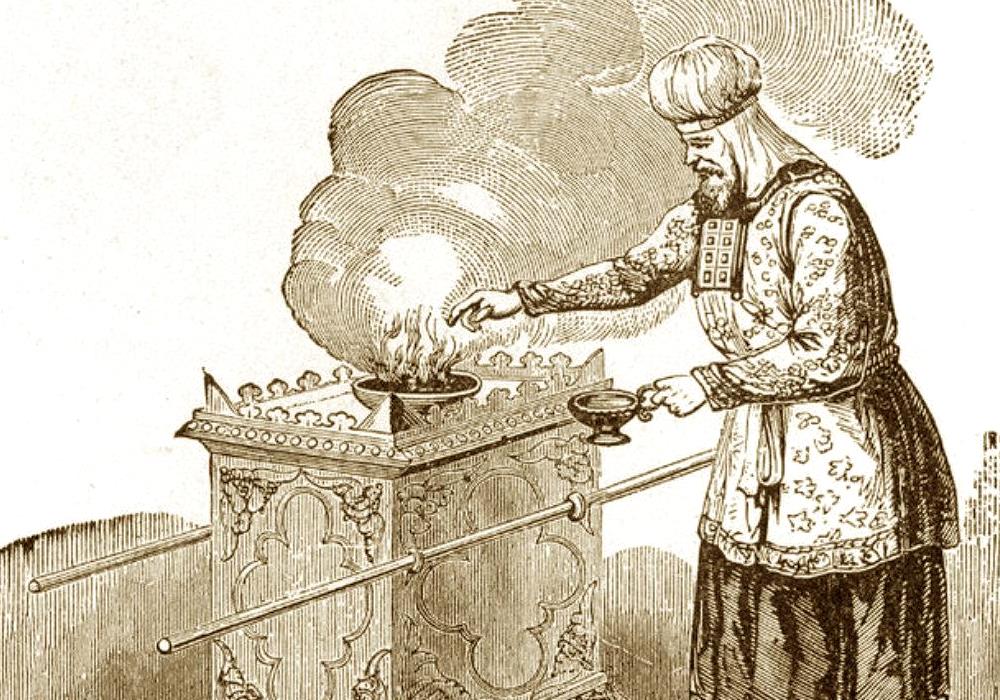
Zechariah served in the priestly division of Abijah. Priests were divided into 24 divisions, which we can read about in 1 Chronicles 24.   Each day 56 of the 300 Priests in their division were chosen by a lottery who would serve in the temple. It was an honor to be selected to have duty over the altar of incense (Exodus 30:7-8). This burning of the incense was the place representing the prayers of the people.   How long had the people been praying, “Send the Messiah, work in our nation?”  How much do we pray for our nation, for revival?

Today was Zechariah’s turn. I’m sure he was overjoyed telling his wife Elizabeth the good news. Many priests go their whole life without the honor. At the appointed time, Zechariah would enter into the Most Holy Place of the temple, just outside the Holy of Holies. The Golden Candlestick would be to his right. The Table of Showbread was to His left. Before him was the Altar of Incense with the veil to the Holy of Holies just beyond the Altar. This was a reverent time of worship.

Incidentally, it was here that Nadab and Abihu were struck down for offering “strange fire” before God (Lev 10:1-3). Spiritual leadership truly is life or death. Zechariah was up for the task while a multitude was outside praying.

And there appeared to him an angel of the Lord standing on the right side of the altar of incense. And Zechariah was troubled when he saw him, and fear fell upon him. (Luke 1:11-12)

What happens next is unexpected and amazing. The man without a child met an angel with a gospel. Even without the appearance of the Angel, Zechariah’s ministry in the Temple would have been a once in a lifetime experience. Now to the right of the Altar stands the Angel Gabriel (Luke 1:19) It is worth noting that it was Gabriel who appeared to Daniel to reveal the 70 weeks of years prophesy (Dan 9:20-21). This prophecy provided Daniel with an exact date of Jesus’ triumphal entry into Jerusalem as Messiah. It will also be Gabriel who appears to Mary shortly.

Angels are vital to our relationship with God. They minister to us and help us and they are all around us. We hear stories of angels helping people in trouble. Sometimes they take human form as Hebrews 13:2 says:  Do not neglect to show hospitality to strangers, for thereby some have entertained angels unawares. (Hebrews 13:2)

We hear reports of I cannot overemphasize the importance of the setting this encounter takes place. This is a holy place Angels are messengers from God. They play a significant role in assuring God’s plan and will is carried out and they were pivotal in announcing the coming of Christ. They will play an active role in the final days of the end times. They have created beings, eternal in nature, and mighty. Angels are not cute cupids floating on clouds, but they are warriors and powerful. So Zechariah’s response to the appearance of Gabriel is to be expected. “Fear fell upon him.” (v.12)

When we encounter the Holy or Divine, we will naturally respond in fear. In every instance, the angels provide assurance of peace and calm. “Do not be afraid.” For we know there are also fallen angels. These are the angels who followed the arch-angel Lucifer in a revolt against God (Revelation 12:4).

We should also know that there is a constant spiritual battle happening all around us that we are entwined in daily. Our prayers are effective against the evil forces and engage us in the spiritual war.   Ephesians 6:12-13.”For we do not wrestle against flesh and blood, but against the rulers, against the authorities, against the cosmic powers over this present darkness, against the spiritual forces of evil in the heavenly places”

But the angel said to him, “Do not be afraid, Zechariah, for your prayer has been heard, and your wife Elizabeth will bear you a son, and you shall call his name John.  Luke 1:13

Gabriel is bringing to Zechariah a grand message announcing the coming of the forerunner of the Messiah. There are some important pieces of Gabriel’s message that we want to look at:

First, after assuring Zechariah not to be afraid, Gabriel tells Zechariah that God has heard his prayer. Because, Gabriel is making the annunciation of John, some believe that Gabriel is talking about Zechariah’s prayer for a son. This could be, but given the context of where John is, it is unlikely John’s prayer was self-focused. Rather, it seems more likely that Zechariah may have been praying for the redemption of Israel. Prayer for the nation was the point of the evening offering

Nevertheless, God hears our prayers. There may be times when it seems like our prayers go nowhere but just waft into the air. This is not the case. God hears our prayers. His answers will sometimes come at surprising times, in a surprising place, in a surprising way. Watch for the answer!

Secondly, Gabriel tells John they are going to have a baby and the baby’s name will be John. Yohanan means “God has been gracious.” God knows us. He forms us and shapes us in our mother’s womb. He even gives us our name. God knows your name. Your life begins before you take your first breath. That’s why every life, including life in the womb, is sacred and holy.

Luke 1:14-17

There are some key characteristics Gabriel shares with Zechariah about John’s life:

First, His life will bring joy to Zechariah & Elizabeth, along with many others. The joy rooted in John’s ministry was pointing people to Jesus as the forerunner of the messiah.

Second, John was set apart for God. The reference to not drinking beer or wine would be clear to Zechariah that John was to be a Nazarite. Nazarites were set apart for special service for God (Numbers 6:1-21). A Nazarite was to avoid strong drink, not to cut his hair, and not to touch a dead body. The real contrast here is that John’s filling of the Holy Spirit. This is something common in Luke’s gospel as well as Acts

The most important thing is that from the very first John was to be filled with the Holy Spirit, without whose help God’s work cannot be done effectively. John is the only person who said in the New Testament to be filled with the Spirit from his mother’s womb; this emphasizes the fact that God chose him and equipped him from the very beginning.

He will be a great prophet. Jesus said that John was the greatest of all prophets in Matthew 11:11

Months from now, when Elizabeth, is visited by Mary who is carrying Jesus in her womb, it will be John who leaps for joy in Elizabeth’s womb. (Luke 1:44). This reminds us that the Holy Spirit was with John from the day of his conception. Even in the womb, John is It also serves as a Scriptural basis for the sanctity of life in the womb. This was not a glob of flesh.

The last thing of John’s life Gabriel shares is the theocentric ministry of John. His ministry is not self-serving. He will turn people to the Lord with the “spirit and the power of Elijah.” Elijah spent most of his ministry opposing apostasy and turn people away from Baal.

Baal was the name of the supreme god worshiped in ancient Canaan and Phoenicia. The practice of Baal worship infiltrated Jewish religious life during the time of the Judges (Judges 3:7), became widespread in Israel during the reign of Ahab (1 Kings 16:31-33), and also affected Judah (2 Chronicles 28:1-2).

Baal was a fertility god and was commonly associated with child sacrifice and sexual immorality. In this way, God’s incredible gift of sexuality was perverted to the most obscene public prostitution. No wonder God’s anger burned against his people and their leaders.

The worship of Baal (which means “lord”) worship is evidenced by the out war on anything biblical and Christian. The glorification of sexual deviance, violence, abortion (child sacrifice), pornography and prostitution is evidence of Baal worship in our culture. Incidentally, Jesus In Matthew 12:26, calls Satan “Beelzebub,” linking the devil to Baal-Zebub, (2 Kings 1:2). The Baal of the Old Testament were nothing more than demons masquerading as gods (1 Corinthians 10:20).

One last interesting aspect of this is Gabriel’s words “to turn the hearts of the fathers to the children, and the disobedient to the wisdom of the just” (v.17). The idea of family and the spiritual leadership of fathers cannot be overlooked here. A major part of Israel’s reconciliation was the reconciliation of the family with the role of the father leading the family spiritually. All of this was vital to the first coming of Jesus. Will He find us any more ready when he comes again?

Will Christ find us upright, righteous, praying, leading our family, turning away from idolatry, and toward God’s grace and goodness? Are we a church committed to strengthening the family? Are we more interested in what is popular or what is holy?  There is hope in the darkness.

Darrell

www.Upwards.Church

Message Audio/Video and Outline: https://upwards.church/leander-campus/watch-now-message-videos

Watch Messages: YouTube-Upwards Church

Facebook: Upwards Church

Read Along Daily Bible Reading: You Version

Posted in The Christ Hope of the World Luke 1-2 | Tagged , , , , , , , , , , | Leave a comment