 You’re invited to our new message series: Jeremiah (A People in Crisis)
Description: How can we remain faithful to God even when many of the people around us are not? This four-week series explores the life and ministry of the prophet Jeremiah. Jeremiah’s ministry was characterized by opposition, suffering, and a message that his people did not want to hear. We can learn much from his faithful journey, deep faith and the message that God gave his rebellious people. We too are “A People in Crisis.”
Dates – Titles (Scriptures) Events
Mar. 3 – Calling Out the Called (Jeremiah 1)
Mar. 10 – Blessed or Cursed? (Jeremiah 17) Spring Break
Mar. 17 – The Lord Knows (Jeremiah 29)
Mar. 24 – A New Covenant (Jeremiah 31) Palm Sunday/ Communion
Introduction:
What is success? Most definitions include references to achieving goals and acquiring wealth, prestige, favor, and power. “Successful” people enjoy the good life—being financially and emotionally secure, being surrounded by admirers, and enjoying the fruits of their labors. They are leaders, opinion makers, and trendsetters. Their example is emulated; their accomplishments are noticed. They know who they are and where they are going, and they stride confidently to meet their goals.
By these standards, Jeremiah was a miserable failure. For 40 years he served as God’s spokesman to Judah, but when Jeremiah spoke, nobody listened. Consistently and passionately he urged them to act, but nobody moved. And he certainly did not attain material success. He was poor and underwent severe deprivation to deliver his prophecies. He was thrown into prison (chapter 37) and into a cistern (chapter 38), and he was taken to Egypt against his will (chapter 43). He was rejected by his neighbors (11:19–21), his family (12:6), the false priests and prophets (20:1, 2; 28:1–17), friends (20:10), his audience (26:8), and the kings (36:23). Throughout his life, Jeremiah stood alone, declaring God’s messages of doom, announcing the new covenant, and weeping over the fate of his beloved country. In the eyes of the world, Jeremiah was not a success.
But in God’s eyes, Jeremiah was one of the most successful people in all of history. Success, as measured by God, involves obedience and faithfulness. Regardless of opposition and personal cost, Jeremiah courageously and faithfully proclaimed the word of God. He was obedient to his calling. Jeremiah’s book begins with his call to be a prophet. The next 38 chapters are prophecies about Israel (the nation united) and Judah (the southern kingdom). Chapters 2–20 are general and undated, and chapters 21–39 are particular and dated. The basic theme of Jeremiah’s message is simple: “Repent and turn to God, or he will punish.” Because the people rejected this warning, Jeremiah then began predicting the destruction of Jerusalem. This terrible event is described in chapter 39. Chapters 40–45 describe events following Jerusalem’s fall. The book concludes with prophecies concerning a variety of nations (chapters 46–52).
As you read Jeremiah, feel with him as he agonizes over the message he must deliver, pray with him for those who refuse to respond to the truth, and watch his example of faith and courage. Then commit yourself to being successful in God’s eyes.
 Vital Statistics:
Purpose: To urge God’s people to turn from their sins and back to God
Author: Jeremiah
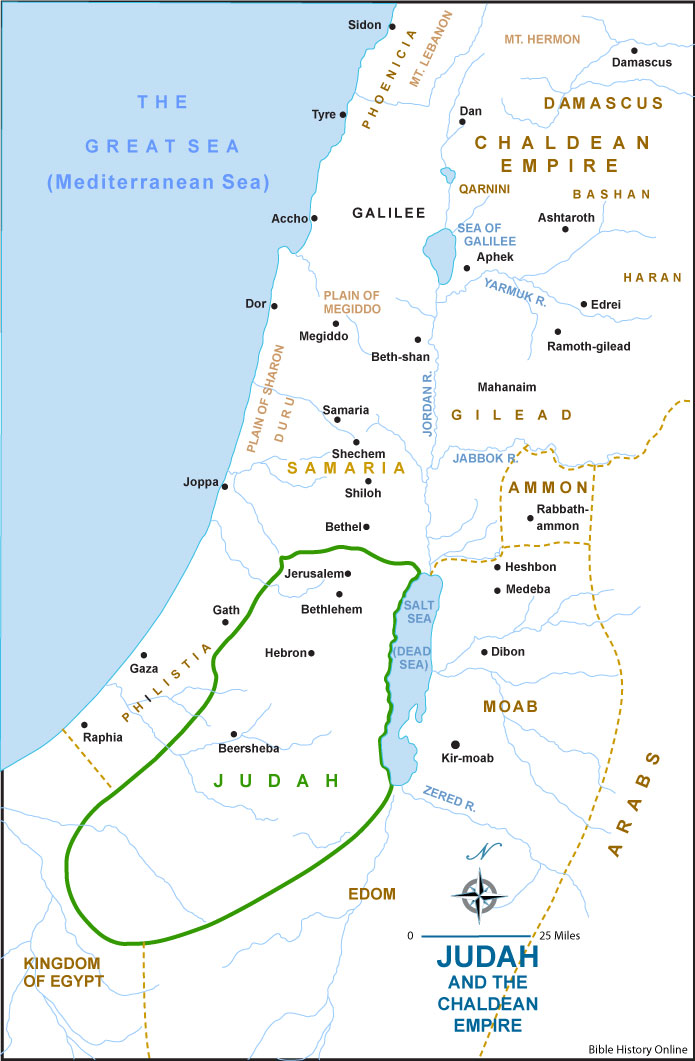
Original Audience: Judah (the southern kingdom) and its capital city, Jerusalem
Date Written: During Jeremiah’s ministry, approximately 627–586 B.C.
Setting: Jeremiah ministered under Judah’s last five kings—Josiah, Jehoahaz, Jehoiakim, Jehoiachin, and Zedekiah. The nation was sliding quickly toward destruction and was eventually conquered by Babylon in 586 B.C. (see 2 Kings 21–25). The prophet Zephaniah preceded Jeremiah, and Habakkuk was Jeremiah’s contemporary.
Key Verse: “Your wickedness will bring its own punishment. Your turning from me will shame you. You will see what an evil, bitter thing it is to abandon the LORD your God and not to fear him. I, the Lord, the LORD of Heaven’s Armies, have spoken!” (2:19)
Key People: Judah’s kings (listed above), Baruch, Ebed-melech, King Nebuchadnezzar, the Recabites
Key Places: Anathoth, Jerusalem, Ramah, Egypt
Special Features: This book is a combination of history, poetry, and biography. Jeremiah often used symbolism to communicate his message.
The Blueprint
A. GOD’S JUDGMENT ON JUDAH (1:1–45:5)
1. The call of Jeremiah
2. Jeremiah condemns Judah for its sins
3. Jeremiah prophesies destruction
4. Jeremiah accuses Judah’s leaders
5. Restoration is promised
6. God’s promised judgment arrives
Jeremiah confronts many people with their sins: kings, false prophets, those at the temples, and those at the gates. A lack of response made Jeremiah wonder if he was doing any good at all. He often felt discouraged and sometimes bitter. To bring such gloomy messages to these people was a hard task. We, too, have a responsibility to bring this news to a fallen world: Those who continue in their sinful ways are eternally doomed. Although we may feel discouraged at the lack of response, we must press on to tell others about the consequences of sin and the hope that God offers. Those who tell people only what they want to hear are being unfaithful to God’s message.
B. GOD’S JUDGMENT ON THE NATIONS (46:1–52:34)
1. Prophecies about foreign nations
2. The fall of Jerusalem
Jeremiah lived to see many of his prophecies come true—most notably the fall of Jerusalem. The fulfillment of this and other prophecies against the foreign nations came as a result of sin. Those who refuse to confess their sin bring judgment upon themselves.
| MEGATHEMES | ||
|---|---|---|
| THEME | EXPLANATION | IMPORTANCE |
| Sin | King Josiah’s reformation failed because the people’s repentance was shallow. They continued in their selfishness and worship of idols. All the leaders rejected God’s law and will for the people. Jeremiah lists all their sins, predicts God’s judgment, and begs for repentance. | Judah’s deterioration and disaster came from a callous disregard and disobedience of God. When we ignore sin and refuse to listen to God’s warning, we invite disaster. Don’t settle for half measures in removing sin. |
| Punishment | Because of sin, Jerusalem was destroyed, the Temple was ruined, and the people were captured and carried off to Babylon. The people were responsible for their destruction and captivity because they refused to listen to God’s message. | Unconfessed sin brings God’s full punishment. It is useless to blame anyone else for our sin; we are accountable to God before anyone else. We must answer to him for how we live. |
| God Is Lord of All | God is the righteous Creator. He is accountable to no one but himself. He wisely and lovingly directs all creation to fulfill his plans, and he brings events to pass according to his timetable. He is Lord over all the world. | Because of God’s majestic power and love, our only duty is to submit to his authority. By following his plans, not our own, we can have a loving relationship with him and serve him with our whole heart. |
| New Hearts | Jeremiah predicted that after the destruction of the nation, God would send a new shepherd, the Messiah. He would lead them into a new future, a new covenant, and a new day of hope. He would accomplish this by changing their sinful hearts into hearts of love for God. | God still transforms people by changing their hearts. His love can eliminate the problems created by sin. We can have assurance of a new heart by loving God, trusting Christ to save us, and repenting of our sin. |
| Faithful Service | Jeremiah served God faithfully for 40 years. During that time the people ignored, rejected, and persecuted him. Jeremiah’s preaching was unsuccessful by human standards, yet he did not fail in his task. He remained faithful to God. | People’s acceptance or rejection of us is not the measure of our success. God’s approval alone should be our standard for service. We must bring God’s message to others even when we are rejected. We must do God’s work even if it means suffering for it. |
Message Audio/Video and Outline: https://upwards.church/watch-now/leander-campus-videos
Watch Messages: YouTube-Upwards Church
Sources:
CROSS e-book, 1197-1198.
Life Application Bible Notes (Tyndale, 2007), 1197–1198.


 Upwards Church
Pingback: God is Calling – Jeremiah 1 | Upwards Church