
 Those who travel, move, or face new challenges know what it is to be uprooted. Life is full of changes, and few things remain stable. The Israelites were constantly moving through the wilderness. They were able to handle change only because God’s presence in the Tabernacle was always with them. The portable Tabernacle signified God and his people moving together. For us, stability does not mean lack of change, but moving with God in every circumstance.
It has been two years since Israel left Egypt. Having received God’s travel instructions through Moses, Israel set out from Mount Sinai into the wilderness of Paran on their way toward the Promised Land.
“Now it came to pass on the twentieth day of the second month, in the second year, that the cloud was taken up,” there’s that cloud going up that was mentioned in the last post, 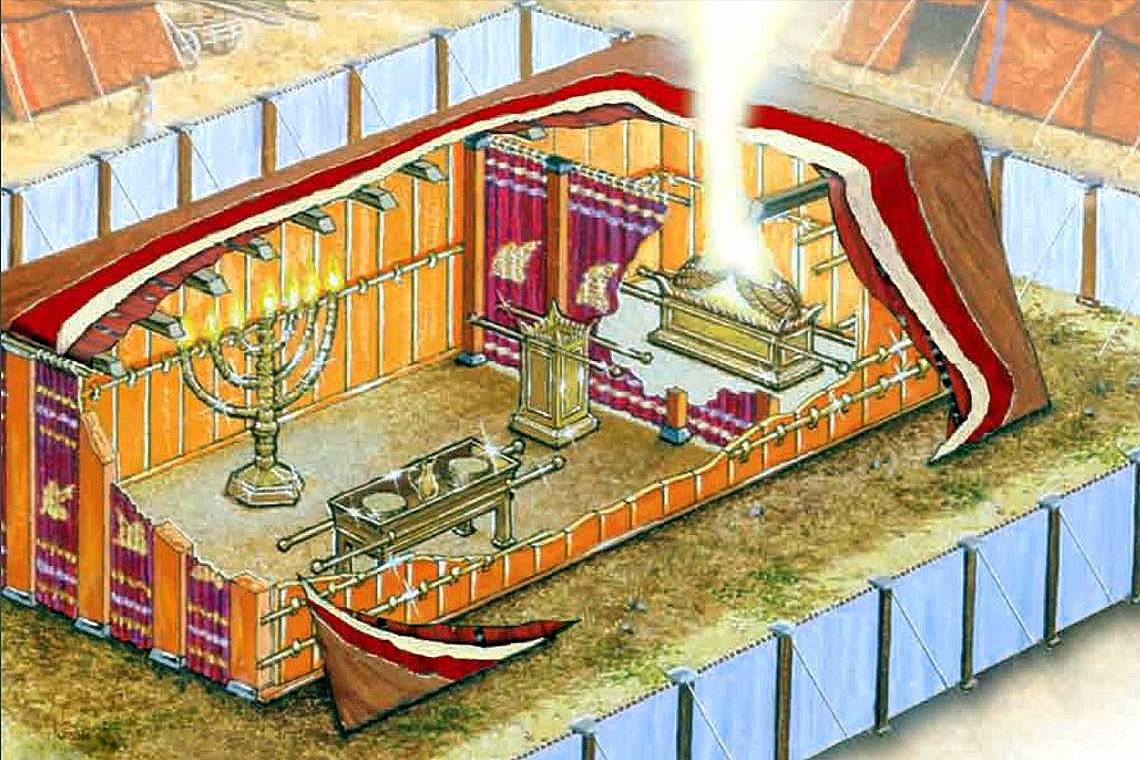 “from the tabernacle of the Testimony. And the children of Israel set out from the Wilderness of Sinai on their journeys; then the cloud settled down in the Wilderness of Paran. So they started out for the first time according to the command of the Lord by the hand of Moses.” We’re moving into phase two of this book from organization to disorganization.
“And so it was, whenever the ark set out, that Moses said,” listen to Moses’ battle cry,” ‘Rise up, O Lord! Let your enemies be scattered.’ “Remember the Lord said, “You blow that trumpet and I’m going to hear it, and I’m going to dispel your enemies.” So here’s Moses’ battle cry, “‘Rise up, O Lord! Let your enemies be scattered; let those who hate you flee before you.’ And when it rested, he said: ‘Return, O Lord, to the many thousands of Israel.’ “They start their journey, they only go three days so far, only three days.
Here’s what I love about Moses: he acknowledges that he’s going into unfamiliar territory laden with adversaries who will be his enemies and fight against him. But the Lord has given him a promise and he’s marching into the land with faith. Not going, “Lions and tigers and bears, oh my!” but, “Rise up O Lord! Let your enemies be scattered.”
He saw his future through the eyes of faith upon a promise that God had given him. May I suggest to you that when you face difficulties, battles, the future that is unknown, wilderness areas, parched deserts, you’re feeling spiritually vanquished or malnourished, that you make statements like this of faith based upon God’s promises to you. When you bring God into the picture, it changes the picture. You take God out of the picture, it’s a bleak desert. Put God into the picture—refreshment, victory, joy, because he promised it.
Chapter 11. Chapter 11 is one of the most important chapters in the book of Numbers, because there’s a change in the wind. Everything has been decent and in order in the march for three days. It doesn’t last long, there’s going to be forty years of havoc after three days of order. The people are going to start to complain as people often do. Keep in mind there’s probably a couple million people.
Ten people in a room have ten different ways of doing one thing. Two million people in a room—how would you like to be the leader of that? Growth, physical numeric growth can be a blessing. Gosh, you look at this and you go, “Wow! This is awesome, a few million people gathered around the tabernacle. Hallelujah!” Yeah, but just zoom in and live among them for a while and listen to their conversations, you’ll get a different picture.
For example, in the book of Acts, chapter 6? It says, “And when the number of the disciples began to multiply, a murmuring arose,” from one group against another group.
It’s great to see growth and it’s great when the church grows, but with growth comes adversity, issues, problems, complaints. As our church grows, we have problems too.
And with growth comes a perceived lack of concern. At one time there were one hundred twenty people in the upper room in Jerusalem. Now there’s multitudes, it says, growing in the early church. Don’t you think there were people from that original room who were saying things like, “Oh, man, do you remember the upper room? Now that’s where the Spirit of Lord dwelt. Do you remember the songs we sang in the upper room? And do you remember those days? Peter and John, they had time for us then. Now they’re, like, studying the Bible all the time and praying all the time and. . .”
In fact, it was in this chapter where they said, “We must not forsake the word of God in order to serve tables.” So you have a lot of people, they’re God’s people, but they’re people and they start complaining.
Look what happens. “Now when the people complained, it displeased the Lord,” uh-oh, “for the Lord heard it,” as he always does, “and his anger was aroused. And so the fire of the Lord burned among them, and consumed some in the outskirts of the camp.” That’s why you always want to sit close.
 Why the outskirts? We’re not told. Maybe there were more complaints by those people who were further away from the action in the tabernacle don’t know, but it affected the population. The Lord began judging the outskirts and then moving inward. “The people cried out to Moses. Moses prayed to the Lord, the fire was quenched. So he called the name of the place Taberah, because the fire of the Lord had burned among them.” So immediately, without a whole a lot of commentary, you can understand and see plainly how God looks at complaining among his people.
Whenever the Bible says that God hates something, you want to notice what that is. Because whatever that is, I don’t want to do those things. There’s a little list of those things in Proverbs, chapter 6. It says, “There are six things the Lord hates, yea, seven are an abomination to him: a proud look, a lying tongue, hands that shed innocent blood, a heart that is given to evil schemes, feet that are swift to do evil, a false witness who speaks lies, and,” listen to the last, “he who sows discord among the brethren.” God hates that.
 There’s not a whole lot of explanation. The people complained, God didn’t like that, he heard it, and immediately started judging it. In the next post we will look why complaining is problematic.
There are some people as soon as you begin to engage them many a conversation it doesn’t take long. They’re so predisposed to negativity that within just a few moments they’re already trash talking. It’s a bad cycle to get into.
There was a lady that walked up to John Wesley the evangelist, and she said, “I believe I’ve discovered what my talent is, my talent, I have a talent,” she said, “for just speaking my mind.” The evangelist said in his classic, wry manner, “I believe that is one talent the Lord wouldn’t mind if you buried.” These people were just speaking their mind, they complained, and so God took action.
In the next post we will look at more reasons we should Avoid Complaining.
Darrell
Message Audio/Video and Outline: https://upwards.church/leander-campus/watch-now-message-videos
Watch Messages: YouTube-Upwards Church
Read Along Daily Bible Reading: You Version
Sources: Life Application Bible Notes (Tyndale, 2007), 216.
Connect Ministries, Numbers 10-11, 2014.


 Upwards Church