
 “I hate you!” she screams and runs from the room. Words from a child thrown as emotional darts. Perhaps she learned the phrase from Mom and Dad, or maybe it just burst forth from that inner well of “sinful nature.” Whatever the case, hate and love have become society’s bywords, almost tired clichés, tossed carelessly at objects, situations, and even people.
The casual use of such words as love and hate has emptied them of their meaning. We no longer understand statements that describe a loving God who hates sin. So we picture God as gentle and kind—a cosmic pushover, and our concept of what he hates is tempered by our misconceptions and wishful thinking.
The words of the prophets stand in stark contrast to such misconceptions. God’s hatred is real—burning, consuming, and destroying. He hates sin, and he stands as the righteous Judge, He will bring just judgement to all who defy his rule.
God’s love is also real. So real that he sent his Son, the Messiah, to save and accept judgment in the sinner’s place. Love and hate are together—both unending, irresistible, and unfathomable.
 In seven short chapters, Micah presents this true picture of God—the almighty Lord who hates sin and loves the sinner. Much of the book is devoted to describing God’s judgment on Israel (the northern kingdom), on Judah (the southern kingdom), and on all the earth. This judgment will come “because of the rebellion of Israel and the sins of Judah” (1:5). And the prophet lists their despicable sins, including fraud (2:2), theft (2:8), greed (2:9), debauchery (2:11), oppression (3:3), hypocrisy (3:4), heresy (3:5), injustice (3:9), extortion and lying (6:12), murder (7:2), and other offenses. God’s judgment will come.
In the midst of this overwhelming prediction of destruction, Micah gives hope and consolation because he also describes God’s love. The truth is that judgment comes only after countless opportunities to repent, to turn back to true worship and obedience—“to do what is right, to love mercy, and to walk humbly with your God” (6:8). But even in the midst of judgment, God promises to deliver the small minority who have continued to follow him. He states, “Your king will lead you; the LORD himself will guide you” (2:13). The king, of course, is Jesus; and we read in 5:2 that he will be born as a baby in Bethlehem, an obscure Judean village.
As we read Micah, catch a glimpse of God’s anger in action as he judges and punishes sin. See God’s love in action as he offers eternal life to all who repent and believe. And then determine to join the faithful remnant of God’s people, who live according to his will.
Vital Statistics
Purpose:
To warn God’s people that judgment is coming and to offer pardon to all who repent
 Author:
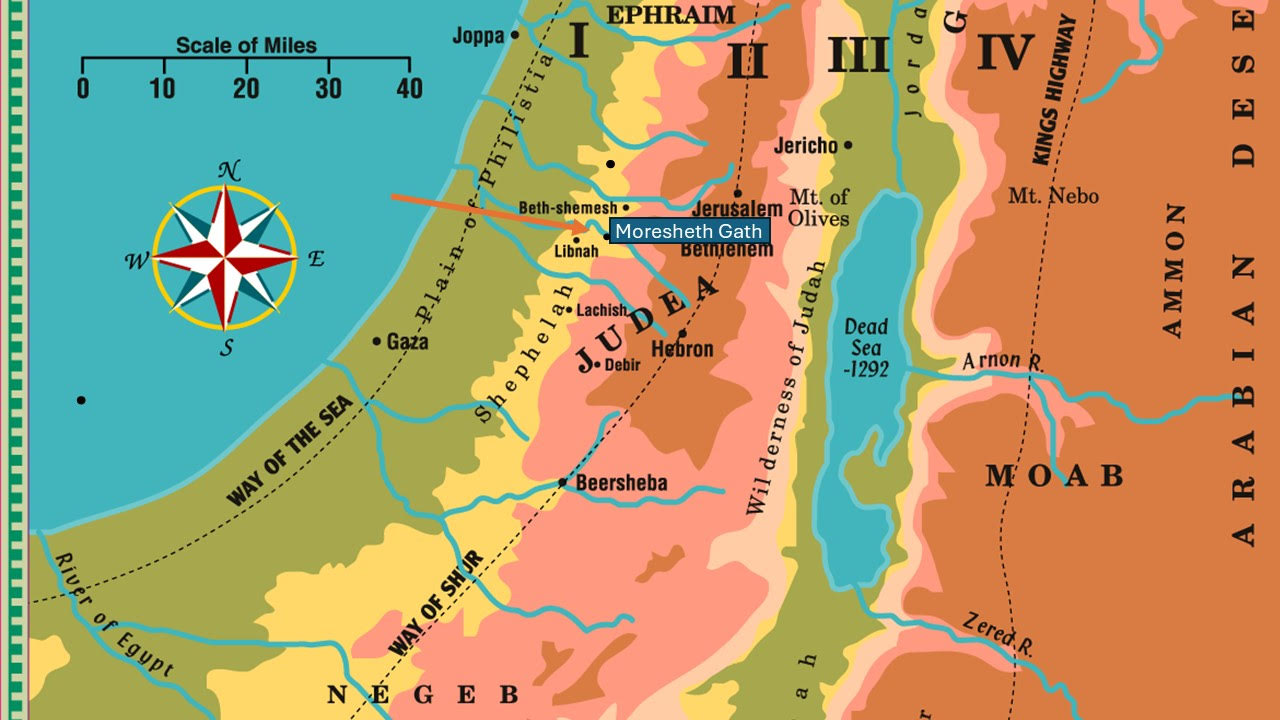
Micah, a native of Moresheth, near Gath, about 20 miles southwest of Jerusalem
Original Audience:
The people of Israel (the northern kingdom) and of Judah (the southern kingdom)
Date Written:
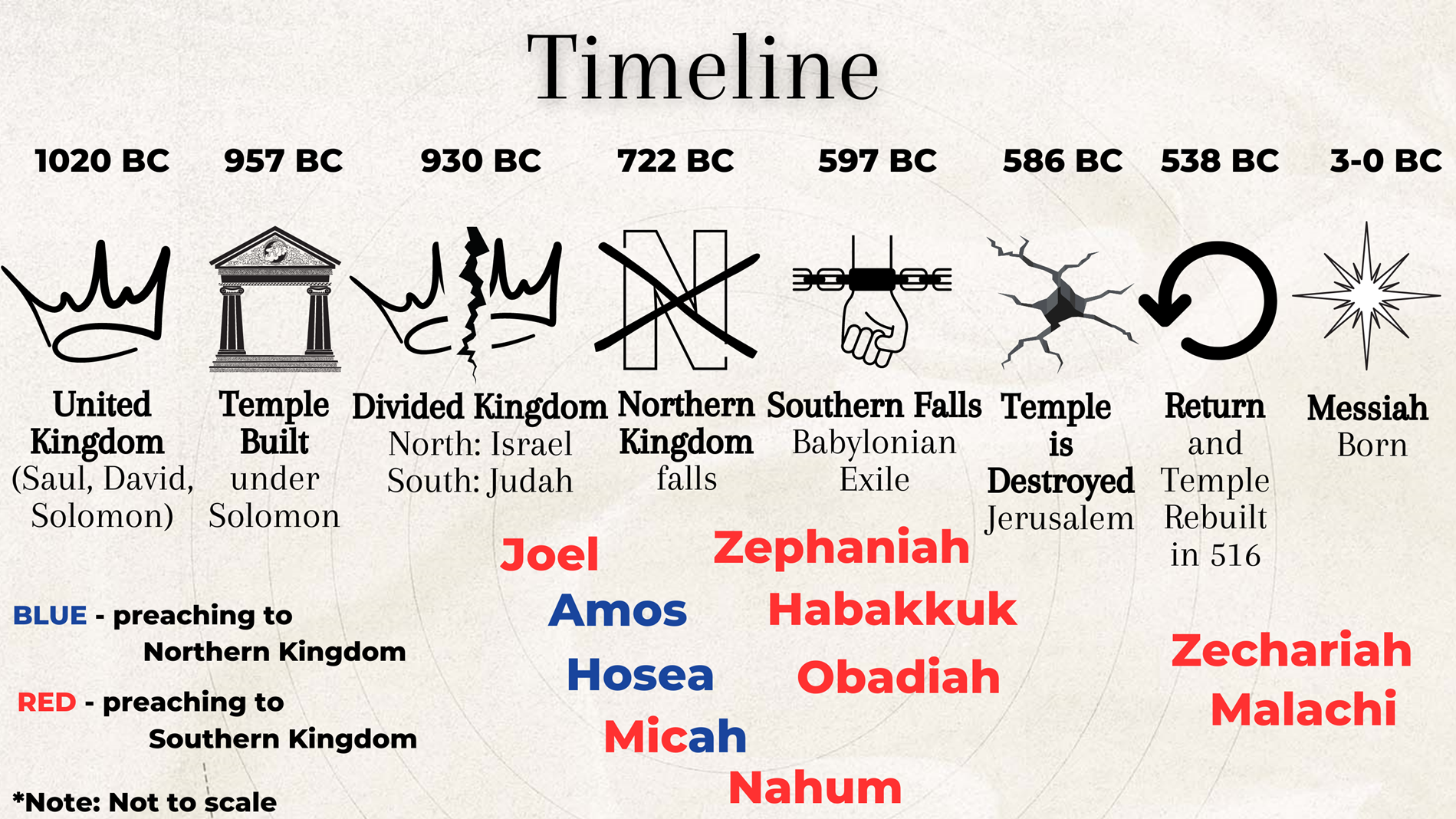
During the reigns of Jotham, Ahaz, and Hezekiah (742–687 B.C.)
 Setting:
The political situation is described in 2 Kings 15–20 and 2 Chronicles 26–30. Micah was a contemporary of Isaiah and Hosea.
Key Verse:
“No, O people, the LORD has told you what is good, and this is what he requires of you: to do what is right, to love mercy, and to walk humbly with your God” (6:8).
Key People:
The people of Samaria and Jerusalem
Key Places:
Samaria, Jerusalem, Bethlehem
Special Features:
This is a beautiful example of classical Hebrew poetry. There are three parts, each beginning with “Attention!” or “Listen” (1:2; 3:1; 6:1) and closing with a promise.
Outline
1. The trial of the capitals (1:1–2:13)
2. The trial of the leaders (3:1–5:15)
3. The trial of the people (6:1–7:20)
Micah emphasized the need for justice and peace. Like a lawyer, he set forth God’s case against Israel and Judah, their leaders, and their people. Throughout the book are prophecies about Jesus, the Messiah, who will gather the people into one nation. He will be their King and Ruler, acting mercifully toward them. Micah makes it clear that God hates unkindness, idolatry, injustice, and empty ritual—and he still hates these today. But God is very willing to pardon the sins of any who repent.
Main Ideas:
Perverting Faith
God will judge the false prophets, dishonest leaders, and selfish priests in Israel and Judah. While they publicly carried out religious ceremonies, they were privately seeking to gain money and influence. To mix selfish motives with an empty display of religion is to pervert faith.
Don’t try to mix your own selfish desires with true faith in God. One day God will reveal how foolish it is to substitute anything for loyalty to him. Coming up with your own private blend of religion will pervert your faith.
Oppression
Micah predicted ruin for all nations and leaders who were oppressive toward others. The upper classes oppressed and exploited the poor. Yet no one was speaking against them or doing anything to stop them. God will not put up with such injustice.
We dare not ask God to help us while we ignore those who are needy and oppressed, or while we silently condone the actions of those who oppress them.
The Messiah-King of Peace
God promised to provide a new King to bring strength and peace to his people. Hundreds of years before Christ’s birth, God promised that the eternal King would be born in Bethlehem. It was God’s great plan to restore his people through the Messiah.
Christ our King leads us just as God promised. But until his final judgment, his leadership is only visible among those who welcome his authority. We can have God’s peace now by giving up our sins and welcoming him as King.
Pleasing God
Micah preached that God’s greatest desire was not the offering of sacrifices at the Temple. God delights in faith that produces justice, love for others, and obedience to him.
True faith in God generates kindness, compassion, justice, and humility. We can please God by seeking these attributes in our work, our family, our church, and our neighborhood.
Message Audio/Video and Outline: https://upwards.church/leander-campus/watch-now-message-videos
Watch Messages: YouTube-Upwards Church
Read Along Daily Bible Reading: You Version
Sources: Life Application Bible Notes (Tyndale, 2007), 1463–1464.


 Upwards Church