
 The story of the nameless Samaritan woman at the well, recorded only in the Gospel of John, is a revealing one, full of many truths and powerful lessons for us today.
In John 4:4–42 we read about Jesus’ conversation with a lone Samaritan woman who had come to get water from a well (known as Jacob’s well) located about a half mile from the city of Sychar in Samaria.
This was an extraordinary woman. She was a Samaritan, a race of people that the Jews utterly despised as having no claim on their God, and she was an outcast and looked down upon by her own people. This is evidenced by the fact that she came alone to draw water from the community well when, during biblical times, drawing water and chatting at the well was the social highpoint of a woman’s day. However, this woman was ostracized and marked as immoral, an unmarried woman living openly with the sixth in a series of men.
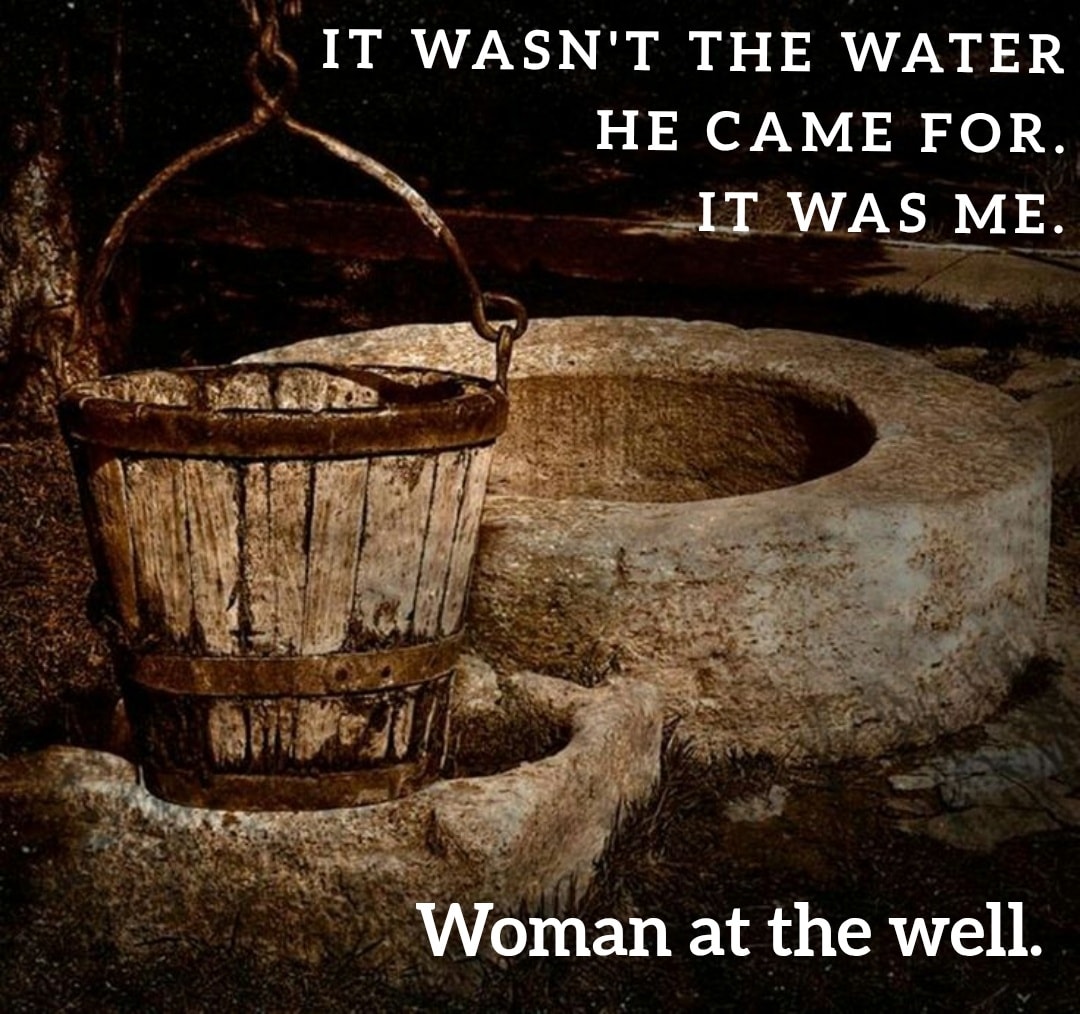 The story of the woman at the well teaches us that God loves us in spite of our bankrupt lives. God values us enough to actively seek us, to welcome us to intimacy, and to rejoice in our worship. As a result of Jesus’ conversation, only a person like the Samaritan woman, an outcast from her own people, could understand what this means. To be wanted, to be cared for when no one, not even herself, could see anything of value in her—this is grace indeed.
In this post, lets look at the background of this passage.
 The territory of Samaria lay between Judea and Galilee—thus Jesus’ itinerary meant that he had to go through Samaria on the way. Since the Samaritans were hated by the Jews, many of the strict Jews traveling from Judea to Galilee took a route around Samaria (through Perea, east of the Jordan River), even though that route took more time. But for those who were trying to make the best time, it was faster to go through Samaria to Galilee. The necessity must be understood in a different way: Jesus went to Samaria to give the Samaritans what he had given to Nicodemus—the offer of eternal life by being born again. And, furthermore, by going to Samaria and bringing the gospel to the despised Samaritans, he showed that he was above the Jewish prejudices.
Where did these prejudices come from? Samaria was a region between Judea and Galilee where Jews of “mixed blood” lived. In Old Testament days, when the northern kingdom of Israel, with its capital at Samaria, fell to the Assyrians, many Jews were deported to Assyria.
Who are the Samaritans?
A Samaritan in the Bible was a person from Samaria, a region north of Jerusalem. In Jesus’ day, the Jewish people of Galilee and Judea shunned the Samaritans, viewing them as a mixed race who practiced an impure, half-pagan religion.
Samaritans, as a people distinct from the Jews, are first mentioned in the Bible during the time of Nehemiah and the rebuilding of Jerusalem after the Babylonian captivity (Ezra 4:17; Nehemiah 2:10). Both Ezra 4 and a fifth-century BC Aramaic set of documents called the Elephantine Papyri point to a schism between the Jews and Samaritans during this Persian period.
The Samaritans saw themselves as the keepers of the Torah and the true descendants of Israel, from the tribes of Ephraim and Manasseh. They had their own unique copy of the Pentateuch, the first five books of Moses, and believed they alone preserved the original Mosaic religion. Samaritans also had a unique religious system and established their primary worship site on Mount Gerizim. They considered the Jerusalem temple and the Levitical priesthood illegitimate.
The historian Josephus and Jewish tradition trace the origin of the Samaritans to the captivity of the northern kingdom under Assyria in 721 BC. Jews of the northern kingdom intermarried with Assyrians after the captivity and produced the half-Jewish, half-Gentile Samaritan race. When the Jews accused Jesus of being a “Samaritan” in John 8:48, they were rudely suggesting that He was a half-breed, born of an unfaithful mother.
In New Testament times, the Jews despised Samaritans and would have nothing to do with them. The Samaritans were still living primarily around Mount Gerizim (John 4:1–42), but also kept to their own villages (Matthew 10:5; Luke 9:52). Scripture mentions encounters with Samaritans in towns bordering Samaria (Luke 17:11–19) and on roads between Jerusalem and Jericho (Luke 10:29–37).
When Jesus stops at a well and asks a woman for a cup of water, she incredulously responds, “How is it that you, a Jew, ask for a drink from me, a woman of Samaria?” (John 4:9, ESV). The apostle adds the explanatory note that “Jews do not associate with Samaritans” (John 4:10). Unbeknownst to the Samaritan woman, Jesus was there to give her “living water” from a well that never runs dry—Himself (John 4:10).
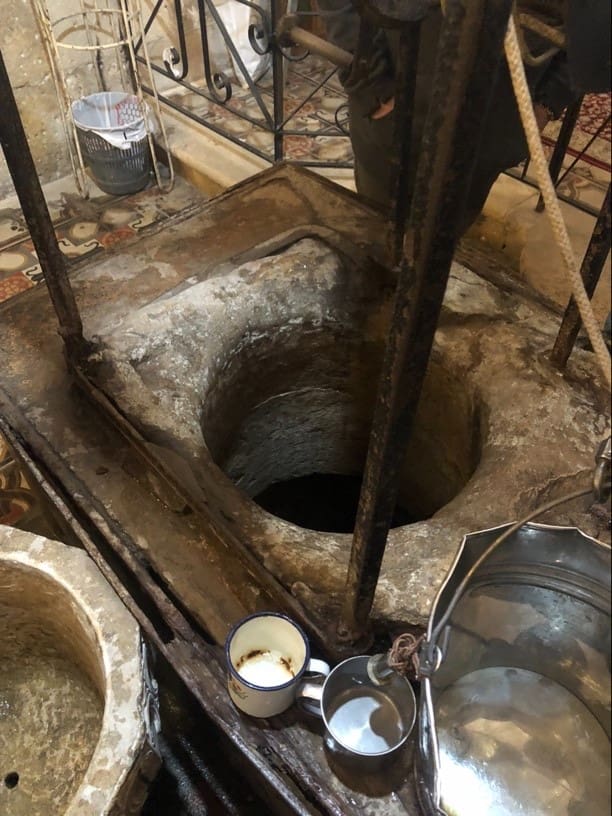 The encounter at Jacob’s well is symbolically and theologically rich. Jesus uses water, a basic human need, as a metaphor for eternal life. The woman, however, interprets Jesus’ words in a literal way (John 4:11), but Jesus wants her to see beyond actual water to spiritual water—the water of life. Her greatest need is not water from Jacob’s well but water for her wearied soul.
The encounter is a key example of the gospel’s universal appeal, showing Jesus’ willingness to connect with those marginalized by society.
Message Audio/Video and Outline: https://upwards.church/leander-campus/watch-now-message-videos
Watch Messages: YouTube-Upwards Church
Read Along Daily Bible Reading: You Version
Sources:
— Life Application Bible Commentary
— Life Application Concise New Testament Commentary


 Upwards Church