
Enough Coveting – Numbers 11

Once upon time there were two store owners who were bitter rivals. Their stores were directly across the street from each other, and they would spend each day keeping track of each other’s business. If one got a customer, he would smile in triumph at his rival while the other was jealous. One night an angel appeared to one of the store owners in a dream and said, “I will give you anything you ask, but whatever you receive, your competitor will receive twice as much. Would you be rich? You can be very rich, but he will be twice as wealthy. Do you wish to live a long and healthy life? You can, but his life will be longer and healthier. What is your desire?” The man frowned, thought for a moment, and then said, “Here is my request: Beat me half to death!

Jealousy and coveting can lead to an ugly end.

A true story: At the end of the Civil War. John Wilkes Booth, the man who killed Abraham Lincoln in Ford’s Theater was the brother of one of America’s most famous actors, Edwin Booth. John Wilkes Booth bitterly coveted the popularity of his brother. He knew there was a growing dislike for Abraham Lincoln in certain areas of the United States. So he killed the President, thinking to become a national hero. The assassination of this beloved man started with one covetous thought.

Maybe you don’t have a raging jealousy going on, but coveting can also be thought of as “Destination Disease.”  We think, “I can’t be happy right now. I will only be happy when…
“I get a new job, I get a new car, I get a new spouse, I get a raise, I move out on my own, I get married, I get divorced, I move to a different city, I get a better church, I go on vacation, I win the lottery, I pay off all my bills, My business takes off, My business slows down, I lose weight, I gain weight, I finally finish school, etc.”
Do you ever struggle with destination disease?  I do.

What does it mean to covet something? After all is it wrong to want nice things? The psalmist said God will give us the desires of our heart. When do the desires of our heart cross the line and become the craving of coveting?

According to author James McDonald, coveting can be defined in four ways…

  1. Coveting is; wanting the wrong things:
    Power over others, an illicit relationship or something that belongs to someone else.
  2. Coveting is; wanting the right things but for the wrong reason
    Wanting to be a leader, manager or boss but not to help people but to have control or my way and my agenda over others.
  3. Coveting is wanting the right things at the wrong time.
    A young couple comes into my office for premarital counseling, they love god and one another, they are committed to one another and plan to get married in 3 months – but they want to move in together now – they want the right things commitment to God and to one another but the timing is wrong, they need to wait until they are married to live together.
  4. Coveting is wanting the right things but the wrong amount
    Take money for example, money is not a wrong thing it is part of life – money causes us a problem when we love money to the point that we become obsessed with getting more and more money to the exclusion of building relationships with God and others.Coveting has a strong hold on people today, yet God’s word teaches us there is a way to escape the trap of coveting and live a life of contentment.

People have always struggled with coveting.  Nowhere is that more obvious than the children of Israel and their desert experience in Numbers chapter 11.

In the last post, we saw how their attitude of complaining caused God to discipline His people, now want us to look at another attitude of the Children of God were displaying; the attitude of coveting. I want us to consider asking God to change our covetous attitude to an attitude of contentment.
We need to look at the story and then discover the application.
This account reads like a three act drama, as the drama unfolds we can see the need to focus on an attitude of contentment.

Act 1 – Giving in to Wanting More
Then the foreign rabble who were traveling with the Israelites began to crave the good things of Egypt. And the people of Israel also began to complain. “Oh, for some meat!” they exclaimed. “We remember the fish we used to eat for free in Egypt. And we had all the cucumbers, melons, leeks, onions, and garlic we wanted. But now our appetites are gone. All we ever see is this manna!” The manna looked like small coriander seeds, and it was pale yellow like gum resin. The people would go out and gather it from the ground. They made flour by grinding it with hand mills or pounding it in mortars. Then they boiled it in a pot and made it into flat cakes. These cakes tasted like pastries baked with olive oil. The manna came down on the camp with the dew during the night. Moses heard all the families standing in the doorways of their tents whining, and the Lord became extremely angry. Moses was also very aggravated.
Numbers 11:4-10
Moses introduces us to a new group of people – the foreign rabble.  These were the people who left Egypt along with the Children of Israel. Having seen the complete devastation of Egypt this group wanted nothing to do with their homeland, so they joined Israel hoping for a better future.
Scripture says, “They began to crave the good things of Egypt”.

The inference is that not only was the rabble complaining but the children of Israel were drawn into their complaining as well. They had a selective memory; they remembered the good life of Egypt. Verse 5, “We remember the fish we used to eat for free in Egypt. And we had all the cucumbers, melons, leeks, onions, and garlic we wanted.”  Really?  As slaves they did not eat at the buffet line each night!

It seems they longed for the good old days – Mark Twain said, what makes the good old days the good old days is a bad memory.
Egypt was not a good place, Egypt was a place of bondage; it was a place of bricks and mortar – yet all they could see was the good things of Egypt – the things that would fill their physical appetites.
While Egypt provided bondage, God was providing deliverance, direction, a new life, water, food and purpose.
Each evening as the dew fell God was giving his people a bread-like substance which would sustain them thru their wilderness journey. Remember the trip was to only take a couple of months and soon they would be in a land flowing with milk and honey. The only thing God’s people would have to do is gather the manna each day and cook it – it would be enough to get them through the desert.
But the manna was not enough.
Verse 6, our appetites are gone. All we ever see is this manna!” God’s provision only brought about complaints. Everyday they had enough food, but they wanted something more. That is the bottom line of a covetous attitude – I want something more than I need!

The reason God is angry for us to have a covetous attitude is that we are saying to God, “you do not give me enough – I have needs and you are not taking care of me, so I want to look someplace else to have my needs met!”  For the children of Israel they wanted their needs met back in Egypt, for us we look to have our needs met by gathering things and possessions rather than seeking God.  The Root of Covetousness is a Rejection of God’s Sufficiency.

Act 1 closes out with a sober truth – verse 10, Moses heard all the families standing in the doorways of their tents whining, and the Lord became extremely angry. Moses was also very aggravated.
Because the people were unappreciative of God’s provision – scripture tells us, “The Lord became angry”, “extremely angry” If you have every tried to do something for someone and they show little or no gratitude you can understand God’s anger at this moment.
Act 2 – Getting what you do not want
Then the Lord said to Moses…”Say to the people, ‘Purify yourselves, for tomorrow you will have meat to eat. You were whining, and the Lord heard you when you cried, “Oh, for some meat! We were better off in Egypt!” Now the Lord will give you meat, and you will have to eat it. And it won’t be for just a day or two, or for five or ten or even twenty. You will eat it for a whole month until you gag and are sick of it. For you have rejected the Lord, who is here among you, and you have whined to him, saying, “Why did we ever leave Egypt?” Numbers 11:16-20
Their request brought a dangerous reply.
Basically God said, “you want meat – I will give you meat, not just one day or two but you will have meat for 30 days. You will become sick of meat.”

He gave them what they wanted but it did not meet their need
Psalm 106 is a companion passage for this event listen to what verse 15 says, He gave them exactly what they asked for, but along with it they got an empty heart. Psalm 106:15
With God we can be satisfied with what he provides for us but if we walk away from God’s provision we soon find ourselves empty.   We may end up loathing what we had to have. 

Nothing is essential, but God.
Things were never designed to take God’s place. When we covet something and make it essential – “I have got to have it”, we are saying to God there is something more than what you can provide.
Maybe today there is something you are putting ahead of God…
A Relationship
A Financial Goal
A Specific Dream for your future
I have and continue to struggle with thinking that my goals must be God’s.  I want to challenge us to seek first His Kingdom, before we seek out our own desires.

Delight yourself in the LORD and he will give you the desires of your heart. Psalm 34:7  Israel’s problem was they wanted their desires but they did not want to delight in the Lord, may that not be said of us.

Act 3 – Consequences to Getting What We Want
Now for the rest of the story:
The Lord sent a wind that brought quail from the sea and let them fall all around the camp. For miles in every direction there were quail flying about three feet above the ground. So the people went out and caught quail all that day and throughout the night and all the next day, too. No one gathered less than fifty bushels! They spread the quail all around the camp to dry. But while they were gorging themselves on the meat—while it was still in their mouths—the anger of the Lord blazed against the people, and he struck them with a severe plague. So that place was called Kibroth-hattaavah (which means “graves of gluttony”) because there they buried the people who had craved meat from Egypt. Numbers 11:31-34
The Lord was true to His Word.
He sent the quail – man, did he send the quail. For 36 hours the people gathered the quail – no one gathered less than 50 bushels.  A bushel of tomatoes or corn weighs about 50 pounds, so 50 bushels is a lot of meat!
Then came the ugly result of their covetousness:
Their punishment came in two forms…
1. Loss of Discernment – One the problems that comes with a covetous attitude is that we lose our capacity for discerning. The Children of Israel had so much quail, scripture says they gorged themselves. They actually lost the ability to know when they had had enough. Instead of controlling their wants their wants were controlling them. When you live a life of coveting you too can lose your discernment, you begin to want a possession or a goal more than life itself and soon you too are controlled by something rather than you having the self-control which is a fruit of the spirit.
2. Loss of their life – God intervened and caused a severe plague to come upon the people and many people died. Interesting Israel wanted to go back to Egypt for the best of everything. But God sent a plague reminded them that all that was in Egypt was destruction and plagues. If we are guilty of coveting we probably will not loose our life in such a dramatic fashion as the children of Israel did in the wilderness, but Jesus asked his followers a pertinent question that applies to us today when wit comes to handling a covetous attitude. What good is it for a man to gain the whole world, and yet lose or forfeit his very self? Luke 9:25

The example of Israel rejecting God and choosing something else is a tragic story of coveting.  The question we need to ask ourselves today is, “what steps can we take to transform our life from an attitude of coveting to an attitude of contentment?   We will look at how to be content in the next post.

Darrell

www.Upwards.Church

Watch Messages: YouTube-Upwards Church
Facebook: Upwards Church

Posted in Enough is Enough - Numbers | Tagged , , , , , , , | 1 Comment

Enough Complaining – Numbers 11

An Aggie family that didn’t get out much went into town to do some shopping. They went into a large store and noticed some elevator doors that got their attention.  The boy asked, “Dad what is that?” The father responded, “Son I have never seen anything like this in my life, I don’t know what it is!”
While the boy and his father were watching in wide-eyed astonishment, an old lady in a wheel chair rolled up to the moving walls and pressed a button. The walls opened and the lady rolled between them into a small room. The walls closed and the boy and his father watched small circles of lights above the walls light up. They continued to watch the circles light up in the reverse direction. The walls opened again, and a beautiful 24-year-old blond woman stepped out.
The father turned to his son and said, “Boy, go get your Ma!”

If only change was that easy! Just walk through a door and you are transformed.  The change that we are focusing on in this series is our attitudes, and today it’s complaining.

Do you find it very easy to complain? I do!  We have plenty to complain about with Covid regulations, masks, polar vortex and it’s fall out.  But should we complain?

I used to think that complaining was no big deal.  “Everyone does it,” I thought. Now I know God takes complaining seriously.

Look with me at Numbers 11:1:

1  Now the people complained about their hardships in the hearing of the LORD, and when he heard them his anger was aroused.  Numbers 11:1(NIV)

Did you see that?  God heard their complaining. What were they complaining about?  Their hardships; lets agree that being a slave in Egypt was hard, walking through a desert with a lack of water and food at times was hard, but God had delivered them and was leading them.  I find it convicting that hardships are not a good reason to complain.

As you know hardships are the normal experience of human life. They confront us all, and they perplex and puzzle us. We often ask, “Why has God let this happen to me?” Trials are common to all people (1 Cor. 10:13). When they strike us, the question is: How are we going to react? Are we going to trust God to help and strengthen us, or grumble and complain?

What are the dangers of complaining?

Complaining is bad for me because it causes anger and bitterness to grow.

Complaining is bad for others.  Do you like to be around people who complain?  If not, then why would people want to be around you when you’re complaining?  I have found that complaining is more contagious than any virus!  Once it starts at work or church it continues and before you know it everyone is complaining.  Then morale and productivity go down.

Complaining is bad because it’s missing the mark of God’s best for us.  In other words, complaining is a sin. Why? Complaining and grumbling show distrust in God:

  • Complaining is like saying, “God you could have met my needs and given me what I wanted but you blew it!”
  • Complaining shows that we do not trust the goodness and power of God that He will work things out.

As a parent if you overheard your kid’s saying, “I wish Dad had a better job.  He is not giving us the things that the neighbors have. He is NOT a good provider!”  or “Mom is too strict. Who does she think she is asking us to do this or that?”  “What losers!”    If I heard my kids say this I would be mad! Then I would be sad.   This is how God must feel at our complaining.

Let’s define complaining:
Author James MacDonald uses the following definition: “Complaining is expressing dissatisfaction with a circumstance that is not wrong and about which I’m doing nothing to correct.”

Complaining is about things that are “not wrong.”
If a situation is wrong and you express your dissatisfaction, it is not complaining.
It is not complaining to express your dissatisfaction with meal served at a restaurant and asked the server if it can be changed.
It is not complaining if you are treated rudely at a store and ask for the manager or fill out a customer service form expressing a legitimate concern.

Complaining involves things that “I’m doing nothing to correct.”  If we choose to whine about an issue but refuse to get involved in correcting the situation then we are complaining.

If we agree that complaining solves nothing but causes more problems for me, for others and with God, how do we stop complaining?

I must replace a complaining attitude with a thankful attitude.

Instead of complaining about traffic, at least I have a car!

Instead of complaining about work, at least I have a job!

It’s all about perspective.

As Christ followers we have much to be thankful for:
Our past is forgiven and our future is secure
We have God’s word to guide us
We have fellow Christians who walk with us
We have a home being prepared for us
We have a purpose for living
We have a hope for tomorrow and a strength for today.

Darrell

www.Upwards.Church

Watch Messages: YouTube-Upwards Church

Facebook: Upwards Church

Posted in Enough is Enough - Numbers | Tagged , , , | Leave a comment

God’s Guidance Then and Now

Numbers 9:15-23 – “On the day the tabernacle, the Tent of Testimony, was set up, the cloud covered it. From evening until morning the cloud above the tabernacle looked like fire…Whenever the cloud lifted from above the Tent, the Israelites set out; whenever the cloud settled, the Israelites encamped. At the Lord’s command the Israelites set out, and at His command they encamped. As long as the cloud stayed over the tabernacle they remained in camp…Whether by day or by night, whenever the cloud lifted, they would set out…They obeyed the Lord’s order, in accordance with His command through Moses.”

God used a cloud to control the movement of His people in the wilderness. Instead of crowd control, think cloud control.

Guidance and Protection

But this was no ordinary cloud! This cloud was the evidence of God’s presence among His people. (Exodus 33:9-10 & Psalm 99:7.) The cloud is first mentioned in Exodus 13, when the people of Israel were hurriedly departing from Egypt. Pharaoh changed his mind about allowing his slaves to leave, so he pursued them to the shores of the Red Sea. Humanly speaking, it looked as though Israel’s escape from slavery in Egypt would be short-lived. The Red Sea was in front of them and Pharaoh’s army was behind them.

But there was no need to worry! “By day the Lord went ahead of them in a pillar of cloud to guide them on their way, and by night in a pillar of fire to give them light” (Exodus 13:21). God did not intend to leave His people stranded, and He wouldn’t allow them to be overrun by the Egyptians. God guided and protected Israel, by day and by night, with the visible evidence of His presence.

During the night before they crossed the Red Sea, God used the cloud to keep His people safe from the Egyptian army. “Then the angel of God, who had been traveling in front of Israel’s army, withdrew and went behind them. The pillar of cloud also moved and stood behind them, coming between the armies of Egypt and Israel. Throughout the night the cloud brought darkness to the one side and light to the other side, so that neither went near the other all night long” (Exodus 14:19-20).

And the next day, when the Egyptians chased after the Israeli people into the Red Sea, “the Lord looked down from the pillar of fire and and cloud at the Egyptian army and threw it into confusion” (Exodus 14:24).

Care and Faithfulness

God’s “cloud control” for Israel didn’t stop after they crossed the Red Sea. The cloud was there to guide and protect them throughout their wilderness journey. When Israel needed protection from the hot desert sun, the “pillar of cloud” was there. When the people needed light and warmth during the chilly desert nights, the “pillar of fire” was there. (See Nehemiah 9:12; Psalm 78:14; Psalm 105:39.) The Lord took care of His people in a wonderful way. There should never have been a time when they doubted that God was with them!

At this point, some of us may be thinking that Israel had a better deal than we do, as God’s people today. After all, they could actually see and feel God’s presence with them in the cloud and the fire. But think again. We haven’t been shortchanged! As believers today we have the Holy Spirit of God living in us to guide and direct us. And how much more protection could we ask than the personal presence of the living Lord Jesus with us at all times? Remember that God has promised us, “Never will I leave you; never will I forsake you” (Hebrews 13:5). And in the very next verse, the writer of Hebrews commented on this promise: “So we may say with confidence, ‘The Lord is my helper; I will not be afraid.”

One of the most amazing aspects of “cloud control” is the grace that God extends to us when we fail and stray from Him. Exodus 13:22 says that “neither the pillar of cloud by day nor the pillar of fire by night left its place in front of the people.” Do you realize the awesome significance of that statement? God did not remove the cloud when the people murmured and complained. He didn’t remove it when they disobeyed. Even on the day they formed the golden calf idol and caroused before it, God didn’t remove the visible sign of His presence! (Deuteronomy 1:30-33; 1 Corinthians 10:1-10.) That’s evidence of God’s amazing grace.

What an unbelievably compassionate and gracious God! And He is the same God today. “I am the Lord. I do not change” (Malachi 3:6). The Lord has guaranteed His continual personal presence with us and His protection for us – even when our attitudes are selfish and ungrateful, or when we’re side-tracked and lured into worshiping earthly “idols,” or when we become involved in lifestyles that are not pleasing to Him. Although He will never forsake us, our negative attitudes and actions bring grief to our Lord’s heart. How much better our lives would be if we continued to walk in fellowship with Him, while enjoying His presence and His protection.

Discipline and Correction

Considering the details of the “cloud control” is well worthwhile. Normally we think of Israel’s 40-year period between Egypt and Canaan as the “wilderness wanderings.” God declared that the people could not enter the Promised Land because of their unbelief, and the entire generation would wander in the wilderness. “The Lord’s anger burned against Israel and He made them wander in the desert forty years…” (Numbers 32:13). But forty years later, when Israel was finally ready to enter the Land, Moses reminded them that God had led them all the way in the wilderness. “And you shall remember how the Lord your God led you all the way in the desert these forty years, to humble you and test you…” (Deuteronomy 8:2).

Is this a contradiction in the Bible? Did Israel wander, or did God lead them? Answer: Both! Even though Israel seemed to be wandering around and not moving forward to the Promised Land, their travels were not aimless or random. God was disciplining His people, and teaching them valuable lessons all along the way. God knew exactly what location and length of time would best serve His purposes for teaching them these lessons. And so He led them (Numbers 9:21-23). What wonderful cloud control!

From the human perspective, the people wandered. From the divine perspective, it was “cloud control” all the way!

Sanctification and Encouragement

The implications of Numbers 9 are amazing for the Christian today – and very encouraging! Is the same sovereign God leading His people today? Yes! Does His cloud control include all the details of our lives today? Yes! Just as the Lord led His people step by step in the Sinai wilderness, so He leads us step by step through life. He places us in just the right place, and for just the right period of time, so He can accomplish His purposes for us there.

From our perspective, our lives may seem random – even aimless at times. But from God’s viewpoint, everything is appointed! From our perspective, our lives may seem ordinary or even negligible. But God is working through all our situations and circumstances to make us more Christlike. God is more interested in us and who we are becoming, than in the earthly accomplishments that we humans regard as important.

Let’s consider one more possible lesson. Is there significance for us in the fact that God’s continual cloud control allowed Israel to travel by day or by night (Exodus 13:21)? Yes! All these things (including the cloud) happened to the children of Israel as “types” – as spiritual illustrations (1 Corinthians 10).   And we can see the truth of God pictured the in Old Testament accounts. So drawing lessons from the fact that Israel could travel by day or by night is not beyond the scope of sound biblical interpretation.

Throughout Scripture, “night” often portrays the absence of spiritual light, or a perception of distance from God. Have you ever felt like it was “night,” and the Lord seems distant? Your fellowship with Him doesn’t seem to be as close – and you don’t know why? Have you “walked through a dark place” of grief or fear or loneliness because of the loss of a loved one, a serious illness, or rejection by a parent, or a child, or a marriage partner? Don’t despair! The pillar of cloud and fire is still there! In fact, when we travel through “dark nights,” we learn valuable lessons about God’s care for us – through dark times as well as bright times.

Do you remember that stormy night when the Lord came to the disciples, walking on the Sea of Galilee? (See Matthew 14:25-33.) They thought He was a ghost and cried out in terror. For the disciples, this was a situation of storm, fear and possible disaster – but it was all part of the Lord’s cloud control for them. Think of the lessons they learned that night – especially Peter, who learned what it means to walk on water! Some lessons that God wants to teach us about cloud control can only be learned by night travel.

Obviously, God’s cloud doesn’t lead us into sin, any more then He led the ancient people of Israel into sin. They sinned by their own willful decisions. But when we do sin, God’s cloud control leads us into situations and circumstances where we will recognize our sin. Because of His perfect cloud control, God can lead us into situations where His discipline will be just right.

In His wisdom, God knows exactly what kind of discipline is needed to turn our lives around, draw us back into fellowship, and make us productive believers again.

Unlike ancient Israel, we don’t have a visible pillar of cloud or pillar of fire to keep us on track, but let’s remember that God is still in complete control. Ephesians 1:11-12 says that God “works out everything in conformity with the purpose of His will…” This amazing statement is precisely in the context of God’s control in the believer’s life. The hand of God can work through people, places, circumstances and “in all things” to teach us, discipline us, and move us step by step toward His good purpose for our lives: “conforming us to the image of His Son” (Romans 8:28-30).

In Proverbs 3:5-6 we have a wonderful promise – if we trust wholeheartedly in the Lord and acknowledge Him in all our ways, He will direct our paths. We can be sure that throughout our lives God will continually direct and protect His people.  That’s something to be grateful for!

www.Upwards.Church

Watch Messages: YouTube-Upwards Church

Facebook: Upwards Church


Source:  https://www.growingchristians.org/devotions/cloud-control
Posted in Enough is Enough - Numbers | Tagged , , , , | Leave a comment

Introduction to the Book of Numbers

Every parent knows the piercing whine and ongoing complaining of a young child—that grates on the eardrums and aggravates the soul. The tone of voice is difficult to bear, but the real irritation is the underlying cause—discontentment and disobedience. As the “children” of Israel journeyed from the foot of Mount Sinai to the land of Canaan, they grumbled, whined, and complained at every turn. They focused on their present discomforts. Faith had fled, and they added an extra 40 years to their trip.

Numbers, which records the tragic story of Israel’s unbelief, should serve as a dramatic lesson for all of God’s people. God loves us and wants the very best for us. He can and should be trusted. Numbers also gives a clear portrayal of God’s patience. Again and again he withholds judgment and preserves the nation. But his patience must not be taken for granted. His judgment will come. We must obey.

As Numbers begins, the nation of Israel was camped at the foot of Mount Sinai. The people had received God’s laws and were preparing to move. A census was taken to determine the number of men fit for military service. Next, the people were set apart for God. God was making the people, both spiritually and physically, ready to receive their inheritance.

But then the complaining began. First, the people complained about the food. Next, it was over Moses’ authority. God punished some people but spared the nation because of Moses’ prayers. The nation then arrived at Kadesh, and spies were sent into Canaan to assess its strength. Ten returned with fearful stories of giants. Only Caleb and Joshua encouraged the nation to “go at once to take the land” (13:30). The minority report fell on deaf ears full of the ominous message of the majority. Because of their unbelief, God declared that the present generation would not live to see the Promised Land. Thus the “wanderings” began. These wilderness wanderings featured a continuous pattern of grumbling, defiance, discipline, and death. How much better it would have been to have trusted God and entered his land! Then the terrible waiting began—waiting for the old generation to die off and waiting to see if the new generation could faithfully obey God.

Numbers ends as it begins, with preparation. This new generation of Israelites was numbered and sanctified. After defeating numerous armies, they settled on the east side of the Jordan River. Then they faced their greatest test: to cross the river and possess the beautiful land God had promised to them.

The lesson is clear. God’s people must trust him, moving ahead by faith if they are to claim his promised land.

Vital Statistics

Purpose: To tell the story of how Israel prepared to enter the Promised Land, how they sinned and were punished, and how they prepared to try again

Author: Moses

Original Audience: The people of Israel

Date Written: 1450-1410 B.C.

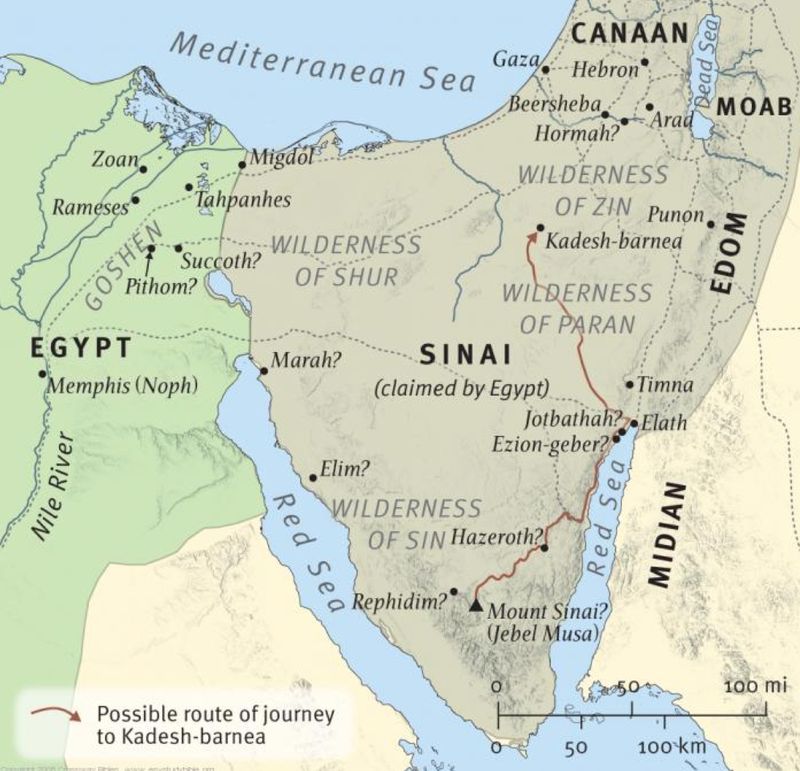
Setting: The vast desert of the Sinai region, as well as lands just south and east of Canaan

Key Verses: “Not one of these people will ever enter that land. They have all seen my glorious presence and the miraculous signs I performed both in Egypt and in the wilderness, but again and again they have tested me by refusing to listen to my voice. They will never even see the land I swore to give their ancestors. None of those who have treated me with contempt will ever see it” (14:22, 23).

Key People: Moses, Aaron, Miriam, Joshua, Caleb, Eleazar, Korah, Balaam

Key Places: Mount Sinai, Promised Land (Canaan), Kadesh, Mount Hor, plains of Moab


www.Upwards.Church

Watch Messages: YouTube-Upwards Church

Facebook: Upwards Church


Source:  Life Application Study Bible, (Wheaton, IL: Tyndale, 1988), WORDsearch CROSS e-book, 199.
Posted in Enough is Enough - Numbers | Tagged , , , , , , | Leave a comment