
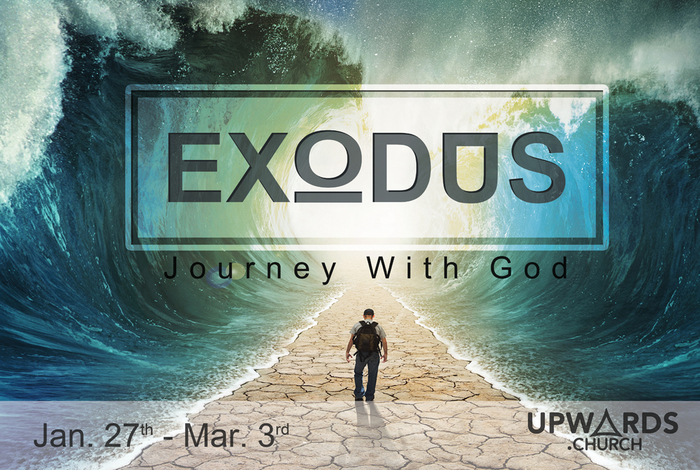
God Will Direct Me – Introduction to the 10 Commandments

Josh McDowell tells of a young man named Greg. Greg lived next door from a family who had an in-ground swimming pool in their back yard. He had never gone swimming in their pool. He barely knew the people, and a high wooden fence enclosed the pool. One dark evening when Greg knew his neighbors were away, he and his girlfriend snuck behind the house, scaled the fence, and entered the pool area to go for a swim. Greg threw off his shoes, climbed the ladder and, while his girlfriend was still taking her shoes and socks off, he leapt off the end of the diving board. Greg heard his girlfriend scream just before he lost consciousness.  The pool held only a few feet of water.  In the dark Greg apparently didn’t notice this. His dive ended with a shallow splat of water and a sickening crunch of bones. Greg’s late-night dive paralyzed him from the neck down for the rest of his life. Greg ignored the fence that his neighbors had erected around the pool. He probably assumed it was there only to keep him and his girlfriend from having fun. In reality it was meant for his protection, and his disregard of that boundary cost him dearly. Similarly, God’s laws are given to protect us.  When we ignore His moral boundaries the cost can be just as devastating.

So the nature of the Ten Commandments is not harsh or unloving. I think that the Ten Commandments would be best compared to a love letter…..a tender, heartfelt message written in stone by the finger of God. To coin Ron Mehl’s phrase…they are ten(der) commandments because that’s what God is like. He is tender and loving. That’s His nature. In fact, this set of laws is one of the most powerful expressions of God’s love in all of Scripture.

Even the context of the Ten Commandments shows this truth. Listen to the things God said immediately prior to the giving of His law. Exodus 19:3-6 says, “And Moses went up to God, and the LORD called to him from the mountain, saying, ‘Thus you shall say to the house of Jacob, and tell the children of Israel: “You have seen what I did to the Egyptians, and how I bore you on eagles’ wings and brought you to Myself. Now therefore, if you will indeed obey My voice and keep My covenant, then you shall be a special treasure to Me above all people; for all the earth is Mine. And you shall be to Me a kingdom of priests and a holy nation.” In essence God told Moses, “Before you give the people these commands…before anything else, will you please remind them that I bore them on eagles wings? Remind them that I cared for them in their Egyptian bondage—as a mother eagle cares for her offspring. Remind them that I heard their cries and freed them from slavery…make sure they remember that when the Egyptian army attacked, I parted the Red Sea I made a way when there was no way. Make sure you remind them of My loving care Moses.” So these ten laws sprang from the tender love of God for His people.

By the way, this is one of the few times in the Bible that we see God writing anything! And He wrote these laws on STONE instead of papyrus because He knew that as fallen, forgetful beings we need things written and preserved.  And we do! We need God’s law. We need it written down.  (He wrote it on our hearts).

Without a holy standard we try to define what is true and right on our own and that can be a very dangerous thing.  It like the story from Chi Chi Rodriguez, the 8 time PGA tour winner who would tell stories of growing up in Puerto Rico.   He was driving down the street with a friend, going a lot faster than he should have been.

A light changed from yellow to red up ahead of him and he zoomed right through it….didn’t even slow down. His friend almost had a coronary.  He looked over at Chi Chi and sputtered, “Chi Chi, what in the world are you doing?  You went right through a red light!  Don’t you stop for red lights?” “My brother taught me to drive,” Chi Chi replied, “and he doesn’t stop for red lights. So I don’t stop at red lights.” And sure enough, a little farther down the road the pro golfer approached another intersection and blasted right through the red light. His friend was a nervous wreck by then and said, “C’mon, man! You’re gonna get us killed. What in the world are you thinking of?”  Chi Chi repeated, “My brother taught me to drive, and he doesn’t stop for red lights. So I don’t stop at red lights.” Driving a little farther, they came to an intersection with a green light. This time Chi Chi put on his brakes and stopped, nervously looking both ways. “Why are you stopping now?” his friend asked.  “This is a green light.” Chi Chi replied, “My brother might be coming!” As Chi Chi inferred….today’s society can be a very dangerous one in which to live…for it is one in which more and more people ignore God’s standards and decide on their own what is right.

The Ten Commandments are Divided into two Sections

  •  How we relate to God. (Commandments 1-4)
  • How we Relate to Others (Commandments 5-10)

The first four laws guide us in the way we relate to God…the way we revere, respect, and love Him. Glance at Exodus 20:1-17 and you’ll see what I mean: LAW #1 – God and God alone is God. LAW #2 – It is wrong to worship anything material as God. LAW #3 – God’s day is to be cherished and honored. LAW #4 – God’s name is not to be used recklessly.

And then the second section…the last six commandments….deal with how we are to treat each other…how we are to love, and respect each other. LAW #5 – Father and mother are to be honored. LAW #6 – Human life is sacred. LAW #7 – Sexual purity and fidelity is demanded. LAW #8 – The rights of property are to be observed. LAW #9 – False and slanderous speaking about others is condemned. LAW #10 – The desire to possess that which is not ours is branded as wrong.

Jesus summed up the Ten Commandments when he was asked what was the greatest commandment.

 “‘Love the Lord your God with all your heart and with all your soul and with all your mind.’   This is the first and greatest commandment.  And the second is like it: ‘Love your neighbor as yourself.’   Matt 22:37-39

So Jesus taught that our relationship with God and our relationships with our fellow man are intertwined. We can’t love and respect God properly if we don’t love and respect each other and we can’t love and respect each other properly if we don’t also love and respect God. Without the horizontal aspect of a proper relationship with our fellow man, our faith would become a selfish impractical thing in which we are concerned with our own soul and our own vision of God and nothing more. And without the vertical principle of loving God we wouldn’t value each other enough we wouldn’t see ourselves as special creations of God. people would be looked at as things and not as persons. The Ten Commandments then teach us that we need both a proper horizontal relationship with each other and a proper vertical relationship with God. The next time you see the intersecting beams of calvary’s cross let it remind you of this truth: We need to practice both LOVE FOR GOD and LOVE FOR OUR FELLOW MAN.

 The Purpose of the Ten Commandments are to lead us to Jesus.

Christianity did not come into the world without roots and foundations. Remember in Matthew 5:17 Jesus said, “I am not come to destroy the law — but to FULFILL it.” In other words Jesus came to show the law’s true purpose. And the law that Jesus came to fulfill began with these ten basic principles for life.

“So the law was our guardian until Christ came that we might be justified by faith.”  Galatians 3:24

In the Greek-speaking world of Paul’s day, there was a type of household servant called the paidagogos or guardian. This person was in charge of the child’s moral welfare; it was his duty to oversee the child’s character development. One of a guardian’s responsibilities was to take the child to school each day. He was not the child’s teacher, but he was responsible to see that the child was, in fact, under the teacher’s care. And in this New Testament text, Paul borrows this picture from his culture and says in effect, that the law has the same function. It is our “tutor” our “paidagogos.” So, the commandments in the Bible are designed not only to say, “Do this,” and “Don’t do that,” but to lead us to the person of Christ Himself. For as we attempt to obey God’s law we see both God’s holy perfection and our sin.

The law sheds a powerful light on our sinful state and leads us to realize how far we fall short. Like a paidagogos the law leads us to “school” where we see our need for Christ.

In the next posts we will look specifically at each commandment.

Darrell

http://www.Upwards.Church


Posted in Journey with God - Exodus | Tagged , , , , | Leave a comment

God Will Deliver Us – Exodus 12

Before it even touched the water, the Navy’s amphibious assault ship USS New York had already made history. It was built with 24 tons of scrap steel from the World Trade Center.

Steel from the World Trade Center was melted down in a foundry in Amite, La., to cast the ships bow section. When it was poured into the molds on Sept. 9, 2003, those big rough steelworkers treated it with total reverence, recalled Navy Capt. Kevin Wensing. It was a spiritual moment for everybody there.  Junior Chavers, foundry operations manager, said that when the trade center steel first arrived, he touched it with his hand and, “the hair on my neck stood up.” “It had a big meaning to it for all of us,” he said. “They knocked us down. They can’t keep us down.”  What’s the ships motto?  “Never Forget.”  That’s also the motto of today’s scripture. God never wants us to forget what He would do through the Passover.

Chapter 12 of Exodus is one of the most important chapters of this book, and perhaps one of the most important of the Old Testament. The reason is that it paints for us a picture of the human condition, and God’s plan to save mankind.

The Passover was the most significant event in Israel’s history, so significant that God used the Passover to change the very calendar of Israel and it was the first feast or remembrance of each year. Grasp the magnitude of what God was doing in the Passover: God had a plan to save and deliver His people, all of them.  God had a plan to show every future believer the importance of the blood of the Passover Lamb.  God had a plan for the forgiveness of sin, every sin that Jesus Christ would willingly take upon Himself.

1  The LORD said to Moses and Aaron in Egypt, 2  “This month is to be for you the first month, the first month of your year. Exodus 12:1-2 (NIV)

I’m sure that most of us can recall a memorable New Year’s Eve, or New Year’s Day that we participated in with our families. The Hebrew people of God were about to experience a New Year’s like no other. It would be so significant, that it would begin their new calendar. Every time a new year rolled around, they would be reminded of what had happened to them, and their forefather’s way back in Egypt, when God sent the death angel, and delivered them from Egyptian bondage.

3 Tell the whole community of Israel that on the tenth day of this month each man is to take a lamb for his family, one for each household. 5 The animals you choose must be year-old males without defect. Exodus 12:3, 5 (NIV)

12:6-11: For the Israelites to be spared from the plague of death, a lamb with no defects had to be killed and its blood placed on the doorframes of each home. What was the significance of the lamb? In killing the lamb, the Israelites shed innocent blood. The lamb was a sacrifice, a substitute for the person who would have died in the plague. From this point on, the Hebrew people would clearly understand that for them to be spared from death, an innocent life had to be sacrificed in their place.

The festival of Passover was to be an annual holiday in honor of the night when the Lord “passed over” the homes of the Israelites.  The Hebrews followed God’s instructions by smearing the blood of a lamb on the doorframes of their homes. That night the firstborn son of every family that did not have blood on the doorframes was killed. The lamb had to be killed in order to get the blood that would protect them.

This foreshadowed the blood of Christ, the Lamb of God, who gave his blood for the sins of all people. Inside their homes, the Israelites ate a meal of roast lamb, bitter herbs, and bread made without yeast. Unleavened bread could be made quickly because the dough did not have to rise. So, they could leave at any time.  Bitter herbs signified the bitterness of slavery.

12:29, 30  Every firstborn child of the Egyptians died, but the Israelite children were spared because the blood of the lamb had been smeared on their doorframes. So begins the story of redemption, the central theme of the Bible.

Redemption means “to buy back” or “to save from captivity by paying a ransom.” One way to buy back a slave was to offer an equivalent or superior slave in exchange. That is the way God chose to buy us back—he offered his Son in exchange for us.

In Old Testament times, God accepted symbolic offerings. Jesus had not yet been sacrificed, so God accepted the life of an animal in place of the life of the sinner. When Jesus came, he substituted his perfect life for our sinful lives, taking the penalty for sin that we deserve.  He redeemed us from the power of sin and restored us to God. Jesus’ sacrifice made animal sacrifice no longer necessary.

We must recognize that if we want to be freed from the deadly consequences of our sins, a tremendous price must be paid. But we don’t have to pay it. Jesus Christ, our substitute, has already redeemed us by his death on the cross. Our part is to trust him and accept his gift of eternal life. Our sins have been paid for, and the way has been cleared for us to begin a relationship with God (Titus 2:14; Hebrews 9:13-15.

Each year the people would pause to remember the day when the death angel passed over their homes. They gave thanks to God for saving them from death and bringing them out of a land of slavery and sin. Believers today have experienced a day of deliverance as well—the day we were delivered from spiritual death and slavery to sin. The Lord’s Supper is our Passover remembrance of our new life and freedom from sin. The next time struggles and trials come, remember how God has delivered us in the past and focus on his promise of new life with him.

I believe that we can compare the Passover to our Christian experience, and recognize two important truths that we should “Never Forget.”

We Need to Remember Who we Are.  We are God’s redeemed people, a people who have been delivered from bondage. Theirs was physical slavery; ours was spiritual enslavement to Satan.  God came down, and delivered us. He did not allow us to remain in agony and suffering, and despair. He sent Moses to them, as their Deliverer. He sent Christ to us, to deliver us from darkness, so that we could walk in His marvelous light.

They had no power to deliver themselves, neither do we. God had to send one who would lead them out of bondage, into the freedom of being the children of God.

Secondly, I believe that God wants us to Remember What He has Done for Us.

Everything about what they were instructed to do was significant. God promised that when He saw the blood, He would Passover them, and not destroy them as His plague of death struck Egypt. We need to always remember that it is by the blood of Jesus that we are redeemed, and that apart from that blood we would perish with the rest of the world when God’s judgment falls.

Our redemption is in the blood of Christ, the perfect Lamb of God, who gave Himself for us, that we might be saved, and given a home in Heaven. Nothing but the blood of Jesus can cleanse us, and rescue us bondage of death.

Jesus established the Lord’s Supper after He had led His disciples in celebrating Passover, for He is the fulfillment of the Passover as the Lamb of God who died for the sins of the world. Each time we share in the Lord’s Supper, we look back and remember His death, but we also look ahead and anticipate His coming again. When Jesus returns, a wonderful exodus will take place! The dead in Christ will be raised and the living believers will be caught up with them and taken to heaven to be with the Lord (1 Thes. 4:13-18).

Our soldiers died for our country’s freedom, and Jesus died for our spiritual freedom, may we never forget.

Darrell

www.Upwards.Church


Sources:
 Life Application Study Bible, (Wheaton, IL: Tyndale, 1988), WORDsearch CROSS e-book, 112-114
Memorial Day Weekend Sermon, by James Powell


Posted in Journey with God - Exodus | Tagged , , , , , , , | Leave a comment

God Will Use Us – Exodus 7

Have you ever wondered why God would use us (imperfect and weak humans), to fulfill His divine purposes?  I do!  It seems to me if God wants something done, it would be faster, easier and more efficient if He did it himself.   In the case of our passage today, when God wanted His people out of slavery in Egypt, He could snap his finger or say the word and it’s done!  Why continue to give Moses pep talks and explain how things would go down and then wait for it to unfold?  It’s a mystery but an undeniable biblical truth that God wants to use not only Moses, but you and me.

We’ll see how God uses us and works in our lives in this chapter as well the normal ways we try to resist.   In verse 1 we read, the Lord said to Moses: “See, I have made you as God to Pharaoh.”   Moses was not only to represent God, but to be like or as God to Pharaoh.

Many people find it hard to believe in a God they can’t see. They want a God “with skin on.” That’s why God sent his Son, Jesus and that’s also why he established his church. We are God’s agents in the world and when we are serving others, and loving them with a godly love, we are showing people what God is like. We are helping them to understand that God loves them like we do only even more so.  I’m reminded of an old story that illustrates this point…

Shortly after World War II came to a close, Europe began picking up the pieces. Much of the Old Country had been ravaged by war and was in ruins. Perhaps the saddest sight of all was that of little orphaned children starving in the streets of those war-torn cities.

Early one chilly morning an American soldier was making his way back to the barracks. As he turned the corner in his jeep, he spotted a little boy with his nose pressed to the window of a bakery. Inside, the baker was kneading dough for a fresh loaf of bread. The hungry boy stared in silence, with his nose pressed against the window, drooling and watching the baker’s every move. The soldier pulled his jeep to the curb, stopped, and got out.

“Son, would you like some of that bread?” The boy was startled. “Oh yes…I would.”

The American stepped inside and bought a loaf of bread, put it in a bag and walked back to where the lad was standing in the foggy cold of the London morning. He smiled, held out the bag and said simply, “Here you are.”

As he turned to walk away, he felt a tug on his coat. He looked back and heard the child ask quietly, “Mister…are you God? I was just praying to God and then you showed up.”

It’s been said, “You may be the only Jesus a person ever sees.” I think that’s true. As followers of Christ, it is an honor to be able to represent Christ to the world.

Moses was to represent God, we are too.  Moses was told to speak everything that God told him to speak and do everything that God told him to do.  That was Moses job.  How would Pharaoh respond?  How do people in your life respond when you live for and serve God?

Pharaoh responded like many of us respond to God; with hard heart.

Verse 3 explains, “I will harden Pharaoh’s heart, and though I multiply my signs and wonders in Egypt, he will not listen to you.”

This is a controversial passage.  It looks as if God is to blame for Pharaohs’ actions.

What does this word “harden” mean? The Hebrew word “harden” is a figurative word which can mean “twisting as with a rope.” God was twisting or putting pressure the heart of this king of Egypt. He was going to squeeze out what was in his heart like someone who squeezes a wet towel. God would expose Pharaoh for what he truly was in his heart.

God in His wonderful grace and longsuffering, gave Pharaoh an opportunity to obey the Lord, but he refused to listen. Few forms of judgment in this life are as severe as the judgment in which God lets us have our sinful way.

God NEVER compels someone to be an unbeliever. His grace is for all, not a select few, but His grace can be resisted because we are given the choice to obey or reject the Lord. God’s grace is extended to all, but His grace can be resisted to the point where some won’t listen anymore.

How is your heart?  Are you willing to listen to God, follow Him and be used by Him, like Moses?  Or are you more like Pharaoh, stuck and hardened in your ways?

Pharaoh’s pride was like water poured on a bag of concrete.

A man was driving down a bumpy country road when he saw a bag of cement beside the road. It appeared to have fallen off a delivery truck as it hit one of the bumps in the rough road. Being a person who did not like to see anything wasted, the man stopped to pick up the lost bag of cement. When he reached down to pick up this heavy bag, to his surprise, he discovered it was not soft and limber, as he had expected, but had solidified into an immovable piece of cement.

Often our lives are like that bag of cement. They take on shapes that were not intended and become hardened in that shape. That bag of cement was meant to become a part of some beautiful, useful structure but, because it did not reach its place of service, because it was not used for its intended purpose, it became a useless rock in the form of a bag of cement. God wants to make something beautiful of our lives.

Will we listen to God and be used by God to those around us?  God has placed us on this planet for a purpose.  We are to know Him, serve Him and serve others.

This story has been attributed to the late Peter Marshall, former chaplain of the United States Senate.

There was once an old man who lived high above an Austrian village along the eastern slopes of the Alps. He had been hired by the village council many years ago to clear away the debris from the pools of water up in the mountain crevices that fed the lovely stream flowing through their village. With faithful, silent regularity, he patrolled the hills, removed the leaves and branches, and wiped away the silt that would otherwise choke and contaminate the fresh flow of water. By and by, the village became a popular attraction for visitors. Graceful swans floated along the crystal clear stream; picnickers gathered along its banks; and the view of the water from local shops and cafes was picturesque beyond description.

Years passed. One evening the council met for its semiannual meeting. As they reviewed the budget, they noticed a small amount that was being paid to the “keeper of the spring.” The village treasurer asked, “Who is this ‘keeper of the spring’? Why do we keep him on the payroll year after year? No one ever sees him. Have any of you ever met this man? For all we know, he is simply taking our money and doing us no good whatsoever. In my opinion, this person is no longer necessary.”    Everyone agreed with the treasurer and the council voted unanimously to dismiss the old man.

For several weeks, nothing much changed. The village went about with its business as usual. But by autumn, the trees began to shed their leaves. Small branches snapped off and fell into the pools that fed the stream, hindering the rushing flow of sparkling water. One afternoon, someone noticed a slight yellowish-brown tint in the water. A couple days later the water was much darker. Within another week or two, a slimy film covered sections of the water along the banks and a foul odor was soon detected. The swans left the village, as did the tourists. The economy of the village was in serious peril. Likewise was the health of the village, as many were getting sick from drinking the water.

An emergency meeting of the village council was held. After much discussion, they realized their error in judgment and they hired back the old “keeper of the spring.” And within a few weeks, the beautiful stream came back to life. The swans and visitors gradually returned, as did the vitality and well-being of the little village in the Alps.

What the “keeper of the spring” meant to the little village, we Christians mean to the world. Jesus called us “salt,” which is to say that we are “preservers” of what is good and true in the world. Like the old man in the mountains, we are called to serve and to be faithful. We may not get a lot of recognition or appreciation for our efforts, but we have the power to change the world. That’s what Jesus wants us to do. He put us here to serve and in a very real sense, the well-being of the whole world is dependent upon us. We do make a difference!

Darrell

www.Upwards.Church

Sources: Rod Mattoon, Mattoon’s Treasures – Treasures from Exodus, Volume 1, (Springfield, IL: Lincoln Land Baptist Church, n.d.), WORDsearch CROSS e-book, 133-143.
Hot Illustrations for Youth Talks, YouthSpecialties.com, Zondervan
Posted in Journey with God - Exodus | Tagged , , , , , , | Leave a comment

God Calls Us – Exodus 3

Imagine being called up by the President of the United States and being asked to come serve on his cabinet. The future of the entire country is on the line, and he wants your assistance. What would you do? What would you say?  Now, it’s highly unlikely that you will receive that call!  I’m certain that God will call you, just as he called Moses, and he called me.  God is a God who calls people to Him.  God is a personal God and a knowable God and He desires a relationship with us.

In our passage, we see that we are called by God and are asked to serve for Him. What will you do? What will you say?

In review, Moses grew up very aware of his heritage. He may have been raised as a Prince of Egypt, but he knew injustice against his people when he saw it. As a young man he killed an Egyptian who was brutalizing another Hebrew.

Justified or not, word got out and this lapse in judgment put Moses in hot water with Pharaoh. When a king is out to get you, it’s time to leave the kingdom, so Moses ran until he found himself in a place called Midian, located in part of what is now Western Saudi Arabia.

Moses would go on to spend 40 years there – fully 1/3 of his life – as a shepherd for his father-in-law. It was at the end of this period of time that he received the call that would change his life.

Exodus 3:1-4

During the interview that would follow his words, “Here I am,” Moses would display reverence, fear, curiosity and plenty of excuses.

Like Moses, there’s no doubt that when we hear the call of God, we’ll experience a whole range of emotions. But the measure of encounter is bound up in our willingness to respond in obedience to that call.

God knew where Moses was. He knew the concerns, the frustration and the desires of Moses’ heart. God had also heard the cries of the Children of Israel. All of this time, Moses had been on a training mission. God was preparing him for bigger and better things and making him ready to carry out the call of God in his life.

When God called Moses, Moses had plenty of questions.  One that I find interesting is this one, “who shall I say sent me?”  Do you remember God’s response?   And God said to Moses, “I AM WHO I AM.” And He said, “Thus you shall say to the children of Israel, ‘I AM has sent me to you.’ ”    In short this is the covenant name of God, the personal name of God translated later as “Yahweh.”

This designation who God is has great importance to our lives today because it’s the same term that Jesus uses to describe Himself in John 8: 58 58 Jesus said to them, “Most assuredly, I say to you, before Abraham was, I AM.” 

Did you see it?  God says to Moses through the burning bush, “I AM.”   Jesus says that He is “I AM”  This is called a Theophany or more specifically a Christophany.  “What is a theophany? What is a Christophany?”

“A theophany is a manifestation of God in the Bible that is tangible to the human senses. In its most restrictive sense, it is a visible appearance of God in the Old Testament.”   A Christophany is a pre-incarnate appearance of Christ in the Old Testament.  Jesus was speaking to Moses through the burning bush.  Jesus is still speaking and calling people to Himself.

I’ll never forget attending a revival service with my parents when I was 11 years old and through the evangelist, I understood that I knew about God, but I didn’t know Him personally and that through Jesus Christ, I could have a relationship with God.  I asked Jesus into my life that night.  My life changed from one of fear, uncertainty to one of feeling accepted and loved by Jesus, knowing my sins were forgiven and knowing that I was a child of God.  I’m thankful for Jesus calling me when I was 11.  Have you responded to Jesus call of salvation?  You can today by simply praying, “Thank you Jesus for loving me and dying on the cross for me.  I don’t understand it all, but I ask you into my life, turning from my sins and turning to you.”  Amen.

I also believe like Moses, that God calls us to serve him.   Moses had a task that God had called him to do. He was to lead God’s people out of slavery into the promise land.

As believers we are all called to ministry.  We are called to be a loving spouse.  No one can or should love Niki the way that I am called to. I have a responsibility to her, this is my ministry.  Going on a date and spending time with Niki is a ministry!  God has given me three children.  I am called to parent them, to bring them up to know God.  It is my responsibility.  Sure school, church and family may help me, but it’s my calling to parent my children.  Changing a diaper is a ministry!  We are called to be salt and light in a dark world, to make a difference where we live and work.  We have a ministry to our neighbors and co-workers.  It is our responsibility to help lead people to Jesus.  Your day to day job is a ministry! Will you accept the call to your spouse, kids, neighbors and co-workers?

We have a choice. We can make excuses like Moses did, which I have done plenty of times too.  Why wouldn’t we make excuses?  Its human nature to feel like we are out of our league, but God promises to be with us, and to teach us what to say.

Some of you are like me. I have often wondered why God would call a person like me.  I’m nothing special in my eyes; there are others who are smarter, stronger, better communicators, and better leaders.   I’m called to know Jesus, serve Jesus and another call I have had is to lead a church as a pastor.   I know that God has been with me to teach me and train me to be what he wanted me to be. All of my life has been a preparation time for this day, this hour, and this church.  And I’m still in training for the ministry that lies ahead.

Know this: God will not call you to go and give you a message and then leave you in the dark about how to get it out.  Wait on Him to finish. Moses received great detail from God concerning what he was to do and to whom he was to speak when he returned to Egypt.

We can expect similar direction. When we receive and listen to that guidance from God we won’t overreach and try to do things we’re not prepared for and we won’t underestimate what God wants to do and miss out on greater things.

When God Calls, We Must Do What He Asks of Us

There’s probably someone reading this, that has been hearing the call of God in your own life. Just like a bush that’s burning, there are unmistakable signs that He’s got your number.

Maybe you are hearing God calling you to give Him control of your life, experiencing a call to involvement in ministry or to helping people.  Wherever we are in life, if God is calling, listen to His voice. Come to him right now and find the fulfillment of being exactly where God made us to be.

I’m thankful for God’s call, that I know Jesus personally, that I have purpose as a spouse, dad and pastor.  I pray that you will answer God’s call too.

Darrell

www.Upwards.Church


Posted in Journey with God - Exodus | Tagged , , , , , , , , , , , | Leave a comment