
Slavery and the New Testament

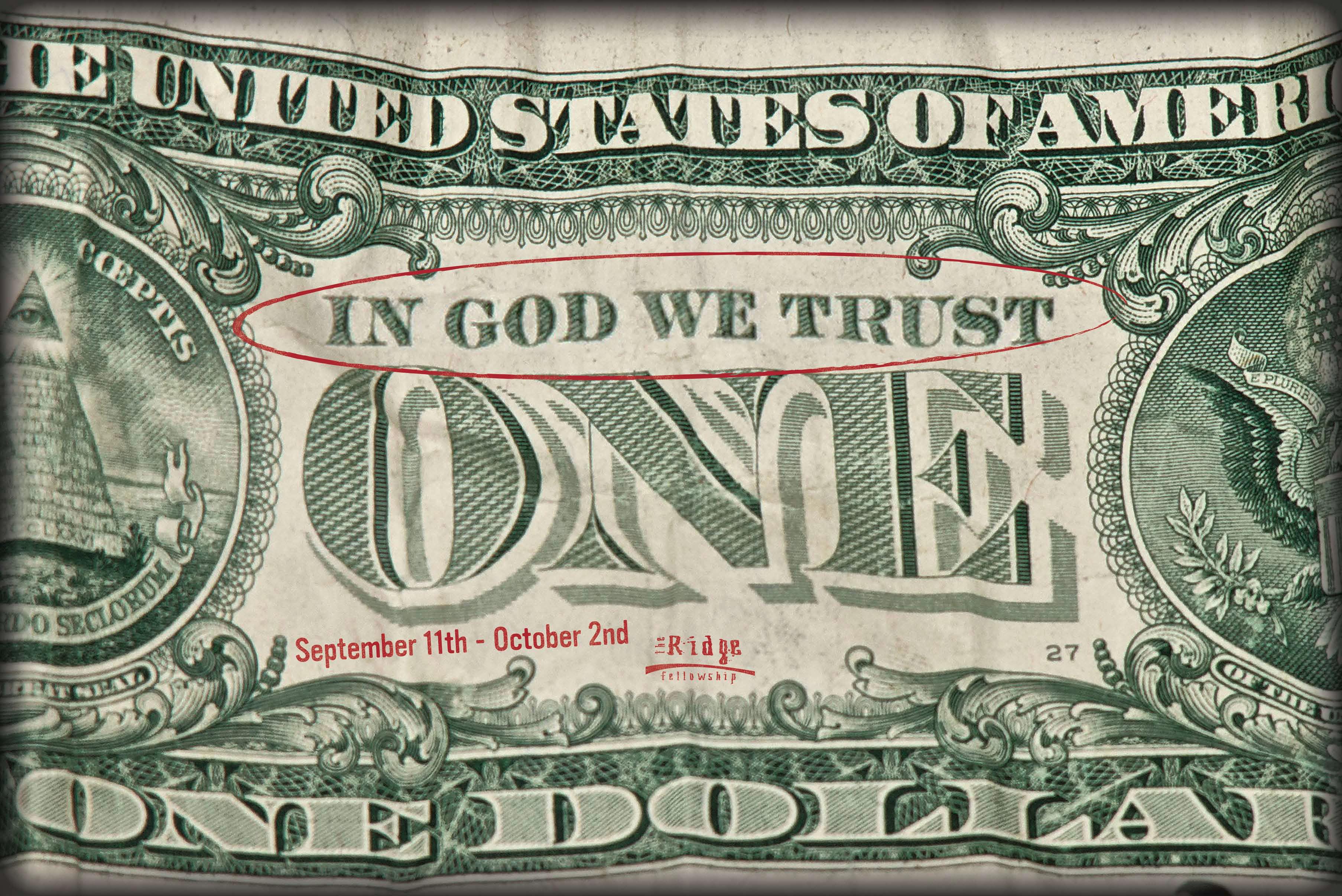
Our series “Released” is based on the New Testament book of Philemon.   Philemon is about a run away slave named Onesiumus who is returned to his master Philemon.  It’s a personal letter written from the apostle Paul to Philemon with an appeal to receive this run away not as a slave but as a brother.

Slavery forms the backdrop to Philemon, and it is difficult to fully appreciate the book without some understanding of slavery in the Roman Empire.

Slavery was taken for granted as a normal part of life in the ancient world.  The whole structure of Roman society was based on it. “Slavery grew with the growth of the Roman state until it changed the economic basis of society, doing away with free labor, and transferring nearly all industries to the hands of slaves” (Marvin R. Vincent, The Epistles to the Philippians and to Philemon, International Critical Commentary [Edinburgh: T. & T. Clark, 1979], p. 162).

 During the period of the wars of conquest, most slaves were war captives. By the time of the New Testament, however, most slaves were born into slavery. The number of slaves was enormous, making up as much as one-third of the population of the Empire.  People could become slaves by being born to a woman who was a slave, as punishment for a crime, by being kidnapped from another land, and by being conquered by another nation (slave dealers would buy captured prisoners and send them to the slave markets to be sold for a profit). Sometimes, however, parents would sell their children into slavery. And some would voluntarily become slaves in order to pay a debt.

Usually those with financial means would own slaves. How slave owners treated their slaves could vary greatly, depending on the temperament of the owner and the performance of the slave. Owners could inflict cruel punishments upon slaves, considered as their property, like thieves, runaway slaves were branded on the forehead. Others were imprisoned. Many slaves died from mistreatment or imprisonment.

Slaves were not actually considered persons under the law, but the property of their owners. They could be sold, exchanged, given away, or seized to pay their master’s debt. A slave had no legal right to marriage, and slave cohabitation was regulated by their masters. As already noted, masters had almost unlimited power to punish their slaves. The Roman writer Juvenal told of a wealthy woman who ordered the crucifixion of a slave and refused to give any reason except her own good pleasure.

The law permitted a master to execute a rebellious slave, but Philemon was a Christian. If he forgave Onesimus, what would the other masters (and slaves) think? If he punished him, how would it affect his testimony? What a dilemma!

It is significant that the New Testament nowhere attacks slavery directly.  The message of Christ and the New Testament however, sowed the seeds of the destruction of slavery. It would be destroyed not by social upheaval, but by changed hearts. The book of Philemon illustrates that principle. Paul does not order Philemon to free Onesimus, or teach that slavery is evil. But by ordering Philemon to treat Onesimus as a brother (Philem. 16; cf. Eph. 6:9; Col. 4:1), Paul eliminated the abuses of slavery. Marvin Vincent comments, “The principles of the gospel not only curtailed [slavery’s] abuses, but destroyed the thing itself; for it could not exist without its abuses. To destroy its abuses was to destroy it” (Vincent, Philemon, p. 167).

One writer summed up the importance of Philemon in relation to slavery in these words:

 The Epistle brings into vivid focus the whole problem of slavery in the Christian Church. There is no thought of denunciation even in principle. The apostle deals with the situation as it then exists. He takes it for granted that Philemon has a claim of ownership on Onesimus and leaves the position unchallenged. Yet in one significant phrase Paul transforms the character of the master-slave relationship. Onesimus is returning no longer as a slave but as a brother beloved (verse 16). It is clearly incongruous for a Christian master to “own” a brother in Christ in the contemporary sense of the word, and although the existing order of society could not be immediately changed by Christianity without a political revolution (which was clearly contrary to Christian principles), the Christian master-slave relationship was so transformed from within that it was bound to lead ultimately to the abolition of the system. (Donald Guthrie, New Testament Introduction [Downers Grove, Ill.: InterVarsity, 1970], p. 640)

Thank God for the power of Jesus Christ to change lives, communities and cultures!  Let’s never forget and lets’ keep spreading the gospel so no one is enslaved.

Darrell

Sources:
— Bible Exposition Commentary (BE Series) – New Testament
— Life Application Bible Commentary
— MacArthur New Testament Commentary, The
Posted in Released (Philemon) | Leave a comment

Introduction to Philemon

Barriers divide people into the “ins and outs,” the “haves and have nots,” and an endless assortment of groups, cliques, and castes. Determined by race, skin color, nationality, money, background, education, status, religion, sex, or ability, individuals are judged, categorized, and put in their place. When those social barriers are crossed, usually it is at a great price.

But Jesus broke the barriers that divide men and women from each other and from God. In a male-dominated society, he spoke freely with women (Matthew 9:18-26; Luke 8:1-3). In the face of holier-than-thou hypocrites, he partied with sinners (Matthew 9:10-13). Ignoring years of prejudice and discrimination, he associated with Samaritans (John 4:1-42) and Gentiles (Luke 7:1-10; 8:26-39). And he continually sought to bring outcasts and the powerless into his fold: the crippled and lame (Luke 6:1-11), the desperately ill (Matthew 8:1-4; Luke 17:11-19), the blind (Luke 18:35-42; Mark 8:22-26; John 9:1-7), children (Mark 10:13-16), swindlers and cheaters (Mark 11:13-17; Luke 19:1-10), and the poor (Mark 3:7-12; Luke 21:1-4).

Following in the footsteps of  Jesus. Paul became the apostle to the Gentiles as he traveled extensively and shared Christ’s message with all types of people. In fact, writing to the Galatians, Paul declared: “There is neither Jew nor Greek, slave nor free, male nor female, for you are all one in Christ Jesus” (Galatians 3:28 niv).

Perhaps the greatest example of the barrier-shattering power of the gospel is here in Philemon, where Paul reunites a rich slave-owner and his runaway slave, now both members of God’s family.

As you read this personal letter of reconciliation, consider what divides you from your brothers and sisters in Christ. Ask God to obliterate those walls and bring you together.

AUTHOR

Paul.  The very first word of this letter names Paul as the writer. The book of Philemon is the shortest of Paul’s inspired writings.   In Colossians, Paul explained that, along with his letter to the believers in Colosse, he would be sending Onesimus (4:9) and  Tychicus would deliver both the letter of Colossians and Philemon. Paul wrote both letters at about the same time and sent them together.  Written from a Roman prison in about a.d. 60

BACKGROUND

Philemon had been led to saving faith in Jesus Christ several years earlier by Paul, probably during the apostle’s ministry in Ephesus. He had become a prominent member in the church at Colossae. Philemon was wealthy, owning a house large enough for the Colossian church to meet in (Philem. 2). He was obviously active in serving the cause of Christ, because Paul refers to him as a “fellow worker” (Philem. 1). He also owned at least one slave, a man named Onesimus (cf. Col. 4:9, which associates Onesimus with Colossae). Onesimus, who was not a Christian, ran away from his master to Rome. He probably hoped to lose himself in the multitudes that lived the capital city. While in Rome, through circumstances unknown to us, he met the apostle Paul and his life was forever changed, for through Paul met Jesus Christ.

Onesimus quickly endeared himself to the apostle (cf. Philem. 12, 16). He then began to live up to his name (Onesimus means “useful”) by assisting Paul (Philem. 11, 13). Paul would have gladly kept him at his side to continue to minister to him. There was, however, a matter that needed to be settled. As a runaway slave, Onesimus was a criminal. In running away he had defrauded his master, Philemon and may have stolen money from Philemon when he fled (Philem. 18). Paul knew that the relationship between Onesimus and Philemon needed to be restored. Onesimus had to return to his master and seek forgiveness and restoration.

To send Onesimus back alone would have exposed him to the danger of being caught by the ever-vigilant slave catchers. The opportunity to send him back with someone came when Paul finished his letters to the Colossians and Ephesians. Because Tychicus would be delivering those letters, Onesimus could return to Colossae with him in relative safety.

If returning Onesimus to his master was a sacrifice for Paul, it was a grave risk for Onesimus. “Roman law . . . practically imposed no limits to the power of the master over his slave. The alternative of life or death rested solely with Philemon, and slaves were constantly crucified for far lighter offenses than his. A thief and a runaway, he had no claim to forgiveness” (J. B. Lightfoot, St. Paul’s Epistles to the Colossians and to Philemon [1879; reprint, Grand Rapids: Zondervan, 1959], p. 314).

Runaway slaves could also be branded with an “F” (for fugitivus) on their heads, or beaten. A large percentage of the Empire’s population was slaves, and the Romans lived in constant fear of a slave uprising. Although the last such uprising (the one led by Spartacus) had taken place over a century earlier, the Romans took no chances—they dealt harshly with runaway slaves. That Onesimus was willing to risk such punishment speaks of the genuineness of his faith.

Not content merely to send Onesimus back under the protection of Tychicus, Paul sends along a letter to Philemon. In that letter, he urges Philemon to forgive Onesimus and receive him as a new brother in Christ. Paul implores Philemon to put into practice the principle taught in Ephesians 4:32 and Colossians 3:13 and treat Onesimus as Christ treated him.

REASON FOR WRITING

Paul wrote this letter on behalf of Onesimus, urging Philemon to see the young man not as a slave but as a “brother in the Lord” (v. 16 ).  Paul hoped that Philemon would welcome him (v. 17), forgive him (vv. 18-19), and perhaps even free him (v. 21).

Paul’s appeal is based on their common love for Christ (v. 9), on their relationship (vv. 17-19), and on his authority as an apostle (v. 8). Philemon’s response is unknown, but it would be difficult to imagine him not welcoming Onesimus as his new brother in Christ.  One of the lessons of this short letter is the example of Paul. He wrote as the advocate of Onesimus, trusting him to return, to submit to Philemon, and to live with the consequences of his actions. Paul believes in Onesimus, that he is a true brother in the faith. Paul does more than write and endorse this runaway slave, he also backs up his words with his money—Paul offers to pay for anything Onesimus may have broken or stolen (v. 18).

Another lesson concerns the power of the gospel to bring people together. At an opposite pole in the society stood Philemon and Onesimus, yet they became unified brothers through their common faith in Christ. God can reconcile people, regardless of their differences or offenses.

With whom do you need to be reconciled? What new believer needs your affirmation and support?

MESSAGE

Forgiveness, Barriers, Respect

Forgiveness (vv. 17-21). Philemon was Paul’s friend, but he also was the legal owner of the slave Onesimus. He could have punished Onesimus severely, as a runaway and as a thief. Paul asked this dear friend not only to withhold punishment, but to forgive Onesimus and to accept him as a new Christian brother, welcoming him into his home as he would welcome Paul (v. 17).

 What That Means for Us Today. Many factors divide people today, including disagreements, politics, arguments, and personal offenses. Yet Believers are to be unified, demonstrating the love of Christ by their love for each other (John 13:34-35). Christian relationships must be filled with forgiveness and acceptance.

Who has wronged you? With what brother or sister in Christ do you feel estranged, distant, or angry? Who do you need to forgive? Build bridges, not walls.

Barriers (vv. 10-16). Slavery was widespread in the Roman Empire, but no one is lost to God or beyond his love, not even the poorest slave. Slavery was a thick barrier, but God can break through anything that divides people. And God tells us, as those committed to Christ, to love all kinds of people. Christian love and fellowship should overcome all barriers.

What That Means for Us Today. In Christ, we are one family. No walls of racial, economic, political, or social differences should separate us. Christ wants to work through us to remove barriers between brothers and sisters.

What can you do to fellowship with believers of other races? How can you reach out to those from different cultures and social standing?

Respect (vv. 4-9, 21-25). Paul was a friend of both Philemon and Onesimus. He had the authority as an apostle to tell Philemon what to do (v. 8). Yet Paul chose to appeal to his friend in Christian love rather than to order him what to do. Paul clearly made his desires known, but he treated Philemon with respect, as a peer and fellow believer.

What That Means for Us Today. Tactful persuasion will accomplish much more than strong commands when dealing with people. No one appreciates being bossed around or ordered what to do. Remember to be courteous and to treat people with respect.

 Here’s to offering forgiveness, removing barriers and keeping respect,

Darrell

Other Sources:  Bible Exposition Commentary (BE Series) – New Testament
Life Application Bible Commentary
MacArthur New Testament Commentary
The New International Version of the Bible
Posted in Released (Philemon) | Leave a comment

Where are You?

Do you feel disconnected from God?

 At some point we all are.  Humanity has a natural desire to be in charge of our own lives and to ignore God’s principles for living. The Bible calls this attitude “sin.”

 “All of us, like sheep, have gone astray, and each of us has turned to his own way.”  Isaiah 53:6

 Sin separates us from God and causes us to live our lives out of His will.

 “All have sinned and fall short of God’s glorious ideal.”  Romans 3:2

It looks like this…                

All the best attempts in the world won’t get you to where you need to be.  Many people say things like: 

  •  “My mother was a Christian, so I am too!” Is salvation by heritage?                 
  • “I’ll work real hard and earn it.”        Is salvation by service?
  • “It doesn’t matter what you believe, just be sincere.”  Is salvation by sincerity?
  • “I’m better than so-and-so.”  Is salvation by comparison?
  • “I’ll give up all my bad habits.” Is salvation by subtraction?
  • “I’ll be religious and go to church.”   Is salvation by religion?

 No, none of these will work.   The Bible teaches us a relationship with God is NOT based on GOOD WORKS or RELIGION.

 “It is by grace you have been saved, though faith – it is not from yourselves, it is a gift of God – not by works so that no one can boast. Ephesians 2:8-9

 WHAT’S THE SOLUTION?

  “Jesus said, ‘I AM THE WAY, the Truth, and the Life. No one comes to the Father, except THROUGH ME!’”  John 14:6

 God came to earth as a human being [in Jesus] to bring us back to Himself. If any other way would have worked, Jesus would not have had to come.  “The Way” is through the person of Jesus!

 “The wages of sin is death, BUT the gift of God is eternal life through Jesus Christ our Lord.”  Roman 6:23

JESUS PAID THE PRICE FOR YOUR SINS ON THE CROSS!

 “For there is only one God and one Mediator who can reconcile God and people.  He is the man Christ Jesus.” 1 Timothy 2:5

 Because of Jesus, now we can be reconciled with God.  It looks like this,


WHY DID GOD SEND JESUS TO DIE IN YOUR PLACE?

 Because He loves you and wants you to KNOW Him.

 “God demonstrated His love for us in that while we were still sinners, Christ died for us.”  Romans 5:8

  God has already done His part to restore our relationship to Him. HE TOOK THE INITIATIVE.  NOW HE WAITS FOR EACH OF US to individually ACCEPT what He has done for us.

 Are you ready for Your Next Step?  Go to :

  Darrell

Sources and more information:
 http://www.billygraham.org/specialsections/steps-to-peace/steps-to-peace.asp
 http://www.saddleback.com/resources  (Class 101)
 www.ridgefellowship.com
Posted in Your Next Steps | Leave a comment

How to Commit Your Life to Christ


 1.  ADMIT THAT I AM A SINNER.

 “If we confess our sins, He is faithful and just and will forgive us our sins and cleanse us from every wrong.”  1 John 1:9

 2.  BELIEVE THAT JESUS DIED TO PAY FOR MY SINS AND THAT HE ROSE AGAIN, AND IS ALIVE TODAY.

“If you confess that Jesus is your Lord, and you believe in your heart that God raised Him from the dead, you will be saved.”  Romans 10:9

 “Salvation is found in no one else, for there is no other name (Jesus) by which we must be saved.”  Acts 4:12

3.  COMMIT  MY LIFE TO CHRIST.

  “To all who received him, to those who believed in His name, he gave the right to become children of God. John 1:12

 “Jesus says, ‘Listen!  I stand at the door and knock.  If anyone hears my voice and opens the door, I will come in…’”  Revelation 3:30

  YOU CAN TAKE THESE STEPS BY PRAYING A SIMPLE PRAYER OF COMMITMENT TO CHRIST LIKE THIS…

  “Dear Jesus, thank you for making me and loving me, even when I’ve ignored you and gone my own way.  I realize I need you in my life and I’m sorry for my sins.  I ask you to forgive me. Thank you for dying on the cross for me.  Please help me to understand it more.  As much as I know how, I want to follow you from now on.  Please come into my life and make me a new person inside.  I accept your gift of salvation.  Please help me to grow now as your follower.”

 If you prayed a prayer like this, you have committed your life to Christ.  Congratulations!   You have made the most important decision in your life: 

  •  It Forgives Your Past.
  • Secures Your Future
  • Makes Your Present Manageable With God’s Help.

   “Whoever calls upon the name of the Lord will be saved.”  Romans 10:13

  Now, we would love to help you grow in your faith!  I will get you some free resources if you comment at the bottom of this blog with your email.

 Sources and more information:
  http://www.billygraham.org/specialsections/steps-to-peace/steps-to-peace.asp
 http://www.saddleback.com/resources.com   (CLASS 101)
 www.ridgefellowship.com
 The New International Version of the Bible
Posted in Your Next Steps | 4 Comments