God Parts the Sea – Exodus 13-15

“History does not long entrust the care of freedom to the weak or the timid.” President Dwight D. Eisenhower spoke those words in his first inaugural address, January 20, 1953. As the man who helped lead the Allies to victory in World War II, General Eisenhower knew a great deal about the high cost of victory as well as the heavy burden of freedom that always follows. British novelist Charles Kingsley rightly said, “There are two freedoms—the false, where a man is free to do what he likes; and the true, where a man is free to do what he ought.” Throughout their history, the nation of Israel struggled with both of these freedoms, just as God’s people struggle with them today.

It’s a mark of maturity when we learn that freedom is a tool to build with, not a toy to play with, and that freedom involves accepting responsibility. Israel’s exodus experience taught them that their future success lay in fulfilling three important responsibilities: following God (13:17-22), trusting God (14:1-31) and and praising God (15:12-21).

Following God (Ex. 13:17-22)

Israel’s exodus from Egypt wasn’t the end of their experience with God; it was the new beginning. “It took one night to take Israel out of Egypt, but forty years to take Egypt out of Israel,” said George Morrison. If Israel obeyed His will, God would bring them into the Promised Land and give them their inheritance. Forty years later, Moses would remind the new generation, “He [the Lord] brought you out of Egypt… to bring you in, to give you [the] land as an inheritance” (Deut. 4:37-38, nkjv).

The same thing can be said of the redemption we have in Christ: God brought us out of bondage that He might bring us into blessing. A.W. Tozer used to remind us that “we are saved to as well as saved from.” The person who trusts Jesus Christ is born again into the family of God, but that’s just the beginning of an exciting new adventure that should lead to growth and conquest. God liberates us and then leads us through the varied experiences of life, a day at a time, so that we might get to know Him better and claim by faith all that He wants us to have. At the same time, we come to know ourselves better; we discover our strengths and weaknesses, and we grow in understanding God’s will and trusting His promises.
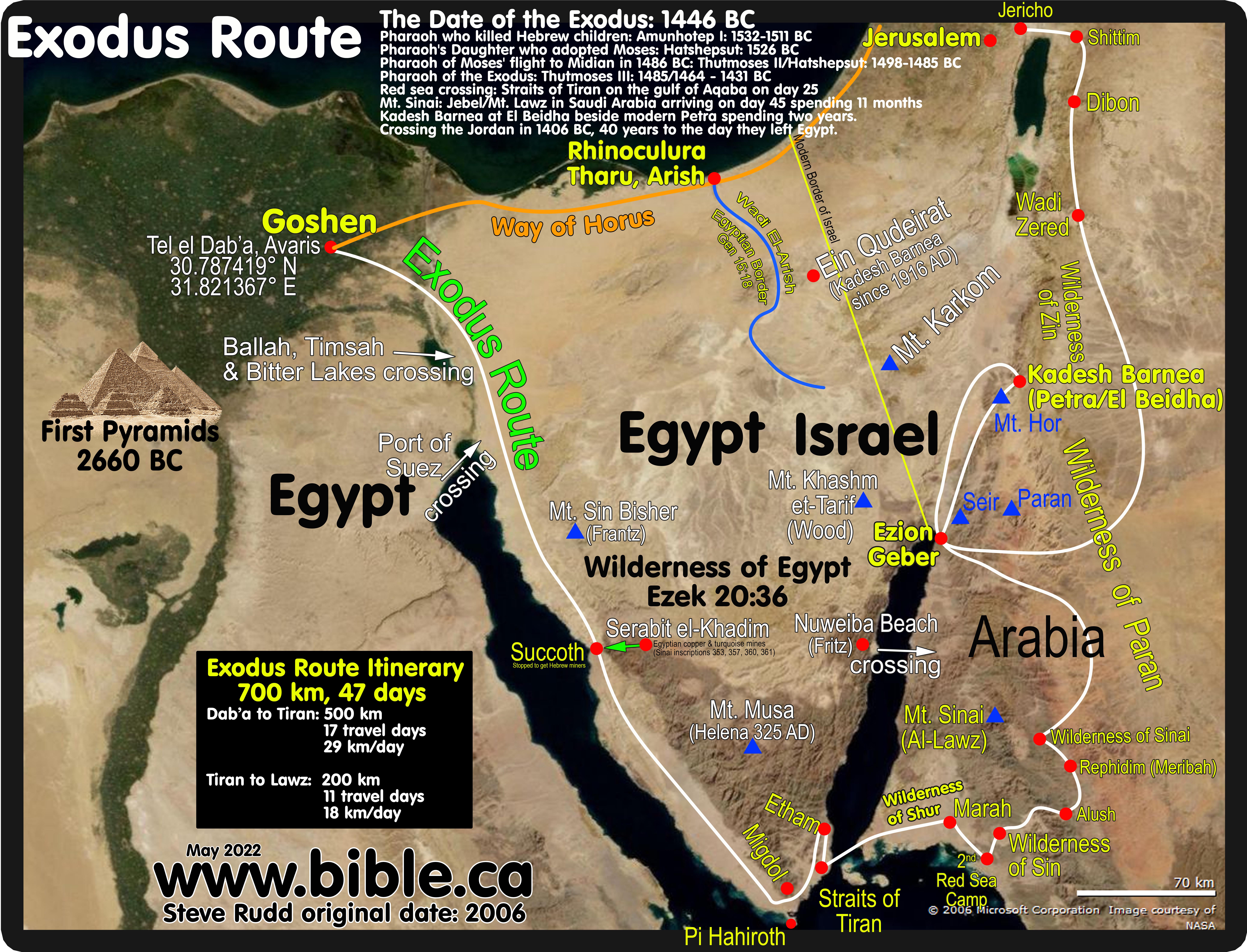
God plans the route for His people (vv. 17-18). Nothing takes God by surprise, for in His providence He plans the best way for His people to take. We may not always understand the way He chooses, or even agree with it, but His way is always the right way. We may confidently say, “He leads me in the paths of righteousness for His name’s sake” (Ps. 23:3, nkjv), and we should humbly pray, “Show me Your ways, O Lord; teach me Your paths. Lead me in Your truth and teach me” (25:4-5, nkjv).

If there had been any military strategists in Israel that night, they probably would have disagreed with the evacuation route God selected because it was too long. Israel’s immediate destination was Mount Sinai, but why take several million people the long way instead of using the shorter and easier route? The answer is: because there were Egyptian military posts along the shorter route, and the soldiers stationed there would have challenged the Jews. Furthermore, crossing the Philistine borders would have invited their army to attack, and the last thing Israel needed was a war with the neighbors. God knew what He was doing when He chose the longer way.

If you permit the Lord to direct your steps (Prov. 3:5-6), expect to be led occasionally on paths that may seem unnecessarily long and circuitous. Remind yourself that God knows what He’s doing, He isn’t in a hurry, and as long as you follow Him, you’re safe and in the place of His blessing. He may close some doors and suddenly open others, and we must be alert (Acts 16:6-10; 2 Cor. 2:12-13).

God encourages His people’s faith (v. 19). Before he died, Joseph made his brothers promise that, when God delivered Israel from Egypt, their descendants would take his coffin with them to the Promised Land (Gen. 50:24-25; Heb. 11:22). Joseph knew that God would keep His promise and rescue the Children of Israel (15:13-16). Joseph also knew that he belonged in the land of Canaan with his people (49:29-33).

What did this coffin mean to the generations of Jews who lived during the years of terrible bondage in Egypt? Certainly the Jews could look at Joseph’s coffin and be encouraged. After all, the Lord cared for Joseph during his trials, and finally delivered him, and He would care for the nation of Israel and eventually set them free. During their years in the wilderness, Israel saw Joseph’s coffin as a reminder that God has His times and keeps His promises. Joseph was dead, but he was bearing witness to the faithfulness of God. When they arrived in their land, the Jews kept their promise and buried Joseph with Abraham, Isaac, and Jacob (Josh. 24:32).

Is it idolatrous to have visible reminders of God’s faithfulness? Not necessarily, for you find several significant monuments in the Book of Joshua. When Israel crossed the Jordan River, they put up a monument of stones on the farther shore to commemorate what God had done (Josh. 4). They also put stones on Mount Ebal and Mount Gerizim to remind them of God’s law (Josh. 8:30-35). A heap of stones bore witness of Achan’s treachery (Josh. 7:25-26), and a “witness stone” was a reminder of Israel’s rededication after the conquest of the land (24:24-28). Samuel set up a stone to commemorate Israel’s victory over the Philistines and called it “Ebenezer, the stone of help” (1 Sam. 7:12).

As long as we keep obeying the Lord, such reminders can encourage our faith. The important thing is that they point to the Lord and not to a dead past, and that we continue to walk by faith and obey the Lord today.

God goes before His people to lead the way (vv. 20-22). The nation was guided by a pillar (column) of cloud by day that became a pillar of fire by night. This pillar was identified with the angel of the Lord who led the nation (14:19; 23:20-23; see Neh. 9:12). God occasionally spoke from the pillar of cloud (Num. 12:5-6; Deut. 31:15-16; Ps. 99:7), and the pillar of cloud also shielded the people from the hot sun as they journeyed by day (105:39). When the cloud moved, the camp moved; when the cloud waited, the camp waited (Ex. 40:34-38).

We don’t have this same kind of visible guidance today, but we do have the Word of God which is a light (Ps. 119:105) and a fire (Jer. 23:29). It’s interesting to note that the pillar of fire gave light to the Jews but was darkness to the Egyptians (Ex. 14:20). God’s people are enlightened by the Word (Eph. 1:15-23), but the unsaved can’t understand God’s truth (Matt. 11:25; 1 Cor. 2:11-16).

The Spirit of God, who is the Spirit of Truth, guides us by teaching us the Word (John 16:12-13). Just as God spoke to Moses from the pillar, so the Lord communicates with us from the Scriptures by making them clear to us. There are times when we aren’t sure which way God wants us to go, but if we wait on Him, He will eventually guide us.

How foolish it would have been for the Jews to pause in their march and take a vote to see which route they should take to Mount Sinai! Certainly there’s a place for community counsel and referendum (Acts 6:1-7), but when God has spoken, there’s no need for consultation. On more than one occasion in Scripture, the majority has been wrong.

Trusting God (Ex. 14:1-31)

He [God] made known His ways to Moses, His acts to the children of Israel” (Ps. 103:7, nkjv). The Jewish people were told what God wanted them to do, but Moses was told why God was doing it. ‘The secret of the Lord is with them that fear Him” (25:14). The leadership of Moses was a key ingredient in Israel’s success.

Egypt’s pursuit (vv. 1-9). It dawned on Pharaoh and his officers that, by allowing their Jewish slaves to escape, they had threatened, if not destroyed, Egypt’s whole economy, so the logical thing was to go after the Jews and bring them back. Now we’re given another reason why the Lord selected this route: the reports would convince Pharaoh that the Jews were wandering like lost sheep in the wilderness and therefore were fair game for his army to pursue and capture. The Lord was drawing the Egyptians into His trap.

What seemed like an easy victory to Egypt would turn out to be an ignominious defeat, and the Lord would get all the glory. Once again He would triumph over Pharaoh and the gods and goddesses of Egypt. Pharaoh commandeered all the chariots of Egypt, mounted his own royal chariot, and pursued the people of Israel.

Israel’s panic (vv. 10-12). As long as the Israelites kept their eyes on the fiery pillar and followed the Lord, they were walking by faith and no enemy could touch them. But when they took their eyes off the Lord and looked back and saw the Egyptians getting nearer, they became frightened and began to complain.

These verses introduce the disappointing pattern of Israel’s behavior during their march from Egypt to Canaan. As long as everything was going well, they usually obeyed the Lord and Moses and made progress. But if there was any trial or discomfort in their circumstances, they immediately began to complain to Moses and to the Lord and asked to go back to Egypt. However, before we criticize the Jews, perhaps we’d better examine our own hearts. How much disappointment or discomfort does it take to make us unhappy with the Lord’s will so that we stop believing and start complaining? “For we walk by faith, not by sight” (2 Cor. 5:7).

When you forget God’s promises, you start to imagine the worst possible scenario. The Jews were sure that they and their children would die in the wilderness as soon as Pharaoh’s army caught up with them. The frightened people reminded Moses that they had told him to leave them alone (Ex. 5:20-23), but he had persisted in challenging Pharaoh. Israel was now in a terrible predicament, and Moses was to blame. Unbelief has a way of erasing from our memory all the demonstrations we’ve seen of God’s great power and all the instances we know of God’s faithfulness to His Word.
What is God Showing us in the Parting of the Read Sea? 

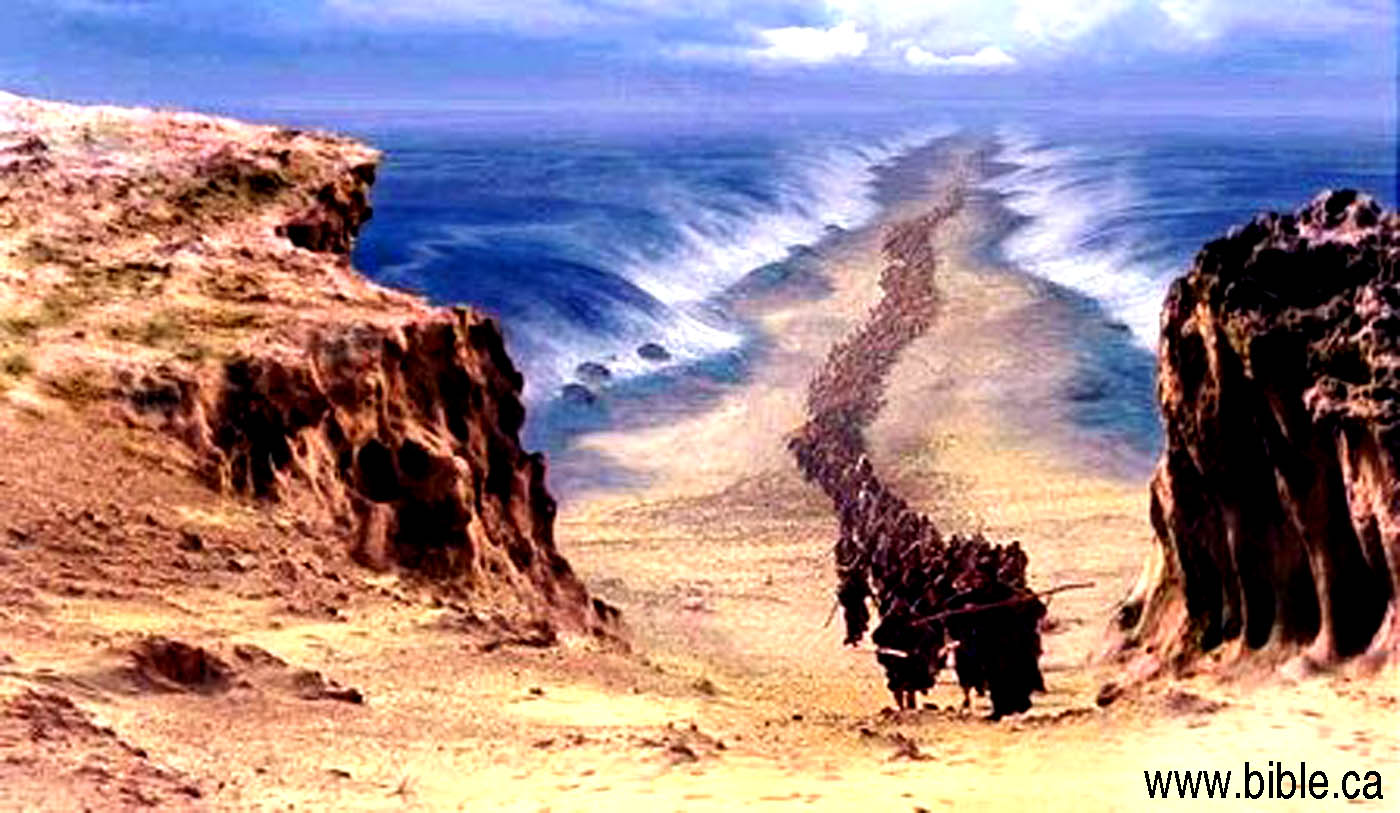
At night, when the Israelites were blocked in by the Red Sea and the attacking Egyptians, God parted the Red Sea (Exodus 14:10-21). All the people of Israel, along with their livestock, were able to cross on dry land with towering walls of water on the right and left as Moses led them (Exodus 14:21-22Psalm 78:13).

Even though the Egyptians tried to chase after the Israelites by crossing through the sea, God enclosed the waters around them, which caused Israel’s oppressors to drown (Exodus 14:27-28). On that day, the Lord displayed His power and might through the miraculous parting of the Red Sea.  Exodus 14:21-31 (NIV)

  • God Delivers and Brings Salvation to His People 

The parting of the Red Sea is one of the most significant events in the Old Testament. It is repeatedly mentioned to emphasize God’s amazing act of salvation in freeing the Israelites from slavery.

For 400 years, the Israelites had been enslaved and mistreated in Egypt (Acts 7:6). God had previously told Abraham: “know for certain that for four hundred years your descendants will be strangers in a country not their own and that they will be enslaved and mistreated there” (Genesis 15:13).

However, He also promised to punish Egypt and bring out Israel with an abundance of possessions (Genesis 15:14).

When the Lord heard the cries of His people, He responded by sending Moses and Aaron to the Israelites (Exodus 2:24Exodus 3:9-10; 4:29). Through them, He pronounced judgment on Pharaoh and sent ten plagues against Egypt to show that He alone is God (Exodus 7-12; 7:5).

After the plague of the death of the firstborn son, Pharaoh allowed the Israelites to leave but then changed his mind (Exodus 12:31; 14:5). He chased after them until Israel was hemmed in by the sea. God used this situation to display His power in parting the Red Sea.

On that day, God set Israel free. They were no longer slaves to Egypt. In response to God’s act of salvation, the Israelites sang to God a song of praise: “I will sing to the Lord, for he is highly exalted. Both horse and driver he has hurled into the sea” (Exodus 15:1). They learned the importance of Following God, Trusting God and now Praising God!

Repeatedly in Israel’s years of wandering and entrance into the Promised Land, God would remind them of His miraculous act of freeing them from slavery (Exodus 20:2Deuteronomy 5:6).

  • God Has Power over Nature

Another reason the parting of the Red Sea is significant is that it displays God’s power over nature. The Israelites crossing through the sea on dry land was a miracle by the Lord.

This is a crucial point because many scholars and commentators attempt to explain the parting of the Red Sea as a natural phenomenon.

Some commentators have argued that the Red Sea mentioned in Exodus 14 refers to a reedy marsh and that the Israelites crossed through the low waters.

Other scholars have posited that a volcanic eruption caused a tidal wave to part the Red Sea. These explanations, though, dismiss the biblical account.

The Israelites did not merely wade through a shallow river. They recorded that they passed through on dry ground (Exodus 14:29Hebrews 11:29).

God was the cause of the parting of the Red Sea when he sent a strong wind to push back the waters (Exodus 14:21-22). He is the Creator and has power over His creation to control the wind and sea (Psalm 89:9Mark 4:39).

While it is popular for people to explain away biblical miracles with naturalistic explanations, Christians should listen to God’s Word. The parting of the Red Sea was a miracle from God and a wonderful display of His power.

  • God is Faithful

In the rest of the Old Testament, we see followers of God looking back to the parting of the Red Sea to remind themselves of God’s faithfulness. When Joshua led the Israelites into the Promised Land, God parted the Jordan River to lead them into their new home (Joshua 3:17).

He did this to remind the Israelites of what He did in parting the Red Sea and freeing them from slavery.

As it is recorded in the Book of Joshua, “For the LORD your God dried up the Jordan before you until you had crossed over. The LORD your God did to the Jordan what he had done to the Red Sea when he dried it up before us until we had crossed over” (Joshua 4:23).

In Psalm 74, there is another reminder of God’s faithfulness connected to the parting of the Red Sea. Asaph talks about the enemy who ransacked God’s sanctuary (Psalm 74:4-7). Worrying about Israel’s enemy, Asaph asks if God would reject His people forever (Psalm 74:1).

In reply to his own question, Asaph reminds himself and others of God’s past deeds of faithfulness. As he wrote, “But God is my King from long ago; he brings salvation on the earth. It was you who split open the sea by your power;” (Psalm 74:12-13).

Although he goes on to describe the Lord’s power over creation (Psalm 74:16-17), Asaph specifically mentions the parting of the Red Sea to remind himself of God’s salvation. The Lord had saved them before from the enemy and He would do it again.

  • God’s Salvation Today is Through Jesus 

The parting of the Red Sea is also important because it provides a picture of Jesus’ act of salvation. Like the Israelites who were in slavery to Egypt, all people are in bondage to sin (John 8:34Romans 7:14).

We have no hope of saving ourselves, which is why God did a mighty act to free us from our slavery to sin.

During the exodus, God parted the Red Sea and led Israel out of the land of their oppressors (Exodus 1:11-14). Likewise, God the Son willingly gave up his life to die on a cross (John 10:18).

Jesus paid the price for our sin, taking the punishment we deserve (2 Corinthians 5:211 Peter 2:24). He died but rose to life on the third day after His burial (Romans 4:252 Corinthians 5:15).

Because of what Jesus did, anyone who trusts in His death and resurrection will be saved (1 Corinthians 15:2-4).

Believers in Christ have passed from the dominion of darkness — the “land” of oppression from sin — into a new kingdom.

As Paul wrote in Colossians 1:13, God “has rescued us from the dominion of darkness and brought us into the kingdom of the Son he loves.”

We no longer live in darkness but are now children of the light, belonging to Christ (1 Thessalonians 5:5).

Furthermore, just as Israel was set free from bondage to Egypt, the chains that bind us to sin are loosed at salvation. Believers “have been set free from sin and have become slaves to righteousness” (Romans 6:18).

The Christian life consists of living free from bondage to our sinful nature and tendencies. Just as the Israelites received a new life after passing through the waters of the Red Sea, we have a new life in Christ (2 Corinthians 5:17).

Like God’s people in Exodus, we too can Follow God, Trust God and Praise God!

Darrell

www.Upwards.Church

Message Audio/Video and Outline: https://upwards.church/watch-now/leander-campus-videos

Watch Messages: YouTube-Upwards Church

Facebook: Upwards Church

Sources:
Warren W. Wiersbe, The Bible Exposition Commentary – Pentateuch, (Colorado Springs, CO: Victor, 2001), WORDsearch CROSS e-book, 202-204.
https://www.christianity.com/wiki/bible/what-is-the-significance-of-parting-the-red-sea.html

https://www.bible.ca/archeology/bible-archeology-exodus-route-goshen-red-sea.htm

Posted in Out of Darkness - Exodus | Tagged , , , , , , , , | Leave a comment

God Will Deliver Me – Exodus 12 (The Passover)

1938, a man in New England went into an Abercrombie and Fitch store and purchased a new barometer. He took it home and proudly placed it upon a window sill. He consulted it to see what the weather would be like that day. He couldn’t believe it. The barometer said, “hurricane.” Here he was in New England. Hurricanes are usually in Florida. He grabbed the barometer and took it back down to the store to return it. The store clerk asked him, “What’s the matter?” He said, “The barometer you sold me is defective. It’s reading “hurricane.” The store owner said, “Oh, well we will happily refund your money.” He got his money back and started home. By the time he got home, his house had been blown away by the hurricane that hit New England in 1938. The barometer wasn’t wrong at all.

God’s Word is the barometer for mankind. It is always accurate.  For people without Christ, it reads, “the storm of Judgement is coming.” You can tap it, say it is broken or wrong, but it is still accurate. The barometer for Egypt read, “Death of the First Born.” This was God’s warning, whether you were an Egyptian or Hebrew. As we will see, if God’s instructions were not followed, the firstborn in that house would die.

At this event, God would deliver His people.

Deliverance the action of being rescued or set free.

This Passover chapter is a wonderful chapter because it continually points to the Lord Jesus Christ, as our deliverer, our Passover Lamb. He is “the Lamb of God that took away the sin of the world.”

Exodus 12 is also important because it is birth chapter of Israel as a NATION. They entered Egypt as a family and exit as a nation. Their national existence basically starts from this point. It was the month of Abib (April) which means “green ear month.” It is when the corn is in the ear. After the Babylonian captivity, Abib was called Nisan. The month of Tisri (October), which was the first month, is now changed to the seventh month of the calendar year. All of the other feasts of the year are based upon the Passover.

The Passover lamb begins the chronology of Israel as a nation. They have a new beginning, a new start. In the Lord Jesus Christ, we have the same new beginning! The Passover lamb is a picture of Jesus Christ. The birth of Christ changed our calendar just like the death of the Passover lamb. Anno Domini which means “year of the Lord.”

Christ will deliver His people and everything will change.  How does deliverance occur?

  • Deliverance Requires a Spotless Lamb

The night of the first Passover was the night of the tenth plague. On that fateful night, God told the Israelites to sacrifice a spotless lamb and mark their doorposts and lintels with its blood (Exodus 12:21–22). Then, when the Lord passed through the nation, He would “pass over” the households that showed the blood (verse 23). In a very real way, the blood of the lamb saved the Israelites from death, as it kept the destroyer from entering their homes. The Israelites were saved from the plague, and their firstborn children stayed alive. From then on, every firstborn son of the Israelites belonged to the Lord and had to be redeemed with a sacrifice (Exodus 13:1–212; cf. Luke 2:22–24).

The children of Israel in Egypt followed God’s command and kept the first Passover. However, none of the Egyptians did so. All through Egypt, behind the unmarked, bloodless doorways of the Egyptians, the firstborn children died at midnight (Exodus 12:21–29). “There was loud wailing in Egypt, for there was not a house without someone dead” (verse 30). This dire judgment finally changed the Egyptian king’s heart, and he released the Israelite slaves (verses 31–32).

  • Deliverance Happens When we Follow God’s Instructions.

Along with the instruction to apply the Passover lamb’s blood to their doorposts and lintels, God instituted a commemorative meal: fire-roasted lamb, bitter herbs, and unleavened bread (Exodus 12:8). The Lord told the Israelites to “observe this rite as a statute for you and for your sons forever” (Exodus 12:24, ESV), even when in a foreign land.

The Israelites were safe from the plague because they followed God’s instructions to sacrifice a lamb and paint its blood over their doors. In this way, God passed over their homes, and the Israelites’ firstborns were protected from the plague.

This is why the holiday is now called “Passover” because God passed over their homes. Out of their praise and thanks to God for protecting them as well as the freedom that He gave them through their exodus, the Israelites celebrated Passover in remembrance of God’s faithfulness.

Those within Judaism still celebrate Passover in remembrance of God bringing his children out of slavery. Christians today do not celebrate Passover because Jesus fulfilled Passover by His death on the cross.

We too must recognize that we are sinners needing deliverance from our slavery to sin. We must follow God’s instructions to repent, ask Jesus to be the Lord of our lives and be baptized.

Then Peter said to them, “Repent, and let every one of you be baptized in the name of Jesus Christ for the remission of sins; and you shall receive the gift of the Holy Spirit. Acts 2:38

When we follow God’s instructions we experience a day of deliverance as well—the day we were delivered from spiritual death and slavery to sin. The Lord’s Supper is our Passover remembrance of our new life and freedom from sin. The next time struggles and trials come, remember how God has delivered you in the past and focus on his promise of new life with him.

Deliverance from Death is found Only in Jesus.

The Apostle Paul tells us, “Get rid of the old yeast, so that you may be a new unleavened batch — as you really are. For Christ, our Passover lamb has been sacrificed.” The fulfillment of Passover is found in Christ.

Just as the blood of the lamb painted across the Israelites’ door spared their firstborn from death, the blood of Christ covers our sin and saves us from eternal condemnation. Out of pure joy, devotion, and thankfulness, we should worship Jesus always and forever.

The death Jesus experienced on the cross was the most painful death anyone has ever had to go through.  Not only did Jesus experience physical death, but he also experienced the pain of being separated from the Father as he shouted, “‘Eli, Eli, lema sabachthani?’ (which means ‘My God, my God, why have you forsaken me?’” (Matthew 27:46).

Jesus experienced the pain of separation from the Father on the cross in order for us to not have to suffer eternal separation from the Father. The Lord loves us so much that He willingly died on the cross in order to restore our relationship with Him.

Therefore, as Christians today, we still acknowledge the importance of Passover, yet Jesus fulfilled the Passover through His death.

There is no longer any need for us to offer sacrifices to cover our sins as the Israelites had to do in the Old Testament because our Passover Lamb has already been sacrificed for our sins.

Through the sacrifice of Jesus on the cross, all of our sins are forgiven, and we are granted salvation. This does not happen automatically or “by default.”

Rather, a person has to place faith in Jesus by believing that He died for their sins, was buried, and rose again (1 Corinthians 15:1-4). Once a person does this, they are eternally forgiven of their sins and are given eternal life in Christ.

 Passover comes from the Old Testament, in which God led His people out of slavery in Egypt. The Israelites had been in slavery to Pharaohs for 400-430 years and the Passover marked the beginning of the Israelites’ freedom.

This freedom was only given to them because of God and His love. In the same way, Jesus’ death on the cross gives us the freedom to live the life God has planned for us. Freedom is only found in Christ and His ever-present love.

Passover celebrates Israel’s exodus out of Egypt, freedom from slavery, and the providence of God. Passover is still celebrated among Jewish circles in celebration of God bringing their people out of slavery.

As Christians, we don’t celebrate this holiday; however, we do celebrate Jesus every day because He is our Passover Lamb, who redeems us, gives us forgiveness, and blesses us with eternal life.


www.Upwards.Church

Message Audio/Video and Outline: https://upwards.church/watch-now/leander-campus-videos

Watch Messages: YouTube-Upwards Church

Facebook: Upwards Church


Sources:

Rod Mattoon, Mattoon’s Treasures – Treasures from Exodus, Volume 1, (Springfield, IL: Lincoln Land Baptist Church, n.d.), WORDsearch CROSS e-book, 244-245.

Life Application Study Bible, (Wheaton, IL: Tyndale, 1988), WORDsearch CROSS e-book, 113-114.

https://www.christianity.com/wiki/holidays/what-does-passover-celebrate.html

https://www.gotquestions.org/what-is-Passover.html


Posted in Out of Darkness - Exodus | Tagged , , , , , , , , , , , | 2 Comments

God is Powerful – Exodus 7-10 (Ten Plagues)

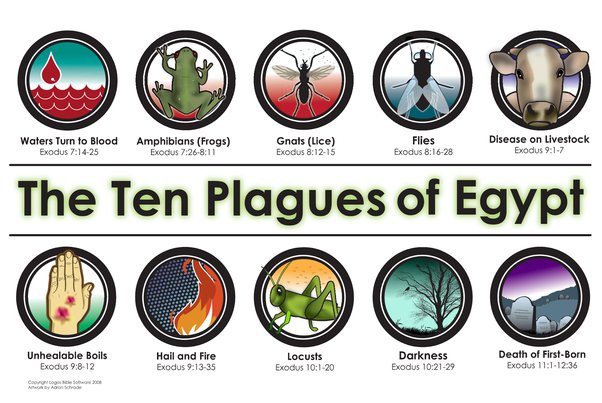
The Ten Plagues of Egypt are described in Exodus 7—12. The plagues were ten disasters sent upon Egypt by God to convince Pharaoh to free the Israelite slaves from the bondage and oppression they had endured in Egypt for 400 years. When God sent Moses to deliver the children of Israel from bondage in Egypt, He promised to show His wonders as confirmation of Moses’ authority (Exodus 3:20). This confirmation was to serve at least two purposes: to show God’s people that the God of their fathers was alive and worthy of their worship (Exodus 6:6–812:25–27) and to show the Egyptians that their gods were nothing (Exodus 7:512:12Numbers 33:4).

The Israelites had been enslaved in Egypt for about 400 years and in that time had lost faith in the God of their fathers. They believed He existed and worshiped Him, but they doubted that He could, or would, break the yoke of their bondage. The Egyptians, like many pagan cultures, worshiped a wide variety of nature-gods and attributed to their powers the natural phenomena they saw in the world around them. There was a god of the sun, of the river, of childbirth, of crops, etc. Events like the annual flooding of the Nile, which fertilized their croplands, were evidences of their gods’ powers and good will. When Moses approached Pharaoh, demanding that he let the people go, Pharaoh responded by saying, “Who is the Lord, that I should obey his voice to let Israel go? I know not the Lord, neither will I let Israel go” (Exodus 5:2). Thus began the challenge to show whose God was more powerful.

1. The first plague, turning the Nile to blood, was a judgment against Apis, the god of the Nile, Isis, goddess of the Nile, and Khnum, guardian of the Nile. The Nile was also believed to be the bloodstream of Osiris, who was reborn each year when the river flooded. The river, which formed the basis of daily life and the national economy, was devastated, as millions of fish died in the river and the water was unusable. Pharaoh was told, “By this you will know that I am the LORD” (Exodus 7:17).

2. The second plague, bringing frogs from the Nile, was a judgment against Heqet, the frog-headed goddess of birth. Frogs were thought to be sacred and not to be killed. God had the frogs invade every part of the homes of the Egyptians, and when the frogs died, their stinking bodies were heaped up in offensive piles all through the land (Exodus 8:13–14).

3. The third plague, gnats, was a judgment on Set, the god of the desert. Unlike the previous plagues, the magicians were unable to duplicate this one and declared to Pharaoh, “This is the finger of God” (Exodus 8:19).

4. The fourth plague, flies, was a judgment on Uatchit, the fly god. In this plague, God clearly distinguished between the Israelites and the Egyptians, as no swarms of flies bothered the areas where God’s people lived (Exodus 8:21–24).

5. The fifth plague, the death of livestock, was a judgment on the goddess Hathor and the god Apis, who were both depicted as cattle. As with the previous plague, God protected His people from the plague, while the cattle of the Egyptians died. God was steadily destroying the economy of Egypt, while showing His ability to protect and provide for those who obeyed Him. Pharaoh even sent investigators (Exodus 9:7) to find out if  God’s people were suffering along with the Egyptians, but the result was a hardening of his heart against God’s people.

6. The sixth plague, boils, was a judgment against several gods over health and disease (Sekhmet, Sunu, and Isis). This time, the Bible says that the magicians “could not stand before Moses because of the boils.” Clearly, these religious leaders were powerless against the God of Israel.

Before God sent the last three plagues, Pharaoh was given a special message from God. These plagues would be more severe than the others, and they were designed to convince Pharaoh and all the people “that there is none like me in all the earth” (Exodus 9:14). Pharaoh was even told that he was placed in his position by God, so that God could show His power and declare His name through all the earth (Exodus 9:16). As an example of His grace, God warned Pharaoh to gather whatever cattle and crops remained from the previous plagues and shelter them from the coming storm. Some of Pharaoh’s servants heeded the warning (Exodus 9:20), while others did not.

7.  The seventh plague, hail, attacked Nut, the sky goddess; Osiris, the crop fertility god; and Set, the storm god. This hail was unlike any that had been seen before. It was accompanied by a fire which ran along the ground, and everything left out in the open was devastated by the hail and fire. Again, the children of Israel were miraculously protected, and no hail damaged anything in their lands.

Before God brought the next plague, He told Moses that God’s people would be able to tell their children of the things they had seen God do in Egypt and how it showed them God’s power.

8.  The eighth plague, locusts, again focused on Nut, Osiris, and Set. The later crops, wheat and rye, which had survived the hail, were now devoured by the swarms of locusts. There would be no harvest in Egypt that year.

9. The ninth plague, darkness, was aimed at the sun god, Re, who was symbolized by Pharaoh himself. For three days, the land of Egypt was smothered with an unearthly darkness, but the homes of God’s people had light.

10. The tenth and last plague, the death of the firstborn males, was a judgment on Isis, the protector of children. In this plague, God was teaching the Israelites a deep spiritual lesson that pointed to Christ. Unlike the other plagues, which  God’s people survived by virtue of their identity as God’s people, this plague required an act of faith by them. God commanded each family to take an unblemished male lamb and kill it. The blood of the lamb was to be smeared on the top and sides of their doorways, and the lamb was to be roasted and eaten that night. Any family that did not follow God’s instructions would suffer in the last plague. God described how He would send the destroyer through the land of Egypt, with orders to slay the firstborn male in every household, whether human or animal. The only protection was the blood of the lamb on the door. When the destroyer saw the blood, he would pass over that house and leave it untouched (Exodus 12:23). This is where the term Passover comes from. Passover is a memorial of that night in ancient Egypt when God delivered His people from bondage. First Corinthians 5:7 teaches that Jesus became our Passover when He died to deliver us from the bondage of sin. While God’s people found God’s protection in their homes, every other home in the land of Egypt experienced God’s wrath as their loved ones died. This grievous event caused Pharaoh to finally release God’s people.

By the time God’s people left Egypt, they had a clear picture of God’s power, God’s protection, and God’s plan for them. For those who were willing to believe, they had convincing evidence that they served the true and living God. Sadly, many still failed to believe, which led to other trials and lessons by God. The result for the Egyptians and the other ancient people of the region was a dread of the God of Israel. Even after the tenth plague, Pharaoh once again hardened his heart and sent his chariots after  God’s people. When God opened a way through the Red Sea for  God’s people, then drowned all of Pharaoh’s armies there, the power of Egypt was crushed, and the fear of God spread through the surrounding nations (Joshua 2:9–11). This was the very purpose that God had declared at the beginning. We can still look back on these events today to confirm our faith in, and our fear of, this true and living God, the Judge of all the earth.

www.Upwards.Church

Message Audio/Video and Outline: https://upwards.church/watch-now/leander-campus-videos

Watch Messages: YouTube-Upwards Church

Facebook: Upwards Church

Sources:    https://www.gotquestions.org/ten-plagues-Egypt.html

PLAGUES OF EGYPYT (INTRO)

Posted in Out of Darkness - Exodus | Tagged , , , , , , | Leave a comment

God’s Word is Rejected – Exodus 5-6

Moses delivers God’s message as instructed. Pharaoh, however unleashes his fury and increases the pressure on the people of God. He removes their straw for the brick production and tells them to get their own. In this section of Exodus, we address the difficulties that may arise from obeying God. It is not all rosy. Serving Christ, especially in the ministry, may require hardships. If we are not committed to face them and keep going forward, or if we quit easily, it would be better for us to not get into the ministry in the first place. Sharing the truth of God’s Word is not a task for people who wet their finger and put it in the air to see which way the winds of opinion are blowing.

God is looking for people who will serve him whether they have straw or stubble. Whether we are enjoying the straw of provision and abundance or the stubble of hardship and suffering, God is looking for men and women who will not quit serving and obeying Him.

In our passage today, Moses and Aaron stood before the ruler of one of the greatest kingdoms of the ancient world. They were sent by God to inform Pharaoh that if he didn’t release the Jewish people, Yahweh would declare war on him and his gods and wouldn’t stop attacking Egypt until the people of Israel were set free. God’s two ambassadors had one message from the Lord: “Let My people go—or else!” Pharaoh’s responses to Moses and Aaron were predictable: he rejected God’s command, disdained the miracles Moses and Aaron performed, and deliberately hardened his heart against the Lord.

Pharaoh rejects God’s Word (Ex. 5:1-6:27)

Their request was a simple one: Moses and Aaron wanted permission to take the Jewish people three-days’ journey into the desert to a place where they could worship the Lord. Six days of travel and one day of worship would add up to a week away from their work, but Moses said nothing about how long they would be gone or when they would return. This omission made Pharaoh suspicious, and he wondered if the purpose of their journey was escape rather than worship. Three questions are involved in this episode.

Pharaoh: “Why should I obey the Lord?” (5:1-3) This was a reasonable question because the Egyptian people considered Pharaoh to be a god, and why should their king obey a strange god that neither Pharaoh nor the Egyptians knew? Furthermore, what right did this new god have to call the Israelites “My people” when the Jews were the slaves of Pharaoh? If Pharaoh obeyed the edict, he would be acknowledging a deity greater than himself, and he wasn’t about to do that. In his pride and false security, Pharaoh wouldn’t listen to the words of the living God.

Moses mentioned that the Israelites might be in danger of being killed if they failed to obey the Lord. Why bring that up? Perhaps Moses was hinting that Pharaoh’s stubbornness might cost him his slaves and that he’d be better off to give the Jews a week off and thereby protect his cheap labor. However, there’s another factor involved: Moses was telling Pharaoh that the God of the Hebrews was a powerful God who could kill the Egyptians as well as the Jews. Pharaoh needed to understand that the demands Moses and Aaron were making were not to be taken lightly, for this was a matter of life and death.

Pharaoh: “Why should the work stop?” (vv. 4-21) The enslavement of the Israelites was a great boost to the economy of Egypt, and Pharaoh wasn’t about to give up a good thing. As dictators have done for centuries, Pharaoh exploited a captive people and was unconcerned about their welfare. Unknown to the king, God was working out His perfect plan to free His people and glorify His great name; and nothing Pharaoh could do would prevent God’s plan from succeeding.

Instead of giving the Jews relief from their toil, Pharaoh made their labor even harder. He refused to give them the straw they needed for the manufacturing of the clay bricks, but he demanded that they still reach their assigned daily quotas. “If they have so much time on their hands that they can take a week off,” he argued, “then let them find their own straw. The extra work will take their minds off such foolish ideas.” God’s message to Pharaoh through Moses and Aaron was only “vain words” as far as the king was concerned (v. 9; “lies,” niv).

When their work became unbearable because of the new rules, the Hebrews sent their foremen to protest to Pharaoh. It’s unusual that slaves would have access to the king, but Pharaoh knew what he was doing. He told them what Moses and Aaron had demanded of him, and this turned the Jewish foremen against the leaders God had given them. The foremen told Moses and Aaron what they thought of them and then slandered them among the Jews. This wouldn’t be the last time Moses would be opposed by his own people who didn’t understand what the Lord was doing.

Instead of going to Pharaoh to complain, the foremen should have gone to Moses and Aaron and suggested that they summon the elders and have a prayer meeting. They should have reminded themselves of the promises God had given Israel and claimed them by faith. What a difference that would have made for them and for their leaders! Alas, during the next forty years, complaining about God’s will and criticizing God’s leaders would be characteristic of the people of Israel; but are God’s people much different today?

Moses: “Why have You sent me?” (5:22-6:27) Moses did what all spiritual leaders must do when the going is tough: he took his burden to the Lord and honestly talked to Him about the situation. It’s easy to see that Moses was disappointed and distressed. He blamed God for the way Pharaoh was mistreating the Jews, and he accused Him of doing nothing. “Is this why You sent me?” he asked (5:22, niv). In other words, “Are You going to keep Your promises to me or not?”

God’s chosen servants must expect opposition and misunderstanding, because that’s part of what it means to be a leader; and leaders must know how to get alone with God, pour out their hearts, and seek His strength and wisdom. Spiritual leaders must be bold before people but broken before God (see Jer. 1) and must claim God’s promises and do His will even when everything seems to be against them.

How did the Lord encourage His struggling servant? To begin with, God spoke to him and gave him great promises (Ex. 6:1-8). Today we have the written Word of God, but it’s likely that Moses heard God speak in an audible voice (33:11; Deut. 34:10). Four times in this speech, God reminded Moses, “I am the Lord

(Ex. 5:2, 6, 7, 8) and used His covenant name “Yahweh”; and seven times, God said, “I will.” When we know that God is in control and we claim His promises, then we can experience peace and courage in the battles of life. God promised to bring Israel out of Egypt, free them from bondage, and take them into their Promised Land. At the heart of the seven “I will” promises is “And I will take you to Me for a people” (v. 7), which is the basis for all that God did for the Jews.

God also reminded Moses of His covenant name “Yahweh” (6:3). One way to get to know God better is to pay attention to His names. The patriarchs knew God as “God Almighty,” which in the Hebrew is “El Shaddai—the all-sufficient and all-powerful God,” and they knew that God’s name was “Yahweh”; but they didn’t understand the full implications of the name. God had explained the name “Yahweh” to Moses when He called him in Midian (3:13-14), but now He associated His name with the covenant He would make with His people (6:4). Yahweh is the special name of God that links Him with Israel and His covenants, and it is so sacred to Jews even today that they will not speak it when they read the Scriptures in the synagogue. Instead, they substitute “Adonai” (Master) or simply say “the Name.”

Third, the Lord assured Moses that He felt the burdens of His people and was working on their behalf (v. 5; see 2:24). God wasn’t ignorant of their need or unconcerned about their suffering, nor was He adding to their problems by delaying their deliverance. Everything was working according to His plan and nothing God had planned would fail. Whenever we feel the Lord has abandoned us and doesn’t really care, we need to remember His assuring words, “Casting all your care upon Him, for He cares for you” (1 Peter 5:7).

Fourth, the lord commanded Moses to speak to Pharaoh again (Ex. 6:9-13). Moses reached the depths of discouragement when the Jewish elders wouldn’t even listen to him. They had forgotten the signs and promises that Moses and Aaron had given them (4:29-31) and in their anguish were convinced that the situation was hopeless. Moses and the elders had given up, but God hadn’t given up on Moses. Moses was still God’s servant, and He commissioned him to return to the palace and confront Pharaoh again. In times of despair, it’s best to ignore our feelings and simply do what God tells us to do, leaving the consequences with Him.

The genealogy (6:14-27) isn’t there by accident, for it’s the Lord’s way of reminding us, the readers, that God had prepared Moses and Aaron for their ministry in Egypt. Their arrival in Jacob’s family was part of His providential working. Reuben was Jacob’s firstborn, then Simeon, and then Levi, the ancestor of Moses and Aaron. “Before I formed you in the womb I knew you; before you were born I sanctified you; and I ordained you a prophet to the nations” (Jer. 1:5, nkjv). God’s calling means God’s enabling, and what He begins He always completes (Eph. 2:10; Phil. 1:6).

Pharaoh belittles God’s miracles (Ex. 6:28-8:7)

Up to this point in their confrontation with Pharaoh, Moses and Aaron had simply delivered God’s ultimatum. Now the time had come for them to reveal God’s power and perform the miraculous signs that proved they were truly sent by God. Still somewhat discouraged, Moses maintained that he wasn’t a competent speaker; so God reminded him that Aaron could be his spokesman (6:26-7:2; 4:15-16). However, the Lord advised Moses and Aaron that it would take more than one or two miracles to accomplish His purposes, for He would multiply His signs and wonders in the land of Egypt.

Before we look at this remarkable series of miracles, we must focus on the reasons why the Lord took this approach in dealing with Pharaoh and sent these sign judgments to the land of Egypt. The ultimate purpose, of course, was to bring Pharaoh and the Egyptians to their knees so they’d be willing for the Jews to leave the land. But at the same time, the Lord was revealing Himself to both the Israelites and the Egyptians and proving that He alone is God (7:5).

The miracles and plagues were also God’s way of judging the gods of Egypt and proving them false and futile. “Against all the gods of Egypt I will execute judgment: I am the Lord” (12:12; and see 18:11 and Num. 33:4). More than eighty different deities were worshiped in Egypt, but they could do nothing to deliver the land and the people from the terrible judgments Yahweh sent. If nothing else, the Egyptians learned that Yahweh was the true and living God.

But the people of Israel also needed to learn this lesson. According to Ezekiel 20:1-9, some of the Jews had begun to worship the Egyptian gods; and when they were delivered from Egypt, they took their gods with them! Did they compromise their faith in an attempt to please their captors and receive better treatment? But how could they forsake Yahweh after seeing all the demonstrations of His power? “Our fathers in Egypt did not understand Your wonders; they did not remember the multitude of Your mercies” (Ps. 106:7, nkjv).


www.Upwards.Church

Message Audio/Video and Outline: https://upwards.church/watch-now/leander-campus-videos

Watch Messages: YouTube-Upwards Church

Facebook: Upwards Church


Sources:
Rod Mattoon, Mattoon’s Treasures – Treasures from Exodus, Volume 1, (Springfield, IL: Lincoln Land Baptist Church, n.d.), WORDsearch CROSS e-book, 92.
Warren W. Wiersbe, The Bible Exposition Commentary – Pentateuch, (Colorado Springs, CO: Victor, 2001), WORDsearch CROSS e-book, 186-188.
Posted in Out of Darkness - Exodus | Tagged , , , , , , , , , , , , | Leave a comment