
Seeing My Preferred Future – Nehemiah 1

As the New Year begins it serves as a time of evaluation. How’s is my life, my relationships, the ministry that God has called me to?  What changes should I make?  Our new series will center on the life (and Old Testament book) of Nehemiah.  Nehemiah was a regular person like you and me who caught a divine glimpse of what could be and then went after it with all his heart. Are you ready to Rise and Build?

As we study this great Old Testament book, we will find many applications, but I mention two major ones today:

  1. There is much to be learned from Nehemiah on an individual level. God is in the life-changing business! Jesus wants to rebuild your life. If your life is a mess and our lives are in some area. God wants to do a rebuilding project in us!
  2. There are also some parallels in the book of Nehemiah between the job he did building walls and the job God calls us to do of building the church. The church is the one thing Christ promised to build, and He uses us to do that building. Ironically, at the same time, we are that building! We can learn much from a wall-builder about church building.

Let’s look at this fascinating book.  Let me fill you in on the setting.

THE BACKGROUND OF NEHEMIAH’S STORY  
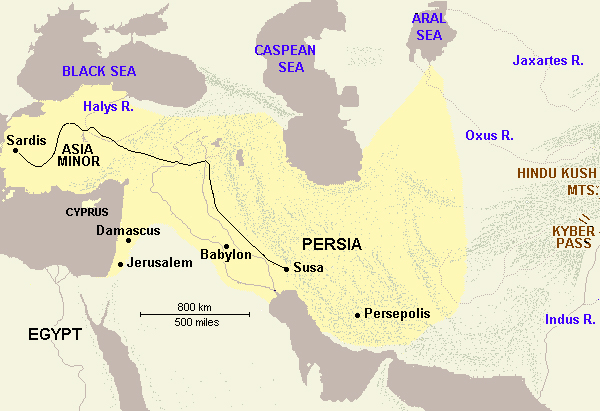
When: In 586 BC the Babylonians destroyed the city of Jerusalem in Israel.  Jews were deported over to Babylon, which is now Iraq.  They were to be kept there for 70 years.  But in 538 the Persians defeated the Babylonians and in 537 the first group of Jews were allowed to return.  In 516 the Temple was rebuilt.  In 458 Ezra led the second group of Jews back to Jerusalem.  Then in 445 Nehemiah asked permission to return to Jerusalem with a third group to rebuild the city walls.

Where is it happening?  Susa & Jerusalem.

What: The Problem is that the city walls needed to be rebuilt.  Today we use other means to protect our cities like radar.  We don’t need walls.  But in those days if a city was walled and an enemy came against it, it might take 2 months to several years for the enemy to break in.  The walls were very important.  The Jews had been taken away in captivity into another country.  They finally were allowed to trickle back in.  Finally they were allowed to rebuild the Temple.  But the city and its walls were still in ruins, rubble.  It was just junk and they were living in a heap.

*Pictured: Rubble from the 586 BC destruction of Jerusalem.

And this broken-down Jerusalem is exactly like the lives of some of you. You look at your life and you see places where there is rubble and ashes, a broken wall. You’ve become vulnerable, effectively defenseless, to the attacks of temptation, peer pressure or Satan. You’ve fallen victim to sinful habits that have you in their relentless grip to the point where you wonder if you’ll ever find freedom. A root of bitterness or anger has sprung up in your life, and you just can’t seem to shake it. There is shame, or there is the feeling of betrayal, or there is any of a number of things that bring you shame in your heart. Maybe no one else is even aware of the ruin, the brokenness but you know it’s there.

Not only that, there are some Christians who seem to want to give up, who feel that there is no way out, no victory, and that throwing in the towel is the only viable option. They’ve become comfortable in the ashes, happy living among the heaps, relaxing in the rubble. They’ll just make the best of the mess they’re in. The people of Jerusalem had lived in the rubble for over one hundred forty years, and there is record of only one instance in which they attempted to do anything about it!

But just as it was not God’s will for the people of Jerusalem to live in the reproach of the rubble, so it is not His will for you either! Perhaps today is the day, by the grace of God, when you ask God to give you the wisdom and power to rebuild your broken walls!  How do I get started?
Let’s look at Nehemiah’s journal, diary or memoirs:

1 The words of Nehemiah son of Hacaliah:

 In the month of Kislev in the twentieth year, while I was in the citadel of Susa, 2 Hanani, one of my brothers, came from Judah with some other men, and I questioned them about the Jewish remnant that survived the exile, and also about Jerusalem.

 3 They said to me, “Those who survived the exile and are back in the province are in great trouble and disgrace. The wall of Jerusalem is broken down, and its gates have been burned with fire.”

Kislev is “The 9th month of the Jewish year, corresponding to December.”—International Standard Bible Encyclopedia So it’s December, of the 20th year of the reign of Artaxerxes, King of Peria and Susa was the winter capital of Persia.

Now things were going pretty good for Nehemiah on the outside, he had a good job, an influential position within the Persian Empire. It says Nehemiah was a cupbearer to the king.  What was a cupbearer?  “As the cupbearer, his primary responsibility was to always taste the wine being served to the king in order to protect the king from an assassination attempt by means of poison (v.11). The cupbearer was a very prominent, honored, responsible, and influential position within the kingdom. Furthermore, the cupbearer had to be an honest and trusted man, a man in whom the king could put his complete confidence. A king placed his very life in the hands of his cupbearer. Because of this, the cupbearer sometimes became a trusted advisor to the king, which was apparently true with Nehemiah (2:1-8).” —Preacher’s Outline and Sermon Bible Commentary

So Nehemiah probably had a nice home in the palace, a 3 camel garage, a good retirement plan, a key to the executive washroom and a paid membership to the “Sweet Susa Country Club.” I mean Nehemiah was a mover & shaker within the most power empire in the world.

The same is true of so many of us we may have the look, the job, the house, the fluff and stuff but deep down inside we know things aren’t right in the world.

What Moves me to Sorrow?

One day his brother Hanani came to visit him along with some other men from Judah. And while they were visiting Nehemiah asked them, “hey guys how are things going back home in Jerusalem with God’s people.” Without the benefit of Fox News or CNN, the only way he could learn of his homeland was through word that came from fellow Israelites. Verse 2 records that his love for his homeland and his people caused him to care enough to inquire about their well-being. One question shaped a destiny; God had been working in the heart of Nehemiah, deep down to cause him to ask, and he was open to the leading of God when the answer came.

The answer Nehemiah received was not the one he wanted to hear. They told him, “Things are not going good Nehemiah, the people are having all kinds of trouble. And the whole city is in disgrace because the walls of Jerusalem are still torn down.”   This report devastated Nehemiah, the news of things back home rocked Nehemiah to his knees and he wept and mourned for several days his sorrow was so great that he didn’t even eat.

Why was Nehemiah so devastated?  What was there about this report that made him so upset that he wept and fasted for days? Nehemiah was upset because he knew that this was not how God’s people were meant to live. They were God’s chosen people, Jerusalem was God’s Holy City, they were meant to live in a land flowing with milk and honey, experiencing the blessings of God therefore it hurt Nehemiah to hear about how they were living. Imagine what the neighbors must have thought! “Those Jews, they claim to know the living God, yet they live in that broken-down rat trap of a town! If their God is so powerful, as some of them want to claim, then can’t He do something about the slums they live in? And if they cared for His glory, they wouldn’t stand for the situation to go on as it is!”

Nehemiah had a deep desire for something better for God’s people in Jerusalem. And it was this desire for something better mixed with the reality of how things actually were that drove Nehemiah to such great sorrow.

The first step that needs to be taken in order to be successful in your new beginning is for you to have a deep desire for something better. You need to be driven by this deep desire for something better driven by a dream of not only how things ought to be, but also how they can be.  And Understand, there is no substitute for desire because without this desire you won’t even get out of the starting gate. You’ll quit long before your hopes are fulfilled or your dreams are realized.
Haven’t you ever heard a sportscaster say, “these 2 teams are about the same we’ll just have to see who wants it more”

What’s your desire for your life? Where do you want it to be? What’s your desire for your relationship with God? What’s your desire for your marriage? What’s your desire for your children? What’s your desire your family? What’s your desire for your ministry at Upwards Church?  Where do you want those things to be? What are your goals, hopes, dreams and desires for 2022?

In the next post we’ll look at what Nehemiah did next and it’s exactly what we should do as well.

Darrell

www.Upwards.Church

Watch Messages: YouTube-Upwards Church

Facebook: Upwards Church

Posted in Rise & Build - Nehemiah | Tagged , , , , , , , , , | Leave a comment

Rise & Build – Nehemiah – January 2022 Series

Series:  Rise & Build (Nehemiah)

Description:

Life can be described as a building project. We build upon our goals, dreams and calling. We build a career, a family, and a spiritual life.  The New Year serves as a time of evaluation. How’s my building? What changes should I make?  Join us at Upwards Church as we are building better lives.  Our study will center on the life (and Old Testament book) of Nehemiah. Nehemiah was a regular person like you and me who caught a divine glimpse of what could be and then went after it with all his heart. Are you ready to rise and build?

Dates                      Titles                                          Scriptures              

Jan 2                       Seeing My Preferred Future         Nehemiah 1

Jan 9                      Getting Support                            Nehemiah 2

Jan 16                     Handling Opposition           Nehemiah 4

Jan 23                     Staying Focused                          Nehemiah 6

Jan 30                     Building God’s Way                      Nehemiah 7

Nehemiah Introduction

“What this church needs is…!” “I can’t believe our government officials. If I were there I would…!” “Our schools are really in bad shape. Someone ought to do something!”

Gripers, complainers, self-proclaimed prophets, and “armchair quarterbacks” abound. It is easy to analyze, scrutinize, and talk about all the problems in the world. But what we really need are people who will not just discuss a situation but who will do something about it! Nehemiah saw a problem and was distressed. Instead of complaining or wallowing in self-pity and grief, he took action. Nehemiah knew that God wanted him to motivate the Jews to rebuild Jerusalem’s walls, so he left a responsible position in the Persian government to do what God wanted. Nehemiah knew God could use his talents to get the job done. From the moment he arrived in Jerusalem, everyone knew who was in charge. He organized, managed, supervised, encouraged, met opposition, confronted injustice, and kept going until the walls were built. Nehemiah was a man of action.

The story begins with Nehemiah talking with fellow Jews who reported that the walls and gates of Jerusalem were in disrepair. This was disturbing news, and rebuilding those walls became Nehemiah’s burden (chapter 1). At the appropriate time, Nehemiah asked King Artaxerxes for permission to go to Jerusalem to rebuild its fallen walls. The king approved (chapter 2).

Armed with royal letters, Nehemiah traveled to Jerusalem. He organized the people into groups and assigned them to specific sections of the wall (chapter 3). The construction project was not without opposition, however. Sanballat, Tobiah, and others tried to halt the work with insults, ridicule, threats, and sabotage. Some of the workers became fearful; others became weary. In each case, Nehemiah employed a strategy to frustrate the enemies—prayer, encouragement, guard duty, consolidation (chapter 4). But a different problem arose—an internal one. Rich Jews were profiteering off the plight of their working countrymen. Hearing of their oppression and greed, Nehemiah confronted the extortioners face to face (chapter 5). Then, with the walls almost complete, Sanballat, Tobiah, and company tried one last time to stop Nehemiah. But Nehemiah stood firm, and the wall was finished in just 52 days. What a tremendous monument to God’s love and faithfulness. Enemies and friends alike knew that God had helped (chapter 6).

After building the walls, Nehemiah continued to organize the people, taking a registration and appointing gatekeepers, Levites, and other officials (chapter 7). Ezra led the city in worship and Bible instruction (chapters 8-9). This led to a reaffirmation of faith and religious revival as the people promised to serve God faithfully (chapters 10-11).

Nehemiah closes with the listing of the clans and their leaders, the dedication of the new wall of Jerusalem, and the purging of sin from the land (chapters 12-13). As you read this book, watch Nehemiah in action—and determine to be a person on whom God can depend to act for him in the world.

I hope that you can join us for our new series and I pray that God will help you Rise and Build in 2022.

Darrell

www.Upwards.Church

Watch Messages: YouTube-Upwards Church

Facebook: Upwards Church


Posted in Rise & Build - Nehemiah | Tagged , , , , , , , | Leave a comment

The Light of the World – John 8:12

We live in a dark world. It seems be getting darker lately.  Into our sin-darkened world came Jesus Christ as “the Light [that] shines in the darkness” (1:5); “the true Light which, coming into the world, enlightens every man” (v. 9).

We all have a great need. We are not always aware of it, but the need is still there.  We live in darkness and apart from Jesus:  We cannot see into the future nor into the next world. We cannot see God, who He is and what He is like.  We cannot see the real meaning, significance, and purpose in life.  We cannot save ourselves from our sin or gain eternal life.   We live in darkness morally and spiritually.

Our great need is to see “the Light of the world.”

12 Then Jesus spoke to them again, saying, “I am the light of the world. He who follows Me shall not walk in darkness, but have the light of life.” John 8:12

Jesus was speaking in that part of the temple known as the treasury, where the offerings were collected (8:20) and huge torches or lamps burned to symbolize the pillar of fire that led the people of Israel through the wilderness (Exodus 13:21-22). In this context, Jesus called himself the Light of the World. The pillar of fire in the wilderness had represented God’s presence, protection, and guidance.

In this modern age of electricity, we tend to take light for granted. We don’t realize how important it is until we have to do without it. How many of us have groped through ourhomes during a power outage as we tried to find candles or lanterns? Without light, it’s very difficult to find your way around. The Lord Jesus said He is “the Light of the world”.  That is, He is our guide through this world, and helps us avoid pitfalls along the way. In Christ, God became light personified. Jesus brought God’s presence, protection, and guidance into the world in an approachable way.

Jesus said we would not walk in darkness if we followed Him.

What does it mean to follow the Lord? This word has three different, but closely related meanings.

  1. A soldier following his commander. Wherever the commander leads, the soldier follows him whether it is into battle, strange places, or on long marches. The believer is in the Lord’s army and is a soldier whose commander is the Lord Jesus Christ.
  2. A servant following his master. The servant was on call all the time to serve their master. Or today, people say, “I have to work late or overtime this week, the boss says.” Christ followers are servants to Christ, he is our boss. We are to be devoted to doing God’s will in our lives and following Him.
  3. A student following his Teacher’s instructions. The Christ follower is a person who follows the teaching of Jesus Christ after he has been saved. The believer receives His Word and puts it into practice in his life. He yields to the Lord in his body, soul, and spirit.

In claiming to be the light of the world, Jesus defined his unique position as the one true light for all people, not just the Jews. Isaiah wrote, “I will also give You as a light to the Gentiles, that You should be My salvation to the ends of the earth” (Isaiah 49:6 nkjv).

Death brings eternal darkness; but to follow Jesus means to never walk in darkness, but . . . have the light of life. When we follow Jesus—accepting him as Savior and Lord and following him—we are walking in his light. We no longer walk blindly in our sin, rather his light shows us our sin and our need of forgiveness, guides us along life’s pathway, and leads us into eternal life with him.

After Jesus said this, the Pharisees challenged him, John 8:13Here you are, appearing as your own witness; your testimony is not valid.NIV Jesus did not disagree with the Jewish law instead, he claimed that his testimony was true even if no one else bore witness: for I know where I came from and where I am going.NIV Jesus knew his origin and his destiny. In other words, Jesus knows God the Father, and the words that Jesus spoke were from the Father himself. Therefore when Jesus spoke, not only was he testifying for himself, but because he spoke the words of God, God was testifying for him as well. Countless believers have discovered that their consistent exposure and memorization of the words of Jesus have deepened their awareness of his divinity. His words ring true. Not knowing or obeying Christ’s words is our fault, not a reflection on their truthfulness.

People today are very willing to acknowledge the greatness of Jesus as a man but not to acknowledge him as God. By human standards, Jesus was the greatest man who ever lived. Yet human standards are not enough to portray all of Jesus’ true identity. Calling Jesus “great” is faint praise in light of his identity as God. Mere admiration of Jesus as a great leader or teacher falls short. Our response should be to acknowledge the darkness of our sin, accept Christ into our life that we may see the light.

A woman named Mrs. Crawford had been blind for fifty years. “I just can’t believe it!” she gasped as the doctor lifted the bandages from her eyes after her recovery from delicate surgery in an Ontario hospital. She wept for joy when for the first time in her life a dazzling and beautiful world of form and color greeted eyes that now were able to see.

The amazing thing about the story, however, is that twenty years of her blindness had been unnecessary. She didn’t know that surgical techniques had been developed, and that an operation could have restored her vision at the age of thirty. The doctor said, “She just figured there was nothing that could be done about her condition. Much of her life could have been different.” Why did she continue to assume that her situation was hopeless? Had no one told her about the wonderful advances in eye surgery? Is this not the plight of those who reject Christ? How many will go on living in moral blindness unless we tell them about the Savior? Many will never know anything but spiritual darkness because no one has shared with them the Light that has come into the world.

Have you accepted Christ, the Light of the world?

Darrell

www.Upwards.Church

Watch Messages: YouTube-Upwards Church

Facebook: Upwards Church

Sources:

John MacArthur, MacArthur New Testament Commentary – John 1-11, (Chicago, IL: Moody Publishers, 2006), WORDsearch CROSS e-book, 332.
The Preacher’s Outline & Sermon Bible – John, (Chattanooga: Leadership Ministries Worldwide, 1991), WORDsearch CROSS e-book, Under: “B. Man’s Need: The Light of the World, 8:12-20”.
Bruce B. Barton et al., Life Application Bible Commentary – John, (Wheaton, IL: Tyndale, 1993), WORDsearch CROSS e-book, 172.
Rod Mattoon, Mattoon’s Treasures – Treasures from John, Volume 1, (Springfield, IL: Lincoln Land Baptist Church, n.d.), WORDsearch CROSS e-book, 241-242.


Posted in Light Has Come- John's Writings | Tagged , , , , , , | Leave a comment

Eternal Light – John 1

He spoke, and galaxies whirled into place, stars burned the heavens, and planets began orbiting their suns—words of awesome, unlimited, unleashed power. He spoke again, and the waters and lands were filled with plants and creatures, running, swimming, growing, and multiplying—words of animating, breathing, pulsing life. Again he spoke, and man and woman were formed, thinking, speaking, and loving—words of personal and creative glory. Eternal, infinite, unlimited—he was, is, and always will be the Maker and Lord of all that exists.

And then he came in the flesh to a speck in the universe called planet Earth. The mighty Creator became a part of the creation, limited by time and space and susceptible to aging, sickness, and death. But love propelled him, and so he came to rescue and save those who were lost and to give them the gift of eternity. He is the Word; he is Jesus, the Messiah.

John discloses Jesus’ identity with his very first words, “In the beginning the Word already existed. The Word was with God, and the Word was God. He existed in the beginning with God” (1:1, 2);

Each of the Gospel writers chose a different starting point for their accounts of the life of Jesus. Matthew began with Abraham, showing how Jesus came from Abraham’s family and was the fulfillment of God’s promise to Abraham. Mark skipped most of the preliminaries and moved right to the action, beginning with the ministry of John the Baptist. Luke began with a review of his research method and rooted Jesus’ life in the wider historical events of his time. But John presented the largest perspective of all, describing Jesus as the very source of everything we understand as beginning.

In the beginning the Word.. John 1:1

What does John mean by “the Word”? Theologians and philosophers, both Jews and Greeks, used the term word in a variety of ways. The Greek term is logos. In the Hebrew language of the Old Testament, “the Word” is described as an agent of creation (Psalm 33:6), the source of God’s message to his people through the prophets (Hebrews 1:1-3

The Greeks used “the Word”  logos to convey the rational principle that governed the universe, even the creative energy that generated the universe.

In both the Jewish and Greek conceptions, logos conveyed the idea of beginnings—the world began through the Word (see Genesis 1:3ff., where the expression “God said” occurs repeatedly).

John is unique in his powerful presentation of Jesus as the great Creator-God of the universe. His massive vision of Christ has been used countless times to open the eyes of unbelievers to who Jesus is and the way of redemption.

This Gospel’s continuing effect on Christians is equally profound because in John’s account believers find an ongoing source for expanding their concept of the Savior’s greatness.  I hope that each time we return to John’s Gospel, Christ will be a little bigger—something like Lucy’s experience with the lion Aslan (the Christ symbol in C. S. Lewis’s Chronicles of Narnia) as she again gazed into his large, wise face.

“Welcome, child,” he said.

“Aslan,” said Lucy, “you’re bigger.”

“That is because you are older, little one,” answered he.

“Not because you are?”

“I am not. But every year you grow, you will find me bigger.”

As we work our way through the wonders of John’s writings this Holiday season, may we will find Christ bigger!

John continues…”Through him all things were made; without him nothing was made that has been made. (John 1:2-3)

 Jesus is the Creator of the universe.  The fact of Christ’s Creatorship is the consistent witness of the New Testament. Col. 1:16-17 says: “For by him all things were created: things in heaven and on earth, visible and invisible, whether thrones or powers or rulers or authorities; all things were created by him and for him. He is before all things, and in him all things hold together.Hebrews 1:2-3 adds: “…in these last days [God] has spoken to us by his Son, whom he appointed heir of all things, and through whom he made the universe. The Son is the radiance of God’s glory and the exact representation of his being, sustaining all things by his powerful word.Rev. 4:11 states: “You are worthy, our Lord and God, to receive glory and honor and power, for you created all things, and by your will they were created and have their being.”

In verses 4-13 the metaphor of Christ as light stresses the revelation, rejection, and reception of his love as it came to the world.

Light Revealed 

In clearest terms, Christ is described as light: “In him was life; and that life was the light of men. The light shines in the darkness” (John 1:4-5).

The thought of our Lord being spiritual light gives us a heartening insight into his loving attempt to reach the world. Where light goes, darkness is dispelled, revealing the true nature of life. No place with the slightest crack can withhold its presence. “The light shines in the darkness.” Literally, this means it shines continually in the darkness, meaning that Christ is continually bombarding every corner of our hearts of darkness through the work of his Holy Spirit in nature, conscience, and the Scriptures.

Whether you are with or without Christ, meditate upon Christ being light, and you will better understand how much he loves you.

But how was our Lord’s loving light received?

Light Rejected

Sadly, the majority of mankind rejected the light. Verse 5 concludes, “…but the darkness has not understood it.” Or as some translations more accurately read, the darkness did not “overpower” it. The light met with tremendous resistance. Verses 10-11 round out the description in terms that are tragically absurd as we bear in mind the immense description of Christ that has gone before: “He was in the world, and though the world was made through him, the world did not recognize him. He came to that which was his own, but his own did not receive him.

Think of it! The One who said, “Let there be light,”  the One who clothed his light in a human body so that he might bring light to all, the One who set aside a special people for himself to be a light to the nations, was rejected!

And though many reject him, some respond.

Light Received

Yet to all who received him, to those who believed in his name, he gave the right to become children of God—children born not of natural descent, nor of human decision or a husband’s will, but born of God. (John 1:12-13)

To believe” parallels “receive” as another aspect of our relationship with Christ. It leaves no doubt that we need to make a conscious personal response. Receiving and believing indicate informed awareness, not blind or empty faith. Receiving and believing have a personal object—Jesus Christ. The object of our faith is not a system, tradition, or organization. When we receive and believe in Jesus Christ, he gives us the privilege of becoming children of God.

Apparently John never got over it because when he was an old man he wrote, “How great is the love the Father has lavished on us, that we should be called children of God! And that is what we are!” (1 John 3:1). This should  be the refrain of our lives if we have believed in him.

Oh, the greatness of Christ and his love. Receive it now if you have not done so before.

Sources: Life Application Study Bible   (Wheaton, IL: Tyndale, 1988), WORDsearch CROSS e-book, 1745.
R. Kent Hughes, Preaching the Word – John: That You May Believe , (Wheaton, IL: Crossway Books, 1999), WORD search CROSS e-book, 15-21.
Posted in Light Has Come- John's Writings | Tagged , , , , , , , | Leave a comment