
 You’re Invited to our New Series in the Book of Romans!
Series: Romans (Foundation of Our Faith) 5 weeks
Description: There is not any letter that is more foundational to Christian faith than Paul’s letter to the Romans. It is the greatest, longest and widest in its scope of all of Paul’s letters. Our series is bird’s-eye view examining the sinfulness of humanity, the atoning work of Christ, the transforming power of the Spirit, and the new ethic for a Christian life.
Dates Titles (Scriptures) Events
Aug. 27 – Without Excuse (Romans 1-2)
Sep. 3 –– The Roman’s Road (Romans 3-10) Communion
Sep. 10 – The Struggle is Real (Romans 7)
Sep. 17 – Life in the Spirit (Romans 8)
Sep. 24 – Personal Responsibility (Romans 12)
Introduction to the Book of Romans:
A knowledgeable and experienced, the district attorney makes his case. Calling key witnesses to the stand, he presents the evidence. After discrediting the testimonies of witnesses for the defense by skillfully cross-examining them, he concludes with an airtight summary and stirring challenge for the jury. The announced verdict is no surprise. “Guilty” states the foreman, and justice is served. The apostle Paul was intelligent, articulate, and committed to his calling. Like a skilled lawyer, he presented the case for the gospel clearly and forth rightly in his letter to the believers in Rome.
Paul had heard of the church at Rome, but he had not yet been there, nor had any of the other apostles. Evidently the church had been started by Jews who had come to faith during Pentecost (Acts 2). They had spread the gospel on their return to Rome, and the church had grown.
Although many barriers separated them, Paul felt a bond with these believers in Rome. They were his brothers and sisters in Christ, and he longed to see them face to face. He had never met most of the believers there, yet he loved them. He sent this letter to introduce himself and to make a clear declaration of the faith.
After a brief introduction, Paul presents the facts of the gospel (1:3) and declares his allegiance to it (1:16, 17). He continues by building an airtight case for the lostness of humanity and the necessity for God’s intervention (1:18-3:20).
Then Paul presents the Good News: Salvation is available to all, regardless of a person’s identity, sin, or heritage. We are saved by grace (unearned, undeserved favor from God) through faith (complete trust) in Christ and his finished work. Through him we can stand before God justified, “not guilty” (3:21-5:21). With this foundation Paul moves directly into a discussion of the freedom that comes from being saved—freedom from the power of sin (6:1-23), freedom from the domination of the law (7:1-25), freedom to become like Christ and discover God’s limitless love (8:1-39).
Speaking directly to his Jewish brothers and sisters, Paul shares his concern for them and explains how they fit into God’s plan (9:1-11:12). God has made the way for Jews and Gentiles to be united in the body of Christ; both groups can praise God for his wisdom and love (11:13-36).
Paul explains what it means to live in complete submission to Christ: Use spiritual gifts to serve others (12:3-8), genuinely love others (12:9-21), and be good citizens (13:1-14). Freedom must be guided by love as we build each other up in the faith, being sensitive and helpful to those who are weak (14:1-15:4). Paul stresses unity, especially between Gentiles and Jews (15:5-13). He concludes by reviewing his reasons for writing, outlining his personal plans (15:22-33), greeting his friends, and giving a few final thoughts and greetings from his traveling companions (16:1-27).
As we discover Romans, lets reexamine our commitment to Christ, and reconfirm our relationships with other believers in Christ’s body.
Vital Statistics
 Purpose: To introduce Paul to the Romans and to give a sample of his message before he arrives in Rome
Author: Paul
Original Audience: The Christians in Rome
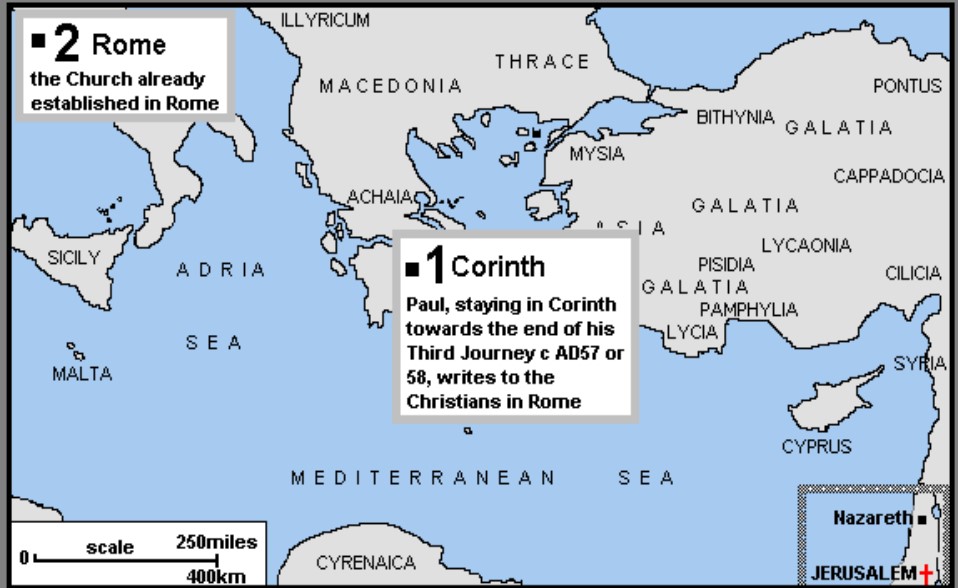
Date Written: About A.D. 57, from Corinth, as Paul was preparing for his visit to Jerusalem.
Setting: Apparently Paul had finished his work in the east, and he planned to visit Rome on his way to Spain after first bringing a collection to Jerusalem for the poor Christians there (15:23-28). The Roman church was mostly Jewish but also contained a great number of Gentiles.
Key Verse: “Therefore, since we have been made right in God’s sight by faith, we have peace with God because of what Jesus Christ our Lord has done for us” (5:1).
Key People: Paul, Phoebe
Key Place: Rome
Special Features: Paul wrote Romans as an organized and carefully presented statement of his faith—it does not have the form of a typical letter. He does, however, spend considerable time greeting people in Rome at the end of the letter.
The Blueprint
- WHAT TO BELIEVE (1:1-11:36)
- Sinfulness of humanity
- Forgiveness of sin through Christ
- Freedom from sin’s grasp
- Israel’s past, present, and future
Paul clearly sets forth the foundations of the Christian faith. All people are sinful; Christ died to forgive sin; we are made right with God through faith; this begins a new life with a new relationship with God. Like a sports team that constantly reviews the basics, we will be greatly helped in our faith by keeping close to these foundations. If we study Romans carefully, we will never be at a loss to know what to believe.
- HOW TO BEHAVE (12:1-16:27)
- Personal responsibility
- Personal notes
Paul gives clear, practical guidelines for the believers in Rome. The Christian life is not abstract theology unconnected with life, but it has practical implications that will affect how we choose to behave each day. It is not enough merely to know the gospel; we must let it transform our life and let God impact every aspect of our lives.
| MEGATHEMES | ||
|---|---|---|
| THEME | EXPLANATION | IMPORTANCE |
| Sin | Sin means refusing to do God’s will and failing to do all that God wants. Since Adam’s rebellion against God, our nature is to disobey him. Our sin cuts us off from God. Sin causes us to want to live our own way rather than God’s way. Because God is morally perfect, just, and fair, he is right to condemn sin. | Each person has sinned, either by rebelling against God or by ignoring his will. No matter what our background or how hard we try to live good and moral lives, we cannot earn salvation or remove our sin. Only Christ can save us. |
| Salvation | Our sin points out our need to be forgiven and cleansed. Although we don’t deserve it, God, in his kindness, reached out to love and forgive us. He provides the way for us to be saved. Christ’s death paid the penalty for our sin. | It is good news that God saves us from our sin. But in order to enter into a wonderful new relationship with God, we must believe that Jesus died for us and that he forgives all our sin. |
| Growth | By God’s power, believers are sanctified—made holy. This means we are set apart from sin, enabled to obey and to become more like Christ. When we are growing in our relationship with Christ, the Holy Spirit frees us from the demands of the law and from fear of judgment. | Because we are free from sin’s control, the law’s demands, and fear of God’s punishment, we can grow in our relationship with Christ. By trusting in the Holy Spirit and allowing him to help us, we can overcome sin and temptation. |
| Sovereignty | God oversees and cares about his people—past, present, and future. God’s ways of dealing with people are always fair. Because God is in charge of all creation, he can save whomever he wills. | Because of God’s mercy, both Jews and Gentiles can be saved. We all must respond to his mercy and accept his gracious offer of forgiveness. Because he is sovereign, let him reign in your heart. |
| Service | When our purpose is to give credit to God for his love, power, and perfection in all we do, we can serve him properly. Serving him unifies all believers and enables them to show love and sensitivity to others. | None of us can be fully Christlike by ourselves—it takes the entire body of Christ to fully express Christ. By actively and vigorously building up other believers, Christians can be a symphony of service to God. |
Hope your can join us! Darrell
Message Audio/Video and Outline: https://upwards.church/watch-now/leander-campus-videos
Watch Messages: YouTube-Upwards Church


 Upwards Church