
 One of the modern “Christian myths” that ought to be silenced says that when you trust Jesus Christ, you get rid of all your problems. You don’t.
It’s true that your basic spiritual problem—your relationship with God—has been solved, but with that solution comes a whole new set of problems that you didn’t face when you were an unbeliever, like: “Why do good people suffer and evil people prosper?” or “Why isn’t God answering my prayer?” or “When I’m doing my best for the Lord, why do I experience the worst from others?”
Believers who claim to be without problems are either not telling the truth or not growing and experiencing real life. Perhaps they’re just not thinking at all. They’re living in a religious dream world that has blocked out reality and stifled honest feelings.
Habakkuk wasn’t that kind of believer. As he surveyed the land of Judah, and then watched the international scene, he found himself struggling with some serious problems. But he did the right thing: he took his problems to the Lord.
WHO/WHAT? (1:1)
1:1. The prophet called his writing a maśśā’, which means a “burden.” The message Habakkuk presented is indeed a weighty one. “The burden that Habakkuk the prophet saw.” The word “saw” (ḥāzâh), when used of the prophets, often means to see in a vision (cf. Isa. 1:1; 2:1; Ezek. 12:27; Amos 1:1; Micah 1:1). Receiving glimpses from God into the future (i.e., “visions”) that actually come true – are indicators that the prophet is speaking on behalf of God.
GOD WHERE ARE YOU? (1:2-4)
“How long will my prayers go unanswered? Why, Lord, are you not answering my cry for help?” Habakkuk cries out. These questions have been asked by multitudes of God’s people in every generation and are still being asked today.
Habakkuk Asks Several Bold Questions:
- Why did God not answer his prayer and help His people (v. 2)? Habakkuk had apparently been pleading for God’s help for some time, but so far had received no answer. For this reason, he cried out asking God how long he must call for help, how long before the Lord would hear and answer his prayers. We do not know how long the prophet had been praying and seeking God’s help, but we can imagine it was quite some time, perhaps months or even years. He had been waiting for an answer to his prayers at least long enough to reach the point of frustration.
Habakkuk’s words How long show his agony over God’s seeming delay in responding to his concerns. Many believers today sense the same problem. They wonder why God seems silent when they pray.
Like we see in Psalms… (David, Pss. 13:1-4; 22:1, 11, 19-20; Asaph, Ps. 74:1-2, 10-11; the sons of Korah, Ps. 88), Habakkuk went to God to complain about his troubles and the troubles of his people. He described the injustice that was rampant around him and then asked “How long?” (Hab. 1:2)
2. Why did God not save His people from violence (v. 2)?The Hebrew word used for violence is hāmās. Why was God allowing the wicked to prosper and the righteous to suffer? Habakkuk’s concern was not only that his cries went unheeded but that the corruption continued unchecked. He cried out to God, Violence! but God seemed to do nothing. The stark word “violence” sums up all the chaos Habakkuk witnessed around him. The word is sprinkled throughout the book (1:2-3, 9; 2:17) like inkblots on a crumpled page in history.
3. Why did God seem to tolerate evil (v. 3)? Why did it appear He was doing nothing about all the wickedness, corruption, and injustice in the world? Why did God not stamp out…
- evil and wickedness?
- injustice and oppression?
- destruction and violence?
- strife and conflict?
- pain and suffering?
The prophet’s questions reveal just how low Judah had sunk. Judean society had become utterly corrupt. (Other prophets such as Jeremiah, Micah, Joel, and Amos describe in more depth just how depraved Judah had become.) The nation was crooked from the top levels of government to the lowest rungs of the social ladder. People greedily sought to defraud and cheat one another. Leaders, rulers, and the upper classes were especially guilty, even priests and ministers. Rulers were exploiting and oppressing the people under them. Leaders were hungry for money and abused their power and positions. Priests and ministers cared more about growing rich than about teaching the truth of God’s Word. The result was unrestrained greed, unfairness, strife, conflict, and violence. Habakkuk witnessed the people’s crimes and saw how wicked the people had become. He not only grieved over all the suffering caused by their wickedness, but he was also confused and frustrated. Why had God allowed things to get this bad? How could God let His people sink this low?
The Consequences of this Wide-Spread Evil:
1. The law was ineffective (v. 4a). It was being ignored. God’s law no longer had any effect on the people’s behavior. Its strength and influence had been sapped. The people had continued in sin so long that God’s Word had lost its power for them.
2. Justice had become corrupted (v. 4b). The rich and powerful were exploiting the poor and powerless. And the poor and powerless had become covetous—lusting for things that others possessed. People of every social class were trampling on each other to get what they wanted. Government at every level had broken down:
- Social support systems had fallen apart.
- Courts and the judicial system were plagued by corruption.
- Judges were taking bribes.
- Officials were demanding payoffs.
The end result was that justice was completely perverted. Corruption and dishonesty were the rule of the day and no one could get a fair deal.
3. The righteous were being surrounded by the wicked; they were hemmed in and being persecuted, treated unfairly (v. 4c). Since justice had been perverted, the righteous had nowhere to turn; they had no one to stand up for their rights. They would not bribe judges, pay off officials, or exploit the system to get what they needed. In this way, they were helpless and easily taken advantage of by those with no conscience, those who had no concern for obeying God’s laws.
*For Us Today, Evil is Still Present but We Have a Choice
In every generation, corruption and injustice wage war against God and His Word. All creation groans at the human race’s rebellion against God (Ro. 8:20-22). Human beings can be particularly evil. It is we who commit the greatest atrocities against God and His created order. It is we who commit the most hideous crimes against nature and each other. We were created to be human—placed at the pinnacle of God’s created order, made to govern and take care of the earth, even to fellowship with the Lord Himself. Instead, we abuse one another and the earth itself. We act inhuman and inhumane. Consider some of the violent and depraved acts people commit against one another every day…
- murder
- rape
- physical, sexual, and mental abuse
- child, spousal, and elder abuse
- prostitution
- pornography
- incest
- slavery
- war
- genocide
- discrimination
- oppression
- exploitation
…and on and on. Every one of these crimes is occurring somewhere in the world today, right at this very moment—and not infrequently. They are happening in every nation and city, in our own towns and neighborhoods. The question is not whether evil exists, but what are we doing about it?
All of us need to ask ourselves truthfully: Do the things that break God’s heart break our own hearts? Do the wicked deeds, the corruption, the injustice, and all the inhumane acts we witness and hear about every day disturb and distress us? Or, have we become calloused, cold-hearted, and insensitive to the evil around us? Are we ignoring the cries of those who suffer or who are in despair? Or do we cry out in prayer as Habakkuk did and plead for the Lord’s justice and mercy?
Every believer should pray as Habakkuk did. We should observe, stay informed, be on watch, and pray for the Lord’s justice. We should be willing to be burdened and broken by the evil around us. And, like Habakkuk, we should take our burdens to the Lord.
GOD’S ANSWER (1:5-11)
God’s revelation (v. 5): Habakkuk earnestly sought the counsel of God and the Lord gave the prophet a glimpse into the future. Keep in mind, however, that God does not owe us any explanation of His actions, but He does reveal Himself to those who truly seek Him. The lesson for us living today is that God has revealed Himself in His Word. And He will continue to do so for all who study His Word and who genuinely seek to learn His ways. Thus, God revealed His plans to His faithful minister.
1. The Lord was already at work in the world.
2. The Lord would execute the unbelievable: true justice and judgment on the nations. What Habakkuk was about to witness would be both unimaginable and astonishing. It would cause wonder and amazement among all who heard the message. In looking at the nations, Habakkuk and the people needed to wait and observe, to be alert and watch for what the Lord was about to do. It would astound and dumbfound them. They would not believe their own eyes.
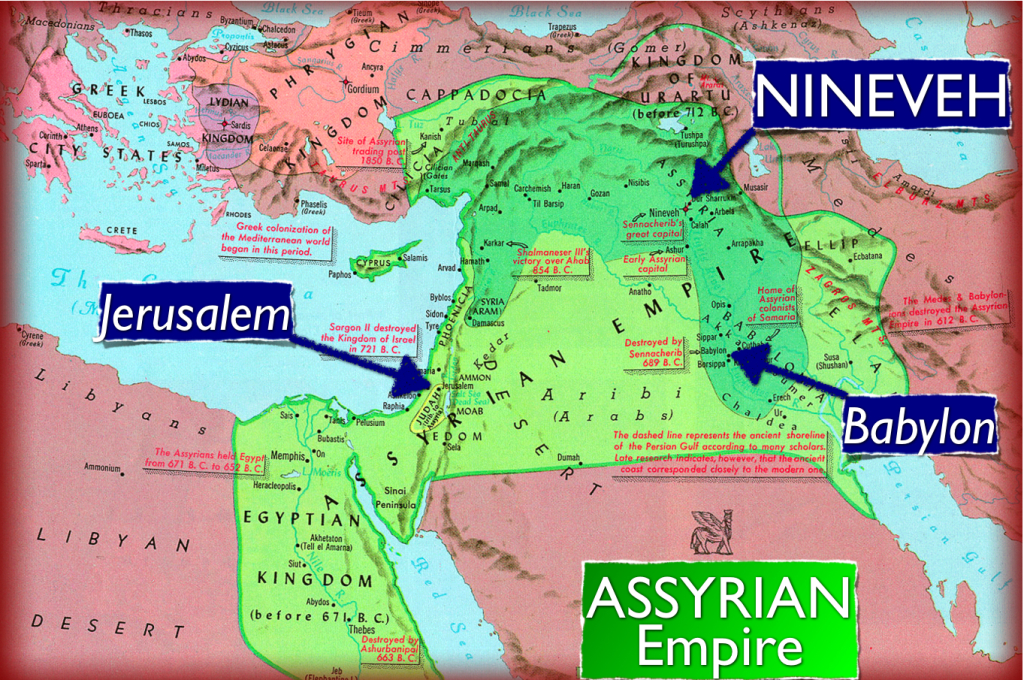 God’s explanation: He was raising up a strong and ruthless nation to serve as His agent of judgment (vv. 6-10). Babylon would be God’s instrument of punishment and correction. His people had become so corrupt, so sinful and rebellious, that they were beyond the point of repentance. God had already sent the people many warnings. Prophet after prophet had cautioned the people that they must repent or else face God’s coming judgment. But the people had mocked, persecuted, and even killed God’s prophets. They chose instead to listen to false prophets, corrupt men who preached a deceptive message of blessings in exchange for a livelihood and social acceptance. Consequently, the Lord had no choice but to judge His people. He had given them plenty of opportunities to repent.
God described the Babylonians, His agents of judgment, in terrifying terms. He did not disguise or downplay His message at all. Habakkuk and the people were being placed on high alert. They needed to prepare themselves for the judgment to come. Note God’s description of the Babylonians:
1. The Babylonians would be ruthless and would conquer the world (v. 6). In Habakkuk’s day, it was Assyria who had conquered Israel and also made inroads into Judah. Nonetheless, within a few short years, Babylon would begin to emerge as a world power and would conquer much of the known world. This would include the nations of Assyria, Egypt, Judah, and Edom. In doing so, the Babylonians would become known for their cruelty and brutality. They were considered a bloodthirsty and violent people.
2. They would be known as a feared and dreaded people (v. 7a). They were merciless, bent on destroying all in their path.
3. They were a law unto themselves (v. 7b). They feared and listened to no one, doing exactly as they pleased. They abided by no moral code, no code of honor among soldiers or enemy nations. They were a haughty and proud people who lived, fought, and conquered only to bring glory to themselves.
4. They would attack with a fierce, swift, and devouring army (v. 8). Their horses would be swifter than leopards and fiercer than hungry wolves at night. Their armies would swoop down like vultures ready to devour.
5. They would attack with an army bent on violence, sweeping in like a desert wind and taking prisoners as if they were scooping up sand (v. 9). In fact, the Babylonians were known for taking captives, then enslaving their enemies. They came up with a very shrewd method for keeping their enemies subdued. Enemies they did not enslave were resettled into foreign lands, sometimes in Babylon itself and sometimes in other territories it had conquered. Their intention was to completely absorb their enemies into the Babylonian culture and society and to cut them off from all ties to their own cultures and past. Therefore, they separated and scattered those they conquered in order to weaken them and keep them under control.
6. The Babylonians would scoff at kings, rulers, and their fortress cities (v. 10). They would easily capture even the strongest, most protected cities. The Babylonians did this by developing a cunning method for breaching a city’s walls. They built massive earthen ramps and piled them up against the walls, ever higher and higher, until they reached the top. Once these enormous mounds were high enough, they would simply march up the ramps and stampede into the city. In light of this, no city was safe against them no matter how tall or how thick its walls. It was just a matter of time before a city’s walls could be breached. This was the reason the Babylonians scoffed at rulers and laughed at fortified cities. And because of their many military successes, as well as their strength and ingenuity, they grew proud. In fact, Scripture describes the Babylonians as one of the haughtiest, most arrogant people on earth.
But the Babylonians were more than prideful; they were spiteful, vicious, and cruel. It was their practice when capturing a nation’s king and rulers to cage and parade them through city streets like circus animals. Even worse, they sometimes mutilated their captives as they would later do to King Zedekiah of Judah when they gouged out his eyes. Before this atrocity, though, Judah’s king was forced to look on while his sons were put to death. These events would happen in 586 B.C., right after the fall of Jerusalem.
God’s verdict: the Babylonians would also stand guilty before God for trusting in their own strength instead of in God (v. 11). Though God had already planned to use Babylon as His agent of judgment against Judah, He would still judge the Babylonians for all the evil they had done in the past and would do in the future. As Scripture says, they would pass over or sweep past like a strong wind and conquer other nations with ease. But they would also sweep past the stage of history and disappear from the world scene once God had judged them. Their selfish ambitions and thirst for glory would be used by the Lord, but they would nonetheless be held accountable for their crimes. Why? Note the Scripture—it declares that the Babylonians trusted their own strength: their own strength was their god. In other words, they gloried in their own power and promoted their own honor. It was because of such pride that they would be judged, just as Judah was going to be judged.
*For Us Today, God Still Judges Evil
Today the world asks, “Why doesn’t God do something about sin?” God has done something about it! Over two thousand years ago He gave His Son to die. He intruded into the affairs of the world. And He says that He is still going to intrude again in the affairs of the world — yet today the world goes along having a good time in sin. But God is still moving!
 Did you know Paul quotes from Habakkuk 1:5? It is recorded in (Acts 13:38-41). Paul is preaching a sermon in Antioch which he is saying that God has provided forgiveness and freedom from guilt. He did so through Jesus Christ! Don’t let the words of the prophets apply to you. God has done something in your days that you would never believe. He sent Christ to die for us sinners. Have you received the forgiveness Christ offers? Have you let His Spirit transform you from an evil person into a new creation in Christ? Judgment for sin is coming.
Each and every one of us will be judged by what we have done on earth. Listen to what God’s Word says:
- “For the Son of man shall come in the glory of his Father with his angels; and then he shall reward every man according to his works” (Mt. 16:27).
- “In the day when God shall judge the secrets of men by Jesus Christ according to my gospel” (Ro. 2:16).
- “For we must all appear before the judgment seat of Christ; that every one may receive the things done in his body, according to that he hath done, whether it be good or bad” (2 Co. 5:10).
- “And I saw the dead, small and great, stand before God; and the books were opened: and another book was opened, which is the book of life: and the dead were judged out of those things which were written in the books, according to their works” (Re. 20:12).
- “And, behold, I come quickly; and my reward is with me, to give every man according as his work shall be” (Re. 22:12).
SAY WHAT?! (1:12-17)
As far as Habakkuk was concerned, God’s first answer hadn’t been an answer at all. In fact, it only created a new problem that was even more puzzling: inconsistency on the part of God. How could a holy God use a wicked nation to punish His own special people?
(v. 12) The prophet knew God’s people were deserving of punishment, yet the Babylonians seemed deserving of far greater punishment. After all, they did not worship the Lord, the true and living God. They bowed down to worthless idols and gloried in their own strength. Babylon seemed to be more sinful, corrupt, and evil than Judah.
This was an honest concern. And those of us who read God’s answer to Habakkuk likely share his concern. We can understand the prophet’s astonishment, even his sense of frustration. However, despite Habakkuk’s shock, note how he approached the Lord. First, he did not approach the Lord with doubts about God’s character. Even though the prophet was confused and frustrated by the Lord’s reply, he did not doubt God’s goodness. Rather, Habakkuk began by acknowledging the Lord’s faithfulness, His holiness, and His eternal nature. He called the Lord, “my God,” and declared that He is the everlasting and Holy One (v. 12).
After affirming the faithfulness and holiness of God, Habakkuk continued his questioning. The problem of evil still haunted him. He was troubled that God would use a nation as wicked as Babylon to punish His own people. In fact,
Habakkuk had many more questions:
1. Why would God—who is too pure to look on evil—tolerate the wicked (v. 13a)? Previously, Habakkuk had asked the Lord why he, Habakkuk, must look at injustice and view evil. Now, however, the prophet appealed to the Lord’s purity and sense of justice. In essence the prophet asked the Lord how He, who is so pure and holy, could tolerate evil any longer. How could He even stand to look upon it? Habakkuk knew that God was greatly disturbed by the sins of His people and that the people were deserving of punishment. What he had not counted on was that they would be punished by so wicked a nation. God’s revelation that Babylon would be God’s agent of justice shocked the prophet. This led to his further confusion and to his next question.
2. Why would God remain silent while the wicked Babylonians destroyed people more righteous than they (v. 13b)? Surely the prophet did not consider the people of Judah righteous; nevertheless, they were still God’s people and not as wicked as the Babylonians, at least in his mind. Habakkuk knew the strength and the consuming greed of the Babylonians for world domination, that they would easily destroy his own small nation. For this reason, Habakkuk was genuinely puzzled by why God would allow this.
3. Why would God allow injustice? Why would He make His people like fish in the sea then allow the wicked to entrap them with hooks and nets? Why would God allow wicked people to rejoice over their cruel, evil behavior (vv. 14-15)?
Habakkuk compared his people to fish that are easily caught in nets. He knew they would be helpless and defenseless against the ruthless Babylonians. Habakkuk also knew that the Babylonians were proud. They would gloat and rejoice over their “catch.” He saw this as an injustice; it did not seem fair to him. How could God permit this to happen?
4. Why would God tolerate a people of idolatry, allow them to reject Him and worship the things (nets) that brought them prosperity (v. 16)? The prophet pleaded further, reminding God that the Babylonians were idolatrous. They worshipped their own strength and trusted in their own evil plots. Not only did they worship and seek guidance from false gods, they sought glory and honor for themselves. They trusted in their own strength and resources, not in the living God.
5. Why would God allow the wicked to keep on destroying without mercy (v. 17)? The prophet summed up his argument with a final question: Considering the wickedness of the Babylonians—their brutality, their arrogance, their idolatry, all of which was worse than Judah’s—how could God allow such a people to conquer His own? He did not know how God could allow these wicked people to keep on conquering other peoples without mercy, especially God’s own people—His children of promise.
*For Us Today, What Can We Do With Our Questions?
Like many today, Habakkuk had sincere questions. He had grown frustrated with the circumstances in his life and nation and with God’s apparent silence. However, Habakkuk still approached the Lord with reverence and awe. He approached God in humility, acknowledged God’s faithfulness, and accepted God’s sovereignty. Note several important truths:
1. Habakkuk was humble. Despite his sincere questions and complaints, despite the fact that he was troubled and confused, he approached the Lord in humility. He was careful not to show arrogance. This is a vital lesson for every believer and for every seeker of God. No matter how sincere we may be in our prayers, no matter how confused or frustrated we may become, we should approach the Lord in humility. We must remember who God is and who we are in comparison. He is the Creator of all heaven and earth, and we are the created.
2. Second, Habakkuk did not doubt the Lord’s character or faithfulness. In fact, his words were an expression of great faith. The prophet may have had questions about the Lord’s plans, but he did not doubt the Lord Himself. Even though God’s plans seemed unfair to him, he knew that the Lord would be faithful. He knew that in some way, in due time, the Lord would fulfill His promises to Israel. In faith and humility, the prophet declared God’s faithfulness and reminded himself of the eternal, unchanging nature of the God he served.
3. Third, Habakkuk did not doubt God’s sovereignty—His right to rule and to act as He sees fit (this becomes even more apparent in chapter 3). This is another critical lesson for us. Even when we do not get the answers we seek, or cannot understand the reasoning of God, we must acknowledge the Lord’s right to do as He pleases. He alone is Sovereign over the earth and all the affairs of mankind. He alone can work out the eternal plans He has for us and for all creation.
Next time (Ch. 2) we’ll see God’s answers to Habakkuk’s next set of questions!
Darrell
For more on about the series, When God Doesn’t, go to
Watch Messages: YouTube-Upwards Church

 Upwards Church