Have you been angry lately? I have. Anger is a natural God given emotion. It’s okay to be angry, what matters is what we do with our anger.
In today’s passage Jonah was angry, but not at things or even people, he was mad at God.
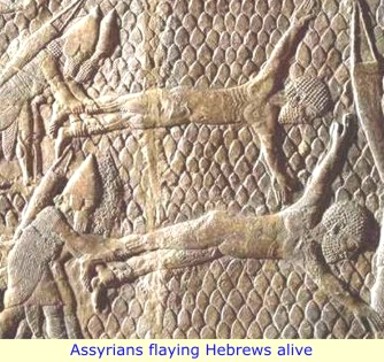
In the last post we see that Jonah delivered God’s message to the people of Nineveh. They responded by repenting of their wicked lifestyle and by putting their faith in God, one of the great revivals in history! If the story had ended here, Jonah would be one of the greatest prophets. But the story of Jonah DOESN’T end here because this is not just a story about God’s love for the wicked Assyrians. It is also a story of His grace and love for an angry, pouting prophet.
As chapter 4 begins, Jonah is not at all happy that the Assyrians have repented and turned to God. The story is not over because God’s work was not complete. The people of Nineveh were doing fine at this point—but not Jonah. He still needed work.
God is not satisfied with mere compliance to His will…which is apparently what He got from Jonah in chapter 3. What God wanted was for Jonah to value what He valued.
As we look at Jonah 4,
We see that Jonah is mad at God. Jonah then proceeded to prove that old statement that says, Man is angriest when he is the most wrong because he blew his top at God. He blamed Him for his own rebellious flight to Tarshish. He even threw scripture in God’s face quoting Exodus 35:6-7 but instead of using this familiar text to praise God, Jonah angrily uses it to complain and accuse. He says in essence, I left home because I knew You would do this, Lord! I knew that you were a gracious and compassionate God, slow to get angry and filled with unfailing love. I knew how easily You could cancel your plans for destroying these people!
Now, look closely at verse 4 which is God’s GENTLE response to Jonah’s tantrum. If I were God, I may have said something like, You want to see some fire and brimstone? Okay…here…enjoy! But, thankfully, God is not that way. The Lord has a LONG FUSE where we are concerned. The verse Jonah sarcastically quoted is something Moses had written down some 500 years earlier when he was up on the top of Mt. Sinai conferring with God. You may remember that the people had thrown a party characterized by drunkenness and immorality.
These people whom God had just delivered from bondage in Egypt expressed their thanks to their Heavenly Father by worshiping an idol of a golden calf. When God told Moses what was going on Moses came down from the mountain and angrily shattered the original copy of The Ten Commandments. God was ALSO angry and wanted to destroy the people…but in answer to Moses’ pleading on the people’s behalf, God reconsidered. He even promised to give Moses a new copy of the Ten Commandments. God took him back to the top of Mount Sinai, and before God began dictating these moral imperatives a second time, Exodus 34 says that He passed in front of Moses proclaiming,
The Lord…the compassionate and gracious God, is slow to anger, abounding in love and faithfulness.
Like any parent, God DOES get angry. But He puts up with a great deal before reaching His boiling point. He is PATIENT with us.
When I was about 10 years old through 15 years old I was active in the boy scouts. And I remember the seemingly limitless composure of our leaders, Mr. Murry, Mr Whorton seemed to be the most PATIENT men I have ever met. As we botched up setting up our tents, building campfires, raw breakfast over a smokey fires, not tying the right knots and just plain being filthy and awkward, I know we must have frustrated them at times, but they was soooo patient with us. Why? Because they knew we were just boys. They didn’t expect us to be more than we could be.
And God is patient with us for the same reason. As Psalm 103:14 says, …He knows how we are formed, He remembers that we are but dust. As our compassionate Creator, God understands our tenuous nature and factors in our frailty when He weighs His responses to us…which is why instead of a rebuke of fire and brimstone, God patiently asked Jonah a question: Is it right for you to be angry? The word that God uses for angry literally means “to burn” so what God really said, was, Jonah, do you have any valid reason to be so hot under the collar? Jonah’s only response at that point was to stomp off up into the hills where he could have a clear view of the city of Nineveh.
Understand, this is the second time Jonah has fled his area of ministry. He fled to Tarshish in chapter one rather than do what God wanted him to do and now he head for the hills when he should have been helping the newly repentant Ninevites to learn more about the God Who had so lovingly spared their city.
When Jonah reached an elevation where he was high enough to see all of Nineveh proper he built himself a little lean-to using some leafy branches…something to shield himself from the severe desert heat, which was pretty much a necessity because the average temperature in that region was between 110 and 120 degrees Fahrenheit. In other words, it was not a good place to allow yourself to get hot under the collar!
Jonah got as comfortable as he could and then he proceeded to sit there and look down on the Ninevites, thinking, “Just watch God! They are going to go back to their wicked ways…You’ll see! You can never trust a Ninevite. Once a Ninevite, always a Ninevite. I’m going to sit here until they slip and then force You to admit that You were wrong about these pagans! You’ll see that I am justified in my anger at what You have done!”
In other words Jonah trained his eyes on the Ninevites when he should have been examining himself. Like many of us, he was more concerned with the speck in his neighbor’s eye than he was about the log in his own eye!
As the day dragged on the leaves on the branches of his shelter dried up and began to fall off. And because of this Jonah began to get very hot. Perhaps adding to his discomfort were the sounds of the Ninevites in the city below continuing to mourn and pray to God in repentance! At this point verse 6 says that God caused a vine to grow up and provide shade for Jonah, to ease his discomfort. The Hebrew here literally says, to deliver him from his evil which means that even this vine was just a tool in God’s hands to free Jonah from his sinful attitude.
Verse 6 also says that, Jonah was very happy about the appearance of this vine. In fact it is the only time in the entire book that this grumpy prophet is happy about anything. Maybe his mood improved so because he thought this shady vine was an indication that God was coming over to his side. But, God was not done. He interceded once more and performed another miracle. This time instead of summoning a huge sea creature, He called forth a tiny worm to eat the root of the vine, causing it to wilt and ruin Jonah’s shelter. Then He threw another storm at Jonah. This time it is a desert windstorm known a Sirocco. When these winds blow in the temperature rises dramatically, and the humidity drops quickly. It’s like being inside a convection oven. The Septuagint accurately translates this sudden wind as “a scorcher.” It is almost as if God says, Okay, Jonah if you’re so up on being hot under the collar, here’s a little help. Then, as Jonah’s frustration builds, God said, Do you have a right to be angry about the vine?
Jonah angrily retorted, Yes, I do…even angry enough to die!
At this point God has Jonah where He wants him. God has used this vine and worm and wind as tools to show Jonah the absurdity of his demeanor to help him understand his own confused heart…to help Jonah realize that he is so full of self-pity that he has no pity left over for the repentant Ninevites. When the vine withered Jonah’s temper flared again and so God said in essence, You are angry about this plant that is pretty much here today and gone tomorrow but Nineveh has more than 120,000 children. If you can be concerned about something as trivial as a plant, should I not be allowed to be concerned about something as important as these people—not to mention their livestock?
It is in an awkward silence like this that the book of Jonah ends. God had the first word in this story and now He has the last word as well. Jonah doesn’t reply. He couldn’t because by now even he could now see how off base he has been. God got through to old Jonah in the end. In fact I believe he wrote this no-holes-barred autobiographical book and ended this way to show his repentance. One of Michelangelo’s paintings on the walls of the Sistine Chapel is called The Prophets and the Apostles…because in it he attempted to capture the faces of the great heroes of the Bible. Art critics say that of all the faces Michelangelo illustrated in this work, none had a more radiant countenance than Jonah. He painted old Jonah this way because he was convinced that Jonah did see his sin and change. Michelangelo believed that Jonah became a communicator of grace to his own nation through writing his book and his continued preaching as a prophet of God.
If we were honest with ourselves, I think we’d have to admit that there is a little Jonah in all of us. As Jimmy Draper has said, “Our concern should not be whether a man can live inside a fish, but whether the spirit of Jonah lives inside of us.”
At one time or other in our life each of us have rebelled against God just like Jonah did. We have refused to do things God has told us to do. We have done things He told us not to do. We have also had our own priorities mixed up. Like Jonah we have frequently been more concerned about our own physical comfort than about God’s purposes. And, as Jonah did in this last chapter, many of us have also willfully fanned the flames of anger…even anger that is directed at God Himself. This is because anger is possible in any relationship—even a relationship with our Creator. The closer you are to someone—the more passionate you feel about each other—the more likely you are to get mad at each other.
Maybe you are mad at God due to the seeming unfairness of life. Or maybe you have loved ones or friends….good, God-serving people, who have suffered in life. Perhaps you had children who have endured great pain or even died prematurely. Like Jonah, many of us have at times had misplaced expectations of what God ought to do, and when He didn’t do what we thought He should, we got mad. So the question is not, SHOULD we get mad at God? The question is, What should we do with our anger? How should we handle it?
The idea of getting mad at God is enough to make some people feel very uncomfortable. Many feel that somehow it is not right to be angry at God…the very idea seems blasphemous. Others are afraid to admit their angry feelings because they are intimidated by what they hear from some Christians. They’re given the impression that being angry toward God is the unforgivable sin.
They’re told, “Look, no matter what happens, just thank God and keep praising Him and keep a smile on your face at all times, because God has a wonderful plan for your life and He doesn’t need you second guessing it.” In other words, if you don’t feel like smiling at God—fake it.
On the one hand, we have the fact that at times in life many of us are angry at God and on the other hand we have the fact that many people think it’s totally unacceptable to be angry at God. So what’s the natural result? The result is that people paper over their emotions. When they experience anger because they feel like God’s being unfair or silent or unresponsive, they stuff that emotion down deep and paste a phony smile on their face. And yet that just aggravates problem, because when you bury your anger, you bury it ALIVE. It doesn’t go away; inevitably, it crawls out in other forms.
Think about it in terms of your relationship with your spouse. If you’re angry at something he or she did and you don’t deal with the anger, what happens? Communications stops, doesn’t it? Because we don’t like talking to people we’re mad at. We give them the silent treatment—we withdraw. And, eventually if nothing is done we begin to feel distant from our spouse. Well, the same is true in your relationship with God.
So ask yourself a very important question: Could the reason you have stopped praying and reading the Bible or enjoying worship be due to your unexpressed anger at God over some perceived injustice or unfairness?
Maybe you secretly blame Him because you married a man who said he was a Christian and he ended up to be abusive or he walked out on you. Maybe you harbor a lingering resentment because your parents divorced when you were a youngster or a loved one suffered and died, and God didn’t stop it. Maybe you’ve accused, convicted, and sentenced God because you feel He has let you down at a crucial time. You blame God because you think if He really cared, He’d do something about it.
One thing we can learn from Jonah is that it’s okay to express our honest emotions to God, even when we’re angry. Actually, it can even be advisable. As theologian Dr. Gilbert Bilezikian has said, God is a big boy. He can handle your anger. It won’t threaten Him or diminish Him or embarrass Him, and, really, it won’t even surprise Him, since as Psalm 44:21 says, He already knows the secrets of our hearts. When we’re dealing with the pain and confusion and frustration over the difficulties and seeming unfairness of life, God understands. He knows we’re people with messy emotions who live in a messy world. He created us. He sent His son to live among us. I’m not saying God deserves our anger. I’m not saying He’s done something wrong or is somehow at fault or that our anger is justified. I’m just saying He understands our anger. He understands when our pain causes us to be unreasonable and accusatory and confused. And like a true friend, He wants us to bring it to Him and talk it out. God is compassionate, not condemning. So we should feel free to be honest in our relationship with Him even to the point of being painfully honest.
The Bible records that this is what the heroes of the faith did. Listen to the angry words of Moses in Exodus 5: 22 -23: O Lord, why have You brought trouble upon these people? Is this why You sent me? Ever since I went to Pharaoh to speak in Your name, he has brought trouble upon these people, and You have not rescued Your people at all! God’s spokesman, Jeremiah, actually accused God of deceiving him and said his life had become so unbearable that he wished he had never been born. And King David didn’t shy away from venting his frustration toward God either. Listen to the way Psalm 13 begins: How long, O Lord? Will You forget me forever? How long will You hide Your face from me? How long must I wrestle with my thoughts and every day have sorrow in my heart? How long will my enemy triumph over me? Look on me and answer, O Lord my God!
Do you see? These men were honest. They expressed their real feelings to God instead of pasting on a superficial smile. And guess what? God didn’t destroy them for it! On the contrary, He included their angry words in the Bible for us to read and gain confidence that we, too, will find God compassionate and gracious, slow to anger, and abounding in loving kindness.
Darrell
www.Upwards.Church
Watch Messages: YouTube-Upwards Church
Facebook: Upwards Church