
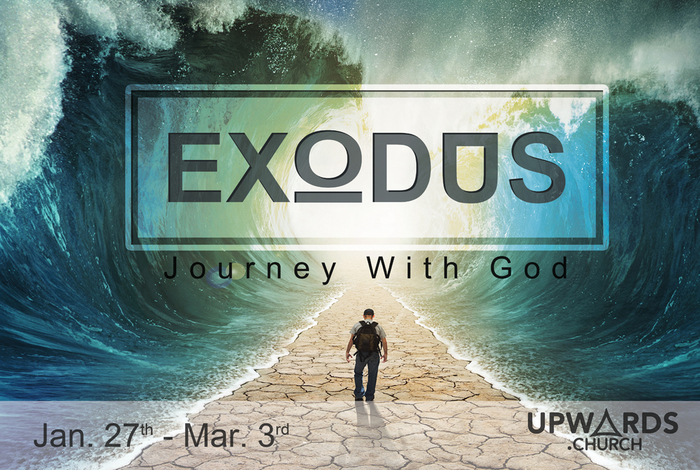
God Calls Us – Exodus 3

Imagine being called up by the President of the United States and being asked to come serve on his cabinet. The future of the entire country is on the line, and he wants your assistance. What would you do? What would you say?  Now, it’s highly unlikely that you will receive that call!  I’m certain that God will call you, just as he called Moses, and he called me.  God is a God who calls people to Him.  God is a personal God and a knowable God and He desires a relationship with us.

In our passage, we see that we are called by God and are asked to serve for Him. What will you do? What will you say?

In review, Moses grew up very aware of his heritage. He may have been raised as a Prince of Egypt, but he knew injustice against his people when he saw it. As a young man he killed an Egyptian who was brutalizing another Hebrew.

Justified or not, word got out and this lapse in judgment put Moses in hot water with Pharaoh. When a king is out to get you, it’s time to leave the kingdom, so Moses ran until he found himself in a place called Midian, located in part of what is now Western Saudi Arabia.

Moses would go on to spend 40 years there – fully 1/3 of his life – as a shepherd for his father-in-law. It was at the end of this period of time that he received the call that would change his life.

Exodus 3:1-4

During the interview that would follow his words, “Here I am,” Moses would display reverence, fear, curiosity and plenty of excuses.

Like Moses, there’s no doubt that when we hear the call of God, we’ll experience a whole range of emotions. But the measure of encounter is bound up in our willingness to respond in obedience to that call.

God knew where Moses was. He knew the concerns, the frustration and the desires of Moses’ heart. God had also heard the cries of the Children of Israel. All of this time, Moses had been on a training mission. God was preparing him for bigger and better things and making him ready to carry out the call of God in his life.

When God called Moses, Moses had plenty of questions.  One that I find interesting is this one, “who shall I say sent me?”  Do you remember God’s response?   And God said to Moses, “I AM WHO I AM.” And He said, “Thus you shall say to the children of Israel, ‘I AM has sent me to you.’ ”    In short this is the covenant name of God, the personal name of God translated later as “Yahweh.”

This designation who God is has great importance to our lives today because it’s the same term that Jesus uses to describe Himself in John 8: 58 58 Jesus said to them, “Most assuredly, I say to you, before Abraham was, I AM.” 

Did you see it?  God says to Moses through the burning bush, “I AM.”   Jesus says that He is “I AM”  This is called a Theophany or more specifically a Christophany.  “What is a theophany? What is a Christophany?”

“A theophany is a manifestation of God in the Bible that is tangible to the human senses. In its most restrictive sense, it is a visible appearance of God in the Old Testament.”   A Christophany is a pre-incarnate appearance of Christ in the Old Testament.  Jesus was speaking to Moses through the burning bush.  Jesus is still speaking and calling people to Himself.

I’ll never forget attending a revival service with my parents when I was 11 years old and through the evangelist, I understood that I knew about God, but I didn’t know Him personally and that through Jesus Christ, I could have a relationship with God.  I asked Jesus into my life that night.  My life changed from one of fear, uncertainty to one of feeling accepted and loved by Jesus, knowing my sins were forgiven and knowing that I was a child of God.  I’m thankful for Jesus calling me when I was 11.  Have you responded to Jesus call of salvation?  You can today by simply praying, “Thank you Jesus for loving me and dying on the cross for me.  I don’t understand it all, but I ask you into my life, turning from my sins and turning to you.”  Amen.

I also believe like Moses, that God calls us to serve him.   Moses had a task that God had called him to do. He was to lead God’s people out of slavery into the promise land.

As believers we are all called to ministry.  We are called to be a loving spouse.  No one can or should love Niki the way that I am called to. I have a responsibility to her, this is my ministry.  Going on a date and spending time with Niki is a ministry!  God has given me three children.  I am called to parent them, to bring them up to know God.  It is my responsibility.  Sure school, church and family may help me, but it’s my calling to parent my children.  Changing a diaper is a ministry!  We are called to be salt and light in a dark world, to make a difference where we live and work.  We have a ministry to our neighbors and co-workers.  It is our responsibility to help lead people to Jesus.  Your day to day job is a ministry! Will you accept the call to your spouse, kids, neighbors and co-workers?

We have a choice. We can make excuses like Moses did, which I have done plenty of times too.  Why wouldn’t we make excuses?  Its human nature to feel like we are out of our league, but God promises to be with us, and to teach us what to say.

Some of you are like me. I have often wondered why God would call a person like me.  I’m nothing special in my eyes; there are others who are smarter, stronger, better communicators, and better leaders.   I’m called to know Jesus, serve Jesus and another call I have had is to lead a church as a pastor.   I know that God has been with me to teach me and train me to be what he wanted me to be. All of my life has been a preparation time for this day, this hour, and this church.  And I’m still in training for the ministry that lies ahead.

Know this: God will not call you to go and give you a message and then leave you in the dark about how to get it out.  Wait on Him to finish. Moses received great detail from God concerning what he was to do and to whom he was to speak when he returned to Egypt.

We can expect similar direction. When we receive and listen to that guidance from God we won’t overreach and try to do things we’re not prepared for and we won’t underestimate what God wants to do and miss out on greater things.

When God Calls, We Must Do What He Asks of Us

There’s probably someone reading this, that has been hearing the call of God in your own life. Just like a bush that’s burning, there are unmistakable signs that He’s got your number.

Maybe you are hearing God calling you to give Him control of your life, experiencing a call to involvement in ministry or to helping people.  Wherever we are in life, if God is calling, listen to His voice. Come to him right now and find the fulfillment of being exactly where God made us to be.

I’m thankful for God’s call, that I know Jesus personally, that I have purpose as a spouse, dad and pastor.  I pray that you will answer God’s call too.

Darrell

www.Upwards.Church


Posted in Journey with God - Exodus | Tagged , , , , , , , , , , , | Leave a comment

Journey With God – Exodus Introduction

Are you ready for a journey with God?  “It’s time to go!” It’s time to move somewhere new.” These words sound good to those trapped or enslaved, but we may resist change because we prefer our present surroundings to a new, unknown environment. But what if God gives the order to move? Will we follow his lead? Exodus describes a series of God’s calls and the responses of his people.

Exodus is the great book of deliverance, of salvation, and of redemption. Exodus clearly pictures and proclaims that God: delivers us, saves us and redeems us.

God’s great deliverance is pictured for us in the experiences of Israel. Israel was a new people created by God in ages past to be His witnesses, the people of God who were to bear witness to the only living and true God.

Throughout Exodus, it is helpful to remember this fact: Israel was a whole new race of people, a race created by God to carry on the godly line of believers and eventually to bear the promised seed, the Savior of the world. What had happened was this.

From the very beginning of human history, man had sinned and brought death upon the human race. But to counteract sin and death, God had promised to send a Savior (the promised seed) through the godly line of Adam and his son Seth. Time and again God had to intervene to keep the godly line of believers pure. This He did right up to The Great Flood. At that time God chose Noah, and later the line of his son Shem, to carry on the godly line of people. God kept His promise and kept the hope of the promised seed and Savior alive.

But even after The Great Flood, the human race, just as it had always done, continued to try to be their own god and do things their way, not God’s.  Therefore God had to once again intervene in human history. This He did by calling Abraham to father a whole new race of people, a people who were to carry on the godly line and give birth to the promised seed and Savior of the world, the Lord Jesus Christ.

As stated, Israel was a whole new race of people, the descendants of Abraham. God had created Israel to carry on the godly line of believers and to eventually bear the promised seed, the Savior and Messiah of the world. The first great Book of the Bible, Genesis, covered the birth and early beginnings of Israel.

The second great Book of the Bible, Exodus, begins with Israel (God’s People) in Egypt. Remember that Egypt is a picture, a type, a symbol of worldliness. Egypt was a society that had reached the summit of prosperity, technology, and pleasure; but the people had rejected the only living and true God (Jehovah) and created their own gods to follow. Israel, the new race of people who believed in the true God, sat right in the middle of Egypt; and Egypt was oppressing and enslaving Israel. The people of God were being persecuted by the world. Israel needed God’s help. The people who believed in the true God (true believers) needed God to intervene on their behalf. The believers of that day needed God to deliver them from the persecution and oppression of the Egyptians.  The subject of Exodus is our great need for deliverance, salvation, and redemption.

Exodus means “the way out” and tells the story of redemption by blood and by power. A summary of Exodus is found in the New Testament in Hebrews 11:23-29, which says: “By faith Moses, when he was born, was hid three months of his parents, because they saw he was a proper child; and they were not afraid of the king’s commandment. By faith Moses, when he was come to years, refused to be called the son of Pharaoh’s daughter; choosing rather to suffer affliction with the people of God, than to enjoy the pleasures of sin for a season; esteeming the reproach of Christ greater riches than the treasures in Egypt: for he had respect unto the recompence of the reward. By faith he forsook Egypt, not fearing the wrath of the king: for he endured, as seeing him who is invisible. Through faith he kept the passover, and the sprinkling of blood, lest he that destroyed the firstborn should touch them. By faith they passed through the Red sea as by dry land: which the Egyptians assaying to do were drowned.”

Exodus has been called the sequel to Genesis. Four hundred years had passed since Joseph moved his family to Egypt. These descendants of Abraham had now grown to over two million strong. To Egypt’s new pharaoh, the Hebrews were foreigners, and their numbers were frightening. Pharaoh decided to make them slaves so they wouldn’t upset his balance of power. As it turned out, that was his biggest mistake, for God then came to the rescue of his people.

Through a series of strange events, a Hebrew boy named Moses became a prince in Pharaoh’s palace and then an outcast in a wilderness land. God visited Moses in the mysterious flames of a burning bush, and, after some discussion, Moses agreed to return to Egypt to lead God’s people out of slavery. Pharaoh was confronted, and through a cycle of plagues and promises made and broken, Israel was torn from his grasp.

Moses figures prominently in the Book of Exodus. He is the author of the Pentateuch which includes the first five books of the Old Testament — Genesis, Exodus, Leviticus, Numbers, and Deuteronomy. In the Book of Exodus, Moses’ life is divided into three forty-year periods:

  1. Forty years in Pharaoh’s palace in Egypt (received the best education in the world)
  2. Forty years in the desert in Midian (as a shepherd, becoming a family man)
  3. Forty years in the wilderness as leader of Israel

Moses’ training in Egypt, evidently in the Temple of the Sun, did not prepare him to follow God in leading Israel out of Egypt. God trained him in the desert for forty years to reveal to him that he could not deliver Israel alone. “God gave Moses a B.D. (Backside of the Desert) degree.”

It should be noted that after God prepared Moses to deliver his people, He sent him back to Egypt after forty years. Moses is to assemble elders of Israel and go to Pharaoh. Pharaoh will refuse to let Israel go. His refusal will open the contest between God and the gods of Egypt.

Egypt was dominated by idolatry — “gods many and lords many.” There were thousands of temples and millions of idols. Behind idolatry is Satan. There was power in the religion of Egypt.  As God performed miracles through Moses, the sorcerers and magicians in Egypt were able to somewhat duplicate these acts through satanic methods.    Pharaoh asked, “…Who is the Lord, that I should obey his voice to let Israel go? I know not the Lord, neither will I let Israel go” (Exod. 5:2). God introduced Himself. Pharaoh got acquainted with God and acknowledged Him as God. “And Pharaoh sent, and called for Moses and Aaron, and said unto them, I have sinned this time: the Lord is righteous, and I and my people are wicked” (Exod. 9:27).

A question arises from this book: Why the plagues? They were God’s demonstration of power over the gods of Egypt. Each plague was directed against a particular god in Egypt. “For I will pass through the land of Egypt this night, and will smite all the firstborn in the land of Egypt, both man and beast; and against all the gods of Egypt I will execute judgment: I am the Lord” (Exod. 12:12). God wanted to reveal to His own people that He, the Lord, was far greater than any god of Egypt and that He had power to deliver them.

God led Moses and the nation of Israel, and he wants to lead us as well. Is he preparing us, like Moses, for a specific task? He will be with us;  let’s obey and follow. Is he delivering us from an enemy or a temptation? Trust him, and do what he says. Have you heard his clear moral directions? Read, study, and obey his Word. Is he calling you to true worship? Discover God’s presence in your life, in your home, and in the body of assembled believers. Exodus is the exciting story of God’s guidance.  Let’s learn it with the determination to follow God wherever he leads.

I hope you can join us this weekend and journey with God!

Darrell

www.Upwards.Church

Sources:   The Preacher’s Outline & Sermon Bible – Exodus I, (Chattanooga: Leadership Ministries Worldwide, 1996), WORDsearch CROSS e-book, Under: “I. ISRAEL AND EGYPT: THE OPPRESSION OF GOD’S PEOPLE BY A NATION THAT HAD REJECTED GOD, 1:1-22”.
Vernon McGee, Thru The Bible with J. Vernon McGee, (Nashville, TN: Thomas Nelson, 1983), WORDsearch CROSS e-book, Under: “EXODUS”.
Life Application Study Bible, (Wheaton, IL: Tyndale, 1988), WORDsearch CROSS e-book, 94.


Posted in Journey with God - Exodus | Tagged , , , , , , | Leave a comment

New Beginnings – Ruth 4

Are you ready for a new beginning?  God can give each of us a new beginning in Jesus Christ, our redeemer.  The book of Ruth is the eighth book in the Bible. In biblical numerology eight is the number for new beginnings.  Ruth’s story starts with death and leads to new life.  God changed her life and her circumstances and He still changes lives today.   In chapter four we see the word “redeem” or “redeemer” 12 times.

To redeem, what is that?  It means to “buy” or “buy back.”

A gemstone dealer was walking down the aisle at a Gem and Mineral Stone Show in Tucson, Arizona. As he walked along he saw a blue-violet rock about the size and shape of a potato. He picked up the rock and looked at it closely. He then asked the owner of the stone how much he wanted for it. The owner side that he would take $10 for it since it wasn’t much to look at. The dealer bought it and took it back to his lab where he began to examine it and refine it.

That ugly blue-violet rock has been certified today as a 1,095 carat natural star sapphire. It is 800 carats larger than any other stone of its kind in the world. At its last appraisal its value was set at $2,280,000. It took someone who loved rocks to really see its inner value. To the other man, it was just another ugly dull rock, not worthy of notice.

To Boaz, the land of Naomi wasn’t the real value. The real value was found in who came with the purchase. Ruth was the greatest value of all. Because he kept the faith and didn’t give up, but was willing to pay the price for redemption, he now had a beautiful bride and a place in the lineage of the Messiah. Ruth’s prayers were answered and she became Boaz’s bride. The miracle had finally come to pass and their dreams had come true.

What a great love story. But it’s much more than that. It’s a story that foretells the love that Jesus has for his Bride, the church. It’s the story of his great love for you and I while we were living in the poverty of sin.

Ruth had come a long way; from the land of death and idolatry, to committing herself to God and His people placing herself under the wings of God, into the heart and home of Boaz.  We too were living in death and have been brought close by the blood of Christ.  We can be in the family of God and one of these days we are going to be in His home!

We left Ruth in Chapter 3, waiting for Boaz to work on her behalf. In chapter 4 we will see the work of Boaz. Christ, like Boaz, will not move in your behalf until you claim Him as your Kinsman-Redeemer. Christ died on the Cross for you; He went through hell for you; and He even today stands at the door of your heart and knocks,  but He won’t crash the door. We have to invite Him in.

Boaz is ready to act in the capacity of kinsman-redeemer. Ruth is to wait and let him be the one to make all the arrangements. He is the one now who will step out into the open and claim her, actually jeopardizing everything that he has and everything that he is. But he wants her; he loves her. This is the great message of this book: redemption is a romance; because God loves us He redeemed us.

The first 12 verses of Ruth Chapter 4 contain the legal proceedings that Boaz had to go through.  All the witnesses hear and are agreeable with this determined decision of Boaz. They ask God’s blessing on his house and his new bride.

Right after the town hall meeting, Boaz marries Ruth. And blessing comes to the married couple. We read, God opened Ruth’s womb and provided them a son.

And then we get the rest of the story, from Ruth comes the lineage of David and Jesus.  Up until now, Ruth has been a living, breathing illustration of what love and redemption look like, we been treated to a picture of how deeply God cares for people, even wayward people.  But then all of a sudden, the writer tells us there’s more to the story than we could have ever imagined.

Ruth, who came to Bethlehem from pagan Moab, is the great-grandmother of King David of Israel, the man after God‘s own heart. And, here in the little town of Bethlehem, where King David’s grandpa was born, David would also be born, and much later, the King of Kings and Savior, the Son of David, would also here be born into the world.

The mention of David’s line communicates something more. God providentially works even in the middle of a perverse godless generation to preserve a godly family line through whom the Messiah would come. 70 decades before David was born, God powerfully weaves the threads of history together, to the smallest details of human activity, and accomplishes His purpose. He called an unbelieving Gentile woman to Himself in a pagan country. He reversed the bad decisions Elimilech and Naomi made. He worked in spite of a marriage between a Jewish son and a Gentile woman.

God drew Ruth to Himself — and she became faithful where her mother-in-law had not been. And her faithfulness, and Boaz faithfulness, laid the foundation for the faithful godly heritage that would become David’s.

There’s still one more detail.  We should know that Ruth’s name is mentioned in only one other place in God‘s Word — in Matthew chapter 1 — it appears in the genealogy of Jesus Christ. The staggering thing you’ll discover there is, Ruth is one of five women who were part of the line of Christ. And the list is not at all the sort of women we’d expect. There is Tamar, whose husband died, and who subsequently deceived her father-in-law into sleeping with her, by dressing as a prostitute — so she could raise up children. Also in that list is Rahab, from Joshua 1 and 2. She actually was a prostitute, as well as a Gentile — but she was the one who in faith, hid Israel’s spies who came to see the promised land. She converted to Judaism and was the great-great-grandmother of David. The there’s David’s wife Bathsheba — she committed adultery with David, but yet her second son Solomon followed David to the throne and also entered into Christ‘s line. Finally there is Mary, the mother of Jesus. Even though she was a godly teenage woman from a rural town, she spent a lifetime with a charge hanging over her head — that she was pregnant before she was married.

The point is this: God has always been in the business of redeeming people and giving new beginnings.

Long before our Redeemer came, God redeemed lives — not only in Israel and but outside it as well. People assumed to be without hope and without merit, God redeemed, again and again. He does the same today.

Like Ruth, We couldn’t help ourselves. We couldn’t pay the price for redemption, so Jesus paid it for us. He is our Lord and our Savior, and He is the Bridegroom who will soon come to take his Bride away.

Jesus knew the value of your soul and mine.  Like Boaz Jesus redeemed the earth and bought back his creation that was under Satan’s claim because of the sin of Adam. Jesus came to redeem all of creation from the hand of the devil and the power of sin.

Jesus redeemed all of creation and he is going to soon take possession of it all once again forever, but his crowning achievement was the redemption of man who was created in God’s own image. Like Ruth, you and I are part of that redemption. The price of redemption purchased our salvation too, and that’s what Jesus was really after all along. Every other part of the redemption was secondary to the redemption of your soul because Jesus loved each of us, so much, that he was willing to pay the price on the cross just to buy our freedom and bring us home with him to Heaven forever.

That’s what we are worth to God. The world may call us hopeless, good for nothing, poor and unimportant, but Jesus loves us and He calls us a Child of God, his brother or sister, and his beautiful Bride. We are more valuable to him than all of creation, and all of Heaven. His great love for us is beyond understanding. In God’s eyes we are the most precious, valuable, priceless creature in the universe.

Will you let Christ be your redeemer and give you a new beginning?

Darrell

www.Upwards.Church

Sources:
Bible Exposition Commentary (BE Series) – Old Testament – The Bible Exposition Commentary – History.
Thru The Bible with J. Vernon McGee.
Rejoicing Because of Redemption,  James May
The Best is Yet to Come, Dean O’Brian
Posted in New Beginnings - Ruth | Tagged , , , , , , , , | Leave a comment

Waiting for True Love – Ruth 3

Do you love a good love story?  I enjoy reading about plants, landscaping, history, my sports teams and theology but there’s something about love that touches something deep inside of me.

Ruth is love story.  Ruth was single and financially destitute, but she was faithful, determined and trusted God.  While she waited for her situation to change she kept her hope alive.

Ruth’s story begins with death but ends with marriage and a baby.  Yes it’s a romantic story but, behind the scenes is the faithful love of God who romances every hopeful heart.

In review: Chapter 1 opened with tragic circumstances. Naomi and her husband ran off to Moab to find food during a famine. They fell for the “Grass is Greener Myth.” The head of the family Elimilech and both his sons died in Moab.  The boys left behind two young widows: Orpha stayed in Moab, and Ruth returned with Naomi to her land, people and to God.

Naomi and Ruth returned to Bethlehem as poor beggars. But then, in chapter 2, suddenly, there arose the possibility of resolution in their circumstances. Ruth went out to glean in the barley fields and there met God’s good and righteous man, Boaz.  Boaz showers encouragement, opportunities, food, shelter, fellowship and blessings upon Ruth.

Chapter 3 begins the love story which is a key component of this book. The love that begins between Ruth and Boaz reminds us of what the book is about. Ruth is a story of redemption. Redemption has to do with being rescued or delivered.

Ever since Boaz came into Ruth’s life, Naomi has been a different person. Her concern is no longer for herself and her grief but for Ruth and her future. It’s when we serve others that we ourselves receive the greatest joy and satisfaction.

When the two widows came to Bethlehem, their plan was that Ruth take care of Naomi and both of them eke out an existence the best they could. But now Naomi has a new plan: Ruth is to marry Boaz, and then all of them can live happily ever after. Naomi could tell from Ruth’s report that Boaz would be in favor of the plan, so she began to set things in motion. In that day, it was the parents who arranged marriages; so Naomi was not out of place in what she did.

Keep in mind that the Book of Ruth is much more than the record of the marriage of a rejected alien to a respected Jew. It’s also the picture of Christ’s relationship to those who trust Him and belong to Him. In the steps that Ruth takes, recorded in this chapter, we see the steps God’s people must take if they want to enter into a deeper relationship with the Lord. Like Ruth, we must not be satisfied merely with living on leftovers (2:2), or even receiving gifts (2:14-16). We must want Him alone; for when we have Him, we also have all that He owns. It’s not the gifts that we seek, but the Giver.

Here’s what to do when waiting for true love,

Listen to Wise Counsel.   Ruth 3:1-5 Naomi had some instructions for Ruth to help her succeed and Ruth willingly listened.  God has placed wise people in our lives to give us instructions and wise counsel.  Will we listen to them or do we think we have all the answers?  If we think we can do everything ourselves and not listen to our parents, mentors, and godly people we will run into trouble.  God’s word gives us wise counsel. the Holy Scriptures, which are able to make you wise for salvation through faith in Christ Jesus. 16 All Scripture is God-breathed and is useful for teaching, rebuking, correcting and training in righteousness.’  2 Timothy 3:13-16

By the way, there was nothing immoral about this procedure that Naomi set for it was the only way Ruth could offer herself to Boaz in marriage in a way that was culturally right and that followed the customs and biblical laws that they lived by.  She had to put herself at the feet of the lord of the harvest, and he would do the rest.

Suppose that on her way to the threshing floor, Ruth decided to take a different approach. Why lie at the feet of the man you want to marry? Why uncover his feet and then ask him to put a corner of his mantle over you? Certainly there ought to be a better way! Had she used another approach, Boaz would have been confused; and the entire enterprise would have failed.

The Old Testament priests knew how to approach God because He gave them their instructions in the law. New Testament Christians know how to approach God because in the Word He has told us what is required.  Ruth followed these instructions and everything worked out perfectly.

Secondly we need to…

Put Ourselves at the Feet of Jesus.   Four times in this chapter there is mention of feet (3:4, 7-8, 14). Ruth had fallen at the feet of Boaz in response to his gracious words (2:10), but now she was coming to his feet to propose marriage. She was asking him to obey the law of the kinsman redeemer and take her as his wife.

What is a kinsman redeemer? A kinsman or family redeemer was a relative who volunteered to take responsibility for the extended family. When a woman’s husband died, the law (Deuteronomy 25:5-10) provided that she could marry a brother of her dead husband. But Naomi had no more sons. In such a case, the nearest relative to the deceased husband could become a family redeemer and marry the widow. The nearest relative did not have to marry the widow. If he chose not to, the next nearest relative could take his place. If no one chose to help the widow, she would probably live in poverty the rest of her life, because in Israelite culture the inheritance was passed on to the son or nearest male relative, not to the wife.

We have a family redeemer in Jesus Christ, who though he was God, came to earth as a man in order to save us. By his death on the cross, he has redeemed us from sin and hopelessness and thereby purchased us to be his own possession I Peter 1:18-19. This guarantees our eternal inheritance.

Ruth understood:  This man Boaz is my kinsman-redeemer. I have a right to claim him. In fact, I must claim him as my kinsman-redeemer. I will go tonight and let him know.

Like Ruth, I believe we need see our need for redemption and go to Christ. We need to see our need for something better in our lives and go to Christ.  What needs redemption in your life?  Is it only your soul or could it be your health, finances or relationships?  For change, for true love, for redemption we need to put our all our lives at the feet of our redeemer.

In the responses of Boaz to Ruth, we see how the Lord responds to us when we come to Him. Just as Boaz spoke to Ruth, so Christ speaks to us from His Word.

He accepts us (Ruth 3:8-10). Boaz might have refused to have anything to do with Ruth; but in his love for her, he accepted her. He even called her “my daughter” and pronounced a blessing on her.  Jesus accepts us just like this!

He assures us (Ruth 3:11-13). In the midnight darkness, Ruth couldn’t see the face of Boaz, but she could hear his voice; and that voice spoke loving assurance to her: “Fear not!” Our assurance is not in our feelings or our circumstances but in His Word.

Lasting, in waiting for true love we must

Wait for Christ to Work on our Behalf. Ruth 3:18

Since Naomi and Ruth believed that Boaz would accomplish what he said he would do, they waited patiently until they received the good news that Ruth would be a bride.

I confess that waiting is one of the most difficult things for me to do, whether it’s waiting in a line at the grocery store or waiting for God to answer a prayer. I like to see progress and I like to see things happening. Perhaps that’s why the Lord has often arranged for me to wait.

Boaz was busy working for Ruth, and Naomi was confident that he wouldn’t rest until he had settled the matter. “Being confident of this, that he who began a good work in you will carry it on to completion until the day of Christ Jesus.”  Phil. 1:6  It encourages my heart to know that Jesus Christ is working unceasingly in and for His people.

I have put myself at the feet of Jesus my redeemer and I will trust Him to work on my behalf, will you?

Darrell

www.Upwards.Church


Sources: Life Application Study Bible, (Wheaton, IL: Tyndale, 1988), WORDsearch CROSS e-book, 401.
Warren W. Wiersbe, The Bible Exposition Commentary – History, (Colorado Springs, CO: Victor, 2003), WORDsearch CROSS e-book, 191.


Posted in New Beginnings - Ruth | Tagged , , , , , , , , | Leave a comment