
 Life is too complex, its problems too challenging, and our own strength too limited to allow us to cope without help. Defining the exact need may not be as crucial as admitting our incompleteness. But recognizing our emptiness before Christ will allow him to work a miracle in us. He will apply his powerful resources to our lives. Have you expressed to God your lack that only he can fill?
Turning water into wine was Jesus first miracle (2:11). This small display of his divine power was enough to convince the disciples of his identity and initiate their trust in him (2:11), though later events demonstrated that they only partially understood Jesus’ purpose.
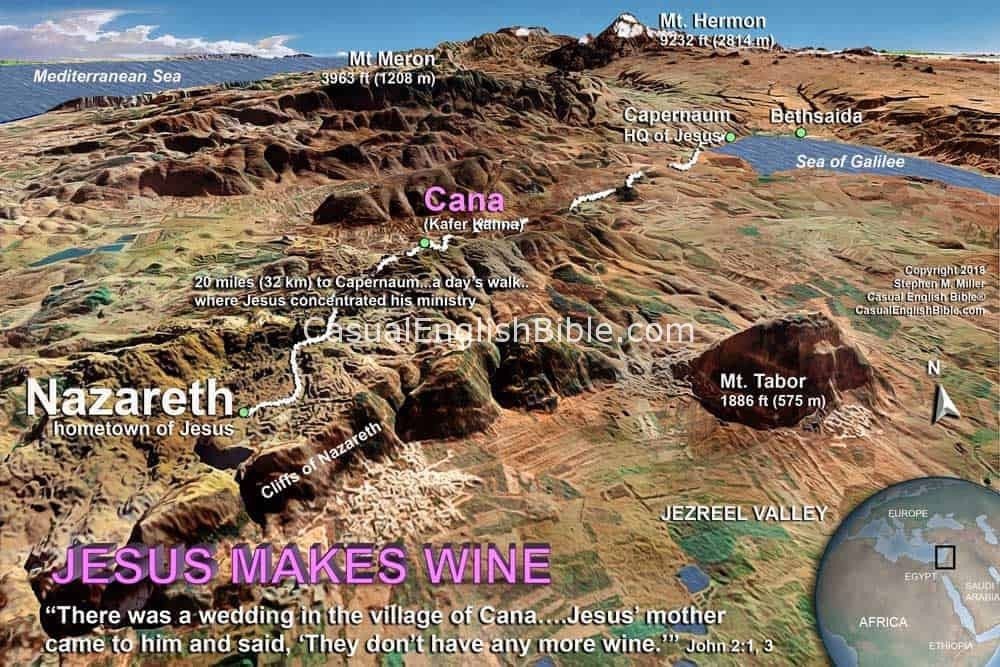 2:1-2 A wedding celebration could last as long as a week (see Genesis 29:27-28). Cana was a town about nine miles north of Nazareth. The only references to the town of Cana are found in John’s Gospel. Two of Jesus’ miracles are connected with that location: creating wine from water (2:1-11) and healing an official’s son (4:46-54). Nathanael, one of the twelve disciples, is described as a native of Cana (21:2).
 Jesus’ mother, Mary, was a guest, and Jesus and his disciples were also invited. When a wedding was held, the entire town was invited, and most made the effort to come (it was considered an insult to refuse an invitation to a wedding). Cana was Jesus’ home region, so he may have known the bride and groom. In any case, his presence was intentional.
Jesus’ attendance and his actions at this wedding indicate his approval of the celebration. (See Jesus’ comments about marriage in Matthew 5:31-32; 19:3-9.) Images of Jesus as a dour-faced Messiah, passing judgment on all in his path simply fail to account for the biblical evidence that he was completely at home in festive occasions. In fact, part of his rejection by religious leaders was based on their perception that he enjoyed being with sinners more than was appropriate (see Mark 2:15-16 and Luke 5:30). Jesus’ life is the most profound statement ever made against joyless spirituality.
*LIFE APPLICATION – LET’S CELEBRATE!
Jesus was on a mission to save the world, the greatest mission in the history of mankind. Yet he took time to attend a wedding and take part in its festivities. We may be tempted to think we should not take time out from our “important” work for social occasions. But we need to see these social occasions as part of our mission. By participating in these events, Jesus was able to be involved with people, the very ones he came to save. Likewise, our efforts to represent Christ should not exclude joyous times of celebration with others. We can develop balance in our lives by bringing Jesus into times of pleasure as well as times of work.
2:3-4 The week-long weddings in Jesus’ time must have had about the same impact on family budgets as weddings do today. Banquets were prepared for many guests, and everyone spent several days celebrating the new life of the married couple. To accommodate the guests, careful planning was needed. Running out of wine meant more than embarrassment; it broke the strong unwritten laws of hospitality. Jesus was about to respond to a heartfelt need. Mary told Jesus of the predicament, perhaps expecting him to do something about it. Some believe Mary was not assuming that Jesus would perform a miracle; she was simply hoping that her son would help solve this major problem and find some wine. Tradition says that Joseph, Mary’s husband, was dead, so she probably was used to depending on her son’s help in certain situations. Although Mary did not know what Jesus was going to do, she trusted him to handle the problem. Others point out that Mary had known for a long time about her son’s divine commission. Perhaps she wanted Jesus to do something in the presence of her relatives and/or friends (who may have heard some reports about Jesus) that would prove he was the Messiah. The tension between Jesus’ verbal response, “How does that concern you and me?” and his later actions leaves the question of Mary’s expectations undecided. But Mary’s trust is unmistakable!
In any case, Jesus made it clear to his mother that his life was following a different timetable; he lived to carry out his Father’s business, according to his Father’s plans. Whatever Jesus’ intended response to the problem at hand, he expressed to his mother a firm reminder that his priorities were different from hers—his time had not yet come. The “time” to which Jesus referred was the time of his glorification, when he would receive his true place and position, not as an earthly king, but as the Messiah, God’s Son, Savior of mankind, seated at God’s right hand (see 7:30, 39; 12:23-24; 17:1). This glorification would occur after his death and resurrection, for it would be only through death and resurrection that Jesus could accomplish what he came to earth to accomplish—to offer salvation to all people.
*LIFE APPLICATION – NO MORE WINE
Mary’s simple action illustrates that receiving our Lord’s filling and healing begins with recognizing our need. For Mary, it was easy—the wine was gone. It may be more difficult for us to identify our problem. But left to our own resources, we will run dry. Are you willing to do what he asks of you?
2:5-6 Mary was not promised any kind of action but realized that Jesus might do something about the situation, even though his remark in verse 4 must have limited her expectations. Nevertheless, Mary’s words to the servants to do whatever they are told show her respect for Jesus’ authority.
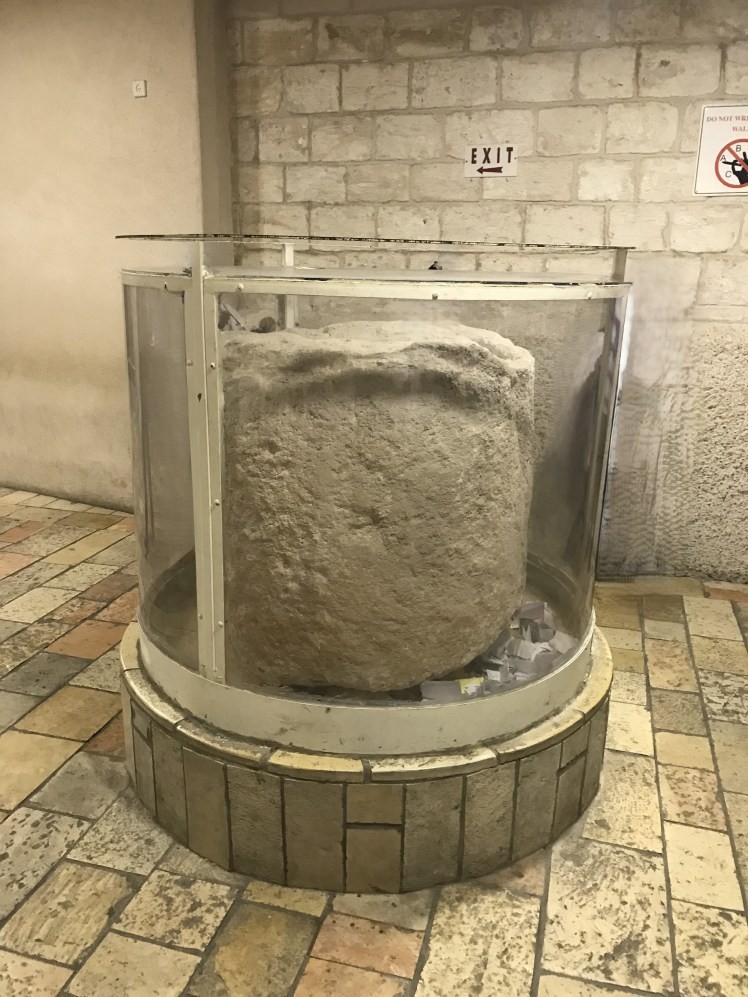 The six stone waterpots were normally used for the ceremonial washing of hands as part of the Jewish purification rites before and after meals (see Matthew 15:1-2). When full, each jar would hold twenty to thirty gallons.
*LIFE APPLICATION – DO IT!
We would do well to follow Mary’s command to the servants to “Do whatever he tells you” every moment of our lives. No one could have guessed what Jesus was about to do. But Mary’s willingness to obey was settled beforehand. We, too, must decide that our first reaction will be to obey rather than to question what God directs us to do. Like the servants, we will rarely be told beforehand all the details of what God plans to do.
Are you ready to do what he says? Ask yourself:
ls there a cherished sin? Confess and forsake it.
Is there a broken relationship? Seek to heal it.
Is there a service opportunity Christ has placed before you? Step out and do it.
Is there a need you feel convicted to fill? Be strong and meet it.
Is there a higher level of commitment that Christ directs you to make? Welcome his call with all your heart.
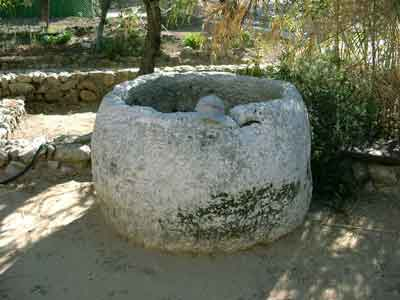
2:7-8 This filling to the brim showed that nothing could be added to the water. When Jesus performed the miracle, all the water was changed to wine; wine was not added to the water. It portrays the abundance of Christ’s gracious work; it also indicates the wholeheartedness of the servants’ obedience. The servants dipped into the jars and drew out the water that had been miraculously changed to wine. Jesus instructed them to take it to the master of ceremonies.
 *LIFE APPLICATION – HUMAN AGENTS
Jesus did not require the help of the servants nor the filled jars in order to perform his miracle. The filling of the jars could itself have been part of the miracle. But as Jesus demonstrated repeatedly in dealing with people, God honors us with significant roles in his work. We are not indispensable, but graciously included. For another outstanding example, note the resurrection of Lazarus (11:43-44) where Jesus gives life, but friends unwrap and clean up what must have been a completely shocked Lazarus. Does your work carry the imprint of Christ upon it? Do you fulfill your responsibility, sensing how Christ is using you?
2:9-10 It was customary to give the best wine first and the poorer wine last because people’s taste buds grow less sensitive with more and more drinks. The water turned into wine was of such quality that the master of ceremonies made a point of mentioning this to the bridegroom, who also probably reacted in surprise. Neither of them knew where this wine came from, but Mary, the servants, and the disciples were aware of what had happened.
*LIFE APPLICATION – BETTER
People look everywhere but to God for excitement and meaning. For some reason, they expect God to be dull and lifeless. Just as the wine Jesus made was the best, so life in him is better than life on our own. Why wait until everything else runs out before trying God?
This miracle illustrated the emptiness of the Jewish rituals versus what Jesus came to bring (see 4:13; 7:38-39). The water of ceremonial cleansing has become the wine of the messianic age. Have we tasted the new wine?
*LIFE APPLICATION – MORE THAN WE NEED
Jesus did not come to earth solely to satisfy our desires or to make us happy, as this first miracle might lead some to conclude. Jesus did perform a miracle, but it was in his time and in his way. Jesus provided as much as 180 gallons of choice wine. The lavish supply of wine was a picture of the salvation he came to offer, and a revelation of who he was. What God gives is given in abundance. In Christ we are promised life, the abundance of that life is indicated by the fact that it is eternal!
2:11 The Gospels record thirty-five miraculous signs performed by Jesus. In the Gospel of John, each miracle was a sign intended to point people to the truth that Jesus is the divine Son of God come down from heaven. These signs were remarkable actions that displayed the presence and power of God. According to John’s Gospel, this was Jesus’ first sign—and it was performed in Cana in Galilee (his own region). His second was also performed in Galilee (see 4:46-54).
*LIFE APPLICATION – WHY JESUS PERFORMED MIRACLES
Miracles are not merely superhuman events, but events that demonstrate God’s power. Almost every miracle Jesus did was a renewal of fallen creation—restoring sight, making the lame walk, even restoring life to the dead. We are to believe in Christ, not because he is a superman, but because he is the God who continues his creation, even in those of us who are poor, weak, crippled, orphaned, blind, deaf, or with some other desperate need for re-creation.
Many have wondered why Jesus would “waste” his powers on performing a miracle of providing wine for a wedding feast, a party. But all of Jesus’ miracles had a purpose beyond alleviating suffering; they were a display of his glory. The miracles recorded in John’s Gospel (and indeed all the miracles recorded by the other Gospel writers) demonstrated God’s great love for people and his concern for their individual needs. But on a deeper level, Jesus’ unique, divine nature was portrayed in such a way as to claim our loyalty and reverence. The sign of turning water into wine was a partial unveiling of Jesus’ full identity. His power over nature, death, sin, and evil revealed him to be the promised Messiah.
*LIFE APPLICATION – GLORY!
What was this glory of Jesus that people glimpsed in the miracles? It was as if, for a moment, the miracles drew back the curtain and allowed people to see a fuller view of Jesus, including his divine power and authority. Jesus’ divine nature became apparent to those willing to see. The sight was dazzling, compelling, and overwhelming. The Gospel writer summarizes what those who were with Jesus came to understand: “We have seen his glory, the glory as of a father’s only son, full of grace and truth” (1:14 nrsv). John’s invitation to us is to look through the eyes of the disciples and allow ourselves to be convinced, as they were, by the glory of Jesus.
Up to this point, the disciples (those who had been called so far) were following Jesus for their own reasons. Others may have been questioning who Jesus was and were following him to find out. John says that when the disciples saw the miracle, they believed in him. The miracle demonstrated Jesus’ power over nature and revealed the way he would go about his ministry—helping others, speaking with authority, and being in personal touch with people. God may confront us in any number of ways with our need to believe in his Son. We will be held accountable for whether or not we have believed.
In a moment, Jesus accomplished what should have taken years. In your life too, He can redeem lost time, accelerate your journey, and bring forth fruit that others say is impossible.
“I will restore to you the years the locust has eaten…” (Joel 2:25)
Acceleration of Time is still available today
We are seeing in this generation a hunger for the acceleration of God’s promises. Delayed dreams, seemingly barren seasons, and long waits are meeting the sudden breakthrough of divine intervention.
Marriages restored in weeks that were broken for years. Ministries ignited in months that had been dormant for decades. Hearts transformed in moments that no counselling could reach.
Why? Because Jesus still turns water into wine.
The same Jesus who filled those stone jars in Cana is still working in lives today. “Jesus Christ is the same yesterday, today, and forever” (Hebrews 13:8). What He did then, He is doing now.
He doesn’t need years. He needs your trust.
Message Audio/Video and Outline: https://upwards.church/leander-campus/watch-now-message-videos
Watch Messages: YouTube-Upwards Church
Read Along Daily Bible Reading: You Version


