
Forgiving Love – Hosea 2

We have such interesting perceptions of God. Some people think God is up in heaven waiting for us to make a mistake. And when we do, He’s quick to judge us and mess up our lives.  God’s up there watching and as soon as we mess up He’s going to zap us.  But in reality as we read the Bible the facts are very different.  We have to have our facts right. I love this story reported by the Associated Press: Linda Burnett, a 24 year old woman pulled into a grocery store parking lot. When a guy pulled up next to her he noticed she was sitting with hands up over behind her head. She wasn’t moving. He thought that was odd. He taps on the window and says, “Ma’am are you alright?” She exclaimed, “I’ve been shot in the head and I’m holding my brains in. Call 911!” He calls 911.The paramedics and police come. She has her hands up on her head and she won’t roll the window down. They bust through the window to get through the car. Here are the facts: She pulled into the parking lot of the grocery store and a can of biscuits in the back seat of her car exploded due to the heat. When it exploded it made a sound like a gun. It hit her in the back of the head with significant force.  When she reached back to touch the back of her head she touched the biscuit dough on her hand and was convinced someone shot her on the back of the head!

There are people in our world that are paralyzed by their view of God. It’s like they are sitting in life with their hands locked behind their head saying, “I can’t go to church. I can’t serve God because of what I’ve done, because of who I am or what has happened in my past. I’m not good enough. I’m not worthy.” I talk to believers who are paralyzed with a sense of guilt because, “I should know better. I’ve been a Christian my whole life but I still fall. I’ve been a believer but I still make mistakes.” Many people carry this guilt around. What God desires for us when we fall is to return to Him. He doesn’t want us to be paralyzed with fear. He is ready to forgive us.  We have to get our facts straight when we think about God.

In the last post we saw that the story of the prophet Hosea is a story of him and his unfaithful wife, Gomer.  God uses their relationship as a picture of His relationship with us.  Gomer was unfaithful to Hosea again and again and again, but he took her back despite anyway. Here’s a description of her activity in Hosea 2:5,

Their mother is a shameless prostitute and became pregnant in a shameful way.  She said, ‘I’ll run after other lovers and sell myself to them for food and water, for clothing of wool and linen, and for olive oil and drinks.’

I can’t imagine the heartbreak of seeing my wife Niki chase after other men.   Some of you know what unfaithfulness feels like.   God does too.  This is why Hosea was written.  It shares how God feels.   The important question is, “what now?”  What will God do?  Will he zap us?   No, God is faithful and forgives us when we are unfaithful.  Let’s look at God’s response to His people and even our own unfaithfulness.

In Hosea chapter 2 he shares some very powerful imagery. In Hosea 2:7 speaking of His people: “She will chase after her lovers but not catch them. She will look for them but not find them. Then she will say, ‘I will go back to my husband as it first for then I was better off than now.’” God is saying that she will get to a place, my people will come to a realization that what they are looking for, outside of Me, ultimately will not satisfy their lives and they will come back to Me. Then you get to 2:14 this is so powerful: “Therefore, I’m going to allure her.” The word allure in the Hebrew language throughout the Old Testament is a romantic term. God is saying, “I’m going to romance my people.”

Wait a minute, they just had another spiritual affair on You. They have turned their backs on You repeatedly. They have forgotten about You. They have denied You. They have worshiped other gods. And, God says, “I will allure my people and bring them back.” He says, “I will lead her into the desert and I will speak tenderly to her.” God says metaphorically speaking, “I will not turn my back on them. I will remain faithful and they can return to me when they fail.”  Isn’t that amazing? I don’t know about you but that fires me up. I start thinking if there is hope for them then there is hope for me. If there is hope for me then there is hope for everybody. No matter where we are in life, if we return to God when we fail, He’ll be there. No matter what ways we have been unfaithful to God, no matter what terrible things we have done, what God asks of us is that we return to Him and He will forgive us.  He will allure us to Him; He will speak tenderly to us.

That word return when it says that she’s gone after her lovers but she won’t find them and return to me. It has the idea of repentance. We’re going to turn around and live toward God now. We are going to live different lives. He gives us the option and freedom to do that. We can return to God when we fail. Then we can enjoy God forever. In Hosea 2 there is more powerful imagery in verses 19-20. God says this, “I will make you my wife forever.” In that culture there was a bride price. A groom would pay a price to the father of the bride for the bride. He says, “I will make you my wife.” How long? Forever! Showing you righteousness and justice, unfailing love and compassion.” I will be faithful to you and make you mine, and you will finally know me as the Lord.  That word know is used in the Hebrew language for intimate/sexual relations. To know someone – He’s saying you will know me in a personal intimate way. I will marry you forever. That’s incredible imagery.  It means we can have an intimate relationship with God for forever.

Glen Wolf is a guy who died at eighty-eight years of age in Los Angeles. He died as many people do in our world, alone. There was no one to take care of him and no one to attend to his funeral. He didn’t really have a funeral. He was buried alone. It was a tragic way to end a life. But Glen Wolf had a very unique distinction. He is in the Guinness Book of World Records for the man who has been married the most in his life. Twenty-nine times he walked down the aisle with a different woman. Twenty-nine times he stood and said, “I do.”  Twenty-nine times he watched a relationship explode. He died alone. He never learned that love has to be cultivated, nurtured, and matured in the midst of the heartaches and difficulties of life.

What the book of Hosea is teaching us is that God, unlike Glen Wolf, will never walk out on us. God will never turn His back on us. He’s there. We may run out on Him, but we should to return to Him.  Return to Him when we fail. Enjoy Him forever because He’s there for us. He loves you and me and wants to be in this relationship with us.  Can we accept God’s forgiveness and unending love?  I want to and hope that you can too.

Darrell
Sources:  Life Application Study Bible, Bible Exposition Commentary (BE Series) – Old Testament – The Bible Exposition Commentary – The Prophets, Thru The Bible with J. Vernon McGee,  Pursuit Ministries, Beyond Boundaries, Jud Wilhite,
Posted in Crazy Love (Hosea) | Tagged , , , | 2 Comments

Crazy Love – Hosea 1

Are you a fan of love stories?  The classic love stories still capture us and draw us in, classics like, Romeo and Juliet, Gone with the Wind, Cinderella, Beauty and the Beast.  As we get into the book of Hosea we will find one of the most profound and most amazing love stories in the Bible. Some would even call it scandalous.  Here’s how it starts:  A guy named Hosea marries a prostitute named Gomer and she breaks his heart by her repeated unfaithfulness, but he keeps taking her back. This relationship is meant to be a living picture that illustrates God and his people. This salacious story is tucked away in the Old Testament of the Bible the section called “The Minor Prophets.”  Hosea was a prophet which means he had a message from God for the people. We’re going to learn some incredible things as we look at this book together.

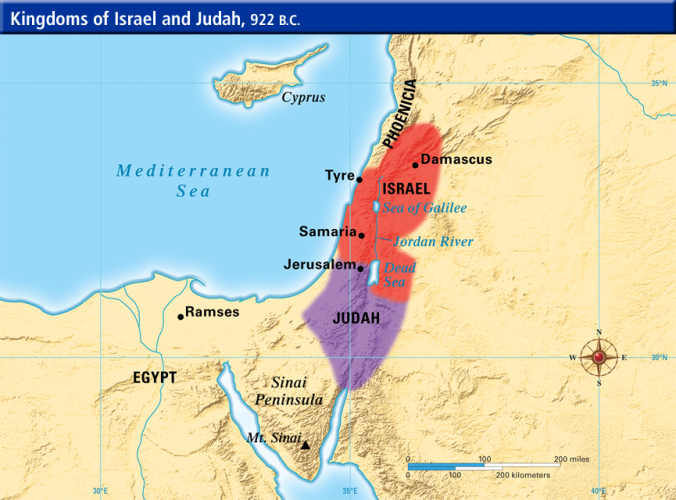
Hosea lived about 755-715 BC in northern Israel.  Let’s dive in the book of Hosea, Chapter one, verse one. “The word of the Lord that came from Hosea son of Beeri… during the reign of Jeroboam, son of Jehoash and King of Israel.”  Hosea’s name means “salvation” in the Hebrew language. The “word of the Lord” is a phrase that is used 438 times in the Old Testament of the Bible. It’s a phrase about God communicating to people through special prophets that He raised up in the Old Testament times. He asked Hosea to do something shocking. We see it in verse two: “When the Lord began to speak through Hosea the Lord said to him, ‘Go – take to yourself an adulteress wife and children of unfaithfulness.’” Let’s just stop right there!  God shows up and says, “Hosea – I want you to marry a prostitute. And you will have children from unfaithfulness in your relationship.” God asked Hosea to do something He has never asked anyone to do. This is not only unique, this is crazy.  Hosea has a special role as a prophet for God. He was the spokesperson for God during these desperate times. God was looking out and His people, those who were called by His name were denying Him, turning their backs on Him, they were worshiping false gods. God is heartbroken.   What He wants is for Hosea to not only speak His words to the people of Israel but He wanted Hosea to feel the pain that He felt.

In fact, He goes on in chapter 1:2 on why He asks Hosea to do this. He says, “Because the land is guilty of the vilest adultery and departing from the Lord.” The people had turned from God and God loved them so passionately and so intensely that He was going to communicate to them a message that was extreme because of the extreme unfaithfulness that He saw in the people’s lives.  Hosea marries Gomer. This is the first time in the Old Testament that the marriage relationship between a man and a wife is fully blown out as a metaphor of God’s relationship to us. As we go on through the Bible we see, “Jesus is the bridegroom,”  “We are His bride, the church.” There is a lot of this imagery of marriage in our relationship with God. In Revelation, the last book of the Bible and it says that those who are followers of Christ will be at the wedding celebration of the lamb (Jesus). There’s lots of wedding imagery. This is where it starts in the Old Testament. The relationship of Hosea to Gomer is like God’s relationships to us.   Wow!  Not a flattering description of you and me to our relationship with God.  But it’s true, how often is God faithful to me and yet I am unfaithful to him?

Moving on in our story, Hosea marries Gomer. They have their first child, a son. God says to Hosea, “I want you to name this child, Jezreel.” Jezreel means, “God scatters.” He said, “Because I’m going to bring judgment to my people who have turned their back on me.”  Then Hosea has a daughter. God says, “Hosea, I want you to name this child, Lo-Ruhamah. It means not loved.” Think about Hosea going around the house calling out to his children, Jezreel – God scatters and Lo-Ruhamah – not loved. Because he says, “I will no longer love these people.” Then He says, “I want you to have a third child. That child is to be named, Lo-Ammi.” It was a son. It literally means, “Not my people.”

As we read the first nine verses of Hosea we may think, what is God doing? Hosea and Gomer are having kids and God is telling them to name them these horrible names. This is awful.  Extreme circumstances require extreme measures. God is sending a message through Hosea to His people. God brings us into the emotional side of His love for us as people. As we read all of this, the first nine verses read like a break up letter.  Is God is breaking up with His people?

In human relationships we break up and it’s harsh. We say and do hurtful things. God is different than we are. Yet in the book of Hosea He allows us to step into the emotional side that He loves us so intensely that there is a pendulum that swings back and forth. There are moments where He says, “You are not my people. I’m done with you.” In the very next verse of chapter one everything begins to change. In 1:10: “Yet the Israelites will be like the sand of the seashore which cannot be measured or counted. The place where it was said of them, ‘you are not my people,’ they will be called ‘sons of the living God.’God swings the pendulum one way and then He says, “You know what? I do love you and you are driving me crazy, but I can’t give up on you!”  God takes us back even when we are unfaithful to him!   God loves us period, even when we don’t deserve it.

God’s love for us is illogical and irrational. Why would God love us when we continue to fail and continue to disobey Him? Yet He does. That’s why we are calling this series in Hosea, “Crazy Love.” God’s tremendous love for us as His people is crazy.

I think about author and pastor Max Lucado in his book, “In the Grip of Grace,” when he writes about Jeffrey Dahmer. He says this, “Jeffrey Dahmer murdered seventeen people. When they searched his apartment they found eleven corpses. Dahmer did things that were unthinkable. He ate people’s body parts.” Lucado says, “What disturbs me most about Jeffrey Dahmer is not his ax, not his trail, and not his punishment but his conversion. Months before an inmate murdered him Jeffrey Dahmer became a Christian. He said he repented. He said he was sorry for what he did. He was profoundly sorry and put his faith in Christ. He was baptized. He started life over. He began reading Christian books and attending chapel. Sins washed, souls cleansed, past forgiven – that troubles me. It shouldn’t but it does. Grace for a cannibal. Yet that is how radical God’s grace is.” When we reach out to Him, even if we are powerless in that moment, even if we are ungodly, even if we are sinners He’s willing to forgive us and draw us in.

For some of us today, in our distant state we need to accept God’s crazy love for us. Some of us may have accepted Christ a while back but have never really accepted the fact that God loves you and me as we are. We’ve never really rested in the fact that we already have His love. I know intimately what this is all about. I’ve gotten on the treadmill of human achievement again and again and again. I’ve tried to earn the love of God. He loves us irrespective of whether or not we perform well at work or whether we have it all together on the outside or if you jump through all the right religious hoops. We cannot earn what we already have! What I have found is there are two ways to live our lives. On one way we continue to try to earn it and achieve it and get God’s love. We work hard for it by doing all these things. The other way is to just accept it and rest in it. Then we respond to God out of the love He has already poured out into our lives.

Hosea reminds us, “God is crazy in love with us.” He loves us unconditionally. He remains faithful even if we are unfaithful.  He wants this relationship with us that’s deep and profound.

I want to rest in God’s crazy love for me.  Will you?

Darrell

Sources:  Life Application Study Bible, Bible Exposition Commentary (BE Series) – Old Testament – The Bible Exposition Commentary – The Prophets, Thru The Bible with J. Vernon McGee,  Pursuit Ministries, Beyond Boundaries, Jud Wilhite,
Posted in Crazy Love (Hosea) | Tagged , , , , , , , , , | 2 Comments

Do Over: Introduction to Romans

Do you ever wish that you could take back something that you said or did?  The apostle Paul shows us in Romans that Christ alone can cancel a person’s past and give us second chances. Jesus offers you the “do over” that you’re looking for.  I hope that you can join us for our new series called Do Over.

Don’t you love that our God is a relational God?  I do!  God has used many ways to communicate with us such as creation, our conscience, Christ and his Words. Even in His word he gives us various types of literature to speak to us:  He gave the Pentateuch, (the Law). He gave us history, He gave poetry, and He gave prophecy. He gave the Gospels, and now we come to a new section: the Epistles (or letters) the majority of which were written by Paul.

These letters that we have, these epistles are so warm and so personal that, as far as you and I are concerned, it is just as if they came by special delivery mail to us today. The Lord is speaking to us personally in each one of these very wonderful letters that Paul and the other apostles wrote to the churches. Romans contains the great gospel manifesto for the world. To Paul the gospel was the great ecumenical movement and Rome was the center of that world for which Christ died.

Interesting Facts: 

  • The book of Romans is the longest letter of all the epistles. (Did you know that Paul’s Epistles are in placed in the New Testament based on length, not chronological order? Galatians was the first epistle that Paul wrote)
  • Some commentators and authors say that Romans is Paul’s Magnum Opus.
  • Paul had not been to Rome when he wrote the epistle. Romans was written in Corinth about AD 57.
  • The letter was evidently carried by a woman name Phoebe, a deaconess (servant) from the church in Rome. ( 16:1).
  • The Key Theme is “The Righteousness of God” which Paul uses over 30 times in this epistle.
  • Preaching from Romans 1:17 caused a radical transformation in two men who went on to be the founders of two church denominations. See below:

On May 24, 1738, a discouraged missionary went “very unwillingly” to a religious meeting in London. There a miracle took place. “About a quarter before nine,” he wrote in his journal, “I felt my heart strangely warmed. I felt I did trust in Christ, Christ alone, for salvation; and an assurance was given me that He had taken away my sins, even mine, and saved me from the law of sin and death.”

That missionary was John Wesley. The message he heard that evening was the preface to Martin Luther’s commentary on Romans. Just a few months before, John Wesley had written in his journal: “I went to America to convert the Indians; but Oh! who shall convert me?” That evening in Aldersgate Street, his question was answered. And the result was the great Wesleyan Revival that swept England and transformed the nation.

Paul’s Epistle to the Romans is still transforming people’s lives, just the way it transformed John Wesley.

The one Scripture above all others that brought Luther out of mere religion into the joy of salvation by grace, through faith, was Romans 1:17: “The just shall live by faith.” The Protestant Reformation and the Wesleyan Revival were both the fruit of this wonderful letter written by Paul.

Imagine! You and I can read and study the same inspired letter that brought life and power to Luther and Wesley! And the same Holy Spirit who taught them can teach us! You and I can experience revival in our hearts, homes, and churches if the message of this letter grips us as it has gripped men of faith in centuries past.

Join us as we dive into Romans, be prepared to be transformed by the good news of the gospel,  leave your past behind and experience a “do over!”

Darrell

Sources:  Thru The Bible with J. Vernon McGee. Bible Exposition Commentary (BE Series) – New Testament – The Bible Exposition Commentary – New Testament, Volume 1.  The Essential Bible Companion, Zondervan, 2006
Posted in Uncategorized | Tagged , , , , , | Leave a comment

Experiencing God

Are you in one of life’s storms?  “Into each life some rain must fall” writes Henry Wadsworth Longfellow.   For some of us there’s not a cloud on the sky, for some it’s drizzling on us. Others of us – it’s raining. Some of us have been hit by a lightning bolt. Others of us have had a tornado or a hurricane just rip apart our lives.  Job has had it the worst storms take everything from him.  Job is mad at God. Job feels like God’s not answering his prayer. Job’s saying, “Lord, I just want a chance to plead my case in your court. That’s all I want! God, I just want you to show up.”

So, Job finally has his prayer answered. When God answers Job’s prayer, it’s interesting in Job 38 verse 1, it says; “The Lord answered Job out of a storm.” Do you find that fascinating? All these storms had wrecked Job’s life; but God spoke to Job out of the storm.

God says to Job, “Brace yourself like a man, and I will question you, and you shall answer Me.’’ In the book of Job, there are 288 question marks. In the following chapter, we will see that 78 of those 288 question marks come from God.  What’s fascinating is that in Job 38 all the way through Job chapter 42, God never answers any of the questions that were raised by Job and his friends. He does not answer their questions. He just asks question after question after question. He gives Job a lesson on cosmology. He gives Job a lesson on zoology. He gives Job a lesson on physics and mathematics. Where were you, Job, when the foundations of the earth were laid? Do you know how difficult that was? Where were you when all the animals were made? What do you know about this? What do you know about that? And God just asked Job question after question after question that no human being could possibly answer.

The amazing thing is after God goes off on Job, this man who is naked, sitting on a big pile of garbage, scraping himself with a broken piece of pottery, his life is shattered, and his friends have given poor advice. What kind of comfort is that? The amazing thing is that after God finished, Job was okay.  He didn’t answer any of his questions, just asked a bunch of questions – and Job’s okay.

At the end of the book of Job, Job had everything restored to him – he got a lot more camels, a lot more donkeys, and ten kids to replace the ten kids who had died in the storm. Had all this prosperity, was able to visit with his great-great grandchildren. He died a man – a happy man – at a ripe old age. How did it happen?

Did he die happy because God compensated him? Is that the point of the book of Job?  If you have faith and trust God, He’s going to compensate you?  He’s going to bless you in this life, and the life to come?  God gave him ten children to replace the other ten children. Is that why Job died happy? He got a rebate and more?

No! You cannot replace the loss of a child, much less ten children. You cannot replace that loss. So why did Job die happy? Look at Job 42:1: (After the Lord’s 78 questions) “Job replies to the Lord, ‘I know that You can do all things. No plan of Yours can be thwarted. You ask who is this that obscures My counsel without knowledge; surely I spoke of things I did not understand, things too wonderful for me to know. You said, “Listen now and I will speak. I will question you and you shall answer Me.” My ears had heard of You but now my eyes have seen You. Therefore I despise myself and repent in dust and ashes.’”

Why did Job die happy? He did so because God gave Job a glimpse of the big picture. That’s it. God gave Job a view – a panoramic view – of the big picture. He gave Job a view of His power; He gave Job a view of His sovereignty. He gave Job just a taste of His presence, and Job was completely satisfied.

I’m a bad photographer.  I mess up my pictures all the time.  I look at ones that I think will be great and then they are all fuzzy.  But God is a great photographer.  Because God has a wide angled lens, and God sees not only what’s in front of you, He sees the whole panoramic view of the history of the universe, and He sees the entire panoramic view of your life and of my life.  Nothing happens on this planet without God’s permission, without God’s sovereign hand behind it. It doesn’t mean that everything that happens on this planet, everything that happens in your life is good. Real evil happens to real people every single day. There are some things in this life that we will never figure out. There are some wounds that we will experience in this life that will never fully heal. But God’s panoramic view, the fact that God is sovereignly in control, gave Job great solace, gave Job great comfort.  It amazes me as I read the scripture, because I’m a why person, and even though Job didn’t get an answer, he was satisfied.

Job was satisfied because God showed up. And even when God blessed him financially again, when God blessed him with children again, that was simply an appetizer. All the goodness, all the joy, all the happiness, all the pleasures that we experience here on this earth – it’s simply a foretaste, an appetizer to the big meal!  Heaven.

We know that life here is only temporary. That’s just a speck compared to the joys and the pleasures and the comfort of heaven.

He’s promised us His presence, His presence. And God’s presence is with you whether we feel it or not.

Sometimes He allows us to feel His presence, sometimes He gives us those feelings, but many times there are no feelings there. Nothing – but God is with us.  I like this poem entitled I Believe.

I believe in the sun, even when it is not shining.

I believe in love, even when I feel it not.

I believe in God, even when He is silent.

This poem was found scribbled on the walls of a concentration camp.

What did Job want? Job simply wanted God to not be silent, and God spoke up! He made a cameo appearance. And that was enough.

Do you ever ask for that? Have you ever asked for that in your life? Have you ever said, “God, I wish You would come down out of heaven and talk to me.” “Lord, I want You to perform some kind of miracle, give me some kind of sign to know that You’re real.” “God, I sure wish You would give me some explanation for why I had to go through this particular storm, why I had to get this particular disease, why I had to go through this certain situation of rejection, why You had to take this person out of my life. Why I had to endure this affliction, this pain. Lord, I just want You to tell me, show me, show up, do something?  Have you ever had those feelings?

Jesus Christ answers Job’s questions. Have you ever thought about that? Because through Christ, we have God’s presence with us. We want an audience with God; God has spoken to us through nature. God has spoken to us through His prophets. God has spoken to us through the law, and God ultimately spoke to us through His Son, the incarnation. God is with us.  Jesus Christ offers healing for us – isn’t that great? I’m not saying He’s going to make everything hunky-dory. Just a snap of His fingers, just pray the prayer, believe hard enough and all your problems, all the pain, all the hurt’s going to go away. No. But God will, through Christ and through His presence, give us healing to know that His presence is with us. He’ll give us healing from the penalty of sin. That’s our deepest need – is to be made right with this holy, powerful God. And the only way to be made right with Him is through trusting in Jesus Christ and in Christ alone, who suffered in your place and in my place.

So, we look at Christ, we gain healing for the present and we also gain hope for the future. As we look to the cross, we realize that our sin and our life was so ugly, that it cost God the death of His only Son.

And we realize through trusting in the person of Christ that we are forgiven. And then we receive a partial healing in this life, but we receive hope in the eternal life that we will one day be with Him in a perfect world, a new heavens and a new earth, where there’s no sickness, where there’s no pain, where there’s no suffering.  In Christ we have that!

I have experienced the love, salvation and presence of Christ in my life and I pray that you may too.

Darrell

Sources:  Life Application Bible Notes, Bible Exposition Commentary and also adapted from Dr. Ben Young’s “Why Job Died Smiling”
Posted in Job - When Life Knocks You Down | Tagged , , , , , | 6 Comments