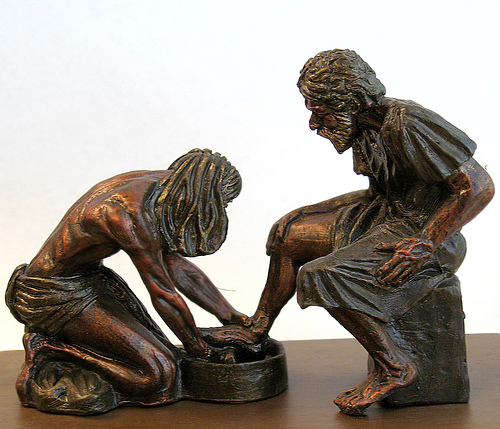
Does Your Life Seem Meaningless?

17 So I came to hate life because everything done here under the sun is so troubling. Everything is meaningless—like chasing the wind. Ecclesiastes 2:17

Strong words from Solomon.  Do you ever feel that way?   Many do, but we don’t need to if we learn from Ecclesiastes what NOT to live for.

Now before we delve into Ecclesiastes, it’s important to understand exactly who  Solomon is.  Solomon was King David’s son and became the king of the united kingdom of Israel in about 1000 BC. He was the greatest king Israel had ever known.  Under his reign Israel was the richest and most powerful it had ever been.  The kingdom of Israel was the largest during the reign of Solomon.  When Solomon became king of Israel many historians believe he was no older than 20 yrs. old.  Think for a minute to when you 20 yrs. old.  Can you imagine becoming responsible for leading an entire nation?  I could barely lead myself when I was twenty; nevertheless lead a nation.

So…at the age of twenty, Solomon becomes king of Israel.  Not too long after his inauguration, something pivotal happens in his life. God appears to Solomon in a dream one night and tells Solomon to ask Him for any one thing and He’ll give it to him.  When you were 20 yrs. old what would you have asked for if God granted you one wish?  I probably would have asked for a Corvette or the ability to play professional football.  Getting a wish like that at 20 yrs. old probably would have produced similar requests from you. Let’s find out what Solomon asked for.

 5 That night the Lord appeared to Solomon in a dream, and God said, “What do you want? Ask, and I will give it to you!”
6 Solomon replied, “You showed faithful love to your servant my father, David, because he was honest and true and faithful to you. And you have continued your faithful love to him today by giving him a son to sit on his throne.
7 “Now, O Lord my God, you have made me king instead of my father, David, but I am like a little child who doesn’t know his way around.
8 And here I am in the midst of your own chosen people, a nation so great and numerous they cannot be counted!
9 Give me an understanding heart so that I can govern your people well and know the difference between right and wrong. For who by himself is able to govern this great people of yours?”
10 The Lord was pleased that Solomon had asked for wisdom.
11 So God replied, “Because you have asked for wisdom in governing my people with justice and have not asked for a long life or wealth or the death of your enemies—
12 I will give you what you asked for! I will give you a wise and understanding heart such as no one else has had or ever will have!
13 And I will also give you what you did not ask for—riches and fame! No other king in all the world will be compared to you for the rest of your life!
14 And if you follow me and obey my decrees and my commands as your father, David, did, I will give you a long life.” 1 Kings 3:5-14 (NLTse)

Just as intriguing as what Solomon asked for is what he didn’t ask for.  Solomon didn’t ask for wealth, power, fame, possessions, political influence, or military success.  All of which, at least from our viewpoint, would have been legitimate requests from a king.  Yet, Solomon didn’t ask for these things.  What Solomon did ask for is amazing, if not somewhat shocking.  Solomon asked for wisdom and knowledge.

From a human standpoint, there has never been a wiser man on the face of our planet than Solomon (until Christ).  Solomon’s knowledge and wisdom and intellectual capacity have been surpassed by no mortal man.  Listen to another passage that describes Solomon’s mind.  

29 God gave Solomon very great wisdom and understanding, and knowledge as vast as the sands of the seashore. 1 Kings 4:29 (NLTse)

Solomon had degrees of discernment, intellectual power, and memory capacity that exceeded the grains of sand on all the shores of this world.  You and I can only dream of having such mental capacity.  Yet, for someone blessed with the wisdom and knowledge of Solomon he still didn’t comprehend how to live with meaning and purpose until the end of his life.   So as we talk about how we can live for the wrong things don’t feel dumb or stupid because even the smartest guy on the planet made the same mistakes!

You would think that at some point in his life, Solomon’s discernment and photographic memory would have kicked in.  But…they didn’t.  According to Ecclesiastes, the most brilliant man this planet has ever known spent his entire life living for things that brought disappointment and disillusionment.  What a tragedy.  Solomon lived his whole life with a sense that he was missing something.  Some of us here know exactly how he was feeling!

Solomon was uniquely qualified for this search for happiness.  Not only was he the most intelligent man he was the wealthiest man who ever lived.  He had both the brains and the bucks to do his research and to try out everything to figure out what would make him happy.  He was a king, so he had lots of free time.  He accomplished more with his life than most of us will ever even dream of.  He tries different things that we will look at in just a moment.  Please hear me, he’s not saying these are wrong things. They’re not wrong at all.  But these are not the source of lasting happiness.

Solomon’s words in Ecclesiastes are honest, sobering, and confrontational.  Many people shy away from the message Solomon reveals in Ecclesiastes because it is a reality check like no other.  Maybe you’re wondering, what things did Solomon  try to live for?  Honestly?  They’re the same impotent things that the majority of human’s are trying to fill their lives with today.  Let’s take a quick perusal through Ecclesiastes and identify the things that didn’t bring meaning and satisfaction.

In the next post we will see exactly what doesn’t bring satisfaction and meaning and then what will.

Darrell
http://www.RidgeFellowship.com

Posted in Meaning(less) - Ecclesiastes | Tagged , , , | Leave a comment

Is Life Worth Living?

Are you happy?  Does your life have meaning?  Sadly I hear people say, “My life is empty and disappointing.”  As we try to fill our lives with possessions, power and pleasure we will find that life has let us down.  In the book of Ecclesiastes Solomon takes us on a mental journey through his life explaining how he tried and tested everything to find meaning and enjoyment in life. He tries to spare his readers the same disappointment he learned through personal experience.  Everything apart from God is empty and meaningless.  Solomon has an honest approach to life.  His comments may come across as negative but his attempt is to lead people to center their lives around God. Not any substitutes. He affirms the value of education, pleasure, work and possessions, but only in their proper place. All of these things must be seen in the perspective of God’s purpose.   True enjoyment of life is comes from knowing that what we are doing is part of God’s purpose for our lives.

Is Life Worth Living?

Vanity of vanities,” lamented Solomon, “all is vanity!” Solomon liked that word “vanity”; he used it thirty-eight times in Ecclesiastes as he wrote about life “under the sun.” The word means “emptiness, futility, vapor, that which vanishes quickly and leaves nothing behind.”    One professor at seminary defined hevel as “whatever is left after you break a soap bubble.”

From the human point of view (“under the sun”), life does appear futile; and it is easy for us to get pessimistic. The Jewish writer Sholom Aleichem once described life as “a blister on top of a tumor, and a boil on top of that.” You can almost feel that definition!

The American poet Carl Sandburg compared life to “an onion—you peel it off one layer at a time, and sometimes you weep.”

Life is “not in vain” if it is lived according to the will of God, and that is what Solomon teaches in this neglected and often misunderstood book.

Before we embark on our introduction of Ecclesiastes, let’s first get acquainted with the author and his aim in writing the book. We also want to get an overview of the book so we can better understand his approach to answering the question, “Is life really worth living?”

The Author

Nowhere in this book did the author give his name, but the descriptions he gave of himself and his experiences would indicate that the writer was King Solomon. He called himself “son of David” and “king in Jerusalem” (1:1, 12), and he claimed to have great wealth and wisdom (2:1-11, and 1:13; see 1 Kings 4:20-34 and 10:1). In response to Solomon’s humble prayer, God promised him both wisdom and wealth (1 Kings 3:3-15); and He kept His promise.

The Application

What is the practical application of this book for us today? Is Ecclesiastes nothing but an interesting exhibit in a religious museum, or does it have a message for people in the Space Age?

Its message is for today. After all, the society which Solomon investigated a millennium before the birth of Christ was not too different from our world today. Solomon saw injustice to the poor (4:1-3), crooked politics (5:8), incompetent leaders (10:6-7), guilty people allowed to commit more crime (8:11), materialism (5:10), and a desire for “the good old days” (7:10). It sounds up-to-date, doesn’t it?

If you have never trusted Jesus Christ as your Savior, then this book urges you to do so without delay. Why? Because no matter how much wealth, education, or social prestige you may have, life without God is futile. You are only “chasing after the wind” if you expect to find satisfaction and personal fulfillment in the things of the world. “For what shall it profit a man, if he should gain the whole world, and lose his own soul?” asked Jesus (Mark 8:36).

Solomon experimented with life and discovered that there was no lasting satisfaction in possessions, pleasures, power, or prestige. He had everything, yet his life was empty! There is no need for you and me to repeat these experiments. Let’s accept Solomon’s conclusions and avoid the heartache and pain that must be endured when you experiment in the laboratory of life. These experiments are costly and one of them could prove fatal.

When you belong to the family of God through faith in the Son of God, life is not monotonous: it is a daily adventure that builds character and enables you to serve others to the glory of God. Instead of making decisions on the basis of the vain wisdom of this world, you will have God’s wisdom available to you (James 1:5).

As far as wealth and pleasure are concerned, God gives to us “richly all things to enjoy” (1 Tim. 6:17). “The blessing of the Lord makes one rich, and He adds no sorrow with it” (Prov. 10:22, nkjv). The wealth and pleasures of the world do not satisfy, and the quest for power and position is futile. In Jesus Christ we have all that we need for life and death, time and eternity.

If there is one truth that Solomon emphasizes in this book, it is the certainty of death. No matter what Solomon enjoyed or accomplished, the frightening shadow of death was always hovering over him. But Jesus Christ has defeated death and is “the resurrection and the life” (John 11:25). The victory of His resurrection means that our “labor is not in vain in the Lord” (1 Cor. 15:58).

If you don’t know Jesus Christ as your Savior, then all that you work for and live for will ultimately perish; and you will perish too. But faith in Jesus Christ brings you the gift of eternal life and the privilege of serving Him and investing your years in that which is eternal.

So, the first message of Ecclesiastes is: turn from the futility of sin and the world, and put your faith in Jesus Christ (John 3:16; Eph. 2:8-10).

But if you are a believer in Jesus Christ and have received the gift of eternal life, then Solomon asks you, “Are you living for the Lord or for the things of the world?” Remember, Solomon knew God and was greatly blessed by Him, yet he turned from the Lord and went his own way. No wonder he became pessimistic and skeptical as he looked at life! He didn’t have God’s perspective because he wasn’t living for God’s purposes.

More than one professed Christian has followed Solomon’s bad example and started living for the things of this world. When you start living for the world instead of for the will of God, you begin to look at life from the wrong perspective: “under the sun” and not “above the sun.” Instead of seeking those things which are above (Col. 3:1), you start majoring on the things that are below. This wrong vision soon causes you to adopt wrong values and you stop living for the eternal. The result is disappointment and defeat; the only remedy is repentance and confession of sin (1 John 1:9).

Ecclesiastes also contains a message for the faithful believer who wants to serve the Lord and have a fulfilled life in Jesus Christ. Solomon says, “Don’t bury your head in the sand and pretend that problems don’t exist. They do! Face life honestly, but look at life from God’s perspective. Man’s philosophies will fail you. Use your God-given wisdom, but don’t expect to solve every problem or answer every question. The important thing is to obey God’s will and enjoy all that He gives you. Remember, death is coming—so, be prepared!”

I opened this post by quoting some metaphors that describe “life,” and I want to quote one more. It’s from the popular American novelist Peter De Vries: “Life is a crowded superhighway with bewildering cloverleaf exits on which a man is liable to find himself speeding back in the direction he came.”

That need not happen to you! King Solomon has already explored the road exhaustively and given us a dependable map to follow. And if we follow God’s Word, we will be satisfied.

Are you ready for the journey?

What will life be for you: vanity or victory?

Join us Sunday!

Darrell

http://www.RidgeFellowship.com


Posted in Meaning(less) - Ecclesiastes | Tagged , , , , | 3 Comments

It’s Your Serve – John 13

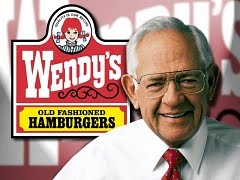
The late Dave Thomas, founder of Wendy’s hamburger chain was known for his humble service within the multi-billion dollar empire he founded. When asked what made him so successful; he replied, “my MBA.” But he didn’t mean a graduate degree in business education, he meant “a mop- and-bucket attitude.” In other words, no work task was too insignificant for him to tackle; he simply jumped in and got the job done.

Dave Thomas, was a high-school dropout, he was always ashamed of that and it would have been easy for him as he tasted success to demand every perk and privilege as a way of covering for his own inadequacies, but instead He lived by the creed of the Mop Bucket Attitude.   We too can learn from Dave and especially from Jesus in how to serve others.

HOW TO BE LIKE JESUS

  • Get up from my comfort zone

 So he got up from the table… (vs. 4a)

Jesus was sitting comfortably at the table, but He left his Comfort Zone. He made his body do something it may have not wanted to do.  The same is true for us.  Often we are comfortable in life and we don’t think we should disturb our comfort to come to the earlier service and help with the children. Often we wrongly think, “well when I feel like serving I will.”  Let me tell you something you may never feel like, but it needs to be done.  Some of you need to get out of bed and get here to serve.  Some of ys need to get out of our lazy boys and pitch in.  Get out of your comfort zone. This is what Jesus did.

  • Lay something in my life aside.

…took off his robe, (vs. 4b)

To serve other we usually have to lay something aside. Most of us live with a full plate of activity. If I’m going to add a service for the Jesus and His kingdom, I usually have to subtract something I am doing for myself.

Some of us may have to lay aside some of our pride.  Sadly the church is full of people who are standing on their dignity when they ought to be kneeling at the feet of their brothers and sisters.  One who is proud and self-centered has no capacity for love or service.  They think that any service they may provide for the Lord is a waste of their time!  When you are tempted to think of your dignity, your prestige or your rights open your bible to John 13 and see Jesus clothed like a slave washing dirt off of feet.   Jesus knew he was the king of the universe but his heart was not filled with pride or self-importance! Perhaps it was because he knew who he was because he was SECURE in own IDENITY that he could bow to the lowest point of service. It is not great men who will not serve others.  It is insecure men who think that washing feet defines them as something less than others. That person will not serve in lowly tasks because he sees it as a challenge to his identity.

  • Get the tools I need for the job

…wrapped a towel around his waist, 5 and poured water into a basin. (vs. 4c-5a)

Jesus made preparations to meet the need.  Sometimes there are preparations we need to make.  It great when children’s teachers start reading about teaching children and collecting craft material, when small group leaders study their lesson or read about leading a group.  Those in the band practice their instruments.  We offer leadership training here and through our association of churches we have a classes, training and support to leaders.  There are so many ways you can get prepared and learn what you need to learn to help you do the job Jesus is leading you to do.  For many service areas the leader of a team will provide you with what you need, you may just need to show up, watch or follow the instructions.

  • Begin to do what needs to be done

Then he began to wash the disciples’ feet and to wipe them with the towel he had around him. (vs. 5b)

I like that. At some point we have to begin. We can think about it. We can pray about it. We can prepare for it. But at some point we must start doing it.  We started this church in the fall of 2000, by spring 2002 we had purchased this land by 2003 we had started this building and by Feb. 2004 we were here.  We were only four years old.   We get calls from other churches about how we did this, we have given many tours, we have had denominational leaders come visit us, I share the information with pastor after pastor, leader after leader, I did an interview for a guy who included us in a PHD dissertation.   The most frequently asked question goes something like this “How did you build your building. We’ve been planning and saving for years and still haven’t been able to build. What is the secret?”  I say, “The secret is simple, you have to begin. Start building.” At some point you have to start doing it.  Some of you say, one of these days I am going to help out, one of these days I am going to get involved.  One of these days will never come.  Just do it!

  • Don’t protest or resist Jesus’ instructions

“No,” Peter protested, “you will never ever wash my feet!”  Jesus replied, “But if I don’t wash you, you won’t belong to me.”  (vs. 8)

Poor Peter thought he had a better idea than Jesus. Jesus wants to wash his feet—Peter doesn’t want him to do it. Then he wants a full bath. It took Peter awhile to learn that none of us have a better idea than Jesus.  We are the same way, we protest thinking our schedule is too full, we say “well I’ve done my time” or Jesus you don’t understand today’s fast paced lifestyle, I have too much to do to help out at church. The best thing we can possibly do is to simply hear him and obey him.

Peter eventually learned to simply obey the Lord rather than offer better idea. That’s something we all have to learn.

  • Remember Jesus’ example

And since I, your Lord and Teacher, have washed your feet, you ought to wash each other’s feet. I have given you an example to follow. Do as I have done to you. (vs. 14-15)

 What does it mean to wash the feet of others? It means you humble yourselves—you get down where the need is –and you do something about it. We have so many wonderful examples of that in this church. There is the cleaning crew who make the floors and toilets shine, I heard a comment just this week about how clean the restrooms are!  That’s service that makes it that way.  People comment on how nice the yard looks, service!  How much fun their kids had, service!  How great the music sounded, service! In our culture the need is not to wash feet as it was in Bible times. But there are many, many practical needs all around us. Feet washers see those needs and do something about it.

Is it easy?  No its difficult at times.  Let me give you a secret. When I am tempted to complain or get tired I remember Jesus and what he did.

  • Remember Jesus will bless me

Now that you know these things, God will bless you for doing them.  (vs. 17)

 It’s a whole lot easier to talk about service, think about service, fanaticize about great service, hear sermons about service than to actually do service for others.

But the blessing, the joy, the happiness, is not found in talking about it or hearing about it. It is found in actually doing it.

Think of it like this: imagine that the value of your life, your salvation your gifts, talents and abilities was equal to a $1 million dollar bills, and it’s yours!   Few of us will ever be required to lay down that $1 million dollars in a single moment and then enter into the glory of heaven. Rather we have to give our lives away only $1 or $2 at a time through small acts of service; maybe we might have to lay down $100 all at once, for a special occasion but that’s no big deal when you think about $1 million dollars.

If I convince myself that the cost is too great; the enemy will magnify the little that we are asked to give to others making it seem like a great loss.  We lose sight of all that God has given to us.  Now here’s the truth.

Everything we willingly lay down to serve someone else, God adds it to our account in heaven. Jesus said, “Deposit your treasures in heaven” (Matthew 6:20 paraphrase).  If we don’t serve then you will find very little of your life has been saved for you in heaven. Jesus made it plain: “Give your life away for me and I’ll keep it safe for you in heaven” (Matthew 16:25 paraphrase).  Did you know God pays interest?  Jesus said 100 times would be returned to him who gives up for the gospel. (Mark 10:30)  One hundred times is 10,000% interest.  Wouldn’t you like to have that kind of interest on your CD’s money market accounts, mutual funds or stocks?

God is recording anything and everything that you give in service.  Every time you give something is recorded in heaven.  Jesus said, even “a cup of cold water given in his name is written down.” (Matt. 10:42)

Give your life in service “one piece at a time,” “moment by moment.” A servant’s heart is willing to share the pieces of their life with other, because they know that their life is not their own.

When you become a willing servant who freely gives his life to the Master, you will discover that Jesus will add to your life with interest– that’s His promise.

Jesus tells us in John 13:17 that when we follow His example living out our lives with a servant’s heart we will receive a blessing. You can never out give God. When you start laying down your life $1 or $2 at a time you will soon discover that He has added interest to your life and the value has increased. You have the blessing of God’s hand upon your life. This isn’t like the “hand of Midas” turning everything you touch into gold it’s better. With God’s hand upon your life everything you touch as a servant takes on eternal value and the temporal becomes eternal.

It really doesn’t get any better than that! When you are willing to surrender your all to God, He takes what many would think of as a sacrifice and holds it safely in heaven for you. That which you think you have lost becomes gain!

I hope and pray that we may all learn to serve like Jesus.

Darrell

www.RidgeFellowship.com

Posted in Explicit Jesus - Gospel of John | Tagged , , , , | Leave a comment

You’ve Been Served – John 13

Did you know that Jesus loves you whether you love him or not?  He died for you while you were a sinner.  Jesus knows us as fully as he knew his disciples. He knows intimately of every time and every way that we have denied or deserted him. Yet knowing us and our shortcomings he willingly died for us. Jesus continually displays his love toward us and reaches out to us. He continues to serve us, guide us and encourages us by his Spirit. He serves us as we serve one another. Are we prepared to love one another with the same kind of love Jesus demonstrated for us?

In our passage today Jesus knew that one of his disciples had already decided to betray him. Another would deny him by the next morning. Even this night, they would all desert him. In the next hours they would repeatedly display ignorance, laziness, and lack of trust. It was indeed a sorry lot that gathered in the upper room. Even with good reasons to reject the entire group, Jesus deliberately showed to them the full extent of his love. The actions, words, and feelings that he shared with his disciples conveyed the highest form of love because his disciples did not deserve nor immediately appreciate this love.  Neither do we deserve his love or service.

As Jesus final days on the earth are coming to an end, he shows his closest followers what love is:  service, sacrifice and laying his life down.

This story is one of the most memorable incidents in Bible. It was the night before Jesus’ betrayal and crucifixion. It was an intense time in Jesus’ life. His public ministry had ended. Jesus now turns his full attention to his disciples.

I want you to imagine this situation with me for a moment. In that culture the most demeaning task around was to wash the guest’s feet. This was job done by lowest slaves.

It was necessary because people wore sandals did most of their travel by foot. They walked along trails that we not only dusty, or muddy when wet but also cluttered with camel and donkey dung!

I’m sure that guests arrived with more than dust on their feet. It was a common courtesy for the host to have his slave wash the guest’s feet as they entered the house.

Jesus had sent Peter & John to prepare for their meal together. The food had been cooked. The table had been set. And I’m sure the disciples thought this matter would be taken care of as well. It wasn’t!

As Jesus and the disciples enter the room they see towel & water basin in the corner. They do not see a slave to wash their feet. Perhaps some of them pause as they enter the room, wondering where the servant was—maybe wondering why Peter and John had not taken care of this important detail.

As they recline at the table, each disciple feels a little uncomfortable.  They may have thought:

“Somebody ought to at least wash Jesus’ feet. But—if I do that, where will that put me on the social pecking order?

“I would be at the Bottom of the heap. If I volunteer I’ll get stuck with that job from now on.”

“Maybe if I just wait, somebody else will do it.”

If you’ve been in church more than week, you know that kind of thinking does occur at times.

“Somebody needs to take care of the nursery, but that’s not my ministry. Somebody needs to clean those bathrooms, who dropped the ball on that?”

I think maybe each disciple was hoping one of others would volunteer.

Each one may have begun to JUSTIFY in own mind why it was not his job to do it.

“I did it last time, its Matthew’s turn he hasn’t done it in long time.”

“Peter and John were supposed to take care of all this-Jesus told them to. One of those guys ought to take care of it.”

“I came to enjoy a time with the Lord—and now we’ve got this problem”

John is thinking—“Look I’m over here leaning next to Jesus, I’m in spiritual intimacy.

Jesus doesn’t want me to leave and help you.”

Peter is thinking—“Don’t these turkeys know the call of God on my life? Don’t they see the leadership giftings in me? I just wish they would remember that I’m the one who answered Jesus’ question: Who do you say that I am?” I got the revelation—‘You are the Christ, the Son of the Living God.’ I’m moving in the Spirit don’t disturb that. Don’t you remember the prophecy Jesus gave me on that occasion? I wish these people would pay attention to what God’s doing in me. If they had, they would be over here right now washing mine and Jesus’ feet.”

We don’t know all the specifics, I’m taking some liberties–but we do know that nobody rose to the occasion.
Rather than begin with a lecture, He gave them an EXAMPLE.  Verse one says,

Before the Passover celebration, Jesus knew that his hour had come to leave this world and return to his Father. He now showed the disciples the full extent of his love. (vs. 1)

Historically Christians have displayed a number of different kinds of symbols to mark their identity as believers.  Such emblems as neck chains with crosses have been used for hundreds of years.  In recent years we use bumper stickers, posters, tee shirts, key chains, decorated bibles, jackets, hats and you name it, it has probably been marketed and sold.  I don’t have any problem with these items per say. Whether you wear a button or display a fish on your car is of no consequence.  More important and more definitive than all the pins, stickers is the sign of a true follower of Christ:  ONE WHO SERVES.

In the next post we will examine how we can serve like Jesus.

Darrell

www.RidgeFellowship.com


Posted in Explicit Jesus - Gospel of John | Tagged , , , , | Leave a comment