Nehemiah faced a great challenge and had great faith in a great God, but he would have accomplished very little had there not been great dedication on the part of the people who helped him rebuild the wall. With the kind of humility that befits a godly leader, Nehemiah gave all the credit to the people when he wrote, “So built we the wall … for the people had a mind to work” (Neh. 4:6).
British humorist Jerome K. Jerome said, “I like work, it fascinates me. I can sit and look at it for hours.” When it comes to the work of the Lord, there is no place for spectators or self-appointed advisors and critics; but there is always room for workers. As you study this chapter, you will discover principles that apply to all human labor, especially the work of building the church.
1. The purpose of the work
Nehemiah was concerned about only one thing, the glory of God. “Let us build up the wall of Jerusalem, that we be no more a reproach” (2:17; and see 1:3; 4:4; 5:9). The Gentiles delighted in mocking their Jewish neighbors by pointing out the dilapidated condition of Jerusalem. After all, the Jews claimed that their capital city was “beautiful for situation, the joy of the whole earth” (Ps. 48:2). They said that God loved “the gates of Zion more than all the dwellings of Jacob” (87:2). If God loved Jerusalem so much, why were the walls in ruin and the gates burned? Why was the “holy city” a reproach? Why didn’t the Jews do something?
For the most part, the world today ignores the church. If it does pay any attention to the church, it is usually to condemn or mock. “If you are the people of God,” unbelievers ask, “why are there so many scandals in the church? If God is so powerful, why is the church so weak?” Whether Christians like it or not, we are living in a day of reproach when “the glory has departed” (1 Sam. 4:21).
The purpose of all ministry is the glory of God and not the aggrandizement of religious leaders or organizations (1 Cor. 10:31; 2 Cor. 4:5). The words of Jesus in His high priestly prayer ought to be the motivating force in all Christian ministry: “I have glorified You on the earth; I have finished the work which You gave Me to do” (John 17:4). God has a special task for each of His children (EPH. 2:10); and in the humble, faithful doing of that task, we glorify His name.
Of course, the rebuilding of the walls and the setting of the gates also meant protection and security for the people. Jerusalem was surrounded by enemies, and it seemed foolish for the residents to improve their property when nothing was safe from invasion and plunder. Over the years, the citizens had become accustomed to their plight. Like too many believers in the church today, they were content to live with the status quo. Then Nehemiah arrived on the scene and challenged them to rebuild the city to the glory of God.
2. The pattern of the work
Nehemiah was a leader who planned his work and worked his plan, and the way he did it is an example for us to follow.
Thirty-eight individual workers are named in this chapter, and forty-two different groups are identified. There were also many workers whom Nehemiah did not name whose labors were important; and each worker—named and anonymous— was assigned a place and a task.
“A great many people have got a false idea about the church,” said evangelist D.L. Moody. “They have got an idea that the church is a place to rest in … to get into a nicely cushioned pew, and contribute to the charities, listen to the minister, and do their share to keep the church out of bankruptcy, is all they want. The idea of work for them—actual work in the church—never enters their minds.”
In 1 Corinthians 12 and 14, Paul compared individual Christians to members of the human body: Each member is important, and each has a special function to perform. I recall the relief that came to my own heart when I realized that God didn’t expect me to do everything in the church, but rather to use the gifts He gave me in the tasks that He assigned. When I started doing that, I discovered I was helping others discover and develop their own gifts; and all of us accomplished more for the Lord.
The people finished this difficult task because they obeyed the same leader, kept their eyes on the same goal, and worked together for the glory of God. Neither the enemy outside the city nor the difficulties inside the city distracted them from their God-given task. Like Paul, they said, “This one thing I do” (Phil. 3:13).
The word built is used six times in Nehemiah 3 and means “rebuilt.” George Morrison reminds us “that for this restoration no new material was needed. In the debris of the ruined masonry lay all the material required . . . and it seems to me that is always so when the walls of Zion are rebuilt” (Morning Sermons, London: Hodder and Stoughton, 1931, p. 249). It is not by inventing clever new things that we take away the church’s reproach, but by going back to the old truths that made the church great in ages past. They lie like stones in the dust, waiting for some burdened Nehemiah to recover them and use them.
The word repair is used thirty-five times; it means “to make strong and firm.” Nehemiah wasn’t interested in a “quick fix,” a whitewashed wall that would soon crumble (Ezek. 13:1-16; 22:28). They were building to the glory of God, and therefore they did their best.
The gates of Jerusalem had been destroyed by fire (Neh. 1:3; Jer. 17:27; Lam. 1:4), so Nehemiah requisitioned timber from the king’s forest and had new gates constructed (Neh. 2:8) and put into place (6:1; 7:1). The gates were important to the safety of the people and the control of who went in and out of the city (7:3; 13:15-22). If the Lord loves the gates of Zion (Ps. 87:2), then His people ought to love them too.
Locks and bars are mentioned five times (Neh. 3:3, 6, 13-15). Locks refer to the sockets into which the bars were fitted, thus making it difficult for anyone outside to open the gates. It isn’t enough that we simply do the work of God; we must also make sure that what we do is protected from the enemy. “Watch out that you do not lose what you have worked for, but that you may be rewarded fully” (2 John 8, NIV).
3. The people in the work
As you get acquainted with the various people mentioned in Nehemiah 3, you will find yourself saying, “This is just like the church today!” Circumstances change but human nature remains pretty much the same.
God uses all kinds of people. The chapter mentions rulers and priests (vv. 1, 12-19), men and women (v. 12), professional craftsmen (vv. 8, 32), and even people from outside the city (vv. 2, 5, 7). There was a place for everyone, and a job for everyone to do.
Leaders must set the example (Neh. 3:1). If anybody in the city should have been busy in the work, it was the priests, for the glory of the Lord was involved in the project. That the high priest used his consecrated hands to do manual labor shows that he considered the work on the wall to be a ministry to the Lord. “Therefore, whether you eat or drink, or whatever you do, do all to the glory of God” (1 Cor. 10:31, NKJV). Eliashib enlisted the other priests to work at the sheep gate in the northeast corner of the city. Since the sacrifices came into the city that way, the priests would be especially interested in that part of the project.
Sad to say, Eliashib did not remain true to his calling; for later he allied with the enemy and created serious problems for Nehemiah (Neh. 13:4-9). Some people who enthusiastically begin their work may drop out or turn against it for one reason or another. Eliashib’s grandson married a daughter of Sanballat (v. 28), and this alliance no doubt influenced the high priest.
Some people will not work (Neh. 3:5). Tekoa was a town about eleven miles from Jerusalem, and some of their people traveled to Jerusalem to assist in the work. What a contrast between these people and their nobles! The Tekoites built in two places on the wall (vv. 5 and 27), while their nobles refused to bend the neck and work in even one place. Were these “aristocrats” so important in their own eyes that they could not perform manual labor? Yet Paul was a tentmaker (Acts 18:3), and Jesus was a carpenter (Mark 6:3).
The Tekoites were not the only “outsiders” to go to Jerusalem to work on the wall; for men also came from Jericho (Neh. 3:2), Gibeon, and Mizpah (v. 7). Their loyalty to their nation and their Lord was greater than their local interests. They were certainly safer back in their own communities, but they risked their lives to do the work of the Lord (Acts 15:25-26).
__Nehemiah 3:11, 19, 21, 24, 27, 30__
Some people do more work than others (Neh. 3:11, 19, 21, 24, 27, 30). Most workers are glad to lay down their tools when their job is finished, but these people asked for additional assignments. It isn’t enough for us to say that we have done as much as others; we must do as much as we can as long as the Lord enables us. Jesus asked, “What do you do more than others? (Matt. 5:47, NKJV)
Some do their work at home (Neh. 3:10, 23, 28-30). At least six different workers, plus an unknown number of priests, repaired the portions of the wall that were nearest to their own houses. If all of us would follow this example, our neighborhoods and cities would be in much better shape! Of course, there is a spiritual lesson here: Christian service begins at home. A Chinese proverb says, “Better to be kind at home than to burn incense in a far place”; and Paul wrote, “Let them learn first to shew piety at home” (1 Tim. 5:4).
Some people work harder than others (Neh 3:20). Baruch is the only worker of whom it is said that the work was done “earnestly” (“zealously,” NIV). The Hebrew word means “to burn or glow” and suggests that Baruch burned a lot of energy! “Whatever your hand finds to do, do it with all your might” (Eccl. 9:10, NIV). Paul admonished the slaves to work hard for their masters because they were really working for Christ (EPH. 6:5-8). Lazy workers not only rob themselves and the Lord, but they also rob their fellow workers. “He also that is slothful in his work is brother to him that is a great waster” (Prov. 18:9).
4. The places of the work
Nehemiah began his list of the “work stations” with the Sheep Gate in the northeast corner of the city (Neh. 3:1). Then he moved counterclockwise around the walls to the Gate Hammiphkad (“the Muster Gate”), which was adjacent to the Sheep Gate and just above the East Gate (v. 29). In his record, he names ten gates and several towers and other landmarks. He describes the work on the north wall first (vv. 1-7), then the western wall (vv. 8-13), then the southern point of the city (v. 14), and finally the eastern wall (vv. 15-32).
His primary purpose was to document for posterity and the official records the names and accomplishments of the people who worked on the wall. Without straining the text, however, we can glean from this chapter some spiritual illustrations to encourage us in our own personal lives and ministries.
The Sheep Gate (Neh. 3:1, 32). This was the gate through which the animals were brought into the city, including the temple sacrifices. The gate was near the temple area, so it was logical that the priests make this their special project. This is the only gate of which it is recorded that it was “sanctified,” that is, dedicated to God in a special way.
This gate reminds us of Jesus Christ, the Lamb of God who died for the sins of the world (John 1:29; 5:2). Nehemiah could have begun his record with any of the gates, but he chose to start and end the report with the Sheep Gate. Jesus is the “Alpha and Omega, the beginning and the ending” (Rev. 1:8). Apart from Him and His sacrifice, we would have nothing eternal and satisfying. Nothing is said about the gate’s “locks and bars,” for the way is never closed to the lost sinner who wants to come to the Savior.
The Fish Gate (Neh. 3:3). This was located to the west of the Sheep Gate, and between the two stood the Tower of Hammeah (“the hundred”) and the Tower of Hananeel (v. 1). These two towers were a part of the city’s defense system and were close to the citadel, where the soldiers guarded the temple and protected the northern approach to the city which was especially vulnerable. Merchants used this gate when they brought fish from the Mediterranean Sea, and there may have been a fish market near the gate. In any event, it was a key entrance to the city.
The Old Gate (Neh. 3:6) is probably the Corner Gate (2 Kings 14:13; Jer. 31:38), located at the northwest corner of the city. Some students identify this with the “Mishneh Gate”; the Hebrew word means “second quarter” or “new quarter” (Zeph. 1:10, NIV). In Nehemiah’s day, the northwest section of the city was “the mishneh” or “new quarter”; and this gate led into it. What a paradox: the old gate leads into the new quarter! But it is from the old that we derive the new; and if we abandon the old, there can be nothing new (see Jer. 6:16 and Matt. 13:52).
The Valley Gate (Neh. 3:13) is where Nehemiah began his nocturnal investigation of the ruins of the city (2:13). It was located at the southwest corner of the city walls, about 500 yards from the Dung Gate; and both opened into the Valley of Hinnom. The workers here not only restored the gate, but they also repaired the section of the wall between the two gates. It is likely that this long section of the wall—over 1,700 feet—was not as severely damaged as the other sections.
Every Christian needs a “valley gate,” for God opposes the proud but gives grace to the humble (1 Peter 5:5-6). It is only as we yield to Christ and serve others that we can truly enter into the fullness of the life He has for us (Phil. 2:1-11).
The Dung Gate (Neh. 3:14) was located at the southernmost tip of the city, near the Pool of Siloam. It was a main exit to the Valley of Hinnom, where the city disposed of its garbage. The word gehenna means “Valley of Hinnom” and identified this area that Jesus used as a picture of hell, “where their worm dieth not, and their fire is not quenched” (Mark 9:44). King Manasseh had sacrificed children to idols in that valley (2 Chron. 33:6), and King Josiah had desecrated the place by turning it into a rubbish heap (2 Kings 23:10).
The sanitary disposal of waste materials is essential to the health of a city. This gate did not have a beautiful name, but it did perform an important service! It reminds us that, like the city, each of us individually must get rid of whatever defiles us, or it may destroy us (2 Cor. 7:1; 1 John 1:9).
The Fountain Gate (Neh. 3:15) was on the east wall, just north of the Dung Gate, in a very strategic location near the Pool of Siloam, the old City of David, and the water tunnel built by King Hezekiah (2 Kings 20:20). The Gihon Spring that fed the water system was an important source of water in the city.
In the Bible, water for drinking is a picture of the Holy Spirit of God (John 7:37-39), while water for washing is a picture of the Word of God (EPH. 5:26; John 15:3). Spiritually speaking, we have moved from the Valley Gate (humility) to the Dung Gate (cleansing) to the Fountain Gate (fullness of the Spirit).
The Water Gate (Neh 3:26) led from the old City of David to the Gihon Spring, located adjacent to the Kidron Valley. Jerusalem was one of the few great cities of antiquity that was not built near a great river, and the city depended on reservoirs and springs for its water. The text does not say that this gate was repaired, but only that the workers repaired the walls adjacent to it. The “Nethinims” (“those who are given”) were probably temple servants, descendants of the Gibeonites who were made drawers of water (Josh. 9:23). They would naturally want to live near the most important source of water for the city.
If the Fountain Gate reminds us of the Spirit of God, the Water Gate reminds us of the Word of God. In fact, it was at the Water Gate that Ezra and the priests conducted a great “Bible conference” and explained the Scriptures to the people (8:1ff). That this gate is not said to have been repaired, as were the others, suggests that the Word of God stands forever and will not fail (Ps. 119:89; Matt. 24:35). The Bible does not need to be repaired or improved.
“The Ophel” (Neh. 3:26-27) was a hill south of the temple area, between the Horse Gate and the Water Gate. It was especially fortified and had a tower. The temple servants lived in that area because it was close to the water supply.
The Horse Gate (Neh 3:28) stood north of the Water Gate, adjacent to the temple area. It was here that wicked Athaliah was executed (2 Chron. 23:15). God warned His people not to trust in horses and chariots (Deut. 17:14-20), but Solomon imported them from Egypt (1 Kings 10:26-29), and they became an important part of the nation’s defense system (Isa. 2:7). The Horse Gate reminds us that there is warfare in the Christian life (2 Tim. 2:1-4) and that we must always be ready to do battle (EPH. 6:10-18). It is significant that the priests repaired this gate as well as the Sheep Gate. Both were near the temple area.
The East Gate (Neh. 3:29) led directly to the temple and is probably what we know today as the Golden Gate. Tradition says that Jesus entered the temple on Palm Sunday through this gate. In the sixteenth century, the gate was sealed up with blocks of stone by the Turkish sultan, Sulayman the Magnificent. Jewish and Christian tradition both connect the Golden Gate with the coming of the Messiah to Jerusalem, and Muslims associate it with the future judgment.
Ezekiel saw the glory of the Lord depart from the temple at the East Gate (Ezek. 10:16-22; 11:22-25), and the Lord will return to the city the same way (43:1-5). So, we have every reason to associate this gate with the coming of the Lord and to remind ourselves to “abide in Him; that, when He shall appear, we may have confidence, and not be ashamed before Him at His coming” (1 John 2:28).
The Gate Hammiphkad (Neh. 3:31) was located at the northeast corner of the city. The Hebrew word has a military connotation and refers to the mustering of the troops for numbering and inspection. The NIV and NASB both translate it “the Inspection Gate.” This is where the army was reviewed and registered. The north side of Jerusalem was the most vulnerable to attack, so this was a logical place to locate the army. When our Lord returns, He will gather His people together and review their works in preparation for giving out rewards for faithful service (1 Cor. 3:10-15; 2 Cor. 5:9-10; Rom. 14:10-12).
In this report, Nehemiah does not mention the Gate of Ephraim (Neh. 8:16; 12:39) or the Gate of the Guard (12:39). The former may have been on the north wall, looking toward the area of Ephraim; and the latter may have been associated in some way with “The Inspection Gate.” Some translate it “The Prison Gate.” It may have been the “court of the guard” named in 3:25.
Nehemiah’s record ends with the Sheep Gate (v. 32), the place where he began (v. 1). Because they have rejected their Messiah, the people of Israel today have no sacrifice, no temple, and no priesthood (Hosea 3:4). Thank the Lord, here and there, individual Jews are trusting Christ; but the nation as a whole is blinded in unbelief (Rom. 11:25ff). When they see their Messiah, they will believe and be saved (Zech. 12:10-13:1).
No one person could have accomplished the work of repairing the walls and restoring the gates. It took leadership on Nehemiah’s part and cooperation on the part of the people. Each had a place to fill and a job to do. So it is with the church today: We must work together if we are to finish the work to the glory of God.
“Therefore, my beloved brethren, be steadfast, immovable, always abounding in the work of the Lord, knowing that your labor is not in vain in the Lord” (1 Cor. 15:58, NKJV).
For more about the series, “Making a Difference” go to www.RidgeFellowship.com
Source: Bible Exposition Commentary (BE Series) – Old Testament
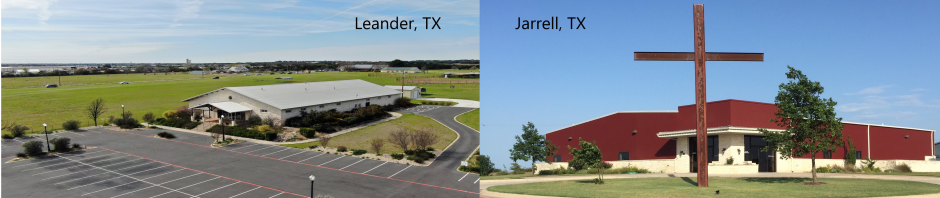
 The Ridge Fellowship’s mission group to Nairobi Kenya July 8th-21st. Pictured left to right Hector Cortez, Jordan Weber, Darrell Koop, Kenneth Koop, Michael Bolanos, Julie Bolanos and Jeff Sanchez.
 Our work began at the orphanage called the Hobbs House of Hope which houses 18 children.
 Our church donated funds to build a ceiling in the kids dormitory. *PS. We were able to give a third of our Christmas Offering – thanks again for those who gave! You can see the results of your generosity. Here we are unloading wood. It was great to have the kids help.
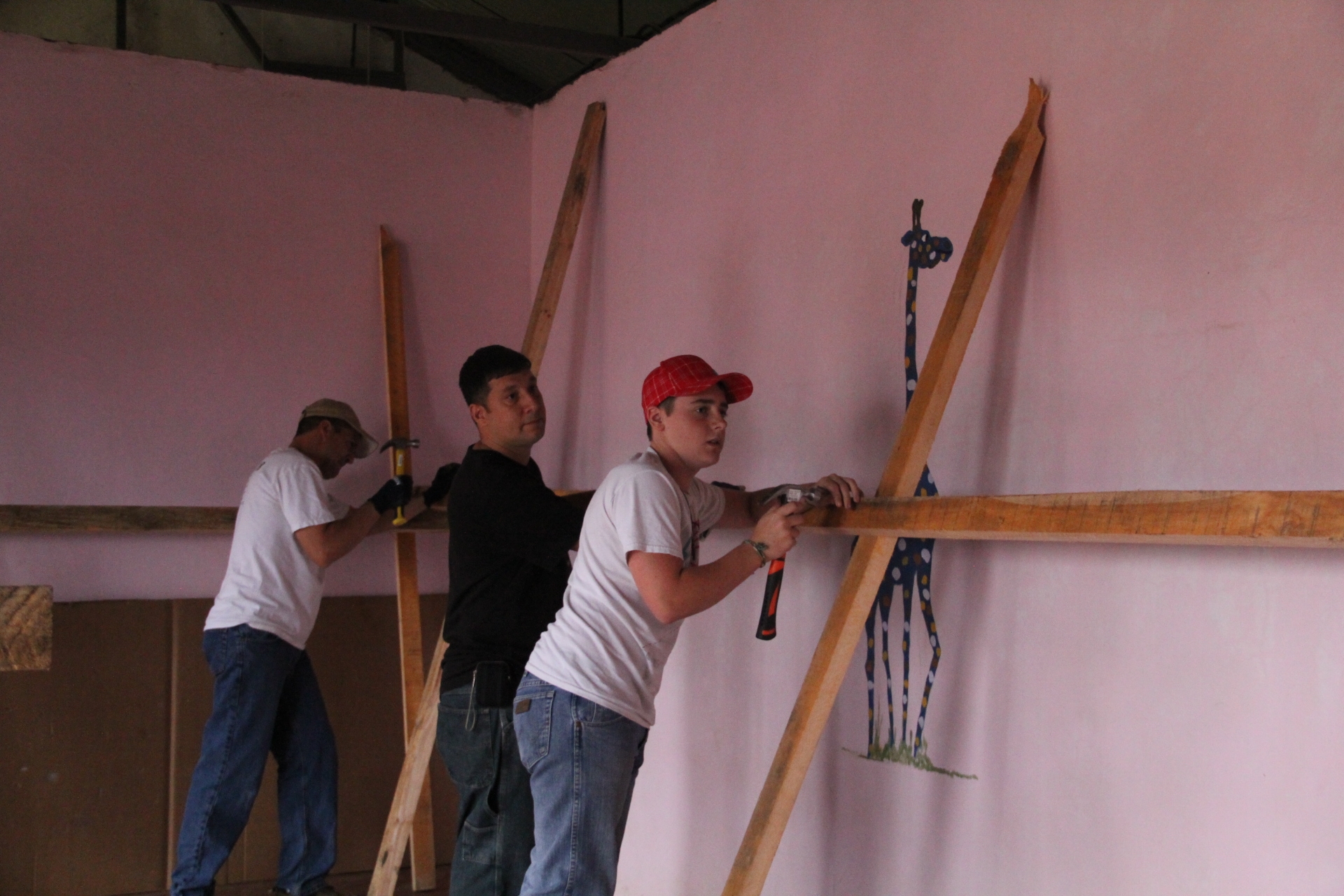 We began by building a scaffolding to reach the ceiling. The ceiling will help regulate the temperature, provide privacy and reduce noise.
 Completed scaffolding!
 Here’s the ceiling at the end of the week.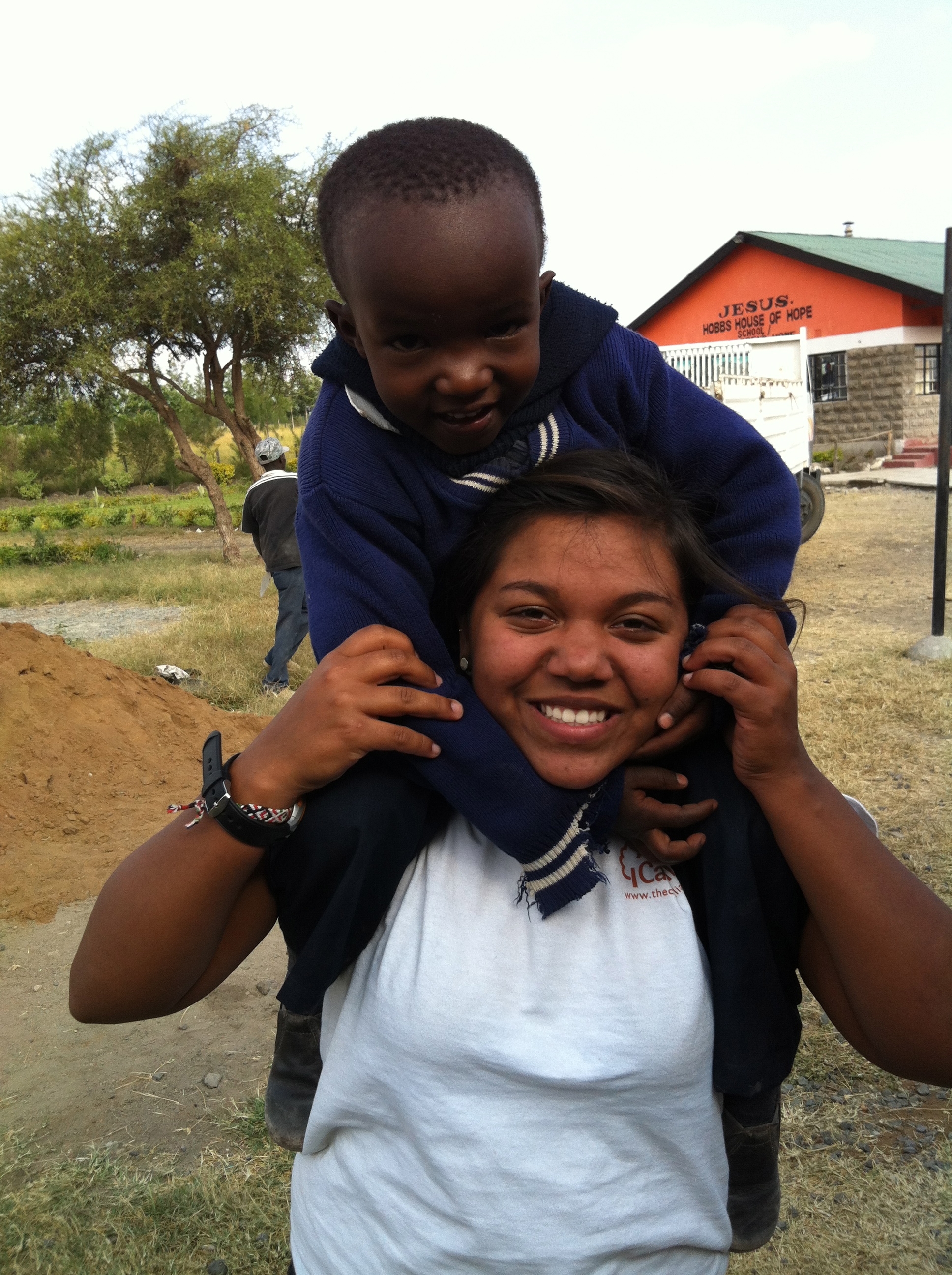
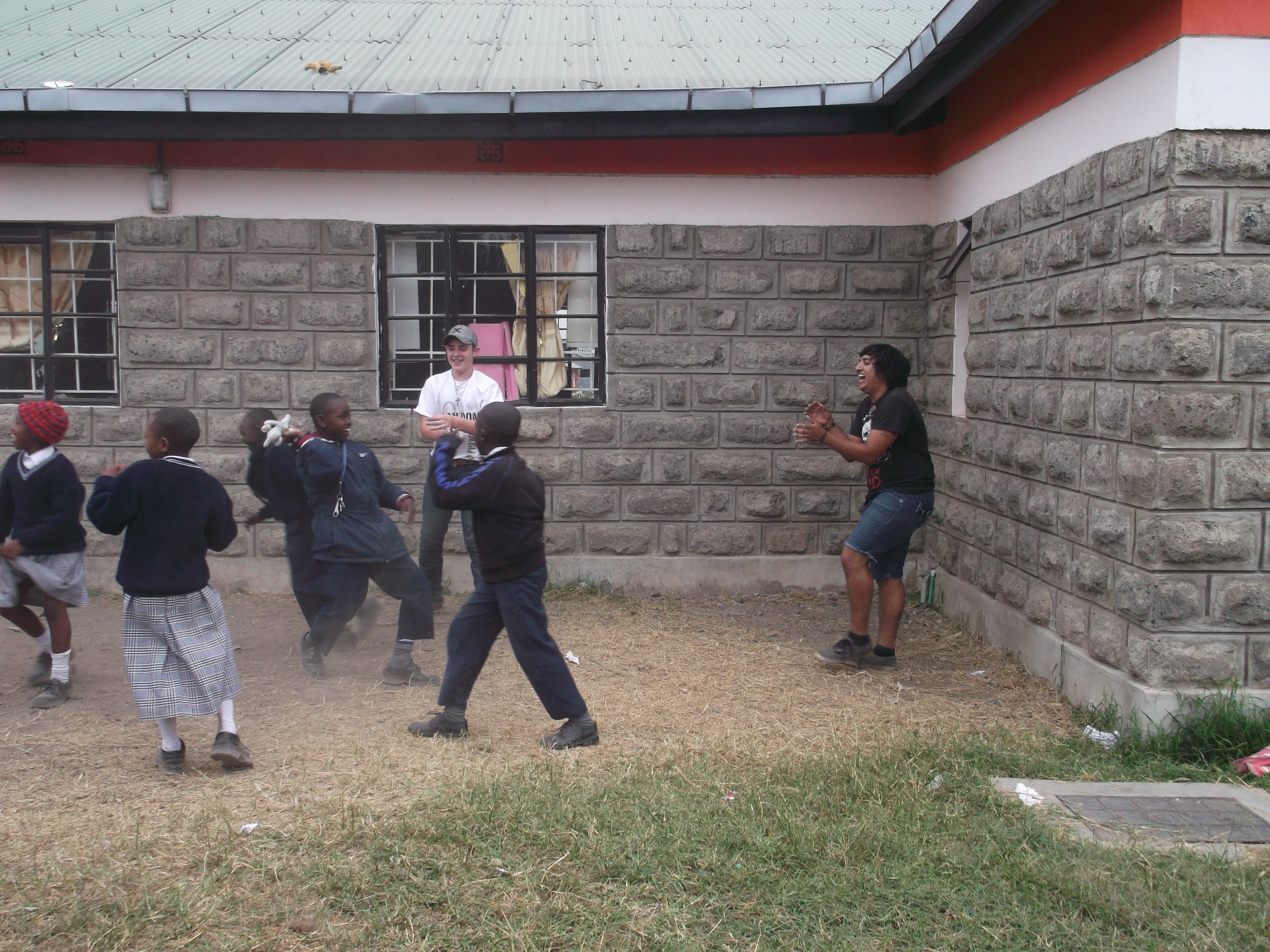

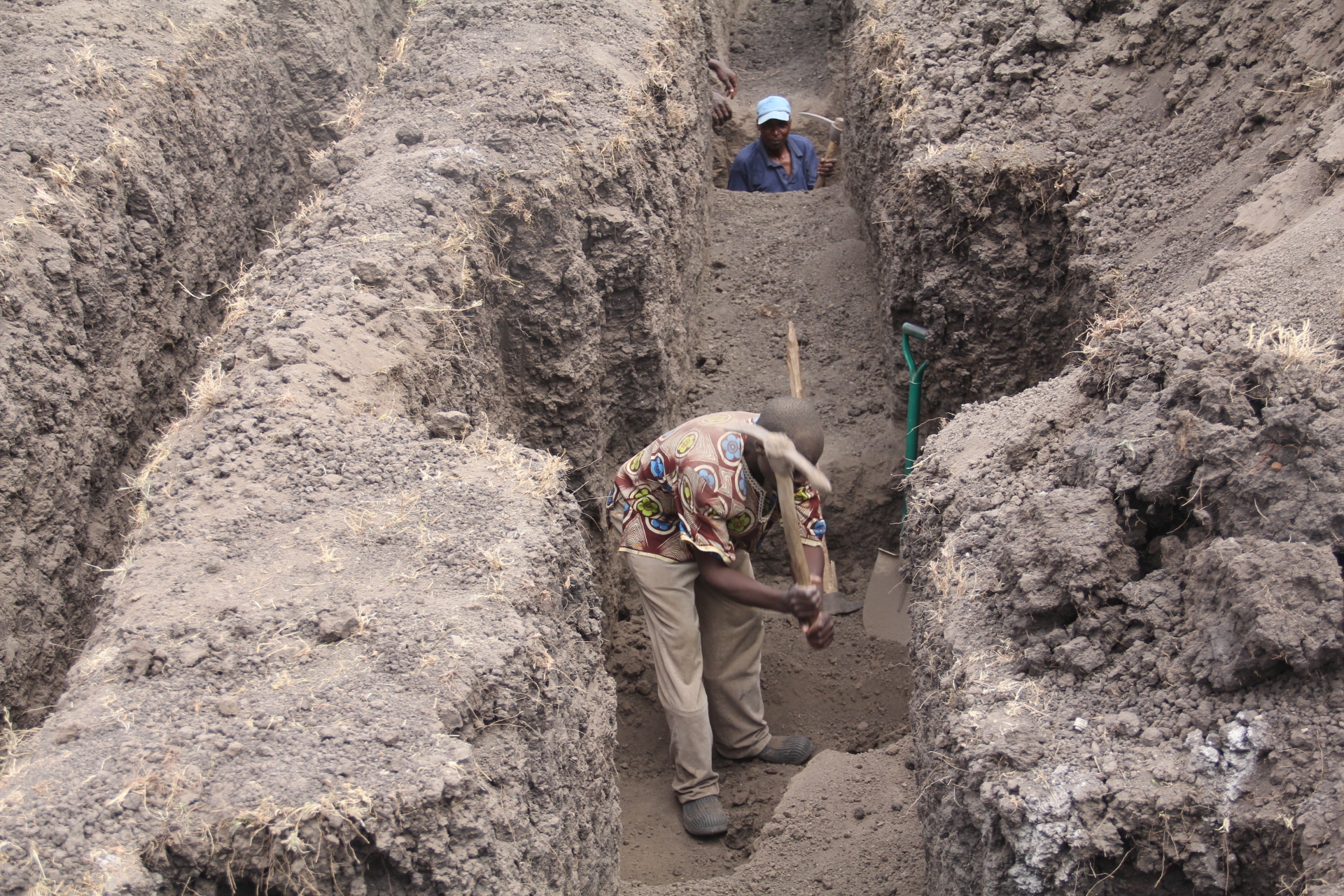 While we were there they were getting ready to add a building for classrooms and a library. They hired men to dig the foundation beams. All work was done by hand. The men you see are making $3 a day for this type of labor all day long for several weeks.
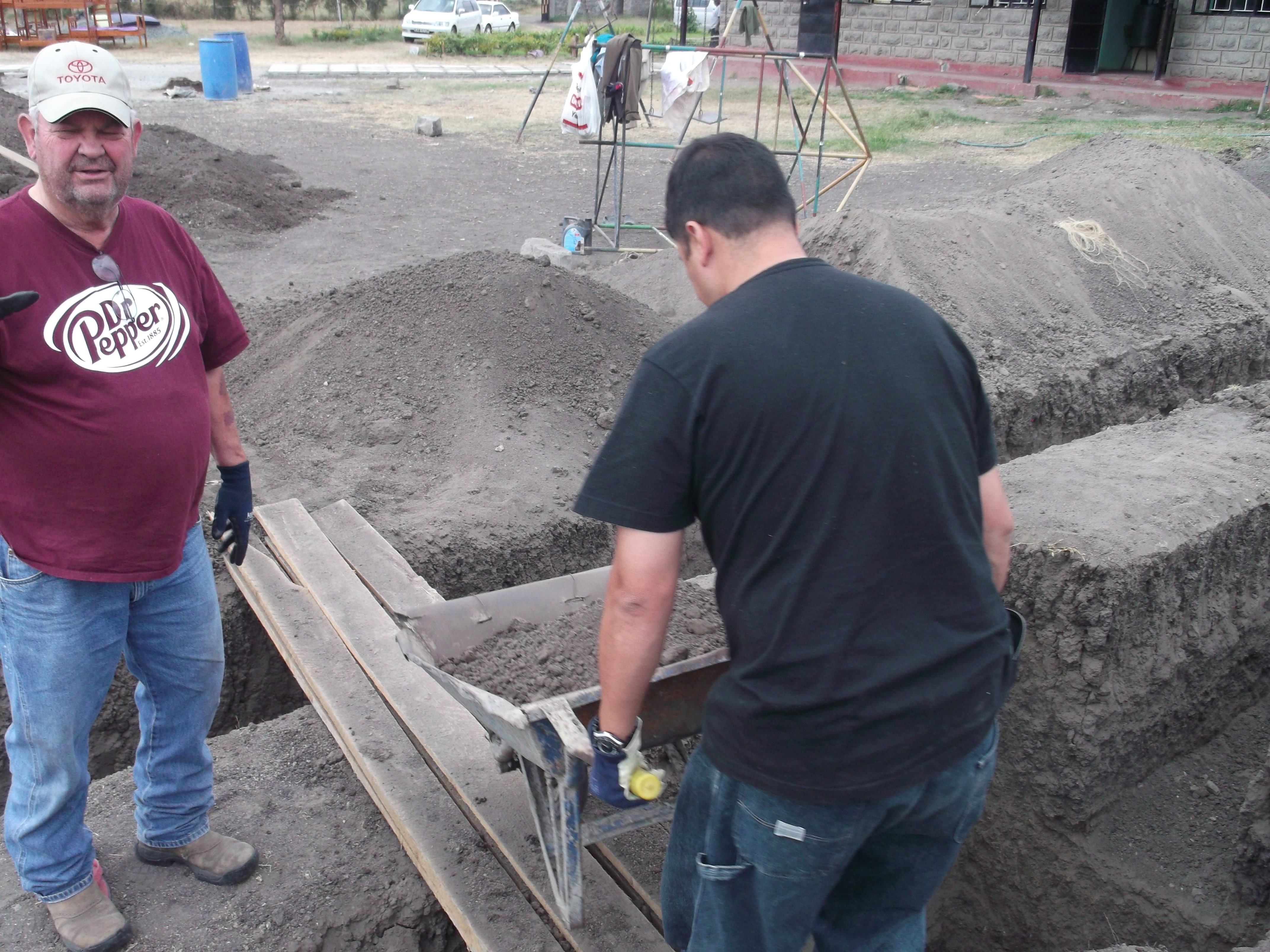 Here we are moving the dirt by hand. How we longed for a Bobcat or a front end loader.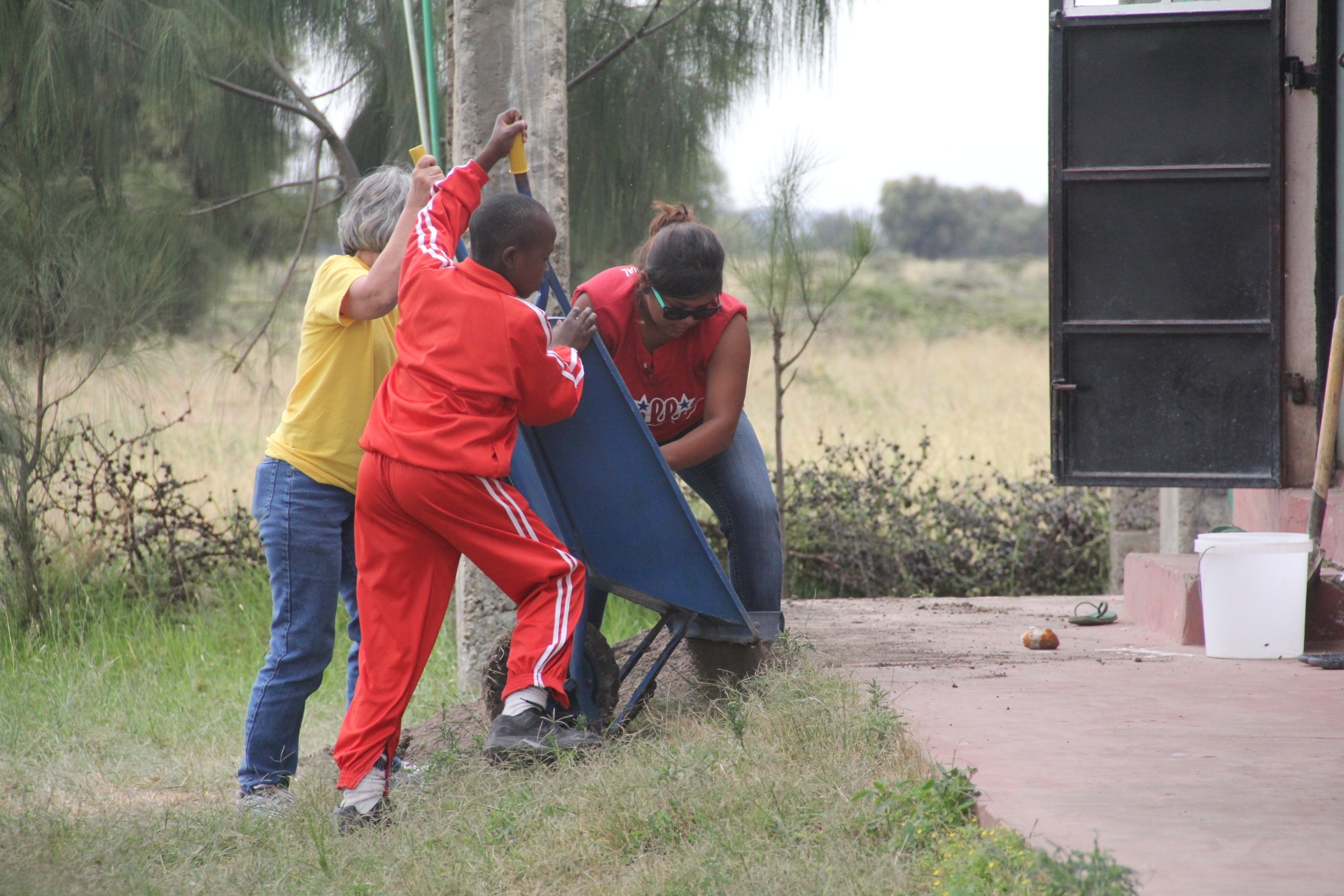
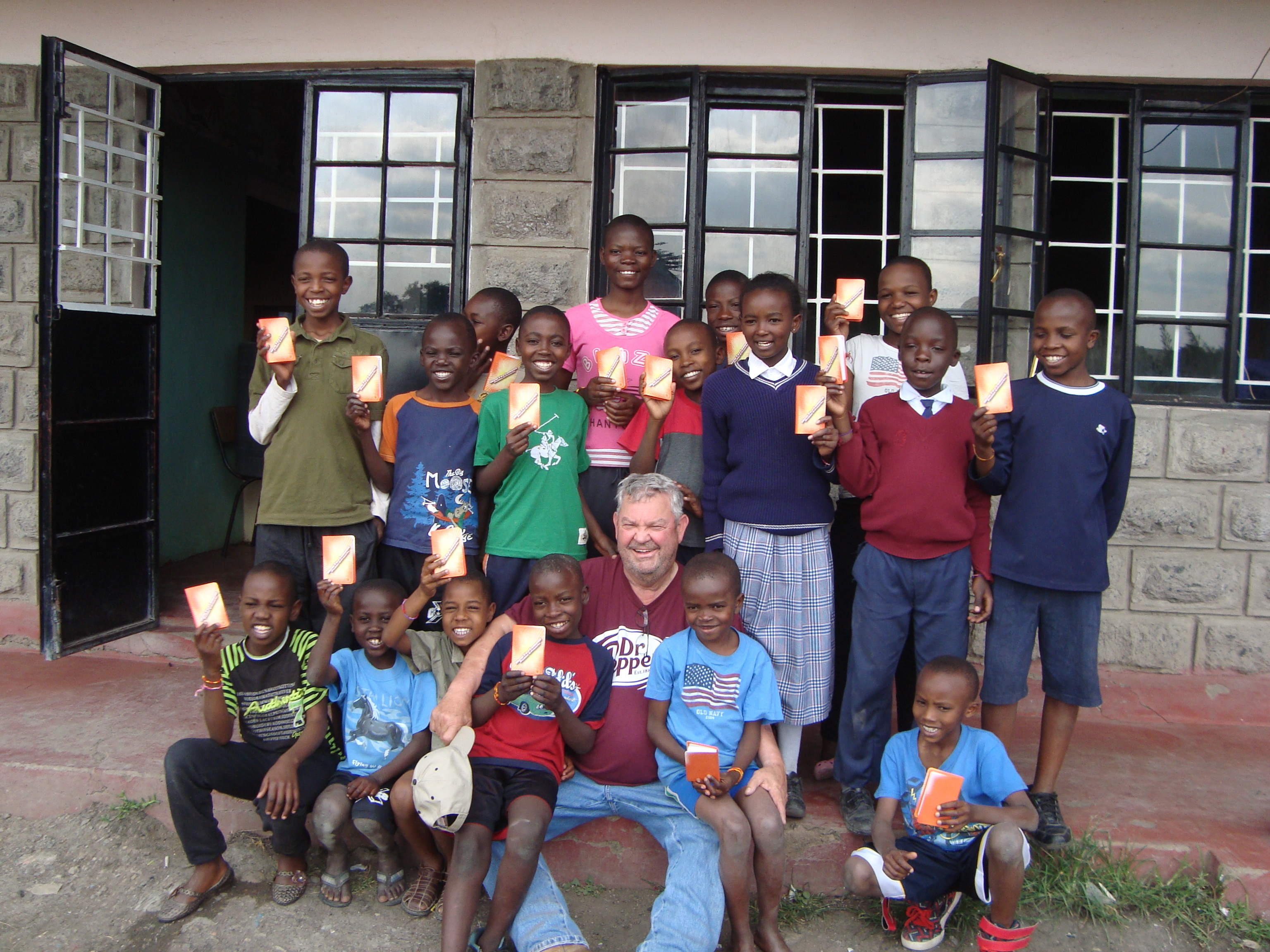
 The orphanage allowed us to write our church name on the wall as a remembrance. It was so rewarding for me personally write our vision statement: To SHOW Christ to our World and realize that it was coming true before our eyes! We were showing Christ to orphans and people in Kenya Africa.
 Pictured above are the directors Pastor Peter and his wife Jemimah expressing thanks for our service, time, love and offering for the ceiling by giving us a certificate. I have to admit in my 20 years of doing missions this is the first time that I have received a certificate of thanks. It was a very nice touch.
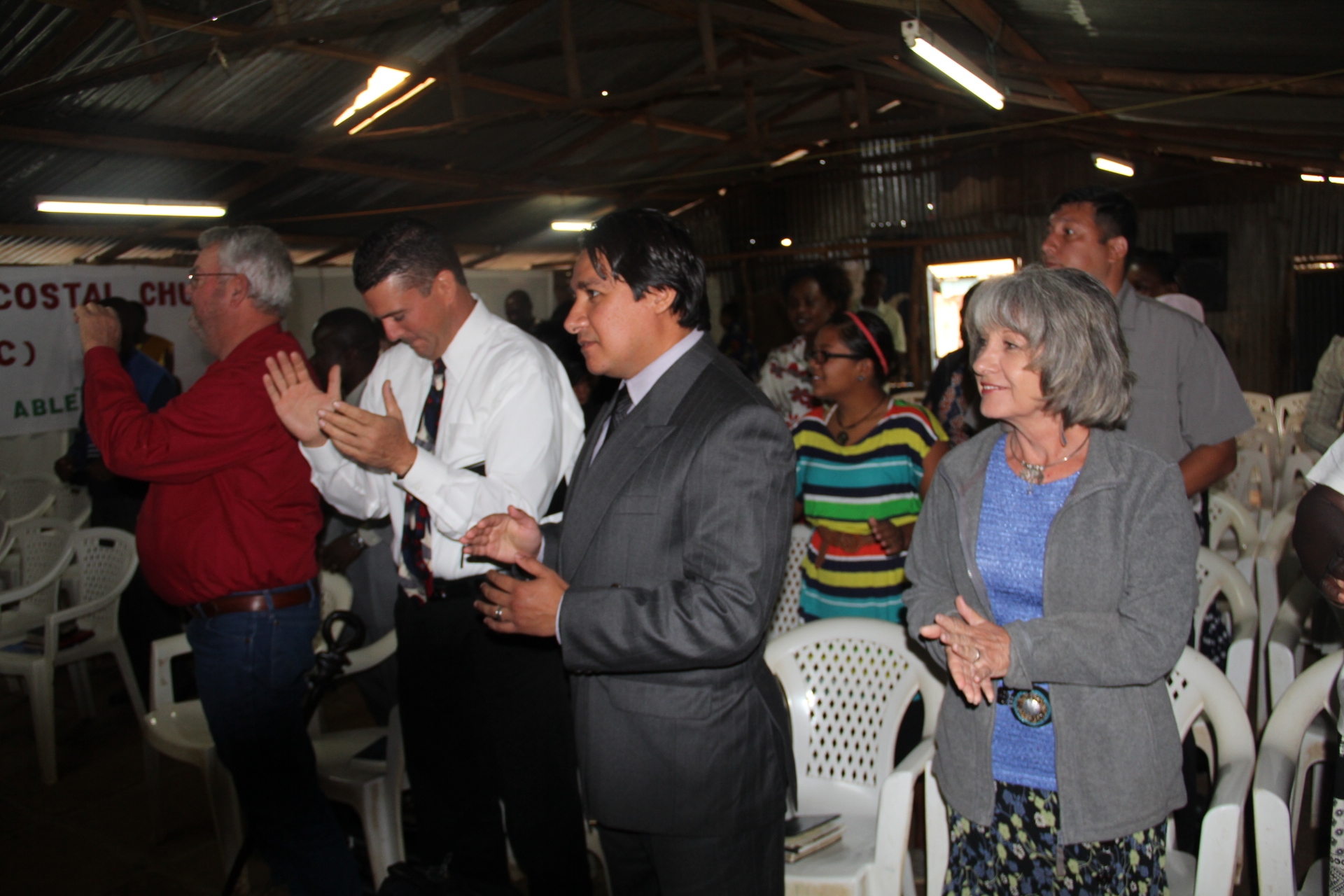 We had big day on Sunday attending church in the slums of Kibera. It was very moving to sense the presence of the Holy Spirit as we sang while at the same time smelling raw sewage just outside the window.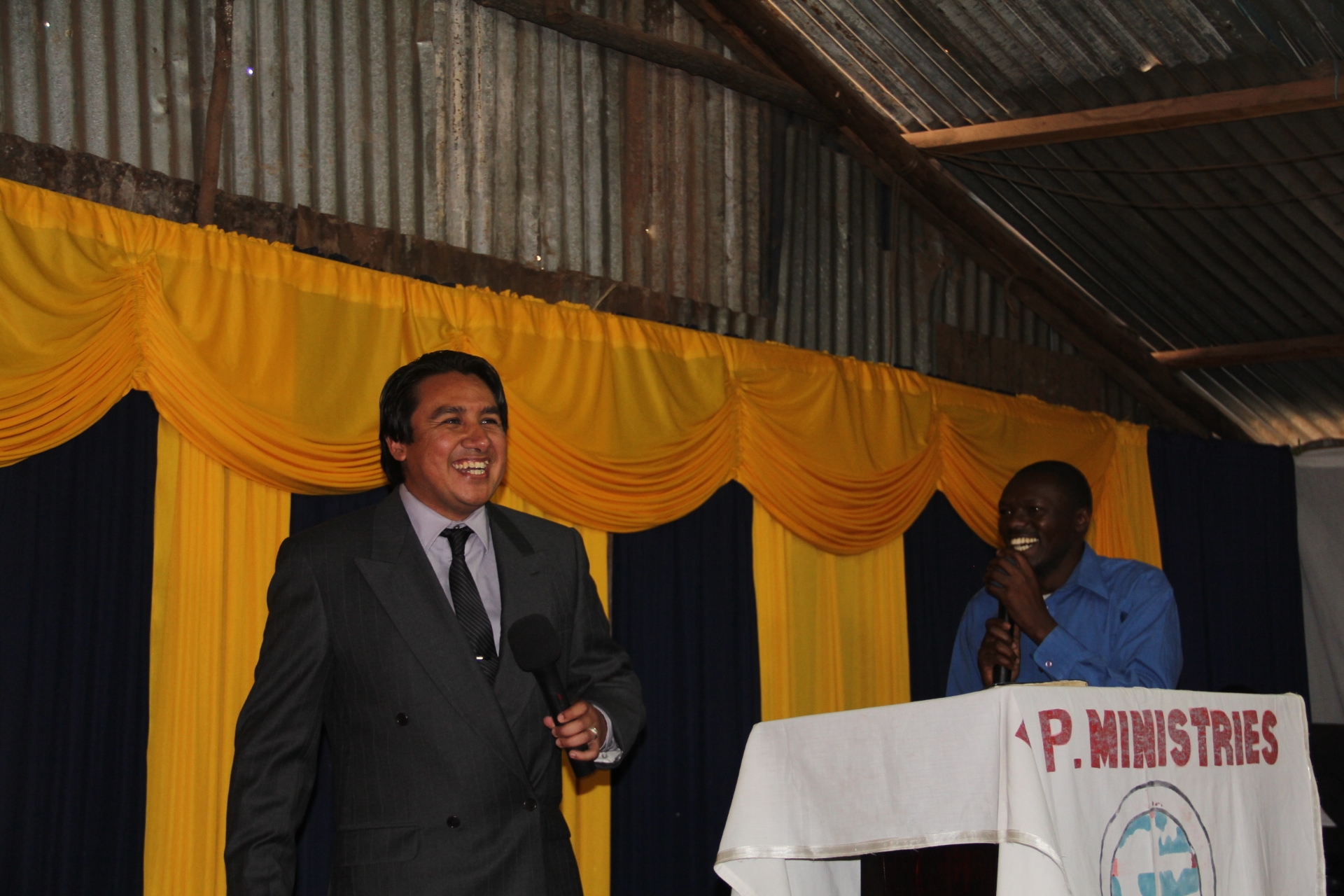
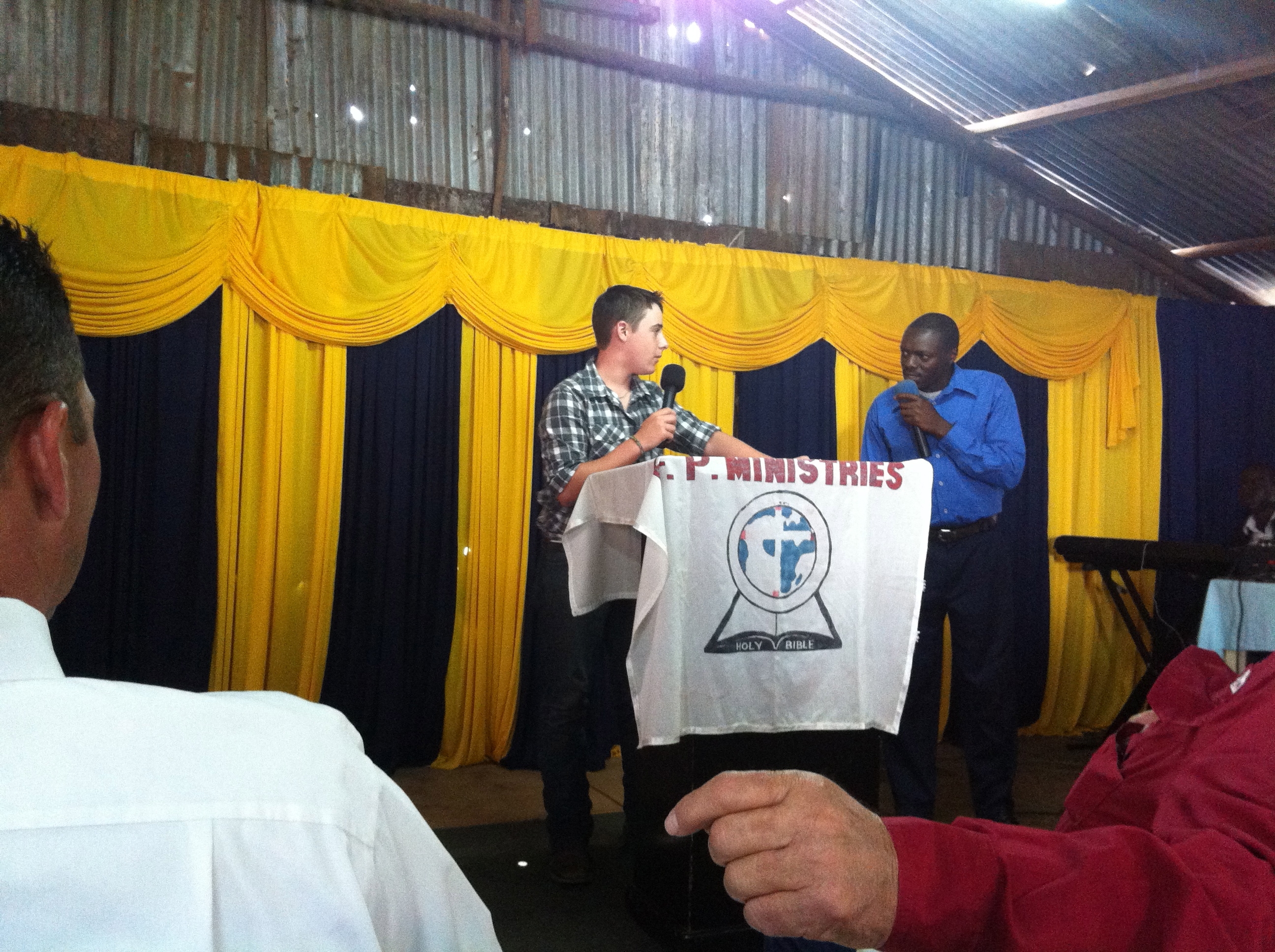
 Each member of our group and members from the church took turns carrying the cross. It’s hard to describe the feeling of carrying a cross like Jesus did.

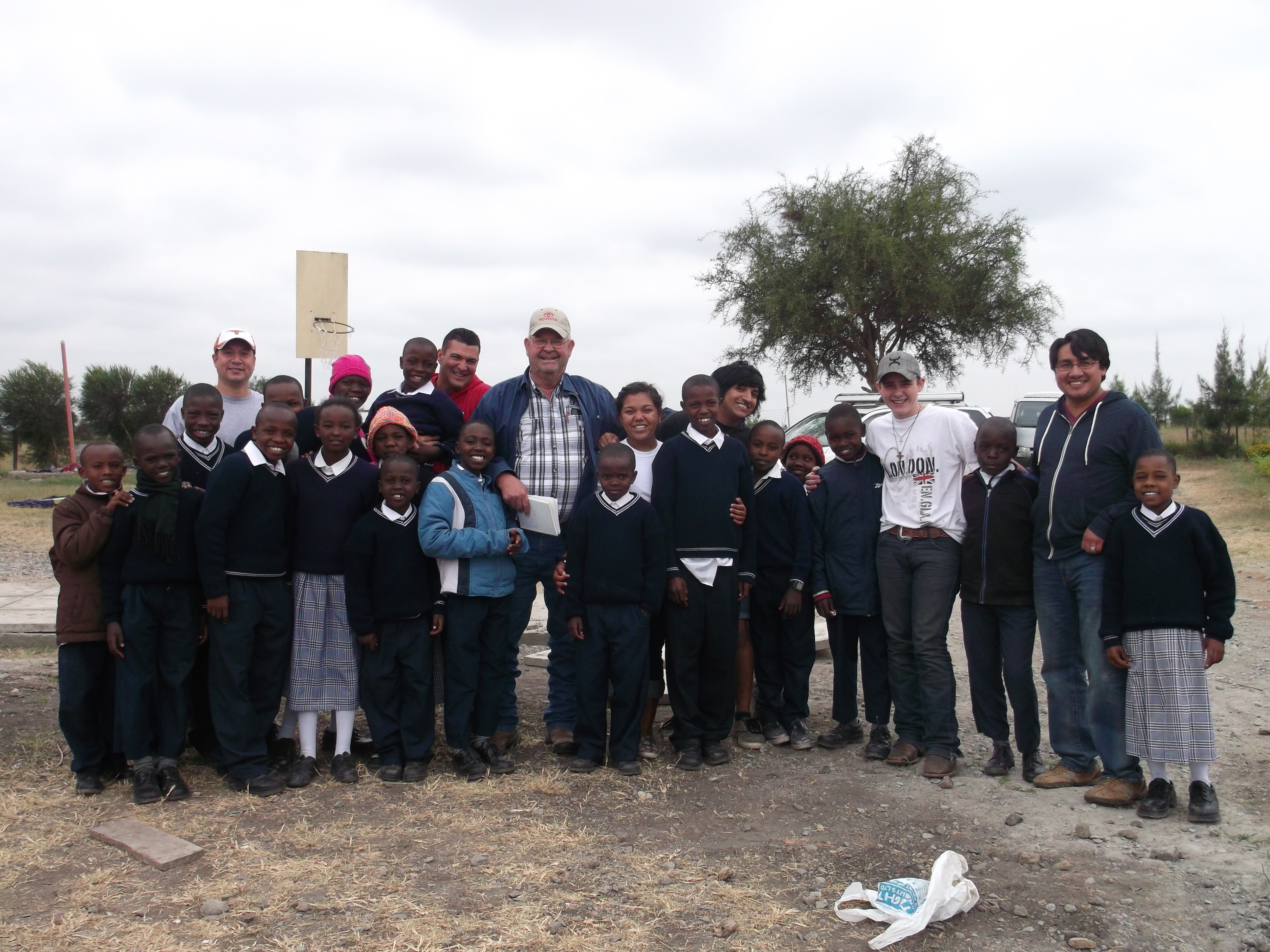
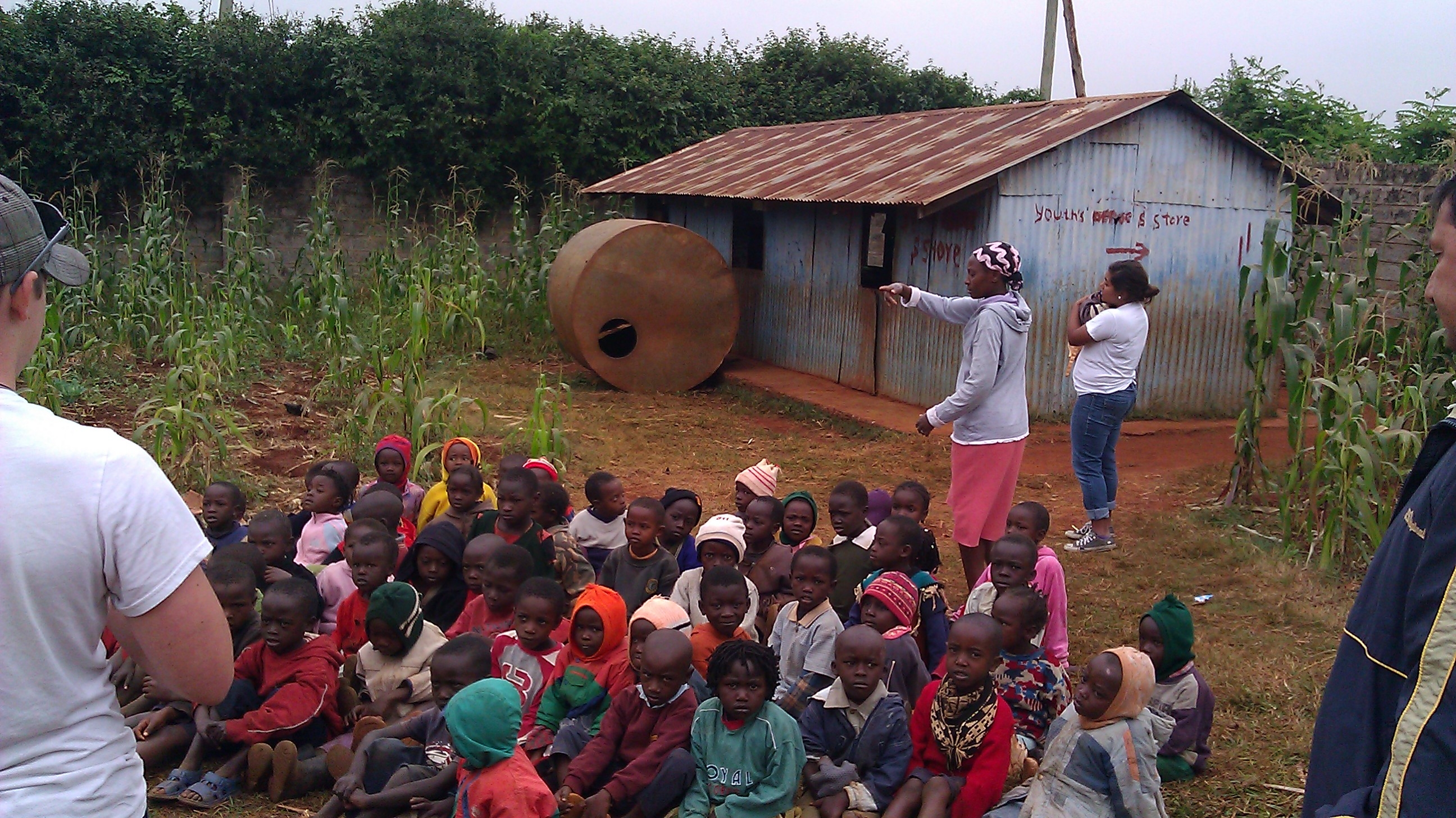 Another way we served was to visit the local school that was located near were we stayed. There are between 70-90 children who attend each day in that metal building behind them. Below is a closeup picture of their school.
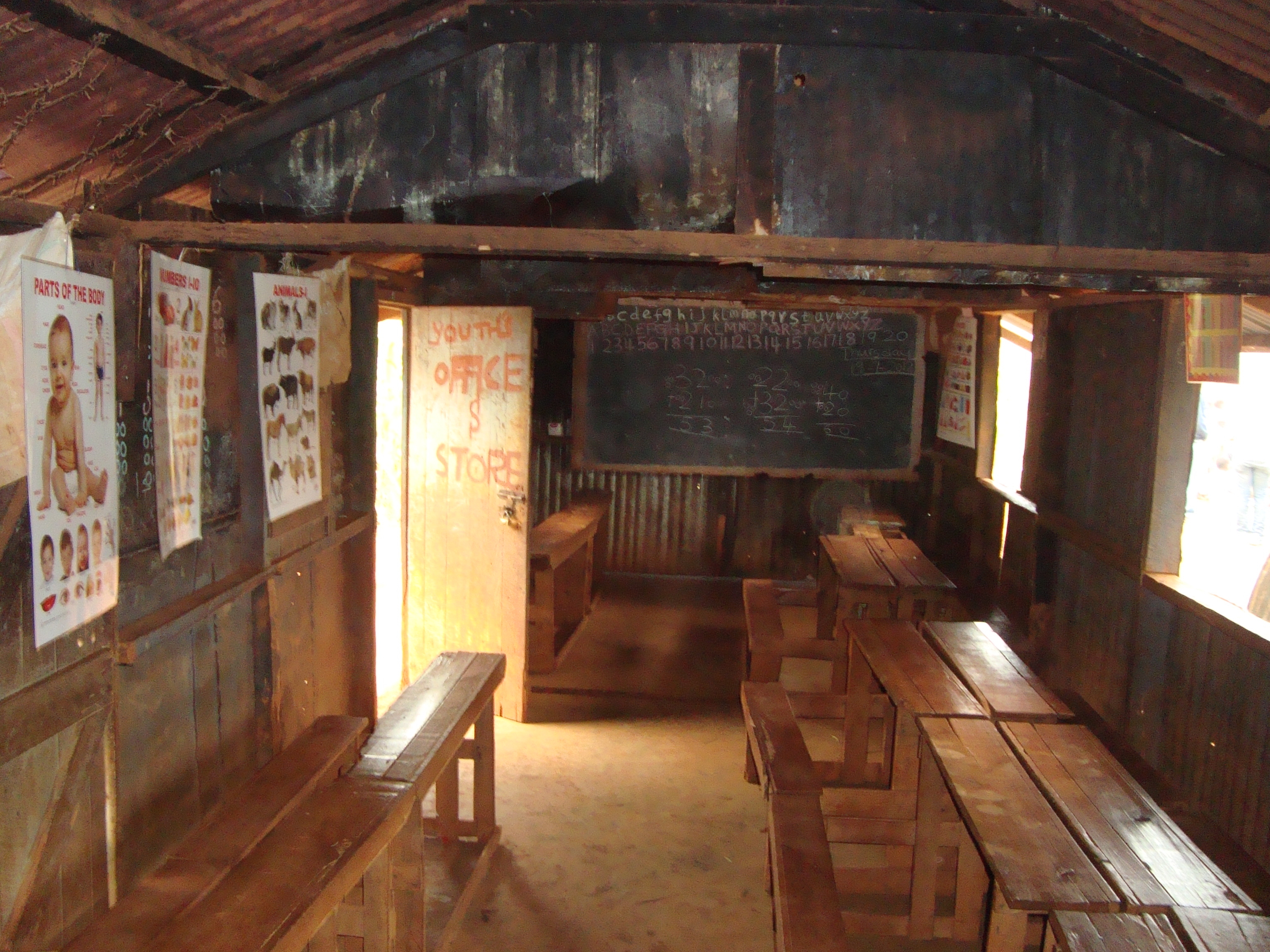 What do you notice? How about no lights, no electricity and no space! This class room has several ages grouped together in a 12×30 space. What would your local PTA say about this?
 Special thanks to those of you who donated school supplies before we left. Pictured here are the kids with some of their supplies! Because of our generous Ridge family we brought with us 6 suit cases full of supplies. Most for this school and some for the orphanage.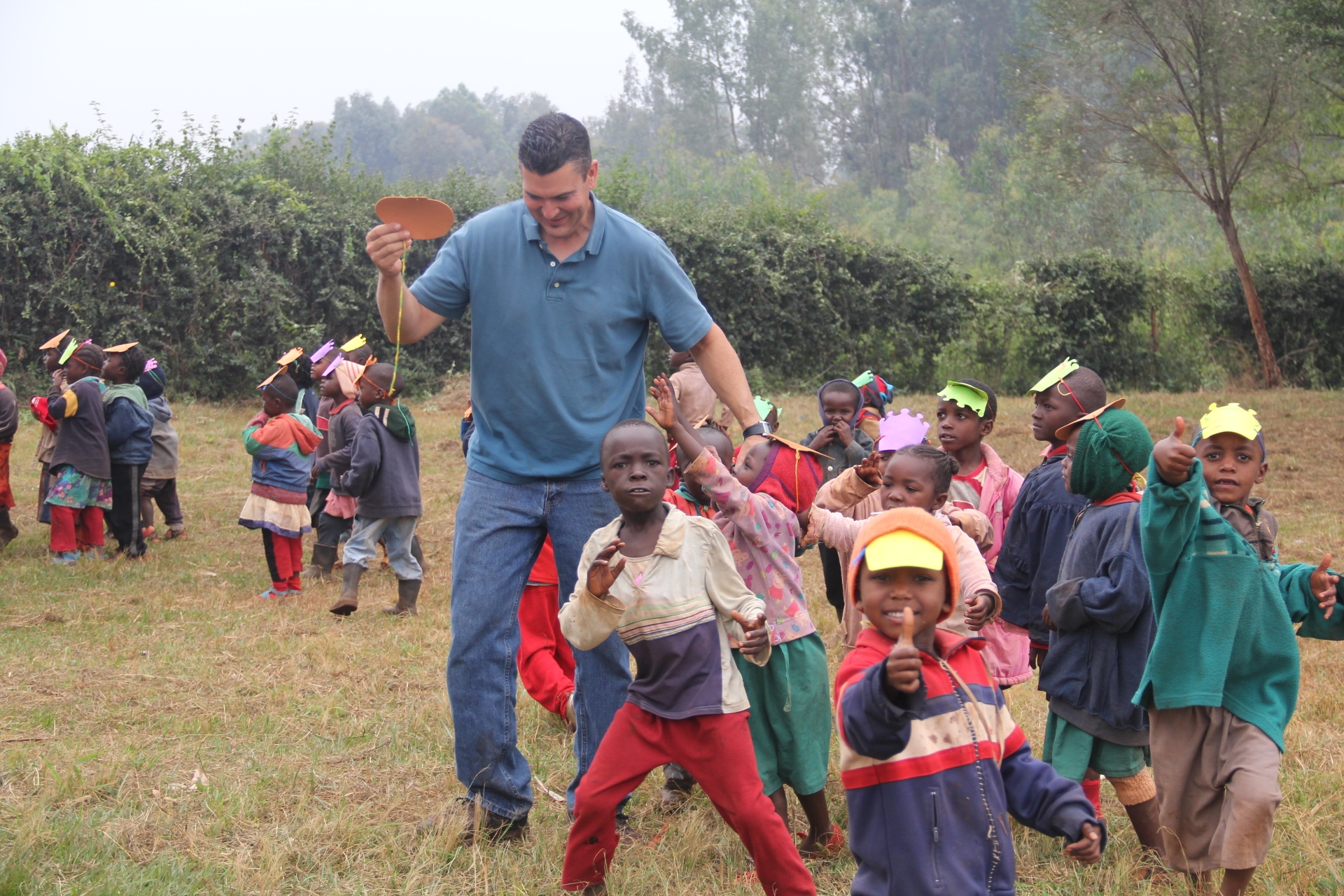
 We also had some down time and went to the Maasi Mara for Safari. We stayed out in the bush in camp run by the Maasi. Pictured is one our hosts.
 THE END!