Who was Goliath? 1 Samuel 17

Most people have heard of the Biblical account of David the young shepherd who defeats the mighty Goliath with only a slingshot. Who was Goliath?

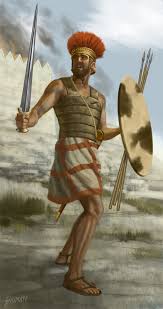
According to the Bible (1 Samuel 17), David, a young Israelite teenager, defeated the giant Philistine warrior with a slingshot and a smooth stone. After David aimed true at Goliath’s forehead, he beheaded the enemy of Israel when the rest of the Israelite army cowered in fear.

But where did Goliath come from? Where does he fit in the historical narrative of Israel and of world history? And was he really as tall as our Sunday school teachers made him out to be?

Israel encounters a number of enemies throughout the Old and New Testament, but the Philistines seem to dot the narrative far more than once.

These descendants of Noah (Genesis 10:14) have some possible links to the Sea Peoples who wreaked havoc and war at the end of the Bronze Age.  Read more about them in our last post.

How Tall Was Goliath?

1 Samuel 1:4 describes Goliath as “a champion…from Gath” whose “height was six cubits and a span.” Depending on how one interprets the “cubits,” Goliath’s height could’ve ranged from 6’0” to 9’6”. Whether Goliath came from Philistia or not, this still brings up the question of whether a person could grow taller than nine feet. The tallest man in modern history, Robert Wadlow stood at 8’11”.

One article from Telling Ministries suggests the Philistines might have hired Goliath as a mercenary for their army due to his giant size.

Meaning of the David and Goliath Account

Whether Goliath received his giant height via supernatural or simply hereditary genes, he still seems to tower over all of Israel.

From a historical standpoint, if we know that the Philistines were fierce warriors and that Goliath was a champion and a very large man,  then we can see why the Israelites were so intimidated by them – except David.

Goliath openly and repeatedly defied God and challenged ones of God’s chosen people to fight him. When young David heard this, he asked the king of Israel if he could fight the giant himself. In 1 Samuel 17:36-37, we see David remembering when God protected him before against a lion and a bear, and he trusted God to protect him now against Goliath.

You come against me with sword and spear and javelin, but I come against you in the name of the LORD Almighty, the God of the armies of Israel, whom you have defied. This day the LORD will deliver you into my hands, and I’ll strike you down and cut off your head. This very day I will give the carcasses of the Philistine army to the birds and the wild animals, and the whole world will know that there is a God in Israel. All those gathered here will know that it is not by sword or spear that the LORD saves; for the battle is the LORD’s, and he will give all of you into our hands” (1 Samuel 17:46-47).

A young man put his confidence in God and defeated the giant. This biblical account attests to God’s power and strength over one’s enemies, even in the face of insurmountable odds.

This familiar scripture reminds us of the courage in men’s hearts when their faith is placed completely in God. Goliath taunts David, but David’s faith becomes evident when he does not cower under the threats, but instead warns Goliath with the hand of God. The armor David rejected represents the strength of man, David chose the armor of God. (Ephesians 6:10-17)

As Christians who have trusted Christ as the only way to heaven (John 14:6), our battle with the giants in our lives will result in victory if we cling by faith to God and His power. The illustration of David and Goliath is only one of many examples of the supernatural power of our Lord. He cares deeply for His children and wants only our best. Sometimes that involves trials and battles, but these are ultimately for our good and His glory. James tells us to consider it pure joy when we encounter trials because they test our faith and develop patience and perseverance (James 1:2-4). When we are tested by these trials, we can, in the power of the Lord, stand up against any giant, trusting our Savior to win the victory.

www.Upwards.Church

Message Audio/Video and Outline: https://upwards.church/watch-now/leander-campus-videos

Watch Messages: YouTube-Upwards Church

Facebook: Upwards Church

Sources:
Posted in 1 Samuel - Kings & Covenants | Tagged , , , , , , , , | Leave a comment

Who were the Philistines? 1 Samuel

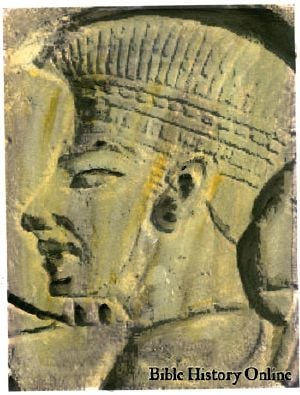
The Philistines were a people of Aegean origin who settled on the southern coast of Palestine in the 12th century BC, about the time of the arrival of the Israelites.

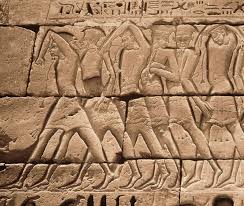
The first records of the Philistines are inscriptions and reliefs in the mortuary temple of Ramses III at Madinat Habu, where they appear under the name prst, as one of the Sea Peoples that invaded Egypt about 1190 BCE after ravaging AnatoliaCyprus, and Syria. After being repulsed by the Egyptians, they settled—possibly with Egypt’s permission—on the coastal plain of Palestine from Joppa (modern Tel Aviv–Yafo) southward to Gaza.

*(The image depicted here is  Philistine captives being led away after their failed invasion of Egypt, from a relief at Ramses III’s mortuary temple at Medinet Habu, Thebes, Egypt.)*


The name “Philistine” comes from the Hebrew word Philistia, and the Greek rendering of the name, palaistinei, gives us the modern name “Palestine.” The Philistines are first recorded in Scripture in the Table of Nations, a list of the patriarchal founders of seventy nations descended from Noah (Genesis 10:14). It is thought that the Philistines originated in Caphtor, the Hebrew name for the island of Crete and the whole Aegean region (Amos 9:7Jeremiah 47:4). For unknown reasons, they migrated from that region to the Mediterranean coast near Gaza. Because of their maritime history, the Philistines are often associated with the “Sea Peoples.” The Bible records that the Philistines had contact with both Abraham and Isaac as early as 2000 B.C. (Genesis 21:323426:18).

After Isaac’s involvement with the Philistines (Genesis 26:18), they are next mentioned in passing in the book of Exodus shortly after the Israelites crossed the Red Sea: “When Pharaoh let the people go, God did not lead them on the road through the Philistine country, though that was shorter. For God said, ‘If they face war, they might change their minds and return to Egypt’” (Exodus 13:17).

The “road through the Philistine country” refers to a route later known as the Via Maris or “the Way of the Sea,” one of three major trade routes in ancient Israel. This coastal road connected the Nile Delta with Canaan and Syria and beyond, into the Mesopotamian region of southwest Asia.

The Old Testament indicates that around the 13th century B.C., during the days of Samuel and Samson, the Philistines moved inland from the coast of Canaan. There, they built their civilization primarily in five cities: GazaAshkelonAshdodGath, and Ekron (Joshua 13:3). These cities were each governed by a “king” or “lord” (from the Hebrew word seren, also rendered as “tyrant”). These kings apparently formed a coalition of equals. Each king retained autonomous control of his city, such as when Achish, king of Gath, dealt with David (1 Samuel 27:5-7), but they worked in concert in times of national emergency (Judges 16:5).

From the very beginning, the Philistines were either allies or deadly enemies of God’s people. They played a pivotal role in the lives of Samson (Judges 13:114:1), Samuel (1 Samuel 4:1), Saul (1 Samuel 13:4), and David (1 Samuel 17:23).

The Philistines were known for their innovative use of iron, which was superior to the bronze used by the Israelites for weapons and implements. Even as late as the time of Saul (1050 – 1010 B.C), the Israelites were forced to rely on the Philistines to sharpen or repair their iron tools (1 Samuel 13:19-21). With their more advanced armaments and aggressive military policy, the Philistines continually thwarted Israel’s development as a nation. For nearly 200 years, the Philistines harassed and oppressed the Israelites, often invading Israel’s territory. The children of Israel simply could not deal with the Philistines’ overwhelming military might. This only came to an end when Samuel and then David, through the guidance of God, were able to defeat the Philistines (1 Samuel 7:12-142 Samuel 5:22-25).

The Old Testament indicates that the Philistines worshiped three gods: Ashtoreth, Dagon, and Baal-Zebub—each of which had shrines in various cities (Judges 16:231 Samuel 31:102 Kings 1:2). Archaeological findings show that Philistine soldiers carried images of their gods into battle (2 Samuel 5:21). Apparently, they were also a superstitious people who respected the power of Israel’s ark of the covenant (1 Samuel 5:1-12).

The Philistines were infamous for their production and consumption of alcoholic beverages, especially beer. Ancient Philistine ruins contain numerous breweries and wineries, as well as countless beer mugs and other drinking vessels. Samson’s wedding feast, recorded in the book of Judges, illustrates the Philistine practice of holding week-long drinking parties; the Hebrew word misteh, translated “feast” in Judges 14:10, means “drinking feast.”

The Israelites frequently referred to the Philistines as “uncircumcised” (Judges 15:181 Samuel 14:62 Samuel 1:20), meaning, at that time, those who had no relationship with God. They were not God’s chosen people and were to be strictly avoided as a contaminating evil.

Today, the word philistine is used as an epithet to refer to an unrefined, dull person. In truth, the Philistines of history were not unsophisticated or uncultured. They were an advanced seafaring people who, for several generations, were years ahead of Israel.

What does modern archeology reveal? Between 1997 and 2016, researchers at an excavation near Ashkelon in Israel examined the remains of more than one hundred humans, remains that dated from the 12th to 6th centuries before Christ. The researchers hoped to find human DNA in order to answer an old question: Who were the Philistines? Where did they come from?

As it turns out, the Philistines were exactly who the Bible says they were, and they came from where the Bible says they did.

Amos 9 speaks of God bringing up the Philistines from Caphtor, just as he brought Israel out of Egypt. Deuteronomy 2 tells us that “the Caphtorim, who came from Caphtor, destroyed [the original Canaanite inhabitants] and settled in their place.”

This brings us to the obvious question: “Where was Caphtor?” We just don’t know for sure, but the Bible does provide an interesting clue. Jeremiah called the Philistines “the remnant of the coastland of Caphtor.” The Hebrew word translated “coastland” can also mean “island.”

For this and other reasons, many archaeologists have concluded that biblical Caphtor was Crete. In fact, some modern Bible translations even render “Caphtor” as “Crete.” We can’t be completely certain that it is, but the Bible does tell us three additional things about the Philistines. First, they weren’t native to Iron Age Canaan. Second, they displaced the original inhabitants of the region. And, third, they came via the sea, that is, the Mediterranean.

Which brings us back to the excavation in Ashkelon. After analyzing DNA from the site, Michal Feldman, an archaeogeneticist at the Max Planck Institute, and Daniel Master, the head of the expedition, revealed the results. Master announced, “Our study has shown for the first time that the Philistines immigrated to this region in the 12th century (BC).”

And from where did they immigrate? According to Feldman, “This [DNA] ancestral component is derived from Europe, or to be more specific, from southern Europe, so the ancestors of the Philistines must have traveled across the Mediterranean and arrived in Ashkelon sometime between the end of the Bronze age and the beginning of the Iron age.”

Over time, the “ancestral component” became diluted as the Philistines mixed with the local Canaanite population.   Also according to other historians, Philistine civilization disappeared after its cities were conquered by the Assyrian Empire in the late eighth century B.C.E.

All of this is pretty much in accordance with the Biblical narrative. The Philistines were ancient Israel’s principal antagonist during the period of the Judges, which coincides with the time frame Feldman and Master mention, as well as the early Monarchy. As the biblical narrative continues, they become less distinct from their Canaanite neighbors and basically drop out of the picture, except as an historical reference, as in Jeremiah.

Whenever the latest archaeological evidence confirms parts of the Biblical narrative, we are told that this does not prove the Bible is “true.” I suspect what critics are trying to say, for example in this case, is that confirming the biblical narrative’s account of the origin of the Philistines doesn’t necessarily mean the rest of the Bible is true.

Of course, it doesn’t. But the Bible is on quite a streak here, isn’t it? And, each finding further distinguishes the Biblical narrative from other religious or even ancient historical texts. The Biblical writers weren’t creating myths or recounting legends. They were relating history.

Like all history, the events it describes are interpreted within Israel’s larger story, but the events are clearly not created out of thin air to suit their agenda. These were events either witnessed or received from reliable sources.

Which is why we must say that Biblical faith is a historical faith. Many other faiths are “ways of life” or “paths to enlightenment” or something like that. The Bible is different. It tells the story of God’s dealing with His people as it unfolded in human history. Its details are grounded in real events, not in some mythological “once upon a time.”

www.Upwards.Church

Message Audio/Video and Outline: https://upwards.church/watch-now/leander-campus-videos

Watch Messages: YouTube-Upwards Church

Facebook: Upwards Church

Sources:

https://www.britannica.com/topic/Philistine-people

https://www.gotquestions.org/Philistines.html

https://www.breakpoint.org/archaeology-the-philistines-and-the-old-testament/

https://www.newworldencyclopedia.org/entry/Philistines

Posted in 1 Samuel - Kings & Covenants | Tagged , , , , | Leave a comment

Trust God for the Future – 1 Samuel 16

We now begin an exciting adventure into the life of a shepherd boy named David. David plays an important role in the Bible. More space is devoted to David in the Scriptures than any other person, except Jesus Christ. Jesus was called the son of David and the root and offspring of David. Jerusalem is the city of David.

Saul was man’s pick for a king and he failed. David is God’s choice who is blessed and used of God and also repents when he falters and fails. Let’s open up to this exciting account.

God asked Samuel, “How long will you mourn for Saul?” Samuel was broken hearted over Saul’s failure. It was a great disappointment. The one who really should be weeping and grieving is not weeping at all. It should be Saul with the tears. God helps Samuel see that, “what has happened is in the past. What’s done is done. Samuel it is time to go forward. Fill your horn and go to Jesse’s home.”

The message is the same for us today. Has a dream, goal or hope died? Has someone disappointed you? Get up and go forward in your walk with the Lord. Paul put it this way.… “this one thing I do, forgetting those things which are behind, and reaching forth unto those things which are before, I press toward the mark for the prize of the high calling of God in Christ Jesus” (Philippians 3:13, 14). The history of most people’s lives is falling down and getting back up! If you have suffered a spiritual defeat in your life, learn from it, if a sin, confess it to the Lord, repent and forsake it, and go onward to serve the Lord the best you can. Have you been disappointed? Put your expectations in the Lord.

God said, “I have provided Me a king!” The Lord is in the providing business!  He provided for Samuel and Israel.  He will do the same for you too. “But my God shall supply all your need according to his riches in glory by Christ Jesus (Philippians 4:19).

  •  God Shows Us What to Do (1 Samuel 16:1-5)

Samuel was to go to Bethlehem from Ramah, which would pass through Gilead.… Saul’s capital. Samuel is concerned that Saul will kill him if he anoints another to be king. He wonders how he can do this. Samuel shows a measure of doubt as to God’s ability to care for him.

The Bible is such an open, honest book. The fears of Samuel are revealed just like the weaknesses of other men of God.  All of these people are just like us. They had the same concerns, worries, and fears that we have. We need to remember whenever or wherever God calls you to a task, He will take care of the details.

God’s solution to Samuel’s concerns is to conceal his plans. The concealment was not a deception. It is the glory of God to conceal a thing: but the honor of kings is to search out a matter (Proverbs 25:2). The trials of Job concealed the blessings of God for Job. Jesus’ delay in responding to Lazarus’ sickness concealed the miracle of his resurrection by the Lord later. Camouflaged in your trials are the blessings of God.

16:4–5 Perhaps the elders “trembled” at the sight of Samuel because they interpreted Samuel’s arrival with a heifer as an indication that a murder had occurred in their territory and that a legal action was being initiated; Youngblood suggests the elders were “awed by his formidable reputation,” established in part by his recent execution of Agag.[1]

The people are scared. They wanted to know what they did wrong. They are afraid because visits of this nature are usually for the purpose of judgment or denouncing sin. It is the same feeling a kid might have when he is called to the principle’s office at school.   Samuel tells them he comes to peaceably make a sacrifice to the Lord.

Jesse’s oldest son Eliab is seen by Samuel. Samuel presumes that he must be the next king. His presumption is wrong. Presumptions can get a person into big trouble. Some presume, “I have plenty of time to live and be saved!”

Another common presumption is, “It’s okay for me to live this way because everyone else is doing this too.”  The majority is not always right, in fact, many times they are wrong.

God gives Samuel His criteria for picking His man. God is still teaching Samuel in his senior years and Samuel is still learning. We are never too old to learn and to grow in Christian maturity. God tells Samuel, “Look not on the outward appearance.… the countenance, height, and stature.” God’s criteria was to look at the inward.… the character and the heart of the person. The internal is more important than the external. God was looking for a man after His own heart (13:14). God is not interested in the tall, but the one who is small in his own eyes. God was looking for a man of …

* character not compromise,

* courage, not consternation or fear,

* conviction, not convenience for the moment,

* consistency, not confusion and changing beliefs.

Our Lord is much more concerned about our heart and character than reputation. Reputation is what we project.… what people think of us. It is what we can package, perform, promote, and pretend. Character or heart is what God knows we are when no one is around.

When the Lord looked at Eliab, He did not find what He was looking for at all. He knew what was in his heart. In chapter seventeen of this book we find Goliath mocking, defying, and defaming God. Look who gets mad when David shows up on the scene (17:28). It is Eliab. It is David, not Eliab who meets the challenge. He is not fearful and frustrated like Eliab who was tolerating the defaming of God. David responds with courage and faith in the incident. God commended David for his actions and attitude (2 Corinthians 10:18).

Is God still looking for a man or woman after His own heart today? You better believe He is! What does the Lord see when He looks at your heart? Does He find a love for Him (Deuteronomy 6:5) or wickedness (Jeremiah 17:9).  Since matters of the heart are more important to the Lord than outward appearance, don’t you think we should be concerned about our heart condition too? If we’re are looking for a mate, don’t focus on the appearance alone of the person, be sure to focus on the character of the person too. When the beauty fades, the character remains.  In all our relationships realize that it takes time to really get to know the character of a person.

The next son, Abinadab passes before Samuel, but he is not the man. Shamah and the rest of Jesse’s sons except one come before Samuel, but with no avail. The underlying insight here is this.… it is difficult to find a man after God’s own heart. As you look at yourself, are you a person who thirsts for a close walk with the Lord?  We can fool people, but not the Lord who sees our heart.

 Samuel is on a mission from God to find and anoint another king other than Saul. He is sent by God to Bethlehem to anoint someone in Jesse’s home. As he views the sons of Jesse, he makes a common false presumption by looking at the outward manly features of these young men. God is still teaching Samuel even after years of service. He still wants to teach you too. God is looking at the heart and is looking for a man after His own heart. The remaining verses show where He focuses His attention.… on a teenage shepherd boy named David.

Samuel has looked at all of Jesse’s sons but none had the green light from the Lord. Samuel asked, “Are there anymore sons?” Samuel is told there is one more son.… the youngest who keeps the sheep.  David’s dad doesn’t even call him by name.  David was not even invited to the feast.  We may all related to David by being overlooked, uninvited, deemed as unimportant.  We may be that way to our family, but never to God!

David had a heart for the Lord. What a challenge and example for teenagers today to follow the Lord. It is a greater challenge for us who are older and supposedly wiser and more mature. Unfortunately, I have seen more maturity in godly teenagers than in some adults who claim to be Christians.

David wasn’t a big shot. He was herding the sheep which was a job usually done by the servants of wealthy families. It was considered a menial job. God was preparing David for greater tasks. God may entrust you with greater responsibility if you are faithful in smaller tasks.

David was considered foolish, an outcast. He was the youngest (16:11) meaning he was least in importance. The Hebrew root word is koot which means “cut off, detest, loathe.” David was least in his father’s estimation; the last choice on his list but he was first on God’s list because he was a young man after God’s own heart.

God has a way of finding His men in unexpected places.

* A king in a pasture with sheep.

* Joseph in a prison.

* Gideon hiding by a wine press.

* Moses in the desert.

David was chosen as king because he had a heart for God. What does this mean or involve? A look at David’s heart will reveal the answer.  We should seek to have these traits too.

* David’s Heart

* Psalm 23:1.… A believing heart (Psalm 14:1)

* Psalm 23:2.… A meditating heart.

* Psalm 23:3.… A holy heart set on holiness.

* Psalm 23:4.… A confident heart that was confident in God.

* Psalm 23:5.… Grateful heart (Psalm 9:1)

* Psalm 23:6.… A Fixed Heart; not flirting with the world. (Psalm 57:7)

* Psalm 15:1, 2.… A truthful heart.

* Psalm 26:2.… An open heart. (Psalm 139:23)

* Psalm 37:4, 5.… An expectant heart that was dependant upon God.

* Psalm 40:8.… He remembered God’s Word (Psalm 19:14)

* Psalm 51:10, 17.… A repentant heart. He was repentant when wrong.

* Psalm 131:1.… A humble heart.

* Psalm 40:8.… An obedient heart

If we want a heart for God, then we should strive to have these attitudes in our lives.

David was son number eight. Eight is the number of new beginning in the Bible. This was a new beginning for Israel’s history. David is the second king to be anointed. He was God’s choice. This pattern of choosing number two is seen all throughout the Old Testament. God’s choice was.…

* Isaac, not Ishmael (a type of the flesh)

* Jacob, not Esau (flesh)

* David, not Saul (flesh)

* Jesus (the 2nd Adam), not Adam (1 Corinthians 15:22, 45)

David is anointed in front of his brothers.  All there probably had no idea the long term ramifications, or that David would be king except God and Samuel.   Oil was a visible sign of the Holy Spirit. For Jesus, the sign was a dove. For the disciples it was tongues of fire. Olive oil was used to light lamps, for cleansing, healing, nourishing, and strengthening. God was preparing to use David to do this for his own people. It was the first of three anointing’s for David. The second one was as the king of Judah (2 Samuel 2:4). The third was as the king of all Israel (2 Samuel 5:3).

The Spirit of the Lord came upon David. The Holy Spirit of the Lord worked differently in the Old Testament than in the New Testament. In the Old Testament, the Holy Spirit was selective (Moses, Joshua), temporary (Othniel, Samson), and could depart from the person. David was concerned about the Holy Spirit’s departure (Psalm 51:11). The Holy Spirit departs from Saul. In the Church Age, He is universal and indwells all believers permanently. He does not leave the Christian.

* John 14:16, 17—And I will pray the Father, and he shall give you another Comforter, that he may abide with you for ever; Even the Spirit of truth; whom the world cannot receive, because it sees him not, neither knows him: but you know him; for he dwells with you, and shall be in you.

* Romans 8:9—But you are not in the flesh, but in the Spirit, if so be that the Spirit of God dwells in you. Now if any man has not the Spirit of Christ, he is none of his. For this reason we are called the temple of the Holy Spirit (1 Corinthians 6:20). Does the Holy Spirit indwell you? Are you saved? Are you yielded to Him?

Other questions to consider:  Why do we get anxious about our future?  In what ways does God show us what to do and how to live?  “Man looks at the outward appearance, but the Lord looks at the heart;” what does this mean to you? How does God anoint us and empower us for our future?

www.Upwards.Church

Message Audio/Video and Outline: https://upwards.church/watch-now/leander-campus-videos

Watch Messages: YouTube-Upwards Church

Facebook: Upwards Church

Sources:

1 Youngblood, 1, 2 Samuel, 683.

2 Robert D. Bergen, 1, 2 Samuel, vol. 7, The New American Commentary (Nashville: Broadman & Holman Publishers, 1996), 178.

3 Rod Mattoon, Treasures from 1 Samuel, Treasures from Scripture Series (Springfield, IL: Rod Mattoon, 2001), 251–260.

Posted in 1 Samuel - Kings & Covenants | Tagged , , , , , | Leave a comment

Who is King Saul? – 1 Samuel 9-31

First impressions can be deceiving, especially when the image created by a person’s appearance is contradicted by his or her qualities and abilities. Saul presented the ideal visual image of a king, but the tendencies of his character often went contrary to God’s commands for a king. Saul was God’s chosen leader, but this did not mean he was capable of being king on his own.
During his reign, Saul had his greatest successes when he obeyed God. His greatest failures resulted from acting on his own. Saul had the raw materials to be a good leader—appearance, courage, and action. Even his weaknesses could have been used by God if Saul had recognized them and left them in God’s hands. His own choices cut him off from God and eventually alienated him from his own people.

Saul started out very well only to see his subsequent disobedient actions derail what could have been a stellar, God-honoring rule over the nation of Israel. How could someone so close to God at the start spiral out of control and out of favor with God? To understand how things in Saul’s life got so mixed up, we need to know something about the man himself. Who was King Saul, and what can we learn from his life?

The name “Saul,” from the Hebrew word pronounced shaw-ool, means “asked.” Saul was the son of Kish from the tribe of Benjamin. Saul came from a wealthy family (1 Samuel 9:1) and was tall, dark and handsome in appearance. Scripture states that “there was not a man among the sons of Israel more handsome than he, being taller than any of the people from his shoulder and upward” (1 Samuel 9:2). He was God’s chosen one to lead the scattered nation of Israel, a collection of tribes that did not have a central leader other than God and no formal government. In times of trouble, leaders would arise but never consolidated the power of the twelve tribes into one nation. Years before Saul’s rule, Samuel the prophet was Israel’s religious leader but not a king. In fact, Israel was loosely ruled by judges who presided over domestic squabbles (1 Samuel 8). They were not, however, equipped to rule in times of war. It is no exaggeration to say that Samuel and Saul lived in turbulent times. The Philistines were Israel’s sworn enemies, and war broke out between the two on a fairly regular basis (1 Samuel 4). Because of the constant threat of war and a desire to be like the surrounding nations, the people pressed Samuel to appoint a king to rule over them (1 Samuel 8:5).

Though the people’s request for a king was displeasing to Samuel, God allowed it. The people had rejected God as king, forsaken Him, and served other gods (1 Samuel 8:6–8). God told Samuel to anoint a king as the people had asked, but also to “warn them and show them the ways of the king who shall reign over them” (1 Samuel 8:9). Thus, it became Samuel’s task to anoint a king from among the people. Saul was secretly anointed the first king of all the tribes of Israel (1 Samuel 10:1) before being publicly selected by lot (1 Samuel 10:17–24).

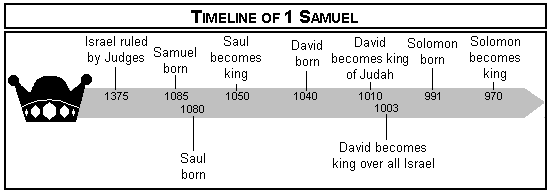
Saul’s reign over Israel started peacefully around 1050 BC, but the peace did not last. One of the most famous events in Saul’s life was the stand-off with the Philistines in the Valley of Elah. Here Goliath taunted the Israelites for 40 days until a shepherd boy named David slew him (1 Samuel 17). Aside from that incident of fear and uncertainty, Saul was a competent military leader. He was good enough that his rule was solidified by his victory at Jabesh-Gilead. As part of the triumph, he was again proclaimed king at Gilgal (1 Samuel 11:1–15). He went on to lead the nation through several more military victories as his popularity reached its zenith. However, a series of very serious blunders, beginning with an unauthorized sacrificial offering (1 Samuel 13:9–14), started Saul’s downfall from his kingship. Saul’s downward spiral continued as he failed to eliminate all of the Amalekites and their livestock as commanded by God (1 Samuel 15:3). Disregarding a direct order from God, he decided to spare the life of King Agag along with some of the choice livestock. He tried to cover up his transgression by lying to Samuel and, in essence, lying to God (1 Samuel 15). This disobedience was the last straw, as God would withdraw His Spirit from Saul (1 Samuel 16:14). The break between God and Saul is arguably one of the saddest occurrences in Scripture.

While Saul would be allowed to serve out the rest of his life as king, he was plagued by an evil spirit that tormented him and brought about waves of madness (1 Samuel 16:14–23). Saul’s final years were profoundly tragic as he endured periods of deep manic depression. However, it was a young man brought into the king’s court named David who became the soothing influence on the troubled king by playing music that temporarily restored the king’s sanity. The king embraced David as one of his own, but all of this changed as David became a fine military leader in his own right. In fact, a popular song of the day was “Saul has slain his thousands, and David his tens of thousands” (1 Samuel 18:7). When Saul realized that God was with David, the king sought to kill David at every opportunity. David succeeded in evading the countless attempts on his life with the help of the king’s son, Jonathan, and the king’s daughter, Michal.

The final years of King Saul’s life brought a general decline in his service to the nation and in his personal fortunes. He spent much time, energy, and expense trying to kill David rather than consolidating the gains of his earlier victories, and because of this the Philistines sensed an opening for a major victory over Israel. After Samuel’s death, the Philistine army gathered against Israel. Saul was terrified and tried to inquire of the Lord, but received no answer through the Urim or the prophets. Though he had banished mediums, witches and spiritists from the land, Saul disguised himself and inquired of a medium/witch at Endor. He asked her to contact Samuel. It seems that God intervened and had Samuel appear to Saul. Samuel reminded Saul of his prior prophecy that the kingdom would be taken from him. He further told Saul that the Philistines would conquer Israel and Saul and his sons would be killed (1 Samuel 28). The Philistines did, indeed, route Israel and kill Saul’s sons, including Jonathan. Saul was critically wounded and asked his armor-bearer to kill him so that the Philistines would not torture him. In fear, Saul’s armor-bearer refused, so Saul fell on his own sword, followed by his armor-bearer who did the same.  Ironically, Saul did not die from falling on his sword and was finished off by an Amalekite! (2 Samuel 1); the very tribe Saul was commissioned to exterminate, (1 Samuel 15:1-3).

There are several lessons we can learn from the life of King Saul. First, obey the Lord and seek to do His will. From the very start of his reign, Saul had the perfect opportunity to be the benchmark by which all future kings could be measured. All he had to do was to seek the Lord wholeheartedly, obey God’s commandments, and align his will with that of God’s, and his rule would have been a God-honoring one. However, like so many others, Saul chose a different path and strayed away from God. We find a perfect example of his disobedience in the incident where God commanded him to kill all the Amalekites, but Saul kept the king and some of the spoils of war. Haman the Agagite, who would later seek to kill the Jews (see the book of Esther), was a descendant of the king whose life Saul spared. Saul compounded his troubles by lying to Samuel over the incident. He claimed that the soldiers had saved the best of the animals in order to sacrifice them to God (1 Samuel 15). This act, plus many others over the course of his rule, emphasized the fact that he could not be trusted to be an instrument of God’s will.

The second lesson we learn is not to misuse the power given to us. There is no question that King Saul abused the power God had entrusted to him. Pride often creeps into our hearts when people are serving and honoring us. In time, receiving “star treatment” can make us believe that we really are something special and worthy of praise. When this happens, we forget that God is the one who is really in control and that He alone rules over all. God may have chosen Saul because he was humble, but over time that humility was replaced by a self-serving and destructive pride that destroyed his rule.

Strengths and accomplishments
• First God-appointed king of Israel
• Known for his personal courage and generosity
• Stood tall, with a striking appearance

Weaknesses and mistakes
• His leadership abilities did not match the expectations created by his appearance
• Impulsive by nature, he tended to overstep his bounds
• Allowed jealousy to overcome him so that he tried to kill David
• He specifically disobeyed God on several occasions

Lessons from his life
• God wants obedience from the heart, not mere acts of religious ritual
• Obedience always involves sacrifice, but sacrifice is not always obedience
• God wants to make use of our strengths and weaknesses
• Weaknesses should help us remember our need for God’s guidance and help

Vital statistics
• Where: The land of Benjamin
• Occupation: King of Israel
• Relatives: Father: Kish. Wife: Ahinoam. Sons: Jonathan, Malkishua, Abinadab, Ishbosheth (and possibly Ishvi). Daughters: Merab, Michal.

Key verses
“But Samuel replied, ‘What is more pleasing to the LORD: your burnt offerings and sacrifices or your obedience to his voice? Listen! Obedience is better than sacrifice, and submission is better than offering the fat of rams. Rebellion is as sinful as witchcraft, and stubbornness as bad as worshiping idols. So because you have rejected the command of the LORD, he has rejected you as king’ ” (1 Samuel 15:22, 23).
His story is told in 1 Samuel 9–31. He is also mentioned in Acts 13:21.

Another lesson for us is to lead the way God wants us to lead. First Peter 5:2–10 is the ultimate guide for leading the people that God has placed in our charge: “Be shepherds of God’s flock that is under your care, serving as overseers—not because you must, but because you are willing, as God wants you to be; not greedy for money, but eager to serve; not lording it over those entrusted to you, but being examples to the flock. And when the Chief Shepherd appears, you will receive the crown of glory that will never fade away. Young men, in the same way be submissive to those who are older. All of you, clothe yourselves with humility toward one another, because,God opposes the proud but gives grace to the humble.’ Humble yourselves, therefore, under God’s mighty hand, that he may lift you up in due time. Cast all your anxiety on him because he cares for you. Be self-controlled and alert. Your enemy the devil prowls around like a roaring lion looking for someone to devour. Resist him, standing firm in the faith, because you know that your brothers throughout the world are undergoing the same kind of sufferings. And the God of all grace, who called you to his eternal glory in Christ, after you have suffered a little while, will himself restore you and make you strong, firm and steadfast.” How much different Saul’s life would have turned out had he obeyed these principles. King Saul would have had no shortage of wise counsel available to him. By ignoring God and His wise counsel, Saul allowed the spiritual health of his people to deteriorate further, alienating them from God.

From Saul we learn that while our strengths and abilities make us useful, it is our weaknesses that make us usable to God. Our skills and talents make us tools, but our failures and shortcomings remind us that we need a Craftsman in control of our lives. Whatever we accomplish on our own is only a hint of what God could do through our lives. Will you allow God to work through your weaknesses? Will you obey God or make excuses and be partially obedient?

www.Upwards.Church

Message Audio/Video and Outline: https://upwards.church/watch-now/leander-campus-videos

Watch Messages: YouTube-Upwards Church

Facebook: Upwards Church

Sources:

Life Application Bible Notes (Tyndale, 2007), 425.

https://www.gotquestions.org/life-Saul.html

Posted in 1 Samuel - Kings & Covenants | Tagged , , , , , , , , , | 1 Comment