

Handling Opposition – Nehemiah 4

When Igor Sikorsky was 12, his parents told him that competent authorities had already proved human flight impossible. He went on to build the first helicopter!  In his American plant, he posted this sign:

“According to recognized aerotechnical tests, the bumblebee cannot fly because of the shape and weight of his body in relation to the total wing area. The bumblebee does not know this, so he goes ahead and flies anyway.”  (Encyclopedia of 7,700 Illustrations, by Paul Lee Tan [Assurance Publishers], p. 945).

Nehemiah would have loved that sign! His story shows that whenever you try to accomplish anything significant for the Lord, you will face strong opposition.

Today we are talking about opposition and how to handle it. The Bible tells us to love our neighbors and also to love our enemies. Probably because they are the same people! This was certainly true in Nehemiah’s time. His arrival in Jerusalem was a threat to those leaders and tribes and nations around him. A strong Jerusalem would endanger the balance of power in the region as well as balance of the influence and wealth.

By Chapter 4 We find ourselves about at the halfway point in the rebuilding of the wall.  In Nehemiah 4:6 he recorded “we rebuilt the wall till all of it reached half its height”. As the work is being accomplished and the people are honoring God with their efforts, we find that there was perfect storm of opposition brewing all around Nehemiah. He was getting reports of people planning to attack them and was even starting to hear the rumblings of grumbling from within his own ranks. I am sure that He began to have a few doubts as to the ultimate success of the building project. He probably feared for his own life and for that of his workers. Not only that he also had to expend great amounts of time and energy to encourage those around him to keep building.

What about you? What will you do when opposition comes to you? Do you begin to doubt? What will you do when others come against you and ask you to quit what you are doing for God?

When you attempt to do something for God, when you try to live for God, when you try to serve God, you had better expect opposition along the way.

Any cause worth doing is also a cause that someone will feel they need to criticize! All great causes have had great critics. I believe it was Aristotle who said, “You can avoid opposition by saying nothing, doing nothing, being nothing!”

Our key truth;

Opposition will Happen

It’s foolish to think we can skate through life without opposition. Don’t be surprised at opposition. Opposition is going to happen. There are accounts recorded throughout God’s word of opposition that the people of the faith faced. Moses faced 40 years of griping and complaining from the ones whom he was leading. He faced continual conflict and continual criticism. Remember the shepherd boy David as he came against Goliath and how Goliath “trash talked” him and made fun of not only David but the entire nation of Israel. Jesus especially had critics and he had them to the point of death. Opposition is going to happen!

Today I would like to talk about the tools of opposition that were brought against Nehemiah. (Pat tool belt) These are the same types of things we will face as well. Then we will discuss what our response to opposition should be, how to handle opposition.

The Tools of Opposition…

  • Criticism 

 1 When Sanballat heard that we were rebuilding the wall, he became angry and was greatly incensed. He ridiculed the Jews, 2 and in the presence of his associates and the army of Samaria, he said, “What are those feeble Jews doing? Will they restore their wall? Will they offer sacrifices? Will they finish in a day? Can they bring the stones back to life from those heaps of rubble–burned as they are?” Vs. 1-2

The first tool the opposition usually uses is criticism or ridicule.  It is like a chisel to our self-esteem, it chips away at us.  We have a clear example of this here.  It’s a powerful, effective tool. Why is it so effective?  It’s because it attacks our sense of self worth.  A lot of times we can handle anything but criticism.

Notice the motive.  “He became very angry and greatly incensed….”  People who ridicule first become threatened because they would rather have you down and out than doing well.  If you begin to succeed the threat becomes real and your opposition gets angry.

Also notice the name calling, “…those feeble Jews”.

  • Ganging Up 

 3 Tobiah the Ammonite, who was at his side, said, “What they are building–if even a fox climbed up on it, he would break down their wall of stones!” Vs. 3

Those who oppose you will like the leverage (pry bar) of having others help them. Ganging Up. People that throw rocks generally like to hang out with other rock throwers. Another way that I have heard it said is, “Birds of a feather flock together.  Opposition is contagious. When Sanballat makes the initial criticism Tobia, his sidekick, chimes in and starts.  There are always people who will ridicule you if somebody else will take the lead.  They are cowards and won’t do it on their own.

  • Exaggeration 

 Sanballat  “…Will they finish in a day?”

 He exaggerates. (Show tape measure one size then larger)  Nowhere is there any place they say they’re going to rebuild it in one day. He’s probably implying that they better get it done in one day because that’s all their good for.  Typical ridicule.

  Tobiah  “…Even a fox climbed up on it, he would break down their wall of stones!”

Quite an exaggeration I am sure that you will agree, especially since I showed pictures last week of the wall around Jerusalem that archeologists have uncovered from Nehemiah’s time.  They have found it to be as much as 9 feet thick in some places. Nine feet! That would take a pretty big fox to break it down.

  • Scheming 

 7 But when Sanballat, Tobiah, the Arabs, the Ammonites and the men of Ashdod heard that the repairs to Jerusalem’s walls had gone ahead and that the gaps were being closed, they were very angry. 8 They all plotted together to come and fight against Jerusalem and stir up trouble against it.  Vs. 7-8

The opposition is gaining size and force! (sledge hammer) They’re getting organized.  Instead of just a couple of critics we have a conspiracy.  Sanballat has gathered all the disgruntled parties to resist the rebuilding of the wall.  Sanballat and the Samaritans were in the North, the Arabs were in the south, Tobiah and the Ammonites were in the east, the men of Ashdod were in the west.  The Jews were surrounded by these people who were conspiring against them.  Have you noticed that negative people tend to gravitate together?  The purpose was to fight and stir up trouble.  These folks are all around.  It seems that some people, their whole purpose in life is be against things.

  • Threats and Constant Nagging 

 11 Also our enemies said, “Before they know it or see us, we will be right there among them and will kill them and put an end to the work.” 12 Then the Jews who lived near them came and told us ten times over, “Wherever you turn, they will attack us.” Vs. 11-12

The best way to make a threat feed on people’s fears. (Threats and nagging are like sand paper they wear you down) The gist of the threat is, “We’re going to get you from all sides”.  We’re going to attack you and you’re not even going to know what hit you.  The fact is the opposition didn’t have enough power to do this.  But the threat of an attack was enough to incite panic.  Threats are often used by opposition.

Also constant nagging “Then they told us ten times over.”  What happens when a threat is exaggerated ten times over?  People start to believe it.  I think it was Hitler that discovered if you tell a lie long enough people are going to start believing it.  This can easily turn to rumors another tool of opposition. If you are going to report something have the facts to back it up. Today it takes the form of “a lot of people are saying” or maybe “some have said”. Whenever something is brought to your attention and it cannot be substantiated with where it came from and who is saying it, generally you cannot give it much merit. Why? Because the opposition would like nothing better than for you to spend time worrying and fussing over what amounts to nothing.

What was the result of all this opposition?  v. 10-11 “Meanwhile the people in Judah said, `The strength of the laborers is giving out, and there is so much rubble that we cannot rebuild the wall.  Also our enemies will attack.”  When you’re working hard and you’re bombarded by criticism, exaggeration and threats you’re going to get discouraged.  A common effect of opposition is discouragement.

When is discouragement most likely to occur?  v. 6 “So we rebuilt the wall until all of it reached half of its height.”  Discouragement often comes at the half waypoint.  How many of you have half finished projects around your house?

Here’s what opposition can do.  You will find this too. First it wears you down, “the strength of the laborers is giving out” Then it affects your perspective, there was so much rubble” Then we feel like we are failing, “we cannot rebuild the wall” And there’s fear — “the enemies will attack us”

 Everyone here in this room has been in a similar place before whether it has been trying to make a difference at work, in your family, or in the world around you as a Christian.  Opposition is building and getting more difficult instead of going away. We feel like God isn’t paying attention to us. We feel surrounded and alone and we feel that at any minute we will be attacked so badly that it will be the end of us. All we want to do is give up!

In the next post, I want to look at some things that will help us when we find ourselves discouraged, overwhelmed, and facing an increase of opposition.

Darrell

www.Upwards.Church

Watch Messages: YouTube-Upwards Church

Facebook: Upwards Church

Posted in Rise & Build - Nehemiah | Tagged , , , , , , , , , , , , , , | Leave a comment

Getting Support from Others – Nehemiah 2

In the last post we looked at getting support from those in authority, now lets look at how to Get Support from Others…

  • Wait for the Right Time

 In motivating others and suggesting change, timing is everything! Have you ever had a good idea killed because of bad timing? Timing makes a big difference.  V. 11 says “I went to Jerusalem and after staying there three days I set out…”  He stops for three days.  Nehemiah does not make some grand entrance, flash the flags, bands playing, arrives in on a white horse.  He doesn’t proclaim, “I’m here to save the day.  Now get to work!” When he arrives in Jerusalem, the first thing he doesn’t do is get brick and mortar together.  He didn’t even announce why he was there.  He did nothing for three days.

What was he doing for those three days?  We don’t know.  Four probabilities:

  1. He was probably resting, recovering from a long journey. He had been on a camel, crossing the desert. This is wise because you never make a major decision when you’re tire.  It will probably be wrong.  Fatigue clouds your perspective.
  2. He may have been praying.  We know he was a man of prayer.
  3. He most likely was planning.  He probably was reviewing his strategy.
  4. He was building curiosity. He arrives with a king’s escort, into a town that is defeated and discouraged.  He goes to his home and says nothing for three days.  Don’t you think that caused a little curiosity?  Do you think the existing power structures in Jerusalem said, “What is this guy here for?  What is he going to be doing?”  For three days the speculation is rising.  What is Nehemiah doing?  By the third day everybody has heard of Nehemiah.  He’s actually using the delay to his advantage.  He’s using it for psychological edge so that when he presents the proposal, they’ll be ready to listen.  Before he says a word he does his homework.  Have you done your homework?
  •  Do My Homework

 In v. 12-16 we have Nehemiah’s research party of actually going out and inspecting the walls of Jerusalem.  You’ve heard of Paul Revere’s midnight ride.  This is Nehemiah’s midnight ride.

 12 I set out during the night with a few men. I had not told anyone what my God had put in my heart to do for Jerusalem. There were no mounts with me except the one I was riding on.

13 By night I went out through the Valley Gate toward the Jackal Well and the Dung Gate, examining the walls of Jerusalem, which had been broken down, and its gates, which had been destroyed by fire. 14 Then I moved on toward the Fountain Gate and the King’s Pool, but there was not enough room for my mount to get through; 15 so I went up the valley by night, examining the wall. Finally, I turned back and reentered through the Valley Gate.

He goes on and explains how at night he’s out traveling around the walls of the city, actually inspecting.  He is personally inspecting the damage in the middle of the night.  He only takes a small group with him.  He obviously didn’t want to attract attention.

Every good leader knows exactly what Nehemiah is doing here.  He is doing his homework, his background checks.  This is the lonely part of leadership, the un-glamorous part of leadership. It’s the part nobody ever hears about.  It’s the guy doing his preparation, checking out the situation, getting the facts.  v. 14 says there was so much rubble he even had to get off his horse and walk through it.  At this point the size of the project probably starts to sink in and he thinks, “This is worse than I thought.  Why did I volunteer for this?  I’ve never built anything in my life.”

16 The officials did not know where I had gone or what I was doing, because as yet I had said nothing to the Jews or the priests or nobles or officials or any others who would be doing the work.

Why is he being so secretive about this survey?  Because he didn’t want the plan to be stalled before it got out of the starting gate.  There had been 90 years of negativism and he didn’t have all the facts yet.  Is it easier to promote a good idea or kill a good idea?  Have you noticed that negative people tend to be more vocal than positive people? Nehemiah doesn’t have all the facts yet so he says before I even announce what I’m going to be doing, I’m going to get the facts. Then…

  •  Own and Identify the Problem

 17a Then I said to them, “You see the trouble we are in: Jerusalem lies in ruins, and its gates have been burned with fire.

 He didn’t walk in as an outsider, having never been to Jerusalem and say, “You guys are a bunch of failures.  You can’t get this thing rebuilt.  It’s been 90 years and nothing’s been done on it.”  When you blame other people you decrease the motivation.  When you accept the blame you increase the motivation.  He doesn’t play the role of an outside expert here.  He doesn’t say, “I’m going to rebuild the wall… I’m going to be your savior.”  He says, “I’m one of you and it’s our problem.”

Then he says, “Jerusalem lies in ruin … burned with fire … we’re in disgrace.”  He’s pointing out the problems.  Why?  Because these guys had been living with this for years.  Isn’t it a fact of life that when you live with a bad situation long enough, you start ignoring it? If something breaks in your house the first two or three weeks it really bugs you; six months later it’s still broken.  When you live with a situation long enough you can become apathetic about how it is.  Change never occurs until we become discontent.  If you want to create change in your school, work, home, office — one of the ways is to create discontent.

Let me show you some pictures of the rubble from that time period and some of the walls that were built by Nehemiah.

PICTURES:  586BC Rubble, Nehemiah’s wall

How did he do it?  He used two motivators.  He appealed to their self-esteem.  He said, “We’ve got to go out and build this; we’re in disgrace.  We could do better than this.  We’re God’s people and we’re living in rubble.  The city is torn down.  The walls are torn down.  The place is in shambles and a mess.  We’re in disgrace.”  I think that was a breath of fresh air to these people.  This leader is different because he’s concerned about us.  He doesn’t just have his own agenda.  He’s concerned about us and he realizes we’re demoralized.  He’s says I want to come in here and raise your level of esteem so you’re not in disgrace any more.  This was a strong motivator.

But even deeper than that, he appealed to a higher motive which was concern for God’s glory, not only were the Jews being disgraced but God was being disgraced.  Who were the Jews?  God’s people the whole world was laughing:  “Those poor Jews!  They say they worship the true God.  They can’t even rebuild their own city.  They say their God’s the greatest God of the whole world, but they can’t even get their walls rebuilt; they’re living in rubble.”  It was an embarrassment to God and a poor testimony. When Nehemiah said, “we’re in disgrace!” he was not only appealing to personal self esteem but he was appealing to the fact that God’s name was being defamed.  It was a bad testimony.

When Nehemiah identifies the problem he does not rely only on external motivators, “We’re going to rebuild this wall; whoever gets their section done first gets an all expense paid vacation to the Dead Sea! He uses internal motivators: self-esteem and God’s glory.  Next…

  • Propose a Solution and Ask for a Response

  17b Come, let us rebuild the wall of Jerusalem, and we will no longer be in disgrace.”

 In v. 17 he says, “let us rebuild the wall.”  He calls for action.  He appeals for help. He asks for a response.

Notice that Nehemiah was both realistic and optimistic.  Nehemiah was realistic because he did get the facts on his night ride. He saw really how bad the place was.  He tells them:  the walls have been destroyed the gates have been burned.  But he’s also optimistic.  After honestly laying out the problem, he says, “Let’s rebuild.”

 Not too many of us like to ask for help.  Most of the time we’re afraid to ask for help and say, “I’ll just do it myself!”

During our building campaign, it was the first time that I had to ask people to really give, to really dig deep to make a sacrifice.  I was uncomfortable doing so, but that was my job.  Our church was not going to be built unless I said, its time lets do it! The wall around Jerusalem was not going to be built until someone stood up and said, “It’s going to take sacrifice.  We’re going to have to put time, money, effort, energy to do this.”   Then…

  •  Share My Heart

 In v. 18 we have Nehemiah sharing his heart and there are two parts to it. “I also told them about the gracious hand of my God upon me.”   He tells them about how God had called him to lead the project.  The second part he tells them how circumstances confirmed his calling.  “I also told them what the king had said to me.”  He was saying, “I didn’t want this job, but I was praying over there in Susa.  As I prayed for four months, I got a burden.  The more I prayed about it God said, Why don’t you be the answer to it. The burden turned into a vision.  I said, `OK, God, I’ll do it.’ It was really God’s idea.  He called me to come do this project. Not only did God call me but He confirmed the call when I went to the king and the king said Yes.  He gave me a cavalry guard and he’s going to pay for it.”

That is a legitimate thing to ask for if somebody comes to you and says, “God told me to do this.”  A legitimate response is “Is anybody confirming this in your life?  Or is this just something you thought up?  Are there any confirmation signs?”

The testimony of how we got started is that I did not want to start a church initially. That seemed crazy.  I would have never picked this for myself.  I prefer a bit more stability, but God put it on my heart in 1999 to start a new church.  God called me. He confirmed this through his intervention to make all of what you see now happen.  I don’t know a whole lot, but I know God called me to begin this church and I see his hands all over it!

Nehemiah shares his testimony of how God had called him and the circumstances confirmed his calling.  V. 18b is the people’s response, “I told them about the gracious hand of my God upon me and what the king had said then they replied, `Let’s start rebuilding.'”  They were excited!  For ninety years nothing is going on, then Nehemiah comes saying, “God’s put me here to do this.  And we’ve got the king’s permission — the guy who wouldn’t allow it to be done before is paying for it.”

The vision has been transferred.  First he said this is my vision.  He guarded it very carefully at first — he didn’t tell anybody.  He went out, did the survey, didn’t tell anybody.  He was waiting for the right timing.  Once he had all the facts, he dramatized the problem, he asked for a specific response and then encouraged them with his own personal testimony about how God called him to do this and how the circumstances confirmed God’s call.  Now the vision has been transferred.  It’s not Nehemiah’s vision any more; it’s the people’s vision.  What was a secret for a long time is now shared.

Why did Nehemiah use his personal testimony in motivation?  People follow people not programs.

In the next post we will look at handling opposition.

Darrell

www.Upwards.Church

Watch Messages: YouTube-Upwards Church

Facebook: Upwards Church

Posted in Rise & Build - Nehemiah | Tagged , , , , , , , , , | Leave a comment

Getting the Support I Need – Nehemiah 2

I can’t do it alone.  God has given me people and support that I need to rely on.  Every biblical person that did something significant relied on others.  Noah had his sons, Moses had Aaron, David had Jonathan, Abner and his mighty men, Jesus had his disciples, Paul had Barnabas, Silas and Timothy.  You need people too.

Usually you will need support from people who have some sort of control over you, those in authority, they usually hold the money, the power or the permission that enables you to move forward or not. Then you will need support from others around you to help you with your project.  You will need both, first…

 GETTING SUPPORT FROM THOSE IN AUTHORITY

 There are few areas in life in which we live or work that do not come equipped with an authority figure. Whether you’re in a family, a student, teacher, nurse, executive, salesman, we all have people in authority over us whose presence significantly controls and affects our lives. Nehemiah is under the authority of the King, and has to ask permission to fulfill his God-given vision.  But the don’t forget King is under the authority of God.  When the time for seeking the support of those in authority how do we handle it? It is increasingly difficult if the leader is insensitive or unconcerned, especially when it comes to spiritual matters.  Missionary Hudson Taylor once said, “It is possible to move men through God by prayer alone.” Prayer as we said last week is the tool we have that is more powerful than anything on earth.
Proverbs 21:1 “The king’s heart is in the hand of the Lord and He directs it like a water course wherever He pleases.” What is true of the King is true of those in authority over us. To understand our bosses or the loan officers we have to become acquainted with God’s method of operation.

 Watch for the Right Opportunity

 1 In the month of Nisan in the twentieth year of King Artaxerxes, when wine was brought for him, I took the wine and gave it to the king. I had not been sad in his presence before;

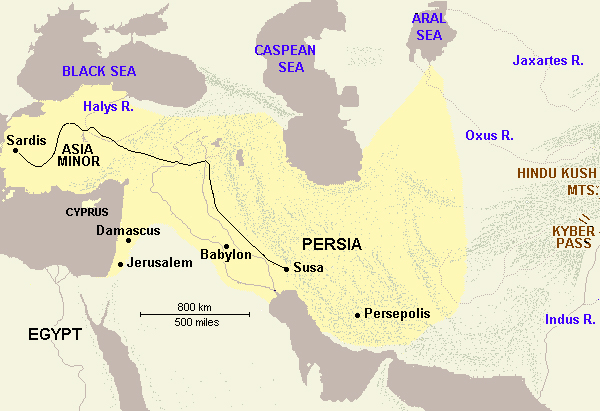
Let me review who Nehemiah is, he is the cupbearer a security agent serving in the palace of the Persian king.

The date is 444-5 BC, the Persians are the world power at this time.

v. 1, “In the month of Nisan” — Nehemiah had gotten this burden four months

earlier and for four months he’s been waiting for something to happen.  THE RIGHT OPPORTUNITY.

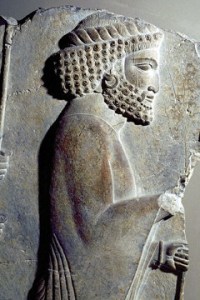
*Pictured: Persian wall relief of a Persian Palace Servant 400 BC

What had been happening between when Nehemiah first got the idea of rebuilding the wall and when he actually got the opportunity to present his program to the king.  What had he been doing?  He’d been praying, but he also had been planning and waiting for the exact opportunity to be heard by the king.

Sometimes God takes time to answer our prayers. Sometimes it is because he is setting up the situation for us. In this case God was preparing the heart of the King.
What are we praying for at this time: Our job situation?  Our boss? Our spouse? Unsaved Loved one? A Difficult relationship? Our family? Children going through A rough time? Health situations? School?

Remember one thing, it is all about God’s timing. We have to wait for the right opportunity to move.  Niki had wanted to start her own physical therapy clinic.  She had been a therapist for 12 years, but in 2007 she feel it was the right time. She knew that the major insurance providers were not allowing any new PT practices in Cedar Park and Georgetown but when she calls to inquire about Leander, there are no clinics there YET so it was wide open. The insurance companies (the four major ones) would allow her to bill them at that time.  This was a big deal; this was an open door for her, the right opportunity.  I remember when we bought the land for church we were only 2 years old, every bank laughed me out of its office, and they wanted five years of financial history.  The VFW wanted to sell and they wanted to bad enough to owner finance.  We bought 10 acres with the right to refusal on the other 20. When I approached them a year later and then another year later and then a couple of years later, they do not want to sell any more and have even said they wished they wouldn’t have sold us what they did.  Talk about the right opportunity!  A year later would have changed everything.

Now for some reason, maybe it was God who directs him; maybe the king is in a good mood, for some reason Nehemiah knows this is it!  I must move now, the door is open!

*Pictured: Wall relief of  King Artaxerxes

In verse 6 Nehemiah adds“… with the queen sitting beside him…”  My guess is that she had an influence over the king’s receptivity.  Probably Nehemiah and the queen were friends.  He was the king’s right hand man.  She’s sitting there, he’s pouring the wine, everybody’s happy.  Nehemiah says, “I’d really like to go back and rebuild the wall around the city where my father’s graves are.”  Probably the queen influenced Artaxerxes to let Nehemiah go.  Maybe Nehemiah timed it this way.  But God had a time in it.

This is the moment Nehemiah has been waiting for.  He’s been praying for an opportunity to present his idea to the king. He’s got an opportunity now to state his case.  Because he had planned he was ready with the answer. Notice he had a sad face.

2 so the king asked me, “Why does your face look so sad when you are not ill? This can be nothing but sadness of heart.” I was very much afraid,

 The king says, “What’s wrong, Nehemiah?”  Notice it says “I was afraid.”  He was literally scared to death.  In those days it was a capital crime to be sad before the king.  The kings were very fickle in those days.  They didn’t want anyone raining on their party.  If you frowned in the presence of the king you’d get your head cut off.  Notice it says, “This is the first time I ever appeared sad.”  That is a real gamble.

Not only that, but Nehemiah is going to ask permission for a leave of absence.  In those days if a king did not like your request that meant he didn’t like you.  No wonder Nehemiah was frightened.  On top of that he was going to ask permission to go rebuild the walls of Jerusalem and the king himself had said the walls could not be rebuilt!  He’s standing before a king who has the power of life and death.  He has reason to be afraid.

There is a myth that courageous people are never afraid.  Courage is moving ahead in spite of your fear.  Notice what Nehemiah did with his fear.  The king said to him, “What do you want?  You’re upset obviously.” It says Nehemiah prayed.  He sends up a little quickie prayer. This isn’t the four months of prayer; he’s already done that. This is the quick one!  A silent, quick, on the spot prayer. “God, give me wisdom.  Help me know what to say.”

Then he answered the king in v. 3 “Why should my face not look sad?  The city where my fathers are buried, lies in ruins and its gates have been destroyed by fire.”  He chooses his words very carefully; he assures the king of his loyalty, “May the king live forever!”  Remember, this guy is also a bodyguard.  If he’s sad maybe he also knows of some assassination plot.  The king’s asking why his number one man is upset.

Nehemiah appeals to the Eastern respect for ancestors, “My fathers graves are in ruin.”  The Eastern guys were into taking care of the ancestor’s graves.  The king’s response was, What do you want?

Be Honest

 Nehemiah did not try to manipulate the king.  When he was asked “What’s wrong?” he was honest:  “My home town is in shambles.” He didn’t make up some phoney story.  He didn’t make up a story about going back to Jerusalem under false pretenses.  He didn’t manipulate the king.  He didn’t trick him.  He didn’t play games with him.  He didn’t use any deceit.  He talked to God about him. When you have a boss who is unsympathetic to a project, a goal you want to do don’t manipulate him, don’t play games with him. Just talk to God about him.  Because the heart of the king is in the hand of the Lord and He can turn it.  Don’t ever try to change anybody’s heart.  You can’t.  When you try, that’s manipulation.  Let God change the heart.

 Plainly State My Goal

 4 The king said to me, “What is it you want?”

Then I prayed to the God of heaven, 5 and I answered the king, “If it pleases the king and if your servant has found favor in his sight, let him send me to the city in Judah where my fathers are buried so that I can rebuild it.”

When asked, Nehemiah stated his goal simply and quickly.  When the king said, “what do you want?”  He said what his goal was.  He didn’t go off on some rabbit trail, he knew what he wanted to do exactly and said it.  My objective is rebuilding the walls in Jerusalem.

 Know the Details and Needs of My Project

 6 Then the king, with the queen sitting beside him, asked me, “How long will your journey take, and when will you get back?” It pleased the king to send me; so I set a time.

 As I said earlier people will ask questions about your plans.  Can you answer the questions?  In verse six the king is asking questions. Nehemiah knew the details of his project and could answer the king’s questions.  It doesn’t look to good when you say, “Hum, I don’t know” or “I never thought about that.”  Nehemiah was ready he had planned well. It is interesting that the king asked, “When will you get back? This showed that the king really liked Nehemiah.

 7 I also said to him, “If it pleases the king, may I have letters to the governors of Trans-Euphrates, so that they will provide me safe-conduct until I arrive in Judah?

It’s about 800-1000 mile journey between Iraq and Israel.  He’s got to go through a lot of provinces.  You didn’t travel freely in those days.  You had to go through proper procedures.  Nehemiah said, “I would like you to give me letters of authority so I’ll have clear sailing and when I get over there, there is no problem.  I need traveling permits to travel unhindered.”

This implies that Nehemiah had thought it out.  Remember he’s just asked here on the spot, “What do you want?”  He had already thought it through.  This is a clear example of planning.  He was not just praying during those four months but he was also planning so that when the opportunity arose he could say what he needs.

Question to ask yourself in your own planning:  What do I need? What could hold me back?  What are the potential problems?  What could go wrong?  If anything could go wrong, it will.

Nehemiah is thinking ahead.  He’s already thought ahead where he wants to go.   Now he’s anticipating the problems.

8 And may I have a letter to Asaph, keeper of the king’s forest, so he will give me timber to make beams for the gates of the citadel by the temple and for the city wall and for the residence I will occupy?” And because the gracious hand of my God was upon me, the king granted my requests.

Nehemiah gives the king a shopping list.  “First, I want you to let me go.  Then, I want you to give me the protection to get there.  And by the way, I want you to pay for it too.”  He asks for lumber to build three things:  I want to build the beams for the city gates — he had thought it out.  Then he said, I’m going to need lumber for the city walls. Then, I want lumber for my own house.  Remember, Nehemiah is not a contractor.  He’s never built anything in his life.  He’s a cupbearer.  Yet, when the opportunity arose he rattled off exactly what he needed.  Why?  He knew the details and needs of his project.

How in the world did he know there was a royal forest near Jerusalem?  Advance planning.  This whole chapter indicates that he already knew what he was doing when he got into the situation.  He even knew the name of the foreman.  He had already figured all of this out way in advance, so that when the opportunity arose he was prepared for the opportunities.

God has wonderful opportunities for us but we must be prepared to take advantage of them when they come.  If Nehemiah had not had his planning done he wouldn’t have been prepared.  But because his planning had been so well thought out he knew exactly what to ask for.

9 So I went to the governors of Trans-Euphrates and gave them the king’s letters. The king had also sent army officers and cavalry with me.

The king sends a military escort.  Nehemiah didn’t even ask for that.  He got more than he asked for!  This is Eph. 3:20 “God is able to do more than you think or ask or imagine.”  He got more than he asked for.  He thought he was really stretching asking for so many different things but as the king leaves he says, “By the way, you have a military escort to take you.”  This was a God thing.

This is a beautiful example of the harmony that takes place between God’s part and our part in accomplishing things on earth.  God’s part is the sovereignty part.  Our part is the prayer and planning part.  We pray for God to set up circumstances that are out of our control.  Then we plan for all the things that are under our control.  It’s not one or the other.  It’s both. God’s part and my part, it’s prayer, depending on God to do his part, planning, doing the best I can at my part.  Prayer and planning go together. They’re both important.  Because Nehemiah had done his homework, when the opportunity arose he was ready.

In the next post we will look at Getting Support from others.

Darrell

www.Upwards.Church

Watch Messages: YouTube-Upwards Church
Facebook: Upwards Church

Posted in Rise & Build - Nehemiah | Tagged , , , , , , , | Leave a comment

Prayer for my Preferred Future – Nehemiah 1

Do you want to see change in your life, church, family or ministry?   Nehemiah teaches us a vital principle, BEFORE you go out to accomplish a major building project or a huge life change.  You need to spend time in thought, in prayer, in fasting, in planning exactly what it is God is calling you to do.  I have some bad new for the go-getters; the rest of this chapter is a prayer!  Three verses about some bad news then all prayer. This is a hard pill to swallow for those who like to roll up your sleeves and start working. Prayer, planning and fasting, what fun!

What moves me to prayer and fasting? 

Look at verse 4. What was Nehemiah’s response to the bad news he received about the remnant living in Jerusalem? When I heard these things, I sat down and wept. For some days I mourned and fasted and prayed before the God of heaven.” He mourned, he wept, he fasted, and he prayed.

What is fasting? In the Bible it is going without food for some period of time to focus your mind on prayer.  It shows you and God that you are serious about what you are praying for. You show God that the spiritual work you are involved in is more important for the time being than your physical needs. It is one of the keys to spiritual breakthroughs, especially when it comes to these large life changing decisions and projects.

How long does this go on? Well we started the story in the month of Kislev – or December. Chapter 2:1 tells us when he finally has an open door with the king it is the month of Nisan – or April. Four months have passed.

Four months! Most of us have a hard time waiting 4 minutes for God to clarify his plans for us, or for God to break in miraculously and change our impossible situations. But Nehemiah prayed, and fasted, and waited, and prayed some more and fasted some more, and prayed some more, until finally the Lord opens the door for action on his part. In the next chapter we’ll learn what to do after we pray and fast and wait upon God.

But we’ve got some questions to ask ourselves.

• Are you willing to fast and pray for direction? Are you willing to wait for direction? Have you started planning?

When you have big desires  for change you need a big God, a powerful God.  For Nehemiah, to rebuild the walls around Jerusalem was not an easy task, after all for over 140 years no one else was able to get the job done. So what made Nehemiah think that he would be able to do it?
(And as we will find out later once Nehemiah got the project going in just 52 days it was finished!) The reason Nehemiah knew that he could do it was because Nehemiah had a powerful God.

Listen to how Nehemiah starts off his prayer in Nehemiah one.
“O Lord God of heaven, the great and awesome God.”
Our God is Great! And our God is Awesome!! He is the ultimate power source.
Nehemiah knew that if God was able to create this world. Since He brought it into being by simply speaking a word then nothing was too big for God. Do you believe that?

*Close your eyes and visualize a problem or obstacle that you feel will ruin your new beginning now visualize God. Who is bigger? You see God is not only powerful. He is all-powerful. And since Nehemiah had such a high View of God he knew that rebuilding some walls around a city would not be hard at all for Almighty God. God knew how to do it and he had the power to do it.
Do you have a high view of God? Are you willing to connect to his power?
Our God is the one true Almighty God He has always existed and will always exist. There is nothing that He cannot do. Nothing. Your God can handle bringing about the good desires in your life.

What moves me to confess? 

I confess the sins we Israelites, including myself and my father’s house, have committed against you. 7 We have acted very wickedly toward you. We have not obeyed the commands, decrees and laws you gave your servant Moses.

Part one of Nehemiah’s prayer is to base his request on who God is.  “God, you’re a great God.  You’re awesome!  You keep your promises!”  Part two I admit who I am.  He says, “We’ve sinned.” Look at how many times he uses the word “I” and “we”.  He says, “I confess. Myself. My father’s house; we have acted wickedly. We have not obeyed.”  It wasn’t Nehemiah’s fault they went into captivity.  He wasn’t even born when this happened years earlier.  Yet, he is including himself in the national sins.  He says, “I’ve been a part of the problem”.

There is personal confession and there is corporate confession. This is something we don’t know anything about.  We don’t have a corporate sense in America today.  We are very individualistic. We’re taught to confess my sins.  When was the last time you confessed the sins of the nation?  or the sins of your family? or your church?  or your friends?  We don’t think that way. We’re very individualistic.  Our society has taught us the concept of you’re only responsible for you.  And that’s just not true!   Nehemiah says, “Not only do I have personal sin to confess but I have corporate sin.  I’ll accept the blame for others.

What moves me to remember God’s promises? 

Every one of us is aware of what a contract is. If you have a car, unless you paid cash you signed a contract to pay for it.  If you have a house or rent an apartment you signed a contract.  Did you know God has contracts?  He does and another word for them is promises.  Lets look at Nehemiah referring to God’s contractual agreement…

8 “Remember the instruction you gave your servant Moses, saying, ‘If you are unfaithful, I will scatter you among the nations, 9 but if you return to me and obey my commands, then even if your exiled people are at the farthest horizon, I will gather them from there and bring them to the place I have chosen as a dwelling for my Name.’ 10 “They are your servants and your people, whom you redeemed by your great strength and your mighty hand.

 .”  Notice it says “if . I will.”    Then again He says “if . I will”.  He has a warning and a promise.

Nehemiah is praying to the Lord and saying, “I want You to remember what You told your servant Moses.”  Can you imagine saying, “remember” to God?  He’s reminding God what He had said in the past.  God warned us through Moses that if we were unfaithful we would loose the land of Israel.  But You also promised that if we repent You’d give it back to us.  All through the Bible you find God’s people reminding God about what He said He wants to do.  David did it.  Abraham did it.  Moses did it.  All the prophets did it.  “God, I want to remind You of one of Your promises.” then they’d share it.

Question:  Does God have to be reminded?  No.  Does He forget what He’s promised?  No.  Then why do we do this?  Because it helps us remember what God has promised.  Nothing pleases God more that when you remind God of one of His promises.

Prayer transforms God’s promises into performance.  Prayer is taking God at His word.  It’s holding God to His promises.  It’s asking God to do what He’s already promised He wants to do. Nehemiah says, “God, first I’m basing my prayer on Who You are. Then I’m admitting who I am.  Then I’m reminding You of what You’ve said.”

There are over 7000 promises in the Bible waiting to be claimed.

Nehemiah could claim these promises because he knew them.  The promises he mentions in these verses are Leviticus 26:33 and Deuteronomy 30:4.  When was the last time you memorized a promise out of Leviticus or Deuteronomy?

The point is, the strength of my prayer life is determined by how well I know the promises of God.  The secret of successful praying is pleading the promises of God.  “God, you said it and because of what You said and who You are, I thank You that the answer is on its way.  I’m expecting You to meet my needs.”  We need to learn the promises of God.

11 O Lord, let your ear be attentive to the prayer of this your servant and to the prayer of your servants who delight in revering your name. Give your servant success today by granting him favor in the presence of this man.” 

 I was cupbearer to the king.

 Nehemiah has the whole prayer just to have the little request at the end.  “When I go before the king to ask to be released to go build the wall, give me success when I make that request to the king.”  Nehemiah is willing to go to Jerusalem.  He was available.  He was willing to rebuild the project.  But he knew he’d have to get the king’s permission first who was definitely not a believer.  You don’t just let your right hand guy walk away.  The king has the power of death and life over anybody.  Nehemiah was asking a leave of absence for three years, to go back to his hometown and rebuild a wall the king had ordered not to be rebuilt.  This was the reason he was asking for success when he went to talk with the king.

He’s not hesitant to pray for success.  He’s very bold in his praying.  Have you ever prayed, “Lord, make me successful!”  What is the alternative, pray for failure?  There is nothing wrong with praying for success if what you’re doing is ultimately for the glory of God.  Pray boldly. Pray that God will make you successful in life for the glory of God.  That’s what Nehemiah did.  This is a valid prayer.  Give me success!

*If I can’t ask God to bless what I’m doing, then I’d better start doing something else.

Remember this is just a sample prayer of four months of praying. What did Nehemiah do during these four months?  Did he have this one prayer and he prayed it over several times a day?  No, I doubt it.  If Nehemiah was praying over a four-month period his prayer probably evolved into this.  Like our prayers do a lot of time.  You start praying for something and then it gets clarified.  That’s one of the reasons God will delay answering prayers many times, He wants us to clarify.

I can imagine Nehemiah began with something like, “God, you’ve got to do something about those people over there.  Please help them.”  He probably prayed that for a number of weeks.  Finally, God probably said, “Nehemiah, aren’t you being hypocritical?  If you’re so concerned, why don’t you get involved?”  Probably, sometime during that four-month period a little light went on in Nehemiah’s mind that said, “I could be the answer to that prayer. Maybe God could use me to go rebuild the wall.  I’ll do it!  I’m available!”  Over a period of time he probably got the concept. First he prayed, God help them over there,” then he said, “Maybe God could use me as an answer to that prayer.”  Now he’s finally praying, “Give me success.”

Next week we’re going to look at the next chapter and answer the question, “What do you do after you’ve seen your preferred future?” “How do I get the support from others?

Darrell

www.Upwards.Church

Watch Messages: YouTube-Upwards Church
Facebook: Upwards Church

Posted in Rise & Build - Nehemiah | Tagged , , , , , , , , , , | Leave a comment