
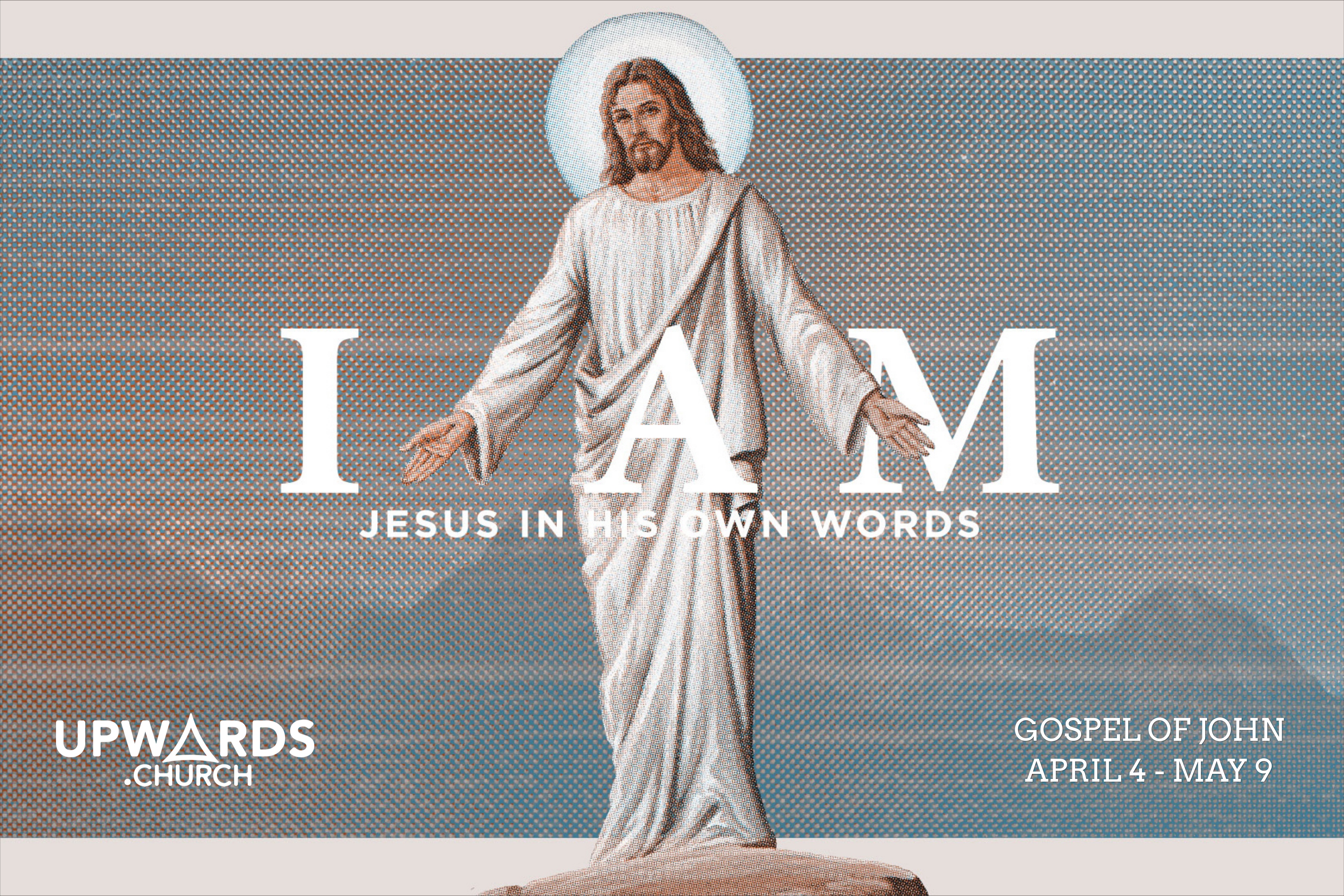
I am the Living Water – John 4

The story of Jesus and the woman at the well of Samaria helps us deal with many modern issues. Here Jesus crosses the barrier of race prejudice and interacts with a race hated and rejected by the Jews.. Our Lord encounters a moral outcast and displays for our instruction the proper approach to take with people like this. In this story he also settles a theological quarrel that had been going on for centuries as to the proper place and manner of worship. We, too, are still wrestling with those issues today, so this scripture is of great value to us.

John gives the background and the setting of this encounter in the first six verses of Chapter 4 of his gospel.

5 So He came to a city of Samaria which is called Sychar, near the plot of ground that Jacob gave to his son Joseph. 6 Now Jacob’s well was there. Jesus therefore, being wearied from His journey, sat thus by the well. It was about the sixth hour.

John calls attention to the route Jesus took on his journey to Galilee. He chose the most direct route, traveling through Samaria, which lies between Judea and Galilee. It is interesting that Prime Minister Menachem Begin reintroduced the practice of calling this section of the Holy Land, Samaria today. This direct route from Judea to Galilee was about 70 miles, or two and a half days’ walk. But many of the Jews chose not to go through Samaria. They traveled the hot desert road from Jerusalem to Jericho, and up the Jordan valley. Thus, because of the terrible prejudice that prevailed against the Samaritan people, they journeyed almost twice the distance on a much hotter and more uncomfortable road. But our Lord cut right through that ignorant, narrow-minded prejudice and went through Samaria.

Then, John calls attention to the place where Jesus stopped. It was an historic spot — Jacob’s well, at the foot of Mount Gerizim. There, about one-half mile west of the village of Sychar, where Joseph’s tomb is located, at the well which Jacob, in his day, had dug for his flocks and herds, Jesus sat down to rest.

It was “the sixth hour” when Jesus stopped at the well. By Jewish reckoning that would be noon. Jesus was weary. He had been walking in the hot sun. He was thirsty, so he sat beside the well to rest while the disciples went into the city to find something to eat. We have here a very beautiful picture of our Lord’s humanity.

Verses 7 through 26 give an account of a most remarkable conversation our Lord had. Jesus himself seizes the initiative with a woman who comes to the well to draw water.

7 A woman of Samaria came to draw water. Jesus said to her, “Give Me a drink.” 8 For His disciples had gone away into the city to buy food.
9 Then the woman of Samaria said to Him, “How is it that You, being a Jew, ask a drink from me, a Samaritan woman?” For Jews have no dealings with Samaritans.

How very beautifully Jesus overleaps the barriers that separated him from this woman. He was a rabbi, and according to the rabbinical law, rabbis were instructed to never talk to a woman in public — not even to their own wives or sisters. In fact the rabbinical law said, “It is better to burn the law than to give it to a woman.” In that culture women were regarded as totally unable to understand complicated subjects like theology and religion.

Ever since the days of Nehemiah, 450 years earlier, this race of Samaritans — who had been brought in by the Assyrians to populate the area after they had removed the Jewish population — were regarded as a hated, heretical Jewish cult. The Samaritans accepted only the five books of Moses, and they had mingled with the Law of Moses pagan, idolatrous practices. They had even erected a temple on Mt. Gerizim as a rival to the temple in Jerusalem. They were regarded by the Jews as reprobates, and were hated even more than the Gentiles. No wonder, then, that this Samaritan woman was surprised when Jesus addressed her.

But notice how Jesus treats her. He knows her heart, her past and he loves her. Although there was another well in the village, as a moral outcast she was forced to come all the way out to this well, half a mile away. Remember that he himself said on one occasion, “I did not come to call the righteous to repentance but sinners,” (Matthew 9:13).

So, as he always did in such a wonderful way, Jesus seizes what was right at hand. Here was a thirsty woman coming to draw water, and he said to her these remarkable words, “If you knew about the gift of God and who it is that is saying to you, ‘Give me to drink,’ you would have asked of him and he would have given you living water.” This woman misunderstands what he says. Although he is speaking figuratively, she takes him literally.

She is obviously puzzled by his words. She responds, “You have nothing to draw with, and the well is deep.” If you have been there you know the well is indeed deep. It is at least 60 feet down to the water. If you do not have a long rope and a bucket you cannot get the water out. Then when Jesus says “living water,” she thinks of running water. That is what the figure means metaphorically — a fountain or a stream, compared with a well or a cistern. She is puzzled by what he says. “You have nothing to draw with; and what do you mean, ‘running water’?”

That she has already begun to suspect she is talking to a most unusual man is shown by her second question, “Are you greater than our father Jacob?” Jacob was the great founder of the Jewish faith. The Samaritans, who had the five books of Moses, looked to Jacob as their founder as well. Her question, “Are you greater than Jacob?” indicates that she does not clearly understand what he means. But now Jesus explains:

That is a very clear explanation. What Jesus says immediately is, “I am not talking about the water in the well. Drink of that water and you will thirst again.” (She knew what he meant. She had been coming to that well for years.) “But I will give you living water, and the one who drinks of the water I give will never thirst.” Many Christians never seem to learn this truth. They never realize that there is a place where their inner thirst — their sense of restlessness, their desire for more than they have got — can be met instantly.

Jesus goes on to make clear that it is going to be from within: “The water I shall give him will become in him a spring of water welling up to eternal life. The water shall be in him a spring of water welling up to eternal life.” He means, of course, that that Spirit which he will impart is a life-giving Spirit, that as one drinks of that Spirit one experiences the quality of life which is called, in the Scriptures, eternal life.

That means far more than everlasting life. It means refreshing, invigorating, exciting life; life that has the qualities of love and joy and peace about it. When you lack these qualities, if you have drunk of the water that Jesus gives you can immediately slake your thirst — again and again and again. It is a beautiful picture: a well springing up to eternal life.

But, still confused, the woman replies: “Sir, give me this water, that I may not thirst, nor come here to draw.”

It is obvious that she still does not understand him. But the issue is up to him. She has asked for the water which he offered, now it is up to him to find a way to supply it.

Jesus knows that there is something hindering her, that she is still in darkness. This very gospel begins with the words “the light shines in darkness and the darkness cannot get hold of it; does not apprehend it, does not grasp it, does not understand it.” That is what Jesus is up against with this woman. There is something inhibiting her understanding.

Jesus knows what it is, and he proceeds immediately to deal with it.

16 Jesus said to her, “Go, call your husband, and come here.”

He knew she had had five husbands, and that she was regarded as a moral outcast in the village. He also knew that she was now living with a man without benefit of marriage. Jesus shared that with her not to condemn her, but to help her face the problem in her life.

The gospel tells us that the steps to redemption are twofold: repentance and belief: Repentance is a human act; belief and regeneration is a divine act. Until we admit our need there is no way of releasing God to act and to regenerate. Jesus knows that she must come to that place, so he proceeds to deal with the hindrance. “Go call your husband,” he tells her. She admits that she has no husband, and he tells her she has had five, and is now living with another man. Jesus knew there was a thirst in this woman’s heart, a hunger for something more.

What is it that causes a woman to have five husbands and then keep on living with men anyhow? It sounds like the life of a Hollywood movie star. This is the story of many. The hunger after the thrill and excitement of falling in romantic love is a powerful drive.

Falling in love imparts an arm-flinging ecstasy, a beat in the blood, a heady euphoria. You can hear about it in the popular songs of any day. All the songs reflect the yearning of people after a new affair, a new sense of this euphoric excitement. That is what this woman wanted. But that kind of excitement is intended to lead to marriage and to simmer down to a steadier, growing, deeper, richer kind of love which is intended to last a lifetime. C. S. Lewis rightly said, “That richer, quieter love is the fuel on which the engine of life runs. Falling in love is the explosion that gets it started.”

But many insist on living in the heady intoxication of falling in love; they long to have that preserved and perpetuated. It is simply impossible to do that. It cannot be retained no matter how hard a couple may try. If they are unwilling to let that go they never allow the deeper love to form. When romance fades, as it always does, they become restless. They feel cheated, deprived and angry. Eventually they feel desperate, trapped. They fling over the old, a new partner appears, and they fall in love again. The fires begin to glow again, never quite as brightly as the last time; there is always a diminishing return. At last, they end up as millions are doing today, like this woman who had five husbands. Finally, not bothering with the formalities of marriage at all, they just have a roommate live with them.

This is the kind of woman Jesus met at the well. He knew that somehow he must gently lead her to face the thing that was destroying her; that she must understand what it was that was ruining her life and keeping her from the satisfaction of her thirst. So gently, plainly, forthrightly, but without condemnation, he led her to see what was wrong.

Her response is very revealing. We will look at her response and more great dialogue in the next post.

Darrell

www.Upwards.Church

Watch Messages: YouTube-Upwards Church

Facebook: Upwards Church

Sources: Life Application Bible Notes

Ray Stedman Ministries

Posted in I Am - Gospel of John | Tagged , , , , , , , | Leave a comment

I Am the True Vine – John 15:1-2

There’s a funny video where a young woman asks her grandfather how he likes the new iPad she gave him for Christmas. He says, “its great” as she watches him use his iPad as a cutting board for chopping his vegetables. She is horrified as he rinses it off in the sink and puts in the dishwasher!

In real life, it’s no laughing matter when you see something costly not being used to fulfill its intended purpose.  Even worse is when people who know Jesus fail to live for the purpose for which He saved them. They drift through life like the lost people around them, living to accumulate more stuff that they think will make them happier before they die.  

 Main Idea: Jesus is the Vine who empowers us to live productive lives for God.

1 “I am the true vine, and My Father is the vinedresser.

Jesus used the illustration of a vine.

The Old Testament sometimes used a vine as an illustration of Israel.

  • Psalm 80: 8-9 compares Israel to a vine that was taken out of Egypt and planted in Israel.
  • The prophet Isaiah compared Israel to a vineyard that yielded nothing but bad grapes (Isaiah 5:1-7).

Jesus, by contrast, is the “true vine”.

  • Unlike Israel, He is without sin.
  • He bears fruit for God, and enables us to do the same.
  • He said His Father is the “husbandmen” (or “vinedresser”).
  • He takes care of the vine.
  • He removes unproductive branches.
  • He prunes branches to make them even more productive.

Bearing fruit is a main theme in this analogy. We see it both negatively and positively in John 15:2: “Every branch in Me that does not bear fruit, He takes away; and every branch that bears fruit, He prunes it so that it may bear more fruit.” So, to understand this metaphor, we need to know what Jesus means by fruit.

To bear fruit is to see God produce Christlikeness in you.

While the word is used widely in the New Testament, in this context it primarily refers to whatever the life of Christ produces in and through the believer who lives in close fellowship with Him. That includes obedience to Christ’s commandments and extends to all godly behavior (Matt. 7:20; Rom. 6:21) and conduct that is pleasing to the Lord (Eph. 5:9-10). It encompasses experiencing Jesus’ love, joy, peace and extend the list to include the other fruits (Gal. 5:22-23): “patience, kindness, goodness, faithfulness, gentleness, and self-control.” It also refers to seeing people come to Christ through your witness (John 4:36).  To sum it up, fruit is Christlike character, Christlike conduct, and Christlike converts.

Obviously, it takes time for fruit to grow. So don’t despair if you don’t see all of these qualities fully developed in your life yet. But if you are a Christian, you should see growth or progress in these things. You should be in the habit of obeying Christ. You should see the fruit of the Spirit increasing in your conduct. You should be hungering and thirsting after righteousness with increasing intensity. You should be looking for opportunities to tell others about the Savior.

Next, notice that God does some pruning. Uh Oh, that sounds painful!

John 15:2: …..every branch that bears fruit, He prunes it so that it may bear more fruit.”

I did some research this week and here is some of what I found out about pruning grapevines.
• Pruning is necessary for fruit bearing.

A vine that is not pruned will grow out of control. It will be long, tangled, and bushy. But the vine will not have enough energy left to produce fruit since all its energy is spent in developing size and foliage.

Do you ever have the feeling that in your life you’re doing more and more and accomplishing less and less? Maybe we need to learn something from this lesson of the vine. When we just keep running and doing more and more – we will hamper our fruitfulness. All our energy will go into maintaining our activities – so that we won’t have energy to develop fruit that will really make a difference in the kingdom of God.

The grapevine teaches us that we will be more productive if we limit our areas of activity and expansion.

Pruning must be severe.

“With any pruning system, at least 85 to 90 percent of the one-year old wood will be removed….This will allow the grapevines to maintain their structure…and enhance fruit quality.”

In order for a grapevine to reach it’s maximum effectiveness in producing fruit – the pruning process must be severe – almost ruthless. If dead or diseased parts of the branch are not removed, they will invite insects or rot to infect the entire vine. Not only are dead or dying branches removed from the vine, but also those parts of the branch that are bearing fruit need extreme pruning as well.

When God sees us, he sees our maximum potential for fruitfulness in his kingdom – and he knows how to get us to that point. As he looks at you perhaps there are parts of your life that are inviting disease and death into your life. Habits that you cling to. Sins that you love more than your Lord. Relationships that pull you away from obedience to His word.

But its not just these dead and dying areas of our lives that need pruning – even those areas that are producing fruit need pruning in order for us to be more fruitful in the future. I’ll explain this more as we look at the next thing I learned about pruning a grapevine…

Pruning must be done regularly.

Fruit does not grow on wood that is more than a year old. Fruit develops only on new growth. Unless the vine is pruned annually, it will grow out of control and lose it’s fruit bearing ability.

Did you catch that? The fruit only grows upon wood that is new growth. Last years parts of the vines may grow more vine – but it won’t bear fruit.

How does this apply? We need to be continually seeking new growth in our relationship with the Lord – because it is out of this new growth that we’ll start having an effect on our world around us.

We cannot be content to keep trying to do whatever seemed to work last year, or the year before that. We need to ask the Lord to help us grow TODAY in our relationship with Him.

No matter how successful and fruitful our lives or our church have been in the past we need to ask the Lord to prune us back on a regular basis and start a NEW work in us so that we might create a new harvest of righteousness and of souls for His Kingdom.

We dare not sit back as a church or as individuals and think that just because we’ve been blessed by the Lord in the past He will continue to bless us. We need to offer ourselves to him and say – Lord take my successes and prune them back so that I’m just as dependent upon you as I was before I had those successes.

Pruning is done by God.

Pruning is tricky work – and takes a good amount of knowledge. It’s best done by someone who knows what they are doing.

Our application of this truth is simple. God is the gardener. We’re not. We’re branches. And one branch can’t say to another – “You really need pruning!”

God is the only one who has the right to come and prune areas of our lives back. Because he is the one with the knowledge of what we’ll look like once we reach our potential.

You see, if it were up to us branches, we’d never prune ourselves. It’s to painful. If you look at a vineyard after it has been pruned in the early spring – it looks like a bunch of dead twigs. But the master gardener has in his minds eye the day of harvest. He can already see the beautiful, plentiful bunches of grapes that will soon be growing out of the spots he’s pruned. So it is with you and me.

We should ask ourselves on a regular basis:
Is your life bearing fruit?
Does God need to prune you in some areas?
Do you need some new growth?

Darrell

www.Upwards.Church

Watch Messages: YouTube-Upwards Church

Facebook: Upwards Church

Posted in I Am - Gospel of John | Tagged , , , , , , , | Leave a comment

I AM the Way, the Truth and the Life – John 14 – Part 2

 “In My Father’s house,” Jesus said, “there are many rooms. I am going to prepare a place for you. I’m coming back to take you so that you may be where I am.”

I Can Trust Him to Come for Me

Jesus’ promise, I will come again and receive you to Myself, that where I am, there you may be also, refers to what is called “The Rapture of the Church.” Here are verses for more information:  (1 Cor. 15:51-54; 1 Thess. 4:13-18; Rev. 3:10).

The disciples were probably confused again when Jesus reveals that He is going to take His people beginning with the apostles off this earth to be with Him in the place that He is preparing for them! According to Dr. McGee, this is the first time this mentioned, but it is not the last time (see 1 Cor. 15:51-54; 1 Thess. 4:13-18).  The Lord Himself would descend from heaven with a shout. His voice will be like a trumpet and like the sound of an archangel. He is coming to call His own. The dead in Christ will rise first, and then those believers who are still alive will be caught up together to meet the Lord in the air. So shall we ever be with the Lord in that place that He has prepared.

I Can Trust Him to Guide Me

4 And you know the way to where I am going.”5 “No, we don’t know, Lord,” Thomas said. “We have no idea where you are going, so how can we know the way?” 6 Jesus told him, “I am the way, the truth, and the life. No one can come to the Father except through me. (vs. 4-6)

Thomas is asking directions.  So Jesus says, ‘I am the way, the truth and the life”  What did he mean? Suppose we’re in a strange city and we ask for directions. I know its quite a stretch for most guys.  Then if that’s not hard enough, the person we asks tells us to take the first to the right, then the third to the left, go across the square, past the church, take the second on the right by the old oak tree, and the road you want is the fifth on the left. You’ll take off scratching your head and be lost before you get halfway there.

But let’s suppose that person says, “Come with me. I’ll take you there.” Then that person becomes the way to us and we can’t get lost. That is what Jesus has done for us— Jesus guides us, like the good shepherd, so we won’t get lost. He has prepared the way for us into heaven because He is The Way. He is the gate.   He will guide me at death, but he also guide me through life.

You may be in the middle of something right now. Can you see the end from the beginning? No, God can but we can’t. That’s why we have to trust His leadership and guidance over our lives. That’s why trust must take us to a higher level of perspective than reason can.

Have you ever hit high turbulence while on an airplane flight? I remember one flight in particular we had flown into a thunderstorm and the currents began to toss the plane all over the place. Most of the people in the plane were pretty frightened. There were a lot of gasps and even some screams. The pilot came on the intercom and in a calm voice said, “Hello, this is your captain, we are encountering some turbulence.” That was not news to anybody there. Then he told us that he was in the process of flying the plane higher above the storm.  The turbulence did not immediately stop. But within ten minutes everything settled down and the flight smoothed out. We had to trust that pilot during that time of disturbance.

As it turned out he knew exactly what he was doing and got us to our destination safe and sound. The flight was much better once we rose above the storm.

Are you in a storm today? As a Christian will you let Jesus Guide you?  Will you trust the pilot to know what he is doing? Will you allow him to take you above the turbulent level of your own understanding into the calm above the storm?

It was not really necessary for our pilot to come on the intercom and assure us of his intentions. He could have gotten us above the storm without telling us anything. But I was really glad he did. It really felt good to know that he was still there in control and that he had a plan for my safety. It should not have been necessary for Jesus to assure these disciples of his openness with them. But he graciously assures them.

I Can Trust Him to Be My God 

7 If you had really known me, you would know who my Father is. From now on, you do know him and have seen him!” 8Philip said, “Lord, show us the Father, and we will be satisfied.”9 Jesus replied, “Have I been with you all this time, Philip, and yet you still don’t know who I am? Anyone who has seen me has seen the Father! So why are you asking me to show him to you?10 Don’t you believe that I am in the Father and the Father is in me? The words I speak are not my own, but my Father who lives in me does his work through me.11 Just believe that I am in the Father and the Father is in me. Or at least believe because of the work you have seen me do.  (vs. 7-11)

Jesus is God; He is one with the father.  To see Jesus in the pages of scripture, his love, compassion, forgiveness is to see God.    What does this mean?  To me it means he is in control.   What happens happens for a reason. When the soldiers came to arrest Jesus it would have been easy to forget that God was in control. It may have looked very much like the Roman government or the Jewish leaders were the ones in control. And it may have even seemed that Satan was successfully thwarting the plan of God. Don’t forget that the disciples’ idea of the Messiah was that he would create a politic kingdom in Jerusalem, overthrowing the Roman government. The death of the Messiah didn’t fit into their idea.

But Jesus explained to them that it was all a part of God’s plan. Satan may have thought it was his idea to crucify Jesus, but he was really just playing right into God’s hands. Jesus explained that he had to leave them, but it was for good reason. It was only if he left that he could prepare heaven for them. In fact, it was only by his death and resurrection that they could even get to heaven in the first place. Another reason that he is going, as he explained later on, was so that he could send the Holy Spirit.

We look at what is about to happen from hindsight. We have the advantage of knowing what is going to happen!  Have you ever noticed when you look at a movie or a picture on TV for the first time you may be nervous because you don’t know what is going to happen to the main characters of the story? Will they escape the danger that confronts them? Will they get through the situation unharmed? But when you look at the movie the second time and know how things turned out you can relax. You know how the situation was resolved.

We know the whole story of the end days of Jesus, the trial, the crucifixion, the resurrection. We know how everything turned out. But the disciples were living through it then. They didn’t know how things were going to turn out. They didn’t know anything about a resurrection and all of that. They were going through the experience unaided by hindsight.

The same is true for your life right now, you are in the middle of something and it is scary, it is uncertain it may even seem hopeless.   We may even question, “Where is God in all this?” We may wonder how anything good could possibly come of our situation. But God is in control, his word is still the same to you, “Do not let your hearts be troubled, trust in me” 

When we face troubling times we often feel overwhelmed by fear, doubts, grief, and conflict. Our outer resources may evaporate and our inner strength may prove inadequate. Though faced with possible or certain failure, we have assurances in Jesus’ words to remain calm and hopeful:

  • God is trustworthy, and he has sent Christ, who is also trustworthy, to us. No one else deserves our trust.
  • God has a gracious welcome and plenty of space in His “house.”
  • Jesus is returning for His church.
  • Jesus spoke the truth. His description of the future was realistic. He has never been proven wrong. We can rely on both Jesus’ teaching and his promises.
  • Jesus did exactly what he said he would do, return to the disciples after the Resurrection. In so doing, he guaranteed our entrance into God’s presence and our place in God’s house.
  •  Jesus is always with us, and someday we will be face to face with him. Whatever the future holds, Jesus promised to be our companion. We know who Jesus is and how much he loves us

Darrell

www.Upwards.Church

Watch Messages: YouTube-Upwards Church

Facebook: Upwards Church

Sources:

John MacArthur, MacArthur New Testament Commentary – John 12-21, (Chicago, IL: Moody Publishers, 2008), WORDsearch CROSS e-book, 101.

J. Vernon McGee, Thru The Bible with J. Vernon McGee, (Nashville, TN: Thomas Nelson, 1983), WORDsearch CROSS e-book, Under: “Chapter 14”.

Posted in I Am - Gospel of John | Tagged , , , , , , , , , , | Leave a comment

I AM the Way, the Truth and the Life – John 14 – Part 1

In John chapter 14 Jesus is continuing to prepare his disciples for his violent death and departure from them.  They were confused and filled with anxiety.  Like the disciples we too can relate to loss and hurt and find ourselves in need of help and hope.  These verses provide a foundation for comfort to our troubled hearts.

Do you like wrestling, either WWE or the Olympic style? 

I always like to see the body slam when one wrestler picks up his opponent and pounds him into the mat!   Sometimes life gives us a body slam, we are lying on the mat, confused, with the breath knocked out of us wondering, what just happened?

The disciples in today’s scripture are much like that pounded wrestler, slammed and hurting on the mat. They feel lost, uncertain, deserted, and exposed. They left everything to follow Jesus. They expected an earthly kingdom, with positions of leadership. A few hours ago, victory seemed near. Jesus had entered Jerusalem in triumph, with cries of “hosanna!” Surely, the new kingdom will be established.

Then Jesus called them aside and said words that changed their anticipated victory into an unbelievably painful body slam to the mat. The first slam came: Jesus told them that before long crowds like they had just experienced would turn away and reject him. (John 12:37) Not only would the crowds reject him, but people who believed his message would turn away from him in fear. (John 12:42)

They were slammed down a second time. For Jesus told them that not only would they miss their expected kingdom, but he would be nailed to a cross and be killed. (12:31-33)

Can you remember how shocked and upset you where when you discovered that someone you respected and looked up to was leaving? A teacher you had become used to was leaving. A pastor you had respected was leaving. A boss you had enjoyed working under was leaving. A co-worker you had worked with for years was leaving. A friend you had known for years tells you that she is moving to another town. How did you feel when you found out they were leaving? If you can remember how you felt perhaps you have some idea of how the disciples felt in this 14th Chapter of John.

Just as they thought they were getting up, His words slammed them to the mat a third time. One of their inner circle would defect and betray him. (13:21). The scriptures says the disciples looked at each other perplexed and anxious. (13:22)

Then, one more time, the words of Jesus slammed them to the mat. For Jesus said that their leader Peter would deny him three times.  If their fearless leader would deny him there seemed to be little hope for the rest of them. (13:38)

In a heartbeat their lives were changed from joy and anticipation to lying on a mat with broken dreams. It was at that moment that Jesus, loving his disciples and seeing their hurt, gave them a promise of hope and comfort.  Let’s see his dialogue meant to pick up his disciples, to give them help and hope.

Let me just repeat the first thing Jesus said, verse one, “Let not your hears be troubled, Trust in God, trust also in me.”   

Faith is the answer. If I were on the 5th floor of a building engulfed in flames, I would be insane not to be troubled. The stairs and the elevators are all blocked by fire. I go to the window and low and behold there is a fireman on the end of a ladder looking into my eyes and saying, “I am here to rescue you. Trust me.” Will I experience any comfort? You bet I will. Will hope arise in my heart? Yes, because he is the answer to my problem.

In our text Jesus talks about WHO HE IS. That is essential to this trust issue. When you’re in trouble you want somebody who can actually help you. You want somebody who is in a position to help you. If I’m in a burning building on the 5th floor, I don’t want another victim who is trapped with me. I want a trained fireman on the end of a ladder saying, “Take my hand.”

In John 14 Jesus reminds them of WHO HE IS. He talks to them about his relationship with the Father. He is altogether willing and able to take care of them. And he wants you and me to know the same thing.  Jesus is MORE THAN a fellow struggler. He is the Lord of glory. He is not a philosopher groping around in darkness trying to find the light. He IS THE LIGHT. No matter what problems you may be facing, Jesus is both able and willing to lead you triumphantly through it.

Notice that Jesus does not say, “Deny the problem.” He is not advocating denial. He is advocating trust. And he tells us exactly where to place that trust. “Trust in God; trust also in me.” Are you trusting? If we trust the wrong thing we will be disappointed.

DURING LIFE’S DIFFICULTIES AS A FOLLOWER OF JESUS…

I Can Trust Him to be With Me

“Don’t let your hearts be troubled. Trust in God, and trust also in me.(vs. 1)

What is Jesus saying there?  He saying, “I know you trust in God, and you also trust in Me. Now remember, when you can no longer see Me, don’t stop trusting in Me.”

You see, we have always found it easier to trust in things that we can see & touch. We have a little bit of Thomas in us, don’t we? It was the disciple Thomas who said, “Unless I see the nail marks in His hands & put my fingers where the nails were, & put my hand into His side, I will not believe it.”

So Jesus shows him & he believes. Jesus then said, “Thomas, because you have seen me, you have believed; blessed are those who have not seen & yet have believed.”

This is a hard lesson for us to learn, isn’t it? Yet it is an important lesson, because when we face troubles & difficulties in life, we need to remember as Christians that Jesus has promised, “I am with you always, even until the end.”  (Matt 28: 20)  “I will never leave I will never abandon you.”  (Heb. 13: 5) You can trust me to be with you.

None of us can predict the problems that we’re going to face in the future.  We don’t know what’s going to happen in the next three hours, much less tomorrow or next week or next year.  But regardless of what you go through in the future, you won’t go through it alone.  This is a basic truth taught over and over in the Bible and Jesus emphasizes it again.  There is never a time in your life when Jesus will not be with you.  There are some times when you don’t sense His presence, but He doesn’t move.  Jesus will never leave you.  He’s with you all the time.  And God will be with you no matter what you go through in the future.

This is very important because one of the sad realities of life as time passes, as we grow older, is the fact that people are going to leave you.  We don’t like it but they will.  You will be left alone by other people.  As you go into the future you’re going to have family members and loved ones who die, who pass on, who are going to leave you behind.  That’s a fact of life.  You will have kids who will grow up and they’ll leave the home.  You will have friends who will move away.  And you may have parents who move into rest homes or away from you.  There will even be some people in your life who will intentionally walk out of your life in anger in the future.

So we have this natural fear that we will be abandoned, left behind.  But Jesus will never leave you. 

I Can Trust Him to Provide for Me

One of the fears we have is that when we get into the future somehow we’re not going to have what we need emotionally or physically or financially to make it through the crises, the things that come into our lives.  Maybe we’re real confident right now that Jesus has been with us up to this point in our lives but sometimes we project ahead saying, “There may be some problem or something so big and so intense, He will not be able to help me through that particular problem.  He won’t take care of my needs.” 

Jesus taught in Matthew 6:31-32, “So don’t worry anything.  Don’t says ‘what will we eat? What will we drink? What will we wear?’32 These things dominate the thoughts of unbelievers, but your heavenly Father already knows all your needs.”   Jesus says that God will provide.

God does that in my life and your life.  He provides for me.  His presence in my life, the fact that He’s with me, also lets me be confident that He will provide my needs. 

That trust doesn’t mean that I think I won’t ever have any losses in the future, that bad things aren’t going to happen.   I don’t know.  But what I do know is that God will give me what I need.  Jesus is with me, he will provide for me needs now and he will provide for me in all eternity.

2There is more than enough room in my Father’s home. If this were not so, would I have told you that I am going to prepare a place for you? 3 When everything is ready, I will come and get you, so that you will always be with me where I am. (vs. 2-3) The Bible uses a lot of different words to describe heaven. In one place it is called “a country” indicating the vastness of heaven. In another it is called “a city” indicating the number of inhabitants.  It is called “a kingdom” indicating that there is a governmental structure to it all. It is called “paradise” indicating its beauty & desirability. But here it is called, “My Father’s house,” & that is another way of saying, “It is home.”

Home is a place where you can be yourself. Home is where you can kick off your shoes and take off your socks. Home is where you can say what you are thinking. Home is where you’re always accepted & loved. You’re not just a guest. You are a resident. You live there. That is home.

Jesus is saying, “I’m going to take you to My Father’s house, & it will be your home, too. You’ll be a part of the family. You’ll be home where you belong.”

 He says, “In My Father’s house are many rooms.” The KJ version says, “many mansions.” We like that word; but “dwelling place” or “rooms” is also really good in understanding the heart of what Jesus was saying.

In the eastern custom that when a son grows up & gets married, he brings his bride back home again. And the father adds another room onto His house for them. Then when another son grows up & gets married, they add another room. The house just keeps getting bigger & bigger, as the family stays together. In the next post we will see that Jesus will come back for his followers and what that means.

Darrell

www.Upwards.Church

Watch Messages: YouTube-Upwards Church

Facebook: Upwards Church

Posted in I Am - Gospel of John | Tagged , , , , , , , | Leave a comment