The Righteous Will Live By Faith – Habakkuk Ch 2.1

Suppose you lose your job because a person who “has it in for you” misrepresents something you have done. Why did God allow this bad person to succeed?  Suppose you experience some great disappointment—the death of a child or spouse, the breakup of a marriage or an engagement, a failure to get into school. Doesn’t God care? You are not perfect, but why should someone who is not even a believer have it good while you lose out?

When we face problems like this, how we respond is critical.  When things go wrong, some people tend to withdraw. They stop going to church or serving, then isolate themselves until “things get better.”  Others conclude that they must have been wrong about God and renounce all belief in him.  Both are common but not helpful.

How should we deal with problems that shake our faith?  The book of Habakkuk shows us how.  In chapter 1 we see Habakkuk questioning and wrestling with God.  It is ok to have faith and still have questions, this is healthy.   God is there and in our struggle we are drawn closer to Him.  He responds when we question.

In Chapter 2 we see Habakkuk waiting.  What should we do in these times we are waiting for God’s answer?

WAITING PATIENTLY (2:1)

Habakkuk says he says he will “stand at my watch.”   This is a reference to being in watchtower, which built on the walls of the city from which a watchman could keep a sharp eye out for an enemy.  A tower provided a new vantage point.  So when Habakkuk says that he is going to stand at his watch and station himself on the ramparts, he is saying, “I have been down on the ground my problem and have not been able to solve it. Now I am going to leave it with God and wait.”

The prophet had lodged his complaints. He had pleaded with God for answers to the burning questions of his heart. Now, he knew that he must wait. But he would not wait idly by, nor would he be impatient. He set his heart and mind to stand watch. He determined to be diligent and purposeful, to focus his whole existence on listening for the voice of the Lord. Like a guard or sentinel, he would watch for God’s answer and not abandon his post until it came.

Image: Habakkuk retreated to one of the mountaintop stations from which guards watched for the approach of enemy armies. As Habakkuk looked over his own nation’s countryside he was determined to find the reasons why God permitted injustice.  We too need to take time out to meditate and to struggle with life’s important issues.


*For Us Today:  We must be patient in prayer. We can be sure that our prayers are heard. But we do not always receive the answers we want, nor do we always receive answers immediately. The Lord responds in His perfect timing and according to His will. Therefore, every child of God needs to wait patiently when seeking answers from the Lord.

People with little or no faith are impatient. They are not willing to wait. Like an impulsive child, they demand an answer immediately, and if they do not get it, they grow impatient and move on to the next thing. But true faith requires patience, and patience brings about maturity in Christ. Therefore, all believers are called to be patient in prayer. We must wait expectantly for answers and be willing to stand watch. This simply means that we must focus our minds on listening for the voice of God, being prepared and ready to receive His Word. This may require us to change our priorities. We may have to rearrange our schedules to spend more time in God’s Word and in meditation. We may even need to seek new friends or godly counsel. The point is that if we truly want to receive answers from God, we must do whatever it takes to prepare ourselves. We must not only wait for answers but also wait expectantly, in faith. Like Habakkuk, we must be alert and ready to act when the answer comes.

*For Us Today -Expect God to Speak:  Habakkuk says that he “will stand at” his watch and “look to see” what God will say to him.  How do we look for God’s answer? How does God speak? The primary way is through Scripture. Sometimes God directs us by what used to be called “intimations,” deep personal feelings concerning the way we should go. He frequently directs us by what we call “open or closed doors.” That is, God provides an opportunity or takes it away. These things occasionally enter in. Still, the primary (and ultimately the only fully reliable) way of knowing God’s direction or answer to our perplexities is through Scripture. Anyone who has made a habit of reading the Word of God regularly knows how that happens. We have a problem, have been unable to solve it, and have left it with God. It may be that we have even forgotten about it temporarily. But one day we are reading a passage of the Bible and suddenly a verse leaps out at us and we recognize at once that it contains the solution to what has troubled us. It is God’s answer to the problem we previously left with him.

GOD’S ANSWER AND REVELATION (2: 2-3) The Lord answered.” What beautiful words! Imagine the prophet’s emotions at this point in his long conversation with God. He had stood watch and waited expectantly, likely for a very long time. Now, God’s message had finally come and Habakkuk was ready to receive it.

What did the Lord say? God’s first instruction to the prophet was to write down the vision. Habakkuk was to record the Word of God. This was a critical message; therefore, it had to be recorded for all people to read. It had to be preserved for those living both then and now, for the whole human race. People in future ages would need to read and hear about God’s message to all mankind.

These are words that are difficult for some people to accept: “an appointed time.” God told Habakkuk that His plan for dealing with evil—for establishing justice on earth—would be revealed according to God’s timeframe, not Habakkuk’s time frame nor that of any other human being. This meant that once again the prophet had to wait. God’s vision plan would be fully disclosed and fully accomplished in God’s perfect time.

God’s message to Habakkuk spoke of “the end” (NIV) (v. 3). This refers to the end of Babylon’s dominance AND to the end times when Christ returns. (He. 10:37-38; 2 Pe. 3:3-13). This verse suggests that God’s revelation—His ultimate plans for Babylon and the last days—is moving toward its end. This did not mean that God’s revelation would be fulfilled quickly or according to Habakkuk’s desired timeframe. It meant that the fulfillment of God’s plans would not be delayed beyond the time He had appointed—not even for a moment. In fact, though the end may seem to be delayed, it will surely come. God’s judgment of evil and His establishment of justice on earth are certainties. They will be accomplished at their appointed time. All of history is moving toward this climactic finish.

*For Us Today:  God commanded Habakkuk and the people to wait. The command was meant for us also—all who read and hear God’s Word today. Again, patience is required. This is because we live between the time of God’s revelation and the complete fulfillment of His revelation. God has promised to execute perfect justice on earth, to bring all things to a perfect end. He has revealed His plans to us through His Word. As believers and ministers of His Word, we cannot wait passively; we must stand watch, be alert, be ready to act. Until that day of fulfillment arrives, we must do everything possible to share God’s revelation—His Word—with the whole world.  See also: (Mt. 24:44).  (Mk. 13:35). (Js. 5:8).  (Re. 3:11).“ (Re. 22:7, 20).

TWO PATHS (2: 4-5)

The life of faith mentioned in this key verse is only one of two distinct paths.  One is the way of faith. The other is the way of “un-faith” or unbelief.  the greater part of this verse deals with the unbeliever. It begins, “See, he is puffed up; his desires are not upright…(NIV)” Then there is a dash, followed by “but the righteous will live by his faith” (NIV), followed by another dash. Then the passage continues, talking about the unbeliever. (vv. 4-5).

The way of the righteous is the way of faith in God. The way of the unbeliever is the way of rejecting God. The first submits to God and trusts God. The second submits to no one. The person who chooses the second way is arrogant. He says, “I can take care of myself. I can do without God.” The bulk of this chapter shows the course and dismal end of the ungodly.

 A.  The Righteous Path (2:4)

We have an easy way of approaching this verse, because the places where it is quoted in the New Testament (In Romans (Rom. 1:16-17), in Galatians (Gal. 3:10-11), and in Hebrews (Heb. 10:37-39). are explanations of the three main parts of the verse. In the original language, the Hebrew says:

  1. the justified man” (Who is he? What is justification?) Romans is our commentary on the being justified.
  2. And “by his faith” (What is faith? How does it function?)  Hebrews is our commentary on faith.
  3. will live” (What is the Christian life? How does one live before God?). Galatians is our commentary on the Christian life.

We turn to these books to understand what Habakkuk 2:4 means.

*For Us Today:

What does it mean to be Righteous or Just? The revelation to Habakkuk shows us that a person can be righteous (or justified) before God. In ourselves we are not righteous, instead being righteous we are sinners and therefore under God’s just wrath and condemnation. How can a person who is a sinner and under God’s condemnation attain righteousness? How can one become perfect? The answer is that nobody can attain to righteousness. No one is capable of perfect goodness.

How do we get it then? It is God’s gift to us in Jesus Christ. This is what Romans explains. It shows that the justified person is the one who has ceased trying to please God by his own efforts and who has turned to Jesus instead for the righteousness that God gives freely. This is what it means to be a Christian. It means to stop trying to attain heaven by our own good works and instead to receive what God has done for us in Christ. The foundation of our Christian life is not what we can do for God but what God has done for us. Therefore, the entrance into that life is not by working but by receiving. It is opening our hands to God’s gift. Paul speaks of this by saying at the very beginning of Romans, “I am not ashamed of the gospel, because it is the power of God for the salvation of everyone who believes: first for the Jew, then for the Gentile. For in the gospel a righteousness from God is revealed, a righteousness that is by faith from first to last, just as it is written: ‘The righteous will live by faith’” (Rom. 1:16-17).

How do we receive God’s gift? The answer is found in the second word in Habakkuk 2:4: “by faith.” The Book of Hebrews is the New Testament commentary on it. What is faith? According to Hebrews, particularly Hebrews 11, faith is believing God and acting upon that belief. In the long list of the heroes of the faith in chapter 11, each is shown to have done something as an expression of belief. Abel believed God and offered a better sacrifice than Cain did (v. 4). Enoch believed God and pleased him by his long and faithful life (v. 5). Noah believed God and built an ark to the saving of his family (v. 7). Abraham, the author’s chief example, did four things. He believed God and obeyed him in setting out for the Promised Land; he made his home in the land like a stranger in a foreign country; he was enabled to become a father in the engendering of Isaac; later he offered Isaac as a sacrifice at God’s command (vv. 8-9, 11, 17). Isaac believed God and blessed Jacob and Esau according to God’s direction (v. 20). Jacob believed God and blessed Joseph’s sons (v. 21). The list goes on, in each case showing how faith expressed itself in activity.

It is important to stress faith’s action, because we have a definition of faith in our day that reduces it to mere intellectual assent and that is therefore far less than what the Bible means by belief. We can meet somebody on the street today and say to him, “Do you believe in God?” and have the person answer, “Of course I do. What do you think I am, an atheist?” He does not want to be an atheist, so he believes in God. But this does not necessarily mean that he is a Christian or that this faith makes any difference in his life. Belief includes intellectual assent. We must believe that there is a God and that he rewards those who diligently seek him (Heb. 11:6). But faith is more than this. In salvation matters, it means trusting the Lord Jesus Christ as the one who died in our place and thus also turning from sin to follow him.

How Do We Live?  This commitment carries on throughout life, which is what the third word in Habakkuk 2:4 is all about. The word does not say that the righteous shall begin by faith and then proceed on some other principle. It does not say that the righteous shall draw on faith from time to time as faith is needed. It says “the righteous will live [continuously] by his faith.” That is, the righteous will operate on this principle twenty-four hours a day, seven days a week, fifty-two weeks a year—so long as life lasts.

The Book of Galatians stresses this principle. Paul uses Habakkuk 2:4 to challenge living by the law. He says, “All who rely on observing the law are under a curse, for it is written, ‘Cursed is everyone who does not continue to do everything written in the Book of the Law.'” (Gal. 3:10-11). The only way to live is to “live by faith.” This world may crumble about our ears. All that we know and love may vanish. “But the righteous will live by his faith.” He will live by faith in the one who keeps us, not only in the moment of our initial belief in Jesus Christ as Savior, but in every later moment of life as well.

In the next post we will examine the rest of chapter 2 and those who live by pride and unbelief.

Darrell

www.Upwards.Church

Watch Messages: YouTube-Upwards Church

Facebook: Upwards Church

Sources:
Bible Exposition Commentary (BE Series) – Old Testament
Boice Expositional Commentary – An Expositional Commentary – The Minor Prophets, Volume 2: Micah-Malachi.
Bible Reader’s Companion
Vernon McGee’s Thru The Bible
Preacher’s Outline and Sermon Bible – Commentary – The Preacher’s Outline & Sermon Bible – Habakkuk, Zephaniah, Haggai, Zechariah, Malachi.
Teacher’s Commentary
Posted in When God Doesn't - Habakkuk | Tagged , , , , , , , , , , , , , | Leave a comment

Why God?- Habakkuk Ch 1

One of the modern “Christian myths” that ought to be silenced says that when you trust Jesus Christ, you get rid of all your problems. You don’t.

It’s true that your basic spiritual problem—your relationship with God—has been solved, but with that solution comes a whole new set of problems that you didn’t face when you were an unbeliever, like: “Why do good people suffer and evil people prosper?” or “Why isn’t God answering my prayer?” or “When I’m doing my best for the Lord, why do I experience the worst from others?”

Believers who claim to be without problems are either not telling the truth or not growing and experiencing real life. Perhaps they’re just not thinking at all. They’re living in a religious dream world that has blocked out reality and stifled honest feelings.

Habakkuk wasn’t that kind of believer. As he surveyed the land of Judah, and then watched the international scene, he found himself struggling with some serious problems. But he did the right thing: he took his problems to the Lord.

WHO/WHAT?  (1:1)

1:1.  The prophet called his writing a maśśā’, which means a “burden.”  The message Habakkuk presented is indeed a weighty one.   “The burden that Habakkuk the prophet saw.” The word “saw” (ḥāzâh), when used of the prophets, often means to see in a vision (cf. Isa. 1:1; 2:1; Ezek. 12:27; Amos 1:1; Micah 1:1). Receiving glimpses from God into the future (i.e., “visions”) that actually come true – are indicators that the prophet is speaking on behalf of God.

 GOD WHERE ARE YOU?    (1:2-4)

“How long will my prayers go unanswered? Why, Lord, are you not answering my cry for help?” Habakkuk cries out.  These questions have been asked by multitudes of God’s people in every generation and are still being asked today.

Habakkuk Asks Several Bold Questions:

  1. Why did God not answer his prayer and help His people (v. 2)? Habakkuk had apparently been pleading for God’s help for some time, but so far had received no answer. For this reason, he cried out asking God how long he must call for help, how long before the Lord would hear and answer his prayers. We do not know how long the prophet had been praying and seeking God’s help, but we can imagine it was quite some time, perhaps months or even years. He had been waiting for an answer to his prayers at least long enough to reach the point of frustration.

Habakkuk’s words How long show his agony over God’s seeming delay in responding to his concerns. Many believers today sense the same problem. They wonder why God seems silent when they pray.

Like we see in Psalms… (David, Pss. 13:1-4; 22:1, 11, 19-20; Asaph, Ps. 74:1-2, 10-11; the sons of Korah, Ps. 88), Habakkuk went to God to complain about his troubles and the troubles of his people. He described the injustice that was rampant around him and then asked “How long?” (Hab. 1:2)

2.  Why did God not save His people from violence (v. 2)?The Hebrew word used for violence is hāmās.  Why was God allowing the wicked to prosper and the righteous to suffer?  Habakkuk’s concern was not only that his cries went unheeded but that the corruption continued unchecked. He cried out to God, Violence! but God seemed to do nothing. The stark word “violence” sums up all the chaos Habakkuk witnessed around him. The word is sprinkled throughout the book (1:2-3, 9; 2:17) like inkblots on a crumpled page in history.

3.  Why did God seem to tolerate evil (v. 3)? Why did it appear He was doing nothing about all the wickedness, corruption, and injustice in the world? Why did God not stamp out…

  • evil and wickedness?
  • injustice and oppression?
  • destruction and violence?
  • strife and conflict?
  • pain and suffering?

The prophet’s questions reveal just how low Judah had sunk. Judean society had become utterly corrupt. (Other prophets such as Jeremiah, Micah, Joel, and Amos describe in more depth just how depraved Judah had become.) The nation was crooked from the top levels of government to the lowest rungs of the social ladder. People greedily sought to defraud and cheat one another. Leaders, rulers, and the upper classes were especially guilty, even priests and ministers. Rulers were exploiting and oppressing the people under them. Leaders were hungry for money and abused their power and positions. Priests and ministers cared more about growing rich than about teaching the truth of God’s Word. The result was unrestrained greed, unfairness, strife, conflict, and violence. Habakkuk witnessed the people’s crimes and saw how wicked the people had become. He not only grieved over all the suffering caused by their wickedness, but he was also confused and frustrated. Why had God allowed things to get this bad? How could God let His people sink this low?

The Consequences of this Wide-Spread Evil:  

1.  The law was ineffective (v. 4a). It was being ignored. God’s law no longer had any effect on the people’s behavior. Its strength and influence had been sapped. The people had continued in sin so long that God’s Word had lost its power for them.

2.  Justice had become corrupted (v. 4b). The rich and powerful were exploiting the poor and powerless. And the poor and powerless had become covetous—lusting for things that others possessed. People of every social class were trampling on each other to get what they wanted. Government at every level had broken down:

  •  Social support systems had fallen apart.
  • Courts and the judicial system were plagued by corruption.
  • Judges were taking bribes.
  • Officials were demanding payoffs.

The end result was that justice was completely perverted. Corruption and dishonesty were the rule of the day and no one could get a fair deal.

3. The righteous were being surrounded by the wicked; they were hemmed in and being persecuted, treated unfairly (v. 4c). Since justice had been perverted, the righteous had nowhere to turn; they had no one to stand up for their rights. They would not bribe judges, pay off officials, or exploit the system to get what they needed. In this way, they were helpless and easily taken advantage of by those with no conscience, those who had no concern for obeying God’s laws.

*For Us Today, Evil is Still Present but We Have a Choice

In every generation, corruption and injustice wage war against God and His Word. All creation groans at the human race’s rebellion against God (Ro. 8:20-22). Human beings can be particularly evil. It is we who commit the greatest atrocities against God and His created order. It is we who commit the most hideous crimes against nature and each other. We were created to be human—placed at the pinnacle of God’s created order, made to govern and take care of the earth, even to fellowship with the Lord Himself. Instead, we abuse one another and the earth itself. We act inhuman and inhumane. Consider some of the violent and depraved acts people commit against one another every day…

  • murder
  • rape
  • physical, sexual, and mental abuse
  • child, spousal, and elder abuse
  • prostitution
  • pornography
  • incest
  • slavery
  • war
  • genocide
  • discrimination
  • oppression
  • exploitation

…and on and on. Every one of these crimes is occurring somewhere in the world today, right at this very moment—and not infrequently. They are happening in every nation and city, in our own towns and neighborhoods. The question is not whether evil exists, but what are we doing about it?

All of us need to ask ourselves truthfully: Do the things that break God’s heart break our own hearts? Do the wicked deeds, the corruption, the injustice, and all the inhumane acts we witness and hear about every day disturb and distress us? Or, have we become calloused, cold-hearted, and insensitive to the evil around us? Are we ignoring the cries of those who suffer or who are in despair? Or do we cry out in prayer as Habakkuk did and plead for the Lord’s justice and mercy?

Every believer should pray as Habakkuk did. We should observe, stay informed, be on watch, and pray for the Lord’s justice. We should be willing to be burdened and broken by the evil around us. And, like Habakkuk, we should take our burdens to the Lord.

GOD’S ANSWER (1:5-11)

 God’s revelation (v. 5): Habakkuk earnestly sought the counsel of God and the Lord gave the prophet a glimpse into the future. Keep in mind, however, that God does not owe us any explanation of His actions, but He does reveal Himself to those who truly seek Him. The lesson for us living today is that God has revealed Himself in His Word. And He will continue to do so for all who study His Word and who genuinely seek to learn His ways. Thus, God revealed His plans to His faithful minister.

1. The Lord was already at work in the world.

2. The Lord would execute the unbelievable: true justice and judgment on the nations. What Habakkuk was about to witness would be both unimaginable and astonishing. It would cause wonder and amazement among all who heard the message. In looking at the nations, Habakkuk and the people needed to wait and observe, to be alert and watch for what the Lord was about to do. It would astound and dumbfound them. They would not believe their own eyes.

God’s explanation: He was raising up a strong and ruthless nation to serve as His agent of judgment (vv. 6-10). Babylon would be God’s instrument of punishment and correction. His people had become so corrupt, so sinful and rebellious, that they were beyond the point of repentance. God had already sent the people many warnings. Prophet after prophet had cautioned the people that they must repent or else face God’s coming judgment. But the people had mocked, persecuted, and even killed God’s prophets. They chose instead to listen to false prophets, corrupt men who preached a deceptive message of blessings in exchange for a livelihood and social acceptance. Consequently, the Lord had no choice but to judge His people. He had given them plenty of opportunities to repent.

God described the Babylonians, His agents of judgment, in terrifying terms. He did not disguise or downplay His message at all. Habakkuk and the people were being placed on high alert. They needed to prepare themselves for the judgment to come. Note God’s description of the Babylonians:

1.  The Babylonians would be ruthless and would conquer the world (v. 6). In Habakkuk’s day, it was Assyria who had conquered Israel and also made inroads into Judah. Nonetheless, within a few short years, Babylon would begin to emerge as a world power and would conquer much of the known world. This would include the nations of Assyria, Egypt, Judah, and Edom. In doing so, the Babylonians would become known for their cruelty and brutality. They were considered a bloodthirsty and violent people.

2.  They would be known as a feared and dreaded people (v. 7a). They were merciless, bent on destroying all in their path.

3.   They were a law unto themselves (v. 7b). They feared and listened to no one, doing exactly as they pleased. They abided by no moral code, no code of honor among soldiers or enemy nations. They were a haughty and proud people who lived, fought, and conquered only to bring glory to themselves.

4.  They would attack with a fierce, swift, and devouring army (v. 8). Their horses would be swifter than leopards and fiercer than hungry wolves at night. Their armies would swoop down like vultures ready to devour.

5.  They would attack with an army bent on violence, sweeping in like a desert wind and taking prisoners as if they were scooping up sand (v. 9). In fact, the Babylonians were known for taking captives, then enslaving their enemies. They came up with a very shrewd method for keeping their enemies subdued. Enemies they did not enslave were resettled into foreign lands, sometimes in Babylon itself and sometimes in other territories it had conquered. Their intention was to completely absorb their enemies into the Babylonian culture and society and to cut them off from all ties to their own cultures and past. Therefore, they separated and scattered those they conquered in order to weaken them and keep them under control.

6.  The Babylonians would scoff at kings, rulers, and their fortress cities (v. 10). They would easily capture even the strongest, most protected cities. The Babylonians did this by developing a cunning method for breaching a city’s walls. They built massive earthen ramps and piled them up against the walls, ever higher and higher, until they reached the top. Once these enormous mounds were high enough, they would simply march up the ramps and stampede into the city. In light of this, no city was safe against them no matter how tall or how thick its walls. It was just a matter of time before a city’s walls could be breached. This was the reason the Babylonians scoffed at rulers and laughed at fortified cities. And because of their many military successes, as well as their strength and ingenuity, they grew proud. In fact, Scripture describes the Babylonians as one of the haughtiest, most arrogant people on earth.

But the Babylonians were more than prideful; they were spiteful, vicious, and cruel. It was their practice when capturing a nation’s king and rulers to cage and parade them through city streets like circus animals. Even worse, they sometimes mutilated their captives as they would later do to King Zedekiah of Judah when they gouged out his eyes. Before this atrocity, though, Judah’s king was forced to look on while his sons were put to death. These events would happen in 586 B.C., right after the fall of Jerusalem.

God’s verdict: the Babylonians would also stand guilty before God for trusting in their own strength instead of in God (v. 11). Though God had already planned to use Babylon as His agent of judgment against Judah, He would still judge the Babylonians for all the evil they had done in the past and would do in the future. As Scripture says, they would pass over or sweep past like a strong wind and conquer other nations with ease. But they would also sweep past the stage of history and disappear from the world scene once God had judged them. Their selfish ambitions and thirst for glory would be used by the Lord, but they would nonetheless be held accountable for their crimes. Why? Note the Scripture—it declares that the Babylonians trusted their own strength: their own strength was their god. In other words, they gloried in their own power and promoted their own honor. It was because of such pride that they would be judged, just as Judah was going to be judged.

*For Us Today, God Still Judges Evil

Today the world asks, “Why doesn’t God do something about sin?” God has done something about it! Over two thousand years ago He gave His Son to die. He intruded into the affairs of the world. And He says that He is still going to intrude again in the affairs of the world — yet today the world goes along having a good time in sin. But God is still moving!

 Did you know Paul quotes from Habakkuk 1:5?   It is recorded in (Acts 13:38-41). Paul is preaching a sermon in Antioch which he is saying that God has provided forgiveness and freedom from guilt.  He did so through Jesus Christ!  Don’t let the words of the prophets apply to you.  God has done something in your days that you would never believe. He sent Christ to die for us sinners.   Have you received the forgiveness Christ offers?  Have you let His Spirit transform you from an evil person into a new creation in Christ?   Judgment for sin is coming.

Each and every one of us will be judged by what we have done on earth. Listen to what God’s Word says:

  • “For the Son of man shall come in the glory of his Father with his angels; and then he shall reward every man according to his works” (Mt. 16:27).
  • “In the day when God shall judge the secrets of men by Jesus Christ according to my gospel” (Ro. 2:16).
  • For we must all appear before the judgment seat of Christ; that every one may receive the things done in his body, according to that he hath done, whether it be good or bad” (2 Co. 5:10).
  • “And I saw the dead, small and great, stand before God; and the books were opened: and another book was opened, which is the book of life: and the dead were judged out of those things which were written in the books, according to their works” (Re. 20:12).
  • “And, behold, I come quickly; and my reward is with me, to give every man according as his work shall be” (Re. 22:12).

SAY WHAT?!  (1:12-17)

As far as Habakkuk was concerned, God’s first answer hadn’t been an answer at all. In fact, it only created a new problem that was even more puzzling: inconsistency on the part of God. How could a holy God use a wicked nation to punish His own special people?

(v. 12) The prophet knew God’s people were deserving of punishment, yet the Babylonians seemed deserving of far greater punishment. After all, they did not worship the Lord, the true and living God. They bowed down to worthless idols and gloried in their own strength. Babylon seemed to be more sinful, corrupt, and evil than Judah.

This was an honest concern. And those of us who read God’s answer to Habakkuk likely share his concern. We can understand the prophet’s astonishment, even his sense of frustration. However, despite Habakkuk’s shock, note how he approached the Lord. First, he did not approach the Lord with doubts about God’s character. Even though the prophet was confused and frustrated by the Lord’s reply, he did not doubt God’s goodness. Rather, Habakkuk began by acknowledging the Lord’s faithfulness, His holiness, and His eternal nature. He called the Lord, “my God,” and declared that He is the everlasting and Holy One (v. 12).

After affirming the faithfulness and holiness of God, Habakkuk continued his questioning. The problem of evil still haunted him. He was troubled that God would use a nation as wicked as Babylon to punish His own people. In fact,

Habakkuk had many more questions:

1. Why would God—who is too pure to look on evil—tolerate the wicked (v. 13a)? Previously, Habakkuk had asked the Lord why he, Habakkuk, must look at injustice and view evil. Now, however, the prophet appealed to the Lord’s purity and sense of justice. In essence the prophet asked the Lord how He, who is so pure and holy, could tolerate evil any longer. How could He even stand to look upon it? Habakkuk knew that God was greatly disturbed by the sins of His people and that the people were deserving of punishment. What he had not counted on was that they would be punished by so wicked a nation. God’s revelation that Babylon would be God’s agent of justice shocked the prophet. This led to his further confusion and to his next question.

2. Why would God remain silent while the wicked Babylonians destroyed people more righteous than they (v. 13b)? Surely the prophet did not consider the people of Judah righteous; nevertheless, they were still God’s people and not as wicked as the Babylonians, at least in his mind. Habakkuk knew the strength and the consuming greed of the Babylonians for world domination, that they would easily destroy his own small nation. For this reason, Habakkuk was genuinely puzzled by why God would allow this.

3. Why would God allow injustice? Why would He make His people like fish in the sea then allow the wicked to entrap them with hooks and nets? Why would God allow wicked people to rejoice over their cruel, evil behavior (vv. 14-15)?

Habakkuk compared his people to fish that are easily caught in nets. He knew they would be helpless and defenseless against the ruthless Babylonians. Habakkuk also knew that the Babylonians were proud. They would gloat and rejoice over their “catch.” He saw this as an injustice; it did not seem fair to him. How could God permit this to happen?

4. Why would God tolerate a people of idolatry, allow them to reject Him and worship the things (nets) that brought them prosperity (v. 16)? The prophet pleaded further, reminding God that the Babylonians were idolatrous. They worshipped their own strength and trusted in their own evil plots. Not only did they worship and seek guidance from false gods, they sought glory and honor for themselves. They trusted in their own strength and resources, not in the living God.

5. Why would God allow the wicked to keep on destroying without mercy (v. 17)? The prophet summed up his argument with a final question: Considering the wickedness of the Babylonians—their brutality, their arrogance, their idolatry, all of which was worse than Judah’s—how could God allow such a people to conquer His own? He did not know how God could allow these wicked people to keep on conquering other peoples without mercy, especially God’s own people—His children of promise.

*For Us Today, What Can We Do With Our Questions?

 Like many today, Habakkuk had sincere questions. He had grown frustrated with the circumstances in his life and nation and with God’s apparent silence. However, Habakkuk still approached the Lord with reverence and awe. He approached God in humility, acknowledged God’s faithfulness, and accepted God’s sovereignty. Note several important truths:

1.  Habakkuk was humble. Despite his sincere questions and complaints, despite the fact that he was troubled and confused, he approached the Lord in humility. He was careful not to show arrogance. This is a vital lesson for every believer and for every seeker of God. No matter how sincere we may be in our prayers, no matter how confused or frustrated we may become, we should approach the Lord in humility. We must remember who God is and who we are in comparison. He is the Creator of all heaven and earth, and we are the created.

2.  Second, Habakkuk did not doubt the Lord’s character or faithfulness. In fact, his words were an expression of great faith. The prophet may have had questions about the Lord’s plans, but he did not doubt the Lord Himself. Even though God’s plans seemed unfair to him, he knew that the Lord would be faithful. He knew that in some way, in due time, the Lord would fulfill His promises to Israel. In faith and humility, the prophet declared God’s faithfulness and reminded himself of the eternal, unchanging nature of the God he served.

3.  Third, Habakkuk did not doubt God’s sovereignty—His right to rule and to act as He sees fit (this becomes even more apparent in chapter 3). This is another critical lesson for us. Even when we do not get the answers we seek, or cannot understand the reasoning of God, we must acknowledge the Lord’s right to do as He pleases. He alone is Sovereign over the earth and all the affairs of mankind. He alone can work out the eternal plans He has for us and for all creation.

 Next time (Ch. 2)  we’ll see God’s answers to Habakkuk’s next set of questions!

Darrell

For more on about the series, When God Doesn’t, go to

www.Upwards.Church

Watch Messages: YouTube-Upwards Church

Facebook: Upwards Church

Bible Exposition Commentary (BE Series) – Old Testament
Bible Knowledge Commentary
Bible Reader’s Companion
Boice Expositional Commentary – An Expositional Commentary – The Minor Prophets, Volume 2: Micah-Malachi.
J. Vernon McGee’s Thru The Bible
Preacher’s Outline and Sermon Bible – Commentary – The Preacher’s Outline & Sermon Bible – Habakkuk, Zephaniah, Haggai, Zechariah, Malach
Posted in When God Doesn't - Habakkuk | Tagged , , , , , , , , , , | Leave a comment

When God Doesn’t – Habakkuk Intro

Our series, “When God Doesn’t” is based out of the Old Testament book of Habakkuk, if you would like to read along, here is the introduction!

Planet Earth may look marvelous from a satellite, but for those who live here things tend to look rather grim. Increased turmoil, rising terrorism, mounting tragedies, unprecedented trauma, increasing pollution, deepening trials, and unparalleled tensions cast dark shadows over earthlings. The world looks more and more like some ominous black sphere with a very short fuse, a time bomb sizzling to explode.

It is little wonder thinking people begin to ask questions. Why all the injustice? Why is there so much oppression? Why do the evil prosper? Why do the righteous suffer? Why doesn’t God do something? Why doesn’t God clean up this mess? Why? Why? Why?

These penetrating questions are hardly new. Centuries before Christ visited this planet; an ancient prophet looked around at the violence and wickedness of the world and cried out to God, “Why do You make me look at injustice? Why do You tolerate wrong?… Why are You silent while the wicked swallow up those more righteous than themselves?” (Hab. 1:3, 13)  Habakkuk’s faith was strengthened through his dialogue with God. He may not have received the detailed explanations from God that he was looking for, but he received a revelation of God’s power and wisdom that gave him a better knowledge of God and a determination to remain faithful to him.

AUTHOR: Habakkuk. His name means embraced by God. Some scholars believe it might also suggest wrestling with God, since Habakkuk did this in behalf of the people. Habakkuk was unique among Old Testament prophets. Rather than speaking to the people on behalf of God, he spoke to God on behalf of the people.

Though Habakkuk is specifically called a prophet, his book resembles the literary style of the Psalms. The concluding note, “For the director of music, on my stringed instruments” (Hab. 3:19), suggests that Habakkuk may have been a trained musician, one well-acquainted with the worship and musical traditions of Israel.  He was well-educated (probably a priest), deeply sensitive and penned one of the most penetrating books of the Old Testament.

DATE WRITTEN: between 615-598 B.C. The prophet was familiar with the rising power of the Babylonians (1:6-10), but apparently the brutal nation had not yet invaded Judah. The book was likely written during the evil reign of King Jehoiakim of Judah (608-598). It was during such a time—a time when Judean society was utterly corrupt—that Habakkuk wrote.

WRITTEN TO:

1.  The people of Judah. God’s own people were living wickedly, greedily exploiting and oppressing one another. The leaders were especially corrupt, abusing their power and abusing the people. Habakkuk was overwhelmed by these injustices and wondered why God was doing nothing about it. With all this in mind, he spoke to God on behalf of the people—pleading with the Lord for justice. Habakkuk longed for the Lord to act, to protect the righteous and to punish the wicked for their terrible crimes.

When Habakkuk begged God for an explanation of why he permitted the wicked to sin and the innocent to suffer, the prophet was given an answer. God, even then, was shaping the Babylonians into a world power. The Lord would use these pagan armies to punish His own people. Habakkuk understood, for the use of enemy nations to discipline Israel and Judah was a well-established precedent. But there was still a moral issue that troubled the prophet. How could God use a less righteous people to discipline the more righteous? How could God permit the Babylonians to succeed?

2.  All people:

This book is very relevant for us today as well. We all are troubled in one form or another by these same questions:  Why does God permit the wicked to succeed in this world? Why doesn’t He act, so that the good rather than the wicked prosper? The answers we find in Habakkuk show us that the wicked do not succeed—and that no one, good or bad, can avoid the disciplining hand of God.

There are moral and theological questions raised by sin’s presence, in our own lives and in the ways of the wicked. Perhaps the best and most satisfying answers to be found in Scripture are revealed here in this small, but vital, Old Testament book.

Also this book:

  • teaches us how to live and gives us hope. (Ro. 15:4).

PURPOSE:

1. The Historical Purpose: to comfort the faithful and righteous, the true believers of Judah. Those oppressing others would be judged by God. The nation as a whole was going to be judged as well, but God would also judge the Babylonians, their persecutors.  Habakkuk’s message to believers in Judah was clear: live by faith (2:4); that is, keep living righteously and trust God to right all wrongs.

2. The Spiritual Purpose: the book of Habakkuk raises questions that are of vital concern to every generation, questions such as…

  • Why does God allow suffering and injustice?
  • Why do the wicked prosper and go unpunished?
  • Why do the righteous suffer?

The courageous prophet confronted these troubling questions head on, but with integrity and passion. He was vitally concerned about the injustices he saw in his nation, and he longed for the Lord to do something about it.

The great lessons of Habakkuk are found in how the prophet wrestled with God, how he asked questions that troubled him, how he patiently waited and watched for the Lord’s answer, and how he responded when the Lord answered.

a. Habakkuk teaches that believers should be most concerned about the things that trouble the Lord: sin, corruption and injustice.

b. Habakkuk teaches that believers should take their deepest troubles, hardest questions, and most pressing concerns directly to the Lord in prayer.

c. Habakkuk teaches that believers should wait patiently and confidently for the Lord to answer. He approached the Lord with a sincere desire to understand God’s ways, what the Lord would do for His people. By doing so, the prophet boldly declared that he would stand watch and wait for the Lord no matter how long it took.

d. Habakkuk teaches that believers should respond with praise and thanksgiving when the Lord answers—no matter how He answers our prayers. If He chooses to judge, then, like Habakkuk, we must stand in awe and remember the sovereignty of God. And if the Lord chooses to show mercy, we also need to stand in awe and remember the great love of God for His people.

e. Habakkuk teaches the true meaning of faith—that the righteous must live by faith, trusting God to do what is best. Only by such utter confidence and trust can people praise the Lord even when times are difficult.

f. Habakkuk teaches that God is sovereign, that He rules the world and history according to His own plans and purposes.

 3. The Christ‑Centered Purpose: Christ is foreseen in the great book of Habakkuk in several profound ways. Throughout the book, Habakkuk looked to God for justice and salvation. Although the prophet did not receive a direct revelation of Jesus Christ, his whole book anticipates the salvation that only God’s Messiah could bring.

a. Christ is the ultimate answer to life’s most troubling questions. He is God’s answer to the problem of sin, suffering, death, and all the injustices of the world.

b. Christ is the justice of God. To satisfy God’s justice the first time, Christ went to the cross and died in our place, reconciling God and man. When Christ returns He will judge the world—every person and nation—and establish perfect justice in God’s kingdom.

c. Christ is the salvation of God. Through Christ—His death and resurrection—God offers all people the gift of salvation. Christ would bring salvation to Israel even though judgment would come first. Judah’s earthly judgment would be temporary, but God’s salvation in Christ would be eternal. Christ is God’s answer to all of life’s problems, the great hope for which all men should long. He is the salvation and justice of God.

FINAL THOUGHTS:

This book is very important in its relationship to the New Testament. It is generally conceded that the three great doctrinal books of the New Testament are Romans, Galatians, and Hebrews, all of which quote from Habakkuk (Romans 1:17; Galatians 3:11; and Hebrews 10:38. )    In fact, Habakkuk 2:4 is the background of their message: “The just shall live by his faith.”

Habakkuk begins with an interrogation of God but ends as an intercession to God. Worry is transformed into worship. Fear turns to faith. Terror becomes trust. Hang-ups are resolved with hope. Anguish melts into adoration.

What begins with a question mark ends in an exclamation point. The answer to Habakkuk’s “Why?” is “Who!” His confusion, “Why all the conflict?” is resolved with his comprehension of who is in control: God!

Next time we’ll look at Habakkuk Chapter 1,

Darrell

www.Upwards.Church

Facebook: Upwards Church


Sources:
Bible Knowledge Commentary
Bible Reader’s Companion
Concise Bible Commentary
J. Vernon McGee’s Thru The Bible
Preacher’s Outline and Sermon Bible – Commentary – The Preacher’s Outline & Sermon Bible – Habakkuk, Zephaniah, Haggai, Zechariah, Malachi.
Posted in When God Doesn't - Habakkuk | Tagged , , , , , , , , | 2 Comments

When God Doesn’t – Habakkuk

What do we do when God doesn’t seem to listen or act fairly?  It’s all around; bad people taking advantage of the weak, good people down on their luck, innocent people suffering, sickness, war and injustice.  The prophet Habakkuk struggled with these questions and begins by complaining and questioning God.  As God reveals his divine work, Habakkuk must let go off his own expectations and wait patiently for God to fulfill his divine purposes in his timing and ways. In the end, Habakkuk’s complaint gives away to a beautiful trust in God that is not based upon his circumstances.

Join Us this weekend!

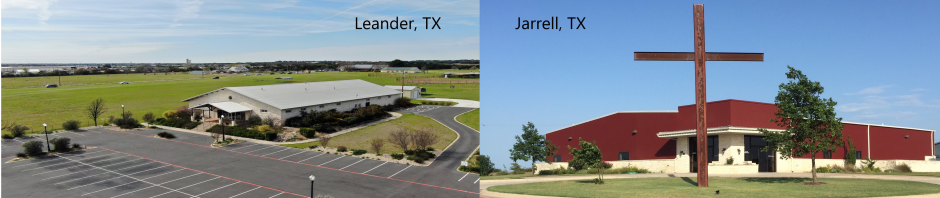
Leander: Saturdays at 7:30 PM Family Service, Sunday 9:30 AM Outdoor Service, 11:00 AM Indoor Service with Kid’s Ministry

Jarrell:  9:00 AM and 10:30 AM Family Service.

Posted in When God Doesn't - Habakkuk | Leave a comment