Invitation and Introduction: Fool Proofing Your Life – Proverbs

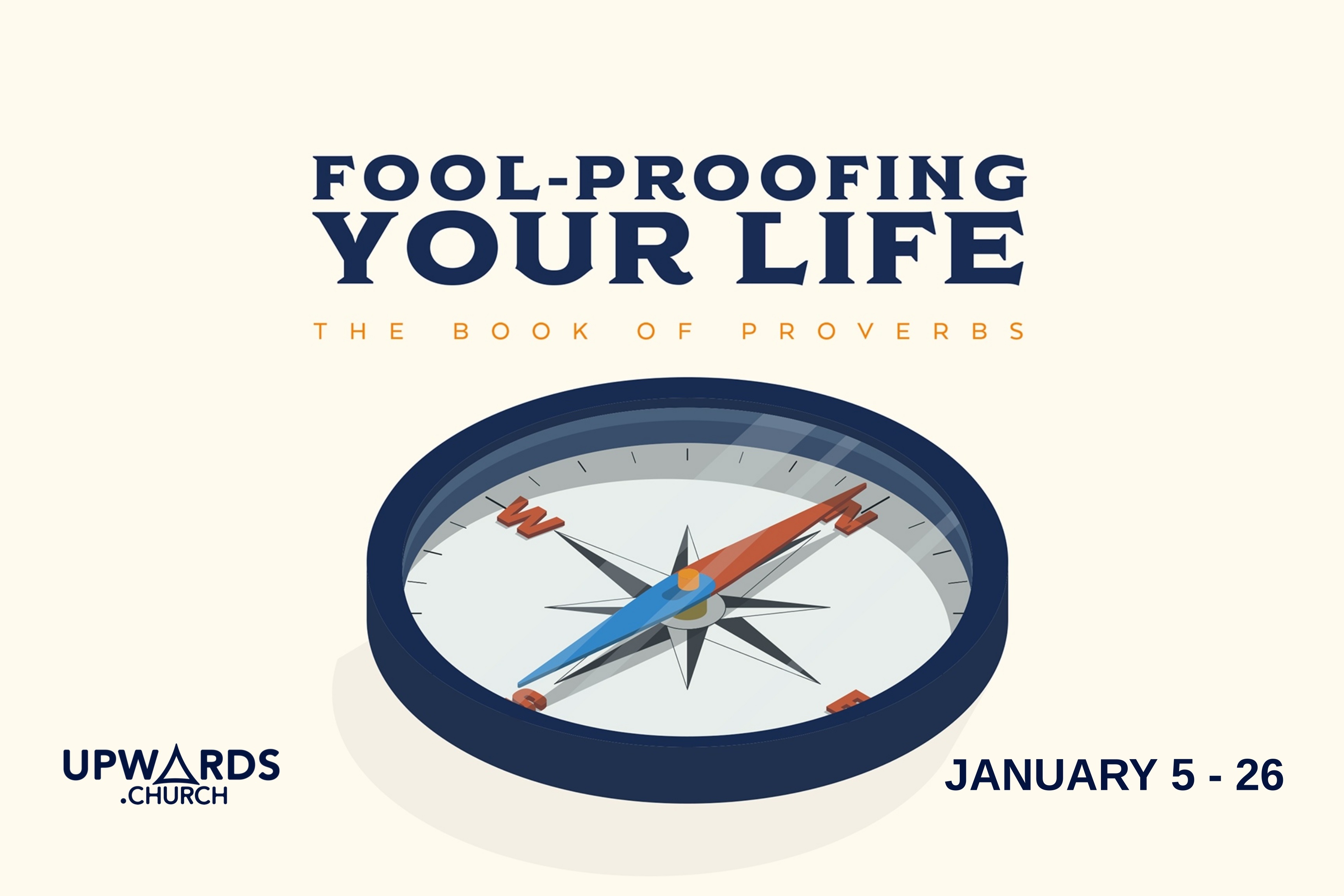
You’re invited to our new series: Proverbs (Fool proofing Your Life). 4 weeks

Description: Are you wise or foolish? The book of Proverbs is primarily about how to
live with wisdom and avoid foolishness. Solomon gives us instructions on how to
build our lives on a foundation of wisdom for daily life: work, family, friendships, finances and God.

Dates Titles (Scriptures) Events
Jan. 5 – The Source of Wisdom (Prov. 1) Back to School
Jan. 12 – Wise Living (Prov.3)
Jan. 19 – Wisdom in Marriage (Prov. 5) Communion / MLK
Jan. 26 – Wise Relationships (Prov. 15)

Proverbs Overview: 

Alphabet letters, vowels, and consonants formed into words, sentences, paragraphs, and books—spoken, signed, whispered, written, and printed. From friendly advice to impassioned speeches and from dusty volumes to daily tabloids, messages are sent and received, with each sender trying to impart knowledge … and wisdom.
Woven into human fabric is the desire to learn and understand. Our mind sets us apart from animals, and we analyze, conceptualize, theorize, discuss, and debate everything from science to the supernatural. We build schools, institutes, and universities, where learned professors can teach us about the world and about life.
Knowledge is good, but a vast difference stands between “knowledge” (having the facts) and “wisdom” (applying those facts to life). We may amass knowledge, but without wisdom our knowledge is useless. We must learn how to live out what we know.
The wisest man who ever lived, Solomon, left us a legacy of written wisdom in three volumes—Proverbs, Ecclesiastes, and Song of Songs. In these books, under the inspiration of the Holy Spirit, he gives practical insights and guidelines for life.
In the first of these three volumes, Solomon passes on his practical advice in the form of proverbs. A proverb is a short, concise sentence that conveys moral truth. The book of Proverbs is a collection of these wise statements. The main theme of Proverbs, as we might expect, is the nature of true wisdom. Solomon writes, “Fear of the LORD is the foundation of true knowledge, but fools despise wisdom and discipline” (1:7). He then proceeds to give hundreds of practical examples of how to live according to godly wisdom.
Proverbs covers a wide range of topics, including youth and discipline, family life, self-control and resisting temptation, business matters, words and the tongue, knowing God, marriage, seeking the truth, wealth and poverty, immorality, and, of course, wisdom. These proverbs are short poems (usually in couplet form), containing a holy mixture of common sense and timely warnings. Although they are not meant to teach doctrine, a person who follows their advice will walk closely with God. The word proverb comes from a Hebrew word that means “to rule or to govern,” and these sayings, reminders, and admonitions provide profound advice for governing our lives.
As we read Proverbs, may we understand that knowing God is the key to wisdom. Lets listen to the thoughts and lessons from the world’s wisest man, and apply these truths to our lives.

Vital Statistics

Purpose: To teach people how to attain wisdom, discipline, and a prudent life, and how to do what is right, just, and fair (see 1:2, 3)—in short, to apply divine wisdom to daily life and to provide moral instruction

Author: Solomon wrote most of this book, with Agur and Lemuel contributing some of the later sections.

Original Audience: The people of Israel

Date Written: Solomon wrote and compiled most of these proverbs early in his reign.

Setting: This is a book of wise sayings, a textbook for teaching people how to live godly lives through the repetition of wise thoughts.

Key Verse: Fear of the LORD is the foundation of true knowledge, but fools despise wisdom and discipline” (1:7).

Special Features: The book uses varied literary forms: poems, brief parables, pointed questions, and couplets. Other literary devices include antithesis, comparison, and personification.

Proverbs Outline:

A. WISDOM FOR YOUNG PEOPLE (1:1–9:18)
Solomon instructed the young people of his day like a father giving advice to his child. While many of these proverbs are directed toward young people, the principles supporting them are helpful to all believers, male and female, young and old. Anyone beginning his or her journey to discover more of wisdom will benefit greatly from these wise sayings.
B. WISDOM FOR ALL PEOPLE (10:1–24:34)
Solomon wanted to impart wisdom to all people, regardless of their age, sex, or position in society. These short, wise sayings give us practical wisdom for daily living. We should study them diligently and integrate them into our lives.
C. WISDOM FOR THE LEADERS (25:1–31:31)
In addition to the proverbs that Solomon collected, the advisers of Hezekiah collected many proverbs that Solomon and others wrote. While most of these are general in nature, many are directed specifically to the king and those who dealt with the king. These are particularly useful for leaders or those who aspire to be leaders.

Mega themes: 

  • Wisdom
    God wants his people to be wise. Two kinds of people portray two contrasting paths of life. The fool is the wicked, stubborn person who hates or ignores God. The wise person seeks to know and love God.
    When we choose God’s way, he grants us wisdom. His Word, the Bible, leads us to live right, have right relationships, and make right decisions.
  • Relationships
    Proverbs gives us advice for developing our personal relationships with friends, family members, and coworkers. In every relationship, we must show love, dedication, and high moral standards.
    To relate to people, we need consistency, tact, and discipline to use the wisdom God gives us. If we don’t treat others according to the wisdom God gives, our relationships will suffer.
  • Speech
    What we say shows our real attitude toward others. How we talk reveals what we’re really like. Our speech is a test of how wise we have become.
    To be wise in our speech we need to use self-control. Our words should be honest and well chosen.
  • Work
    God controls the final outcome of all we do. We are accountable to carry out our work with diligence and discipline, not laziness.
    Because God evaluates how we live, we should work purposefully. We must never be lax or self-satisfied in using our skills.
  • Success
    Although people work very hard for money and fame, God views success as having a good reputation, moral character, and the spiritual devotion to obey him.
    A successful relationship with God counts for eternity. Everything else is perishable. All our resources, time, and talents come from God. We should strive to use them wisely.

www.Upwards.Church

Message Audio/Video and Outline: https://upwards.church/leander-campus/watch-now-message-videos

Watch Messages: YouTube-Upwards Church

Facebook: Upwards Church

Read Along Daily Bible Reading: YouVersion

https://www.bible.com/reading-plans/36951

(https://www.bible.com/organizations/370f8a6e-16bc-464f-8c43-0b7623fd2952)

Source: Life Application Bible Notes (Tyndale, 2007), 1000–1001.

Posted in Fool Proofing Your Life - Proverbs | Tagged , , , , , , , | Leave a comment

Messiah in the Psalms

In the Hebrew Scriptures, the 150 Psalms are divided into five books. These poems of prayer and praise cover many themes and are often stated in terms of human experience. They tell of the victories, heartaches, and sufferings of the people of Israel.

One of the predominant themes in the Psalms is that of the Messiah. About ten percent, or 16 of the 150 Psalms, are classified as messianic. They are Psalms 2, 8, 16, 22, 23, 24, 40, 41, 45, 68, 69, 72, 89, 102, 110, and 118. In addition, many of the other Psalms, while not strictly messianic in nature, refer to Christ. The various writers related much about His person, life, rejection, suffering, and resurrection. The messianic Psalms were often quoted and further explained in the New Testament.

This post examines a few of the messianic Psalms, along with some messianic statements from other Psalms.

The Person of Christ in the Psalms
Psalm 110
Verse 1 affirms that the Messiah is God, for He is called “Lord,” a title of deity. If the Lord has a Lord, we are forced to one of two conclusions: polytheism (more than one god) or a triune God (one God in three persons). The latter is true. This is the beginning point in understanding the triune nature of God.

Psalm 110:1 was quoted by Matthew, Mark and Luke, the writers of the Synoptic Gospels. Peter also quoted this verse on the day of Pentecost: “This Jesus hath God raised up, whereof we all are witnesses. Therefore, being by the right hand of God exalted, and having received from the Father the promise of the Holy Spirit, he haa shed forth this, which you now see and hear. For David is not ascended into the heavens; but he says himself, The LORD said unto my Lord, Sit on my right hand, Until I make your foes your footstool. Therefore, let all the house of Israel know assuredly, that God has made that same Jesus, whom you have crucified, both Lord and Christ” (Acts 2:32–36).

Peter did not doubt that Jesus was Israel’s Messiah. The fact that His foes would one day be made His footstool was clearly taught by this Jewish apostle. Peter quoted Psalm 110:1 to prove that Christ was part of the Godhead and that He literally fulfilled the prophecy of this Psalm. The end result was that the Holy Spirit touched many lives, and three thousand people came to the Lord that day.

Verse 1 also teaches that the Messiah will defeat the enemies of God. Not only is Jesus God, but He will one day rule the world, making His enemies His footstool. This promise was twice quoted by the writer of Hebrews (1:13 and 10:13). Jesus will ultimately defeat Satan and be King of kings and Lord of lords.

He is the eternal High Priest: “The Lᴏʀᴅ hath sworn, and will not repent, Thou art a priest forever after the order of Melchizedek” (v. 4). This verse authenticates Jesus’ eternal high priesthood, a fact that is confirmed in Hebrews 5:66:20, and chapter 7.

Psalm 2
Psalm 2 also clearly describes the person of Christ. He is called the Lord’s “anointed” (Messiah, v. 2), “king” (v. 6), and “Son” (v. 7). Verses 8 and 9 clearly predict that He will conquer the earth. Verse 12 instructs us to “Kiss the Son.” The word kiss, in this context, means to worship. Since the Scriptures clearly teach that we are not to worship any man, the Son must be God. If He is not God, then the Bible leads us to a polytheistic position, which is not the case.

The Rejection of Christ in the Psalms

Psalm 118 is the last part of the Hallel, a portion of Scripture read at Passover. It clearly predicted the rejection of the Messiah Jesus as He approached His sacrificial death on the cross: “The stone which the builders refused is become the head of the corner. This is the Lᴏʀᴅ’s doing; it is marvelous in our eyes” (vv. 22–23).

The Apostle Peter quoted this portion of Scripture, adding to it a quotation from Isaiah 28:16: “Wherefore also it is contained in the scripture, Behold, I lay in Zion a chief cornerstone, elect, precious, and he that believeth on him shall not be confounded. Unto you, therefore, who believe he is precious, but unto them who are disobedient, the stone which the builders disallowed, the same is made the head of the corner” (1 Pet. 2:6–7).

In this passage, the “builders” are Israel, and the “stone” is Christ, indicating that the Jewish people have rejected their Messiah. He is the “head of the corner,” or the cornerstone itself, even though the nation refused Him. The rejection of the Messiah by the Jewish nation is also mentioned in several other Psalms.

The Suffering of Christ in the Psalms
When contemplating the suffering of the Messiah of Israel as described in the Psalms, we usually think of Psalm 22, in which David gave a graphic portrayal of death by crucifixion.

  • He Was Alone
    The first clue that Psalm 22 deals with the suffering of Christ is found in the first verse: “My God, my God, why hast you forsaken me?” While hanging on the cross, suffering and near death, Jesus cried out these very words (see Mt. 27:46). At the ninth hour, God turned His back on His Son as He “bore our sins in his own body” (1 Pet. 2:24). Being alone at that crucial time must have been agonizing.
  • He Was Verbally Abused
    He trusted on the Lᴏʀᴅ that he would deliver him; let him deliver him” (v. 8). This statement was fulfilled in Matthew 27:43. Not only did Jesus suffer physical agony and the awful separation from His Father, but He also suffered verbal abuse from the antagonistic crowd surrounding the cross.
  • He Was Thirsty
    The Psalmist wrote, “I am poured out like water … My strength is dried up like a potsherd, and my tongue cleaves to my mouth” (vv. 14–15). David was not referring to himself but was looking down the corridor of time to the cross. John quoted Jesus’ simple statement, “I thirst” (Jn. 19:28).
  • He Was Pierced
    They pierced my hands and my feet” (v. 16). Although the passages describing the crucifixion do not specifically mention nails being driven into Jesus’ hands and feet, the Apostle Thomas said, “Except I shall see in his hands the print of the nails, and put my finger into the print of the nails, and thrust my hand into his side, I will not believe” (Jn. 20:25). Eight days later, in the presence of the risen Savior, Thomas simply said, “My Lord and my God” (Jn. 20:28).

Zechariah further prophesied, “they shall look upon me [Jesus] whom they have pierced, and they shall mourn for him, as one mourns for his only son, and shall be in bitterness for him, as one that is in bitterness for his firstborn” (Zech. 12:10).

  • He Was Humiliated
    We are not told that Jesus was totally naked on the cross, but if He was wearing clothing, it could not have been more than a simple loincloth. The Psalmist said, “They part my garments among them, and cast lots upon my vesture” (v. 18). According to the Apostle John, an eyewitness to the crucifixion, this was fulfilled with exacting detail: “Then the soldiers, when they had crucified Jesus, took his garments, and made four parts, to every soldier a part; and also his coat. Now the coat was without seam, woven from the top throughout. They said, therefore, among themselves, Let us not tear it, but cast lots for it, whose it shall be; that the scripture might be fulfilled, which saith, They parted my raiment among them, and for my vesture they did cast lots. These things, therefore, the soldiers did” (Jn. 19:23–24).
  • Not One Bone Was Broken
    Psalm 34, while not considered to be a messianic Psalm, does contain a brief statement about the Messiah: “He keeps all his bones; not one of them is broken” (v. 20).

As Jesus and the two thieves were dying on the cross, the Sabbath was rapidly approaching. The Jews asked Pilate to have the soldiers break the legs of the three to hasten their deaths, so that they could be removed from the crosses before sundown, in keeping with the Sabbath rules. The soldiers therefore broke the legs of the two thieves, but when they came to Jesus, they discovered that He was already dead. “For these things were done, that the scripture should be fulfilled, A bone of him shall not be broken” (Jn. 19:36).

Exodus 12:46 and Numbers 9:12 stipulated that no bone of the Passover lamb could be broken. The writer of Psalm 34 strengthened the position that Christ was the true Passover Lamb, “the Lamb of God, who takes away the sin of the world” (Jn. 1:29).

The Resurrection of Christ in the Psalms

In Psalm 16:10, David wrote, “For you will not leave my soul in the grave, neither will you permit your Holy One to see corruption.”

A New Testament interpretation of this passage is found in Peter’s sermon on the day of Pentecost. He said that Jesus had been crucified but that He was raised from the dead. In addition, Peter said in Acts 2:29 that David’s statement in Psalm 16:10 was not concerning his own resurrection, for he told them that David was dead and buried, a fact that was proven by the existence of his sepulcher. He went on to declare that David was speaking of Christ, whose “soul was not left in hades, neither his flesh did see corruption” (Acts 2:31). Peter then quoted Psalm 110:1 to prove the deity of Christ and His ascension (Acts 2:34–36).

Conclusion

Peter, Paul, and Jesus all cited the messianic Psalms when presenting the Messiah to the Jewish people of their day. We too should know them.

www.Upwards.Church

Message Audio/Video and Outline: https://upwards.church/watch-now/leander-campus-videos

Watch Messages: YouTube-Upwards Church

Facebook: Upwards Church

Read Along Daily Bible Reading: YouVersion (https://www.bible.com/organizations/370f8a6e-16bc-464f-8c43-0b7623fd2952)

Source:

https://israelmyglory.org/article/messiah-in-the-psalms/#:~:text=About%20ten%20percent%2C%20or%2016,in%20nature%2C%20refer%20to%20Christ.


Posted in The Savior Comes - Messianic Psalms | Tagged , , , , , | Leave a comment

Psalm 22 – The Crimson Worm

But I am a worm and not a man,
    scorned by everyone, despised by the people.”  Psalm 22:6

There is a specific type of worm that the Hebrew scriptures reference 43 times. It may be easy to overlook it since the English word ‘worm’ is unpleasant, basic, and unassuming, but it is packed with significance.

The word is תּוֹלָע (tôlā’)

Of course, worms are worms no matter what culture you’re from. In several cases it’s used like you would expect, denoting decay, curse, punishment, or insignificance. Worms grow in the manna that the people tried to save (Ex 16:20), and God promises that when they disobey, the worm will eat their produce instead of them (Deut 28:39). This is the worm which was appointed by God to attack Jonah’s shade plant which then withered (Jonah 4:7). Job and Isaiah both equate it to a maggot (Job 25:6, Is 14:11), and it is the worm that eats the dead bodies of those who rebel against the Lord (Is 66:24).

Yet that is only 6 of the 43 uses of the word tôlā’. The other uses only make sense when we look at the nature of this specific ‘crimson worm.’

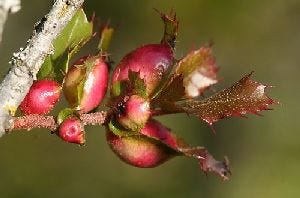
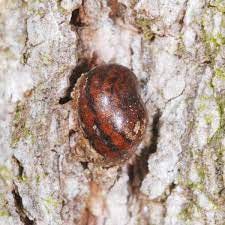
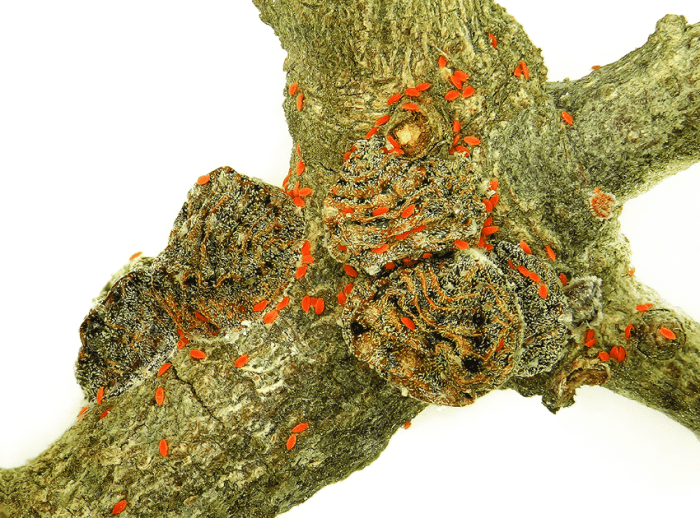
The coccus ilicis, or kermes ilicis (or kermes biblicus), called tôlā’ in Hebrew and ‘crimson worm’ in English, is a red worm found primarily in the Middle East, which produces a brilliant red dye.

This is why tôlā’ is most often translated to ’scarlet’ in the Bible instead of ‘worm.’ When God says ‘use scarlet yarn,’ He’s not merely saying ‘use worm yarn’ or ‘use red yarn.’ He’s saying ‘use tôlā’ yarn’ or ‘use the red yarn you get from the tôlā’ worm.’

This is why it’s significant:

When the time comes for the female tôlā’ to bear her young, she goes through a remarkable process to give birth, protect her young, and sustain them until she eventually leaves them. Here’s a snapshot of the process:

  • She attaches herself to a tree.
  • She fastens herself so securely to the tree that she is physically unable to detach herself. There is finality in this decision.
  • While doing so, she makes a hard shell to protect the eggs she lays beneath her.
  • When the larvae hatch, they live protected under the mother’s fastened body, feeding themselves with her bod.
  • Once the larvae are strong enough, after several days, the mother dies.
  • A scarlet red liquid leaks out of the protective shell and often stains the tree it was attached to as well as the baby larvae. This color is permanent and they’ll be that way for the rest of their lives.
  • Once the mother’s dead, her body begins to decay and over the course of ~3 days, the scarlet red color turns into a white waxy substance.

It’s hard not to see the symbolism here as we think about Jesus.

Attached To A Tree

Jesus, like the worm, attached Himself to a tree in order to die there for the sake of His offspring. This tree was the place where redemption would be purchased and where Jesus would become the source of eternal salvation for all who obey Him.

“He himself bore our sins in his body on the tree, that we might die to sin and live to righteousness. By his wounds you have been healed.” — 1 Peter 2:24

“Although he was a son, he learned obedience through what he suffered.And being made perfect, he became the source of eternal salvation to all who obey him.” — Heb 5:8–9

Protects The Offspring

Jesus’ heart is to protect the offspring. Like the worm, Jesus creates a sort of spiritual ’shell’ of protection around those ‘born again’ newborns and children who are His, and who cannot fend for themselves and are indeed helpless without the mother worm’s fastening herself to them. Jesus is constrained by His love for the offspring such that He, dare we say, ‘cannot’ detach Himself from the tree for their sake. This protection costs Him, like the mother worm, everything. Indeed, it will lead to their life, but the protector’s death.

John 10:1–18, Mt 27:39–44

“While I was with them, I kept them in your name, which you have given me. I have guarded them, and not one of them has been lost except the son of destruction, that the Scripture might be fulfilled.” — John 17:12

Sustains The Offspring

The mother worm not only provides covering and protection from the environment, but also sustenance through herself, as her offspring feed off of her very body. As she gives up her life, she becomes the source of life for her offspring. So it is with Jesus.

“I am the living bread that came down from heaven. If anyone eats of this bread, he will live forever. And the bread that I will give for the life of the world is my flesh.” — John 6:51

Seals The Offspring With Blood

A covenant is sealed with blood, blood being the sign of a confirmed covenant. To be stained with blood is to be sealed by covenant. From Adam (Gen 3:21) to Abraham (Gen 15) to Moses (Ex 24:7–8) to Jesus (Mt 26:28). The last supper provided the image of a New Covenant between God and His people — symbolically in the wine, and fully by the blood on the cross. Those who surrender to this work receive the purifying and sanctifying work of His blood, and are thus stained by it for the rest of their lives, just like the worm’s offspring.

Mt. 26:28, Eph 1:7–14, 4:30, 1 Peter 1:2

Red Turns White

Jesus spent 3 days in the tomb (Mt. 12:40, 27:62–28:8), and it’s His blood that washes away sin and secures eternal redemption (1 Cor 6:11, Mt 26:28, Rom 3:25, Eph 1:7, 2:13, Col 1:20, Heb 9:12–14) and makes His people white/pure (Rev 7:14, 22:14).

Scarlet Yarn

If you aren’t convinced of the supernatural providence of this worm’s creation, let’s go back to the use of tôlā’ in the text and in the ancient Hebrew culture.

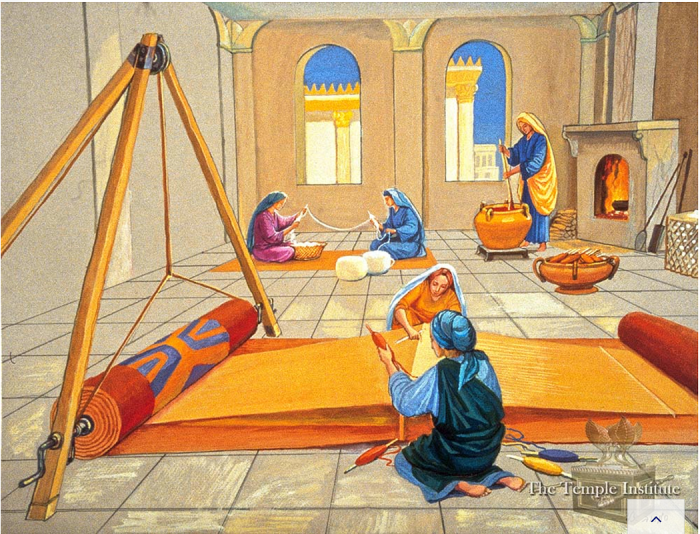
From this crimson worm, the people would create a rich red dye, and thus a rich red yarn. It was with this ’scarlet yarn’ (literally tôlā’ yarn in the text) that God told them to create much of the holy furnishings and dress for tabernacle/temple service.

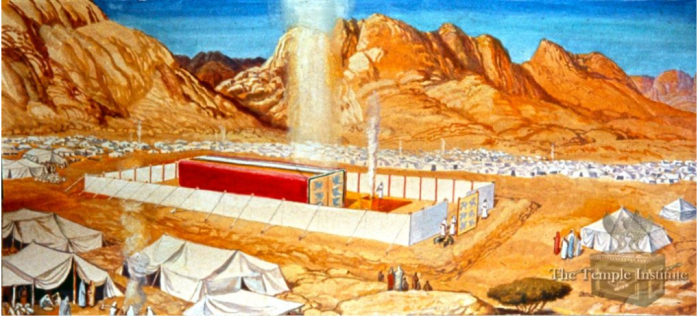
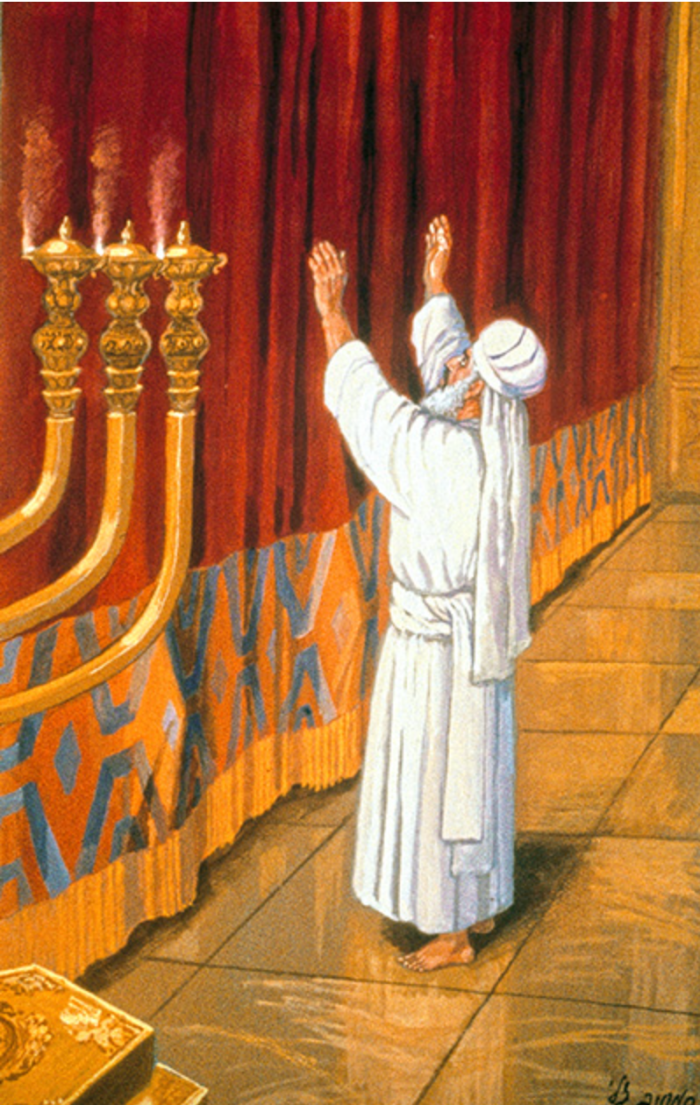
God wanted tôlā’ yarn to be used in the curtains of the tabernacle (Ex 26:1, Ex 36:8), the veil of the tabernacle (Ex 26:31, Ex 36:35), the entrance screen of the tabernacle (Ex 26:36, Ex 36:37), and the screen around the tabernacle courtyard (Ex 27:16, Ex 38:18).

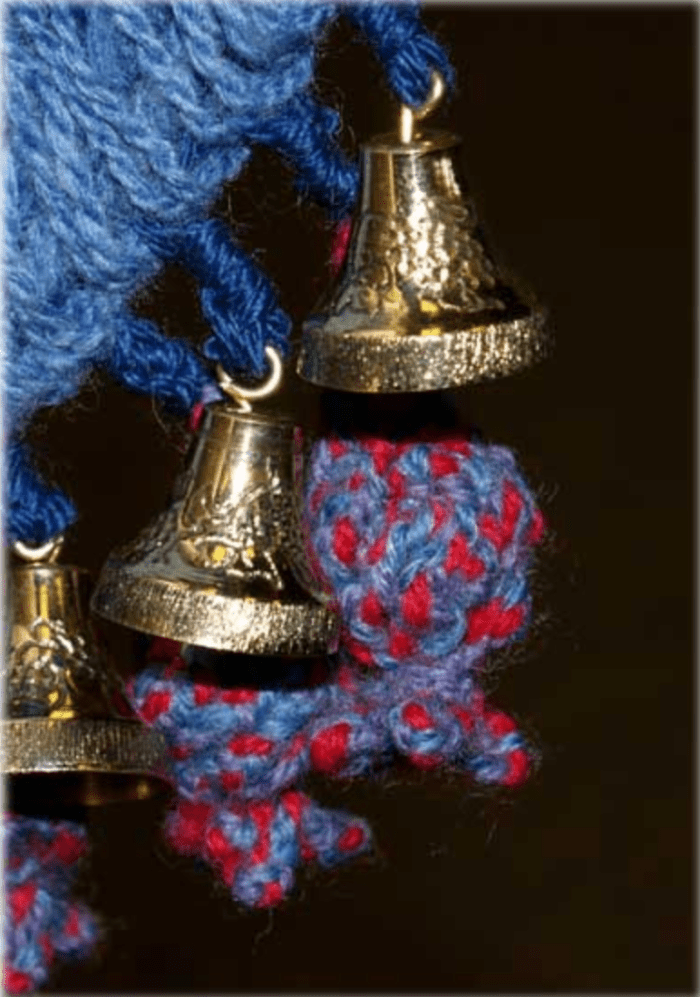
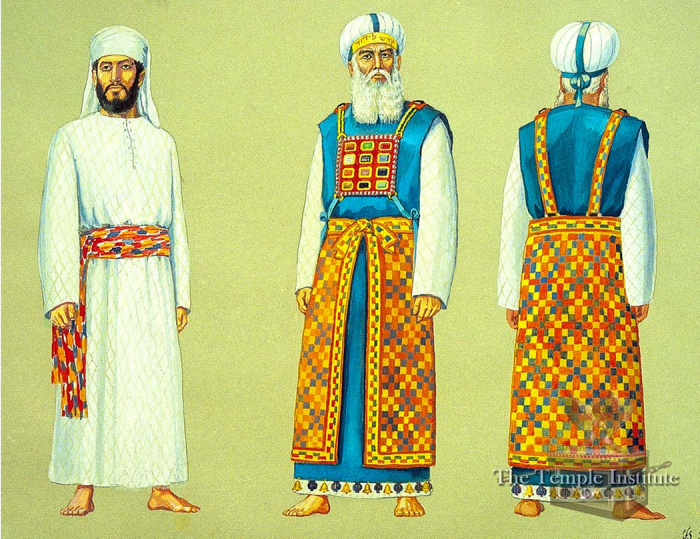
Tôlā’ yarn was also to be used in various parts of the high priest’s ephod (Ex 28:6, Ex 28:8, Ex 28:15, Ex 28:33, Ex 39:1–8, Ex 39:24), and other parts of the priests’ garments (Ex 39:29). It was also used in a cloth which covered elements of the tent of meeting as they traveled (Num 4:8).

Thus, this tôlā’ yarn was one of the things the people could contribute for the tabernacle and a skill that people were trained in (Ex 25:4, Ex 35:6, Ex 35:23, Ex 35:25, Ex 35:35, Ex 38:23). To wear clothing made of this red yarn from the tôlā’ worm was a symbol of wealth (Lam 4:5).

God embedded this process and story of a sacrificial mother worm into the very fabric (literally) of the tabernacle, temple, and priestly process — the means of God’s dwelling with man on earth and the means of man’s communing with God.

Even the yarn itself speaks of God’s redemptive story in pointing to His security, sacrifice, sustenance, seal, and sanctification. It’s no surprise that this tôlā’ yarn was also used in the ritual cleansing of someone who had been healed of leprosy (Lev 14:4–6), in the ritual cleansing of a house which had leprosy in it (Lev 14:49–52), and in the red heifer ritual offering for purification (Num 19:6). It’s this ’scarlet wool’ that the author of Hebrews reminds us of in his point that “without the shedding of blood there is no forgiveness of sins.” (Heb 9:15–22)

Psalm 22

“…but I am a worm (tôlā’) and not a man, scorned by men and despised by the people…” — Ps 22:6

When David wrote this word tôlā’ in Psalm 22, we might suppose he was simply expressing humility. Perhaps he was. I am more inclined to think that David knew exactly what word, symbol, and idea he was portraying. He, as a type of the future Messiah, knew his place (most of the time) as sub-king under the sovereignty and active direction of God.

Regardless of David’s intention, we of course find the word’s greatest significance when Jesus points to it on the cross. When Jesus cited the opening words of Psalm 22 (Mt. 27:46), he employed a tradition of the time that identified the entire passage, like quoting a chapter heading or book title. Jesus’ cry, “My God, my God, why have you forsaken me?” was analogous to a preacher today saying, “Remember the words of Psalm 22.”

What’s more, this was known as the ‘death psalm’ in Jewish culture. RVL (episode 11) says:

…So the Rabbis learn the text, live the text, teach the text…and it is the dream of every rabbi to ‘die the text’… A jew, for 2400 years, if you’re religious that when you die, you recite Psalm 22 and you die with the Shema on your lips, so the first thing you do is meet God after you’ve said the Shema. Now not many jews get that of course but when they went to the gas chambers, went to the inquisition, when the crusaders — they would always recite Psalm 22 and then the Shema. Akiva was reciting the Shema, the Romans had made a cage and were lowering it into a fire and burning him and then lifting him out, and then lowering him into the fire and then lifting him out, and they were making his talmeedim, these 14–16 year old kids, watch. And Akiva would lower in screaming the Shema and come out reciting Psalm 22, and one of the students finally couldn’t take it anymore and said, “Rabbi, your whole life you’ve been trying to follow God and He allowed THIS to happen to you, why do you still say Shema?” And Rabbi Akiva is said to have said, “If I spent my whole life seeking to follow the Torah and live the Shema, and this happened, imagine how bad it would be if I hadn’t.”

This is the ‘death psalm.’ I want you to come with me to the cross and I want to suggest to you that all seven sayings — six for sure — come out of Psalm 22. And what Jesus is doing dying — choking to death — is muttering, gasping through the death psalm, and when He comes to the point that it reminds Him of something, He shouts it. And I’ll take it from the Hebrew so it’s a little different, but if you get the Tanakh you’ll see it this way:

  1. It starts, “My God My God!” (not even Father!) “Why have you abandoned me!” (v.2)

That’s obvious. (Mt. 27:46, Mk 15:34)

2.“You drew me from the womb, made me secure at my mother’s breast. I became your charge at birth from my mother’s womb. You have been my God.” (v.10–11)

“Mother, your son. Son, your mother.” (John 19:25–27) …Maybe?

3. “My life ebbs away, my bones are out of joint. My heart is like wax melting within me, my strength dries up like a shard of pottery, my tongue sticks to the roof of my mouth — “ (v.15)

“I’M SO THIRSTY!” (John 19:28)…Maybe? Your Rabbi died, I think, reciting the text.

4. “Because of you, I offer praise in the great congregation.” (v.26) In Hebrew, “In the presence of the worshippers, I COMMIT MY SPIRIT!”

“To you, I commit my spirit,” Luke says. (Lk 23:46)

5. And last, this is the way the psalm ends: “Offspring shall yet serve him, the Lord’s fame shall yet be proclaimed to the generation to come, they shall tell of his greatness for he has finished it.” (v.31)

“It is finished.” (John 19:30)

In saying any one of these things therefore, Jesus at least implicitly (if not explicitly) prayed the entire psalm as He hung there, as an intimate conversation between Him and His Father. Let’s therefore walk through our own consideration of Psalm 22’s entirety, in the context of the tôlā’.

The tôlā’ in Psalm 22

v.3–5

Jesus identifies the character of God as One who is faithful. Time and time again, He has delivered His people as they trusted Him — He is a Rescuer of men.

v.1–2

Yet confusingly, God is not rescuing this Man (v1–2). It would seem out of character, as this Man is doing all of the right things. Indeed, “Why?”

v.6–7

Jesus says, “…[Those men] cried and were rescued, but I am not a man.” Indeed, He is more than a man — He is a tôlā’. The tôlā’ by its nature is self-sacrificial. It chooses to be permanently bound to the tree. It does not expect that it will cry out and be rescued, for this sacrificial death is the very purpose for its existence. This self-sacrificial nature is exactly contrary to that of mankind, and thus, mankind scorned and mocked it, even though it was for their great benefit.

v.8

This refusal to cry out and be rescued was precisely what they mocked (Mt. 27:39–44,49). In a sense, they might have figured He was less than a man. After all, God rescues men. If God won’t rescue this man, he must be less than a man. Worthless.

To this implication, Jesus responds, “I am not a man.” “I am a tôlā’.” (v.6)

v.9–13

Jesus was used to refusing to be rescued (Mt. 4). Thus, once again, He focused on His Father’s character, His faithfulness, and asked Him to be near, though He felt far.

v.14–15

Just like the tôlā’ on the tree, He let His lifeblood be ‘poured out.’ He gave His entire body such that His bones were ‘out of joint.’ He ‘dried up’ on that tree like the tôlā’ forming its cocoon of safety, and He let His ‘heart melt’ for those who were His, to the point that the only thing that was left was the pure white ‘wax’ substance.

v.16–18

And if the significance of the worm was lost on everyone else, Jesus and His Father knew. For Jesus looked down and saw them casting lots for His clothing. Which clothing? The robe they had put on Him and taken back off of Him — the scarlet (tôlā’) robe (Mt. 27:27–28, 31, 35).

v.19–21

Lest we think Jesus did not ask His Father to rescue Him — He did. Not only in the garden (Mt. 26:39,42,44) but here on the cross.

v.22–24

And yet this lack of rescuing didn’t change what was true concerning the Father’s character. He is still worthy of praise and glory, fear and awe. He is still the God who cares and listens to those afflicted. Yet how can we reconcile this when He is presently not rescuing His most Beloved?

v.25–31

Because there is coming a Day when Jesus will reign physically on the earth from Jerusalem over every other king and all will bow the knee to Him who is worthy to inherit the nations (Is. 2, Ps. 2, Rev 5). The afflicted will be forever rescued, be forever satisfied, and live forever proclaiming His goodness.

And thus, by the Father’s restraint in rescuing Jesus from the cross, He is rescuing and redeeming men unto Himself. How then can we say He wasn’t still the ‘God who rescues’ while Jesus hung on the cross? Jesus, like Moses (Ex 32:32) or Paul (Rom 9:1–3) requests that God “Rescue them, not me. If I can give myself for their sake, I will.”

This is the heart of the tôlā’.

Isaiah says that our sin is “red like crimson” (red like tôlā’), and yet the Lord invites His people to obey that their sin would be white ‘like wool’ (or like the white waxy substance that results from a tôlā’ worm actually sacrificing itself for the sake of others) (1:18). Additionally, the Lord calls the tribe of Jacob a worm (tôlā’) as He invites them to ‘fear not,’ and to receive His help and His refuge (41:14).

Yet we know that we are called to more than this. We are not merely called to be the offspring of the tôlā’. He calls us to follow in the same mind and spirit as Him, laying down our lives for others (Phil 2–3, 2 Cor 4–5). Thus, He calls us to be the tôlā’ ourselves.

Posted in The Savior Comes - Messianic Psalms | Tagged , , , , , , , , | Leave a comment

Messianic Psalm 68 – Quoted in Ephesians 4:8

For Connect Groups we looked at Psalm 68, one of most challenging Psalms according to commentators.  Below are some notes that we referred to.

You have ascended on high, You have led captivity captive; You have received gifts among men, even from the rebellious, that the Lord God might dwell there. (Psalm 68:18)

The Ascension Psalm

The first half of this Psalm God traces Israel’s history through the wilderness (vv. 1–17); in the second half we get the future deliverance of Israel and the millennial kingdom under Adonai (vv. 19–35). Verse 18 connects the two sections and is wonderfully messianic in character, however, not Messiah in His ministry upon the earth as revealed in the Gospels, but His place in heaven. The Apostle Paul quotes Psalm 68:18 in Ephesians 4:8 to show the ascension of Christ with the intent to show the relationship of that to the giving of gifts to the body of Christ. This is the reason why Christians often call Psalm 68, the “Ascension Psalm.”1 In many ways, it is a very remarkable and unique psalm as we will see.

A Cornucopia of Divine Names

Psalm 68 has been recognized for its use of multiple names of God, it has been characterized as a cornucopia of divine names, using eight different names throughout the psalm:

Elohim (twenty-three times); Jah (one time); El Shaddai (one time); Jehovah (YHWH five times); El (two times); Adonai (six times); Jah Elohim (one time); Jehovah Adonai (one time).

But it is the divine name, “Adonai” (“supreme master” or “Lord”), which stands out by occurring six times in this Psalm. The significance of this is that “Adonai” in the Psalms often refers to Christ in the Psalms (see for example, Ps. 8:9 and Ps. 110:1). The use of Adonai in Psalm 68 is prophetic of Christ’s Lordship as Man. He ascends on high in triumph and leads the enemy captive under whose power mankind had been.

Captivity Taken Captive

Psalm 68:18 says that, “When He ascended on high, He led captivity captive.” Paul quotes this phrase in Ephesians 4:8 in connection with Christ’s ascension as well; but what does it mean? Some interpret this in a positive way believing the “captivity” here are those who had died in faith but not set free or brought from Hades to heaven.2 But we believe that this is incorrect. Part of the blessing and victory brought to man through Christ’s work was the destruction of Satan’s power over those who have believed. Christ came to “destroy3 the works of the devil” (1 Jn. 3:8). When Christ ascended He led the adversary captive, in setting Man above all things, He led captive all that could have power over man. The companion verse to this is found in Colossians 2:15Having disarmed principalities and powers, He made a public spectacle of them, triumphing over them in it.

 Gifts to Men

The prophecy in our text (v. 18), is the very center of the Psalm. It declares the ascension of Christ as Man to the throne of God. According to the Apostle Paul, it is the ascension of Christ which the Holy Spirit points to here, especially in relation to the gifts of Christian ministry. He wrote:

But to each one of us grace was given according to the measure of Christ’s gift. Therefore He says: “When He ascended on high, He led captivity captive, and gave gifts to men.” (Now this, “He ascended”—what does it mean but that He also first descended into the lower parts of the earth? He who descended is also the One who ascended far above all the heavens, that He might fill all things.) And He Himself gave some to be apostles, some prophets, some evangelists, and some pastors and teachers, for the equipping of the saints for the work of ministry, for the edifying of the body of Christ.4

Though the Church is not directly revealed in the Old Testament, now that the “mystery”5 has been revealed through the New Testament apostles, we can look back and see God’s councils concerning it (see Eph. 3:3–9).

He who descended is also the One who ascended far above all the heavens, that He might fill all things. What does it mean when it says He also first descended into the lower parts of the earth? He descended into death, from heaven’s throne down to the dust of death—an unmeasurable distance, though we sometimes sing:

Thou didst measure then sin’s distance; Darkness, wrath and curse were Thine;
Man-betrayed, by God forsaken; Thus we learn Thy love divine.

He descended and “tasted death,” was bodily raised from the dead, and then ascended to the right hand of God. In Ephesians we see Christ as the ascended Lord (Eph. 1:20–23; we will recall the name “Adonai” of this Psalm). As the Ascended Man Christ is both Lord and Head; these are both emphasized in Ephesians 1 and 4.

In Ephesians 4 we see Christ as the ascended Head of the “one body” on earth. He receives gifts “in man” (DBY; “among men” ESV; NKJV)6 and communicates these gifts to the body of Christ.

In Paul’s Epistle to the Corinthians we read that the Holy Spirit distributed various gifts to men.7 But in Ephesians it is the men themselves who are the gifts given to the Church by Christ: pastors, evangelists, and teachers. The gifts of a miraculous nature may pass away. But the gifts from the ascended Christ (as revealed in Eph. ch. 4) will abide as long as there is still a Church on the earth, for the Head is faithful to nourish the body as long as it is here.

The Apostle Paul omits the last part of verse 18, which speaks of the “the rebellious,” because it refers to Israel in the future who will also be blessed by God at that time. The Church is nourished by Christ now as Israel will be strengthened by Adonai in a coming day, for “He it is that giveth strength and might unto the people. Blessed be God!” (v. 35).

People sometimes ask, “Why don’t we see more gifts in operation among God’s people?” Brother J. N. Darby once responded to that question with, “If there were more devotion there would be more gifts.” May this stir our hearts and may we covet the best gifts in order to edify the saints and build up the body.

Source: https://patternsoftruth.org/messianic-psalms-psalm-68

www.Upwards.Church

Message Audio/Video and Outline: https://upwards.church/watch-now/leander-campus-videos

Watch Messages: YouTube-Upwards Church

Facebook: Upwards Church

Read Along Daily Bible Reading: YouVersion (https://www.bible.com/organizations/370f8a6e-16bc-464f-8c43-0b7623fd2952)


Endnotes

1.  Psalm 22 is the Psalm of the Sin Offering and Psalm 16 is the Resurrection Psalm. 

2.  See comments on Psalm 16 where this view is mentioned in more detail.

3.  “Undo” – DBY.

4.  Ephesians 4:7–12.

5.  “Mystery” in the biblical sense is not something that is “mysterious” or hidden, but something that is revealed to the initiated or at the time of God’s choosing. For example, there are many types and shadows of the Church in the Old Testament but they could not be known until the death of Christ and the coming of the Holy Spirit.

6.  In Paul’s quotation of Psalm 68:18 found in Ephesians 4:8, he states that Christ has given gifts “to men.” For a technical discussion of this see the NET Bible note R.

7.  It is interesting to see that in Romans 12 it is God who gives the gifts; in 1 Corinthians 12 it is the Holy Spirit who gives the gifts; and in Ephesians 4 it is the Lord Jesus in heaven who gives the gifts.

Posted in The Savior Comes - Messianic Psalms | Tagged , , | Leave a comment