Invitation and Introduction – New Creation -2 Corinthians

You’re invited to our new series, “New Creation” in 2 Corinthians!

Description:

As Christians we are brand-new people on the inside. We are not reformed, rehabilitated, or reeducated—we are re-created (New Creations), living in vital union with Christ.  The church at Corinth was weak. Surrounded by idolatry and immorality, they struggled with their Christian faith and lifestyle. Through personal visits and letters, Paul instructed them in their faith, tried to resolve their conflicts, and reminded them of who they are: “a New Creation,” with a “ministry of reconciliation.”  Will you live out your faith as a “New Creation” in Christ?

Dates           Titles            Scripture                Events

Nov. 17 – God’s New Creation (2 Cor. 5)                     Communion

Nov. 24 – God’s Way of Meeting My Need (2 Cor. 8)  Thanksgiving Weekend

 Dec. 1 – God’s Grace for the Hurting (2 Cor. 12)

Dec. 8 –   God’s Greatest Gifts (2 Cor. 1, 4, 5)


Introduction: 

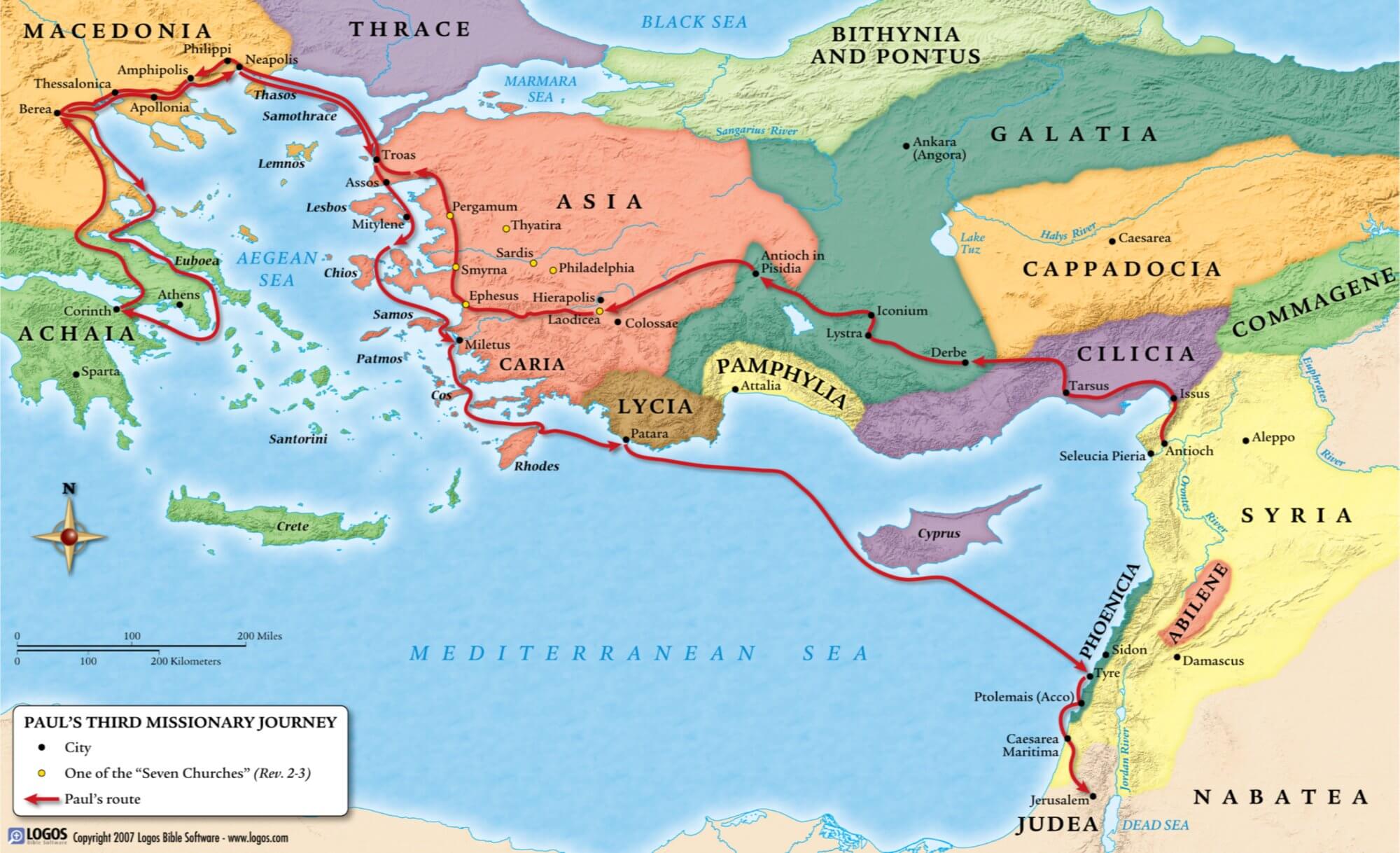
Paul constantly struggled with those who would mislead God’s people, and he poured his life into spreading the Good News to the uttermost parts of the world. During three missionary trips and other travels, he proclaimed Christ, made converts, and established churches. But often young believers were easy prey for false teachers, who were a constant threat to the gospel and the early church. So Paul had to spend much time warning and correcting these new Christians.
The church at Corinth was weak. Surrounded by idolatry and immorality, they struggled with their Christian faith and lifestyle. Through personal visits and letters, Paul tried to instruct them in the faith, resolve their conflicts, and solve some of their problems. First Corinthians was sent to deal with specific moral issues in the church and to answer questions about sex, marriage, and tender consciences. That letter confronted the issues directly and was well received by most. But there were false teachers who denied Paul’s authority and slandered him. Paul then wrote 2 Corinthians to defend his position and to denounce those who were twisting the truth.
Second Corinthians must have been a difficult letter for Paul to write because he had to list his credentials as an apostle. Paul was reluctant to do so as a humble servant of Christ, but he knew it was necessary. Paul also knew that most of the believers in Corinth had taken his previous words to heart and were beginning to mature in their faith. He affirmed their commitment to Christ.
Second Corinthians begins with Paul reminding his readers of (1) his relationship to them—Paul had always been honest and straightforward with them (1:12–14), (2) his itinerary—he was planning to visit them again (1:15–2:2), and (3) his previous letter (2:3–11). Paul then moves directly to the subject of false teachers (2:17), and he reviews his ministry among the Corinthians to demonstrate the validity of his message and to urge them not to turn away from the truth (3:1–7:16).
Paul next turns to the issue of collecting money for the poor Christians in Jerusalem. He tells them how others have given, and he urges them to show their love in a tangible way as well (8:1–9:15). Paul then gives a strong defense of his authority as a genuine apostle while pointing out the deceptive influence of the false apostles (10:1–13:10).
As you read this intensely personal letter, listen to Paul’s words of love and exhortation, and be committed to the truth of God’s Word and prepared to reject all false teaching.

Vital Statistics

Purpose: To affirm Paul’s ministry, defend his authority as an apostle, and refute the false teachers in Corinth

Author: Paul

Original Audience: The church in Corinth

Date Written: Approximately A.D. 55–57, from Macedonia

Setting: Paul had already written three letters to the Corinthians (two are now lost). In 1 Corinthians (the second of these letters), he used strong words to correct and teach. Most of the church had responded in the right spirit; there were, however, those who were denying Paul’s authority and questioning his motives.

Key Verse: “So we are Christ’s ambassadors; God is making his appeal through us. We speak for Christ when we plead ‘Come back to God!’ ” (5:20)

Key People: Paul, Timothy, Titus, false teachers

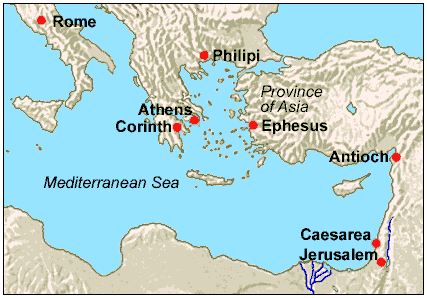
Key Places: Corinth, Jerusalem

Special Features: This is an intensely personal and autobiographical letter.

www.Upwards.Church

Message Audio/Video and Outline: https://upwards.church/watch-now/leander-campus-videos

Watch Messages: YouTube-Upwards Church

Facebook: Upwards Church

Read Along Daily Bible Reading: YouVersion (https://www.bible.com/organizations/370f8a6e-16bc-464f-8c43-0b7623fd2952)

Source: Life Application Bible Notes (Tyndale, 2007), 1958–1959.

Posted in New Creation - 2 Corinthians | Tagged , , , | Leave a comment

Galatians Review

Why is Galatians so important?

In advance of the Jerusalem Council, Paul’s letter speaks wisdom and clarity into the first real controversy that plagued the church in its early years—the relationship between Christian Jews and Christian Gentiles. Paul’s aggressive tone shows just how important it was to him that the people embrace unity in Christ, no matter their racial distinctions. For him, this was no minor issue, as he went so far as to call the Galatians deserters of Christ, people turning from the truth toward a gospel contrary to the one they had received from Paul (Galatians 1:6–9).

 About the Author?

The Epistle to the Galatians was written by the Apostle Paul. Paul identifies himself as the author in the first line of the letter, and virtually all scholars affirm Pauline authorship, due to the style and theology of the epistle.1 In addition, Paul reveals a great deal of autobiographical information in this epistle. Much of this information is not shared in his other known correspondence, and Paul uses the material to address the Galatians, thus making it more authoritatively Pauline.2

When and Where Did the Author Write?

There is no unanimous consensus about when Paul wrote the Epistle to the Galatians. The general range given for the date of this epistle is circa AD 48 -50.3 If this is true, then Paul had already concluded his first missionary journey.4

If one accepts the early 48 date, then Paul would have written this letter from Corinth during his Aegean mission. if a little later, Paul would have written from Ephesus or Macedonia during the latter portion of his Aegean mission.5

Who Was the Original Audience?

There is some debate regarding whom this epistle was written to. Some argue that this letter was written to a region, rather than to a specific city. The debate is whether this region is North Galatia or South Galatia.6 The debate of north versus south has found traction in different groups in different eras. There is evidence for either region, but the south seems to have some distinct advantages.7 Despite the regional debate, Paul made it clear that the people in Galatia were primarily gentiles. There was a cultural milieu of Roman, Greek, and indigenous influences throughout the region of Galatia.8

Genre

What type of book is this?

The book of Galatians is an epistle. An epistle is an ancient letter that was used for correspondence purposes. The biblical epistles were typically used on an as-needed basis, such as addressing issues within the body of Christ. They were most often used to teach theology and offer ethical instruction for behavior.14 It’s helpful for modern-day readers of the epistles to acknowledge that Paul’s world is very different from our world today. The modern-day reader must pursue the historical context of the period in order to most effectively grasp Paul’s words.15

Thematic Language

What words does the Author regularly use in this book?

  • Christ (38 times)
  • Law (32 times)
  • Faith (21 times)
  • Spirit (18 times)
  • Flesh (16 times)

Why did the Author Write?

Paul wrote Galatians because he received word that some Jewish Christian missionaries had come to the region of Galatia to preach a different gospel from what he preached to the Galatians (1:6–7).This epistle was not written to protect the flock from some non-Christian invasion of false teaching, but rather, it was a letter of rebuke to those who had preached a false gospel and those who believedit.9 This “gospel” taught that in order to truly become a Christian and be a part of the people of God, a person must be circumcised. This was clearly against the gospel of salvation by Christ alone that Paul preached.10

Where did the Audience Live?

As mentioned previously, there was great diversity within the region of Galatia. This region was originally founded in the third century BC by Celts who migrated to the northern portion of Asia Minor.11 Much like the rest of the known world at this time, Galatia was under Roman control. As a province, Galatia was much more rural and agrarian as a society. As a result, the people were not dependent on other regions for their provision but were able to provide for their own needs.12 Galatia was quite large in Paul’s day and covered much territory; therefore, it seems that Paul was reaching a sizable audience.13

Key Verses

What are some key verses in this letter?

1:11 (ESV): For I would have you know, brothers, that the gospel that was preached by me is not man’s gospel.

2:15-16 (ESV): We ourselves are Jews by birth and not Gentile sinners; yet we know that a person is not justified by works of the law but through faith in Jesus Christ, so we also have believed in Christ Jesus, in order to be justified by faith in Christ and not by works of the law, because by works of the law no one will be justified.

2:20 (ESV): I have been crucified with Christ. Itis no longer I who live, but Christ who lives in me. And the life I now live in the flesh I live by faith in the Son of God, who loved me and gave himself for me.

3:28 (ESV): There is neither Jew nor Greek, there is neither slave nor free, there is no male and female, for you are all one in Christ Jesus.

5:1 (ESV): For freedom Christ has set us free; stand firm therefore, and do not submit again to a yoke of slavery.

6:9 (ESV): And let us not grow weary of doing good, for in due season we will reap, if we do not give up.

Illustration

What’s an illustration that will help readers understand the context and message of the book?

The Apostle Paul wrote the book of Galatians in order to address issues within the church. To help us understand Paul’s intentions, imagine someone like Gordon Ramsay. Gordon Ramsay is notorious for his television programs where he shows up to a dysfunctional restaurant and helps correct the issues causing the eatery to fail. Ramsay often does this in a harsh tone, much like we see in Paul’s Epistle to the Galatians (though Paul acts with more love while writing his letter). Ramsay’s ultimate concern is not to be angry at someone for running a business poorly, but rather that they correct the issues and become a healthy restaurant again. Paul desires that the church in Galatia become healthy again, too.

Overview

A succinct overview of the book to introduce the book to readers.

Paul, the founder of the churches in Galatia, received word of some Jewish Christians attempting to preach a different gospel from the one he originally presented to the local congregations. This “gospel” argued that people must follow the Law of Moses (and, specifically, be circumcised) to become a part of the people of God. Enraged because of his passion for Christ, the believers, and the gospel, Paul wrote a harsh rebuke defending the gospel that he preached against the “gospel” of these opponents. Paul did not want control of these people; rather, he wanted them to remain faithful to the gospel that he preached and to protect one another from the false “gospel. ”Paul’s vehement rebuke was done in love and as a form of discipline from this loving pastor to the congregations of the churches that he planted and nurtured. It is discipline that emanates from relationship, not that of an emperor disciplining unruly subjects.

How do I apply this?

Unfortunately, the false teaching brought to the Galatian churches by the Judaizers has been extremely difficult to root out even today. We must walk a fine line—on one hand, we do not want to fall into the legalism that the Galatians struggled with, but on the other, we cannot just live as if anything goes. The Christian’s commitment to Christ is based on the free gift of grace through faith, but as Paul articulated at the end of Galatians, it also results in a life of walking by the Spirit.

Is the fruit of the Spirit evident in your life, or do you find yourself living according to the flesh or “the compulsions of selfishness” (Galatians 5:16–26 MESSAGE) Too often we lose ourselves at the extremes, ending in a legalistic attempt to earn our salvation or a devil-may-care attitude about our sin.

Use Paul’s words in Galatians as an encouragement to pursue a life of holiness, not in your own strength but in the knowledge of God’s empowering grace in your life.

www.Upwards.Church

  • G. W. Hansen, “Galatians, Letter to the,” in Dictionary of Paul and His Letters, eds. Gerald F. Hawthorne, Ralph P. Martin, and Daniel G. Reid (Downers Grove, IL: InterVarsity Press, 1993), 326.
  • “James D. G. Dunn, “The Epistle to the Galatians,” in Black’s New Testament Commentary, ed. Henry Chadwick (Grand Rapids: Baker Academic, 1993), 2–3.
  • Craig S. Keener, “Galatians,” in New Cambridge Bible Commentary, ed. Ben Witherington III (New York: Cambridge University Press, 2018), 4.
  • N. T. Wright and Michael F. Bird, The New Testament in Its World (Grand Rapids: 2019), 400.
  • Ibid., 400.
  • Thomas R. Schreiner, “Galatians,” in Zondervan Exegetical Commentary on the New Testament (Grand Rapids: Zondervan, 2010), 23.
  • Keener, “Galatians,” 8–12.
  • Gary M. Burge, Lynn H. Cohick, and Gene L. Green, The New Testament in Antiquity(Grand Rapids: 2009), 270.
  • Richard B. Hays, “Galatians,” in The New Interpreter’s Bible Commentary, ed. Leander Keck (Nashville, TN: Abingdon Press, 2015), 1022.
  • Craig S. Keener, The IVP Bible Background Commentary: New Testament (Downers Grove, IL: InterVarsity Press, 1993), 518.
  • Burge, Cohick, and Green, New Testament in Antiquity, 268.
  • Hansen, “Galatians, Letter to the,” 326.
  • Schreiner, “Galatians,” 23.
  • William W. Klein, Craig L. Blomberg, and Robert L. Hubbard, Jr., Introduction to Biblical Interpretation (Nashville, TN: Thomas Nelson Publishers, 2004), 426–427.
  • Wright and Bird, New Testament in Its World, 475.
  • Bruce Hurt, Galatians: Precept Austin 2020], https://www.preceptaustin.org/galatians_commentaries

Unless otherwise indicated, all Scripture quotations are from The Holy Bible, English Standard Version® (ESV®), copyright © 2001 by Crossway, a publishing ministry of Good News Publishers. Used by permission. All rights reserved.

Posted in Galatians - Freedom in Christ | Tagged , , , , , , , , , , | Leave a comment

Galatians 6: 1-10 Commentary

The Holy Spirit enables us to persevere in serving others doing good.

As Paul wraps up his letter, he offered practical counsel for living “by the Spirit”: keeping in step with the Spirit on the one hand, while avoiding pride and envy on the other. In this section, Paul spelled out in practical terms what a “life in the Spirit” should be like.

Paul outlined the importance of believers balancing their responsibility for their own spiritual growth alongside their responsibility to help others. They are not only to “keep in step with the Spirit” (5:25 niv) but also to encourage others to keep the same pace. Whatever a Christian’s progress or frustration in any day, he or she is to keep going and growing in Christ: “We do not give up!” (6:9 niv). The results, Paul assured us, will be well worth the effort.

6:1 Brothers, if someone is caught in a sin, you who are spiritual should restore him gently.NIV Paul concluded his letter to the Galatians by affirming the confidence that he had already expressed to them in 5:10. He believed that the Galatians would return to their original faith, get rid of the Judaizers, and get on with the business of walking in the Spirit (5:25). Thus he again addressed them as adelphoi (brothers, friends). Paul was modeling the same gentle approach that he wanted them to practice with each other. Paul both demonstrated and taught how believers should walk in the Spirit.

Paul addressed the problem of individual sin by explaining corporate (group) responsibility. A Christian may sin alone, but because he or she participates in the body of Christ, his or her sin affects the whole.

In 1 Corinthians 12:12-27, Paul explained in detail the “body” aspects of the Christian experience. “If one part suffers,” he wrote, “every part suffers with it” (1 Corinthians 12:26 niv). Our reaction to other Christians’ sins ought not to be how we can rid the church of these sinners. Rather, we should help our brothers and sisters who are fellow members of the body of Christ. The correct attitude to other people is not “I’m better than you and I’ll prove it” or “You’re better than I and I resent it,” but “You are a person of importance in your own right (because God made you in his own image and Christ died for you) and it is my joy and privilege to serve you.”

John Stott


The phrase if someone is caught in a sin can also be translated “if anyone is detected in a transgression” (nrsv) or “if a man is overtaken in any trespass” (nkjv). The original expression presents a vivid picture. “Caught” in a sin could mean either that a believer catches another believer sinning, or that the sinning believer has been trapped or caught by sin. “Entrapped by sin” seems most likely because the verb occurs in the passive voice. “Overtaken” also conveys that the sinning believer was caught and overwhelmed. This could refer to an impulsive sin. In either case, “caught” expresses a strong sense of surprise, as the person was “caught red-handed” in a sin. “Detected” pictures a believer unexpectedly discovering that another believer is trapped in some sin.

 LIFE APPLICATION – EXPOSURE
The media perversely delights in exposing the sins of those who claim to be believers. It is sad but true that often others knew about the wrongdoing but did nothing. Silence or inaction regarding sin in the church tends to be read by outsiders as complicity or fear. In reality, people have disobeyed God’s instructions and should be confronted with their sin.
By failing to deal with sin among ourselves in a biblical way, we invite the ridicule of the world. We don’t help ourselves or our brothers and sisters by hiding their problems or by instantly expelling them. Appropriate confrontation, confession, restoration, restitution, and forgiveness would give the world two difficult pills to swallow: (1) It could no longer excuse its own sin by pointing to believers’ failings, and (2) we would weaken the sensational quality of exposing a cover-up in the church

It is uncertain whether “sin” refers specifically to following the Judaizers or to any sin (such as the works of the flesh described in 5:19-21). But we can assume that Paul’s concern for the Galatians certainly extended far beyond the immediate challenges they were facing from the false teachers. No church, indeed no believer, is completely free of sin, for sinful human desires still exist in believers (as Paul explained in 5:16-18). We must not report every sin or point out each person’s failings. While Paul didn’t explain the word sin, he focused on the type of sin that entraps a person, refusing to let him or her go and causing damage to his or her faith. If Paul meant the sin of following the Judaizers, he certainly wanted the church to help the person out of that sin and restore him or her to the fellowship.

 LIFE APPLICATION – RESTORATION
The word translated “restore” has a number of meanings, all of which help us understand how to restore someone who has been caught in sin:
setting a broken bone. We should be helping to reduce pain and promote healing and rehabilitation.
mending a fishnet. We should repair torn relationships in order that they might be returned to useful service.
refitting a ship after a difficult voyage. We should fix the damage, restock the supplies, and prepare the vessel for its next voyage.
Restoration doesn’t happen easily or simply. Sometimes those stung with self-discovery reject our efforts to help. We must persevere in the process because God views the restored person as very valuable.

The believers may have wondered how the church should deal with members who have fallen into sin. Should the sin be overlooked in the name of love? Should the sin be exposed to everyone? If not, who needs to know, and what should they do about it?

Paul did not recommend ignoring unrepented sin because, no matter how well hidden, sin will eventually cause problems in the church. Neither did Paul recommend a public humiliation of the sinner, for that would not achieve the objective of restoring the person to the fellowship. Paul recommended action, but he gave advice as to who should act and how the action should be taken.

Action should be taken only by those who are spiritual. Who are these people? Paul was referring to men and women who walk in the Spirit in the sense that Paul had explained at the end of chapter 5. Only those mature in the faith (see also Hebrews 5:13-14) and mature enough to handle this situation properly should deal with it. In other words, the new, immature believers should not deal with the delicate subject of sin (and sinners) in the church. In addition, mature believers should discern when to confront sin (see Matthew 18:15-20). As explained earlier, sin exists in every church, but those less mature in the faith might categorize some personality traits or strong opinions as “sin.” Every person’s fault need not be dragged into the light for all to see, but persistent sin that destroys the person and hurts the fellowship must be resolved.

 LIFE APPLICATION – LEGALISTS AND RESTORATION
A person can win a race by running faster than everyone else or by having everyone else quit before the finish line. Legalists aren’t sure that they will be good enough to gain God’s acceptance, and sometimes they take comfort from someone else’s failure. The law provides little room for restoration, so legalists tend to gloat on the failures of others.
Legalists often choose an unbending standard to measure themselves and others. Depending on their own degree of success, legalists exhibit a number of judgmental ways to react to others: false pride, “holier-than-thou” attitudes, and a noticeable lack of love and forgiveness. If you find yourself gloating on someone else’s failure, you may be slipping into legalism.

Next Paul clarified what the spiritually mature should do for the one caught in sin by using one word: restore (katartizete). When leaders confront a person caught in sin, they should avoid humiliating, punishing, or using the person as a public example. Instead, the leaders’ purpose should be to restore the person to the fellowship of believers (see 2 Timothy 2:24-26). The Greek word came from a medical term for setting a broken bone. In the New Testament, the word meant “mending nets” (see Matthew 4:21). In both cases, the picture helps demonstrate that a fallen Christian should be neither neglected nor rejected as if he or she were lost. Instead, mature believers should help get the person on the right track, encourage repentance and accountability, offer assistance if needed, and warmly accept the repentant person back into the church. All church discipline aims at this goal.

Finally Paul explained how to restore in one word: gently. He used the same word form in 5:23, translated “gentleness.” Those walking in the Spirit and exhibiting the fruit of the Spirit will be gentle. They should apply that quality in dealing with sin in the church. They should be humble and patient, realizing that no one is immune to sin—even the “entrapping” kind. They must speak the truth while being considerate of the other person’s feelings. They must always act in submission to God and his Word. Then leaders can help without resentment or a judgmental spirit (see also 2 Timothy 2:24-26; James 2:13).

Take care that you yourselves are not tempted.NRSV The Greek verb skopon means “keep an eye on” or “look out for” and is here translated take care (or “watch yourself,” niv). Paul changed from plural to singular, perhaps indicating the individual’s responsibility to keep an eye on himself or herself and to look out for temptation so as not to be tempted to fall into sin as well. The church has a duty to help erring believers, but each individual believer must take responsibility for dealing with sin and temptation. In situations such as the apostle was describing, those who restore a fallen one could face two temptations: (1) They might be tempted to have spiritual pride, or (2) they might be tripped up by the same temptation faced by the one they are trying to correct. Paul wrote the same advice to the Corinthians, “So, if you think you are standing firm, be careful that you don’t fall!” (1 Corinthians 10:12 niv).

 LIFE APPLICATION – SHARE THE LOAD
The church can foster a help-one-another attitude among its members. When we find ourselves under a burden too heavy, we should know that others will help carry our packs. When another believer is overwhelmed by his or her own sin and failings, all believers should be there to encourage, support, and pray. While mature believers must do the work of restoring, even the young and immature believers can help bear burdens, and thereby strengthen their own faith. When another believer faces pain and sorrow, all believers should be ready to offer a word of encouragement, assistance, and persistent prayer on the other person’s behalf.

6:2 Bear one another’s burdens, and so fulfill the law of Christ.NKJV Paul used the Greek word bastazete, translated bear, in three different forms at other times in this letter. In 5:10, Paul said that any false teacher among them would “pay [bear] the penalty” for spreading error and confusion among the Christians. This would be a heavy burden indeed, for it referred to God’s judgment. In 6:5, he called each believer to “carry [bear] his own load.” He pictured a traveling load, like a shoulder pack, that each person carries on his or her back. Finally, in 6:17, Paul explained, “I bear in my body the marks of the Lord Jesus.” Paul’s use of this particular verb may picture Jesus shouldering (bearing) his cross on the way to Golgotha (John 19:17). As used in this verse, burdens refers to the heavy or oppressive burden that a believer cannot carry alone. It could be financial burdens; it could be burdens of temptation. We must help “bear” the loads that others find too heavy to carry alone. However, we must not regard this load as a burden, but a joy.

Like people hiking a trail, we not only shoulder our own backpacks, but we help out with other people’s loads when the trail gets too steep, they get too tired, or their feet get blistered—whenever they need assistance. Christians must have strong shoulders and mighty bones.

Martin Luther


To bear one another’s burdens brings joy; for not only can the believers help one another in tangible ways, but at the same time they also fulfill the law of Christ. How so? As Paul had explained in 5:14, “For the whole law is summed up in a single commandment, ‘You shall love your neighbor as yourself’” (nrsv). Jesus told his disciples on the night before his crucifixion, “A new commandment I give to you, that you love one another” (John 13:34 nkjv, see also John 15:12). The “law of Christ” is his “new commandment” summed up when we show love for others. In a sense Paul was saying, “If you insist on carrying burdens, don’t carry the burden of the law; instead, in love, carry one another’s burdens. Then you not only help one another out and build unity among yourselves, you also fulfill the law of Christ!” Or, in other words, when we help others with their burdens, we do Christ’s work (see Romans 15:1-3; 1 Peter 5:7).

 LIFE APPLICATION  – MAY I HELP YOU?
No Christian should ever think that he or she is totally independent and doesn’t need help from others. And no one should feel excused from the task of helping others. The body of Christ, the church, functions only when the members work together for the common good. Do you know someone who needs help? Is there a Christian brother or sister who needs correction or encouragement? Humbly and gently reach out to that person, offering to lift his or her load (John 13:34-35).


6:3
For if those who are nothing think they are something, they deceive themselves.NRSV However, some believers either would refuse to follow Paul’s command to help bear one another’s burdens or would do so in order to be noticed and receive praise. Both motives come from conceit. Those people may have regarded themselves as too spiritual to dirty themselves with others’ problems and failings. They may not have wanted to make the effort to care about others in need, or they may have been motivated by attention getting, not helping others.

The Greek words in this sentence make strong contrasts. What these people “think” (dokei) about themselves contrasts sharply with what they really “are” (on). A person’s inflated self-image as “something” (or “somebody,” tis) noteworthy has little value if the facts demonstrate that he or she is actually “nothing” (or “nobody,” meden) of any consequence. Paul was anxious to warn the Galatians not to tolerate any form of spiritual superiority, no matter how cleverly disguised.

Paul explained that these people’s lack of love for others revealed both their worthlessness to the body of Christ and also their bankrupt spiritual state. They think they are something or “somebody important.” But such people were really nothing or “nobody.” Paul was deliberately negative and used exaggeration (hyperbole) to correct arrogance in those acting self-important. When we humbly come to God, we are “something” loved and valuable; when we are blinded by sinful pride, we are “nothing” to him.

 LIFE APPLICATION – INTOLERANCE
Reading Paul’s words in our times may raise questions about the apostle’s intolerance. Did he really have a right to invalidate the claims of those other teachers? Or should he have been more open-minded and inclusive about the variety of opinions and beliefs present in the Galatian church?
Paul was dealing with revealed truth. He was confronting teachers who themselves were very intolerant. In addition, he was doing them a favor by confronting them with their error because if they believed him, they would be in a position to respond to the gospel. If you believe the truth of God’s Word, sooner or later you will find yourself in disagreement with those who do not believe.

Those who persist in this attitude deceive themselves. These conceited people were the only people who thought they were “too good” or “too spiritual” to help, or “so good” and “so spiritual” that everyone should have noticed their help. They were deceiving no one but themselves. Measured against God’s standards, no one amounts to anything. Only by Christ’s righteousness imparted to us and by God’s Spirit within us do we become acceptable to God. And, as Paul already had explained in chapter 5, that Spirit will produce results in believers’ lives. The true “somebodies” in the church yield the Holy Spirit’s fruit in their lives, and these people won’t even be concerned about their status. They will be busy helping others.

6:4 Each one should test his own actions. Then he can take pride in himself, without comparing himself to somebody else.NIV While some people may be conceited regarding their burden bearing, others may feel as though they can’t “bear burdens” as well as others. Some might be afraid of grief or pain; some others might get tongue-tied in trying to offer encouragement; others may be so shy as to be unable to approach needy people. Conversely, some may have experienced others who, under the pretense of helping, exploit the vulnerability of a person in trouble or violate a trust that was placed in them regarding very personal matters. Both our abilities and motives need healthy, ongoing examination.

 LIFE APPLICATION – REMEDIES
Failing eyesight often happens so gradually that a person makes small adjustments (squints, holds reading material at arm’s length, etc.) along the way. But an eye examination reveals the truth—the person’s eyesight may have deteriorated significantly. Our ability to detect pride works the same way. The Scripture offers three remedies for our self-deception:
1. Watch yourself (6:1). Remind yourself that you are nothing apart from the value that God gives you. Beyond that, imitate Christ, doing what he did while disregarding your own desires for position and respect.
2. Test your own actions (6:4). Be sure you are doing your best; examine yourself under the guidance of the Spirit and God’s Word. Don’t compare yourself with others; instead, focus on the character of Christ.
3. Carry your own load (6:5). Be accountable and trustworthy. Answer to other believers, and serve them by your holding them accountable.

Here Paul offered the solution. Each one should test his own actions. The Greek word dokimazo, translated “test,” could also mean “scrutinize” or “prove.” The word often described God’s scrutiny of the work of an evangelist or teacher. Each of us should examine our own conduct, asking whether we have accomplished what God has required. We know what God has prompted us to do in the case of bearing others’ burdens; thus, we must ask if we did it. Each individual must answer to God. So we should compare ourselves to God’s standard, not to somebody else. Good pride is being able to say, “I have lived up to the potential God gave me.” We will not be judged on the basis of how we have matched up to others, but on how we have met God’s expectations. The danger of comparing ourselves with others is that we either come out ahead (a cause for false pride) or behind (leading to lowered self-esteem and the danger of not doing any more for others at all). Christians have different gifts and abilities, but God does not excuse us from bearing others’ burdens. We are not responsible to do everything or to make the same contributions as others; we are responsible to accomplish what God has called us to do.

Then, says Paul, he can take pride in himself. This “pride” is very different from the conceit explained in 6:3. In Greek, kauchema literally means “boast, report.” This pride focuses, not on a person’s own accomplishments, but rather on what God has done through his or her life. This pride glorifies God, not oneself. This pride says, “We are unworthy servants; we have only done our duty” (Luke 17:10 niv). The context determines that Paul gave the same advice that he urged the Romans to practice: “For by the grace given to me I say to everyone among you not to think of yourself more highly than you ought to think, but to think with sober judgment, each according to the measure of faith that God has assigned” (Romans 12:3 nrsv).

 LIFE APPLICATION – GREAT EXPECTATIONS
When you do your very best, you feel good about the results. There is no need to compare yourself with others. People make comparisons for many reasons. Some point out others’ flaws in order to feel better about themselves. Others simply want reassurance that they are doing well. When you are tempted to compare, look at Jesus Christ. His example will inspire you to do your very best, and his loving acceptance will comfort you when you fall short of your expectations.

6:5 For each one should carry his own load.NIV In 6:2, Paul encouraged the believers to bear one another’s burdens. Here, he says that each believer should carry his or her own load. This is not contradictory, but complementary. We should bear one another’s burdens while shouldering our own. Each person’s own load (to idion phortion) refers to each believer’s responsibilities and duties. Jesus spoke of this burden in Matthew 11:30 when he promised, “My burden is light.” Each person carries this light load like a shoulder pack. While we each bear our own load, we also must help those with their overwhelming loads. Then everyone will be able to make it to the end of the trail together.

Throughout this paragraph Paul maintained a balance between conscious personal responsibility for one’s own life and looking out for the needs of others. He gave the Philippians similar counsel when he wrote: “Do nothing out of selfish ambition or vain conceit, but in humility consider others better than yourselves. Each of you should look not only to your own interests, but also to the interests of others” (Philippians 2:3-4 niv). By laying aside our attitudes of superiority, we can be ready to help others.

6:6 Those who are taught the word must share in all good things with their teacher.NRSV

After describing how the Holy Spirit helps believers in their relationships with others, Paul explained how the Holy Spirit would affect their use of money. (See 1 Timothy 5:17-18 as a parallel passage.) Your checkbook reveals all that you really believe about stewardship.

Ron Blue


Some commentators hesitate to apply 6:7-9 to the use of money. While these verses also have a broader application, Paul primarily focused on the thought that he had begun in this verse—believers’ responsible use of money. Bearing each other’s burdens as well as following through on our commitments requires faithfulness in our financial decisions.

 LIFE APPLICATION – SELF-ESTEEM
Much of today’s educational emphasis promotes self-esteem. The idea is to have pride in yourself whether you accomplish anything or not. Having removed references to God or the Bible from the classroom, education bases self-esteem on positive thinking. A person attempting to affirm his or her own worth will drift from pride to worthlessness and back.
The Bible provides the basis for the worth of each individual in relation to God—being part of his creation and bearing his image. Thus, each of us has worth because God thinks enough of us to have sent Christ as the supreme sacrifice. But the biblical view of self-image (or self-confidence) differs markedly from the world’s. The Bible promotes a humble self-confidence that recognizes that every talent and accomplishment has been given by God. We do not create our own self-worth. It comes from God. Because we do not dream it up, no one can take it from us. No negative performance or objective analysis can render us worthless. Neither is our self-worth hollow, for it comes from the heavenly Father who loves us.

Paul’s first admonition prescribed support of each Christian teacher (the true teachers as opposed to the false teachers) in the Galatian churches. These teachers were serving full-time in preaching and teaching. The congregations (those who are taught the word) should voluntarily and generously provide for the teachers’ needs. This included financial support and sharing material items and services, as well as personal encouragement (all good things). While the radical giving and sharing of the early church in Jerusalem (recorded in Acts 2:44-45) was a model, all churches were not required to follow it. Instead, Paul recommended a spirit of giving among the believers in the churches that he had founded, especially regarding their care for those who were devoting their time to ministry. Most likely Paul had mentioned this, for he usually set up leaders in the churches before he moved on. He must have explained how they were to be cared for by the church members. But the Galatians apparently needed a reminder.

As opposed to the fees and taxes that paid for teachers in the Jewish and Greek religions, Paul’s wording emphasized that this giving and sharing with the Christian teachers was really a partnership. As the teachers taught the “good things” of the gospel, the believers reciprocated with sharing “good things” to provide for the teachers. Jesus gave the same advice in Luke 10:7. In the context of the principle Paul was about to state, the teachers were sowing the good seed of God’s Word and had a right to expect a harvest of goodness from their students.

 LIFE APPLICATION – HONOR YOUR TEACHERS
Paul instructed students to take care of the material needs of their teachers (1 Corinthians 9:3-14). It is easy to receive the benefit of good Bible teaching and then to take our spiritual leaders for granted, ignoring their financial and physical needs. We should care for our teachers, not grudgingly or reluctantly, but with a generous spirit, showing honor and appreciation for all they have done (2 Corinthians 11:7-9; Philippians 4:10-19; 2 Thessalonians 3:7-9; 1 Timothy 5:17-18).

6:7 Do not be deceived, God is not mocked; for whatever a man sows, that he will also reap.NKJV This sentence, inserted within Paul’s flow of thought regarding money, gives a general principle about the attitudes of kindness, giving, and sharing. Those doing the mocking were the self-righteous, pious Christians who were boasting about their spiritual superiority (5:26; 6:3). While people can deceive one another, and even themselves, about their motives and attitudes for giving, they cannot deceive God. Paul said that these believers themselves must not be deceived or “led astray.” This phrase is a formula that precedes a severe warning of a prophetic nature (see also 1 Corinthians 6:9; James 1:16). The passive tense indicates that some of the Galatians had already been deceived in this matter of financial responsibility. The phrase God is not mocked reveals the immutability of this natural law of God. The Greek word literally means “turn up the nose at.” This could also be translated “God is not fooled” or “You cannot mock [or fool] God.” What they sowed, they would reap. Sow means “spread, utilize, invest.” Whatever we use as key values determines the course of our life. Jesus taught the importance of investing our time and utilizing our resources wisely for the kingdom. He said, “Do not lay up for yourselves treasures on earth, . . . but lay up for yourselves treasures in heaven. . . . For where your treasure is, there your heart will be also” (Matthew 6:19-21 nkjv). Paul’s concept parallels what Jesus taught.

While believers have received God’s special blessings and promises, God does not change the positive and negative of the natural law that whatever a man sows, that he will also reap. From farming to finances, this saying holds true (Proverbs 22:8). A farmer plants corn and grows corn; he should not expect nor desire anything else. Believers must decide what crop they want and plant accordingly, for what they get back will be directly related to what they put in, as Paul explains in the next verse.

 LIFE APPLICATION – REAPING OR WEEPING?
It would certainly be a surprise if you planted corn and pumpkins came up. It’s a natural law that we reap what we sow. The principle holds true in other areas as well. If you gossip about your friends, you will lose their friendship. Every action leads to results or consequences. If you plant to please your own desires, you’ll reap a crop of sorrow and evil. If you plant to please God, you’ll reap joy and everlasting life. What kind of seeds are you sowing?

6:8 The one who sows to please his sinful nature, from that nature will reap destruction.NIV Believers who use their lives and sow their resources in wasteful indulgence in order to do no more than please [the] sinful nature (sarx, flesh, see note on 5:13) will earn a harvest of destruction. The Greek word sarx refers to the unregenerate, uncrucified self. Those who invest their lives in fulfilling sinful human desires are practicing the works of the flesh that Paul listed in 5:19-21. Paul was most concerned about the libertine tendencies of the Galatians who were practicing sins particularly harmful to the church:

quarrelsomeness (5:16, 21), conceit (5:26), envy (5:26), indifference to needs (6:1-2), and pride. Those who live like this will not inherit the kingdom of God (5:21). When we sow to the flesh, we bring these seeds of destruction into our life. To “sow to the flesh” is to pander to it, to cosset, cuddle and stroke it, instead of crucifying it.

John Stott


The one who sows to please the Spirit, from the Spirit will reap eternal life.NIV Believers who sow their resources and invest their lives to please the Spirit have a far different harvest. Their harvest will reap eternal life (see Romans 6:20-23).

How do we sow “to please the Spirit“? When we use our resources to grow spiritually and to support the Lord’s work so that others can enter the kingdom and grow spiritually, we are sowing to please the Spirit. Why? Because our harvest results in spiritual growth and souls reached for the kingdom; thus, our harvest lasts forever. This kind of stewardship of our resources can only be done through the power of the Holy Spirit. When the Holy Spirit controls a believer’s life, the results are amazing. As 5:22-23 pointed out, the fruit borne in a believer is life changing. That change will affect the believer’s handling of money, use of talent, and investment of time.

Because of our sinful human desires, we will always resist the initiatives of the Holy Spirit. Because actions that “please the Spirit” often involve eternal matters, the harvest may not actually come until eternity. Christian efforts, such as character building or caring for others, have long-range results. But, as Paul will write, just because the harvest is not immediate does not in any way lessen its reality!

6:9 Let us not become weary in doing good, for at the proper time we will reap a harvest if we do not give up.NIV While good works will never earn salvation, Paul did encourage believers to persist in doing good.  Paul included himself in his admonishment, saying that while we do good, we should not become weary and give up or lose heart. By repeating this admonition twice, Paul placed great emphasis upon perseverance. Faithful Christians will find innumerable ways to do good. Using the fruit of the Spirit and sharing the burdens of others, we will persevere in our works of service.

 LIFE APPLICATION – FULL CIRCLE
As Paul brought this letter to a close, he was inspired by the Spirit to provide us with a well-rounded picture of healthy, spiritual living. Living by the Spirit is not an individualistic achievement, nor does individual participation get lost by making every action a “shared responsibility.” Life in the Spirit involves a continual ebb and flow of receiving and giving. Those who practice the ministry of restoration today may themselves require restoration tomorrow. Those who have their burdens lifted today may be called to lift another’s burdens in the days to come. Christians, in obedient and growing relationship with God, discover wonderful support from one another along the way. The biblical picture proves true: Christians are parts of the body of Christ; each one is charged with a function so that together all bring glory to God.

Paul may have been feeling very weary as he considered his hard work and suffering on behalf of the churches in Galatia. It is discouraging to continue to do good and serve God while receiving no word of thanks and seeing no tangible results. But results take time. Jesus pointed out to the disciples that months elapse between planting and harvesting (John 4:35). To continue the analogy of sowing and reaping, a farmer will have no harvest to reap if he becomes too weary to labor in the fields or if he gives up altogether. The harvest will not reap itself. Every aspect of farming, planting, maintaining, and finally the harvesting takes hard work. So, too, believers must not become weary and give up when they follow the Holy Spirit’s guidance, grow spiritually, and do good for God’s kingdom. While it may seem at times like a losing battle, we are assured that at the proper time we will reap a harvest.

What kind of harvest did the apostle have in mind? His original statement of the parable “A man reaps what he sows” (6:7 niv) was a warning. But in the space of three verses, the principle has been used to encourage believers to serve faithfully even when facing weariness. A Christian will reap a harvest of present blessings: the fruit of the Spirit, well-instructed believers, restored sinners, and mutual support. But ultimately he or she will reap the harvest of eternal life in the Holy Spirit (6:8). Though the proper time is the time of God’s own choosing, Paul was most likely referring to the time of the fulfillment of God’s promises at Christ’s second coming (1 Timothy 6:15).

 LIFE APPLICATION – FROM FURROW TO SICKLE
Paul challenged the Galatians and he challenges us to keep on doing good and to trust God for the results. Our weariness can be eased by the strength we find in the Spirit and by the relief we find when other Christians help us bear our burdens. We must not fall back into a self-serving, self-centered life, for that denies our claim to be Christ-centered persons.
As Christians, we must persevere. A farmer, for all the work done, doesn’t “make” the crops grow. The principles of nature mirror spiritual principles. We are to persist in sowing goodness. In due time, we will reap a harvest of goodness. Whether that “due time” is in this life or the next (or maybe both) is not for us to decide. But as the farmer knows his crops will grow, so we know that our harvest is sure. For more on persevering, see 1 Corinthians 15:58; 16:13; Philippians 1:27; Hebrews 12:3.

6:10 Therefore, as we have opportunity, let us do good to all people, especially to those who belong to the family of believers.NIV The wordplay on “time” (kairos) in 6:9 and 6:10 does not come through in English. The word is translated “season,” or “time” in 6:9, referring to God’s proper timing—the harvest will not be reaped before God says so. In this verse, the word is translated opportunity, meaning that every time we can do good, we must do so—the timing for doing good is always right. The opportunity is not optional. We are to treat it as strategically placed by God in our path. Our settings may continually change, but each one will bring a fresh opportunity for helping and serving. In concluding his letter to the Colossians, Paul issued a similar challenge: “Be wise in the way you act toward outsiders; make the most of every opportunity” (Colossians 4:5 niv).

This word for “time” in Greek conveys the meaning that once missed, we cannot regain the opportunity. We cannot miss the “time” of the harvest; we dare not miss the “time” of doing good. In both cases, when the time is past, it will never return. How often have we looked back and regretted missing a chance to say a word of encouragement or to do a kind deed?

God calls believers to do good to all people, believers and nonbelievers alike. The fruit of the Holy Spirit must be shared with both the Christian and the non-Christian world. Jesus made it quite clear that doing good would not always be easy: “But I tell you: Love your enemies and pray for those who persecute you” (Matthew 5:44 niv). Some fields may be very difficult to “work,” but our purpose should be to sow goodness anyway!

 LIFE APPLICATION – GOOD DEEDS
Does Paul’s emphasis on good works contradict his teaching that salvation is by faith and not by works? No, because the Pastoral Epistles encourage good works for all the believers (Titus 2:4; 3:8, 14), for leaders (Titus 2:7), for the wealthy (1 Timothy 6:18), and for widows (1 Timothy 5:9-10). Jesus himself stressed good works based on love. Paul does not teach that those good works were needed for salvation, but he does stress the practical side of the Christian faith, expressed by good works (see, for example, Ephesians 2:10; Colossians 1:10; 1 Thessalonians 5:12; 1 Peter 2:12). Everyone’s involvement and service matters. Can you help other members identify the good works they should be doing?

If Paul still had in mind our financial responsibility, we should be willing to help others financially whenever we are able. But we should focus particularly on the needs of those who belong to the family of believers. This “family” (oikeios, household) refers to all who have become God’s children by believing in Christ; thus, all God’s children are related (Ephesians 2:19). The Christian family extends far beyond the walls of a particular church or the limits of a particular denomination to include all true believers. Paul’s directive parallels Jesus’ words: “By this all men will know that you are my disciples, if you love one another” (John 13:35 niv).

When Paul told individual believers to “do good,” he spoke to their responsibility in the community as well as in the church. The church is not meant to become merely a social agency, but individual believers can work together in meeting social needs, giving time and resources as God calls and enables them. Sowing seeds of kindness to those in need expresses Christ’s love and prepares hearts to receive the gospel.

www.Upwards.Church

Message Audio/Video and Outline: https://upwards.church/watch-now/leander-campus-videos

Watch Messages: YouTube-Upwards Church

Facebook: Upwards Church

Read Along Daily Bible Reading: YouVersion (https://www.bible.com/organizations/370f8a6e-16bc-464f-8c43-0b7623fd2952)

Source:

Bruce B. Barton et al., Life Application Bible Commentary – Galatians, (Wheaton, IL: Tyndale, 1994), WORDsearch CROSS e-book, Under: “GALATIANS 6”.

Posted in Galatians - Freedom in Christ | Tagged , , , , , , , | Leave a comment

The Fruit of the Spirit – Galatians 5:21-26 Commentary

Evidence of our faith in Christ is a changed life through the Holy Spirit.

5:22-23 But the fruit of the Spirit is . . .NKJV Paul’s introduction of the word fruit is filled with meaning. While we might have expected him to say, “The works of the Spirit are,” Paul needed to use a fresh term. He had used “works” enough throughout this letter. Besides, “works” indicates lots of activities that people must do. “Fruit,” however, is singular, indicating that all the fruits exist as a unit (like a bunch of grapes rather than many different pieces of fruit) and that all are important to all believers (unlike “gifts” that are dispensed differently to different people). So Paul conveyed the meaning of a full harvest of virtues. Also, “fruit” is a by-product; it takes time to grow and requires care and cultivation. The Spirit produces the fruit; our job is to get in tune with the Spirit. Believers exhibit the fruit of the Spirit, not because they work at it, but simply because they are filled with the Holy Spirit. The fruit of the Spirit separates Christians from a godless, evil world, reveals a power within them, and helps them become more Christlike in their daily lives. In contrast to the list it follows, Paul did not describe these characteristics as obvious. The previous ones reside in us; the following ones come as a result of the Spirit’s presence.

Again, the characteristics fall into categories. The first three are inward and come from God alone:

Love (agape)—Love as shown by Jesus, whose love is self-sacrificing and unchanging, and as demonstrated by God who sent his Son for sinners (Romans 5:5). Love forms the foundation for all the other fruit listed. Elsewhere, Paul breaks love itself down into various components (see 1 Corinthians 13), so that “love” turns out to bear little resemblance to the emotional meaning so often given to the word.

Joy (chara)—An inner rejoicing that abides despite outer circumstances. This characteristic has little to do with happiness and can exist in times of unhappiness. It is a deep and nourishing satisfaction that continues even when a life situation seems empty and unsatisfying. The relationship with God through Christ remains even in the deserts and valleys of living.

Peace (eirene)—An inner quietness and trust in God’s sovereignty and justice, even in the face of adverse circumstances. This is a profound agreement with the truth that God, not we, remains in charge of the universe.

The next three concern each believer’s relationships with others and only come from Christ:

Longsuffering (makrothumia)—Patiently putting up with people who continually irritate us. The Holy Spirit’s work in us increases our endurance.

Kindness (chrestotes)—Acting charitably, benevolently toward others, as God did toward us. Kindness takes the initiative in responding to other people’s needs.

Goodness (agathosune)—Reaching out to do good to others, even if they don’t deserve it. Goodness does not react to evil but absorbs the offense and responds with positive action.

 LIFE APPLICATION – FRUITFULNESS
The fruit of the Spirit is the spontaneous work of the Holy Spirit in us. The Spirit produces these character traits that are found in the nature of Christ. They are the by-products of Christ’s control; we can’t obtain them by trying to get them without his help. If we want the fruit of the Spirit to grow in us, we must join our lives to his (see John 15:4-5). We must know him, love him, remember him, and imitate him. As a result, we will fulfill the intended purpose of the law: to love God and our neighbors. Which of these qualities do you want the Spirit to produce in you?

The last three fruit present more general character traits that ought to guide a believer’s life:

Faithfulness (pistis)—Reliable, trustworthy.

Gentleness (prautes)—Humble, considerate of others, submissive to God and his Word. Even when anger is the appropriate response, as when Jesus cleared the temple, gentleness keeps the expression of anger headed in the right direction. Gentleness applies even force in the correct way.

Self-control (egkrateia)—Mastery over sinful human desires and their lack of restraint. Ironically, our sinful desires, which promise self-fulfillment and power, inevitably lead us to slavery. When we surrender to the Holy Spirit, initially we feel as though we have lost control, but he leads us to the exercise of self-control that would be impossible in our own strength. Egkrateia [self-control] is that great quality which comes to a man when Christ is in his heart, that quality which makes him able to live and to walk in the world, and yet to keep his garments unspotted from the world.

Barclay


Against such there is no law.NKJV God gave the law to make people aware of their sin and to restrain evil. But no one would make a law against these fruit (virtues), for they are neither sinful nor evil. Indeed, a society where all people acted thus would need very few laws at all. Because God who sent the law also sent the Spirit, the by-products of the Spirit-filled life harmonize perfectly with the intent of God’s law. A person who exhibits the fruit of the Spirit fulfills the law far better than a person who observes the rituals but has little love in his or her heart.

 LIFE APPLICATION – GARDEN
To understand the fruit of the Spirit, we must see ourselves, not as individual trees, but as an entire garden under the cultivation of God’s Spirit. His purpose involves not simply the production of a single kind of fruit but all the fruit, each becoming ripe as it is needed. No one person can perfectly exemplify all the fruit all the time. We are all needed to produce God’s harvest of virtue. We must not be discouraged if our love or patience is not perfect. It is the constant flow of the Spirit in all of us that produces all the fruit. Don’t let your lack of fruitfulness in some areas destroy what the Holy Spirit is trying to do in you today.

5:24 Those who belong to Christ Jesus have crucified the sinful nature with its passions and desires.NIV Paul made it clear in this letter that sinful human desires (sarx—the flesh) and the Holy Spirit oppose each other. Believers, while receiving the Holy Spirit, also have sinful desires within. So how do believers gain the victory? The answers lie in these last three verses.

Those who belong to Christ Jesus (believers) have victory over the sinful desires to the degree that they have crucified “the flesh” (sarx)—Paul’s term for the principle of sin and rebellion still at work in us (see 5:16-17). Believers know that this does not mean we actually die, for our sinful human desires don’t really die—life would be so much easier if they did! Instead, our sinful human desires continue to persuade and seduce us. Many Christians are confused because the “old self” (or “old man,” palaios anthropos) has been crucified (Romans 6:6; Colossians 3:9-10; Ephesians 4:22-24) and has died; but the “flesh” still attacks us and hinders the Spirit (even though its power over us is broken).

 LIFE APPLICATION – THE ACT OF CRUCIFIXION
How do we crucify our sinful human desires?
1. Belong to Christ. The process begins when we recognize our old self as crucified with Christ in the historical sacrifice at Calvary. We personalize Christ’s death: If he died for sinners, then he died for me. He is Lord of my life. I belong to him.
2. Crucify our sinful desires. We treat our self-centered ego as dead and unresponsive to sin, while at the same time we foster our new life of fellowship with Christ (see Colossians 3:3). We have exchanged a self-centered life for a Christ-centered life. We restrain our sinful desires by relying on the words of Christ, example of Christ, and love of Christ.
3. Live by the Spirit. As we have been joined with Christ in his death, we have risen with him to a new life (2:20-21). We have the Holy Spirit’s power to live each day as he produces his fruit in us.
4. Keep in step with the Spirit. We don’t have to keep re-crucifying the old self. That was done once for all when we trusted Christ (Romans 6:3-6). But we must restrain our sinful desires. We must continuously harmonize our life with the Spirit’s guidance and actively pursue his interests.

Like a real crucifixion, the death of our sinful human desires is slow and painful . . . and lifelong. In many ways, our sinful human desires may need to be “re-crucified” daily. But the picture conveyed by this “crucifixion of the flesh” shows us that God has broken the power of sin at work in our body. That remains a fact even when it may not feel that way to us. We need no longer live under sin’s power or control. God does not take us out of the world or make us robots; we will still experience the temptation to sin, and sometimes we will sin. Before we were saved, we were slaves to our sinful desires, but now we can freely choose to live for Christ (see also Colossians 2:11; 3:9).

But what happens when we sin? Christ’s death made forgiveness available to us. As believers continue to repent of sin, they will always receive God’s forgiveness—all because of Christ’s death on the cross on our behalf. We can experience victory over our sinful human desires because we are united with Christ in his death, having “crucified” that sinful nature. Our evil desires, our bondage to sin, and our love of sin have been nailed to his cross. Now, united by faith with him, we have unbroken fellowship with God and freedom from sin’s hold on us. Our conduct and attitudes change, and the fruit of the Spirit grows within us because of what Christ did for us.

 LIFE APPLICATION – NAIL IT!
In order to accept Christ as Savior, we need to turn from our sins and willingly nail our sinful human desires to the cross. This doesn’t mean, however, that we will never see traces of these evil desires again. As Christians we still have the capacity to sin, but we have been set free from sin’s power over us and no longer have to give in to it. We must daily commit our sinful tendencies to God’s control, daily crucify them, and moment by moment depend on the Spirit’s power to overcome them (see 2:20; 6:14).

Passions and desires (pathemasin, epithumiais) can be positive traits in other contexts. When they are used to summarize the character of the sinful nature, they are obviously negative (sinful), for the sinful nature can desire nothing else. The two nouns could be taken together to mean “passionate desires” and refer to wrong sexual longings.

5:25 If we live in the Spirit, let us also walk in the Spirit.NKJV The word if could also be translated “since,” for Paul was not expressing doubt as to the presence of the Holy Spirit in his life or in the Galatians. God gives new life; therefore, all believers live in (are alive because of) the Spirit.

Because it is the Holy Spirit who gives new life, believers ought to also walk in the Spirit. Apart from the working of the Holy Spirit, a person cannot please God. The verb translated “walk” means literally “follow in the steps of [or] stay right in line with.” When the Holy Spirit leads, believers must follow. We “follow the Leader” and should have no doubt about who is in charge. To the Colossian Christians Paul wrote, “So then, just as you received Christ Jesus as Lord, continue to live in him” (Colossians 2:6 niv). Since believers have been made alive by the Holy Spirit, he ought to direct the course of their lives. Unless we actively pursue contact with the Holy Spirit and obey his leading, we will be unable to resist the passions and desires of our flesh.

 LIFE APPLICATION – STEP BY STEP
God is interested in all of our life, not just the spiritual part. As we live by the Holy Spirit’s power, we need to submit every aspect of our life to God—emotional, physical, social, intellectual, vocational. Paul says that because we’re saved, we should live like it! The Holy Spirit is the source of your new life, so keep in step with his leading. Don’t let anything or anyone else determine your values and standards in any area of your life.

Paul used three key phrases for the Holy Spirit’s work in our lives:

  1. LIVE by the Spirit (walk by the Spirit) (5:16, 25).
  1. Be LED by the Spirit (5:18; Romans 8:14).
  1. Be GUARDED by the Spirit (in step with the Spirit) (5:25; John 14:26; 16:13).

5:26 Let us not become conceited, provoking one another, envying one another.NKJV This verse seems like a last-minute addition to a section that could have easily ended with verse 25. Paul probably focused on particular problems in Galatia. He explained that if they would “walk in the Spirit,” step-by-step, they could solve any attitude problems in the church. Perhaps even living by the Spirit might be used by some as an occasion for pride.

The apostle mentioned three particular problems. They are the opposite of serving, and they remain three prevalent sins in the church today. (1) Some were being conceited; they had an excessively favorable opinion of their own ability or importance. It could be that those who had not fallen prey to the Judaizers were acting this way, or those who had followed the Judaizers were acting conceited because they believed they were “more spiritual.” In any case, conceit causes problems where it flourishes. Don’t let pride over having the right point of view affect your church (see Philippians 2:3). (2) Everyone seemed to have taken part in provoking one another; they were causing annoyance and anger, the opposites of the virtues the Holy Spirit desired. Some people can’t resist starting verbal fights in church. Don’t bait others to get embroiled in conflict. Don’t be an irritant in your church. (3) Finally, they were envying one another; they wanted to have what others had earned or achieved, whether recognition, status, money, or even spirituality. This also could do nothing more than divide the believers and ruin the church’s unity in Christ. Don’t give in to envy.

Pride makes us perpetually vulnerable to temptation. When Satan can’t stop our spiritual growth, his tactic immediately changes to using pride. As soon as we notice progress, we should expect pride to set in. This will especially be true if we measure our growth against the progress others are making. Growth should be cause not for pride but for humility and thanksgiving because it comes from God.

 LIFE APPLICATION – POPULARITY CONTEST
Everyone needs a certain amount of approval from others. But those who go out of their way to secure honors or to win popularity become conceited and show they are not following the Holy Spirit’s leading. Those who look to God for approval won’t need to envy others. Because we are God’s sons and daughters, we have his Holy Spirit as the loving guarantee of his approval. Seek to please God, and the approval of others won’t seem so important.

CHART: OUR WRONG DESIRES VERSUS THE FRUIT OF THE SPIRIT

The will of the Holy Spirit is in constant opposition to our sinful desires. The two are on opposite sides of the spiritual battle.

Our wrong desires are: The fruit of the Spirit is:
Evil Good
Destructive Productive
Easy to ignite Grown slowly
Difficult to stifle Easy to stifle
Self-centered Self-giving
Oppressive and possessive Liberating and nurturing
Decadent Uplifting
Sinful Holy
Deadly Abundant life

www.Upwards.Church

Message Audio/Video and Outline: https://upwards.church/watch-now/leander-campus-videos

Watch Messages: YouTube-Upwards Church

Facebook: Upwards Church

Read Along Daily Bible Reading: YouVersion (https://www.bible.com/organizations/370f8a6e-16bc-464f-8c43-0b7623fd2952)

Source: Bruce B. Barton et al., Life Application Bible Commentary – Galatians, (Wheaton, IL: Tyndale, 1994), WORDsearch CROSS e-book, Under: “GALATIANS 5:2-26”.

Posted in Galatians - Freedom in Christ | Tagged , , , , , , , , , | 2 Comments