
Hope for Your City – Jeremiah 29: 1-9

After twenty-eight chapters of gloom and doom, Jeremiah came bringing a message of hope!   He promised that God would bring his people back from captivity (30:3). He would love them “with an everlasting love” (31:3) and “turn their mourning into gladness” (31:13). He would make a new covenant with them (31:31) and give them “singleness of heart and action” (32:39). God would even “cleanse them from all the sin they have committed” (33:8).

Jeremiah summarized all these blessings in one wonderful promise: “‘For I know the plans I have for you,’ declares the Lord, ‘plans to prosper you and not to harm you, plans to give you hope and a future’ ” (29:11). The promise meant that God knew what he was doing. He had known it all along, as he always does. God makes his plan and then he carries it out. Everything he does is for the ultimate good of his people.

The promise of Jeremiah 29:11 is a theme verse for our family. We have an image of it on the wall.

God’s promise for the future is for God’s people in the city! “For I know the plans I have for you” (v. 11) comes just a few verses after “Seek the peace and prosperity of the city” (v. 7). The promises of Jeremiah 29 are for those living in exile in Babylon.

The problems of Your city

It is not always easy to live, work, or worship in the city. Thomas Jefferson viewed cities “as pestilential to the morals, the health, and the liberties of men.”2

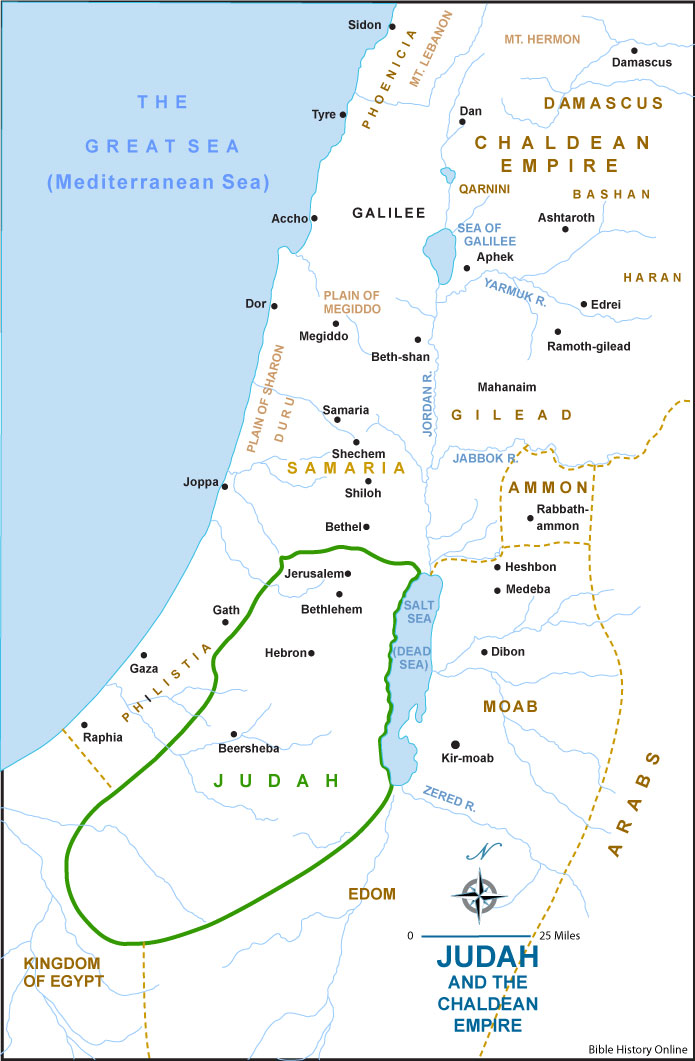
Things were even worse in Babylon. In 597 b.c. King Nebuchadnezzar carried the best and brightest of Judah off to Babylon. The chapter begins: “This is the text of the letter that the prophet Jeremiah sent from Jerusalem to the surviving elders among the exiles and to the priests, the prophets and all the other people Nebuchadnezzar had carried into exile from Jerusalem to Babylon” (v. 1). The reference to “surviving elders” shows how badly things had gone. The survivors were the lucky ones, so to speak: “This was after King Jehoiachin and the queen mother, the court officials and the leaders of Judah and Jerusalem, the craftsmen and the artisans had gone into exile from Jerusalem” (v. 2). The Babylonians had done terrible things to the Jews. They had destroyed their city, ransacked their temple, ruined their economy, removed their leaders, and enslaved their populace. Babylon had done its worst to Jerusalem.

It is not surprising, then, that Saint Augustine (354–430) viewed Babylon as a symbol of evil. In his classic work The City of God, the great North African theologian described human history as a conflict between two great cities—the city of God and the city of Man.

This race we have distributed into two parts, the one consisting of those who live according to man, the other of those who live according to God. And these we also mystically call the two cities, or the two communities of men, of which the one is predestined to reign eternally with God, and the other to suffer eternal punishment with the devil.4

Augustine later identified Babylon as the Biblical symbol of the city of Man.

To read Jeremiah 29 with the two cities in mind is to recognize that God’s people were prisoners in the city of Satan. They were refugees in Babylon, which represents everything hateful and odious to God.

Most postmodern cities are like Babylon. They are Cities of Man, ruled by Satan, and Satan is doing all he possibly can, all in line with his condemnation, to turn them into suburbs of Hell. One can see it in the abandoned buildings, the graffiti, the tired faces of the prostitutes, the racial altercations, the slow shuffle of the poor, and the great buildings built for human pride. Satan has been very busy.

Influence Your City for God

What should God’s people do when their zip code places them in Satan’s precincts? When God’s people were captives in Babylon, they might have expected God to tell them to run away. Or revolt. What he did instead was tell them to make themselves at home. The gist of Jeremiah’s prophecy was that God was going to build his city in the middle of Satan’s city.

Jeremiah was still living back in Jerusalem, perhaps because the Babylonians did not consider him important enough to deport. So he needed to fax this prophecy to the exiles in Babylon. Actually, the letter was written on papyrus and carried in a diplomatic mailbag.

He entrusted the letter to Elasah son of Shaphan and to Gemariah son of Hilkiah, whom Zedekiah king of Judah sent to King Nebuchadnezzar in Babylon. It said: This is what the Lord Almighty, the God of Israel, says to all those I carried into exile from Jerusalem to Babylon: “Build houses and settle down; plant gardens and eat what they produce. Marry and have sons and daughters; find wives for your sons and give your daughters in marriage, so that they too may have sons and daughters. Increase in number there; do not decrease. Also, seek the peace and prosperity of the city to which I have carried you into exile. Pray to the Lord for it, because if it prospers, you too will prosper.” (vv. 3–7)

God practically sounded like the ad man for Babylonian Realty. Anyone who has tried to buy a house knows how realtors tend to exaggerate. “Charming,” the ad will say, which means the house is roughly the size of a telephone booth. “Needs some work” translates as “Bring your own wrecking ball.” “Luxurious library,” means a walk-in closet with bookshelves.

Imagine the reaction when Jeremiah’s prophecy was read in the Jewish ghetto in Babylon. There God’s people were, languishing in captivity, bemoaning their fate, complaining about the crime rate and the wretched Babylonian city school system. But God gave them the hard sell. “You’re going to love this place,” he said. “Wonderful place to raise a family! Exciting opportunities for small business! Great location, right in the heart of the Fertile Crescent!” One senses God’s passion for urban planning. Yet he was talking about the city of Babylon, of all places. His surprising plan for the redemption of the city meant building the City of God smack-dab in the middle of the City of Man.

No doubt when the captives discussed their sojourn in Babylon they used words like “abandoned” or “banished” or “condemned” to describe what God had done to them. But that is not how God saw things. He viewed the Exile as a mission. Literally, what he said was, “Seek the peace and prosperity of the city to which I have sent you.” Nebuchadnezzar did not take them to Babylon. God sent them there. The exiles were not captives—they were missionaries.

Establish a Presence in the City

What did God send his people to the city to do? First, he sent them to establish a presence in the city.

God wanted them to get involved in community development: “Build houses and settle down” (v. 5a). That sounds like a good slogan for Habitat for Humanity. God wanted to establish a presence in the city, which meant living in the city. God’s people were resident aliens. Aliens because they were not living in their hometown anymore. But also residents because they lived where God wanted them to live. Since God had planned an extended stay for them, there was no sense renting; they might as well build.

God also wanted his people to get involved in agriculture: “Plant gardens and eat what they produce” (v. 5b). This is a reminder that when God first called Jeremiah, he appointed him “over nations and kingdoms to uproot and tear down, to destroy and overthrow, to build and to plant” (1:10). After twenty-eight chapters of uprooting and overthrowing, Jeremiah finally got around to building and planting.

God wanted his people to do some matchmaking as well, maybe even start a singles group at the local synagogue: “Marry and have sons and daughters; find wives for your sons and give your daughters in marriage” (29:6a). Then he wanted them to start families. They should marry off their kids, “so that they too may have sons and daughters. Increase in number there; do not decrease” (v. 6b). In short, God wanted his people to go about their business as usual. Despite the fact that they were living in a godless city, he wanted them to lead normal lives. Furthermore, he wanted them to build for the future.

These verses teach the importance of daily family life for the redemption of the post-Christian city. The construction of the house, the planting of the garden, and the raising of the family all build the City of God. The most important thing a Christian parent can do in his or her lifetime is to raise a godly family. And nowhere is the godly family more valuable than today.

The Lord does not just call people to jobs and to spouses—he also calls them to churches and to communities.

The exiles thought their exile would end any minute, so they still had their bags packed to go back to Jerusalem. They were working part-time jobs. They were renting rather than buying. They were not committed to the city.

Seek the Peace of Your City

A second reason God sent his people to the city was “to seek [its] peace” (v. 7). Here the Revised Standard Version best captures the sense of the Hebrew: “Seek the welfare of the city where I have sent you into exile, and pray to the Lord on its behalf, for in its welfare you will find your welfare.” The recurrent word for “welfare” is the word shalom. “Seek the shalom of the city; its shalom is your shalom.”

Shalom is comprehensive peace. “More than the absence of conflict and death,” says Clifford Green, “this rich term fills out the word community by embracing well-being, contentment, wholeness, health, prosperity, safety, and rest.”12 Shalom means order, harmony, and happiness. It means that all is right with the city.

God hereby commands Christians to do anything and everything to further the public good. Seeking the peace of the city means being a good neighbor. It means shoveling the sidewalk. It means cleaning the street. It means planting a tree. It means feeding the poor. It means volunteering at the local school. It means greeting people at the store. It means driving safely and helping people with car trouble. It means shutting down immoral businesses. It means embracing people from every ethnic background with the love of Christ.

Still, a church could do all those things and fail to bring shalom to the city. By themselves, random acts of kindness cannot bring enduring peace. The only basis for real and lasting shalom is the work of Christ on the cross. The city cannot be at peace until the city knows Jesus Christ, and him crucified. In its sin, the whole city is at war with God. It deserves the wrath and curse of God. But Jesus Christ came to make peace between God and humanity. The Bible says that “we have peace with God through our Lord Jesus Christ” (Romans 5:1). Anyone who believes in the Lord Jesus Christ has peace with God.

Whatever shalom the Hebrews offered to Babylon, Christians are able to offer a much greater peace to the postmodern city. What we offer is eternal peace with God through the work of Christ on the cross. That peace is the basis for everything else we do in the city. It is what makes us neighborly, compassionate, and charitable. When the city finds peace with God, all will be well with the city.

Pray for the Prosperity of Your City

Once they had established a presence in the city and had begun to seek its peace, God’s people were to pray for its prosperity. Jeremiah urges the exiles, “Pray to the Lord for it, because if it prospers, you too will prosper” (Jeremiah 29:7). This is the Biblical version of the proverb, “A rising tide lifts all boats.” Christians have a vested interest in the welfare of the city. When the city prospers, the church prospers.

That is not how Christians usually think about the city. Many Christians write the city off. At most, they try to establish their own fortress within the city. But God does not tell his people to seek peace in the city; he tells them to seek the peace of the city. God is not trying to establish a ghetto but a government.

One of the best ways to seek the peace of the city is through prayer

In fact, Jeremiah 29:7 is the only verse in the entire Old Testament in which God’s people are explicitly told to pray for their enemies.13 Prayer for the Babylonians is a foretaste of the forgiveness of Jesus Christ, who teaches, “Love your enemies and pray for those who persecute you” (Matthew 5:44).

When the Jews in Babylon were at a loss to know how to pray for Babylon, one psalm may have come immediately to mind:

Pray for peace in Jerusalem:
“Prosperity to your houses!
Peace inside your city walls!
Prosperity to your palaces!”
Since all are my brothers and friends,
I say, “Peace be with you!”
Since Yahweh our God lives here,
I pray for your happiness
(Psalm 122:6–9, Jerusalem Bible)

The same prayer should be offered for the post-Christian city. Notice four things to pray for.  First, pray for the economy of the city (“Prosperity to your houses!”). Pray for the “common wealth” of the city, asking God to bring justice to the poor and prosperity for everyone within the economic systems of the city.

Second, pray for the safety of the city (“Peace inside your city walls!”). Pray that citizens will be kept safe from harm and violence on the streets. And pray that criminals themselves will be transformed by the love of Christ.

Third, pray for the politics of the city (“Prosperity to your palaces!”). Ask the Lord to grant wisdom and integrity to the authorities who govern the city. Pray for the restoration of virtue to public office.

Fourth, pray for the people of the city (“Peace be with you!”). Pray for the Lord’s blessing on all people and all people groups in the city. Pray neighborhood by neighborhood, church by church, business by business, and house by house for the welfare of the city.

The prosperity of the city comes through prayer.

In the next post we’ll examine the hope we have for the future.

www.Upwards.Church

Message Audio/Video and Outline: https://upwards.church/watch-now/leander-campus-videos

Watch Messages: YouTube-Upwards Church

Facebook: Upwards Church

1 See Linthicum, City of God, City of Satan, pp. 149–153.

2 Thomas Jefferson, quoted in Harvie M. Conn, The American City and the Evangelical Church (Grand Rapids, MI: Baker, 1994), p. 31.

4 Augustine, The City of God, ed. Philip Schaff, Nicene and Post-Nicene Fathers, First Series, Vol. 2 (Peabody, MA: Hendrickson, 1994), XV.1.

6 Pieter Bos, City Cries, quoted in Floyd McClung, Seeing the City with the Eyes of God (Tarrytown, NY: Revell, 1991), p. 72.

7 Roger S. Greenway and Timothy M. Monsma, Cities: Mission’s New Frontier (Grand Rapids, MI: Baker, 1989), p. 44.

12 Clifford J. Green, ed., Churches, Cities, and Human Community: Urban Ministry in the United States, 1945–1985 (Grand Rapids, MI: Eerdmans, 1996), p. viii.

13 Paul Volz, Der Prophet Jeremia, Kommentar Zum Alten Testament, Vol. 10 (Leipzig: Deichert, 1928), p. 269.

Philip Graham Ryken, Jeremiah and Lamentations: From Sorrow to Hope, Preaching the Word (Wheaton, IL: Crossway Books, 2001), 416.


Posted in Jeremiah - A People in Crisis | Tagged , , , , , , | 1 Comment

In God or Self We Trust? – Jeremiah 17

The land that lies to the southwest of the Sea of Galilee is dry. The soil is rocky and dusty. Vegetation is sparse, except where farmers irrigate. There is little or no grass. The trees are little more than shrubs.
Right in the middle of this wilderness is one of the most beautiful places on the face of the earth. It is called Gan Hasheloshah, “Garden of the Three Springs.” Gan Hasheloshah is so beautiful that some rabbis say it was the location of the Garden of Eden. The pools and waterfalls in the garden are filled with deep, cool, emerald-blue water, continually refreshed by underground springs. It is a wonderful place for swimming and diving. Flowers and bushes crowd the banks of the pools, with giant palm trees overhead for shade.
The Bible teaches that a person who trusts in God is like a tree planted at Gan Hasheloshah. To know God is to be refreshed continually by his grace, like a tree watered by underground springs.
This is what the psalmist writes about the man who loves God:

He is like a tree planted by streams of water,
which yields its fruit in season
and whose leaf does not wither.
Whatever he does prospers. (Psalm 1:3)

Psalm 1 and Jeremiah 17 offer the same benediction for godliness. They both say that the one who trusts in God is like a well-watered tree.

IN SELF WE TRUST?

Not only do Psalm 1 and Jeremiah 17 offer the same benediction, but they also pronounce the same curse. Unlike the psalmist, Jeremiah begins with the curse upon those who trust in themselves rather than in God:

This is what the LORD says:
“Cursed is the one who trusts in man,
who depends on flesh for his strength
and whose heart turns away from the LORD.” (v. 5)

This verse is a direct assault on American culture. It would be hard to imagine a statement that is more un-American, at least in the twenty-first century: “Cursed is the one who trusts in man.” In other words, anyone who trusts in technology, economics, psychology, medicine, government, the military, the arts, or any other aspect of human culture more than God is under God’s curse. Yet these are exactly the things Americans trust for meaning and security in life. American money says “In God We Trust,” but what Americans really mean is “In Self We Trust.”
To understand the way Americans think, the author to read is Ralph Waldo Emerson (1803–1882). Emerson’s philosophy is summarized in the title of one of his essays: “Self-Reliance” (1841).1 In the essay, Emerson tells his readers to be completely self-reliant. He tells them not to care for the poor, love their families, or listen to preachers. “Insist on yourself,” he writes, “never imitate.” “Whoso would be a man, must be a nonconformist.” “Nothing is at last sacred but the integrity of your own mind.” “Nothing can bring you peace but yourself.” Emerson’s ideas are so contemporary that quotations from his writings were used to sell sneakers on television during the early 1990s. His motto is the creed of our times: “Trust thyself.”
Jeremiah says just the opposite: Do not trust yourself. To trust in yourself is to turn away from God. Anyone who trusts in man will be cursed. Self-reliance does not bring peace but terror.
Three curses befall the self-reliant—loneliness, poverty, and death. First, loneliness:

“He will be like a bush in the wastelands;
he will not see prosperity when it comes.
He will dwell in the parched places of the desert,
in a salt land where no one lives.” (v. 6)

It makes one thirsty to think of it. Jeremiah imagines a shrub in a salty land, like the dwarf juniper, which has a shallow root system.2 The man who trusts in himself is like that lonely bush. His roots are not deep enough to get water from the ground. He is not planted by the living water of God’s grace. So even when the rains finally come, they will not do him any good. When the showers of blessing come, they will simply disappear into the sand. When the Holy Spirit falls upon the people of God in the power of revival, he will miss it because he will be somewhere else. The man who trusts in himself will be left parched and lonely.
You cannot put yourself first and refuse to be lonely. Once you decide that you come first, before anybody else, you are choosing to be lonely. You will be cut off from God, first of all, and then from other human beings. You will be like a dwarf juniper in the desert.
Second, those who trust in their own strength will become poor:

Like a partridge that hatches eggs it did not lay
is the man who gains riches by unjust means.
When his life is half gone, they will desert him,
and in the end he will prove to be a fool. (v. 11)

Jeremiah was a keen student of nature. He had observed the partridge behave like a surrogate mother, going into another bird’s nest to hatch another bird’s eggs. The chicks hatched, but since they were not partridges, they soon flew away.
The same thing happens to those who amass fortunes by taking advantage of people. The money never belonged to them in the first place, so it will leave them in the end. One thinks of John Bennett, the founder of New Era Philanthropy. In the mid-1990s, Bennett set up a charitable foundation to provide funding for nonprofit organizations. Dozens of museums, universities, seminaries, and mission agencies signed up for matching grants. But when the scheme turned out to be a scam, dozens of institutions were bilked out of millions of dollars.
John Bennett was disgraced and imprisoned. He turned out to be a partridge. He gained riches by unjust means; so when his life was half gone, they deserted him. A man who trusts in his own strength turns out to be a fool. And a poor one at that, for a fool and his money are soon parted.
The third curse to befall men and women who trust in themselves is death:

O LORD, the hope of Israel,
all who forsake you will be put to shame.
Those who turn away from you will be written in the dust
because they have forsaken the LORD,
the spring of living water. (v. 13)

Leaving the oasis to wander out into the desert brings death. Where there is no water, there is no survival. In the same way, there is no spiritual life without the living water of God’s grace. God had already warned his people about this: “My people … have forsaken me, the spring of living water” (2:13). But some people would rather die of thirst than turn to God; so die they must. Like names written in the dust, they will vanish without a trace. There is no water and no life apart from the Lord.

LIKE A TREE PLANTED BY WATERS

Jeremiah knew that to have life, you must stop trusting in yourself. You must put your trust somewhere else:

But blessed is the man who trusts in the LORD,
whose confidence is in him.
He will be like a tree planted by the water
that sends out its roots by the stream.” (17:7–8a)

Like the curse, the blessing is a matter of trust. The contrast is absolute: “Cursed is the one who trusts in man” (v. 5), but “blessed is the man who trusts in the LORD” (v. 7). Kidner observes that the pivotal word in these verses “is trust, for everything will turn on where one’s heart is.”3
Everything turns on where one’s heart is. So where is your heart? Where is your confidence? Do you rely on yourself most of the time, or do you trust in the Lord all the time? God only blesses those who trust in him. If you want life, you must depend on God the way a tree depends on a river. Total trust in God brings life.
The life God gives cannot be taken away. The blessed man or woman is “like a tree planted by the water.” Will such a tree become parched when there is a heat wave? No, because it is planted by streams of living water. Its leaves will stay green when the weather is hot. Will the tree wither during a year of drought? No, because it has a constant water supply. The tree by the river will be in full bloom when the bush in the desert dies.

Do not leave the water’s edge. Keep trusting in God. Keep reading your Bible. Keep praying even if you are not sure God is listening. The tree planted by the water does not just stand there—it “sends out its roots by the stream” (v. 8a). The tree is alive; it stretches and strains toward the grace that is available through God’s Word, through prayer, and through the sacraments. Keep sending your roots toward the stream of God’s grace and reaching out for the water of life. God will refresh you. He will keep your leaves green when the heat comes and will bring forth abundant fruit in the year of drought.

The tree planted by the water’s edge is a picture of the Christian living close to Christ. After a day of feasting, Jesus stood up in Jerusalem and said in a loud voice, “If anyone is thirsty, let him come to me and drink. Whoever believes in me, as the Scripture has said, streams of living water will flow from within him” (John 7:37–38).
To live like a tree is to live close to Christ. He is the water of life. In Jesus Christ there is water during times of drought for thirsty souls. In Jesus Christ there is water for cleansing from sin. Every tree planted close to Christ will have green leaves and rich fruit, and everyone who drinks from his fountain will never die.

A HEART PROBLEM

How will you live? Will you be a shrub or a tree? Will you choose curse or blessing? Will you trust in man or trust in God? Will you wander in the desert or plant yourself by the river? Will you die or live?

Jeremiah had a tell-tale heart of his own. He knew that if he trusted in himself he would be cursed, and that if he trusted in the Lord he would be blessed. But his heart betrayed him: “The heart is deceitful above all things and beyond cure. Who can understand it?” (17:9). These words are true whether they came from Jeremiah himself or from the Lord. The human heart cannot be trusted, cannot be healed, cannot be understood. It is devious, incurable, and inscrutable. It cannot be trusted to live like a tree.

“The heart is deceitful above all things.” This is one of the most powerful statements of human depravity in all of Scripture. The doctrine of total depravity means that every human being is sinful through and through. No part of the human person remains untouched by sin. The mind, the will, the emotions, and the conscience are all corrupt. So is the heart, which is the innermost core of the human person. It, too, is depraved.
Nothing is more deceitful than the human heart. The sin of our first parents was a sin of the heart. When Adam and Eve ate the forbidden fruit, their hearts were turning away from God to trust in man. From that one sin have come all the rest of the sins of the human heart. All the lies, conspiracies, betrayals, and murders in the history of the world have sprung from the deception of the human heart.
Every human being has a heart problem.  In the introduction to the second edition of his Screwtape Letters, C. S. Lewis wrote:

Some have paid me an undeserved compliment by supposing that my Letters were the ripe fruit of many years’ study in moral and ascetic theology. They forgot that there is an equally reliable, though less creditable, way of learning how temptation works. “My heart”—I need no other’s—“to show me the wickedness of the ungodly.”7

Truly, the heart is deceitful above all things, as anyone can confirm from personal experience.
If the heart is full of deceit, and it is, then the verse that follows is terrifying:

I the LORD search the heart
and examine the mind,
to reward a man according to his conduct,
according to what his deeds deserve.” (v. 10)

God knows what is inside every heart. The tell-tale heart tells all its secrets to God.
How alarming it is that these two verses should stand next to one another in Holy Scripture: “The heart is deceitful above all things”—“I the LORD search the heart.” Human depravity is pressed up against divine justice. How alarming it is to know that the deceitful-above-all-things heart falls under the seeing-all-things gaze of Almighty God. How frightening to know that the unknowable heart is known to God. How terrifying to know that God judges the heart, rewarding each person “according to what his deeds deserve.” “Human fickleness and divine accountability together lead to an inevitable judgment.”8 It may be that no one else knows your secret sins, how you have turned away from God in the privacy of your own heart. But God knows!
Jeremiah’s heart betrayed him. He had long preached against the sins of his people. He had listed their transgressions in full, speaking out against the idolatry, adultery, and immorality of his day. But his own heart condemned him. The innermost core of his own being was deceitful beyond cure. This is true about every heart. You, too, have a devious, incurable, inscrutable heart.

SAVE ME, LORD!

The only thing to do with a tell-tale heart is cry to God for mercy. That is what Jeremiah did when he prayed, “Heal me, O LORD, and I will be healed; save me and I will be saved, for you are the one I praise” (v. 14). That is the incurable heart’s prayer for a cure, the unsavable heart’s prayer for salvation.
Jeremiah had often pleaded with God for the salvation of his nation. He had often prayed that God would turn the hearts of his people back to him. But he also had to plead with God for the healing of his own heart.
Somehow Jeremiah must have known that God is able to cure an incurable heart. God not only searches the heart, he knows how to mend it. This is part of the mysterious work of the Holy Spirit. The Spirit takes a deceitful heart and makes it true to God. He comes into an incurable heart and heals it from sin. That is what happens when a sinner comes to Christ. A Christian is someone whose heart has been cured by the grace of God, for “it is with your heart that you believe and are justified” (Romans 10:10a).

Acts 16 tells a wonderful story about the way God answered a similar prayer and cured an incurable heart. It is the story of Lydia, a businesswoman who dealt in purple cloth at Philippi. Like every son or daughter of Adam, she was born with a deceitful and incurable heart. But when she heard the apostles preach the good news about Jesus Christ, “the Lord opened her heart to respond to Paul’s message” (Acts 16:14). That is a beautiful way to describe what happens when a sinner comes to Christ: “The Lord opened her heart.” A heart cannot be mended on its own. But the Lord can send his Holy Spirit to open, mend, fix, and heal the heart. And his cure is total.

Has the Lord cured your deceitful, incurable, sick heart? If he has, then be like a tree planted close to the water of life. Stretch your roots toward the grace that is yours in Jesus Christ. If the Lord has not yet cured your heart, then pray Jeremiah’s prayer: “Heal me, O LORD, and I will be healed; save me and I will be saved” (17:14)

www.Upwards.Church

Message Audio/Video and Outline: https://upwards.church/watch-now/leander-campus-videos

Watch Messages: YouTube-Upwards Church

Facebook: Upwards Church

1 Ralph Waldo Emerson, “Self-Reliance,” in Essays and English Traits, The Harvard Classics, Vol. 5 (New York: Collier, 1909), pp. 63–88.

2 R. K. Harrison, Jeremiah and Lamentations, Tyndale Old Testament Commentaries (Downers Grove, IL: InterVarsity, 1973), p. 106.

3 Derek Kidner, The Message of Jeremiah: Against Wind and Tide, The Bible Speaks Today (Downers Grove, IL: InterVarsity, 1987), p. 72.

4 Thomas Boston, Human Nature in Its Fourfold State (Edinburgh: Banner of Truth, 1989), p. 299.

5 Edgar Allan Poe, A Collection of Stories (New York: Tom Doherty, 1988), pp. 156–161.

6 Jean Bethke Elshtain, “The Newtape File II,” First Things (April 1993), p. 12.

7 C. S. Lewis, The Screwtape Letters (New York: Macmillan, 1971), p. 5.

8 Walter Brueggemann, Jeremiah 1–25: To Pluck Up, To Tear Down, International Theological Commentary (Grand Rapids, MI: Eerdmans, 1988), p. 153.

Philip Graham Ryken, Jeremiah and Lamentations: From Sorrow to Hope, Preaching the Word (Wheaton, IL: Crossway Books, 2001), 273–283.

Posted in Jeremiah - A People in Crisis | Tagged , , , , , , | Leave a comment

God is Calling – Jeremiah 1

God knew you, as he knew Jeremiah, long before you were born or even conceived. He thought about you and planned for you. When you feel discouraged or inadequate, remember that God has always thought of you as valuable and that he has a purpose in mind for you.

Do you ever feel like you’ve been called to minister in a declining society?  Whether we’re at work, married, parenting or trying to live for the Lord the challenge is great because the society around us is crumbling. Jeremiah could relate.  All nations and societies experience difficulties, whether they be moral, economical, or military issues. Economic recessions and depressions, low wages, unemployment, huge expenditures with little capital, selfishness and theft—any or all of these factors can plague entire nations as well as the smallest communities. Political upheaval, party politics, the weakening and collapse of some governments and the rise of others, the assassination of leaders and the rise of world empires—all these events take place throughout the world within every generation. In addition, every generation witnesses some societies becoming cesspools of greed and covetousness, injustice and brutality, immorality and wickedness, lawlessness and violence.

Into such a tumultuous society and world Jeremiah was born. The Lord chose him to be God’s prophet during some of the most stormy times of human history, days that were to be catastrophic for Judah. Judah and its capital Jerusalem were to be utterly destroyed during Jeremiah’s ministry. He was the prophet chosen by God to warn the world of God’s coming judgment.

God has also set us apart to minister and proclaim God’s good news of Jesus and the coming judgement upon all people.

No prophet before or after Jeremiah had a more difficult or demanding task than did this new young prophet of God. He was called to proclaim unceasingly the coming judgment of God. Despite severe and constant persecution—including being ostracized and isolated throughout most of his life—Jeremiah was faithful. And his faithfulness is a dynamic example for all believers of every generation.

Jeremiah was “appointed” by God as his “prophet to the nations.” God has a purpose for each Christian, but some people are appointed by God for specific kinds of work. Samson (Judges 13:3–5), David (1 Samuel 16:12, 13), John the Baptist (Luke 1:13–17), and Paul (Galatians 1:15, 16) were also called to do particular jobs for God. Whatever work you do should be done for the glory of God (Philippians 1:11). If God gives you a specific task, accept it cheerfully and do it with diligence.  If you’re not sure of God’s specific call or assignment, then seek to fulfill the mission common to all believers—to love, obey, and serve God—until his guidance becomes more clear.

Often we struggle with new challenges because we lack self-confidence, feeling that we have inadequate ability, training, or experience. Jeremiah thought he was “too young” and inexperienced to be God’s prophet to the nations. Jeremiah was between 15-19 years old.  God still calls young people.  God promised to be with Jeremiah.  Our inadequacies never limit God. We should not allow feelings of inadequacy to keep us from obeying God. He will always be with us.  Since Jesus has  given us a job to do, He will provide, His presence, His Word which are all we need to do it.

God promised to be with Jeremiah and take care of him, but not to keep trouble from coming. God did not insulate him from imprisonment, deportation, or insults. God does not keep us from encountering life’s storms, but he will see us through them. In fact, God walks through these storms with us and rescues us.

God appointed Jeremiah to bring his word to “nations and kingdoms.” Jeremiah’s work was to warn not only the Jews but all the nations of the world about God’s judgment for sin. Don’t forget in reading the Old Testament that, while God was consistently working through the people of Judah and Israel, his plan was to communicate to every nation and person. We are included in Jeremiah’s message of judgment and hope, and as believers we are to share God’s desire to reach the whole world for him.

The vision of the branch from an almond tree revealed the beginning of God’s judgment because the almond tree is among the first to blossom in the spring. God saw the sins of Judah and the nations, and he would carry out swift and certain judgment. The pot of boiling water tipping from the north and spilling over Judah pictured Babylon delivering God’s scalding judgment against Jeremiah’s people.

The problems we face may not seem as ominous as Jeremiah’s, but they are critical to us and may overwhelm us! God’s promise to Jeremiah and to us is that nothing will defeat us completely; he will help us through the most agonizing problems. Face each day with the assurance that God will be with you and see you through.

The people of Judah sinned greatly by continuing to worship other gods. God had commanded them specifically against this (Exodus 20:3–6) because idolatry places trust in created things rather than the Creator. Although these people belonged to God, they chose to follow false gods. Many “gods” entice us to turn away from God. Material possessions, dreams for the future, approval of others, and vocational goals compete for our total commitment. Striving after these at the expense of our commitment to God puts our heart where Judah’s was—and God severely punished Judah.

When God calls us to do a particular task, He always equips us.  God pays for what He orders.  He provides whatever we need to accomplish the task: His presence, and His Word, No matter how inadequate or incapable we may feel, God will meet our need and equip us.

God’s call is not based upon  ability , but rather availability.  His call is not based upon a person’s appearance, charisma, voice quality, descriptive personality, or flowery speech. Nor is God’s call based upon a person’s ability to think creatively, to come up with new ideas or theological concepts.  We have what we need for God’s call, His presence and His Word.  A surrendered heart is what God is after when He calls a person. If a heart is surrendered to the Lord, He can equip a person to proclaim His Word.

Have you answered God’s call?

www.Upwards.Church

Message Audio/Video and Outline: https://upwards.church/watch-now/leander-campus-videos

Watch Messages: YouTube-Upwards Church

Facebook: Upwards Church
Sources:
Life Application Bible Notes (Tyndale, 2007), 1199–1200.
The Preacher’s Outline & Sermon Bible – Jeremiah I , (Chattanooga: Leadership Ministries Worldwide, 2006), WORD
search CROSS e-book, Under: “I. The Call of Jeremiah: A Reluctant Prophet with a Difficult Mission, 1:1-19”.
Posted in Jeremiah - A People in Crisis | Tagged , , , , , , , , , , | Leave a comment

Invitation & Introduction – A People in Crisis – Jeremiah

You’re invited to our new message series:  Jeremiah (A People in Crisis)

Description: How can we remain faithful to God even when many of the people around us are not?  This four-week series explores the life and ministry of the prophet Jeremiah. Jeremiah’s ministry was characterized by opposition, suffering, and a message that his people did not want to hear. We can learn much from his faithful journey, deep faith and the message that God gave his rebellious people.  We too are “A People in Crisis.”

 Dates – Titles (Scriptures)                                                      Events 

Mar. 3 – Calling Out the Called (Jeremiah 1)
Mar. 10 – Blessed or Cursed? (Jeremiah 17)                                    Spring Break

Mar. 17 – The Lord Knows (Jeremiah 29)

Mar. 24 – A New Covenant (Jeremiah 31)                               Palm Sunday/ Communion

 Introduction:

What is success? Most definitions include references to achieving goals and acquiring wealth, prestige, favor, and power. “Successful” people enjoy the good life—being financially and emotionally secure, being surrounded by admirers, and enjoying the fruits of their labors. They are leaders, opinion makers, and trendsetters. Their example is emulated; their accomplishments are noticed. They know who they are and where they are going, and they stride confidently to meet their goals.

By these standards, Jeremiah was a miserable failure. For 40 years he served as God’s spokesman to Judah, but when Jeremiah spoke, nobody listened. Consistently and passionately he urged them to act, but nobody moved. And he certainly did not attain material success. He was poor and underwent severe deprivation to deliver his prophecies. He was thrown into prison (chapter 37) and into a cistern (chapter 38), and he was taken to Egypt against his will (chapter 43). He was rejected by his neighbors (11:19–21), his family (12:6), the false priests and prophets (20:1, 2; 28:1–17), friends (20:10), his audience (26:8), and the kings (36:23). Throughout his life, Jeremiah stood alone, declaring God’s messages of doom, announcing the new covenant, and weeping over the fate of his beloved country. In the eyes of the world, Jeremiah was not a success.
But in God’s eyes, Jeremiah was one of the most successful people in all of history. Success, as measured by God, involves obedience and faithfulness. Regardless of opposition and personal cost, Jeremiah courageously and faithfully proclaimed the word of God. He was obedient to his calling. Jeremiah’s book begins with his call to be a prophet. The next 38 chapters are prophecies about Israel (the nation united) and Judah (the southern kingdom). Chapters 2–20 are general and undated, and chapters 21–39 are particular and dated. The basic theme of Jeremiah’s message is simple: “Repent and turn to God, or he will punish.” Because the people rejected this warning, Jeremiah then began predicting the destruction of Jerusalem. This terrible event is described in chapter 39. Chapters 40–45 describe events following Jerusalem’s fall. The book concludes with prophecies concerning a variety of nations (chapters 46–52).

As you read Jeremiah, feel with him as he agonizes over the message he must deliver, pray with him for those who refuse to respond to the truth, and watch his example of faith and courage. Then commit yourself to being successful in God’s eyes.

Vital Statistics: 

Purpose: To urge God’s people to turn from their sins and back to God

Author: Jeremiah

Original Audience: Judah (the southern kingdom) and its capital city, Jerusalem

Date Written: During Jeremiah’s ministry, approximately 627–586 B.C.

Setting: Jeremiah ministered under Judah’s last five kings—Josiah, Jehoahaz, Jehoiakim, Jehoiachin, and Zedekiah. The nation was sliding quickly toward destruction and was eventually conquered by Babylon in 586 B.C. (see 2 Kings 21–25). The prophet Zephaniah preceded Jeremiah, and Habakkuk was Jeremiah’s contemporary.

Key Verse: “Your wickedness will bring its own punishment. Your turning from me will shame you. You will see what an evil, bitter thing it is to abandon the LORD your God and not to fear him. I, the Lord, the LORD of Heaven’s Armies, have spoken!” (2:19)

jeremiah-timleline

Key People: Judah’s kings (listed above), Baruch, Ebed-melech, King Nebuchadnezzar, the Recabites

Key Places: Anathoth, Jerusalem, Ramah, Egypt

Special Features: This book is a combination of history, poetry, and biography. Jeremiah often used symbolism to communicate his message.

The Blueprint

A. GOD’S JUDGMENT ON JUDAH (1:1–45:5)
1. The call of Jeremiah
2. Jeremiah condemns Judah for its sins
3. Jeremiah prophesies destruction
4. Jeremiah accuses Judah’s leaders
5. Restoration is promised
6. God’s promised judgment arrives
Jeremiah confronts many people with their sins: kings, false prophets, those at the temples, and those at the gates. A lack of response made Jeremiah wonder if he was doing any good at all. He often felt discouraged and sometimes bitter. To bring such gloomy messages to these people was a hard task. We, too, have a responsibility to bring this news to a fallen world: Those who continue in their sinful ways are eternally doomed. Although we may feel discouraged at the lack of response, we must press on to tell others about the consequences of sin and the hope that God offers. Those who tell people only what they want to hear are being unfaithful to God’s message.

B. GOD’S JUDGMENT ON THE NATIONS (46:1–52:34)

1. Prophecies about foreign nations
2. The fall of Jerusalem
Jeremiah lived to see many of his prophecies come true—most notably the fall of Jerusalem. The fulfillment of this and other prophecies against the foreign nations came as a result of sin. Those who refuse to confess their sin bring judgment upon themselves.

MEGATHEMES
THEME EXPLANATION IMPORTANCE
Sin King Josiah’s reformation failed because the people’s repentance was shallow. They continued in their selfishness and worship of idols. All the leaders rejected God’s law and will for the people. Jeremiah lists all their sins, predicts God’s judgment, and begs for repentance. Judah’s deterioration and disaster came from a callous disregard and disobedience of God. When we ignore sin and refuse to listen to God’s warning, we invite disaster. Don’t settle for half measures in removing sin.
Punishment Because of sin, Jerusalem was destroyed, the Temple was ruined, and the people were captured and carried off to Babylon. The people were responsible for their destruction and captivity because they refused to listen to God’s message. Unconfessed sin brings God’s full punishment. It is useless to blame anyone else for our sin; we are accountable to God before anyone else. We must answer to him for how we live.
God Is Lord of All God is the righteous Creator. He is accountable to no one but himself. He wisely and lovingly directs all creation to fulfill his plans, and he brings events to pass according to his timetable. He is Lord over all the world. Because of God’s majestic power and love, our only duty is to submit to his authority. By following his plans, not our own, we can have a loving relationship with him and serve him with our whole heart.
New Hearts Jeremiah predicted that after the destruction of the nation, God would send a new shepherd, the Messiah. He would lead them into a new future, a new covenant, and a new day of hope. He would accomplish this by changing their sinful hearts into hearts of love for God. God still transforms people by changing their hearts. His love can eliminate the problems created by sin. We can have assurance of a new heart by loving God, trusting Christ to save us, and repenting of our sin.
Faithful Service Jeremiah served God faithfully for 40 years. During that time the people ignored, rejected, and persecuted him. Jeremiah’s preaching was unsuccessful by human standards, yet he did not fail in his task. He remained faithful to God. People’s acceptance or rejection of us is not the measure of our success. God’s approval alone should be our standard for service. We must bring God’s message to others even when we are rejected. We must do God’s work even if it means suffering for it.

www.Upwards.Church

Message Audio/Video and Outline: https://upwards.church/watch-now/leander-campus-videos

Watch Messages: YouTube-Upwards Church

Facebook: Upwards Church

Sources:

Life Application Study Bible , (Wheaton, IL: Tyndale, 1988), WORD search

CROSS e-book, 1197-1198.

Life Application Bible Notes (Tyndale, 2007), 1197–1198.

Posted in Jeremiah - A People in Crisis | Tagged , , , , , | 1 Comment