
Surviving Change – Daniel 1 – Part 1

Have you noticed how much change is happening all around us?  We’ve seen a pandemic, lockdowns, fear, riots, inflation and political unrest. Have you ever found yourself in the middle of a crisis that you were not expecting?  You get that unexpected diagnosis from your doctor or the sudden news of the death of a loved one. You’re on the receiving end of an untrue accusation.  Or it’s an unexpected divorce.  The shocking news when a spouse said they were having an affair. Maybe you were forced to deal with an unexpected financial loss.

We are beginning a study of a truly remarkable young man who was forced to deal with many changes very early in his life. I’m referring to the prophet Daniel, who was taken from his homeland into captivity in Babylon when he was only 13 to 15 years old. Daniel was an amazing teenager. He was literally the best that Judah had to offer, he was honor role, who’s who and the valedictorian type.

The words of verses 3 and 4 of our text paint a very thorough picture of just how notable Daniel was. First, these verses say he was from a family of high social status, part of the royal family itself. He was also physically flawless, no doubt a consequence of the fact that his family was wealthy, so Daniel would have had good clothes and the best food, a nice home. Daniel was not only good looking, he was intelligent, bright, quick to understand. Here’s another thing. The Bible says he was “qualified to serve in the king’s palace…” which meant he also had a high level of what we would call “emotional intelligence”  or “people smarts.” In other words, Daniel knew how to read people, how to communicate with people, people of all temperaments. He had that rare kind of gracious “give and take” personality that made him very good at dealing with fallen human beings like you and me. But, best of all,Daniel was a Godly young man,absolutely devoted to our Lord and His chosen people. Add all these characteristics together and it’s easy to conclude that Daniel was unique. He was a very special person. Gene Getz puts it this way, Daniel is one of the few principal characters of the Old Testament concerning whom there is not one word of criticism.”

Like all young men his age, Daniel would have had dreams of how he thought his life would turn out, and coming from nobility as he did, he would have assumed that his dreams were almost certain to come true. Daniel would get a great education under the best Hebrew teachers of his day and then go on to glittering success in whatever field he chose. He’d meet the right girl, build a great marriage, live in an enviable home, raise a wonderful family, and occupy a prominent place in his nation. In short, Daniel would be an overachiever. He would do great things for God and God’s people. He would be a leader in his homeland someone who was looked up to and admired.

But, life did not turn out the way Daniel planned, did it? No, things changed and you can almost feel the heartbreak that came with it in verses 1 and 2 where it says, “Nebuchadnezzar came to Jerusalem and besieged it.”

For a quick review of Hebrew history:  The Hebrew people became a nation while in slavery in Egypt. They were delivered under Moses. They wandered in the wilderness for forty years and then finally entered the promised land. After a period of time they reached their peak as a nation under kings David and Solomon. Solomon built the glorious temple ,and then in the kingly administrations that followed there was a long, slow decline fueled by a cycle of rebellion then repentance then rebellion and so on. Soon there was more rebellion than repentance and eventually, the kingdom was divided into a northern kingdom, Israel, which was destroyed, so that all that remained was the Southern kingdom called Judah. Then when Daniel was a young man, Nebuchadnezzar came and with very little effort destroyed all that was left of the nation that was to have been God’s representatives on this world, His holy people, and if you’re thinking, “Why did God let this happen?” I’d remind you that the Hebrews brought it on themselves. They ignored the warnings given by God’s prophets and used their God-given freedom to sin. I like what Warren Wiersbe says about this. He writes, “God would rather have His people living in shameful captivity in a pagan land than living like pagans in the Holy Land and disgracing His name.”

Because of this, everything changed for Daniel. Contrary to any hopes he may have had, Daniel would come to adulthood and spend his life in a foreign land. Instead of being served, he would give his best service to an alien, pagan king. But, understand, he lost much more than his hopes. He lost his culture. He lost most of the relationships he had cherished. He probably lost his parents and siblings. He lost his native tongue and would have to learn to speak a foreign language. In short, he would live and die in a place that he never wanted to be. He would never go home again. Daniel and his three friends would even lose their names, and in his day your name was very significant. We see this in the fact that each of their old names, their Hebrew names, had a reference to God in it. The little syllable “el”, Dani-el and Misha-el, came from El-ohim and the syllable “yah” in Hanania-ah and Azaria-ah, it came from Yah-weh. So their names reminded them that they belonged to God, that they were His.

Daniel’s name literally meant, “the Lord will judge” so through his whole life, every time Daniel had heard his name spoken, it was a reminder, a promise, that, “The Lord will judge. He will set things right. The Lord will see that justice is done.” But now, He’s not Daniel anymore.  He was given the name “Belteshazzar” which referred to a pagan Babylonian god and meant, “Bel protect his life.” Can you imagine how that felt to this Godly young man, to hear a pagan prayer every time his name was called, a prayer that made it look like God wasn’t calling the shots anymore? And, the same was true for the re-naming of other three. The name of the true and living God was replaced by the names of the false gods of Babylon. These new names that Nebuchadnezzar gave them were his way of saying, “You have a new king now and a new religion. Give yourself to me. Allow Babylon to define your identity.”

Daniel’s desire for his education changed as well because Nebuchadnezzar said he and his fellow captives were to be educated in a “Babylonian school.” The Babylonians were great builders, calculators, and military strategists, but their religion was steeped in superstition and myth and Daniel along with his three friends were forced to study all this nonsense, they were forced to receive an education that was bathed in a pagan world view. I’m reminded of the way our Christian children often have to study material in secular schools that contradicts what we believe as Christ-followers.

The question we deal with is this: What do you and I do when we face drastic changes, or when we end up in ‘Babylon?’” This is an important question for us to answer because we all will. If you’re young and life has been fair to you so far, unfairness is coming. There will be “Babylon” times when life does not turn out the way you want or expect. Remember, this is a fallen world, a world where one thing we can expect is that the unexpected, the unfair, the unwanted will happen. In some way or another your dreams will fade or be replaced by nightmares. So, you need to decide, what will you do when this happens?

There’s a whole field in the social sciences that involves the study of people who experience suffering, major crises, or trauma. For example, researchers studied people like POWS from the Korean War, POWs from the war in Vietnam, and the 52 hostages that were held 14 months in Iran during the Carter administration. These studies show that a lot of people are just defeated by unexpected ordeals. When they find themselves in a “Babylon,” they just wither in their spirit. They die on the inside. Others get through the tough times, but just barely. And interestingly enough there are some, a minority, but some, who don’t just survive these traumatic events. They actually enlarge their capacity to handle problems and strengthen their ability to persist even to endure and to be creative. They have actually grown on trauma. Daniel was definitely one of them. With God’s help he not only survived in Babylon, he thrived there.  The example he set shows us three characteristics or qualities that will help us to do the same in our own “Babylons.”  Here’s the first characteristic we see in the way this remarkable young man responded to a huge unexpected crisis.

  1. Decide in Advance to Honor God-given Convictions

 Daniel refused to live as a passive victim of circumstances beyond his control. He refused to get tangled up in stuff that would cause him to betray his deepest beliefs. In short, Daniel decided to honor God. Look at verse 8 and I want you to note that this is a very important verse. In fact, in many ways it is the hinge point of this entire book of Daniel. Everything turns here. Up until this point the Babylonians seem to have determined everything. They’ve been in the driver’s seat. For example: Nebuchadnezzar determined to conquer Israel. He determined to cart off it’s most sacred objects and its best citizens, people like Daniel. He determined their new names, their new identities. He determined to enroll Daniel and his peers in that Babylonian version of Harvard. He picked their major. He selected the classes they would take and the books they would read. He even selected their college meal plan. They would be fed rich food and wine that came straight from the king’s table.

The easiest thing in the world would have been for Daniel to think he was just a passive victim in all this, a victim of forces way too big for him. But he didn’t do that. And so, as verse 8 says, at this point the initiative in the story shifts. We see this in the way one Hebrew word is used. It’s the word for “resolved” or “determined.” The first two times it’s used to refer to the Babylonians. They are determining this and that. But in verse 8 it’s daniel the captive, Daniel the prisoner, Daniel makes a decision, and at this point the verb is strengthened. It’s as if it is underlined as it says, Daniel resolved in his heart to honor God.”

Daniel decided, he resolved that enough was enough. He would not defile himself by participating in the meal plan that had been selected for him. So, he went to the dean of the school and said he didn’t want the Adkins diet of all that meat nor did he want a college keg party with all the alcohol he could drink at every meal. And please note, he made this decision before the food was put on the table, before he would be tempted by the smells of that feast which should remind us that we must do our own deciding, we must commit to follow our own convictions before temptation sets in. By then, it’s usually too late.

The reason Daniel did this, the reason he refused this menu is not because he was a vegetarian. He ate meat like any good Hebrew. No, it was because he knew that the meat from the king’s table would have first been offered to a pagan god and so sharing in that food would be the same as honoring that false god. Plus, he knew that Nebuchadnezzar believed that by first offering his food and drink to these gods, he would receive special blessings. And Daniel did not want the king or anyone to conclude that he and his friends had prospered physically, intellectually, and spiritually….because the food they ate and the wine they drank had been offered to pagan gods. In short, he did not want these pagan deities to be honored in anyway whatsoever. And it appears as if these four men were the only ones of these “choice Hebrews” who drew this line in the sand. The rest gave in and pigged out, no Jewish food pun intended.

It took a great deal of courage for Daniel to stand up like this. Nebuchadnezzar was not the kind of leader who cut people a lot of slack. Here’s an example from his life to show you what I mean. In 2nd Kings 25 a puppet king named Zedekiah rebelled against him. Nebuchadnezzar captured Zedekiah and his family and had his sons killed right before Zedekiah’s eyes. Then he had Zedekiah’s eyes put out so that the last thing he saw was his sons being killed. I mean, the dean of the school, Ashpenaz, wasn’t kidding when he said that Nebuchadnezzar would have his head if this turned out poorly. That’s who Daniel is dealing with here. But that doesn’t bother Daniel. He remembered his real name and the message it contained. He believed in his heart that God is the only true judge and he resolves to honor God no matter what. Resilient people, people who survive and thrive in the “Babylons” of life, are like this. They cling to their Christian convictions. They don’t use circumstances that are beyond their control as an excuse to give in to temptation. They build their lives on God’s loving laws and refuse to get tangled up in sin.

And note Daniel’s “people smarts” in the way he went about this. He said, Let’s just try this for ten days, sir, and then you be the judge.” He exercises amazing initiative, courage, and tact, not to mention faith that God would work and God did, miraculously, because no health food diet will make that kind of difference in 10 days. I can tell you by experience that diets take much longer than that to work. If they always worked that fast, we’d all be skinny!  But God worked, and the guard was so impressed with what happened to Daniel and his friends that he took everybody’s steak and wine away and put the whole school on the health food diet.
By the way the word for vegetables here in verse 12 is ZEROAand, as Beth Moore points out, it literally meant “everything that grows from sown seed…” so it would have been not just veggies, but fruits, grains, and bread that was made from whole grain, so they ate well.

Is there anywhere in your life where you are getting tempted by sin or ensnared by the world’s ways? Has your “Babylon” pulled you in to some activity that you know God does not approve of?

There is the husband who never intended to lose his family but he decided it was okay to flirt around the boundaries of adultery. He got tangled up in Babylon. There is the business person who decides that cutting an ethical corner here and there will make a ride to the top quicker. Now she’s a getting caught. Or you tried to ease the pain of your Babylon with some sinful pleasure, and now you are feeling the hurt that always comes our way when we live contrary to God’s will.

So many people never intend to sin, but because they don’t decide as Daniel did to stick with their convictions as a child of God, they allow themselves to get pulled in. Friends, the world is tying to tempt us to settle for less than God’s best, why not decide to say NO?! Why not plant your feet firmly and say, NO, I’m going to be God’s person.”

In the next post we’ll look at two other choices Daniel made that are helpful for us as well.

Darrell

www.Upwards.Church

Watch Messages: YouTube-Upwards Church

Facebook: Upwards Church

Posted in Daniel - In the Fire | Tagged , , , , , , , , , | 1 Comment

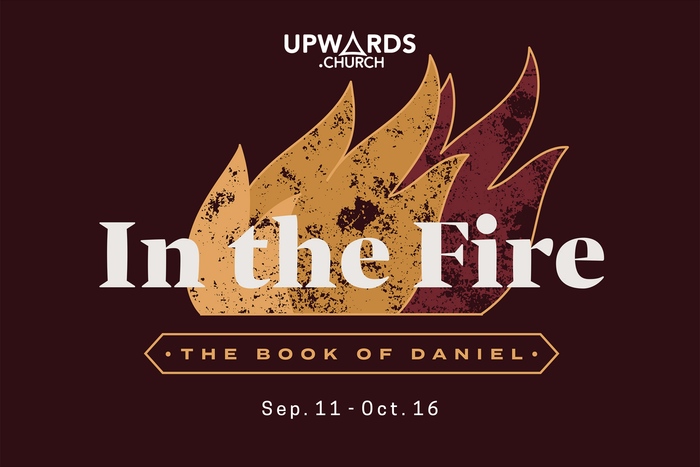
Daniel – In the Fire Introduction & Invitation

You’re invited to our brand new series:

In the Fire – Daniel – 6 weeks

 Description: When the heat gets turned up in our lives, we have a choice to make. Will we choose the path of least resistance or will we remain faithful to God and live with courage?  Our six-week series explores the key themes in the book of Daniel: surviving change, living for God in hostile culture, God’s redemptive plan for his people, the sovereignty of God, and future prophecy.  We’ll see Daniel and his friends remain faithful as they are tested and tempted to compromise to the world’s pressure.  We gain a powerful picture of a faithful person and his challenges living In the Fire. We hope you can join us!

 Dates           Titles            Scriptures

Sep. 11 –      Surviving Change (Daniel 1)                             

Sep. 18 –      Living on a Prayer (Dan 2)
Sep. 25 –      In the Fire (Dan 3)
Oct. 2 –        Living Humbly (Dan 4-5)

Oct. 9 –        Surviving the Lion’s Den (Dan 6)

Oct. 16–        Profiting from Prophecy (Dan 7-12)

Hope you can join us!

Introduction 

An earthquake shakes the foundation of our security; a tornado blows away a lifetime of treasures; an assassin’s bullet changes national history; a drunk driver claims an innocent victim; a divorce shatters a home; terrorism frightens a nation. International and personal tragedies make our world seem a fearful place, overflowing with evil and seemingly out of control. And the litany of bombings, coups, murders, and natural disasters could cause us to think that God is absent or impotent. “Where is God?” we cry, engulfed by sorrow and despair.

Twenty-five centuries ago, Daniel could have despaired. He and thousands of his countrymen had been deported to a foreign land after Judah was conquered. Daniel found himself facing an egocentric despot and surrounded by idolaters. Instead of giving in or giving up, this courageous young man held fast to his faith in his God. Daniel knew that despite the circumstances, God was sovereign and was working out his plan for nations and individuals. The book of Daniel centers around this profound truth—the sovereignty of God.

After a brief account of Nebuchadnezzar’s siege and defeat of Jerusalem, the scene quickly shifts to Daniel and his three friends, Hananiah, Mishael, and Azariah (Shadrach, Meshach, and Abednego). These men held prominent positions within the Babylonian government. Daniel, in particular, held such a position because of his ability to interpret the king’s dreams that tell of God’s unfolding plan (chapters 2 and 4). Sandwiched between the dreams is the fascinating account of Daniel’s three friends and the furnace (chapter 3). Because they refused to bow down to an image of gold, they were condemned to a fiery death. But God intervened and spared their lives.

Belshazzar ruled Babylon after Nebuchadnezzar, and chapter 5 tells of his encounter with God’s message written on a wall. Daniel, who was summoned to interpret the message, predicted Babylon’s fall to the Medes and Persians. This prediction came true that very night, and Darius the Mede conquered the Babylonian kingdom.

Daniel became one of Darius’s most trusted advisers. His privileged position angered other administrators, who plotted his death by convincing the king to outlaw prayer. In spite of the law, Daniel continued to pray to his sovereign Lord. As a result, he was condemned to die in a den of hungry lions. Again, God intervened, saving him, and shutting the mouths of the lions (chapter 6).

The book concludes with a series of visions that Daniel had during the reigns of Belshazzar (chapters 7-8), Darius (chapter 9), and Cyrus (chapters 10-12). These dreams dramatically outline God’s future plans, beginning with Babylon and continuing to the end of the age. They give a preview of God’s redemption and have been called the key to all biblical prophecy.

God is sovereign. He was in control in Babylon, and he has been moving in history, controlling the destinies of people ever since. And he is here now! Despite news reports or personal stress, we can be confident that God is in control. As you read Daniel, watch God work and find your security in his sovereignty.

Vital Statistics

Purpose: To give a historical account of the faithful Jews who lived in captivity and to show how God is in control of heaven and earth, directing the forces of nature, the destiny of nations, and the care of his people

Author: Daniel

Original Audience: The other captives in Babylon

Date Written: Approximately 536 B.C., recording events that occurred from about 605-536 B.C.

Setting: Daniel had been taken captive and deported to Babylon by Nebuchadnezzar in 605 B.C. There he served in the government for about 70 years during the reigns of Nebuchadnezzar, Belshazzar, Darius, and Cyrus.

Key Verse: “He [God] reveals deep and mysterious things and knows what lies hidden in darkness, though he is surrounded by light” (2:22).

Key People: Daniel, Nebuchadnezzar, Shadrach, Meshach, Abednego, Belshazzar, Darius

Key Places: Nebuchadnezzar’s palace, the blazing furnace, Belshazzar’s feast, the den of lions

Special Features: Daniel’s apocalyptic visions (chapters 7-12) give a glimpse of God’s plan for the ages, including a direct prediction of the Messiah.

The Blueprint

  1. DANIEL’S LIFE (1:1-6:28)
    Daniel and his three friends chose not to eat the king’s food. They did not bow down to the king’s image, even under penalty of death. Daniel continued to pray even though he knew he might be noticed and sentenced to death. These men are inspiring examples for us of how to live godly lives in a sinful world. When we face trials, we can expect God to also be with us through them. May God grant us similar courage to remain faithful under pressure.
  2. DANIEL’S VISIONS (7:1-12:13)
    These visions gave the captives added confidence that God is in control of history. They were to wait patiently in faith and not worship the gods of Babylon or accept that society’s way of life. God still rules over human activities. Evil will be overcome, so we should wait patiently and not give in to the temptations and pressures of the sinful way of life around us.
MEGATHEMES
THEME EXPLANATION IMPORTANCE
God Is in Control God is all-knowing, and he is in charge of world events. God overrules and removes rebellious leaders who defy him. God will overcome evil; no one is exempt. But he will deliver the faithful who follow him. Although nations vie for world control now, one day Christ’s Kingdom will replace and surpass the kingdoms of this world. Our faith is sure because our future is secure in Christ. We must have courage and put our faith in God, who controls everything.
Purpose in Life Daniel and his three friends are examples of dedication and commitment. They determined to serve God regardless of the consequences. They did not give in to pressures from an ungodly society because they had a clear purpose in life. It is wise to make trusting and obeying God alone our true purpose in life. This will give us direction and peace in spite of the circumstances or consequences. We should disobey anyone who asks us to disobey God. Our first allegiance must be to God.
Perseverance Daniel served for 70 years in a foreign land that was hostile to God, yet he did not compromise his faith in God. He was truthful, persistent in prayer, and disinterested in power for personal glory. In order to fulfill your life’s purpose, you need staying power. Don’t let your Christian distinctness become blurred. Be relentless in your prayers, maintain your integrity, and be content to serve God wherever he puts you.
God’s Faithfulness God was faithful in Daniel’s life. He delivered him from execution, from a den of lions, and from enemies who hated him. God cares for his people and deals patiently with them. We can trust God to be with us through any trial. Because he has been faithful to us, we should remain faithful to him.

www.Upwards.Church

Watch Messages: YouTube-Upwards Church
Facebook: Upwards Church

Source: Life Application Study Bible, (Wheaton, IL: Tyndale, 1988), WORDsearch CROSS e-book, 1374-1375.

Posted in Daniel - In the Fire | Tagged , , , , | Leave a comment

Letters to Leaders – 1 & 2 Timothy & Titus Invitation

Series: Letters to Leaders (1, 2 Tim. & Titus) 5 weeks

 Description: As Christians all of us are called to be leaders in some area of our life. The weight of leading others and reflecting Christ is placed on the shoulders of every Christian who is also empowered by the Holy Spirit to bring about change.

In our five week series, “Letters to Leaders” we will explore leadership principles from 1 Timothy, 2 Timothy and Titus.

 Dates           Titles Scriptures                                   Events     

Aug. 7           Leaders Live the Faith (1 Tim. 1)            Communion
Aug. 14         Leaders Lead by Example (1 Tim. 3 )      Back to School Events

Aug. 21         Leaders Serve (1 Tim 4-5)

Aug. 28         Leaders are Prepared (2 Tim 3)
Sep. 4           Leaders Teach (Titus)                            Labor Day Weekend

I hope you can join us!

Darrell

www.Upwards.Church

Watch Messages: YouTube-Upwards Church

Facebook: Upwards Church

Posted in Uncategorized | Tagged , , , , , , | Leave a comment

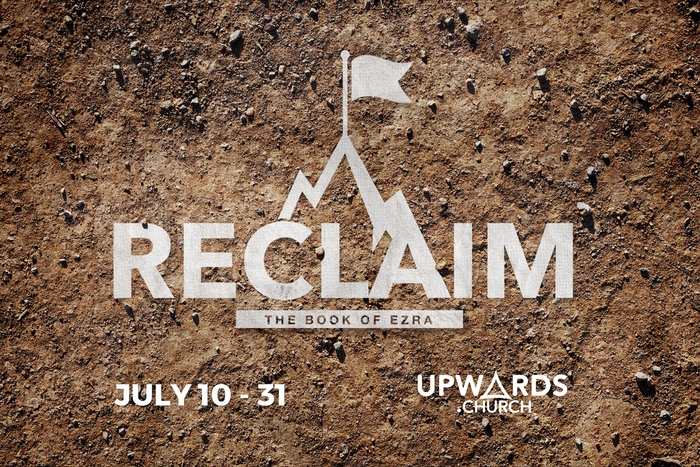
Ezra – Reclaim – Intro. & Invitation

Series: Reclaim (Ezra) 4 weeks

Description: Our four week series Reclaim addresses what God did for the Jewish people throughout the events recorded in the book of Ezra. Through failure, forgetting what is important, and sin, we too may become exiles attempting to return to God. However, just as in the book of Ezra God reclaimed his people according to his promises, he also reclaims and redeems our lives for his purpose in this world.

Dates           Titles            Scriptures

July 10          Reclaim the Promise (Ezra 1)
July 17          Reclaim the Purpose (Ezra 3)

July 24          Reclaim the Presence (Ezra 5-6)

July 31          Reclaim the Truth (Ezra 7)

Ezra Introduction

Name the truly great men and women of your lifetime. Celebrities, including politicians, war heroes, sports figures, and maybe your parents and special friends come to mind. You remember them because of certain acts or character qualities. Now, name some biblical heroes—figures etched in your mind through countless sermons and church school lessons. This list undoubtedly includes many who served God faithfully and courageously. Does your list include Ezra? Far from being well known, this unheralded man of God deserves to be mentioned in any discussion of greatness.

Ezra was a priest, a scribe, and a great leader. His name means “help,” and his whole life was dedicated to serving God and God’s people. Tradition says that Ezra wrote most of 1 and 2 Chronicles, Ezra, Nehemiah, and Psalm 119 and that he led the council of 120 men who compiled the Old Testament canon. The narrative of the book of Ezra is centered on God and his promise that the Jews would return to their land, as prophesied by Jeremiah . This message formed the core of Ezra’s life. The last half of the book gives a very personal glimpse of Ezra. His knowledge of Scripture and his God-given wisdom were so obvious to the king that he appointed Ezra to lead the second emigration to Jerusalem, to teach the people God’s Word, and to administer national life (7:14-26).

Ezra not only knew God’s Word, he believed and obeyed it. Upon learning of the Israelites’ sins of intermarriage and idolatry, Ezra fell in humility before God and prayed for the nation (9:1-15). Their disobedience touched him deeply (10:1). His response helped lead the people back to God.

Second Chronicles ends with Cyrus, king of Persia, asking for volunteers to return to Jerusalem to build a house for God. Ezra continues this account (1:1-3 is almost identical to 2 Chronicles 36:22, 23) as two caravans of God’s people were returning to Jerusalem. Zerubbabel, the leader of the first trip, was joined by 42,360 pilgrims who journeyed homeward (chapter 2). After arriving, they began to build the altar and the Temple foundations (chapter 3). But opposition arose from the local inhabitants, and a campaign of accusations and rumors temporarily halted the project (chapter 4). During this time, the prophets Haggai and Zechariah encouraged the people (chapter 5). Finally, Darius decreed that the work should proceed unhindered (chapter 6).

After a 58-year gap, Ezra led a group of Jews from Persia. Armed with decrees and authority from Artaxerxes I, Ezra’s task was to administer the affairs of the land (chapters 7-8). Upon arriving, he learned of intermarriage between God’s people and their pagan neighbors. He wept and prayed for the nation (chapter 9). Ezra’s example of humble confession led to national revival (chapter 10). Ezra, a man of God and a true hero, was a model for Israel, and he is a fitting model for us.

Read Ezra, the book, and remember Ezra, the man—a humble, obedient helper. Commit yourself to serving God as he did, with your whole life.

Vital Statistics

Purpose: To show God’s faithfulness and the way he kept his promise to restore his people to their land

Author: Not stated, but probably Ezra

Original Audience: The exiles who returned from captivity

Date Written: Around 450 B.C., recording events from about 538-450 B.C. (omitting 516-458 B.C.); possibly begun earlier in Babylon and finished in Jerusalem

Ezra follows 2 Chronicles as a history of the Jewish people, recording their return to the land after the Captivity.

Key People: Cyrus, Zerubbabel, Haggai, Zechariah, Darius I, Artaxerxes I, Ezra

Key Places: Babylon, Jerusalem

Special Features: Ezra and Nehemiah were one book in the Hebrew Bible, and, with Esther, they comprise the post-captivity historical books. The post-captivity prophetic books are Haggai, Zechariah, and Malachi. Haggai and Zechariah should be studied with Ezra because they prophesied during the period of the reconstruction.

The Blueprint

  1. THE RETURN LED BY ZERUBBABEL (1:1-6:22)
    1. The first group of exiles returns to the land
    2. The people rebuild the Temple

Finally given the chance to return to their homeland, the people started to rebuild the Temple, only to be stopped by opposition from their enemies. God’s work in the world is not without opposition. We must not get discouraged and quit, as the returning people did at first, but continue on boldly in the face of difficulties, as they did later with encouragement from the prophets.

  1. THE RETURN LED BY EZRA (7:1-10:44)
    1. The second group of exiles returns to the land
    2. Ezra opposes intermarriage

Ezra returned to Jerusalem almost 80 years after Zerubbabel, only to discover that the people had married pagan or foreign spouses. This polluted the religious purity of the people and endangered the future of the nation. Believers today must be careful not to threaten their walk with God by taking on the practices of unbelievers.

Megathemes
Theme Explanation Importance
The Jews Return By returning to the land of Israel from Babylon, the Jews showed their faith in God’s promise to restore them as a people. They returned not only to their homeland but also to the place where their forefathers had promised to follow God. God shows his mercy to every generation. He compassionately restores his people. No matter how difficult our present “captivity,” we are never far from his love and mercy. He restores us when we return to him.
Rededication In 536 B.C., Zerubbabel led the people in rebuilding the altar and laying the Temple foundation. They reinstated daily sacrifices and annual festivals, and rededicated themselves to a new spiritual worship of God. In rededicating the altar, the people were recommitting themselves to God and his service. To grow spiritually, our commitment must be reviewed and renewed often. As we rededicate ourselves to God, our lives become altars to him.
Opposition Opposition came soon after the altar was built and the Temple foundation laid. Enemies of the Jews used deceit to hinder the building for over six years. Finally, there was a decree to stop the building altogether. This opposition severely tested their wavering faith. There will always be adversaries who oppose God’s work. The life of faith is never easy. But God can overrule all opposition to his service. When we face opposition, we must not falter or withdraw, but keep active and patient.
God’s Word When the people returned to the land, they were also returning to the influence of God’s Word. The prophets Haggai and Zechariah helped encourage them, while Ezra’s preaching of Scripture built them up. God’s Word gave them what they needed to do God’s work. We also need the encouragement and direction of God’s Word. We must make it the basis for our faith and actions to finish God’s work and fulfill our obligations. We must never waver in our commitment to hear and obey his Word.
Faith and Action The urging of Israel’s leaders motivated the people to complete the Temple. Over the years they had intermarried with idol worshipers and adopted their pagan practices. Their faith, tested and revived, also led them to remove these sins from their lives. Faith led them to complete the Temple and to remove sin from their society. As we trust God with our hearts and minds, we must also act by completing our daily responsibilities. It is not enough to say we believe; we must make the changes God requires.


www.Upwards.Church

Watch Messages: YouTube-Upwards Church

Facebook: Upwards Church

Source: Life Application Study Bible, (Wheaton, IL: Tyndale, 1988), WORDsearch CROSS e-book, 719-720.

Posted in Ezra - Reclaim | Tagged , , , , , , , , , | Leave a comment