
Pentecost & Early Church – Acts 2

We are not going to move this world by criticism of it nor conformity to it, but by the combustion within it of lives ignited by the Spirit of God.”

Vance Havner made that statement and he was right. The early church had none of the things that we think are so essential for success today—buildings, money, political influence, social status—and yet the church won multitudes to Christ and saw many churches established throughout the Roman world. Why? Because the church had the power of the Holy Spirit energizing its ministry. They were a people who “were ignited by the Spirit of God.”

That same Holy Spirit power is available to us today to make us more effective witnesses for Christ. The better we understand His working at Pentecost, the better we will be able to relate to Him and experience His power.

In Old Testament times, the Spirit of God came upon isolated individuals or smaller groups only on special occasions and only in a temporary way to help them accomplish God’s purposes (Exodus 31:3; Judges 14:6; 1 Samuel 16:13). As the apostles were gathered together in Jerusalem for the feast of Pentecost, the time had come for the fulfillment of Christ’s promise to send his Spirit completely and permanently upon all believers (Luke 24:49; John 14:16-17, 16:5-15). This marvelous outpouring of God provided the supernatural power for believers to take the life-changing message of the gospel to the ends of the earth (Acts 1:8). This is the day Christ made good on his promise to send the Helper, the Comforter, the Holy Spirit who would take up permanent residence in those who put their faith in Christ. And what a day it was! God’s individualized pouring out of his Spirit into the lives of 120 believers resulted in the effective pouring out of his story, changing the lives of three thousand people in one day!

2:1 Held 50 days after Passover, Pentecost was also called the Festival of First Harvest. It was one of three major annual festivals (Deuteronomy 16:16), a festival of thanksgiving for the harvested crops. Jesus was crucified at Passover time, and he ascended 40 days after his resurrection. The Holy Spirit came 50 days after the Resurrection, 10 days after the Ascension. Jews of many nations had gathered in Jerusalem for this festival.  Peter’s speech (2:14ff) was given to an international audience, and it resulted in a worldwide harvest of new believers—the first converts to Christianity.

2:3, 4 This was a fulfillment of John the Baptist’s words about the Holy Spirit’s baptizing with fire (Luke 3:16) and of the prophet Joel’s words about the outpouring of the Holy Spirit (Joel 2:28, 29). Why tongues of fire? Tongues symbolize speech and the communication of the Good News. Fire symbolizes God’s purifying presence, which burns away the undesirable elements of our lives and sets our hearts aflame to ignite the lives of others. On Mount Sinai, God confirmed the validity of the Old Testament law with fire from heaven (Exodus 19:16-18). At Pentecost, God confirmed the validity of the Holy Spirit’s ministry by sending fire. At Mount Sinai, fire came down on one place; at Pentecost, fire came down on many believers, symbolizing that God’s presence is available to all who believe in him.

2:3, 4 God made his presence known to this group of believers in a spectacular way—roaring wind (2:2), fire, and his Holy Spirit. Would you like God to reveal himself to you in such recognizable ways? He may do so, but be wary of forcing your expectations on God. In 1 Kings 19:10-13, Elijah also needed a message from God. First came a great wind, then an earthquake, and finally a fire. But God’s message came in a “gentle whisper.” God may use dramatic methods to work in your life—or he may speak in gentle whispers. Wait patiently and always listen.

2:4-11 These people literally spoke in other languages as the Spirit gave them ability—a miraculous attention-getter for the international crowd gathered in town for the festival. All the nationalities represented recognized their own languages being spoken. More than miraculous speaking drew people’s attention, however; they saw the presence and power of the Holy Spirit. The apostles continued to minister in the Holy Spirit’s power wherever they went.

2:7, 8 Christianity is not limited to any race or group of people. Christ offers salvation to all people without regard to nationality. Visitors in Jerusalem were surprised to hear the apostles and other believers speaking in languages other than their own, but they need not have been. God works all kinds of miracles to spread the Good News, using many languages as he calls all kinds of people to become his followers. No matter what your race, color, nationality, or language, God speaks to you. Are you listening?

2:9-11 Why are all these places mentioned? This is a list of many lands from which Jews had come to the festivals in Jerusalem. These Jews were not originally from Palestine because their ancestors had been dispersed to other parts of the world through captivities and persecutions. Very likely, some of the Jews who responded to Peter’s message returned to their homelands with God’s Good News of salvation.  God prepared the way for the spread of the Good News. As you read Acts, you will see how the way was often prepared for Paul and other messengers by people who had become believers at Pentecost. The church at Rome, for example, was probably begun by such Jewish believers.

2:12 When the gathered crowd recognized that something supernatural was taking place, they naturally wanted an explanation. At this point, Peter stepped forward and explained the truth about God. This should be the pattern in our lives as well. Hopefully we are living in such a way that people will see Christ in us. If we do shine and sparkle (Matthew 5:14; Philippians 2:15) and if we are “salty” (Matthew 5:13), we will get the attention of others. They will surely want to know what is so attractive and different about us. Then we can explain our “Christian hope” (1 Peter 3:15). What is different about your life? What supernatural evidence would cause someone to stop you and say, “What can this mean?”

2:14 Peter had been an unstable leader during Jesus’ ministry, letting his bravado be his downfall, even denying that he knew Jesus (John 18:15-18, 25-27). But Christ had forgiven and restored him (John 21). This was a new Peter, humble but bold. His confidence came from the Holy Spirit, who made him a powerful and dynamic speaker. Have you ever felt as if you’ve made such bad mistakes that God could never forgive and use you? No matter what sins you have committed, God promises to forgive you and make you useful for his Kingdom. Allow him to forgive you and use you effectively to serve him.

2:14ff Peter tells the people that they should listen to the testimony of the believers because the Old Testament prophecies concerning Jesus had been entirely fulfilled in him (2:14-21), because Jesus is the Messiah (2:25-36), and because the risen Christ could change their lives (2:37-40).

2:16-21 Not everything mentioned in Joel 2:28, 29 was happening that particular morning. The “last days” include all the days between Christ’s first and second comings and is another way of saying “from now on.” “That great and glorious day of the Lord” (2:20) denotes the whole Christian age. Even Moses yearned for the Lord to put his Spirit upon everyone (Numbers 11:29). At Pentecost the Holy Spirit was released throughout the entire world—to men, women, slaves, Jews, Gentiles. Now everyone can receive the Spirit. This was a revolutionary thought for first-century Jews.

2:23 Everything that happened to Jesus was under God’s control. His plans were never disrupted by the Roman government or the Jewish officials. This was especially comforting to those facing oppression during the time of the early Christian church.

2:24 Peter spoke forth rightly about the Resurrection. As Peter preached, the events of Christ’s death and resurrection were still hot news, less than two months old. Christ’s execution had been carried out in public before many witnesses. His empty tomb was available for inspection just a short distance away. If Christ had not truly died, Peter’s message would have been laughed at or ignored. If Christ had not been resurrected, authorities could have produced his body and put an end to this new faith. But Peter and the apostles had witnessed the risen Christ. Changed men, they announced the news with great passion and conviction. Our faith and our credibility also rest on the truth of the empty tomb. Why? For a number of important reasons. According to the apostle Paul in 1 Corinthians 15, the resurrection of Christ means that he is the Son of God and that his word can be trusted. It means that his sacrifice for sin was acceptable to God, so we can be completely forgiven. It means that our Savior is alive and active, able to help us in times of need. It also means that one day we, too, will conquer death. The Christian faith rests on the basic fact of the empty tomb. Don’t neglect this essential part of the gospel when you share your faith with others.

2:25-32 Peter quoted from Psalm 16:8-11—a psalm written by David. He explained that David was not writing about himself because David died and was buried (2:29). Instead, he was writing as a prophet (2:30) who spoke of the Messiah who would be resurrected. The emphasis here is that Jesus’ body was not left to rot in the grave but was, in fact, resurrected and glorified.

2:37 After Peter’s powerful, Spirit-filled message, the people were deeply moved and asked, “What should we do?” This is the basic question we must ask. It is not enough to be sorry for our sins. We must repent, ask God to forgive us, and then live like forgiven people. Has God spoken to you through his Word or through the words of another believer? Like Peter’s audience, ask God what you should do, and then obey.

2:38, 39 If you want to follow Christ, you must “repent of your sins, turn to God, and be baptized in the name of Jesus Christ.” To repent means to turn from sin, to change the direction of your life from selfishness and rebellion against God’s laws. At the same time, you must turn to Christ, depending on him for forgiveness, mercy, guidance, and purpose. We cannot save ourselves—only God can save us. Baptism identifies us with Christ and with the community of believers. It is a condition of discipleship and a sign of faith.

2:40-43 About 3,000 people became new believers when Peter preached the Good News about Christ. These new Christians were united with the other believers, taught by the apostles, and included in the prayer meetings and fellowship. New believers in Christ need to be in groups, where they can learn God’s Word, pray, and mature in the faith. If you have just begun a relationship with Christ, seek out other believers for fellowship, prayer, and teaching. This is the way to grow.

2:44 Recognizing the other believers as brothers and sisters in the family of God, the Christians in Jerusalem shared all they had so that all could benefit from God’s gifts. It is tempting—especially if we have material wealth—to cut ourselves off from one another, concerning ourselves with only our interests and enjoying only our own little piece of the world. But as part of God’s spiritual family, it is our responsibility to help one another in every way possible. God’s family works best when its members work together.

2:46 A common misconception about the first Christians (who were Jews) was that they rejected the Jewish religion. But these believers saw Jesus’ message and resurrection as the fulfillment of everything they knew and believed from the Old Testament. The Jewish believers at first did not separate themselves from the rest of the Jewish community. They still went to the Temple and synagogues for worship and instruction in the Scriptures. But their belief in Jesus created great friction with Jews who didn’t believe that Jesus was the Messiah. Believing Jews were forced to meet in private homes for Communion, prayer, and teaching about Christ. By the end of the first century, many of these Jewish believers were excommunicated from their synagogues.

2:47 A healthy Christian community attracts people to Christ. The Jerusalem church’s zeal for worship and brotherly love was contagious. A healthy, loving church will grow in numbers. What are you doing to make your church the kind of place that will attract others to Christ?

www.Upwards.Church

Watch Messages: YouTube-Upwards Church

Facebook: Upwards Church

Sources: Life Application Study Bible, (Wheaton, IL: Tyndale, 1988), WORDsearch CROSS e-book, 1816-1820.

Bruce B. Barton et al., Life Application Bible Commentary – Acts, (Wheaton, IL: Tyndale, 1999), WORDsearch CROSS e-book, Under: “ACTS 2”.

Warren W. Wiersbe, The Bible Exposition Commentary – New Testament, Volume 1, (Colorado Springs, CO: Victor, 2001), WORDsearch CROSS e-book, 406.
 

Posted in Acts - To the Ends of the Earth | Tagged , , , , , , , | 1 Comment

Resurrection & Commission – Acts 1

The book of Acts is the action book of the New Testament, and one of the most exciting books of the Bible. It is a record of power exercised in the midst of persecution; an account of life and health pouring from a living Christ into a broken society through the channel of obscure men and women, very much like you and me. We could never understand the New Testament if we did not have the book of Acts, for it fills the gap that would exist between the Gospels and the epistles. At the end of the Gospels we read that the disciples and followers of Jesus who had seen the risen Christ!  Imagine if you finished the gospels then turned over to 1 Corinthians and thought, “Who is Paul? How is there a church in Corinth? Acts tells us these important details.

The first eleven verses of chapter one constitute an introduction to the book of Acts, giving us the key to the book. Here we have revealed the essential strategy by which Jesus Christ proposes to change the world, a strategy which is the secret of the revolutionary character of the church when it is operating as it was intended to operate. Most Christians suffer from an inferiority complex when we confront the world around us. We have bought the idea of many around that the church is quite irrelevant, a not at all important segment of society.  The church is the most important body in the world. Whatever happens in the world happens as a result of something that is, or is not, happening in the church. We shall see this clearly in this book of Acts, starting in Verses 1-2:

In the first book, O Theophilus I have dealt with all that Jesus began to do and teach, until the day when he was taken up, after he had given commandment through the Holy Spirit to the apostles whom he had chosen. (Acts 1:1-2 RSV)

The writer here is Dr. Luke, that “beloved physician” who accompanied Paul on his journeys. We do not know how he became a Christian though probably through the ministry of the Apostle Paul. He was Paul’s companion through danger, hardship, trial, and endless difficulty, up and down the length and breadth of the Roman empire. He wrote two books of the New Testament, The Gospel According to Luke, and the book of Acts. The one to whom this book is written is a man named Theophilus. We do not know anything more about him than that.  Luke’s formal greeting “Most Excellent Theophilus” suggests that he may have been an important Roman official (see Acts 23:26; 24:3; 26:25). It is strange that he is not mentioned elsewhere in Scripture, although someone with the name Theophilus might well tend to remain hidden most of the time.

Some boys had a friend whose middle initial was “T”, and he would never tell them what “T” stood for.  One day a friend of his announced that he had discovered what that “T” stood for! It stood for “Theophilus,” he said, because when the doctor first saw this baby, he said, “That’s The awfulest baby I ever saw!”   Actually Theophilus means, “Lover of God” or “Friend of God in Greek.

In his first statement here, Dr. Luke gives us a key by which the Lord works among mankind. He says, “In the first book, I have dealt with all that Jesus began to do and teach…” The Gospel of Luke is the record of the incarnation of the Son of God. In John’s word, he was “the Word made flesh, who came and dwelt among us,” (John 1:14 KJV). Jesus, the God-man, came to begin something, “to do and to teach,” and the record of that beginning is in the Gospels. But, by clear implication, this second book is the continuation of what Jesus began to do.  Acts is not the acts of Christians, but the continuing acts of Jesus. It is an account of what Jesus continues to do and to teach. In the Gospels he did it in his physical body of flesh. In the book of Acts he is doing it through the bodies of men and women who are indwelt by his life. Whether in the Gospels or in Acts, incarnation is the way by which God changes the world.

Whenever God wants to get a message across to men he does not simply send someone to announce it; his final way of driving it home is to dress the message in flesh and blood. He takes a life and aims it in a certain direction and, by the manifestation of his own life through the blood and flesh of a human being, he makes clear what he has to say. That is the strategy of the book of Acts. It is the record of incarnation; men and women, possessed by Jesus Christ, owned by him, and thus manifesting his life. That is the secret of authentic Christianity. Anytime you find a Christianity that is not doing that, it is false Christianity. No matter how much it may adapt the garb and language of Christianity, if it is not the activity human beings possessed and indwelt by the life of Jesus Christ it is not authentic Christianity. That is the true power of the church, as we shall see in this book.

The book of Acts is an unfinished book. It has never been ended, but is still being written. The book abruptly closes with an account of Paul in the city of Rome, living in his own hired house. It just ends there as though you might turn over the next page and begin the next adventure. This book is Volume 1, and we are writing Volume 21 now. It may well be the last volume in the series. I hope so.

The key ingredients of this strategy of incarnation are set before us in this introduction. Here we learn the historic basis on which the strategy rests, and the elements that make up the continuous program by which it operates. That is what any good introduction is for, to tell us what the book is all about. The first of these historic elements is the resurrection of Jesus,

Jesus Gives Us a Purpose

To them [i.e., to the apostles] he presented himself alive after his passion by many proofs, appearing to them during forty days, and speaking of the kingdom of God. And while staying with them he charged them not to depart from Jerusalem, (Acts 1:3-4a RSV)

Dr. Luke stresses for us the great and central fact of Christian faith: Jesus alive! That incomparable fact is what thrusts Christianity ten thousand miles ahead of its nearest competitor in the field of religion. There is nothing else like it. Jesus alive, risen from the dead!  Life has great purpose when we know that Jesus overcame death, the grave and sin.  We too can have a resurrected body! We also have teachings and instructions to follow.

This man, Jesus Christ, has risen from the dead: “He presented himself alive after his passion by many convincing proofs.”

The Greek word for “proof” here is a word that includes the idea of being convincing — infallible, as the King James Version has it. Dr. Luke gives us three categories of these proofs. He does not give us the detail which you will find in other places, but he lists the three categories of proof that Jesus Christ was alive. As you well know, from the very earliest centuries and throughout the twenty centuries of Christendom, we have accounts of the enemies of Christianity who tell us that the appearances of Jesus were really nothing but hallucinations, they occurred only in the imaginations of these disciples, and that he really was not there. But, says Luke, let me show you the three categories of proof that he was risen:

One, he appeared to them during forty days. The word here is one from which we get our word, ophthalmia, i.e., the word for the eye, or literally, the eyeball. If we were to use the modern vernacular, what Dr. Luke says is, these disciples “eyeballed” him for forty days. They saw him again and again, not merely once, but many times during this period. Each time he looked exactly the same. It is hard for an hallucination to accomplish that.

Then continuing with how they can live with purpose he spoke to them: “about the kingdom of God.” Why, says Luke, we even remember his subject matter. He talked about the kingdom of God. We saw him and heard him, two objective sensual experiences that confirmed to us that this was no fantasy, no hallucination.

Finally, third, the ultimate proof was, “he ate with us.” The word, “staying” has a marginal reference which gives eating as the actual Greek word used. “He ate with us,” says Luke, and those who were there saw him eat. They saw the food disappear. It’s hard to get an hallucination to eat! Luke says, “This is the proof; he ate with us, so we know he is alive.”

This marvelous fact of the resurrection of Jesus is the bedrock upon which all Christian faith ultimately rests. Anytime you are troubled with doubts, or are under attack for your faith, come right back to this fundamental fact. The Apostle Paul, remember, holds it up for us and says, in effect, to the enemies of Christianity, “Look, if you want to destroy our faith then disprove this fact. It all rests on this. If Christ be not risen, then our faith is in vain,” (1 Corinthians 15:17 KJV). Throughout the centuries many attempts have been made to disprove the resurrection of Jesus, but none has ever been successful. In fact, oftentimes the ones attempting this have themselves becomes convinced by the evidence and have become Christians. It is fact Number 1 upon which the strategy of incarnation rests.

Jesus spent 40 days teaching his disciples, and they were drastically changed. Before the Resurrection, they had argued with each other and had deserted their Lord. One of them (Peter) even lied about knowing Jesus. Here, in a series of meetings with the living, resurrected Christ, the disciples had many questions answered. They became convinced of the Resurrection, learned about the Kingdom of God, and discovered their power source—the Holy Spirit. By reading the Bible, we can sit with the resurrected Christ in his school of discipleship. By believing in him, we can receive his power through the Holy Spirit to be new people. By joining with other Christians, we can take part in doing his work on earth.

Jesus Give Us Power

The second historic fact is called in this passage, “the promise of the Father.”

And while staying with them he charged them not to depart from Jerusalem, but to wait for the promise of the Father, which, he said, “you heard from me, for John baptized with water, but before many days you shall be baptized with the Holy Spirit.”

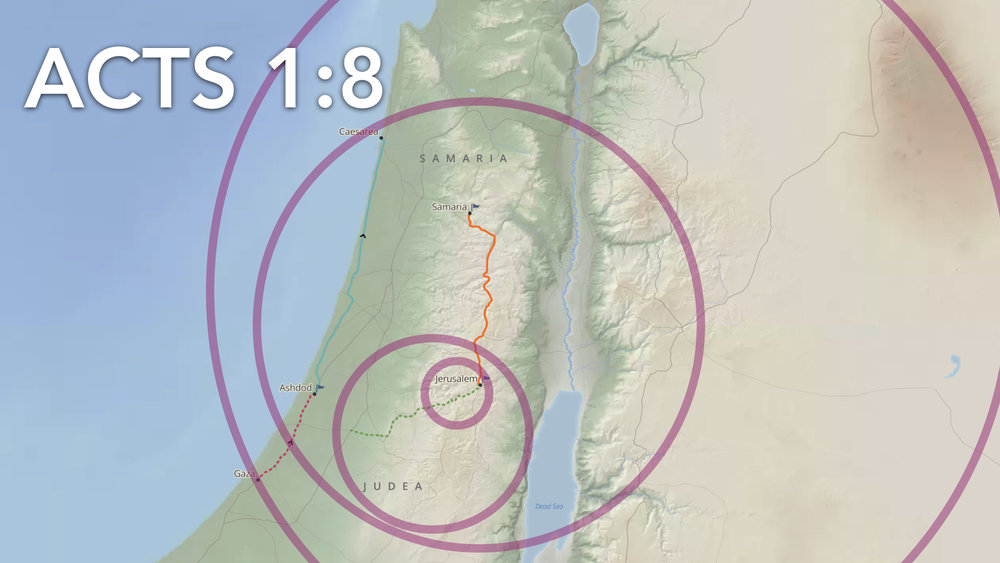
So when they had come together, they asked him, “Lord, will you at this time restore the kingdom to Israel?” He said to them, “It is not for you to know times or seasons which the Father has fixed by his own authority. But you shall receive power when the Holy Spirit has come upon you; and you shall be my witnesses in Jerusalem and in all Judea and Samaria and to the end of the earth. (Acts 1:4-8 RSV)

There is here a four-fold characteristic of the baptism of the Holy Spirit. Literally, what Jesus said to these eleven disciples (Judas now having left them) was, “Stick around in Jerusalem.” That is the literal Greek expression. “Stick around! Don’t go outside the city until the promise of the Father has come upon you.” Why? Because you’ll make a mess of it if you try witnessing without this. This is an essential. You cannot be an effective Christian if you are not operating in the power of the Holy Spirit. Every attempt made to advance the cause of Christianity which does not arise from that source only destroys the message God wants to convey. “It is absolutely essential,” Jesus says to these men, “so don’t try anything without it. Just wait, for, in a few days, you will receive the promise of the Father.”

What did he mean, “the promise of the Father“? He meant several things. First, he indicates that the Holy Spirit’s coming would not be ritual but reality. John, he said, baptized with water. That is a ritual, a shadow, a picture. But the reality will be the actual Spirit himself, coming to live in you. The promise that was made to Abraham two thousand years ago (i.e., prior to that point in history) will be fulfilled in you. If you want to read that promise you will find it in the twelfth chapter of Genesis. There God said to Abraham, “I will bless you, and make your name great, … and all nations shall be blessed through you,” (Genesis 12:2-3). We are not told exactly what that blessing is when we read this in Genesis. But in Paul’s letter to the Galatians he tells us very explicitly what the blessing consisted of. In the third chapter of Galatians, Verse 13, Paul says,

Christ redeemed us from the curse of the law having become a curse for us — for it is written “Cursed be every one who hangs on a tree” — that in Christ Jesus the blessing of Abraham might come upon the Gentiles, that we might receive the promise of the Spirit through faith. (Galatians 3:13-14 RSV)

Our Lord stresses the reality of this. The Holy Spirit is given now, immediately when anyone believes in Jesus. There is no sign, no feeling, no emotional indication of it. It occurs, as Jesus said it would, when any believe on him. It is the means by which the risen life of Jesus becomes available to us, continuously and constantly. All that he is made available through all that I am.

This means that I can have every bit of his attention all the time. All that he is, is available to me, and I do not have to share him with anyone. I can have everything there is of Jesus Christ. He is looking at me, he is talking to me, he is related to me, and everything that he is I can have all the time! But the amazing thing is, so can you! This is why it was important that the Holy Spirit come because it is by means of the Spirit that Jesus’ life is made available to us.

Notice that Jesus points out that not only is this not ritual but reality; it is also not a program, but power. These disciples said to him, “Lord, are you going to at this time restore the kingdom to Israel?” They were thinking in terms of timetables, schedules and programs. “What are you going to do? When is this all going to happen? How is it going to happen? The Lord Jesus said, “That is not for you to know. Times, schedules and programming is not for you to know. That is all in the Father’s authority. Your task is to be the manifestation of power, not the knowledge of a program. The Father will take care of that. You content yourself with exercising the power that is given to you, and the Father will put it all together and work it all out just right.”

Here has been the mistake of the church. The church has thought it had the task of programming the work of God, that it was up to us to set up timetables and establish the structures and framework by which the work would go on; to carry it all out consistently and systematically across and around the world. But we have never been able to do it. The reason is because that is not in our authority. The times and the seasons are not for us to know. The Father has kept that in his own authority. But, said Jesus, though I am not going to let you know the program, I will give you power. “You shall receive power when the Holy Spirit has come upon you.”

What kind of power? This is a most wonderful thing! It is resurrection power. It is the power of a risen Lord, resurrection power, a different kind of power. It is not demonstrative or spectacular; it is quiet power. It is the kind of power that never makes any sound, any demonstration. Most kinds of power that we know about make some kind of sound — they hum, or buzz, or throb, or pulsate, or pound, or explode, or something. But this kind of power does not, it is absolutely quiet. But, though it is quiet, it is irresistible. There is no way to oppose it, no way to overthrow it, no way to stop it. Every obstacle thrown in its path is but turned into an opportunity to advance. You can find many demonstrations of that in the Gospels and church history. Today some of us are watching a demonstration of this in our local scene where certain attempts are being made to resist the working of the Holy Spirit. Every attempt thus made is but opening the door wider, for this is resurrection power at work.

It is a glorious kind of power. It does not need any props, does not require outside help, and does not borrow anything from the world.  And it works best in a cemetery. It operates most visibly where everything is dull and lifeless, and nothing is happening. Anyone who is operating on resurrection power can come in and change the whole scene. Resurrection power changes lives from within and not from without. It does not start on the outside, with the environment, or the circumstances, or the external situation; it starts within, and works out, to change the environment ultimately. And it does not separate or divide; it harmonizes, it heals, it draws together and breaks down “middle walls of partition” (Ephesians 2:14 KJV) that have been standing sometimes for centuries. It batters them down and brings people together, in harmony. It is a totally different kind of power. That is what you receive when you receive the Holy Spirit.

Jesus Gives Us a Plan

Jesus says it will not result in propaganda, either, but witnessing. You shall not be propagandists, but “my witnesses,” he said. Christians are not like salesmen going out to peddle a product, nor are we recruiters, going around trying to get people to join our religious club. When the church becomes that it has always become a false thing and lost its power. But this has a personal note about it. Jesus says, “You will talk about me, because you will have experienced me. What you will talk about will be what I have done for you.” That is always what a witness talks about. “You won’t be talking about yourselves,” he says, “you will be talking about me.”

The mark of  an unhealthy church is that it loves to talk about itself. These early Christians never witnessed about the church at all; they witnessed about Jesus. What he could do, how he would work, what a fantastic person he was, how amazing was his power, what he could do in human hearts.

This promise of the Father will not be restricted at all, but will be universal. It will begin in Jerusalem and Samaria and go to the uttermost parts of the earth. It will include all places, and all times and ages, all classes, all races, both sexes, slaves or free, it makes no difference.

In Christ there is no East or West,
In him no South or North; But one great fellowship of love,
Throughout the whole wide earth.

The promise of the Father, the Holy Spirit and the plan to reach the world are revealed.  You see that emphasis all through the book of Acts, and through the life of the church since, whenever the church has been what it ought to be. Any deviation from this only results in a weakening of the power of the church.  the next element Luke stresses, which will run like a thread throughout the rest of this book, is the hope of Christ’s return.

And when he had said this, as they were looking on, he was lifted up, and a cloud took him out of their sight. And while they were gazing into heaven as he went, behold two men stood by them in white robes, and said, “Men of Galilee, why do you stand looking into heaven? This Jesus, who was taken from you into heaven, will come in the same way as you saw him go into heaven.” (Acts 1:9-11 RSV)

What an amazing experience this was! As they were standing on the Mount of Olives they saw him suddenly lift and ascend into a cloud. They never saw him again; he does not go beyond the cloud, but just disappears. The cloud received him out of their sight. Jesus had told them that this would happen and that this removal was necessary. “It is to your advantage that I go away, for if I do not go away the Comforter will not come to you, but if I go I will send him to you,” (John 16:7 RSV). It is by means of the Spirit that Jesus makes his life available to each of us, so intimately and so personally.

The angels tell us that though he was to go away, his return is certain. “This same Jesus,” they say, “will come back again.” When he comes he will come in exactly the same way as they saw him go. Just as he stepped into invisibility then, he will step back again into visibility. Suddenly he will be back. And when he comes, says other Scripture, he will remove the curse from nature.

People are looking for a solution to the so called environmental crisis of “climate change” that confronts us today. How shall we solve these problems? Bad news, we will not, they are going to get much worse. The crisis will get so bad that human life will actually be unable to exist any longer on the earth. Jesus said so. He said that the tribulation of those days would be so intense, so terrible, that no person would be saved if it were not for the intervention of God. But, he says, God is going to intervene. When Jesus comes again, he will remove the curse from nature, and nature will bloom and blossom once again. God will draw back the curtains on the exciting thing he has been creating behind the scenes throughout these centuries — a new humanity. A new kind of man will suddenly be revealed. That is what Paul calls “the day of the manifestation of the sons of God,” (Romans 8:19 KJV).  That hope of his return runs like a thread throughout the whole book of Acts. It also runs throughout the course of church history. It is part and parcel of the mystery of incarnation, the grand strategy that God employs.

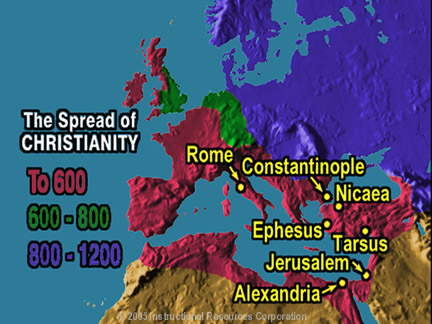
From this modest beginning, Christianity spread throughout the Roman Empire in an amazingly short time span. In spite of repeated attempts to stamp out the movement, it eventually prevailed and became the dominant force in Western culture for nearly two thousand years.  Instead of launching out on their own, they patiently, submissively waited for the promised Holy Spirit to come and give them the power they needed and the plan to carry out.

Here in chapter 1 we have all the elements that make up the book of Acts: a risen Lord whose life is made available through the coming of the Spirit, and who will come again in power and great glory. That is the book of Acts. That is the life of the church. These are what makes any group of Christians have an impact, and exercise a vital revolutionary force in the age in which they live. May God help us experience this as well.

Darrell

www.Upwards.Church

Watch Messages: YouTube-Upwards Church

Facebook: Upwards Church

Sources:  Life Application Study Bible, (Wheaton, IL: Tyndale, 1988), WORDsearch CROSS e-book, 1814.

MacArthur New Testament Commentary, The – MacArthur New Testament Commentary – Acts 1-12.

Raystedman.org/new-testament/acts/out-of-the-shadows


Posted in Acts - To the Ends of the Earth | Tagged , , , , , , , , , , , | Leave a comment

Acts – Invitation & Introduction

Series: Acts – To the Ends of the Earth

Description: This six-week series examines the remarkable spread of the gospel and the kingdom of God from Jerusalem, to Judea and Samaria, and to the ends of the world. Jesus has commissioned every one of his followers to be his witness by the power of the Holy Spirit. Despite challenges from outside and within, the kingdom of God continues to advance. Today, we continue to be his witnesses and have a vital role in the continuing of Jesus’s story to the ends of the earth.

 Dates           Titles (Scriptures)                                 Events

April 17 – Resurrection & Commission (Acts 1)            EASTER 

April 24 – Pentecost & Early Church (Acts 2)

May 1 – People & Prejudices Changed (Acts 9 & 10)

May 8 – Women & the Church (Acts various)                  Mothers’ Day 
May 15 – The Law & Grace (Acts 15)

May 22 – Growth & Opposition (Acts 19)

 Acts Introduction: 

With a flick of a match, friction occurs and a spark leaps from match to tinder. A small flame burns the edges and grows, fueled by wood and air. Heat builds, and soon the kindling is licked by reddish orange tongues. Higher and wider it spreads, consuming the wood. The flame has become a fire.

Nearly 2,000 years ago, a match was struck in Jerusalem. At first, just a few in that corner of the world were touched and warmed, but the fire spread beyond Jerusalem and Judea out to the world and to all people. Acts provides an eyewitness account of the flame and fire—the birth and spread of the church. Beginning in Jerusalem with a small group of disciples, the message traveled across the Roman Empire. Empowered by the Holy Spirit, this courageous band preached, taught, healed, and demonstrated love in synagogues, schools, homes, marketplaces, and courtrooms, and on streets, hills, ships, and desert roads—wherever God sent them, lives and history were changed.

Written by Luke as a sequel to his Gospel, Acts is an accurate historical record of the early church. But Acts is also a theological book, with lessons and living examples of the work of the Holy Spirit, church relationships and organization, the implications of grace, and the law of love. And Acts is an apologetic work, building a strong case for the validity of Christ’s claims and promises.

The book of Acts begins with the outpouring of the promised Holy Spirit and the commencement of the proclamation of the gospel of Jesus Christ. This Spirit-inspired evangelism began in Jerusalem and eventually spread to Rome, covering most of the Roman Empire. The gospel first went to the Jews, but they, as a nation, rejected it. A remnant of Jews, of course, gladly received the Good News. But the continual rejection of the gospel by the vast majority of the Jews led to the ever-increasing proclamation of the gospel to the Gentiles. This was according to Jesus’ plan: The gospel was to go from Jerusalem, to Judea, to Samaria, and to the ends of the earth (1:8). This, in fact, is the pattern that the Acts narrative follows. The glorious proclamation began in Jerusalem (chapters 1-7), went to Judea and Samaria (chapters 8 and following), and to the countries beyond Judea (11:19; 13:4 and on to the end of Acts). The second half of Acts is focused primarily on Paul’s missionary journeys to many countries north of the Mediterranean Sea. He, with his companions, took the gospel first to the Jews and then to the Gentiles. Some of the Jews believed, and many of the Gentiles received the Good News with joy. New churches were started, and new believers began to grow in the Christian life.

As you read Acts, put yourself in the place of the disciples: Identify with them as they are filled with the Holy Spirit, and experience the thrill of seeing thousands respond to the gospel message. Sense their commitment as they give every ounce of talent and treasure to Christ. And as you read, watch the Spirit-led boldness of these first-century believers, who through suffering and in the face of death take every opportunity to tell of their crucified and risen Lord. Then decide to be a twenty-first-century version of those men and women of God.

Vital Statistics

Purpose: To give an accurate account of the birth and growth of the Christian church

Author: Luke (a Gentile physician)

Original Audience: Theophilus

Date Written: Between A.D. 63 and 70

Setting: Acts is the connecting link between Christ’s life and the life of the church, between the Gospels and the Letters.

Key Verse: But you will receive power when the Holy Spirit comes upon you. And you will be my witnesses, telling people about me everywhere—in Jerusalem, throughout Judea, in Samaria, and to the ends of the earth” (1:8).

Key People: Peter, John, James, Stephen, Philip, Paul, Barnabas, Cornelius, James (Jesus’ brother), Timothy, Lydia, Silas, Titus, Apollos, Agabus, Ananias, Felix, Festus, Agrippa, Luke

Key Places: Jerusalem, Samaria, Lydda, Joppa, Antioch, Cyprus, Pisidian Antioch, Iconium, Lystra, Derbe, Philippi, Thessalonica, Berea, Athens, Corinth, Ephesus, Caesarea, Malta, Rome

Special Features:  Acts is a sequel to the Gospel of Luke. Because Acts ends so abruptly, Luke may have planned to write a third book, continuing the story.

Key Places in Acts:  Paul traveled tremendous distances as he tirelessly spread the gospel across much of the Roman Empire. His combined trips, by land and sea, equal more than 13,000 air miles.

  1. Judea Jesus ascended to heaven from the Mount of Olives, outside Jerusalem, and his followers returned to the city to await the infilling of the Holy Spirit, which occurred at Pentecost. Peter gave a powerful sermon that was heard by Jews from across the empire. The Jerusalem church grew, but Stephen was martyred for his faith by Jewish leaders who did not believe in Jesus (1:1-7:60).
  2. Samaria After Stephen’s death, persecution of Christians intensified, but it caused the believers to leave Jerusalem and spread the gospel to other cities in the empire. Philip took the gospel into Samaria, and even to a man from Ethiopia (8:1-40).
  3. Syria Paul (Saul) began his story as a persecutor of Christians, only to be met by Jesus himself on the road to Damascus. He became a believer, but his new faith caused opposition, so he returned to Tarsus, his home, for safety. Barnabas sought out Paul in Tarsus and brought him to the church in Antioch of Syria, where they worked together. Meanwhile, Peter had received a vision that led him to Caesarea, where he presented the gospel to a Gentile family, who became believers (9:1-12:25).
  4. Cyprus and Galatia Paul and Barnabas were dedicated by the church in Antioch of Syria for God’s work of spreading the gospel to other cities. They set off on their first missionary journey through Cyprus and Galatia (13:1-14:28).
  5. Jerusalem Controversy between Jewish Christians and Gentile Christians over the matter of keeping the law led to a special council, with delegates from the churches in Antioch and Jerusalem meeting in Jerusalem. Together, they resolved the conflict and the news was taken back to Antioch (15:1-35).
  6. Macedonia Barnabas traveled to Cyprus while Paul took a second missionary journey. He revisited the churches in Galatia and headed toward Ephesus, but the Holy Spirit said no. So he turned north toward Bithynia and Pontus but again was told not to go. He then received the “Macedonian call,” and followed the Spirit’s direction into the cities of Macedonia (15:36-17:14).
  7. Achaia Paul traveled from Macedonia to Athens and Corinth in Achaia, then traveled by ship to Ephesus before returning to Caesarea, Jerusalem, and finally back to Antioch (17:15- 18:22).
  8. Ephesus Paul’s third missionary journey took him back through Cilicia and Galatia, this time straight to Ephesus in Asia. He visited other cities in Asia before going back to Macedonia and Achaia. He returned to Jerusalem by ship, despite his knowledge that arrest awaited him there (18:23-23:30).
  9. Caesarea Paul was arrested in Jerusalem and taken to Antipatris, then on to Caesarea under Roman guard. Paul always took advantage of any opportunity to share the gospel, and he did so before many Gentile leaders. Because Paul appealed his case to Caesar, he began the long journey to Rome (23:31-26:32).
  10. Rome After storms, layovers in Crete, and shipwreck on the island of Malta, Paul arrived in Sicily and finally in Italy, where he traveled by land, under guard, to his long-awaited destination: Rome, the capital of the empire (27:1-28:31).

The Blueprint

  1. PETER’S MINISTRY (1:1-12:25)
    1. Establishment of the church
    2. Expansion of the church

After the resurrection of Jesus Christ, Peter preached boldly and performed many miracles. Peter’s actions demonstrate vividly the source and effects of Christian power. Because of the Holy Spirit, God’s people were empowered so they could accomplish their tasks. The Holy Spirit is still available to empower believers today. We should turn to the Holy Spirit to give us the strength, courage, and insight to accomplish our work for God.

  1. PAUL’S MINISTRY (13:1-28:31)
    1. First missionary journey
    2. The council at Jerusalem
    3. Second missionary journey
    4. Third missionary journey
    5. Paul on trial

Paul’s missionary adventures show us the progress of Christianity. The gospel could not be confined to one corner of the world. This was a faith that offered hope to all humanity. We, too, should venture forth and share in this heroic task to witness for Christ in all the world.

MEGATHEMES
THEME EXPLANATION IMPORTANCE
Church Beginnings Acts is the history of how Christianity was founded and organized and solved its problems. The community of believers began by faith in the risen Christ and in the power of the Holy Spirit, who enabled them to witness, to love, and to serve. New churches are continually being founded. By faith in Jesus Christ and through the power of the Holy Spirit, the church can be a vibrant agent for change. As we face new problems, Acts gives important remedies for solving them.
Holy Spirit The church did not start or grow by its own power or enthusiasm. The disciples were empowered by God’s Holy Spirit. He was the promised Advocate and Guide sent when Jesus went to heaven. The Holy Spirit’s work demonstrated that Christianity was supernatural. Thus, the church became more Holy Spirit conscious than problem conscious. By faith, any believer can claim the Holy Spirit’s power to do Christ’s work.
Church Growth Acts presents the history of a dynamic, growing community of believers from Jerusalem to Syria, Africa, Asia, and Europe. In the first century, Christianity spread from believing Jews to non-Jews in 39 cities and 30 countries, islands, or provinces. When the Holy Spirit works, there is movement, excitement, and growth. He gives us the motivation, energy, and ability to get the gospel to the whole world. How are you fitting into God’s plan for spreading Christianity? What is your place in this movement?
Witnessing Peter, John, Philip, Paul, Barnabas, and thousands more witnessed to their new faith in Christ. By personal testimony, preaching, or defense before authorities, they told the story with boldness and courage to groups of all sizes. We are God’s people, chosen to be part of his plan to reach the world. In love and by faith, we can have the Holy Spirit’s help as we witness or preach. Witnessing is also beneficial to us because it strengthens our faith as we confront those who challenge it.
Opposition Through imprisonment, beatings, plots, and riots, Christians were persecuted by both Jews and Gentiles. But the opposition became a catalyst for the spread of Christianity. Growth during times of oppression showed that Christianity was not the work of humans, but of God. God can work through any opposition. When persecution from hostile unbelievers comes, realize that it has come because you have been a faithful witness and you have looked for the opportunity to present the Good News about Christ. Seize the opportunities that opposition brings.

I hope that you can join us for our brand new series!

Darrell

www.Upwards.Church

Watch Messages: YouTube-Upwards Church

Facebook: Upwards Church

Additional Sources:  Life Application Study Bible, (Wheaton, IL: Tyndale, 1988), WORDsearch CROSS e-book, 1811-1813.

Posted in Acts - To the Ends of the Earth | Tagged , , , , , , , , , , , , , , , , | Leave a comment

What Does Reconciliation Look Like? – Philemon 17-25

It takes more than love to solve a problem; love must pay a price.  God does not save us by His love, He paid the debt for us!   In the verses today, Paul makes two suggestions:

  1. “Receive the slave as myself,” and “2. Put that [whatever he stole from you] on my account.” This is an illustration of what Jesus Christ has done for us as believers. We are so identified with Jesus Christ that God receives us as He receives His Son!  Plus He paid our debt!

Here are the last verses of Philemon:

A Partnership with Paul  (17-25)

17 So if you consider me your partner, welcome him as you would welcome me.NRSV

In this verse Paul stated his request: welcome him. Like the father of the prodigal son in Jesus’ parable, Philemon should open his arms to welcome Onesimus back to his household and, as a new believer, to the church. God had welcomed Onesimus; so should Philemon.

The word partner is koinonon from the word koinonia, meaning fellowship or sharing.

Philemon and Paul shared the koinonia described in verse 6. Paul wanted Philemon’s attitude toward Onesimus to be based on his attitude toward Paul. If Paul and Philemon had fellowship, then Philemon would have to include Onesimus as well. Paul was relying on his relationship with Philemon (their fellowship and partnership) to cause Philemon to welcome Onesimus as he would welcome Paul (v. 12).

 LIFE APPLICATION  –  PARTNERS
Paul called Philemon his “partner,” but he did not mean a partner in the business sense of the word. Philemon was a partner in grace. Paul and Philemon shared the same experience in Jesus Christ of being saved; in that sense, they were equals. Too often our relationships in the church don’t possess true partnership but reflect merely tolerance of one another. Do you have room in your heart to welcome other believers warmly? Treat them as companions in God’s grace and love, not just fellow workers. Let your common interests in Christ and your common feeling of gratitude for Christ’s love knit you together with others.

18 If he has done you any wrong or owes you anything, charge it to me.NIV Onesimus may have confessed some such act to Paul. The only way Onesimus could have financed his flight was to have stolen from his master money or possessions that he could sell. Even if not, he still would be in debt for the work that had not been performed in his absence. This would cause Onesimus to be extremely afraid to return to his master. It was bad enough that he had run away, but if he had also stolen money or possessions or had wronged his master in any other way, he would be in deep trouble. Thus Paul’s letter served as a buffer—giving Onesimus courage to return and giving Philemon the entire picture so that he might deal kindly with his slave.

Any money or possessions that Onesimus had taken certainly were long gone. Onesimus had no means to repay. Paul asked that any money stolen be charged (elloga is an accounting term) to his own account; in other words, Onesimus no longer would owe Philemon anything, but Paul would. Paul was not suggesting to Philemon that he simply forgive Onesimus’s debt; the wrong needed to be righted. Instead, Paul took on that debt on Onesimus’s behalf. Onesimus would never know whether the debt was actually demanded and repaid. All he knew was that a debt needed to be paid because of his wrong actions—but that someone else was going to pay it for him. Onesimus got a dose of true Christian love through Paul’s action.

LIFE APPLICATION – WORTHY INVESTMENTS
Paul genuinely loved Onesimus. Paul showed his love by personally guaranteeing payment for any stolen goods or wrongs for which Onesimus might be responsible. Paul’s investment in the life of this new believer certainly encouraged and strengthened Onesimus’s faith. Are there young believers who need you to demonstrate such self-sacrifice toward them? Be grateful when you can invest in people, helping them with Bible study, prayer, encouragement, support, and friendship.

19 I, Paul, am writing this with my own hand: I will repay it.NRSV Often Paul would use a secretary to write his letters as he dictated them (see Romans 16:22). But sometimes at the end of the letters, he would take the pen and write a few words in order to authenticate the letters (see, for example, Galatians 6:11; Colossians 4:18). Most likely this entire letter was written in his own hand, for it was a personal letter to a personal friend. This letter was short, not filled with doctrinal teachings; it would be more effective if written by Paul. For Paul to write again the words I will repay it emphasized that he was placing himself under legal obligation to do so. Paul was not “just saying” this to placate Philemon; he meant to do so by putting it in writing. If Philemon had demanded repayment, Paul would have had to do it.

I say nothing about your owing me even your own self.NRSV It seems that Paul knew his friend well enough to know that he would not demand repayment (vv. 19-21), but this does not lessen Paul’s generous action toward Onesimus, who knew only that someone else was paying for his wrongdoing. While Paul told Philemon to put Onesimus’s charge on Paul’s “page” in the accounting book, Paul also reminded Philemon that he (Paul) had a huge credit already, in that Philemon owed himself (that is, his conversion, his true self in Christ) to Paul. Once Onesimus’s debt was put on Paul’s page, it would be cancelled. As Philemon’s spiritual father, Paul was hoping that Philemon would feel a debt of gratitude that would cause him to accept Onesimus with a spirit of forgiveness.

LIFE APPLICATION  – REFRESH THEIR HEARTS
Have you benefited from the ministry of others? Has there been a pastor, youth worker, or Sunday school teacher whose guidance and faithfulness stimulated you to grow in Christ? Consider how you may refresh their hearts with some word of encouragement or some thoughtful gift. Let them know that you have followed their examples by being faithful to Christ.

20 I do wish, brother, that I may have some benefit from you in the Lord; refresh my heart in Christ.NIV Again Paul called Philemon brother. In the matters of ledgers and debts, once Onesimus’s debt was repaid, Paul would still have a credit, for who can ever repay someone for bringing him or her to eternal life? Thus Paul asked that the balance be paid in kindness to Onesimus. The Greek word translated some benefit is onaimen, a word sounding much like Onesimus. Onesimus had benefited Paul (v. 11); Paul hoped that Philemon would do likewise. And as Philemon had refreshed the hearts of the saints (v. 7), he could hardly do other than refresh Paul’s heart as well. The word my is emphatic in the Greek. It is as if Paul were saying, “It is my turn to be refreshed by you.”

21 Confident of your obedience, I write to you, knowing that you will do even more than I ask.NIV Paul’s use of the word obedience seems strong in contrast to how he had carefully worded his request throughout this letter. He may have been alluding to his apostolic authority at which he had hinted previously in the letter but had chosen not to use (v. 8), preferring instead to let Philemon’s act be voluntary (v. 14). But the word “obedience” is more flexible in Greek than in English and does not mean that Paul had been issuing orders. Instead, “obedience” here indicates a person’s response to God’s will. Paul wanted Philemon to obey in the sense of following God’s will.

Paul was not only confident that Philemon would welcome Onesimus back, but that Philemon would also do even more than Paul asked. This may have been a hint that Philemon would willingly free Onesimus so that he could return to Paul or be freed when Paul got to Colosse. We can be sure that Philemon welcomed Onesimus, but the “even more” is left unknown.

22 One thing more—prepare a guest room for me, for I am hoping through your prayers to be restored to you.NRSV That Paul would ask Philemon to prepare a guest room in his home indicates that Paul expected to be released (see also Philippians 2:23-24). Some feel that this was Paul’s way of reminding Philemon of his apostolic authority. Or it may have been a tongue-in-cheek way of securing a kindly reception for Onesimus because Paul hoped to eventually arrive to check up on what had occurred. It is more likely that Paul was simply hoping to eventually visit these friends who had been praying for him.

His freedom would be secured through these prayers. The words your and you are plural, focusing on Philemon, Apphia, Archippus, and the church in Philemon’s house. Paul had never been to Colosse; the word restored in Greek simply means “granted” or “given as a gift” (the root of the word is charis, “grace”). For Philemon and the church in his home to have their prayers answered with a visit from Paul would indeed be a gift of grace. Paul was released from prison soon after writing this letter, but the Bible doesn’t say whether he went to Colosse.

23 Epaphras, my fellow prisoner in Christ Jesus, greets you.NKJV The you in this verse is singular. These are personal greetings to Philemon. Epaphras was well known to the Colossians because he had founded the church there (Colossians 1:7), perhaps while Paul was living in Ephesus (Acts 19:10). Epaphras may have been converted in Ephesus and then had returned to Colosse, his hometown. He was a hero to this church, helping to hold it together in spite of growing persecution and struggles with false doctrine. His report to Paul about the problems in Colosse had prompted Paul to write his letter to the Colossians. Epaphras’s greetings to and prayers for the Colossian Christians reveal his deep love for them (Colossians 4:12-13).

It is unclear whether Epaphras was actually in prison with Paul. Paul’s words fellow prisoner in Christ Jesus may have been a metaphor of warfare or “captivity to Christ.” It is more likely that Epaphras was with Paul voluntarily and would return to Colosse.

24 And so do Mark, Aristarchus, Demas, and Luke, my fellow workers.NRSV Mark, Aristarchus, Demas, and Luke are also mentioned in Colossians 4:10, 14. Mark had accompanied Paul and Barnabas on their first missionary journey (Acts 12:25ff.) and eventually wrote the Gospel of Mark. Luke had accompanied Paul on his third missionary journey and was the writer of the Gospel of Luke and the book of Acts. Demas had been faithful to Paul for a while but then had deserted him (see 2 Timothy 4:10). Paul had sent greetings from these same people in the letter to the Colossians. But in that letter, a man “Jesus who is called Justus” also had sent greetings to Colosse. Much speculation has been done as to why his greetings were not included here, but it may simply have been that he was absent on the day Paul wrote this letter to Philemon.

25 The grace of the Lord Jesus Christ be with your spirit.NRSV The word your is plural, indicating that Paul sent this final blessing not to Philemon only, but to the entire church that regularly met in his home (v. 2). As Paul had begun his letter with “grace” (v. 3), so he ended it with the benediction that the believers would continue to experience God’s unmerited favor. The grace of the Lord Jesus Christ is with Christians’ spirits because the Spirit of Jesus Christ indwells the spirits (the inner selves) of believers (see Romans 8:9-11).

While this is Paul’s standard benediction, it certainly had special meaning to Philemon. It would take God’s grace working in Philemon to enable him to do something difficult, something unnatural—forgiving, welcoming, and accepting into the fellowship as a brother a slave who had, at least at a previous time, proven himself to be unfaithful and untrustworthy. It would be through God’s grace alone that this reconciliation would be possible. Yet the grace was available; Philemon only had to act upon it. If the entire letter was meant to be read to the church that met in Philemon’s home, then they too would, by God’s grace, also need to welcome and accept Onesimus. God’s grace, working in the spirits of believers, makes true fellowship and reconciliation possible within any body of believers.

LIFE APPLICATION – TRANSFORMATION
Paul urged Philemon to be reconciled to his slave, receiving him as a brother and fellow member of God’s family. “Reconciliation” means reestablishing relationship. Christ has reconciled us to God and to others. Many barriers come between people—race, social status, sex, personality differences—but Christ can break down these barriers. Jesus Christ changed Onesimus’s relationship with Philemon from slave to brother. Christ can transform our most hopeless relationships into deep and loving friendships.

The more we look at the book of Philemon, the more we see of the hand of God.  Onesimus fled across the Roman empire trying to escape his master only to meet the very man to that his master owed his spiritual life—and found spiritual life himself! How he must have known this was no random accident.

The wrong things that you have done, the places that you have run away from, the things that you did, or that have been done to you, can be turned into the very things that bring you to Christ.

So what happened to Onesimus?  Did Philemon grant Paul’s request?    Church history records  that about fifty years after Paul wrote this letter, Ignatius, the bishop of Antioch, wrote to the church of Ephesus and commended their bishop, whose name was Onesimus (Apostolic Fathers [Harvard University Press], translated by Kirsopp Lake, 1:166, 175).   Most believe this to be the same Onesimus that was a runaway slave that met Jesus and was discipled by Paul and who did “become useful in the ministry.”  It’s amazing what can happen when Christ changes lives!

Darrell

www.Upwards.Church

Watch Messages: YouTube-Upwards Church

Facebook: Upwards Church

Sources:

— Bible Exposition Commentary (BE Series) – New Testament

— Life Application Bible Commentary

— Preaching the Word


Posted in Philemon - Reconciliation in Christ | Tagged , , , , , , | Leave a comment