
 Are children more likely to learn from their parents’ mistakes or to simply repeat them? In the lives of the people in the Bible, we find that the effects of parental examples are powerful and long lasting. For much of his life, Jehoshaphat seems to have been a son who learned from his father Asa’s mistakes and followed his positive actions. But on several occasions, his decisions reveal the negative aspects of his father’s example.
When the challenges were obvious, like the need for religious education of the people or the threat of war with a vast army, Jehoshaphat turned to God for guidance and made the right choices. His dependence on God was consistent when the odds were clearly against him.
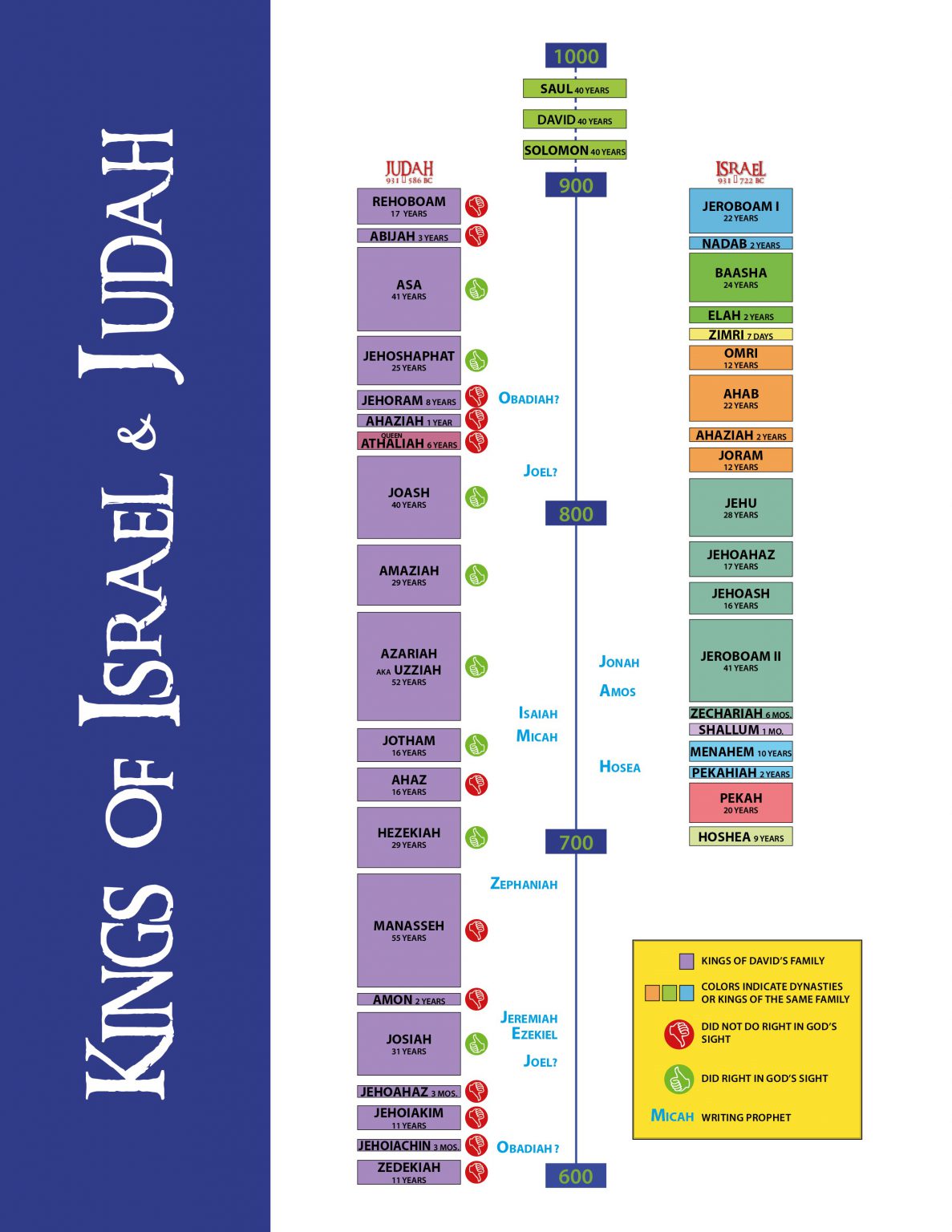 Jehoshaphat’s Strengths
• He was a bold follower of God, he reminded the people of the early years of his father, Asa
• He carried out a national program of religious education
• He had many military victories• He developed an extensive legal structure throughout the kingdom
Just as David had done, Jehoshaphat worshipped the LORD, rejecting false gods, in particular the false gods of Baal. While Jehoshaphat was ruling over Judah, King Ahab and his infamous wife Jezebel were ruling over the Northern Kingdom of Israel. Jezebel had led Ahab to institute the worship of Baal throughout the Northern Kingdom. Apparently, there were worship centers built to Baal throughout the entire northern territory. But Jehoshaphat rejected this false worship, worshipping the LORD and Him alone. He did all he could to keep the false worship of Baal out of the Southern Kingdom. Just as his own father Asa had done, he sought the LORD and obeyed His commandments instead of following the idolatrous practices of Israel (v. 4).
As a result of his faithfulness, Jehoshaphat was blessed by God (v. 5). The LORD enabled him to establish the kingdom under his control. In addition, the LORD blessed him with the esteem of the people who gladly paid their taxes and built up the economic wealth of the nation and the honor of the king.
Jehoshaphat’s heart was wholly devoted to the LORD (v. 6). As evidence of his total devotion, he had all the false worship sites throughout the nation destroyed, removing the high places and the Asherah poles from the nation. Asherah was the goddess of sex and war, with a strong emphasis on sex or reproduction symbolized in the fruitfulness of the land. In worshipping this goddess, the people engaged in fertility rituals of prostitution and homosexuality.
Jehoshaphat set a dynamic example for us. We must turn away from all false worship, and we must worship the LORD and Him alone. We must seek the LORD and obey His commandments. We must be wholeheartedly devoted to Him. When we commit our lives to the LORD, the LORD demands that we be loyal, faithful, and totally given over to Him.
Jehoshaphat not only eliminated the false worship and false teachers throughout the land, but he also instituted a program of godly teaching. Once the false worship with its erroneous instruction was removed, the people needed to be taught the commandments of God. A life of righteousness needed to be held up before them, and the way of righteousness taught them.
Jehoshaphat realized that knowing God’s commands was the first step to getting people to live as they should, so he initiated a nationwide religious education program. He reversed the religious decline that had occurred at the end of Asa’s reign by putting God first in the people’s minds and instilling in them a sense of commitment and mission. Because of this action, the nation began to follow God.
Churches and Christian schools today need solid Christian education programs. Exposure to good Bible teaching through Sunday school, church, Bible study, and personal and family devotions is essential for living as God intended.
Note that this program of godly teaching was launched in the third year of his reign (v. 7). Sixteen instructors were sent to handle the teaching responsibility: five laymen from the royal court and eleven religious personnel, including nine Levites and two priests. Traveling from city to city throughout the Southern Kingdom of Judah, these sixteen men taught God’s Word, His law to the people (vv. 8–9). Most likely, the material taught included Genesis through Deuteronomy, and possibly other books through Samuel and even some of David’s and Solomon’s writings. All these books were in existence at that time.
Next, in launching his reforms, Jehoshaphat reorganized the judicial system of the nation. Apparently, the judges of that day had been neglecting their duties, tolerating injustices, and showing partiality; and, in some cases, they were accepting bribes for favorable judgments. Whatever the case, Jehoshaphat launched a major overhaul of the judicial system. Scripture gives a clear picture of the steps he took:
Jehoshaphat delegated some of the responsibilities for ruling and judging the people, but he warned his appointees that they were accountable to God for the standards they used to judge others.
Jehoshaphat’s advice is helpful for all leaders or people who serve:
(1) Realize that you are serving or judging for God (19:6);
(2) be impartial and honest (19:7);
(3) be faithful (19:9);
(4) act only out of fear of God, not people (19:9). God holds us accountable for the authority we exercise.
19:8 Jehoshaphat appointed priests and Levites to help in administering civil laws. Many years earlier, Moses had chosen men who were capable, faithful, and honest to help him judge disputes among the people (Exodus 18:21, 22). Obviously the best kind of leader is one who always acts with reverence for God. Effective leaders get the job done; faithful leaders make sure the job is done in God’s way and in God’s time. They are careful to instill God’s wisdom in future leaders and God’s values in the entire community.
Lastly whenever we face a severe crisis in life, we need either a way to escape the crisis or the inner strength and knowledge to conquer the crisis. But many times we have no means of escape and no clue how to deal with the emergency or predicament. It is then more than ever that we need the help of someone who has the power or resources to deliver us from the crisis. The crisis may be due to an accident, illness, death, a criminal act, war, a work related matter, or some failure on our part.
But no matter what crises we may face, there is wonderful news. There is Someone who has the power and resources to deliver us, Someone who can make a way for us to escape. This Someone is God Himself. This is clearly seen in the story of the present Scripture.
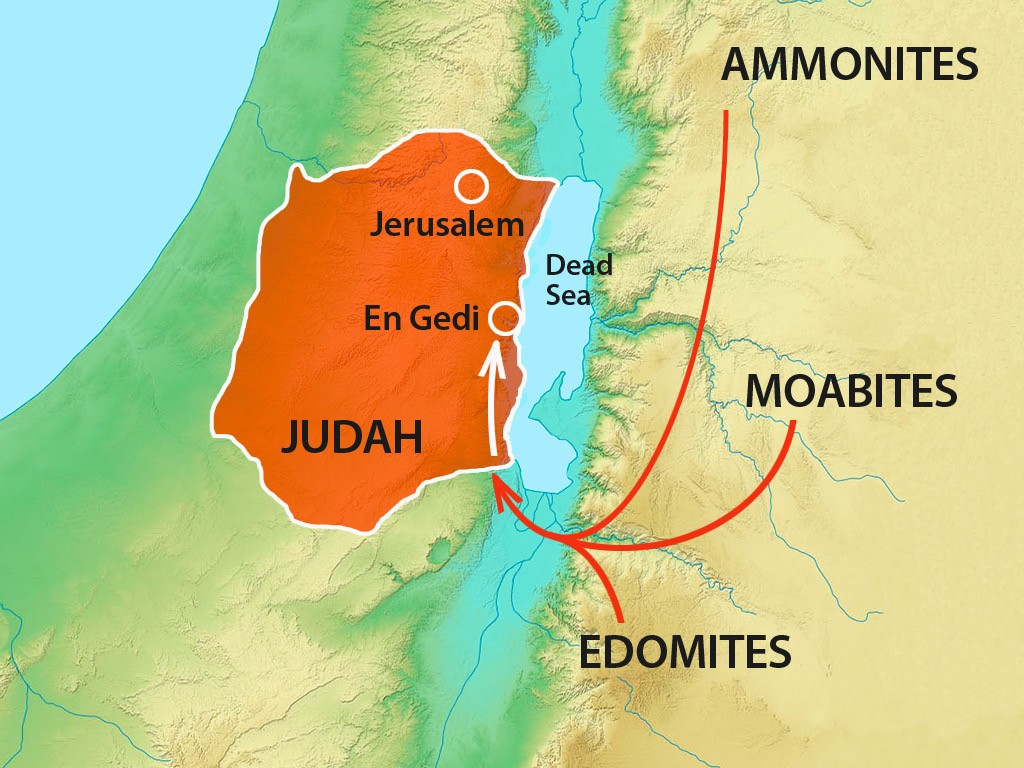 Unexpectedly and shockingly, Jehoshaphat faced the crisis of his life, that of an invasion by a coalition of three powerful nations. Standing all alone, the Southern Kingdom of Judah faced the distinct possibility that it would be utterly destroyed as a nation and taken over by foreigners. Only one hope for escape and deliverance existed. That hope was in the LORD and His mighty power.
When the nation was faced with disaster, Jehoshaphat called upon the people to get serious with God by going without food (fasting) for a designated time.
By separating themselves from the daily routine of food preparation and eating, they could devote that extra time to considering their sin and praying to God for help. Hunger pangs would reinforce their penitence and remind them of their weakness and their dependence upon God.
Fasting still can be helpful today as we seek God’s will in special situations.
20:6 Jehoshaphat’s prayer had several essential ingredients.
(1) He committed the situation to God, acknowledging that only God could save the nation.
(2) He sought God’s favor because his people were God’s people.
(3) He acknowledged God’s sovereignty over the current situation.
(4) He praised God’s glory and took comfort in his promises.
(5) He professed complete dependence on God, not himself, for deliverance. To be God’s kind of leader today, follow Jehoshaphat’s example: Focus entirely on God’s power rather than your own.
20:15 As the enemy bore down on Judah, God spoke through Jahaziel: “Do not be afraid!… for the battle is not yours, but God’s.”
We may not fight an enemy army, but every day we battle temptation, pressure, and “rulers … of the unseen world” (Ephesians 6:12) who want us to rebel against God.
Remember, as believers, we have God’s Spirit in us. If we ask for God’s help when we face struggles, God will fight for us. And God always triumphs.
How do we let God fight for us?
(1) Realize that the battle is not ours, but God’s;
(2) recognize human limitations and allow God’s strength to work through our fears and weaknesses;
(3) make sure we are pursuing God’s interests and not just our own selfish desires;
(4) ask God for help in our daily battles.
Message Audio/Video and Outline: https://upwards.church/leander-campus/watch-now-message-videos
Watch Messages: YouTube-Upwards Church
Read Along Daily Bible Reading: You Version


