
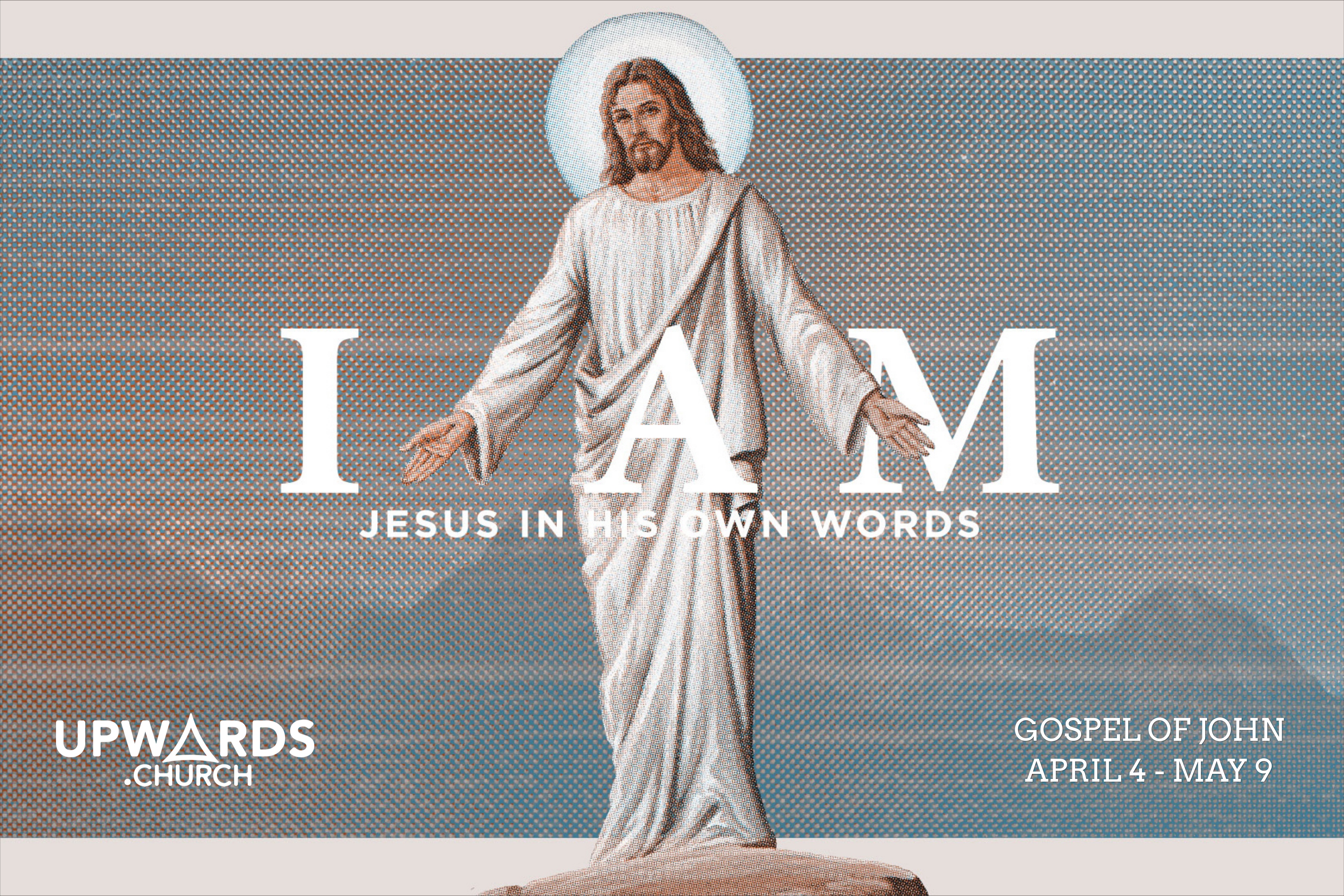
I Am the Resurrection and Life – John 11 – Part 2

I want us to see how Jesus deals with each of our needs in very specific ways.  According to our personalities and needs Jesus meets us differently.  In our passage we see Jesus enter the scene and Martha, the same Martha that we read about in Luke 10 that was too busy to sit down and listen to Jesus rushes out to meet Jesus first.  She is a go-getter she goes out to meet Jesus and has questions, she raises theological issues, she needs to vent, and she needs some answers.   There is no mention of Martha pouring out her soul in His presence. No mention of that happening with Martha but with Mary it was a different story, wasn’t it? For Mary she was more emotional, she was a crier.   Notice what Jesus does. 

He Cries with Me And For Me

32 When Mary arrived and saw Jesus, she fell down at his feet and said, “Lord, if you had been here, my brother would not have died.”
33 When Jesus saw her weeping and saw the other people wailing with her, he was moved with indignation and was deeply troubled. 34 “Where have you put him?” he asked them.
     They told him, “Lord, come and see.” 35 Then Jesus wept.

Mary fell at the feet of the One she knew held the future and wept! She poured out her heart to the One who could make the difference and moved Jesus to work in her circumstances.

 I want to tell you that tears are a language that Jesus understands! Tears speak more about what our hearts feel than any words could ever express. Those tiny drops of humanity that tumble from our eyes, creep down our cheeks and splash on the floor carry the message that our hearts ache and hurt. Tears are the messengers that sometimes substitute for our crippled words.  They spill out carrying with them our deepest emotions. A tearstain on a cheek speaks more than words ever could. A tear falling on a casket says what a spoken farewell never could.  What gives more support than the tears on the face of a friend as we pour out our troubles to them? What do we do when the words just won’t come out right as all the nouns and verbs and adverbs and adjectives lay deflated at our feet?

Tears are a language that Jesus understands.

The scripture says that Jesus was moved by the heartbreak of their souls and that His Spirit groaned inside him and He was troubled.

 How many of us are moved by the heartbreak of our children or some disappointment that crushes their little souls?   Won’t we also move to do all within our power to help them and ease the pain?  As parents we do all within our power to make it all right. 

Why do we think that Jesus doesn’t care about our troubles or the things that trouble us?

John 11: 35, the shortest verse in the entire bible.  Did you know that?  Many people memorize this one because its so easy to remember, but man is it powerful!  “ JESUS WEPT!”  Those two words let us know that God is concerned about the things that break our hearts! God wants so much to be a part of our everyday lives.  Did you know that? God is moved by the tears of his children

Jesus not only cries with us, he also cries for us.  His heart breaks when we don’t recognize our need for him.  His heart breaks from our unbelief.  His heart breaks when we don’t live the lives we could.  I love the compassion in Jesus in Luke 19:41-42 “ As he approached Jerusalem and saw the city, he wept over it  and said, “If you, even you, had only known on this day what would bring you peace”

Think of all the tears that must be shed in heaven as Jesus who died on the cross NONE might perish but all have everlasting life with him, sees each and every moment some lost soul dies and is separated from Him for all eternity.  God created us to fellowship with him and live with him. I believe that Jesus has shed many tears for you if you’re here today and you still have not received Jesus . Jesus knows that time, the last time, you’ll reject the convicting power of the Holy Spirit.  You aren’t able to see that invisible line in the Spirit but Jesus does and for some of you this could be the last time you hear. Tears are a language that Jesus understands when people reject the truth and won’t come to Him.

You might be here and think that you don’t deserve this kind of love, that you’re unworthy. No one has ever loved me before or I’ve lived such a bad life, surely God only wants to punish me. Jesus loves you just the way you are and he’ll accept you and write your name in His Book of Life if you’ll only respond to Him right now. You may have been abused, mistreated, unloved, made fun of your whole life for the way you look, where you live, the clothes you wear or the things you’ve done but Jesus still died for you that you might have life and have it more abundantly as it says in John 10:10.

You may say “I don’t have any self-esteem because of what’s happened to me,” Jesus doesn’t want you to have self-esteem: he wants you to have self-worth! You were worth so much it took the blood of the King of Kings and Lord of Lords, the one at whose name every knee will bow and every tongue confess, to purchase your salvation.  You’re worth so much Jesus died for you!

Some of you may even at this moment be crying on the inside wondering if all this is really true and your head hangs low in your heart as you wonder. My best has never been good enough and I’m just ashamed of what I am but listen to me, God will reach out a nail scarred hand to lift you up and put peace in your heart and joy down deep in your soul if you’ll only let him. Don’t resist Jesus today. Tears are a language that Jesus understands.  Jesus called back a man four days dead in the grave, bloated and stinking, and He does the same today for you.

One of the most exciting things to me about the ministry of Jesus was His willingness let others help him.  Anything that they could do, He allowed them to do!   I like that.
He sent Peter and John to prepare the upper room for the Last Supper.
On a later occasion, we know that while they could not go to Calvary and die for the sins of the world, He took them to Gethsemane and encouraged them to watch and pray with Him.
And while Peter could not still a storm with a single word, he was invited to walk on the water.
As a parent, you smile to see your children imitating you and trying to help you work, so it pleases Jesus to see us help Him.

Like our purpose statement says we are here “LOVE GOD, LOVE PEOPLE and SHARE JESUS” We are commissioned to proclaim the Gospel message to a lost and dying world.

He Invites Me to Help Him Free Others

39 “Roll the stone aside,” Jesus told them.  But Martha, the dead man’s sister, said, “Lord, by now the smell will be terrible because he has been dead for four days.”

43 Then Jesus shouted, “Lazarus, come out!” 44 And Lazarus came out, bound in graveclothes, his face wrapped in a headcloth. Jesus told them, “Unwrap him and let him go!”

There are some things that only God can do. On the other hand, there are those things that He wants us to do. In fact, He invites our participation in more things than we actually are willing to do. Only Christ has the authority to command the dead to come out of the grave. But once that miracle has been accomplished He turns to His disciples and those around and encourages them to join in the blessing by instructing them to “move the stone” and then to “unwrap him and let him go.”

A great miracle had occurred. There was no doubt about that, but it required a finishing touch. The man was raised but was not yet completely free. Look closely at the picture here.

Lazarus is a living man still wearing the clothes of death. It would be pretty strange for someone to come in today wearing a suit or dress dragging a coffin.  Yet there are many, even in this church, who have been made alive by the grace of Jesus Christ but they continue to wear their grave-clothes or drag around a coffin.  In fact, some are in such a state that, unless you asked them, you would think they were still dead.  It is possible to be alive in Christ but acting like you are dead. 

For example we see this with the church at Corinth.
They were saints (I Cor. 1:2) but they were still wearing their old sinful grave clothes.  We see:  arguing and division among them (1:10-13), people who were “controlled by sinful desires” and “acting like people who do not belong to the Lord” (3:1-4). They were sexually immoral and didn’t even care! (5:1-2) “They had done more harm when they met together than good and had abused of the Lord’s Supper.” (11:17-22, 30) 

The truth is that makes little difference how you feel personally about the matter; the truth remains that people see you for how you live. When Lazarus came out perhaps someone said, “He must still be dead, he is wearing his grave-clothes.” To this Jesus would reply, “Loose him and let him go.”

He was a man moving but tied up   He may have been wrapped so that he could not freely walk yet he could shuffle along like a man in a sack.   I know Christians who are able to move in one direction yet they do not seem to be able budge an inch in any other direction.  Lazarus was strong enough to come out of the grave, but he needed help to remove his own bandages. . Just as there are those who are strong enough in one area of their Christian life yet there are other areas in which they are like babies.   You may know your Bible but do not know how to live right. Or know how to worship God with your life …or maybe you don’t give as you should…or you don’t witness or pray.  So we need others to help us, to encourage us to show us the way.

There are times when we need help and there are times when we need to help others.   They may have a large rock in front of an area of their life or they may be wrapped in a problem.  

What are some of the common rocks or wrappings that keep us from being all we can be in Christ?
One is ignorance, some of you have knowledge but you need to be led. Unless you already know all there is to know about God’s Word and how to live then you need to be around other believers by attending Worship, serving somewhere and attending a Small Group.  Others WILL be an example to you, to show you, teach you and help you.  You will be an encouragement to others in your stronger areas.  We need each other!

Another is sorrow.  Some of you are held back by your sorrow for the past.  We need others to listen to us. Some of you may be held back by your fear of the future.  We need others to encourage us.

The grave clothes were left on Lazarus so that the people present might join Christ in His work.  They could say, “Jesus raised Lazarus, and I was there and helped to unloose him from his grave-clothes.”   You will want to say the same thing, I get to teach and love the children at my church, I get to help others, I get to make a difference for Christ! That is what we are to do. 
There is an incredible feeling of satisfaction that we may have done something to cheer, or to teach, or to encourage a soul.

Darrell

www.Upwards.Church

Watch Messages: YouTube-Upwards Church

Facebook: Upwards Church

Posted in I Am - Gospel of John | Tagged , , , , , , , | Leave a comment

I Am the Resurrection and Life – John 11 – Part 1

Today we look at life and death and afterlife.  In today’s passage out of John 11, we will see two ladies, Mary and Martha who felt hopeless and angry.  Their brother Lazarus was sick and dying, but Jesus did not go to help.  Jesus loved Mary, Martha and Lazarus but did not help them when they expected it. This is an interesting picture of Jesus, someone who doesn’t immediately take us out of our situations. Maybe you’re a little uncomfortable with that image. But there was a reason, which we will see.  Jesus eventually came through for Mary, Martha and Lazarus and He will come through for you.  Like Mary, Martha and Lazarus we too need to know that life and faith will be difficult.  They needed Jesus to help them through difficult times and we will too.

I NEED JESUS BECAUSE…

Sickness And Death Will Be A Part Of My Life

1 A man named Lazarus was sick. He lived in Bethany with his sisters, Mary and Martha…3 So the two sisters sent a message to Jesus telling him, “Lord, your dear friend is very sick.”

There are many questions that immediately come to mind when we read through chapter 11 of John.  Why was Lazarus sick? Why did Jesus wait two days after hearing Lazarus was sick? Why did Lazarus have to die? The questions are endless.

And so are the questions we often have as we go through our own type of difficulty and dillema. The “whys” of life can drive you crazy.  

Understand that Jesus loved Lazarus. The Bible is very clear on that. Jesus loved him, but Lazarus was sick! You can be a friend of Jesus and still be sick! You can love Jesus and still be sick! That’s pretty clear in the scriptures. The love of God does not exempt one from sickness or sorrow or physical death.

Our sickness could be a number of things: physical, emotional, mental, family problems, and so on. Sickness can be termed as “that which causes any area to be infected with imperfection.” Here on earth human nature is infected with imperfection.

Even If He Delays Helping He Is In Control So I Should Keep My Faith

5 Although Jesus loved Martha, Mary, and Lazarus, 6 he stayed where he was for the next two days and did not go to them. 7 Finally after two days, he said to his disciples, “Let’s go to Judea again.”

  17 When Jesus arrived at Bethany, he was told that Lazarus had already been in his grave for four days.

Jesus waited two days before he came to help.  John says “finally!” he goes.  When your waiting on God to answer a prayer, for Jesus to help you it seems like forever.  When he does help you may feel like saying “finally!”    It says in verse 17 that “when he arrived Lazarus has been in his tomb for 4 days” 

Have you noticed the attitude of Jesus as he heard the news of Lazarus’ sickness? He knew that Lazarus was dying but it didn’t seem to affect Jesus at all. He just kept doing what he needed to do. Jesus wasn’t upset in the least for he already knew what was going to happen when he reached Bethany. He already knew that there were no impossible situations and that his power to bring about a resurrection was not limited by any circumstances.

I think it would help us greatly to realize that our seemingly hard or impossible circumstances are nothing to God. His power transcends our trouble. His power is not limited by our faithlessness or our hopelessness. Jesus has resurrection power and he cannot only bring victory when we haven’t given up hope, but he is just as able to bring us the victory after we have long given up hope.

When it seems that our finances have already died and the stink is beginning to arise; when it seems that our health is completely gone and the doctors have given up on us; when it seems that God has waited too long and the stink of our unbelief, distrust, and hopelessness rises; that’s when Jesus is ready to show His power and glory in us.

When Jesus finally arrived in Bethany, the family of Lazarus was long past having hope. Lazarus was already dead, buried and his grave was sealed.  One of worst lies we can believe is “it’s over and there is nothing that God can or will do about it now.” It could come from our own disbelief or from the enemy’s whisper.  If he can get you to give up on God, then the he has accomplished his goal.

That should be our first indication that God isn’t finished with us yet because the devil can’t speak the truth, therefore we should realize that God’s answer is still coming in his own time and in His own way. Just keep on trusting and having faith in God.


Perhaps your prayer seems that it will never be answered. We find ourselves in distress over finances, relationships within the family, and any number of things and it seems that God has turned a deaf ear to your cry. Things have gone from very bad to much worse and now there is no visible way to make things right.

You are wrapped up in doubt and fear. Your faith is blinded; your hands and feet are bound up from working for the Lord.  A stone of unbelief has been rolled across the door to your heart and has now convinced you that your attitude, your heart and your life stinks to God so it’s time to quit and walk away. You are shrouded in a tomb of darkness and your spiritual grave is sealed and your life is over and hopeless.

Here are some signs that this sickness is happening.   The first thing that happens is that I get stinking thinking. I start the blame game, blaming everything and everyone else for the sin in my life.

I will blame my own lack of spirituality on the church saying that “I can’t feel anything anymore” or that “the Spirit isn’t moving in this church.”

Then I get “excusitis”, and find a multitude of reasons why I can’t or won’t serve the Lord. Then I find it hard or impossible to talk to about the things of God.   Next is swelling.  I swell up with pride, anger, frustration, or a bad spirit.  By now more than likely they have already began to draw back from everyone in the church and to walk away from the place where there is encouragement and hope. My spiritual life is decaying rapidly!   Finally I bury myself in my own life, working, kids, home, etc. and it’s as though the church no longer exists for me. The stink of sin is easy to see in my life! The stench of hopelessness and doubt emanates from me and it’s very hard for others to stomach my attitudes when around me. I am sick and dying spiritually and relationally and the stone has been rolled in front of my tomb and sealed.

Why does Jesus let us go so far before he comes? Why must we sometimes get so deep into our trouble and our attitudes begin to stink before he comes to our rescue?  Jesus wants us to know that it’s not in our power to overcome our problems and our own sinful hearts. That power must come through “His Resurrection Power” It will come in his time and in his manner.  But we must remain hopeful, not bitter.  We should be pleasant not stinky. 

Jesus arrived in Bethany four days after they’d buried Lazarus. Martha greeted him first, and told him, Lord, if only you had been here YOU could have saved him. And Jesus said: “Lazarus will rise again.” Martha knew enough about Jewish theology to know that one day, all the graves will open and the dead will rise from them. She said: “I know he will rise again in the resurrection of the dead.”
Martha wouldn’t be comforted, I know about the resurrection — but that’s so far off. Jesus then uttered the basis for all history’s hope and direction – “I AM THE RESURRECTION AND THE LIFE!”

What a claim! Jesus claimed to be in charge of everything, life, death, the afterlife and everything between. 

Death is the great equalizer in life. We may all have different lives, come from different backgrounds, experience different joys and sorrows, but the one thing that links all mankind together is death. We are all going to die.

Some of the questions that mankind has tried to answer about death are:
Is death the end? Is there life after death? Why is there death?  Will we live again?

With Him, Even Death Is Not The End

25 Jesus told her, “I am the resurrection and the life. Anyone who believes in me will live, even after dying.26 Everyone who lives in me and believes in me will never ever die. Do you believe this, Martha?”

What did Jesus mean? How could His words help Martha in her time of loss? How can the words of Jesus help you in your time of loss? What comfort can Jesus’ words give you, even today, as we say goodbye to loved ones?


Well, Martha knew that things would be better someday. The resurrection, that sweet by-and-by, that hope of seeing her loved one again someday. She had a hope that things would be OK someday. Jesus said, “I am that hope. You’re waiting for the resurrection to give you hope? Well, I am the resurrection. I can give you hope. I am the promise of a better day. I am who you need to get you through this. I am the promise of things being better someday.”
You see Jesus is our hope. He is our only hope of surviving death, because He is in control over it. He is the resurrection. That word means “alive again.” That is, even when life hits us hard, when the scariest thing in the world attacks us, the thing we have no control over, we can trust in Jesus, because He has the power to make us alive again.
And Jesus went on. He said He was the resurrection. Then He said He was the life. Well, what did He mean? By saying that He was the resurrection He meant He is our only hope of surviving death. So, by saying He was the life, He meant that He is our only hope of getting through our days now. He is the hope for tomorrow and the strength for today. He will help us survive death, and He will help us survive life as well. Sometimes life is hard. But Jesus said, “I will help you if you ask.” There is nothing that life throws at you that you and Jesus can’t handle together.
But it requires trust in Him. Jesus continued speaking to Martha: “He who believes in me will live, even though he dies; and whoever lives and believes in me will never die.” This hope of eternity comes when we place ourselves into God’s hands. But this strength for today comes when we keep placing ourselves into God’s hands. We will remain strong only as we continue to trust in Him.
To comfort the grieving, hurting Martha, Jesus reminded her that He is the lord of the living and the dead. He is master of death and life. You can commit to Him your eternity and your today’s. He is in control of whatever happens to us.  And He also wants to remind you that He can give you strength and hope until the day your name appears in the obituaries. I want us to see how Jesus deals with each of our needs in very specific ways. 

According to our personalities and needs Jesus meets us differently.  In our passage we see Jesus enter the scene and Martha, the same Martha that we read about in Luke 10 that was too busy to sit down and listen to Jesus rushes out to meet Jesus first.  She is a go-getter she goes out to meet Jesus and has questions, she raises theological issues, she needs to vent, and she needs some answers.   There is no mention of Martha pouring out her soul in His presence. No mention of that happening with Martha but with Mary it was a different story, wasn’t it? For Mary she was more emotional, she was a crier.  We will see what Jesus does in the next post.

Darrell

www.Upwards.Church

Watch Messages: YouTube-Upwards Church

Facebook: Upwards Church

Posted in I Am - Gospel of John | Tagged , , , , , , , , , , , | Leave a comment

I AM – Gospel of John Introduction

I_Am_posterWe all long for peace, security, and fulfillment. Denying that we have those needs is pointless. Trying to meet them in unhealthy ways is counterproductive. And languishing in frustration when those needs are not met is unnecessary, because God has a better plan. Jesus came to tell us about Himself. We can find our satisfaction in a relationship with Jesus Christ. Through Jesus we can find peace, security, and fulfillment—everything we need. He is the great “I Am.”

Dates      Titles                                     Scriptures
April 4 – I Am the Resurrection and Life (John 11) EASTER
April 11 – I Am the Bread of Life (John 6)
April 18 – I Am the Good Shepherd (John 10)
April 25 – I Am Way, Truth & Life (John 14)

May 2 – I Am the True Vine (John 15)
May 9 – I Am the Living Water (John 4) Mothers’ Day

John’s purpose for writing the gospel: “these are written so that you may believe that Jesus is the Christ” (John 20:31).

John’s 2 questions for the reader to wrestle with: 1. Who is Jesus? 2. What do I do with his words/teachings?

“I AM”

OT Background: Exodus 3:1-20, especially verses 13-18. (cf. Is. 41:4; 43:10-13)
NT fulfillment: John 8:58

When God calls Himself the “I Am” in Exodus 3, it’s a pivotal moment in redemptive history. God reveals Himself to His people and comes to redeem them out of exile and lead them into a new life. God’s name discloses who He is and what He is like. He is the I Am, the eternal, unchanging, self-existent one, infinite and glorious in every way, and above and beyond all created things. He is God.

When Jesus applies the title “I Am” to himself, he claims to be God (John 8:58). Not a helper to God or a great teacher, but the divine, eternal, pre-existent, infinite, perfect Being. He is Israel’s God. He is greater than Moses because he is the God of Moses. He has life in himself and he can give life to us.

I hope that you can join us for our new series, “I Am” Jesus in His Own Words

Darrell

www.Upwards.Church

Watch Messages: YouTube-Upwards Church

Facebook: Upwards Church

Posted in I Am - Gospel of John | Tagged , , , , , , | 1 Comment

Enough Rebellion – Numbers 16

Rebellion involves knowing what God wants me to do and refusing to do it.

Some notorious historical figures might have remained anonymous if they hadn’t tried to grab on to more than they could hold. But by refusing to be content with what they had, and by trying to get more than they deserved, they ended up with nothing. Korah, one of the Israelite leaders, was one such person.

Korah was a Levite who assisted in the daily functions of the Tabernacle. Shortly after Israel’s great rebellion against God (Numbers 13-14) (or see the last post) Korah instigated his own mini-rebellion (Numbers 16:1-2).

Korah was the ringleader of the coup. He was a Levite and, interestingly, a cousin to Moses. Their fathers were brothers. Three other brothers of the tribe of Reuben were also ringleaders: Dathan, Abiram, and On. Korah was from the Kohathite clan. The Kohathites and the tribe of Reuben camped on the south side of the Tabernacle, camped side by side. Living close together and being friends and co-leaders gave them ample opportunity to sit around in the evenings grumbling, murmuring, and sharing their complaints and disappointments.

Korah recruited a grievance committee and confronted Moses and Aaron. Their list of complaints boils down to three statements (Numbers 16:3-4): (1) You are no better than anyone else; (2) everyone in Israel has been chosen of the Lord; (3) we don’t need to obey you. It is amazing to see how Korah twisted the first two statements—both true—to reach the wrong conclusion.

  • Rebellion reveals deeper problems.

Whenever you find complaining and rebelling among God’s people, there’s usually a “stated reason” and a “hidden reason.” Korah’s public complaint was that Moses and Aaron were “running things” and not giving the people opportunity for input. He wanted more democracy in the camp. After all, the Lord dwelt in the entire camp and all the people were “a kingdom of priests” (Ex. 19:3-6), so who were Moses and Aaron to elevate themselves above everybody else? The hidden reason was that Korah wanted the Levites to have the same privileges as Aaron and his sons (Num. 16:10). Korah wasn’t satisfied to be assisting the priests; he wanted to be a priest.

Korah and his associates had seen the advantages of the priesthood in Egypt. Egyptian priests had great wealth and political influence, something Korah wanted for himself. Korah may have assumed that Moses, Aaron, and his sons were trying to make the Israelite priesthood the same kind of political machine, and he wanted to be a part of it. He did not understand that Moses’ main ambition was to serve God rather than to control others.

Like Korah, we often desire the special qualities God has given others. Korah had significant, worthwhile abilities and responsibilities of his own. In the end, however, his ambition for more caused him to lose everything. Inappropriate ambition is greed in disguise. We should concentrate on finding the special purpose God has for us instead of wishing we were in someone else’s shoes.

Note the reaction of Moses: he fell face down, seeking God (Numbers 16:4-11). How long he stayed upon his face seeking the Lord is not stated. But falling prostrate apparently so startled the rebels that they temporarily held their peace, somewhat backing off until he arose from the ground. Note that Moses did not lash out nor retaliate against the rebels. When they first confronted him face to face, he simply fell prostrate to the ground—in great meekness and humility—and took the matter to the Lord.  This is a great lesson for us as well; when confronted with bad news, or argumentative people, we should go to the Lord in prayer first.

When Moses got up, he responded: 

They were the ones who had gone too far. He used their own charge against them. They were guilty of abusing and trampling underfoot God’s call to them to serve as Levites (Numbers 16:8-9). They had personally been given the privilege of being set apart to serve God and His people. This should have been enough: they were already leaders and servants of God, appointed to lead God’s people as directed by Him. They were guilty of seeking the priesthood itself—seeking a much higher position that should come only from God, never from selfish effort.  Numbers 16:10-11

They were revolting against the Lord Himself!  (Numbers 16:11)       

  • Rebellion is ultimately against God.

When Jude wrote to warn the early church about false teachers, he used Korah as an example, pointing out that he “rejected authority and spoke evil of dignitaries.”  (Jude 5-11).

The test Moses proposed was a simple one. If Korah and his men were indeed priests acceptable to God, then let them bring their censers to the tabernacle and see if God would accept them. Surely the rebels remembered what happened to Nadab and Abihu when they rashly brought “strange fire” before the Lord (Lev. 10), but even this warning didn’t deter them.  The next morning, Korah and his followers showed up with their censers and stood with Moses and Aaron at the entrance of the tabernacle, while Dathan and Abiram stood with their families at the doors of their tents on the south side of the tabernacle. God showed his displeasure with the rebels as the earth opened up and swallowed them! (Numbers 16:32-35)

Korah’s story of rebellion gives us numerous warnings:

  1. Don’t let desire for what someone else has make us discontented with what we already have.
  2.  Don’t try to raise our own self-esteem by attacking someone else’s.
  3. Don’t use part of God’s Word to support what we want now, rather than allowing its entirety to shape our worldview.
  4. Don’t expect power and position to be an end all; God may want to work through us in the position we are now in.

The selfish desire for greatness and authority is a common theme in Scripture, whether it’s Korah opposing Moses and Aaron, Absalom defying his father (2 Sam. 15), Adonijah claiming the crown (1 Kings 1), the disciples arguing over which of them was the greatest (Luke 22:23-25), or Diotrephes loving to have preeminence in a local church (3 John 9-11). And yet the most important place in the Christian life is the place of God’s choice, the place He’s prepared for us and prepared us to fill. The important thing isn’t status but faithfulness, doing the work God wants us to do. Every member of the church, the body of Christ, has a spiritual gift to be used for serving others, and therefore every member is important to God and to the church (1 Cor. 12:14-18).

  • Rebellion must be replaced with submission.

Whether it’s the ancient camp of Israel or a modern city, no society can function without subordination. Somebody has to be in charge. Parents have authority in the home, teachers in the classroom, managers in the factory or office, and civil servants in the city or nation (Rom. 13; 1 Peter 2:13-25). When this kind of order breaks down, then society is in serious trouble. God places us in families, churches, communities, countries and all of them have people who the responsibility to lead, manage and we must submit to the authority God has placed over us.

Darrell

www.Upwards.Church

Watch Messages: YouTube-Upwards Church

Facebook: Upwards Church

Sources:
Preacher’s Outline and Sermon Bible – Commentary – The Preacher’s Outline & Sermon Bible – Numbers.
Bible Exposition Commentary (BE Series) – Old Testament – The Bible Exposition Commentary – Pentateuch.
Life Application Study Bible.
Posted in Enough is Enough - Numbers | Tagged , , , , , , | Leave a comment