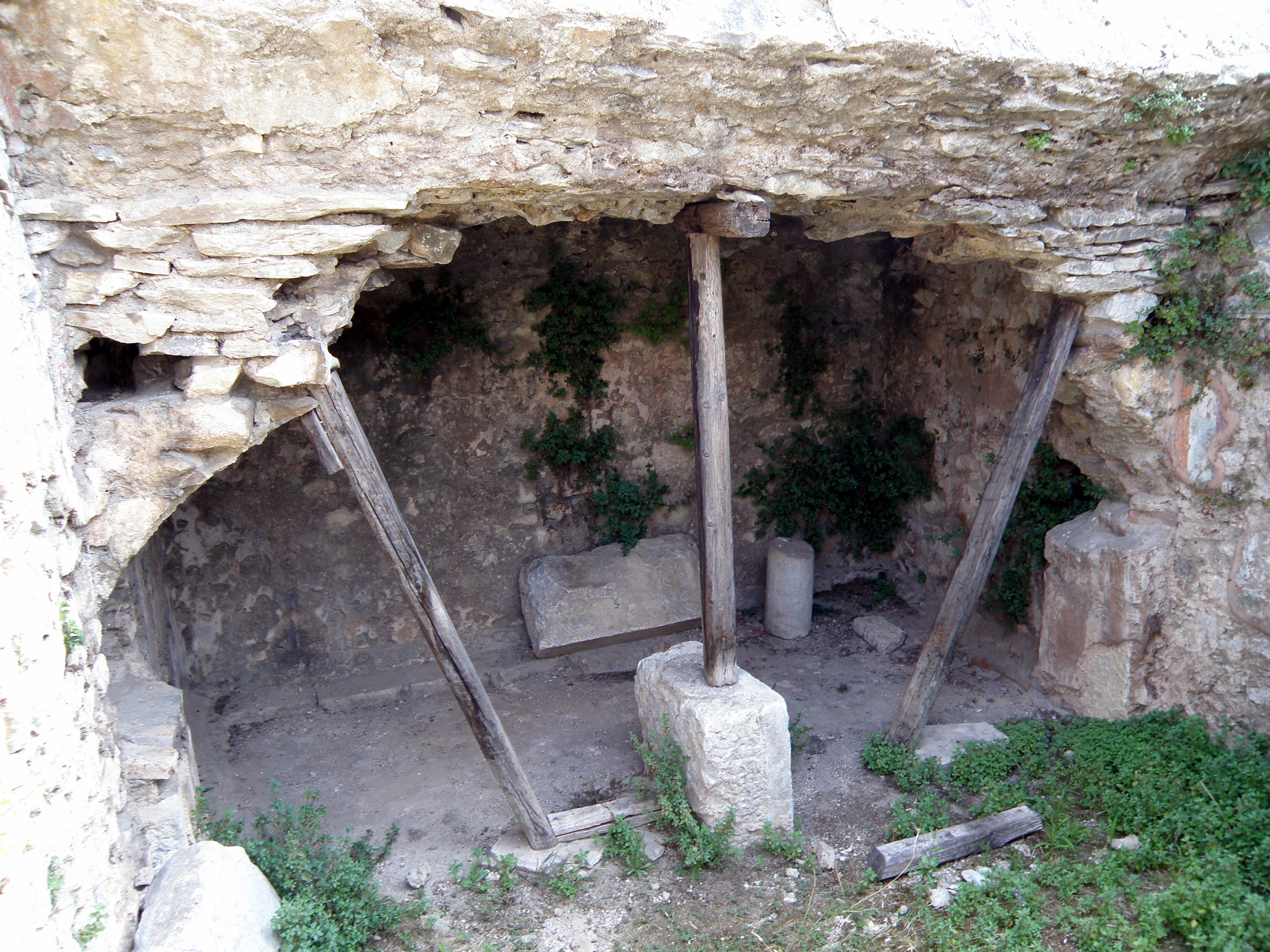
Philippians 1:12-21 – Commentary

HONOR CHRIST BY LIFE OR DEATH / 1:12-26

Paul explained to the Philippians that they shouldn’t despair over his imprisonment because what had happened to him was helping to spread the gospel. Paul’s example encouraged many believers to willingly take a stand for Christ and preach the Good News regardless of the consequences. Paul himself never stopped preaching, even in his confinement. The soldiers guarding Paul heard the gospel, and they learned that he was in prison not for being a criminal, but for being a Christian. Despite the differing circumstances of Paul’s life, his goal never changed—the gospel of Christ was to be preached to as many people as possible. This, too, should be our goal. While we go about the busyness of daily living, we should remember that we are to tell others about Christ and represent him in every situation.

1:12 I want you to know, beloved, that what has happened to me has actually helped to spread the gospel.NRSV Paul called the Philippians beloved, again emphasizing his fatherly love for them, and he turned his attention to a concern expressed by the Philippian church through Epaphroditus. The Philippians were certainly concerned for Paul’s well-being (expressed by their financial gift), but they were also concerned that Paul’s imprisonment had slowed down the spread of the gospel. By the time of this writing, Paul had been in prison about two years. Paul even

 LIFE APPLICATION – PIONEERS
Missionaries of the past who boarded ships to go to foreign lands did not expect to see their homeland shores again. Their good-byes were final, in terms of earth time. Some early missionaries (from Europe to the New World) actually sold themselves into slavery in order to preach to slaves. There was no turning back for them.
Pioneering requires a high sacrifice. Paul’s passion was for others to discover the Good News of eternal life through Jesus Christ. No matter what.
Pressing through frontiers of spiritual darkness still requires pioneers today—people who will reach neglected people or new people groups. Pray for missionaries, support them, join them.

may have questioned God’s reason for his lengthy imprisonment, for it effectively put him out of commission for further traveling and preaching. But Paul had come to understand, and he wanted the Philippians to know beyond any doubt, that what has happened (that is, Paul’s imprisonment) has actually helped to spread the gospel. Although one of Christianity’s most tireless missionaries had been imprisoned, God’s work could not be slowed down. In fact, God was using Paul’s imprisonment to actually help spread the gospel to Europe. “Helped to spread” is also translated “furtherance” and comes from the Greek word meaning “to cut the way before.” The picture is of pioneers cutting through uncharted territory. Paul’s arrest and subsequent lengthy imprisonment had resulted in the gospel moving in new directions. Paul went on to explain this in the following verses.

1:13 So that it has become known throughout the whole imperial guard and to everyone else that my imprisonment is for Christ.NRSV Paul’s long arrest had allowed him to share the gospel with the very soldiers who guarded him. As a result, the whole imperial guard (the Praetorian guard, elite troops housed in the emperor’s palace) and everyone else (others in the palace, other believers, those who came to visit Paul, those in power, and members of the Jewish community—see Acts 28:17-23) knew that Paul was in prison only because of his belief in Christ and teaching of the gospel, not for being a criminal. Paul’s example, fervent love for Christ, and manner of life, even in prison, had allowed others to see the gospel in a whole new light. The custom of the time was for a prisoner to be guarded by a soldier who would be replaced every four hours. These soldiers certainly heard Paul’s words to those who visited, as well as his message spoken to them personally. Paul was confident that the message of the gospel was infiltrating the Roman army and the palace itself (see comments on 4:22).

How did Paul end up in chains in a Roman prison? While he was visiting Jerusalem, some Jews caused a riot and had him arrested. Eventually, Paul appealed to Caesar to hear his case (Acts 21:15-25:12). Paul was then escorted by soldiers to Rome, where he was placed under house arrest while awaiting trial—not a trial for breaking civil law, but for proclaiming the Good News of Christ. At that time, the Roman authorities did not consider this to be a serious charge. A few years later, however, Rome would take a different view of Christianity and make every effort to stamp it out of existence. Paul’s house arrest allowed him some degree of freedom. He could have visitors, continue to preach, and write letters such as this one. A brief record of Paul’s time in Rome is found in Acts 28:11-31. The Jews certainly hoped that Paul’s arrest would silence his teaching; the Romans hoped the arrest would keep the peace (Paul’s teaching sometimes infuriated his audiences to the point of rioting). However, locking up Paul only served to spread the gospel through new preachers to new audiences.

 LIFE APPLICATION  A NICE REFLECTION
Being imprisoned would cause many people to become bitter or to give up, but Paul saw it as one more opportunity to spread the Good News of Christ. He realized that his current circumstances weren’t as important as what he did with them. Turning a bad situation into a good one, Paul reached out to the Roman soldiers who made up the palace guard and encouraged those Christians who were afraid of persecution. We may not be in prison, but we still have plenty of opportunities to be discouraged—times of indecision, financial burdens, family conflict, church conflict, or the loss of our jobs. How we act in such situations will reflect what we believe. Like Paul, look for ways to demonstrate your faith, even in bad situations. Whether or not the situation improves, your faith will grow stronger.

1:14 And most of the brothers and sisters, having been made confident in the Lord by my imprisonment, dare to speak the word with greater boldness and without fear.NRSV Not only was the gospel being spread by Paul through his contacts in prison, but his efforts were being multiplied outside the prison. Paul’s faith, confidence, and patience in spite of his imprisonment helped his fellow believers become more confident in the Lord. Whatever the reason for their lack of confidence before—whether they had been afraid to speak up, whether they left all the mission work to Paul because they lacked his boldness, or whether they wondered if faith in God was worth the price—they saw Paul’s faith and it strengthened their own. They began to tell the gospel with greater boldness and without fear. With more and more believers gaining boldness in telling the gospel of Jesus Christ, more and more people heard the message and had the opportunity to accept it. This gave Paul great joy. He passed this good news on to his friends in Philippi, that they might know how God was working through his difficult situation.

1:15 It is true that some preach Christ out of envy and rivalry, but others out of goodwill.NIV Paul had been made aware that some of the brothers and sisters who had been newly emboldened to speak about Christ were doing so out of envy and rivalry. But others were preaching Christ out of goodwill—that is, with pure motives. They wanted to help others to faith and they wanted to glorify God.

 LIFE APPLICATION – ON THE FRONT LINES
On Omaha Beach, June 6, 1944, when regiments of men were pinned down in fear, desperate for confidence, a brigadier general who could have sent written orders took charge by roaming the beaches like a coach along the sidelines. His language was coarse but his courage was unmistakable. He moved the beachhead uphill, turning a disaster into victory.
Paul’s battle was spiritual, and he carried no rank except “servant of Jesus Christ.” But his bold leadership inspired many others to share the gospel. His courage dissolved others’ fear. See, his life told them, it can be done!
How can you become less inhibited about witnessing for Christ? First, watch those who do it. Second, do it yourself. And third, lead others in doing it. Your confidence will sit still as long as you do and grow as fast as you step out from behind your cover.

This comment by Paul provides an interesting look into people’s motives. All of those who preached Christ were sincere believers—they had the right doctrine and they acted upon it by sharing it with others. While the end result might be the same (people hearing the Good News), some actually had wrong motives in their preaching. Their motives stemmed from envy and rivalry. Now that the great missionary Paul had been virtually silenced in prison, some of these brothers were hoping to make a name for themselves in the vacuum that Paul left. Perhaps they hoped for great notoriety, trying to turn people’s eyes away from Paul and toward themselves. These people had no personal love for Paul. They even hoped that their planting churches and gaining converts would upset Paul and make his imprisonment even more frustrating.

 LIFE APPLICATION – CHRISTIAN COMPETITION
These Christian preachers were driven by envy and rivalry. They saw the authoritative position Paul enjoyed, and that painful awareness drove them to desire the same advantage. They were striving to equal or excel Paul’s position. Christian leaders today can fall for this same temptation: to gain leverage over another or to compete for status or position. God gives us what we really need, so Christian leaders must learn to be content with what God has given (see 4:11). Our eternal life in Christ is our greatest asset, so we should not compete against or strive with others.

1:16 The latter do so in love, knowing that I am put here for the defense of the gospel.NIV Those who preached Christ “out of goodwill” (1:15) did so in love, spreading the Good News of Christ with pure motives. They knew Paul was in prison, not because of any criminal act, but simply for his defense of the gospel (see also 1:7). Paul had landed in prison because of his devotion to Christ and his zeal to spread the gospel. Yet his fellow believers in Rome, some of whom may have been his spiritual children, fearlessly picked up where he left off, continuing and expanding his ministry.

 LIFE APPLICATION – FOR A PURPOSE
Paul could have become depressed, discouraged, or disillusioned. He could have wallowed in self-pity and despair. Instead, he regarded his imprisonment as being appointed or destined. He considered, “I am put here to fulfill God’s greater purpose.” God had used Paul’s imprisonment in Rome to bring the gospel to the Roman emperor. Do you have difficulty accepting your station in life? Do you resent where God has placed you? Although education and focused effort may enable us to take a new role or get a new job, often God puts us in a place to serve. Whether it is an actual prison or a place that feels like one, God wants you to serve him faithfully and joyfully.

1:17 The former preach Christ out of selfish ambition, not sincerely, supposing that they can stir up trouble for me while I am in chains.NIV Those who were preaching Christ “out of envy and rivalry” (1:15) were doing so because of their own selfish ambition, making their motives less than pure. These preachers were not so much interested in their message as they were in their reputation. Apparently their doctrine was sound—these were not false teachers—Paul never tolerated any kind of false teaching (see 2 Corinthians 11:4; Galatians 1:6-9). The error was in motive, not in content. These self-seeking opportunists hoped that Paul would be angered at the notoriety of new and powerful preachers who took his place while he was in prison. Little did these men understand Paul’s sincere love for God and his single-minded focus on spreading the gospel.

1:18-19 But what does it matter? The important thing is that in every way, whether from false motives or true, Christ is preached. And because of this I rejoice.NIV Paul had an amazingly selfless attitude. He knew that some were preaching to build their own reputations, taking advantage of Paul’s imprisonment to try to make a name for themselves. Regardless of the motives of these preachers, Paul rejoiced that whether from false motives or true, Christ is preached. Some Christians serve for the wrong reasons. Paul wouldn’t condone,

nor does God excuse, their motives, but we should be glad if God uses their message, regardless of their motives. Paul had no concern for his own reputation or success; he had dedicated his life to glorifying God. He understood that God was being glorified even as he sat in chains; thus, Paul could rejoice. That is the way it is in the church. It never lives by its deeds, not even by its deeds of love. Rather it lives by what it cannot see and yet believes. It sees affliction and believes deliverance.

Dietrich Bonhoeffer


Yes, and I will continue to rejoice, for I know that through your prayers and the help given by the Spirit of Jesus Christ, what has happened to me will turn out for my deliverance.NIV Paul had been able to rejoice during his two years in prison, could rejoice that good results could come from preachers with bad motives, and would continue to rejoice no matter how long he would remain in prison or how long he would live. Paul knew that all that had happened (resulting in his imprisonment, see also 1:12) would end in his deliverance.

 LIFE APPLICATION – DELIVERANCE
Paul, the prisoner, expected to be delivered, but not by a daring raid. In fact, the means of his escape are downright curious: prayer and the help of the Holy Spirit. What kind of talk is this?
Prayer—his own, no doubt, and the prayers of many Christians. Paul counts them as part of his life’s treasure.
The help of the Holy Spirit—the calm assurance that God is present and potent.
Paul may never escape detention; his shackles may never be loosened. So what? He is delivered.
Today, try prayer, and whatever your circumstances, accept the help of the Holy Spirit, the key to real freedom.

What kind of deliverance did Paul envision? While most scholars agree that Paul was quoting from Job 13:16, “Indeed, this will turn out for my deliverance” (niv), they disagree on what Paul meant. Some scholars argue that Paul was referring to his upcoming trial, believing that he would be acquitted and freed (which did happen). However, this is unlikely because of Paul’s words in the next verse that reveal his uncertainty about the outcome of his trial. Others believe that, like Job, Paul was focusing on his relationship with God—that whether he lived or died, his stand for Christ would be vindicated. Still others think Paul was referring to his apostleship in the face of the envious preachers. As Job sought to prove his integrity, so Paul was seeking to vindicate his standing, despite his chains. A final option, and most likely, is that Paul was referring to his ultimate deliverance in salvation. That is, whether or not he would be delivered by the Roman court, he would be delivered from God’s judgment.

Paul’s confidence came from two sources: human and divine. Paul knew that the Philippians’ constant prayers had sustained him. As Paul consistently prayed for the churches (1:4-5), so he petitioned their prayers on his behalf (Romans 15:30; 2 Corinthians 1:11; Colossians 4:3; 1 Thessalonians 5:25; 2 Thessalonians 3:1-2). In addition, Paul depended upon the help given by the Spirit of Jesus Christ. The word “help” (epichoregias) carries the meaning of “support.” The “Spirit of Jesus Christ” refers to the Holy Spirit, who makes Christ’s presence real in true believers. The prayers of the church and the support of the Holy Spirit sustained Paul through a difficult trial and, in the end, no matter what the outcome, Paul would ultimately be “delivered.”

1:20 It is my eager expectation and hope that I will not be put to shame in any way, but that by my speaking with all boldness, Christ will be exalted now as always in my body, whether by life or by death.NRSV The Greek word apokaradokia, translated “eager expectation,” pictures a person straining his neck to see what is ahead. In Romans 8:19, Paul used the same word as he described looking forward to the revelation of God’s children, as God had planned from the beginning of creation. Hope and expectation are linked together. Paul looked forward to the final fulfillment. He was not concerned about the verdict of his trial, but for the testimony he would leave. Paul hoped and expected to not be put to shame in any way. He was not worried about his own humiliation, but he prayed for courage to present the gospel. When standing trial, Paul wanted to speak God’s truth courageously and not be timid or ashamed. The word “boldness” means with “sufficient courage” (niv). Paul wanted to have openness and fearlessness when he spoke out for Christ. Whether by life or by death, he wanted only to exalt Christ. “Exalt” means to raise in status, to give dignity and honor. Paul did not say, “I will exalt Christ”; instead, he said, “Christ will be exalted.” Paul did not rely on his own boldness, but rather on the help of the Holy Spirit to produce that exaltation of Christ through Paul. Paul wanted his witness to heighten the effect of God’s power and plan. Early Christians would remember the death of Stephen (a death Paul

himself witnessed), the first martyr for the faith, who died bravely, and whose death glorified Christ and resulted in an incredible spread of the gospel (Acts 7:1-8:1). Perish all things, so that Christ be magnified.

Lord Shaftesbury


This was not Paul’s final imprisonment in Rome, but he didn’t know that. Awaiting trial, Paul knew that he could either be released or executed; however, he trusted Christ to work it out for his deliverance. If the verdict were to go against him, Christ would be glorified in Paul’s martyrdom. If Paul was to be released, he would welcome the opportunity to continue serving the Lord. As it turned out, Paul was released from this imprisonment but arrested again two or three years later. Only faith in Christ could sustain Paul in such adversity.

1:21 For to me, to live is Christ, and to die is gain.NKJV To those who don’t believe in God, life on earth is all there is, and so it is natural for them to strive for this world’s values—money, popularity, power, pleasure, and prestige. For Paul, however, to live meant to develop eternal values and to tell others about Christ, who alone could help them see life from an eternal perspective. For to me indicates Paul’s firm resolve and unshaken faith. Paul used the present tense when he said to live is Christ, thus emphasizing the process of living. For Paul, the essence of life was Christ and having a vital spiritual union with him. Everything Paul desired or attempted was inspired by his devotion for Christ. The meaning is not quite the same as Colossians 1:27: “Christ in you, the hope of glory” (niv), or Galatians 2:20: “I no longer live, but Christ lives in me” (niv). Paul wrote not so much of the indwelling Christ here as of Christ being the motive and goal for living and doing worthwhile work for the benefit of others.

Paul’s whole purpose in life was to speak out boldly for Christ and to become more like him. Those who wished to “stir up trouble” for Paul (1:17 niv) might have thought that his anticipation of death would bring shame and fear. Instead, Paul knew that both his living and dying were the decision of God’s sovereign will. To die would not be a tragedy but, instead, a realization of Paul’s hope and expectation (1:20). On one hand, death would be a release from the toils and troubles of this life; on the other, death was the gateway to Christ’s presence. To live would continue Paul’s ministry of spreading the gospel; to die would be gain because Paul’s martyrdom would glorify Christ and bring him face-to-face with the Savior. Paul’s faithful and fearless witness even unto death would enhance the reputation of the gospel. Christ would be magnified as much as in Paul’s death as he had been in Paul’s life. In addition, Paul could confidently say that dying would be even better than living because he would be with God whom he had served and loved (1 John 3:2-3).

 LIFE APPLICATION – A LIFE-AND-DEATH SITUATION
Some people hold tightly to this life. Afraid to lose or let go, they in effect become slaves to their mortality. In contrast, those who do not fear death, seeing it as merely the door to eternal life, are free to live with purpose, meaning, and commitment to a cause. Because Paul was ready to die, he was ready to live. He belonged to Christ and was confident of his eternal destination, so he could donate his life on earth to living for Christ. Where is your hope—is it in this life or in the next? Until you are ready to die, you won’t be ready to live.


 LIFE APPLICATION – MAKING THE MOST
Paul knew that heaven would be better than this life, and he looked forward to it. Yet in obedience to Christ, Paul would work and serve as Christ saw fit. We must avoid two errors: (1) to work and lose sight of our ultimate home with Christ and (2) to desire only to be with Christ and neglect the work he has called us to do. So we must work hard now, live at our peak, serve and love those around us, help the church grow, heal someone’s wounds, write a good poem, clean up our yard, do our best at school, but we always know there’s a better day coming!
Always with one eye toward heaven, Paul made the most of each day. So should we.

www.Upwards.Church

Watch Messages: YouTube-Upwards Church
Facebook: Upwards Church


Source:  Life Application Bible Commentary – Life Application Bible Commentary – Philippians, Colossians, & Philemon.
Posted in Joy Full - Philippians | Tagged , , , , , , , | 1 Comment

Joy In Relationships – Philippians 1

Sometimes we feel bound and chained by our circumstances.  When my kids are giving me trouble, I feel frustrated, when Niki and I are at odds I feel down, when our church is not doing like I think it should be doing, I feel like a failure.  Watch the news and see natural disasters, death, rape, and carnage and get even more depressed.  Can you relate to letting the things around you get you down?   The book of Philippians, which is about experiencing hope and joy regardless of our experiences.

When Paul penned this letter he had already been imprisoned for two years at Caesarea and now is being held a prisoner in Rome. He is writing this letter from prison.  Paul did not have everything go his way before deciding to enjoy life.  He had survived a disastrous shipwreck while being transported to Rome. He has been deserted by most of his friends. Other Christian leaders are using Paul’s circumstances to advance themselves. He is facing possible execution at any time. He is awaiting his trial before Caesar for the trumped up charges of disturbing the peace.  It does not sound like a situation that would lend itself to the writing of a cheerful letter, does it? Yet, there is no book of the Bible that speaks more of joy and hope than Paul’s letter to the Philippians.

On a personal note, this is one of my favorite books in the bible, which contains my favorite verse in it. In high school when I began reading my bible on my own, I found the little book of Philippians with only 4 chapters to be so meaningful.  Every time I would come back to it, it was full of verses that screamed out to me “Memorize me”! “Meditate on me!” “Apply me to your life!”  I have verses memorized from each chapter & I hope you can too!

Perhaps you’ve had a quick read through Philippians, or perhaps you’ve latched on to some key verses that have greatly impacted you or perhaps you have never encountered the powerful spiritual truth in this letter. However, much exposure you’ve had to it – I pray that God will use this study to bring lasting change to your everyday experience, and that you will experience for yourself the power for change found in this book.

This first few verses has to do with people in our lives.

 What was it about the people of Philippi that allowed Paul to be joyful and have hope?
First, he was thankful that he had happy memories of the people.

  •  Remember The Good Times With People In My Life

3 I thank my God every time I remember you. 4 In all my prayers for all of you, I always pray with joy

Paul wrote, “I like to remember the good times with you!” He chose to focus on the good times they had and remember the positive experiences.  What do you remember about people, the good experiences or the bad experiences?

Paul says that he has happy memories of his time with this church. Does that mean that there were no sad times, no times of difficulty? Of course not! (Read Paul’s hard times in Philippi in Acts 16)

When Paul said this, he had not had a relaxing vacation in Philippi. Acts 16 tells us the background of this story.  When he went to Philippi he was arrested, stripped beaten with rods (ouch!) in public, humiliated, thrown in prison and put in stocks.  Stocks were also a humiliating and painful position to be put in. While in prison there was an earthquake.  He was run out of town.  Paul had by anyone’s measurement horrific experience in Philippi; it would have ranked among the worst in anyone’s book. Yet he says, when I think of you I remember the good things.  “I thank God every time I remember you.”  Paul could have dwelt on the negative.  He could have remembered the painful memories.  He chose not to remember the painful and he focused on the things he could be grateful for.

Maybe a parent, partner, co-worker, relative or friend has in your past hurt you and you’re still holding onto that hurt.  As a result you can’t enjoy them today.  You’re still focusing on the bad and the negative.  Be grateful for the good in people.  Pleasant memories are a choice.  I can choose what I’m going to remember about the past.

Am I saying to deny the hurts and excuse the weaknesses in other people? No. That is not healthy either.  But focus on the good, the pleasant and choose to emphasize those instead of the negative, and unpleasant.

  • I can dwell on the bad or I can dwell on the good; it’s my choice.


  • Recall The Ways People Have Helped Me

 Who has been helpful to you? Definitely your parents! Studies reveal it takes over a  million dollars to raise a child – your parents did that for you! Teachers, think of the time spent for you to learn to read, write and count. There’s a pretty long list beyond that: someone at work, a friend, a husband or wife.  Maybe they didn’t do anything really spectacular, like give you a million dollars but time and time again, when they had every opportunity to walk out on you, or hit you they didn’t. They hung in there.  They have been with you day in and day out. When you were going through the crisis, the change in careers, when you were just being a jerk — they stayed with you.  You ought to appreciate that!  They haven’t left and they’ve had plenty of good reasons.  It will revolutionize your world if you will stop thinking people owe you and start thanking people who help you!

Paul remembered all the things the Philippians did and called them his partners.  Did you know it takes many people to pull things off, especially in ministry? People were reached for Christ and the Philippians had a part.

5 because of your partnership in the gospel from the first day until now,

Partnership, I want to focus on that word for a moment. We are reaching people for Christ at our church.   Every one that is doing anything here, even if you think it’s small, from cleaning, to helping with the children, to working in the yard – it makes a difference! You are partners in those decisions for Christ, you are partners in what God is doing, and you are partners in eternity.

7bFor whether I am in chains or defending and confirming the gospel, all of you share in God’s grace with me.

I want to remind you about the make-up of the church at Philippi. Like our church, it was made up of people who outside of the church had little in common. The church at Philippi was a Gentile church, because all of the names associated with it are Gentile names, and no Old Testament passages are quoted in the book. There was the local jailor and his family (Acts 16:25-34), a slave girl who had been delivered from demon possession (Acts 16:16-18) and a businesswoman named Lydia (Acts 16:14-15). Apparently, there was little to bind them together by worldly standards, but they had one important thing in common, their love for the Lord and involvement in His church.

In Paul’s day the world was filled with barriers that separated people, just as it is today, barriers of race, wealth, education and culture. But within the fellowship of the gospel none of these things mattered. They simply loved one another and the world marveled at this.
*Like our church here we have Longhorns, Aggies, Red Raiders and others but what matters most is we are all on the same team, Jesus’ team!

We may have money or not have money, we may be blue-collar, white collar or have ring around the collar but we ALL HAVE THE SAME JESUS, THE SAME FAITH AND THE SAME PURPOSE –  “Love God, Love People Share Jesus.” That is our purpose and we partner together to fulfill it.

  • Learn To Appreciate The Growth In People

Do you have any unfinished projects around your house?  How about any unfinished projects at work?  Most of us do.  Do you realize that you are in the hands of a loving God who is at work in your life? STILL…  You may feel like an unfinished project but God will complete it. And please know this takes time!!

6 Being confident of this, that he who began a good work in you will carry it on to completion until the day of Christ Jesus.  This is our memory verse.


Paul believed in God’s power to change the human personality.  Paul believed that no person was hopeless.  He never gave up on people.  This is a great promise of God.  Claim it for your kids, for your mate, for yourself.

It is God who originates it. It is God who carries out the His work in us. It is God who will complete it. Our hope does not rest in anything we have or will do, but in the fact that Christ lives in us and through us.

Paul is talking about faith.  Faith is expecting the best from other people.  There’s tremendous power in faith.

The common mistake is we tend to judge people on the basis of how far they have to go rather than how far they have come. 

Paul looked at people’s future and not just at their past.  He looked at their potential and was patient with their progress.

Paul looks at the people in Philippi & he says, “I see great potential there. I see God working in you, & He is ready to complete his work.”

We need to be patient with people’s progress.  To enjoy people we must allow for growth and for development.  Paul could say, “I’m not the man I used to be, thank God.  But also, thank God, I’m not the man I’m going to be.  I’m growing and changing.”

In my marriage, if I want to enjoy our marriage, I’ve got to learn to enjoy Niki  right now while allowing for growth and development.  The same is true of all marriages.  By the time they meet your conditions you will have still another condition for them to meet.  We’ve got to learn to enjoy them where they are right now.  Parents, if we’re going to learn to enjoy our kids, we’ve got to learn to enjoy them in the process, while they’re growing because there is no such thing as a perfect kid.  And there’s no such thing as a perfect adult.  If you demand perfection of the people in your life in order to enjoy them, we’re going to be miserable for the rest of your life.  Nobody’s perfect.

  •  If I wait for perfection in people before I am happy with them, I will remain unhappy.

To enjoy people, you’ve got to enjoy them in the process, not when they’ve arrived.

 Develop A Deep Concern and Care For People

7a It is right for me to feel this way about all of you, since I have you in my heart8 God can testify how I long for all of you with the affection of Christ Jesus.
“If people are not on your heart they will be on your nerves.” Rick Warren

 The reason so many marriages are crumbling is that mates are reacting to each other from their mind rather than their heart. When your wife says, “I feel down” listen to her; it’s legitimate.  When your husband says, “I don’t feel this is the right thing we ought to do.” Listen to him.  Listening and loving from the heart hears the hurt behind the words.

Heart love begins with understanding, knowing why they feel that way.  Why does the guy at work act like such a jerk?  Maybe you don’t know the background he grew up in.  Maybe he’s tons better than he used to be ten years ago.  Hear the hurt, look for the problems, know what makes your mate tick.  You cannot love someone you don’t understand.  Understanding them makes it easy (or easier).  You need to understand the moods of the people closest around you, why they act the way they do.  If you care, you’ll be aware.

If heart love begins with understanding, how do you get understanding?  By asking questions and then listening.  The most common complain I hear from people is lack of understanding. What a comfort it is to know that someone fully understand you.

How do you love those people that even when you do understand them, they are unlovable?  V. 8:  “God can testify how I long for all of you with the affection of Christ Jesus.”  In Greek the word “affection” is the word for “intestines”.  King James translates this “bowels”.  In Greek society, the Greeks thought that the seat of the emotions was in your stomach, your liver, and your internal organs.

Paul would say, “I’ve got a deep internal or gut love for you.”  That is not a natural kind of love.  It is a supernatural kind of love and that’s why Paul said it’s not from himself, but it’s the affection of Christ Jesus.  Human love wears out and dries up and dies on the vine.  This happens to everybody.  The only kind of love that lasts and lasts in spite of heartache and difficulty in tough circumstances is God’s love — the affection of Jesus Christ.  That’s the only kind of love that lasts.

 In order to have a deep concern and care for people you have to stay plugged into Jesus Christ.  He will give you the ability to care when your care is gone, he will give you concern when your concern is gone.

For example let say you are at home. I know this is a stretch; but your spouse is on your nerves not on your heart.  I know, I know, not likely but just pretend! What do you do?  You pray, “Jesus help me to love my spouse, give me your love, mine is gone!  I am feeling like I hate their guts but I want to love them.” The same scenario could be played out five minutes later with your kids, or the next day with a co-worker. We need to realize our limitations and plug into the “affection of Jesus Christ.”

Life is too short to not enjoy the people in your life.  If you don’t learn to enjoy the people that God has placed around you in your life you will be miserable.  As Paul begins this great book about joy and hope he starts off talking about people. People will rob your joy unless you learn how to respond to them the way Jesus did.

  • Pray for People in Positive Ways

I want to challenge us to a new level spiritually.  Instead of griping about someone, pray about him or her to God!  Instead of complaining about them, try praying for them.  This is what we see makes a difference in Paul’s attitude. We are even to pray about our enemies. We will see Paul do this and we know Jesus did.  Prayer is a key to joy and hope.

Prayer will do at least two things:  it will change your attitude (for the better) and it will change the person. Positive praying is much more powerful than positive thinking.

  • People may ignore my opinions, reject my feelings and refuse to listen to me but they are powerless against my prayers.

9 And this is my prayer: that your love may abound more and more in knowledge and depth of insight, 10 so that you may be able to discern what is best and may be pure and blameless until the day of Christ, 11 filled with the fruit of righteousness that comes through Jesus Christ–to the glory and praise of God.

There is an entire message right here in these few verses about what Paul prayed for, what these things mean and so on. I am not even going to get into this but when you say to somebody, “I’ll pray for you”, what do you say in prayer? What do you pray?  “God, bless them?”  That’s so general.  Look how specific this prayer is of Paul’s.  I have a list of how to pray for people based on the prayers of Paul it and it is amazing to me how specific he is. You could study the prayers of Paul to see how to pray for people but you could also just be aware of how general we can be and the challenge to you is to be specific when you pray for people.  I know we can be REAL specific about what bugs us about people.  Why not be specific about how God can work in their life?

And lastly the glue that holds all of this together is…

  • Trust Jesus in Everything
  • Jesus and God are used 13 times in these 11 verses.

You can’t read this and not see how much Paul depends on Jesus; he uses his name with every sentence.  Have you ever known someone who repeats phases?  Paul repeats JESUS like this, not in an annoying way or a thoughtless way but in a way that we see Jesus is what gives Paul the strength the joy, the purpose and reason for living. We can see that…

The key to joy is a relationship with Jesus Christ

  • I am a Servant of Jesus Christ (1a)
  • I am in Jesus (1b)
  • I have Grace from Jesus (2a)
  • I have Peace from Jesus (2b)
  • I am Thankful to God (3)
  • Jesus Began a Good Work in me (6a)
  • Jesus Will Complete the Good Work in me (6b)
  • God can Support me (8a)
  • I can Love with the Affection of Jesus (8b)
  • I have a Righteousness from Jesus (11a)
  • I can give Praises to God (11b)

I hope these are personal to you as well.  This is what Jesus is or can become to you.

Darrell

www.Upwards.Church

Watch Messages: YouTube-Upwards Church

Facebook: Upwards Church


Posted in Joy Full - Philippians | Tagged , , , , , , , , , , | Leave a comment

Philippians Introduction

Joy is the theme of the book of Philippians! Here’s the background and historical events surrounding this great New Testament book.

AUTHOR:  Paul: apostle of Christ, courageous missionary, gifted teacher, articulate apologist, and Christian statesman.

In approximately a.d. 46, the believers in Antioch commissioned Barnabas and Paul to take the gospel to both Jews and Gentiles in other lands (Acts 13:1-3). Stops on this first missionary journey included Paphos (on Cyprus), Perga, Attalia, Pisidian Antioch, Iconium, Lystra, and Derbe (Acts 13:4-14:28). When word came to Jerusalem of the ministry among the Gentiles, a controversy arose over whether non-Jewish converts had to be circumcised and had to obey the law of Moses (Acts 15:1). So Paul and Barnabas, along with other believers, were sent to Jerusalem to see the apostles and elders in order to settle the dispute (Acts 15:2-4). After hearing their testimony, the Jerusalem Council affirmed the ministry to the Gentiles (Acts 15:12-35).

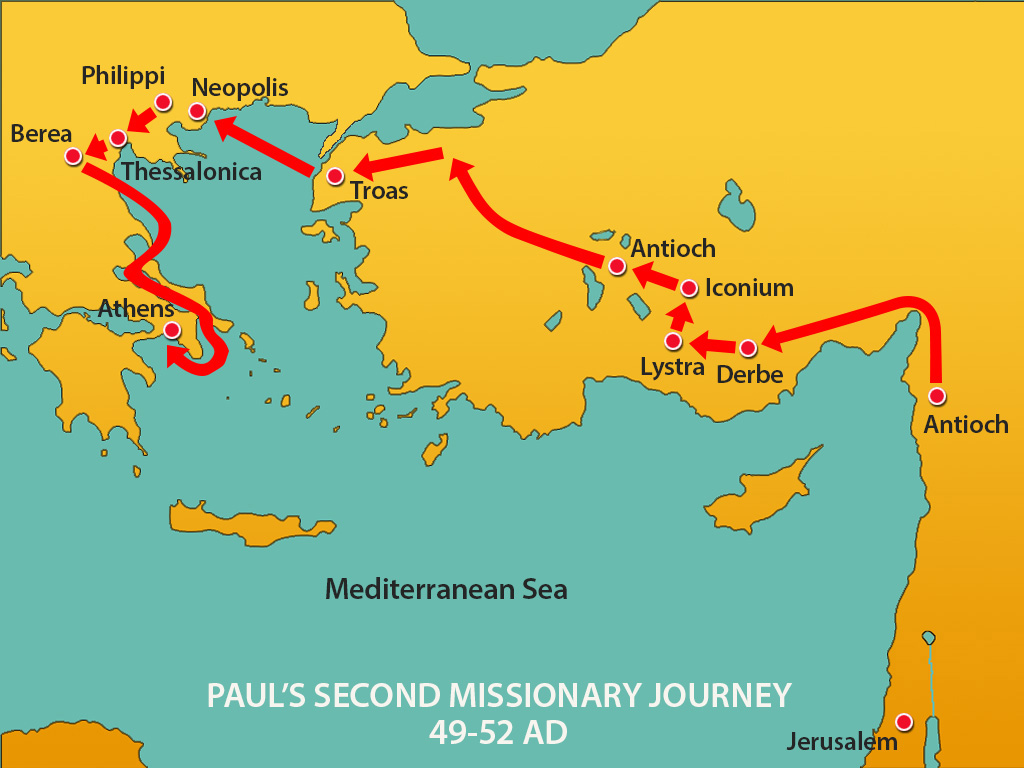
1b 2nd Missionary JourneyA few months later, in approximately a.d. 50, Paul and Barnabas discussed a second trip, to visit the churches they had established on their first missionary journey (Acts 15:36). But because of a disagreement over Mark, they went separate ways: Barnabas and Mark sailed for Cyprus, while Paul and Silas went through Syria and Cilicia (Acts 15:37-41). On this trip, Paul and Silas visited the believers at Derbe, Lystra, and Iconium. Then, passing through the region of Phrygia and Galatia, they journeyed to Troas. There, through a vision, God told Paul to travel to Macedonia (Acts 16:1-10). Obeying the Holy Spirit, Paul and Silas sailed to Samothrace and then to Neapolis. From there they traveled to Philippi, where they ministered for several days (Acts 16:11-40). Upon leaving Philippi, Paul and Silas traveled through Amphipolis and Apollonia to Thessalonica. Next they went to Berea, and then to Athens and Corinth, where they stayed for some time (Acts 17:1-18:18). Leaving Macedonia, they traveled to Ephesus. Then they sailed to Caesarea and made their way back to Antioch.

SETTING

Written from prison in Rome in approximately a.d. 61 Paul wanted to get to Rome (Acts 19:21), not only to teach and fellowship with the believers there (Romans 1:8-13), but also because Rome stood as the center of the civilized world. It was a strategic city for the spread of the gospel. To reach the Roman Empire, the gospel had to reach Rome.

In God’s sovereign plan, Paul did sail to Rome, but not as a prominent citizen, missionary statesman, or even itinerant preacher. He arrived, rather, as a prisoner, in chains (Acts 28:11-16). Even as a prisoner, however, Paul was free to teach, preach, and write (Acts 28:17-31). During these years of house arrest, Paul wrote what have come to be known as the “Prison Epistles”—Ephesians, Philippians, Colossians, and Philemon.

It is clear that Paul was a Roman prisoner when he wrote this letter because of his words in 1:12-17. He wrote of being “in chains” (1:13, 17) and of being a witness for Christ to the “whole palace guard” (1:13 niv).

Some have surmised that Paul wrote this letter to the Philippians during his imprisonment in Caesarea (Acts 23:23-26:32). After all, Paul was imprisoned there for about two years (a.d. 57-59), interrupted by hearings before Felix, Festus, and Agrippa. He would have had the freedom and the time to write. The uncertain and menacing situation in Caesarea seems to fit Paul’s indication that death was an imminent possibility (1:20-23, 30; 2:17). And references to a “palace guard” (niv) or “praetorian guard” (rsv) could fit this location.

AUDIENCE :  The believers in Philippi

3b Excavations of PhilippiThe Macedonian (northern Greece today) city of Philippi was named after Philip of Macedon (the father of Alexander the Great). Surrounded by mountains and close to the sea, Philippi became a strategic city in the Greek empire. In 167 b.c. it became part of the Roman Empire, but it did not achieve real importance until after 31 b.c. when Octavian defeated Antony at the battle of Actium. After that decisive battle, Philippi received a number of Italian colonists who had favored Antony and had been dispossessed of their property. The colony was then renamed Colonia Iulia Philippensis to honor Julius Caesar. Later, in 27 b.c., when Octavian was designated Augustus, the colony’s name was changed again to Colonia Augusta Iulia (Victrix) Philippensium, equating the cause of Augustus with that of Caesar. At that time, Philippi was given the right to the Law of Italy together with many rights and privileges, including immunity from taxation. The residents of Philippi were very conscious and proud of their Roman citizenship and heritage (see Acts 16:20-21). Philippi also boasted a fine school of medicine.

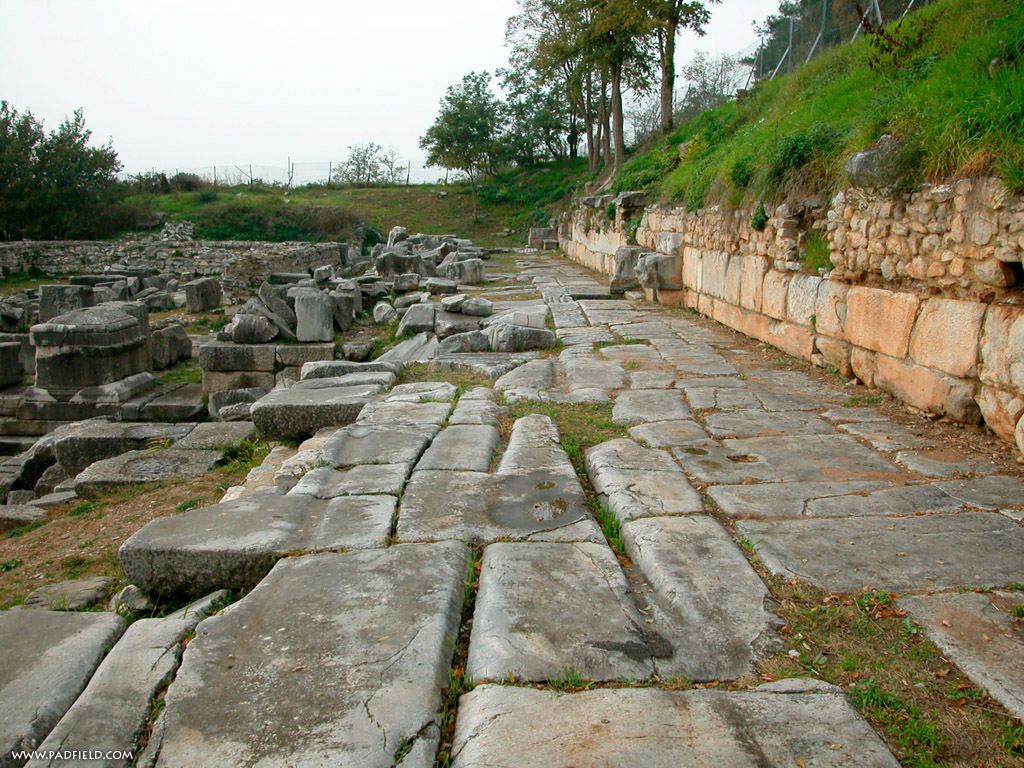
2b Egnatian WayPaul visited Philippi on his second missionary journey, in a.d. 51, about ten years previous to this letter. By the time of Paul’s visit, Philippi had become a thriving commercial center because of its strategic location as the first city on the Egnatian Way, an important ancient highway linking the Aegean and Adriatic Seas. Travelers to Rome would cross the Adriatic and then continue up to Rome on the Appian Way. Thus, Philippi was the gateway to the East. Although thoroughly colonized by the Romans after 31 b.c., Philippi was still more Greek in culture than Roman. Luke refers to Philippi as “a Roman colony and the leading city of that district of Macedonia” (Acts 16:12 niv). Although Philippi was not the capital city of the region (subprovince of Macedonia), it certainly was the “leading city.” Luke’s statement also reflects civic pride in his hometown.

The church at Philippi in ancient Macedonia was the first European church founded by Paul. Thus, it represents the first major penetration of the gospel into Gentile territory (see Philippians 4:14-15).

Acts 16:9-40 tells how the church began. 5b Gangitus RiverIn every city, Paul and his party would go to the synagogue to share the gospel with the Jews. So on their first Sabbath in Philippi, Paul and Silas probably looked for a synagogue. Instead, they found a group of women who had gathered outside the city on the banks of a river. The fact that Philippi had no synagogue indicates that there were few Jews in that city. Therefore, from its inception, the church at Philippi consisted mainly of Gentiles. Acts 16:14-34 tells of two of the first converts in Philippi: Lydia, a businesswoman who may have been a Jew or a Jewish proselyte; and a Roman jailer. The response of these three provided clear demonstration that God’s Good News was for all classes, sexes, races, and nationalities.

OLYMPUS DIGITAL CAMERA

OLYMPUS DIGITAL CAMERA

Luke also mentions that when Lydia responded to Paul’s message, so did the members of her household (Acts 16:15). The same was true for the jailer—his family responded with him (Acts 16:34). No other specific converts are mentioned in this account in Acts, but the chapter concludes with: “After leaving the prison they [Paul and Silas] went to Lydia’s home; and when they had seen and encouraged the brothers and sisters, they departed” (Acts 16:40 nrsv). “Brothers and sisters” seems to indicate that a small but vital group of believers had been forged. Clement, Euodia, and Syntyche may have been won to Christ during this time (see 4:2-3).

When Paul and Silas departed from Philippi, they left Luke there, in his hometown, to carry on the ministry. A few years later, at the end of his third missionary trip, Paul visited Philippi prior to spending the winter in Corinth. When Paul wrote this epistle, the church in Philippi was thriving, and he felt very close to the believers there.

OCCASION AND PURPOSE FOR WRITING

To thank the Philippians for their gift and to strengthen the believers in their faith

This is a very personal epistle. It is obvious from Paul’s opening comments that he enjoyed a close friendship with the Philippian believers: “I thank my God every time I remember you. In all my prayers for all of you, I always pray with joy because of your partnership in the gospel from the first day until now” (1:3-5 niv). During their visit to Philippi, Paul and Silas had witnessed immediate and dramatic response to their message. And despite the fact that they were attacked and imprisoned, they had seen the church begin and then grow into a strong core of believers (Acts 16:40). During the course of Paul’s ministry, the Philippian believers had continually come to his assistance through their gifts (4:15-18). At this time, nearly ten years later, the Philippians had again sent a gift to Paul to help him in his time of need: “I rejoice greatly in the Lord that at last you have renewed your concern for me. . . . It was good of you to share in my troubles” (4:10, 14 niv). Perhaps their donated funds were helping to pay for the rented house to which Paul was confined (Acts 28:30). In response to this gift and to their relationship over the years, Paul wrote to express his deep appreciation for their love, faithfulness, and generosity.

Paul also took the opportunity of this letter to deal with important issues in the church. He had heard of divisive rivalry and selfish ambition (2:3-4), so he gave strong counsel and even named names (4:2). Paul knew that the Judaizers could be a problem, so he gave clear instructions to avoid those men (3:2-3). He also warned of those who would go to the opposite extreme and live totally without the law or any personal discipline (3:17-19). None of these issues were full-blown problems that were threatening the life of the church, but Paul knew their destructive pattern. So he warned his beloved Christian brothers and sisters, encouraging and challenging them to continue to stand strong and united and to live for Christ (1:27; 4:1, 4-9).

Paul’s sensitivity to the needs at Philippi stands as a great example. He didn’t wait for a crisis; instead, he confronted potential problems early, before they could fester and infect the whole body. When we see a fellow believer begin to struggle or stray, we should follow Paul’s example and lovingly confront that person, urging him or her to stay on track.

MESSAGE

Joy (1:3-6, 12-26; 2:1-4, 17-18; 3:1; 4:4-13). Although Paul had suffered much for the cause of Christ and was writing this letter as a prisoner of Rome, still he was filled with joy because of what God had done for him, because of his hope in God’s plan for the future, and because of the faithfulness of the Philippian believers. Paul knew that his beloved brothers and sisters in Christ would be tempted and tested, so he urged them to stay strong in their faith, to be content, and to “rejoice in the Lord always” (4:4 niv). Regardless of the circumstances, believers can have profound contentment, serenity, and peace. This joy comes from knowing Christ personally, depending on his strength, and trusting in his plan for our lives.

Importance for Today. Far from content, people today truly believe that they need every new product, toy, or appliance. Or they think that they will find happiness and personal fulfillment through relationships, travel, adventure, or something else. Thus, most people are discontent and continually seeking meaning and peace. But true, lasting contentment comes only through knowing Christ. With sins forgiven, our future secure, and our lives in God’s control, we can be content . . . and have joy. Yes, we can have joy, even in hardship. Joy does not come from outward circumstances but from inward strength.

In addition to discontent, Paul highlights other joy stealers: selfish ambition (1:17; 2:3), complaining and arguing (2:14), self-centeredness (2:21), hedonism (3:18-19), anxiety (4:6), and bad thoughts (4:8). What steals your joy?

Rely on Christ within you to give you joy, not on what you own, who you know, or what you experience.

Humility (1:15-18; 2:5-11; 3:7-14). If anyone had the right to boast, it was Paul. Yet he continued to lay aside personal ambition and glory in order to know Christ (3:7-11) and to glorify him (3:12-14). Paul knew that Jesus had left glory to come to earth in order to live as a man and to die on the cross. Paul held up Jesus as the example to follow, urging the Philippians to humble themselves as Christ had done.

Jesus showed true humility when he laid aside his rights and privileges as God to become a human being (2:5-11). He poured out his life to pay the penalty that we deserve. Laying aside self-interest is essential to being Christlike.

Importance for Today. We naturally worry about ourselves first, making sure that we are comfortable and that we get the credit and glory we deserve. But as Christ’s representatives, we should live as he would. This means putting others first and renouncing personal recognition. It also means serving others and looking out for their best interests. When we give up our self-interest, we can serve the Lord with joy, love, and kindness. True humility is a by-product of seeing ourselves from Christ’s perspective and recognizing that we are nothing without him.

What can you do to see yourself and the world from Christ’s point of view? What can you do to give your life for others?

Self-Sacrifice (1:15-26; 2:4, 17, 25-30; 3:7-14; 4:14-19). Christ suffered and died so that all who believe might have eternal life. Following Christ’s example, with courage and faithfulness, Paul sacrificed himself for the ministry, taking every chance to tell others God’s Good News, preaching and teaching even while in prison. For Paul, living meant opportunities for serving the Lord, but dying would mean going to live with the Lord (1:20-24). So Paul lived with his goal always before him, motivating him to forget the past and press on to win the prize (3:13-14).

Importance for Today. “Sacrifice” seems like a dirty word these days. Instead, people want to indulge themselves and do everything they can to have a comfortable and easy life. Unfortunately, this cultural attitude can carry into the church. For example, many believers are more concerned about not having padded pews than the fact that people are headed for hell. But reaching people for Christ, helping those in need, and changing our world will involve personal sacrifice. Christ gives us the power to do that. We must follow the example of Jesus and of godly leaders like Paul who demonstrate self-denying concern for others.

What will it take—what sacrifices will you have to make—for you to be an effective witness for Christ in your neighborhood? at work? What will it take for your church to make a difference for Christ in your community?

Unity (1:15-18, 27-30; 2:1-4, 14-16; 4:2-3). In every church, in every generation, controversial issues, personality conflicts, and other divisive issues arise. The tendency toward arguments and division intensifies during hard times, when people can turn against each other. Although the church at Philippi was strong, it was not immune to these problems and, in fact, had experienced some internal conflicts. Paul encouraged the Philippians to get along, agree with one another, stop complaining, and work together.

Importance for Today. Christians should contend against their common enemy—Satan and his work in the world—and not against each other. We need all our resources, focus, and energy for the battle. When we are unified in love, Christ works through us, and we can make a difference for him. We need to keep before us the ideals of teamwork, consideration of others, and unselfishness.

What tends to break your unity with other believers? What issues threaten to divide your church? Keep your focus on Christ and his mission in the world; don’t be sidetracked by petty jealousies, competition, hurt feelings, or minor irritations. Work together with your brothers and sisters in Christ to make a difference in the world.

Christian Living (1:6, 9-11, 21-29; 2:12-13; 3:12-21; 4:4-13). Paul could not stay in Philippi, teaching the new believers, encouraging them to live for Christ, and holding them accountable. When he was with the Philippians, they were careful to obey the Lord (2:12) because they were aware of Paul’s powerful example and strong encouragement. But now, in his absence, they should be even more careful to live the Christian life (work out their own salvation—2:12). They could be confident that God was with them and in them, changing them from the inside out (2:13). Certainly God would complete his good work in them (1:6).

Paul also explained the steps these believers could take to live for Christ: be unified with other Christians (1:27-30), remember Christ’s work on the cross (2:5-11), rejoice in God’s work for them and in them (3:1), keep focused on the goal (3:12-14), guard their thoughts (4:8-9), be content with what they have (4:10-13), and help those in need (4:14-19).

Importance for Today. In this day of media evangelists, celebrity Bible teachers, and articulate preachers, it can be easy to depend on others for our spiritual nourishment and motivation. Yet the Christian life always depends on the relationship an individual believer has with the Lord Jesus. Instead of relying on others for our “faith,” we must depend on Christ and the Holy Spirit working within us. And instead of expecting growth to happen because we have a strong Christian environment, we must keep our focus on Christ, discipline ourselves to pray and to read the Bible, and apply God’s Word to our lives.

On whom do you depend for your motivation to live for Christ? Where do you find your spiritual nourishment? Christian living depends on Christ living in you and you then living in obedience to him.

For more about the series, Joy Full go here:

www.Upwards.Church

Watch Messages: YouTube-Upwards Church
Facebook: Upwards Church

Sources:  Life Application Bible, Life Application Bible Commentary,
Posted in Joy Full - Philippians | Tagged , , , , , , , , | Leave a comment

Joy Full Invitation


Has life got you down?  Are you in a place you don’t want to be?  Join us and find joy in your troubled time.  Sitting in a dark Roman prison cell, Paul writes of hope and joy.  We’ll discover solid biblical principles from the New Testament book of Philippians to help us: Pray with Joy, Share with Joy, Grow with Joy, Live with Joy, and Give with Joy. No matter where you are, you can be Joy-Full.

Join us this weekend!

Darrell

www.Upwards.Church

Watch Messages: YouTube-Upwards Church

Facebook: Upwards Church

Posted in Joy Full - Philippians | Tagged , , , , , , , , | Leave a comment