
What do I do with my Anger towards God? – Jonah 4

Have you been angry lately?  I have.  Anger is a natural God given emotion.  It’s okay to be angry, what matters is what we do with our anger.

In today’s passage Jonah was angry, but not at things or even people, he was mad at God.

In the last post we see that Jonah delivered God’s message to the people of Nineveh. They responded by repenting of their wicked lifestyle and by putting their faith in God, one of the great revivals in history! If the story had ended here, Jonah would be one of the greatest prophets. But the story of Jonah DOESN’T end here because this is not just a story about God’s love for the wicked Assyrians. It is also a story of His grace and love for an angry, pouting prophet.

As chapter 4 begins, Jonah is not at all happy that the Assyrians have repented and turned to God.  The story is not over because God’s work was not complete. The people of Nineveh were doing fine at this point—but not Jonah. He still needed work.

God is not satisfied with mere compliance to His will…which is apparently what He got from Jonah in chapter 3. What God wanted was for Jonah to value what He valued.

As we look at Jonah 4,

We see that Jonah is mad at God.  Jonah then proceeded to prove that old statement that says, Man is angriest when he is the most wrong because he blew his top at God. He blamed Him for his own rebellious flight to Tarshish. He even threw scripture in God’s face quoting Exodus 35:6-7 but instead of using this familiar text to praise God, Jonah angrily uses it to complain and accuse. He says in essence, I left home because I knew You would do this, Lord! I knew that you were a gracious and compassionate God, slow to get angry and filled with unfailing love. I knew how easily You could cancel your plans for destroying these people!

Now, look closely at verse 4 which is God’s GENTLE response to Jonah’s tantrum. If I were God, I may have said something like, You want to see some fire and brimstone? Okay…here…enjoy! But, thankfully, God is not that way. The Lord has a LONG FUSE where we are concerned. The verse Jonah sarcastically quoted is something Moses had written down some 500 years earlier when he was up on the top of Mt. Sinai conferring with God. You may remember that the people had thrown a party characterized by drunkenness and immorality.

These people whom God had just delivered from bondage in Egypt expressed their thanks to their Heavenly Father by worshiping an idol of a golden calf. When God told Moses what was going on Moses came down from the mountain and angrily shattered the original copy of The Ten Commandments. God was ALSO angry and wanted to destroy the people…but in answer to Moses’ pleading on the people’s behalf, God reconsidered. He even promised to give Moses a new copy of the Ten Commandments. God took him back to the top of Mount Sinai, and before God began dictating these moral imperatives a second time, Exodus 34 says that He passed in front of Moses proclaiming,

The Lord…the compassionate and gracious God, is slow to anger, abounding in love and faithfulness.

Like any parent, God DOES get angry. But He puts up with a great deal before reaching His boiling point. He is PATIENT with us.

When I was about 10 years old through 15 years old I was active in the boy scouts.  And I remember the seemingly limitless composure of our leaders, Mr. Murry, Mr Whorton seemed to be the most PATIENT men I have ever met.  As we botched up setting up our tents, building campfires, raw breakfast over a smokey fires, not tying the right knots and just plain being filthy and awkward, I know we must have frustrated them at times, but they was soooo patient with us. Why? Because they knew we were just boys.  They didn’t expect us to be more than we could be.

And God is patient with us for the same reason. As Psalm 103:14 says, …He knows how we are formed, He remembers that we are but dust. As our compassionate Creator, God understands our tenuous nature and factors in our frailty when He weighs His responses to us…which is why instead of a rebuke of fire and brimstone, God patiently asked Jonah a question: Is it right for you to be angry?   The word that God uses for angry literally means “to burn” so what God really said, was, Jonah, do you have any valid reason to be so hot under the collar?  Jonah’s only response at that point was to stomp off up into the hills where he could have a clear view of the city of Nineveh.

Understand, this is the second time Jonah has fled his area of ministry. He fled to Tarshish in chapter one rather than do what God wanted him to do and now he head for the hills when he should have been helping the newly repentant Ninevites to learn more about the God Who had so lovingly spared their city.

When Jonah reached an elevation where he was high enough to see all of Nineveh proper he built himself a little lean-to using some leafy branches…something to shield himself from the severe desert heat, which was pretty much a necessity because the average temperature in that region was between 110 and 120 degrees Fahrenheit. In other words, it was not a good place to allow yourself to get hot under the collar!

Jonah got as comfortable as he could and then he proceeded to sit there and look down on the Ninevites, thinking, “Just watch God! They are going to go back to their wicked ways…You’ll see! You can never trust a Ninevite. Once a Ninevite, always a Ninevite. I’m going to sit here until they slip and then force You to admit that You were wrong about these pagans! You’ll see that I am justified in my anger at what You have done!”

In other words Jonah trained his eyes on the Ninevites when he should have been examining himself. Like many of us, he was more concerned with the speck in his neighbor’s eye than he was about the log in his own eye!

As the day dragged on the leaves on the branches of his shelter dried up and began to fall off. And because of this Jonah began to get very hot. Perhaps adding to his discomfort were the sounds of the Ninevites in the city below continuing to mourn and pray to God in repentance! At this point verse 6 says that God caused a vine to grow up and provide shade for Jonah, to ease his discomfort.  The Hebrew here literally says, to deliver him from his evil which means that even this vine was just a tool in God’s hands to free Jonah from his sinful attitude.

Verse 6 also says that, Jonah was very happy about the appearance of this vine. In fact it is the only time in the entire book that this grumpy prophet is happy about anything. Maybe his mood improved so because he thought this shady vine was an indication that God was coming over to his side. But, God was not done. He interceded once more and performed another miracle. This time instead of summoning a huge sea creature, He called forth a tiny worm to eat the root of the vine, causing it to wilt and ruin Jonah’s shelter. Then He threw another storm at Jonah. This time it is a desert windstorm known a Sirocco.  When these winds blow in the temperature rises dramatically, and the humidity drops quickly. It’s like being inside a convection oven. The Septuagint accurately translates this sudden wind as “a scorcher.” It is almost as if God says, Okay, Jonah if you’re so up on being hot under the collar, here’s a little help. Then, as Jonah’s frustration builds, God said, Do you have a right to be angry about the vine?

Jonah angrily retorted, Yes, I do…even angry enough to die!

At this point God has Jonah where He wants him. God has used this vine and worm and wind as tools to show Jonah the absurdity of his demeanor to help him understand his own confused heart…to help Jonah realize that he is so full of self-pity that he has no pity left over for the repentant Ninevites. When the vine withered Jonah’s temper flared again and so God said in essence, You are angry about this plant that is pretty much here today and gone tomorrow but Nineveh has more than 120,000 children. If you can be concerned about something as trivial as a plant, should I not be allowed to be concerned about something as important as these people—not to mention their livestock?

It is in an awkward silence like this that the book of Jonah ends. God had the first word in this story and now He has the last word as well. Jonah doesn’t reply. He couldn’t because by now even he could now see how off base he has been. God got through to old Jonah in the end. In fact I believe he wrote this no-holes-barred autobiographical book and ended this way to show his repentance. One of Michelangelo’s paintings on the walls of the Sistine Chapel is called The Prophets and the Apostles…because in it he attempted to capture the faces of the great heroes of the Bible. Art critics say that of all the faces Michelangelo illustrated in this work, none had a more radiant countenance than Jonah. He painted old Jonah this way because he was convinced that Jonah did see his sin and change. Michelangelo believed that Jonah became a communicator of grace to his own nation through writing his book and his continued preaching as a prophet of God.

If we were honest with ourselves, I think we’d have to admit that there is a little Jonah in all of us.  As Jimmy Draper has said, “Our concern should not be whether a man can live inside a fish, but whether the spirit of Jonah lives inside of us.”

At one time or other in our life each of us have rebelled against God just like Jonah did. We have refused to do things God has told us to do. We have done things He told us not to do. We have also had our own priorities mixed up. Like Jonah we have frequently been more concerned about our own physical comfort than about God’s purposes. And, as Jonah did in this last chapter, many of us have also willfully fanned the flames of anger…even anger that is directed at God Himself. This is because anger is possible in any relationship—even a relationship with our Creator. The closer you are to someone—the more passionate you feel about each other—the more likely you are to get mad at each other.

Maybe you are mad at God due to the seeming unfairness of life. Or maybe you have loved ones or friends….good, God-serving people, who have suffered in life. Perhaps you had children who have endured great pain or even died prematurely. Like Jonah, many of us have at times had misplaced expectations of what God ought to do, and when He didn’t do what we thought He should, we got mad. So the question is not, SHOULD we get mad at God? The question is, What should we do with our anger? How should we handle it?

The idea of getting mad at God is enough to make some people feel very uncomfortable. Many feel that somehow it is not right to be angry at God…the very idea seems blasphemous. Others are afraid to admit their angry feelings because they are intimidated by what they hear from some Christians. They’re given the impression that being angry toward God is the unforgivable sin.

They’re told, “Look, no matter what happens, just thank God and keep praising Him and keep a smile on your face at all times, because God has a wonderful plan for your life and He doesn’t need you second guessing it.”  In other words, if you don’t feel like smiling at God—fake it.

On the one hand, we have the fact that at times in life many of us are angry at God and on the other hand we have the fact that many people think it’s totally unacceptable to be angry at God. So what’s the natural result? The result is that people paper over their emotions. When they experience anger because they feel like God’s being unfair or silent or unresponsive, they stuff that emotion down deep and paste a phony smile on their face. And yet that just aggravates problem, because when you bury your anger, you bury it ALIVE. It doesn’t go away; inevitably, it crawls out in other forms.

Think about it in terms of your relationship with your spouse. If you’re angry at something he or she did and you don’t deal with the anger, what happens? Communications stops, doesn’t it? Because we don’t like talking to people we’re mad at. We give them the silent treatment—we withdraw. And, eventually if nothing is done we begin to feel distant from our spouse. Well, the same is true in your relationship with God.

So ask yourself a very important question: Could the reason you have stopped praying and reading the Bible or enjoying worship be due to your unexpressed anger at God over some perceived injustice or unfairness?

Maybe you secretly blame Him because you married a man who said he was a Christian and he ended up to be abusive or he walked out on you. Maybe you harbor a lingering resentment because your parents divorced when you were a youngster or a loved one suffered and died, and God didn’t stop it. Maybe you’ve accused, convicted, and sentenced God because you feel He has let you down at a crucial time. You blame God because you think if He really cared, He’d do something about it.

One thing we can learn from Jonah is that it’s okay to express our honest emotions to God, even when we’re angry. Actually, it can even be advisable. As theologian Dr. Gilbert Bilezikian has said, God is a big boy. He can handle your anger. It won’t threaten Him or diminish Him or embarrass Him, and, really, it won’t even surprise Him, since as Psalm 44:21 says, He already knows the secrets of our hearts. When we’re dealing with the pain and confusion and frustration over the difficulties and seeming unfairness of life, God understands. He knows we’re people with messy emotions who live in a messy world.  He created us. He sent His son to live among us. I’m not saying God deserves our anger. I’m not saying He’s done something wrong or is somehow at fault or that our anger is justified. I’m just saying He understands our anger. He understands when our pain causes us to be unreasonable and accusatory and confused. And like a true friend, He wants us to bring it to Him and talk it out. God is compassionate, not condemning. So we should feel free to be honest in our relationship with Him even to the point of being painfully honest.

The Bible records that this is what the heroes of the faith did. Listen to the angry words of Moses in Exodus 5: 22 -23: O Lord, why have You brought trouble upon these people? Is this why You sent me? Ever since I went to Pharaoh to speak in Your name, he has brought trouble upon these people, and You have not rescued Your people at all! God’s spokesman, Jeremiah, actually accused God of deceiving him and said his life had become so unbearable that he wished he had never been born. And King David didn’t shy away from venting his frustration toward God either. Listen to the way Psalm 13 begins: How long, O Lord? Will You forget me forever? How long will You hide Your face from me? How long must I wrestle with my thoughts and every day have sorrow in my heart? How long will my enemy triumph over me? Look on me and answer, O Lord my God!

Do you see? These men were honest. They expressed their real feelings to God instead of pasting on a superficial smile. And guess what? God didn’t destroy them for it! On the contrary, He included their angry words in the Bible for us to read and gain confidence that we, too, will find God compassionate and gracious, slow to anger, and abounding in loving kindness.

Darrell

www.Upwards.Church

Watch Messages: YouTube-Upwards Church
Facebook: Upwards Church

Posted in Runaway- Jonah | Tagged , , , , , , , , | 3 Comments

What Does Repentance Look Like? – Jonah 3 – Part 2

Repentance is an important biblical word that we don’t talk about enough.  What does repentance look like?  We will see in this chapter.

When we follow Jonah’s example and give people GOD’S word instead of our own. When we obediently speak what He wishes, whether we are sharing our faith or teaching then amazing things happen. As God promises in Isaiah 55:11,

My word will not return to Me empty, but will accomplish what I desire and achieve the purpose for which I sent it.

And that is what happened in Nineveh.

4  On the first day, Jonah started into the city. He proclaimed: “Forty more days and Nineveh will be overturned.”  5  The Ninevites believed God….Jonah 3:4-5a (NIV)

They heard God speaking through this reluctant and somewhat self-righteous prophet. In this little phrase, they believed God, (Jonah 3:5) the Hebrew text makes it clear that the Ninevites personally trusted God. Theirs was a response of faith. The exact same phrase is used in Exodus 14 to describe Israel’s response of faith for what God had done to release them from Egyptian bondage. It is also used in Genesis 15:6 to describe Abraham’s faith in God.  These people heard God speak to them through this little message.

This shows that when we are obedient; when we make good on our vows to God, like Jonah, we become vessels filled with God’s power and when you are powered by God nothing is impossible.

As II Corinthians 3:5 says, We are not competent in ourselves to claim anything for ourselves, but our competence comes from God. The truth of this text was clearly seen in Jonah’s experience because God used this short message to stir the entire population of the greater Nineveh area, from the king on the throne to the lowest person in the field. They were given 40 days but didn’t need that long to repent. The entire city responded to God’s message very quickly.  The greatest thrill of being a pastor are those moments when I feel God’s power.  Those times I know that the things I say do not come from me, but from God.  And I want you to know that God doesn’t just empower pastors to speak. He empowers all of His servants! I encourage you to try it. When He gives you an assignment like He gave Jonah, accept it. Let God speak through you!

Jonah’s message also helped him to understand that there was an urgency in his task.

Those people needed the Lord. They urgently needed to hear the message God had given him.  They may have looked mighty and powerful and self-sufficient but at this point in their history the people of Nineveh were having some real tough times. History tells us that they had recently suffered two plagues that had killed thousands and that they had gone through a total solar eclipse, a very frightening thing to people who did not understand that kind of natural phenomena. Plus, Babylon was rising in power at this time, as were other nations that bordered Assyria which meant the Ninevites faced potential war on four fronts. For these and other reasons these people were hungry for help from above. They were ripe for repentance. So when they heard Jonah say, “Forty more days and Nineveh will be overturned,” ears would have perked up. People would have stopped what they were doing and listened intently!

In the ancient Near East the phrase forty days would have had religious significance. The number forty always suggested a time of waiting for divine activity. Think of some of the instances in the Old Testament when this was true: Israel wandered in the wilderness forty years…during the flood it rained forty days. Jesus prayed in the wilderness forty days before his ministry and remained on earth forty days after His resurrection. So when the Ninevites heard that in forty days something was going to happen it was like a trumpet blast of warning: There is danger coming and you better pay attention. It also inferred that this time period was a time in which God gave the people to repent which is what the King understood the message to say. In verse 9 he urged his people to repent of their sin saying, “Who knows? God may yet relent and with compassion turn from His fierce anger so that we will not perish.”

As Jonah watched those people both listen and respond he must have seen that no matter how together a person seems to have it, no matter how depraved they seem, they still need God. And you and I need to glean this from Jonah’s experience as well and remember that regardless of exterior appearances, all people need the Lord. As Philip Yancey says,

We must ask God to give us ‘grace-healed eyes’ so that we see even people who offend us not just as immoral people but as THIRSTY people, like the Samaritan woman at the well.

All people desperately need the Lord we know and love and serve. A life insurance salesman was talking to a customer about a policy. When he finished his presentation, he said, “I believe this is important, but I don’t want to force it on you. Every fifteen seconds someone dies in our country.  Go home and sleep on it tonight. And IF you wake up in the morning, give me a call.” There was more truth than humor to that approach. Some people will not wake up in the morning. And the Bible says that if a person dies without Christ, they face the reality of an eternity of separation from God. We must never forget that people need to hear the message of love God has commissioned all Christians to share.

We learn a lot about what repentance looks like in the way the people responded to his message.

 What Repentance looks like:

  1. Humility   Jonah 3:6-7 “The king of Nineveh, rose from his throne, took off his royal robes, covered himself with sackcloth and sat down in the dust.” The King ordered them to all wear sack cloth and sit in ashes. Through this action they were saying, We make no excuses God. What we have done is wrong. We agree with You.

 2. Calling on God in Prayer Jonah 3:8a “Let everyone call urgently on God.    In seminary I had to take a course called Missiology, where we studied missionaries, missionary movements and revival.   We learned that very major revival and movement of God involves prayer.   It also reminds me of a similar passage where God himself says:  “If My people, who are called by My name, will humble themselves and pray and seek My face and turn from their wicked ways, then I will hear from heaven, and I will forgive their sin and will heal their land.” (2 Chron. 7:14) 

3. Admitting Wrongs and Changing Behavior  Jonah 3:8b   “Let them give up their evil ways and their violence.”

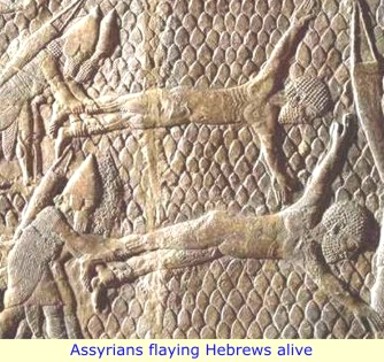
assyrian_flayingThese people who were known for their wickedness were now asked to stop living that way. And in a nutshell that is what repentance looks like. For us to experience God’s forgiveness and restoration we must humbly agree with Him that what we have been doing is wrong. And we must turn completely from doing it.

Repentance is not like the person who sent the IRS a check for $150 with the remark, If I can’t sleep, I’ll send you the rest. No it is a complete turning from sin.

  • Our Repentance Will Change God’s Judgment

I say this because since the people responded to Jonah’s message by repenting, God relented. He changed His plans. No fire or brimstone fell on this Sodom-like city after all. God pulled back His hand of judgment. Now, many people think this conflicts with Scripture like James chapter 1 where it says that, God does not change like shifting shadows. But understand God did not change. He has always hated sin and always loved sinners. As I said earlier He longs to forgive us when we repent. In Jeremiah 18:7-8 God says, If at any time I announce that a nation or kingdom is to be uprooted, torn down, and destroyed, and if that nation I warned repents of its evil, then I will relent and not inflict on it the disaster I had planned.

So, God did not change. The Ninevites did. They heard God’s word spoken by Jonah and then repented and aligned themselves with God and He responded to their repentance in line with His character.  What about us?  Will we change as the people of Nineveh did?

Jesus said in Matt 12:41 41 “The men of Nineveh will stand up at the judgment with this generation and condemn it; for they repented at the preaching of Jonah, and now one greater than Jonah is here.”

Like Jonah we gleaned a great deal of wisdom from his short message. We learned that God can use our tough times in a powerful way. We discovered that success in being God’s representatives is due to His power and not our own. Jonah saw that people need to hear from God. He also witnessed a great example of true repentance or belief and realized that it is possible for our change to affect God to change his plans.

What have you learned from Jonah’s short message? Has God spoken to YOU personally? Has He called you to share His word with a lost friend or neighbor or co-worker?  Has God convicted you of some sin…some act of disobedience…calling you to true belief or life change? Have you realized how much you need God in your life?

In the next post we will see that God is patient with us.

Darrell

www.Upwards.Church

Watch Messages: YouTube-Upwards Church

Facebook: Upwards Church


Posted in Runaway- Jonah | Tagged , , , , , , , , , , , | 5 Comments

Does God Give 2nd Chances? – Jonah 3

Have you ever wanted a second chance? Or wished that you could start all over? I have and whether we said or did something we regretted we often need another chance and that is exactly what God gives to us!


“Then the word of the Lord came to Jonah a second time:  Jonah 3:1

  • God gives second chances.

Although we never get back the time we wasted in in running from God and there are still consequences for wrong behaviors but through God’s grace when we change our mind we get a chance to start over…to begin again. And that is good news for all of us isn’t it?! Because each of us at one time or another has wished that we could have another shot. We have made mistakes in our finances, our careers, our parenting, our marriages….which lead us to wish we could have one more chance. One time or other we have all longed for the opportunity to begin again.

When we humbly admit our wrongs like Jonah did and express a desire to change, God helps us start over. Throughout the Bible in fact we see God doing this for several people who asked for a second chance: Abraham, Jacob, Moses, King David, Peter, John Mark. Each of these great men had failed in one way or another but they changed and asked God for another shot and He gave them one! This is because ours IS is the God of the 2nd chance. He wants very much to forgive us and help us start anew. John Ortberg says,

If there is one way that human beings consistently underestimate God’s love, it is perhaps in His loving LONGING to forgive.

God’s love for us—His desire to help is start anew—is why He sent His only Son to die for us in the first place. He knew that this was the only way we could have our sins washed away and start clean.

Warren Bennis once wrote of a promising junior executive at IBM who was involved in a risky venture for the company and ended up losing ten million dollars in the gamble. He was called into the office of Tom Watson Sr., the founder and leader of IBM for 40 years, a business legend. The junior exec, overwhelmed with guilt and fear, blurted out: I guess you’ve called me in for my resignation. Here it is. I resign. Watson replied, You must be joking. I just invested ten million dollars educating you; I can’t afford your resignation.

I think this illustrates why God longs for us to change our ways: so He can forgive, so He can be faithful and just to cleanse us from unrighteousness, so He can cast our sins as far as the east is from the west and remember them no more, because He has invested the life of His only Son to make it possible for us to begin again.

As Jonah discovered, when we repent we can start over…no matter what mistakes we have made. This is what II Corinthians 5:17 says, If anyone is in Christ he is a NEW creature; the old things have passed away; behold all things have become new.

  • God uses our past as strength for the future.

And the pain Jonah endured in the storm and in the belly of the fish worked to his advantage. It not only led him to renew his vow to be God’s prophet. It also made people stop what they were doing and listen to his message!  Why did they listen as Jonah stopped at every street corner to deliver his sermon?    I think one reason was because Jonah’s 72-hour fish stomach acid bath changed his appearance. His skin was probably bleached white, as was his hair, unless the acid burned it off completely. To me it’s like the image of Darth Vader in Return of the Jedi when he took his mask off.

Several commentary writers go so far as to say they believe that Jonah’s disgorging from the great fish was witnessed by others who happened to have been spending the day at the beach or all the trade workers when he arrived.   If this is the case then the story of his experience must have preceded him to Nineveh via caravans or traders and made people all the more anxious to hear what he had to say.

Also one of the gods of Mesopotamia worshipped by the Canaanites, Babylonians and Assyrians was Dagon which looked part human part fish!  So can you imagine what people were saying? I’m sure the nightly newscasts said something like, “Jonah a powerful prophet who has just spent three days inside a huge fish god is coming here with a message.  Stay tuned for more details.”  So when he arrived and began preaching, you had better believe that they listened all as a direct result of the tough time Jonah had endured.

And God does the same thing with our pain. He takes the bad in our life and uses it to His advantage. As Paul says in Romans 8, “We know that in all things God works for the good of those who love Him, who have been called according to His purpose.”

 I don’t know about you, but I listen to people who have gone through great difficulties. I tend to believe them when they say God will help us when we have to endure tough times. For example, David Ring was born with Cerebral Palsy. Because of this disease he walks with a limp and talks in a stilted fashion. But he is a powerful evangelist who keeps audiences spellbound. He says, “I’m like E. F. Hutton. When I talk people listen.” He challenges others to be more faithful in their own evangelistic efforts saying, I have cerebral palsy. What’s your excuse?

Jonah learned, when we repent of our sin, God redeems the experience and uses it for His glory and this leads to another thing Jonah learned from his sermon.

  • God uses our obedience to do great things.

Jonah 3:3-5   “Jonah obeyed the word of the LORD and went to Nineveh. Now Nineveh was a very important city-a visit required three days.  On the first day, Jonah started into the city. He proclaimed: “Forty more days and Nineveh will be overturned.”  The Ninevites believed God.”

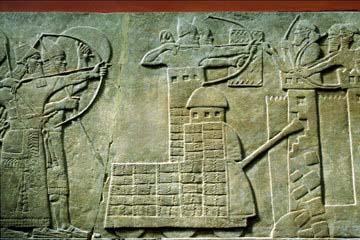
5c-ninevehWhen Jonah crested the final hill and saw Nineveh in the distance he must have been overwhelmed because, as it says in our text, Nineveh was an exceedingly GREAT city and it was. In Jonah’s day Nineveh was very impressive…especially to a country preacher from the hills of Palestine. The Bible says that Nineveh was so big that a visit required three days. This is because the greater Nineveh area included five surrounding cities together which were 60 miles in circumference. There were great aqueducts and canals, huge gardens. There was even a library from which archeologists have discovered 16,000 volumes…some of which describe creation and the flood. Nineveh proper was surrounded by a huge wall 10 stories high and wide enough on the top for three chariots to run abreast.

7-wall-relief-1There were 1500 towers equally spaced around the wall each 20 stories tall. These towers served both as watchtowers for any approaching enemy and as storehouses for weapons. These weapons could be transported quickly on chariots or wagons that would speed around the top of the wall to places where they were needed in time of attack. The combined population of the area must have been between six hundred thousand and a million. We can guesstimate this based on the fact that God said in chapter 4 that there were 120,000 who didn’t know their right from their left—a possible reference to children. So, Nineveh was no insignificant place and Jonah must have thought,  How can I alone have any impact on a city this size? Besides they obviously already have everything they need, so why would they listen to me?

In the next post we’ll look at why they would listen and see that not only did God give Jonah a second chance he also loves to give our enemies a 2nd chance!

Darrell

www.Upwards.Church

Watch Messages: YouTube-Upwards Church

Facebook: Upwards Church

Posted in Runaway- Jonah | Tagged , , , , , , , , | Leave a comment

Why Should We Pray? – Jonah 2 – part 2

Have you ever prayed out of AFFLICTION not AFFECTION?   I have!  This is how Jonah prays and we see that’s it’s okay.

From inside the fish Jonah prayed to the Lord his God Jonah 2:1. This is the first time we see Jonah pray.  Let’s review the things that his emergency-motivated prayer teaches us.

  1. GOD HEARS US when we pray.

In verse 2 he said, In my distress I called to the Lord and He ANSWERED mefrom the depths of the grave I called for help and [GOD], You LISTENED to my cry.” Jonah 2:2 In a previous post we see that God SPEAKS but now we see that He also HEARS!  When Jonah was sinking deep into the sea; when his life was about to ebb away, he squeezed off a quick SAVE ME! God heard even that supplication, which is in line with His promise to us. In Isaiah 65:24 God says, BEFORE they call I will answer; while they are still speaking I will HEAR!

God wants to hear from us. He is very much like a father whose daughter or son goes away to college or the military and then waits for that phone call home. This is why it is so true that no matter how far we run from God…even to the bottom of the sea, it is always only one step back to Him.

I have learned that people in crises need two things:  our presence and someone to listen.  God does both for us!   He is there and always hears when we call out to Him.

The second thing Jonah’s prayer show us is….

  1. There is no place where God is not.

Back in chapter 1 verse 9, Jonah had admitted to the sailors that God was Lord of all the earth and in the belly of this fish at the bottom of the ocean he found out just how true a statement that was.  He crys “In my distress.. This is the Hebrew word that’s used when a woman is giving birth. The distress of labor, the pain of childbirth.  He’s inside the belly of this fish and he’s using a pregnancy word.  “In my distress, in the agony, as if I’m being born, I called on God and He answered me.”

He goes on, “From the depths of the grave I called for help, and you listened to my cry.”  The Hebrew word is Sheol, and the King James translates it “from the depths of hell.” In other words, “from the point in which I was furthest from God, from the place where I was miserable and had no way to contribute, from the place where I was helpless and desperate and afraid and hurting from hell I called on God and he heard me!”  This is going to speak to some of you because you are in the middle of what you would call Sheol or hell.  Some of you would say, “From the depths of my marriage in Hell, I called on God and He answered me.  From the depths of Sheol in my heart, everything on the outside seems fine, but inwardly I’m depressed and I’m hurting and I’m afraid and I’ve got this anxiety, and something’s just not right.  And everything seems right, but inside, it’s not.  From the depths of an inward Hell, I called on God and He answered me.  When I had no place to turn, I called on God and He answered me from the deepest, darkest place, Sheol.  When I needed Him most, and I deserved it the least, He was there for me.”

Perhaps this experience reminded him of the words of Psalm 139 where King David prayed, Where can I go from Your Spirit? Where can I flee from Your presence? If I go up to the heavens, You are there; if I make my bed in the depths, You are there.”  God IS always with us, around, before, above, and beneath. In this Psalm David is proclaiming God’s hear-ness AND nearness. The problem is not that God is distant and needs to be wooed or badgered into coming to us. No, the problem is that God is ever present, ever near, but that some of us like Jonah, seek ways of escape from Him.

Jonah learned He is present…near…even in the midst of the dark trials of life. In Joshua 1:9, God promises, I will be WITH YOU wherever you go!  In Psalm 46 it says, God is my refuge and strength, a VERY PRESENT help in time of trouble.

God is near, as Jonah and anyone who has ever called out to Him has discovered…

  1. Prayer Helps Us Remember God’s Faithfulness

At any point in this story, God could have just gone “poof, it’s over!”   God could have sent, instead of a fish, a turtle.  Not a little turtle like in my back yard, but the largest sea turtle over 8 feet long, a leather back!  Jonah gets on the back, gets a suntan as a turtle takes him to shore.  God still did a miracle, but I want us to notice, God was actively working, even though Jonah was still in pain.  Watch the different phases of God’s work:  “Jonah, go.”  Jonah says, “No.”  Jonah gets on a ship.  Phase 1, God sends a storm.  It doesn’t work.  Phase 2, God sends the captain.  “You need to pray.”  Phase 3, the sailors have mercy on him and don’t throw him overboard.  Phase 4, when they do throw him overboard, God sends a fish.  Phase 5, the fish gets a tummy ache and throws him up onshore.

All through we can see different places where God was working.  A lot of times, we will say, “God, I want You to do this,” whatever it is.  Fill in the blank.  When God doesn’t do what we hope we freak out.  Don’t overlook all of the little things that God may be doing on the way.  Watch as God works.  God may have you on a 10 phased healing process, because if you don’t go through the first nine, you’re not going to learn the things that God wants you to learn.  You may be on phase 4 going, “God, what are you doing?”  Don’t forget to look back and count, “1, 2, 3 … Oh, I can see how You’re working and how You’re moving.”

Jonah prayed, “To the roots of the mountains I sank down; the earth beneath barred me in forever. But You brought my life up from the pit O Lord my God Jonah 2:6

In Jonah 1 and the first part of chapter 2 we see over and over again the phrase, “DOWN.”  He went down to Joppa, He went down to the bottom of the ship, down to the bottom of the ocean and then all of a sudden in Jonah 2, because of the interaction of God, things shift and we see him starting to go back UP!  “But you, O God, brought me UP from the pit.” 

Maybe today you feel like your life is spiraling out of control, going downward, never forget the “BUT God,” moments.  My life was out of control, BUT God intervened.  My marriage was in trouble and we thought it was over, but God changed my heart and healed our marriage.  The doctor said there’s no chance, but God has the final say.”  Don’t forget the “but, God” moments.  Remember, all things are possible with God.

Jonah prayed, 7  “When my life was ebbing away, I remembered you, LORD, and my prayer rose to you, to your holy temple.  Jonah 2:7 (NIV)

Like Jonah have you forgotten God? When things are going well, I can put God on shelf.  I’m doing my thing,” and then one day, I recognize, “I’ve been doing life without the power of God.  I remember my God.

  1. Prayer Shows Us Who We REALLY Are and What We Need to Do

Jonah’s experience opened his eyes to his shortcomings.  He saw his idolatry. In verse 8 when Jonah said,

Those who cling to worthless idols forfeit the grace that could be theirs.

He was talking about himself.  Jonah had put himself in God’s place. God had told him he had a job for him to perform and Jonah had told God He had the wrong man. God had told him he wanted him to go east to Nineveh. Jonah decided to go west to Tarshish. God told him to go by land. Jonah went by boat. Everything God said to do, Jonah did the opposite. Jonah made himself his own god. He tried to superimpose his will on the will of God. He was determined to direct his life, to govern it himself. And we do the same thing today. We superimpose our will on His. We put ourselves, a loved one, our possessions, or whatever in the place of God. But our counterfeits will always fail and will leave us frustrated and defeated.

When we put ourselves in God’s place we run headlong into our insufficiency and inadequacy. If we are wise, when that happens we turn back to God. We cry out to Him in prayer and see the error of our ways. We see ourselves from God’s perspective and like Jonah we return to making Him Lord.

Well, after this three day combination underwater cruise/prayer retreat Jonah was ready to listen to God and next week, we’ll learn that God Gives 2nd Chances!

Darrell

www.Upwards.Church

Watch Messages: YouTube-Upwards Church
Facebook: Upwards Church


Posted in Runaway- Jonah | Tagged , , , , , , , | Leave a comment