Tearing Down the Walls of Division – Eph. 2

14 For he himself is our peace, who has made the two one and has destroyed the barrier, the dividing wall of hostility, Ephesians 2:14 (NIV)

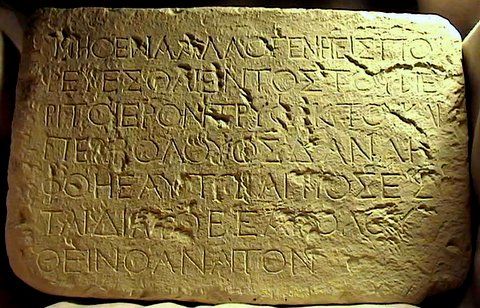
Archeologists working in Jerusalem have found two of these inscriptions in the ruins of Herod’s temple. This is a picture of one of them. It says, “No foreigner may enter within the barricade which surrounds the sanctuary and enclosure. Anyone who is caught doing so will have himself to blame for his ensuing death.” Not exactly a warm welcome was it!?

There was a lot of racially, fueled hostility, enmity, between Jews and Gentiles, and unfortunately that particular variety of wall, building of enmity has not died out.

Right now we are very familiar with this kind of barrier, because we still can’t seem to get along. We “wall” ourselves off from one another over everything from differences in political party affiliation to worship style preference, to race. Don’t get me wrong, most people want to get along, they want the walls to come down. Every once in a while we forget our differences long enough to rally around songs like, “We are the World” and the like, but the walls remain. On our own it’s next to impossible to bring the walls down, and when we do, someone just puts them back up again.

Bishop John Reed tells about a time he was driving a school bus in Australia, a bus that carried both white students and aborigine students. He grew tired of all the squabbling between the two groups as he drove them to and from school, and one day an argument broke out that was the last straw…so he pulled over to the side of the road and told the boys this kind of nonsense had to stop. He said that kind of behavior was a sin and would not be tolerated on his bus. Then he turned to the white boys and said, “What color are you?” They said, “We are white.” Reed said, “No…from now on you are green. Anyone who rides my bus is green. No what color are you?” The white boys replied, “green” Then he went to the Aborigines and said, “What color are you?” They said, “We are black.” He said, “No…from now on you are green. Anyone who rides my bus is green.” “Now what color are you?” And the Aborigines students said, “We are green.” The situation seemed to be resolved until several miles down the road, he heard a boy in the back of the bus announce, “Alright, light green is on this side, dark green is on that side!”

Bishop Reed had the right idea. What was needed was the unity of a new race…like his “green race.” But he couldn’t pull it off, because no human can. To bring down the barriers, the walls, that separate humanity, to accomplish this kind of demolition requires the power of God, because the real problem is never a wall between men, between races, between political parties or whatever, the real problem behind all these walls is the wall that existed between the fallen human race and our Holy God. This “wall” is why people can’t get along.

Our lack of peace between each other for whatever reason can always be traced to our sin, sin that “walls” us off from God. Racism is not really a SKIN problem but rather a SIN problem.

The reason there is enmity between man and man, is that there is enmity between man and God. The fact that we are born sinful, fallen beings, this is what fuels selfish, prideful hatred like the Jews felt toward the Gentiles. And sin continues to fuel hate and hate prompts us to build walls between each other today.  A few verses later Paul explains, 16 and in this one body to reconcile both of them to God through the cross, by which he put to death their hostility. Ephesians 2:16 (NIV)

Paul is saying that it’s natural for man to have hostility and hate, to hate God and hate other people.   Christ came to earth to do some needed demolition.

He came to tear down this wall of enmity that exists between us and God. He came to make it possible for our sins to be washed away so we could be forgiven…and come near to God. As Paul puts it in verse 2:18, “Through Jesus we have access to the Father by one Spirit.” In that relationship, when we come to God by grace through faith in Jesus…we can then be empowered to love all people as He loves all people.

This is something the church must get right. To be effective we can’t have any walls, especially racial ones.  I can understand why non-believers build these kinds of walls, but Christians don’t have any excuse. We have experienced God’s grace, we know by first, hand experience that He loves all people equally, so when we don’t get this right we are being outright disobedient against God. God’s people should always work to end racial discrimination, be it individual or systemic.

Jesus brought the wall down. And in so doing, He created peace. He created one man from the two. In essence He made a new race, not the “Greens” but the “forgiven(s).” Paul’s point here is that we need to be made right with God before we can have the power to be right with each other. Only as we experience the forgiveness of Jesus can the walls come down.

Warren Wiersbe tells of the time a man came into his office and said that his marriage needed help. He told Wiersbe , “My wife and I need a re-cancellation.” Of course he meant, “reconciliation” but in a sense “re-cancellation” was the right word. After all, these two spouses had sinned against each other and the Lord and there could be no harmony, the wall that separated them could not come down, until they repented and asked Jesus to forgive their sins, to cancel them out. That was our problem before Christ came.  Our problem was sin, so God sent His Son to be the sacrifice for our sins, thereby revealing His love and meeting the demands of His righteousness. It was truly a “re-cancellation.”

When people are saved by the blood of Jesus Christ, there is no longer Jew nor Gentile. As His blood washes away our sins, it reveals that we are the same in God’s eyes. Walls come down and we become truly one in this new “structure” God built called the church.

Think about that for a minute. God took two groups as diametrically opposed to each other as Jews and Gentiles. He took them, and when He saved them, He unified them, unified them to the point where the two became one race. God the builder broke down the barriers that separated them. He abolished the hatred and enmity between them. He destroyed the divisions, brought down the barriers and He brought them peace.

Because Jesus is my peace, I choose to live in peace.  Will you join me?

Darrell
www.Upwards.Church

Facebook: Upwards Church


Posted in Home Improvement (Ephesians) | Tagged , , , , , , , , , , | Leave a comment

10 Facts You May Not Know about Ephesus

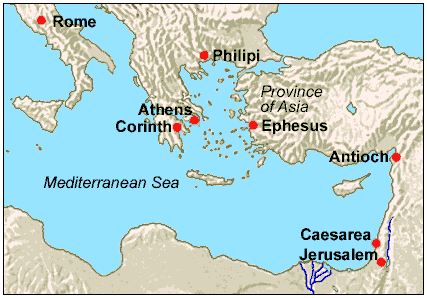
In our new series,  we are gleaning truth’s from the New Testament book of Ephesians.  Ephesians is a letter from the Apostle Paul to the church in Ephesus.   Here are ten facts you may not know about this important city.

  1. Ephesus was “the most important commercial center in the Roman province of Asia[i].” It was a large and very influential port city. Today think New York or Hong Kong.
  2. Because of its size, location and influence Paul planted the church in Ephesus on his third missionary journey and Luke records that from this base “the whole province of Asia heard the word of the Lord.” (Acts 19:8-10)
  3. Paul stayed and pastored the church in Ephesus longer than any other single church. 3 years!
  4. Timothy was the next pastor placed there by Paul, “As I urged you when I went to Macedonia, remain in Ephesus.” I Timothy 1:3
  5. If you could write one letter to your children or grandchildren passing on your cherished beliefs what would you say? The letter to the church in Ephesus is often called “quintessential Paul” as it concisely summarizes the essence of Paul’s faith and theology.
  6. According the church history, the apostle John was the pastor of the church in Ephesus. He lived there with Mary, the mother of Jesus. Why was Mary with John? Remember that John was entrusted by Jesus to care for his mother after his death on the cross. (John 19:26-27). According to tradition, John built a house for her and she lived there for nine years.[ii]
  7. From Ephesus, the Apostle John wrote the Gospel of John, 1 John, 2 John and 3 John.
  8. John wrote the book Revelation from the Island of Patmos, an Island just off the coast of Ephesus.
  9. In Revelation, John records a message from Jesus to seven churches. Which church is listed first?  Ephesus.  Why? It was either the largest church of the seven or the first church on the Roman mail route.  Either way the church in Ephesus was very influential.
  10. According to church history the apostle John was buried in Ephesus around 100 AD. After 313, when Emperor Constantine ended anti-Christian persecution in the Roman Empire, Ephesian Christians built a chapel over the apostle’s tomb.[iii]

Ephesus was an influential city with an influential church led by influential leaders but guess what?  That influence continues today as we live out the message penned by Paul.   Ephesians all about Christ and his church and how we can be part of that foundation and part of God’s family which has great influence in any generation!

Darrell

www.Upwards.Church

Message Audio/Video and Outline: https://upwards.church/leander-campus/watch-now-message-videos

Watch Messages: YouTube-Upwards Church

Facebook: Upwards Church

Read Along Daily Bible Reading: YouVersion (https://www.bible.com/organizations/370f8a6e-16bc-464f-8c43-0b7623fd2952)

[i] The Essential Bible Companion, pg. 96, Zondervan, 2006.
[ii] Bible Hub, http://biblehub.com/library/emmerich/the_life_of_the_blessed_virgin_mary/xviii_the_death_of_the.htm
[iii] Our Sunday Visitor, https://www.osv.com/MyFaith/Article/TabId/586/ArtMID/13752/ArticleID/977/Archaeologists-discover-the-tomb-of-St-Philip-the-Apostle.aspx
Posted in Home Improvement (Ephesians) | Tagged , , , , , , , , , | Leave a comment

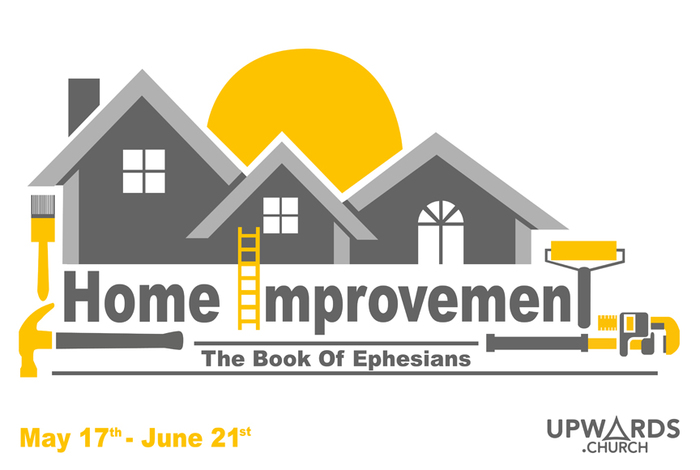
Home Improvement – Ephesians

Would you say that, “A close knit family is a key to happiness?”  A high majority of Americans agree that statement is true according to the Harris Poll.  Fortunately the book of Ephesians shows us exactly how to build our families and improve our lives!

Ephesians (Home Improvement) 6 weeks

Dates                      Titles (Scripture)                     

May 17 – God the Builder  (Eph. 2: 12-22)
May 24 – Extreme Makeover (Eph. 4:17-24)

May 31 – Defusing Anger (Eph. 4: 25-32)

June 7 – Submission in Marriage (Eph. 5:21-25)
June 14– Building My Marriage (Eph. 5:25-33)

June 21 –Parenting Blueprints (Eph. 6:1-4)

I hope that you can join us!

Darrell

www.Upwards.Church

Facebook: Upwards Church

Posted in Home Improvement (Ephesians) | Tagged , , , , , | 2 Comments

Healed by Faith – 2 Kings 5

God often uses the personal failures, sicknesses, and problems to bring us to the end of ourselves and to the knowledge of the Lord and His salvation. (Ps. 119:67, 71). God uses problems in life to force us to face our deeper problem, the problem of sin, and the need of God’s forgiveness and salvation in Jesus Christ. This chapter illustrates this. Naaman went from his problem to God’s solution which was more than simply the healing of his leprosy. As we will see, Naaman came to know the true God. God worked in various ways, through the disease and through people to bring Naaman to the Lord. In these verses we have portraits of how God saves.

In the last post we are introduced to Naaman the decorated Syrian general, the faith filled, helpful and hopeful slave girl who suggested he go Elisha in Israel and the king of Syria who sends traveling documents so Naaman can go to Israel.

In verse 7 we see the response of the king of Israel. Though he had power, position and wealth, yet unlike the little slave girl, he had no faith. Instead of seeing that God was at work in this situation, he was paralyzed with fear and paranoid. He thought that the king of Aram was seeking some cause to create an incident and reason to attack. Instead of seeing this as an opportunity to demonstrate the power of the Lord, he thought only of himself. What a contrast to the little slave girl.

Like the king of Israel, how quick we are to read things into situations and expect the worst rather than take life’s situations as opportunities to serve the Lord and to see Him work.

But from Naaman’s standpoint, what did this do for him? It shattered part of his trust in his human resources. That which he thought would buy his cure was worthless. He was literally left holding the bag, the bag of money in his leprous hand. He needed to learn, as all of us do, that we must never trust in the uncertainty of riches, or power, or position, but instead, to trust only in God’s grace and work in His Son. Compare Ephesians 2:8-9Titus 3:5

Money, power and good works cannot save us or make us spiritual. Only God’s grace and his gifts and blessings in Jesus Christ can do that.

The Invitation of Elisha (5:8)

8 And it happened when Elisha the man of God heard that the king of Israel had torn his clothes, that he sent word to the king, saying, “Why have you torn your clothes? Now let him come to me, and he shall know that there is a prophet in Israel.”

Does this not illustrate God’s loving concern for people. Again, God has his messengers. Though some will fail in their responsibility and ministry, the Lord watches over the seeking soul and at just the right moment, he sends one of his own with whatever is necessary to take the seeking person another step toward the Lord and salvation.

Naaman represents the seeking soul, one in need of the Lord. Remember, God was using his leprosy as a means to bring him to a knowledge of the Lord. Elisha on the other hand represents the Lord. And Elisha, as God’s representative, said “let him come to me,” words which the Lord wants to speak to every unsaved person. For Naaman to come “to know that there was a prophet in Israel” was to come to know that the God of Israel was the only true God, and the only real hope in life.

Naaman Goes To Elisha (Vs. 9)

This must have been an imposing picture. Naaman in his chariot with his fine horses, with his gold and silver and fine clothes standing in front of the prophet’s house which was probably very unimposing by Naaman’s standards. Naaman was a proud man. He was proud of his accomplishments, talents, power, position, and wealth. He rode up arrogantly and thought, “surely this lowly prophet of Israel will come out to me, Naaman the great warrior; and he will wave his hand over the area of my leprosy and I will be cured.” We see his pride expressing itself in verses 9-12, but especially in his anger at being told to go and wash seven times in the Jordan.

What does the Scripture teach about pride?

Pride goes before destruction, and a haughty spirit before stumbling” (Prov. 16:18).

Naaman had to be brought low; he had to be knocked off his high horse! God cannot and will not bless us as long as we are full of pride.

The Actions and Commands Of Elisha (Vs. 10)

In a time where hospitality was a big deal, what prophet does seems unthinkable and outright rude.  But what Elisha did was really an act of love. It was a means of showing Naaman his pride so he could receive God’s grace.

Sure Naaman reacted and snorted off and Elisha didn’t run after him; it appears he simply turned it over to the sovereignty of God who then worked through the lives of others to bring Naaman to his senses. As long as Naaman was proud, he would never obey the Lord in humble belief or faith.

Naaman had contempt for God’s solution and plan. To him it was foolish. He was thinking, why should I go wash in the muddy Jordan River in Israel when I have clear streams of water in Damascus?

It reminds me of Paul’s comments about man’s wisdom and solutions versus God’s wisdom and plan of salvation in the cross of Christ in 1 Corinthians 1:20-31. The world’s standards and ideas of salvation seem so much more logical in comparison to God’s which seems foolish and so simplistic. “Go wash in the Jordan seven times . . . and you shall be clean.” A very simple thing to do, surely, but Naaman objected. And so the Bible teaches, “Believe on the Lord Jesus Christ and you shall be saved” (Acts 16:31). But simple faith is not so simple; men object. Ironically, Naaman “was willing to pay any price, willing to do any great deed of prowess, to make any fatiguing pilgrimage, but he was unwilling to obey a simple command ‘wash and be clean.’”

However, God was at work in the hearts of both Naaman and his servants, and the commander was still to be healed and converted (2 Kings 5:13-14). As soon as Naaman’s servants felt it was safe to approach the commander, they began encouraging him to calm down and to get control of his emotions. Then they began to suggest that he would have paid any price and undertaken any difficult task demanded by the prophet. Why, then, would he not do the simple thing suggested?

Finally being convinced by his servants, the prideful and self-centered commander reluctantly obeyed the instructions of Elisha, the man of God (2 Kings 5:14). He went down to the Jordan River and dipped himself seven times, exactly as Elisha had instructed. Immediately after the seventh dip, he was healed. Surprisingly, his flesh became as healthy and as youthful looking as that of a child.

Excited and filled with a heart of thanksgiving, Naaman quickly returned to Elisha and made a strong confession of faith in the Lord (2 Kings 5:15-18). He now knew there is only one true and living God, that there is no God other than the Lord God worshipped in Israel. He and He alone is the true and living Lord.

What are some of the key lessons we can glean from this story?

  • God is constantly at work to lead people to Himself, no matter how dark their condition.
  • God uses any committed believer, no matter how ordinary or insignificant he may be. How? Because of the mighty God who indwells us. This makes us significant as His instruments.
  • The grace of God cannot be bought with silver and gold or power or position. We must come to God in faith and believe His revelation in the Scripture.
  • Power and position, silver and gold, can be a hindrance and an impediment to coming to Christ, as well as to effective service.
  • Two of the greatest hindrances to experiencing God’s blessing for believers and unbelievers alike are:  our pride–Naaman almost lost out because of his pride, and our opinions–Naaman almost lost out because his thinking was contrary to Scripture.

Sometimes people react to God’s offer of forgiveness in the same way. Just to believe in Jesus Christ somehow doesn’t seem significant enough to bring eternal life. What Naaman had to do to have his leprosy washed away is similar to what we must do to have our sin washed away—humbly accept God’s mercy. Don’t let our reaction to the way of faith keep us from the cure we need the most.


Darrell

www.Upwards.Church

Facebook: Upwards Church


Sources:

The Preacher’s Outline & Sermon Bible – 2 Kings, (Chattanooga: Leadership Ministries Worldwide, 1996), WORDsearch CROSS e-book, Under: “B. The Syrian Army Commander Naaman Miraculously Healed: God’s Power to Convert and Heal a Person, 5:1-27”.

Warren W. Wiersbe, The Bible Exposition Commentary – History, (Colorado Springs, CO: Victor, 2003), WORDsearch CROSS e-book, 520-524.

Life Application Study Bible, (Wheaton, IL: Tyndale, 1988), WORDsearch CROSS e-book, 575-576.


Posted in Brave - Elisha (2 Kings) | Tagged , , , , , , | Leave a comment