
God’s Leading – Psalm 23

Psalm 23 has been memorized more than any passage of Scripture, other that the Lord’s Prayer. Charles Haddon Spurgeon called it “the pearl of psalms.” Alexander Maclaren said, “This psalm has dried many tears and supplied the mold into which many hearts have poured their peaceful faith.” Ministers like myself have used its words to comfort people who are going through severe personal trials, suffering illness, or facing death. In fact the words of this psalm have been the last that many people have uttered in this life. Max Lucado writes, “In these lines sailors have found a harbor, the frightened have found a father, and strugglers have found a friend.”  Why do is this Psalm so loved?  I believe it is because the entire song is built around the profound truth of its first five words: “THE LORD is my Shepherd.” This first lyric express the fact that God Himself  stands ready to lead and guide us through life.  Allow this truth of those five precious words sink in to the depths of your soul.

The Hebrew here that we translate as, “the Lord” is “Jehovah” or “Yahweh” and is the loftiest, most respected title a Jew could utter. The Hebrews stood in awe before it. It was so holy that they substituted some lesser title for God whenever it occurred in their public reading of sacred Scripture. “Jehovah” means “the I AM.” It refers to the self-existent being-He Who is timeless-Who was and is and is to come, Who inhabits eternity, Who has life in Himself. In F. B. Meyers’ commentary on this text he says,

“…all other life, from the aphid to the rose-leaf, to the archangel before the throne, is dependent and derived. All others waste and change and grow old; [GOD] only is unchangeably the same. All others are fires, which He supplies with fuel; He alone is self-sustained. THIS MIGHTY BEING IS OUR SHEPHERD!”

Think about it. Though God creates, He was never created. Though He makes, He was never made. Though he causes, He was never caused. As Psalm 90:2 says, “Before the mountains were born, You brought forth the earth and the world. From everlasting to everlasting You are God.” God doesn’t check the weather; He makes it. He doesn’t defy gravity; He created it. He isn’t affected by health; He has no body. And since He has no body-He has no limitations. He is equally active everywhere. Lucado writes, “Counselors can comfort you in the storm, but you need a God Who can still the storm. Friends can hold your hand at your deathbed, but you need a Yahweh Who has defeated the grave. Philosophers can debate the meaning of life, but you need a Lord Who can declare the meaning of life. You need a God Who can place 100 billion stars in our galaxy and 100 billion galaxies in the universe. You need a God Who can shape two fists of flesh into 75 to 100 billion nerve cells, each with as many as 10,000 connections to other nerve cells, place it in a skull, and call it a brain. And you need a God Who, while so mind-numbingly mighty, can come in the soft of night and touch you with the tenderness of an April snow.”

Do we grasp the wonderful message that is found in these first five words? The fact that God-the only Being in the universe with this power and tender love wants to lead our lives does bring us deep comfort no matter what we face.

The theme of this much loved Psalm is this: because THE LORD is my Shepherd, I shall not want for anything-I shall lack nothing! Or, as a little girl once put it as she misquoted these first few words, “The Lord is my Shepherd, that’s all I want.”

The word, “Shepherd.” is an amazing word to associate with God because in Israel, a shepherd’s work was considered the lowest of all works. If a family needed a shepherd, it was always the youngest son-like David-who got this unpleasant assignment.  Shepherds had to live with the sheep twenty-four hours a day and the task of caring for them was unending. If you were a shepherd, you never clocked out. Day and night, summer and winter, in fair weather and foul, they labored to nourish, guide, and protect the sheep of their flock. So, few would choose to be a shepherd. But David says that Jehovah-GOD-the GREAT I AM has made this choice. He has stooped to take just such “24-7” care of you and me.

And not only does the Old Testament proclaim this truth-the New Testament records that, as God in the flesh, Jesus applied this title to Himself. Remember, our Lord called Himself, “the Good Shepherd….Who willingly laid His life down for His sheep.”  Lets draw comfort from all the implications of this amazing truth.

God Provides Me…

 1. Enduring Peace

Peace is something that we desperately need because these days peace is not easy.. We are often anxious: about our bills-about our children-about our health-about our jobs. Did you know that panic anxiety is the number one mental-health problem for women in the US and in men it is second only to substance abuse? Stress-the absence of peace-has become a way of life. It is the rule rather than the exception for most Americans.

Thanks to our lack of peace and all the subsequent anxiety that plagues our lives; we e are all physically tired. In an effort to deal with the symptoms of this problem Americans like you and me consume lots of melatonin, sleeping pills, alcohol and then coffee.

As Max Lucado reminds us, only one other living creature has as much trouble resting as we do: not dogs-they doze, not bears-they of course hibernate. Cats invented the catnap and sloths snooze twenty hours a day. Most animals have enough sense to know how to rest-with one exception: sheep! For sheep to sleep, everything must be right: no predators, no tension in the flock, no bugs in the air attacking them, no hunger in the belly. Everything has to be just so before they can rest. But they can’t take care of all these worries on their own. This is where the shepherd comes in. He finds the best pasture-one with no poisonous plants and plenty of water. Shepherds anoint their sheep’s heads with oil that acts as a repellant to keep pesky insects away. Even then as the psalm says, they have to take each sheep’s head in their hand and make them lie down-forcing them to focus on him. This calms them and they can finally rest.

God taught David, the shepherd king, that it is the same with you and me. In order for us to have peace, we must learn to focus on our mighty Shepherd/Provider instead of on our problems. This is what Isaiah 26:3 means when it says, “He will keep him in perfect peace whose mind is stayed on Thee.” This is what David was talking about in Psalm 3:3 when he said that God was the “lifter of his head.” In other words David relied on God to lift his focus from the problems all around him to God’s limitless power and provision.

I like the way Hadden Robinson expresses this truth. He writes: “With God the calf is always the fatted calf, the robe is always the best robe, the joy is unspeakable and the peace passes understanding. There is no grudging when it comes to God’s goodness. He does not measure His goodness by drops like a druggist filling a prescription. It comes to us in floods.”

Worry is needless, with such a Savior, our Shepherd Who says, “Come TO ME, all you who are weary and burdened and I will give you rest.” (Matthew 11:28) “Peace I leave with you; My peace I give you. I do not give to you as the world gives. Do not let our hearts be troubled and do not be afraid.” (John 14:27)

The next time you feel anxiety building, read the words of this 23rd Psalm-and instead of focusing on how you are going to pay the mortgage or feed your family or deal with all those problems that are constantly attacking like a swarm of insects, stop and focus on your Almighty Shepherd: the Prince of Peace who, as Paul says, “can do exceedingly abundantly beyond all you ask or think.” (Ephesians 3:20).

And then David says that because the Lord is our Shepherd, God provides…

 2. Everlasting Security

I think another reason that God inspired this comparison of us to sheep is because-of all the animals He created-the species that most needs the most security is sheep. They also cannot see very well-less than 15 yards. And-unlike cats and dogs they have no sense of direction and so they get lost easily-even in the familiar environment of their own territory.

Sheep can’t find food or water on their own. This is because, unlike most animals, sheep have no keen sense of smell. In fact, if left on their own, sheep tend to wander into running creeks and then their wool grows heavy and they drown: hence their need for someone to guide them to STILL, QUIET, CALM WATER like David said in verse 2. Sheep have no natural defense: no claws, no horns, no fangs, not even a stink bag like a skunk. So, they are basically helpless and, like David say in verse 4, they need a guiding, guarding, shepherd with a rod and a staff to protect them.

And-no insult intended. I mean you and I are in the same boat here-but sheep on the whole are pretty dumb animals. If left to themselves, they will eat poisonous weeds and die and when one sheep does this the others will follow the leader and before long the entire flock is belly up.

All this points to the fact that-sheep need moment by moment guidance in order to survive. The uncomfortable truth is we are like that. As Isaiah 53:6 says “all of us like sheep, “…have gone astray…each of us has turned to his own way.” Every day we are faced with countless decisions-and most of the time we foolishly yield to our sinful nature and make the wrong ones. Like stupid sheep we repeat the mistakes of our peers. If you doubt this, then just watch the evening news one night and count how many stories concern people who went astray-people who made poor decisions because they went down a wrong path.

We need a Shepherd-to lovingly guide and protect us in life. That is what David says we have here in this much loved psalm. God Almighty yearns to direct us along the right path and this is great because as Isaiah 28:29 says, “The Lord of hosts…is wonderful in counsel and excellent in guidance.” He knows everything there is to know about any path that has ever been or ever will be.

The Bible defines God in terms of three OMNI’S. God is OMNIPOTENT, OMNIPRESENT, and OMNISCIENT. These three words mean that God is all-powerful-all-present (in other words there is no place that God is not-and all-knowing. God has complete knowledge.  What this word means is that God knows everything. No question can confound Him. No dilemma can confuse Him. No event can surprise Him. He has eternal, intrinsic, comprehensive, and absolutely perfect knowledge. In short, nothing is news to God. As Hebrews 4:13 puts it, “All things are naked and open to the eyes of God.” This means that God knows everything there is to know about you. There isn’t a single motivation, thought, act, or word that has slipped out of your being that has escaped the undivided attention of God. He knows which way is best for you to turn when you come to any crossroad in life-whether it concerns your career or your marriage or your children or your health. Doesn’t it comfort you to know you can have that caliber of guidance at your disposal?!

So-since THE LORD is our Shepherd-all the days of our lives-we will not want for peace or protection-but then David goes a step further and reminds us that when our lives END…  God gives

3. Eternal Provision

He says, we will “dwell in the house of the Lord forever.” This particular Psalm is frequently requested at funerals. These beloved words are quoted at the grave-sides of paupers, and carved on the headstones of kings. Those who know nothing of the Bible know this part of the Bible. People who quote no Scripture can remember this verse about the valley and the shadow and the shepherd. Why? Because as David reminds us in this psalm, we all know that we have to face death. As Hebrews 9:27 says, “Everyone must die once and after that be judged by God.”

Ecclesiastes 7:2 puts it this way, “We all must die and everyone living should think about this.”

This is why in the only Psalm attributed to him, Moses prayed, “God, teach us how short our lives really are so that we may be wise.” (Psalm 90:12) So, if we are wise we will remember the brevity of life. Exercise may buy us a few more heartbeats. Medicine may grant us a few more breaths. But in the end-there is an end. That is terrifying news but thankfully God has used David to remind us that we don’t have to face that end alone. If we let Him, God and God alone can and will guide us through the valley of the shadow of death.

Years ago a chaplain in the French army used the 23rd Psalm to encourage soldiers before battle. He would urge them to repeat the opening clause of the psalm, ticking it off, one finger at a time. The little finger represented the word, the; the ring finger represented the word LORD; the middle finger IS; the index finger my; and the thumb, Shepherd. Then he asked every solder to write the words on the palm of his hand and to repeat the verse whenever he needed strength. This chaplain placed special emphasis on the message of the index finger, MY. He reminded the soldiers that God is a PERSONAL shepherd with a PERSONAL mission-to get them home safely. Well a few days later after a fierce battle one of the young solders was found dead, and his right hand was still clutching the index finger of the left. As his life ended he clung to this comforting truth, “The Lord is MY Shepherd.”

And this brings us to a very important aspect of this popular psalm. You see to experience the PEACE that God gives-to benefit from the SECURITY He offers…to have His assurance that death is not the end-we must know the Shepherd personally. He must be our Shepherd. And, we only enter into this personal relationship with God through faith in His Son, Jesus Christ. Thanks to our sin that separates us from His loving but holy presence, there is no other way. This is why God sent His only Son into the world-to be the sacrificial lamb for all mankind. In dying on the cross, Jesus took our sins on Himself and because He did we can pray to God and ask Him to forgive us of our sin-to cleanse us from all unrighteousness, and to come into our lives as Lord and Shepherd. In that simple prayer we come to know the Shepherd personally. The familiar words of this psalm take on their true meaning because He becomes OUR Shepherd.

There was once a Shakespearian actor who was known far and wide for his one-man show of readings and recitations from the classics. He would always end his performance with a dramatic reading of the 23rd Psalm. Each night, without exception, as the actor began his recitation, “The Lord is my Shepherd, I shall not want” the crowd would listen attentively. And then, at the conclusion of the psalm, they would rise in thunderous applause in appreciation of the actor’s incredible ability to bring the verse to life. But one night, just before the actor was to offer his customary recital of Psalm Twenty-three, a young man from the audience spoke up. “Sir, do you mind if tonight I recite the Twenty-third Psalm?” The actor was quite taken back by this unusual request, but he allowed the young man to come forward and stand front and center on the stage to recite the psalm-knowing that the ability of this unskilled youth would be no match for his own talent. Well, with a soft voice, the young man began to recite the words of the Psalm. And, when he was finished, there was no applause. There was no standing ovation, as on other nights. All that could be heard was the sound of weeping. The audience had been so moved by the young man’s recitation, that every eye was full of tears. Amazed by what he had heard, the actor said to the youth, “I don’t understand. I have been performing the Twenty-third Psalm for years. I have a lifetime of experience and training. But I have never been able to move an audience as you have tonight. Tell me, what is your secret?” The young man humbly replied, “Well sir, you know the psalm….but I know the Shepherd.”

Do you know the Shepherd? I didn’t ask if you knew about the Shepherd. I asked whether or not you knew Him. If you don’t then hear this: He wants to know you! Even now He stands at the door of your life, knocking, asking to come in. He won’t force you to enter into His fold. That is your decision. Won’t you decide today to open the door and follow Jesus as your Lord and Savior and Shepherd?

And if you do know the Shepherd-if you are a Christian-then perhaps today our Good Shepherd is saying to you, “You need to stop focusing on your problems. You need to let Me lift your head so you can focus on My power and provision and then rest and have the peace that only I can bring.” He may be cautioning you to stop living according to the world’s guidance systems and let Him truly lead your through life.

www.Upwards.Church

Message Audio/Video and Outline: https://upwards.church/watch-now/leander-campus-videos

Watch Messages: YouTube-Upwards Church
Facebook: Upwards Church

Posted in Psalms | Tagged , , , , , , | Leave a comment

God’s Encouragement – Psalm 42

Have you ever been discouraged?  Discouragement is something all people and even close followers of God such as Moses, Elijah, Job, David, Jonah, John the Baptist and even Jesus in the Garden of Gethsemane.   In times of discouragement, God will encourage us and has called us to keep going or to persevere in times of trouble. This is the point of the three-repeat refrain “Why are you downcast, O my soul? Why so disturbed within me? Put your hope in God, for I will yet praise him, my Savior and my God.” To get through the turmoil, we need God. While we wait for God, we cannot allow our emotions to spin out of control and rule our lives. Nor should we get angry at others if they’re not able to help us.   We are to look up and endure. God will get us through.

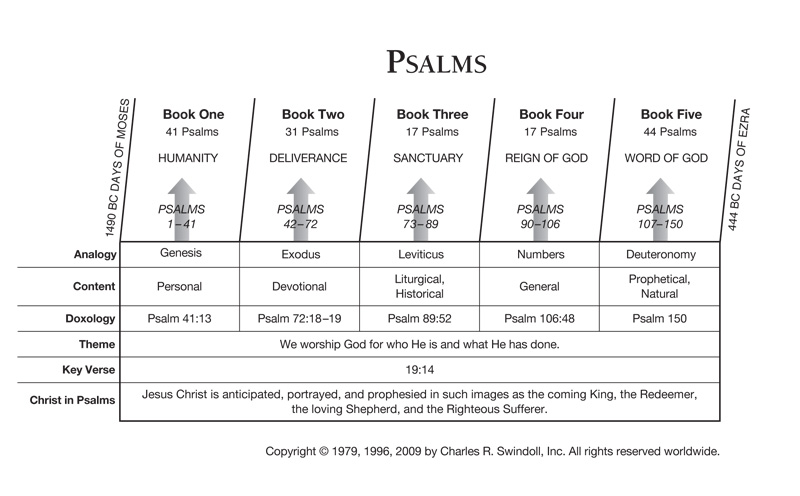
Psalm 42 begins Book 2 in the Psalms. For the first time we are told a psalm is written by a different author than David. The sons of Korah penned this psalm and few of the other psalms found in Book 2.

Psalms 42–49 were written by the descendants of Korah. Korah was a Levite who led a rebellion against Moses (Numbers 16:1–35). He was killed, but his descendants remained faithful to God and continued to serve God in the Temple. David appointed men from the clan of Korah to serve as choir leaders (1 Chronicles 6:31–38), and they continued to be Temple musicians for hundreds of years (2 Chronicles 20:18, 19).

42:1, 2 As the life of a deer depends upon water, so our lives depend upon God. Those who seek him and long to understand him find eternal life. Feeling separated from God, this psalmist wouldn’t rest until he restored his relationship with God because he knew that his very life depended on it. Do you thirst for God?

God Encourages Me as I

  1. Worship Him

Thirsting for the living God only begins when we realize that it is a matter of our own soul’s life and death. Just as the deer requires water for life and therefore thirsts for it, so also we will thirst for the living waters of God if we will see its need.

The psalmist’s desire is so strong that he wants to “meet with God.” It is not enough to go and worship for God. Nor is it enough to have a longing for the Lord. The thirst can only be quenched when he goes to meet God. This is the drive and goal of life. The psalmist wants to experience God, be with God, and spend time with God. The psalmist does not see worship, singing, fellowship with others  believers and reading scripture as God’s rules to keep. Rather, the psalmist realizes that worship, singing, fellowship with other believers and reading scripture are the ways to be with God. These are the only ways to get to know and experience God until we can see him face to face.

We also must see that this thirst is sustained even through his personal times of oppression and skepticism. We see the psalmist’s pain in the words, “My tears have been my food day and night.” We also see the scorn the psalmist is enduring as others say to him all day long “Where is your God?” He is remembering the good times with God and continues to thirst for God even though he is enduring an undisclosed oppression.

42:4, 5 The writer of this psalm was discouraged because he was exiled to a place far from Jerusalem and could not worship in the Temple. During these God-given holidays, the nation was to remember all that God had done for them.

2.  Remember Him

42:5, 6 Depression is one of the most common emotional ailments. One antidote for depression is to meditate on the record of God’s goodness to his people. How has God been faithful to you in the past? How has God answered your prayers? How has God worked in your family?  How has God blessed you?   This will take your mind off the present situation as you focus your thoughts on God’s ability to help you rather than on your inability to help yourself. When you feel depressed, take advantage of this psalm’s antidepressant: Read the Bible’s accounts of God’s goodness, and meditate on them.  Focus on gratitude for what God has done and all that God has given.

Also, in our efforts to help others deal with their emotions and we see the scriptural foundation for this advice in this psalm. We have to talk to ourselves when we are enduring oppression, suffering, or begin to be skeptical of what God is doing for us. Notice how the psalmist talks to himself, “Why are you downcast, O my soul? Why so disturbed within me?“  Talk to yourself instead of letting your feelings talk to you.  Our feelings can lead us astray.

The psalmist is speaking to his emotions. He is not allowing his emotions to dictate his mind. He is going to keep his feelings in check, realizing that he must keep his hope in the Lord. This is absolutely critical for us to understand and commit ourselves to do in the midst of trouble. We cannot allow our emotions to get the best of us and control our lives. We cannot allow our actions and rationale be dictated by how we feel. To be governed by our feelings and emotions is spiritual suicide and makes us an emotional disaster. The psalmist is telling us that we have to talk ourselves through many of the hard times of life and especially we need to talk to God.

3. Pray to Him

The Lord will command His lovingkindness in the daytime,
And in the night His song shall be with me—
A prayer to the God of my life.”  Psalm 42:8

Its a great reminder that God is loving, kind and with us all day and all night! He is available to pray to and talk to anytime!

Let’s focus on the last statement in this repeated refrain, “Put your hope in God.” The psalmist is reminding himself to put his hope and trust in the Lord. When are backs are to the wall and things do not seem to be working out the way we expected, it is time to repeatedly tell ourselves to put our trust in God.

The repetition of the phrase should tell us that it is not going to be enough to tell ourselves to trust God once. We have to keep reminding ourselves of this! Things will not go according to plan and how we deal with it is a test to our ability to trust in the Lord.

Like the psalmist, you may be struggling with depression and despair in your life right now or know someone who is.   There are many things that lead to depression: distressing burdens, disobedience, disappointment, defeat or failure, defiance against God, dread or fear,  the rejection of people, despondency or hopelessness, desolation or sorrow, danger, debilitating pain and suffering, a disposition of selfishness, disdain for others, and the death of a loved one. Have you dealt with this menu before? Many have been in this boat, yet the Lord can help us to overcome our discouragement.
God’s Word has given practical instruction for us on how to get our wind back when life has punched us in the stomach. It gives important principles on how to bring order, peace, and calm back into our lives if we have been sinking down emotionally.

God encourages us as we: Worship Him, Remember Him and Pray to Him

www.Upwards.Church

Message Audio/Video and Outline: https://upwards.church/watch-now/leander-campus-videos

Watch Messages: YouTube-Upwards Church

Facebook: Upwards Church

Sources:

Brent Kercheville, Looking Up When You’re Feeling Down

Life Application Bible Notes (Tyndale, 2007), 888.

Rod Mattoon, Treasures from Treasured Psalms, vol. 2, Treasures from Scripture Series (Springfield, IL: Rod Mattoon, 2007), 108–109.

Posted in Psalms | Tagged , , , , , , , , , , , , | Leave a comment

God’s Word – Psalm 1:2-6

What does it mean to delight in God’s Word?  The word is used in the Old Testament (Gen. 34:19; Esther 2:14) of a man delighting in a woman. Now, that tells us something! Have you noticed that when a young man delights in a woman, he rearranges his priorities so that suddenly he has plenty of time to spend with her? And he doesn’t do it because he has to; he wants to! Nothing interferes with his time with the object of his delight!  That was so true when I met Niki, I was very busy with a full load of classes at seminary, managing a 300 acre ranch, teaching driver’s Ed in the evenings and being a youth minister on the weekends, but I made time for her and still do.

Do you delight in God’s Word in that sense? Do you make time to spend in the Word because you delight in it? Or has it become a duty? It’s easy to fall into the duty mentality toward the Word: “A chapter a day keeps the devil away!” Besides, it alleviates your guilt to read it. So you grind through a chapter and check it off on your list, but you didn’t commune with the living God or apply His Word to where you need to change.

The Bible is God’s love letter to you. You’re reading the counsel of a loving, all‑wise Heavenly Father as to how you should live. His commandments are for your blessing and good. It should be no more of a duty to spend time in God’s Word than it is for a young man to spend time with an attractive woman. The way to true happiness is to delight in God’s Word.

We are responsible not only to delight in God’s Word, but also to meditate on it continually. To meditate means to think about what the Word says and how it applies to all of life. Meditation is to reading what digestion is to eating: chewing on it, letting it become part of you. We’re to be doing it continually (“day and night”), which implies knowing the Word well enough to think about it all day long.

As we saw in verse 1, the mind is the first bastion we must defend. Whatever shapes your thinking will shape your life. The only way for a person to reject the counsel of the ungodly which bombards him from every side is to be continually meditating on, thinking about, chewing on in his mind, the Word of God and how it applies to life.

That’s our responsibility: to delight in and meditate on the Word of God. Do you do it? Matthew Henry wisely comments, “We may judge of our spiritual state by asking, “What is the law of God to us? What account do we make of it? What place has it in us?”  To the extent that you build your life on God and His Word, you will have true happiness.

This “law” means all of Scripture: the first five books of Moses, the Prophets, and the other writings. The more we know of the whole scope of God’s Word, the more resources we will have to guide us in our daily decisions.   God’s Word not only blesses us but,

  • God’s Word Proper’s Me  (1:3).

The psalmist describes the person who delights in God’s Word as a tree planted by streams of water. This is a tree that has been deliberately cultivated, surrounded by these canals or streams so that its roots have a continual supply of water. It is solid and able to withstand drought or storms. It is fruitful and has continual evidence of life and vitality‑‑its leaves do not wither. He sums it up by applying it: “In whatever he does, he prospers.” There’s a truly happy person: the person God blesses with His prosperity, no matter what circumstances of life he finds himself in.

God is not promising financial prosperity here, but rather, soul-prosperity. The so-called “health and wealth” teaching being promoted by some TV preachers, which claims that God promises financial prosperity, is false. God’s servants may be poor in this world’s goods and afflicted by many trials. But they are rich toward God (Luke 12:21), which is true prosperity.

But perhaps, if you were honest, you’d admit that you question the truthfulness of Psalm 1. You may know people who leave God out of their lives and who seem to be genuinely happy and prosperous. They seem to have good marriages and happy families. They seem to be doing just fine without God. And you may know others who are godly people, who build their lives on God and His Word, and yet they are hit with adversity and difficulties. What about that? The psalmist goes on to show that…

  • God’s Word Protects Me  (1:4‑6).

The psalmist describes the wicked in contrast to the righteous. The righteous is like a sturdy tree‑‑rooted, firm, fruitful. The wicked is like chaff from the wheat‑‑rootless, weightless, useless. This is not man’s view. From our viewpoint, many who leave God out of their lives are glamorous, powerful, exciting people. Rather, this is God’s view, as verse 6 shows. God’s view takes eternity into account and says, “Those who leave Me out of their lives are like chaff.” They have no substance. They may be great before men, but before God they will be blown away like chaff in the final judgment.

“The wicked will not stand in the judgment” (1:5), which means, they won’t have a leg to stand on. Their case won’t hold up in God’s court. They won’t be in heaven, where those who have been made righteous through faith in Christ will be assembled. Even though it may not look like it at times, “the Lord knows” (is intimately acquainted with) “the way of the righteous, but the way of the wicked will perish.” (6) The wicked will be condemned to eternal punishment in the lake of fire (Rev. 21:8).

You may say, “Isn’t that a cop‑out? That’s the old pie‑ in‑the‑sky‑when‑you‑die bit.” No, it’s not a cop‑out. It is the plain teaching of God’s Word, which says, “It is appointed for men to die once and after this comes judgment” (Heb. 9:27). We all must stand before God. If you take God and eternity out of the picture, all you are is an accident‑‑the chance product of random chance. Your birth was an accident, your death will be an accident. All you are is an accident suspended between two accidents! There’s no happiness in that view.

The Word of God declares that you are not an accident. You are here as the creation of God, made in His image, designed to find true happiness in Him and in His Word. But due to your rebellion, as seen in your running your own life rather than in submitting to Christ as Lord, you are alienated from God. He could rightfully judge you, but because of His love and mercy, He sent Jesus Christ to die in your place on the cross. You must turn from your rebellion, trust in Him and accept the pardon He offers. If you will do that and then build your life on God and His Word, you will live happily ever after, both now and throughout eternity! And that’s no fairy tale.

www.Upwards.Church

Message Audio/Video and Outline: https://upwards.church/watch-now/leander-campus-videos

Watch Messages: YouTube-Upwards Church

Facebook: Upwards Church

Sources:

Bible.Org – Psalms

Life Application Bible Notes (Tyndale, 2007), 843.

Matthew Henry’s Commentary [Revell], 3:239.

Posted in Psalms | Tagged , , , , , , | Leave a comment

Happiness – Psalm 1:1

“And so they lived happily ever after.” So ends many a fairy tale. We enjoyed hearing such stories when we were young, but we all grow up to realize that real life isn’t like that. Life’s too complex.

Just look around. We’re a nation founded upon the inalienable rights from our Creator: of life, liberty, and the pursuit of happiness. Ask almost any person what they want out of life, and they will reply, “I want to be happy.” And yet for a people bent on pursuing happiness, we’re not doing so well. Many try to find happiness in love and marriage, but the divorce rate shows that we’re not finding happiness there. Couples hope that having a family will bring them happiness, but often their children cause them more pain than pleasure. Others try to find happiness in a career or in recreational activities. Many try to deaden their pain with alcohol or drugs. But few would admit that they’ve found lasting happiness.

Things can never satisfy us; only God can. Even relationships cannot ultimately satisfy apart from God. Pursuing pleasure, self-fulfillment, or self-centered goals cannot satisfy. Only a life built on God and obedience to His Word will bring true happiness. That’s what this psalm declares.

To live happy or blessed, we must build our lives on God and His Word.

The first verse begins with “blessed,” which in Hebrew is a plural of intensity and may be rendered, “Oh, how truly happy is the person!” or “Oh, the happiness of the person!” The word stems from a verb meaning to go on or advance. If you want to advance to the fullest measure of happiness, the psalmist is going to tell you how.

It’s significant that he begins by telling us some things that the happy person does not do. Your happiness, both now and in eternity, depends upon your choice of one of two ways. Choosing one means rejecting the other. The psalm begins with that which the happy person must reject:

1 Blessed is the man who does not walk in the counsel of the wicked or stand in the way of sinners or sit in the seat of mockers.

The writer begins this psalm extolling the joys of obeying God and refusing to listen to those who discredit or ridicule him. Our friends and associates can have a profound influence on us, often in very subtle ways. If we insist on friendships with those who mock what God considers important, we might sin by becoming indifferent to God’s will. This attitude is the same as mocking. Do your friends build up your faith, or do they tear it down? True friends should help you to draw closer to God, not hinder your relationship with him.

God doesn’t judge people on the basis of race, sex, or national origin. He judges them on the basis of their faith in him and their response to his revealed will. Those who diligently try to obey God’s will are blessed. They are like healthy, fruit-bearing trees planted along a riverbank with strong roots (Jeremiah 17:7, 8), and God promises to watch over them. God’s wisdom guides their lives. In contrast, those who don’t trust and obey God have meaningless lives that blow away like dust. Only two paths of life lay before us—God’s way of obedience or the way of rebellion and destruction. Be sure to choose God’s path because the path you choose determines how you will spend eternity[1]

How can you discern the counsel of the wicked from the wisdom of God.  Here are five marks:

  1. The counsel of the wicked denies the sufficiency of Scripture for dealing with the problems of the soul. The Bible claims to be adequate to equip the believer for every good work (2 Tim. 3:16-17) and to produce in us true happiness by dealing with the problems of the soul (Ps. 1). It provides answers for problems of guilt, anxiety, depression, anger, bitterness, and relational conflicts. The world’s wisdom implies that the Bible is not sufficient and often stating “solutions” opposed to what the Bible prescribes.
  2. The counsel of the wicked exalts the pride of man and takes away from the glory of God. The Bible humbles the pride of man and exalts the glory of God (Isa. 42:8; 1 Cor. 1:31). The world’s wisdom builds the self and minimizes the need for absolute trust in God, whether for salvation or for daily living.
  3. The counsel of the wicked denies or minimizes the need for the cross of Christ by asserting either the basic goodness of man or by downplaying the extent and impact of the fall. The Bible teaches that we are all utterly wicked and self-seeking. None of us could or would seek God if left to ourselves (Rom. 3:10-18). The cross humbles human pride and wisdom and exalts Christ alone (1 Cor. 1:18-2:5).
  4. The counsel of the wicked denies God’s moral absolutes and substitutes relative human “goodness.” God is absolutely righteous and His standards of holiness as revealed in His Word are absolute (1 Pet. 1:16). Worldly wisdom rationalizes away God’s absolutes as being too “idealistic” or “harsh” and substitutes some human standard, such as “love.” In other words, human wisdom makes a god in its own likeness, rather than submitting to the true God.
  5. The counsel of the wicked focuses on pleasing self rather than on pleasing God and others. The world’s wisdom does not promote self-denial and love for God and others as of first importance (Mark 8:34; 12:29-31). Often the world’s wisdom provides “help” for a person (relief from the symptoms of his problem) without leading him to confess sin, depend on God, and live in obedience to God. The world’s wisdom counsels you to live first of all for yourself.

The path of sinners refers to their way of life or behavior. To stand in the path of sinners means involvement with sinners in their sinful behavior. The word “sinners” comes from a Hebrew word meaning to miss the mark. It refers to deviating from the standard of God as revealed in His Word.

In that sense, we’re all sinners. We’ve all missed the mark by deviating from God’s Word. But when we trust in Christ as Savior and Lord, we become converted sinners. Instead of living to please self, the converted sinner seeks to please God (Col. 1:10). He grows in learning how to deny self (Mark 8:34) and to love God and others (Mark 12:28-31).

The Bible teaches that the objective of our relationship with lost sinners needs to change after we come to Christ. On the one hand, “Do not be deceived: Bad company corrupts good morals” (1 Cor. 15:33). If we run with worldly people in their godless way of life, we will be wrongly influenced by them.

On the other hand, we are not supposed to cut ourselves off completely from sinners (unless they make claim of being Christians). Otherwise, you would have to go out of the world (1 Cor. 5:9-11).  Rather, our objective changes. Whereas before we associated with sinners as one of them to join in their evil deeds, now we associate with them as a sinner saved by grace to seek to bring them to repentance and faith in Jesus Christ. Take note: How truly happy is the person who does not stand in the path of sinners!

Scoffers have rejected God and His Word. They now seek to justify themselves by openly deriding that which they’ve rejected. Scoffers think they know more than God. They’re too smart to believe in the Bible. Many scoffers come from church backgrounds, but they’ve cast it off as too “repressive.” Although they almost always hide under an intellectual smoke screen, invariably scoffers have cast off the Bible because they want to be their own god so that they can follow their own lusts. They don’t want God interfering in their sinful lifestyles.

The seat” of scoffers refers to the assembly or place where such men gather to reinforce their godless philosophy. Birds of a feather flock together. Those who scoff at God love to get together to reinforce their prejudices. To sit in their seat means to belong to such a crowd. Take note: How truly happy is the person who does not sit in the seat of scoffers!

Before we leave verse 1, please note the downward progression in the life of sin. Satan doesn’t cause a person to fall away and spurn the faith all at once. There are degrees of departure from God, as implied in three sets of three words:

(1) Walk > Stand > Sit. First, you walk‑‑you’re still moving, but now in the wrong direction. Then, you stand‑‑you’re lingering in sin. Finally, you sit‑‑you’re at ease in the company of scoffers.

(2) Wicked > Sinners > Scoffers. First, you’re with the wicked‑‑those who hang loose about God. Then you’re with sinners‑‑those who openly violate God’s commands by missing the mark. Then you’re with scoffers‑‑those who openly reject the truth.

(3) Counsel > Path > Seat. First, you listen to counsel‑‑you begin thinking wrong thoughts. Then, you stand in the path‑‑you engage in wrong behavior. Finally, you sit in the seat‑‑you belong to the wrong crowd and have adopted the fatal attitude of the scoffer. And Satan’s got you!

Two Actions:

  1. Guard your mind! Satan begins there, as he did with Eve (“Has God said ...?”). Wrong thoughts lead to wrong behavior which leads to rejection of God and His truth. Guarding your mind doesn’t mean that you become a non-thinker. It means that you critique everything by the unchanging standard of God’s Word of truth.
  2. Guard your friends! Those whom you choose as close friends should be committed to the things of God. “What fellowship has light with darkness?” (2 Cor. 6:14). Bad company will corrupt good morals.

But, the negative is not enough in and of itself to produce true happiness. The psalmist goes on to show in verse 2 which we will look at in the next post.

www.Upwards.Church

Message Audio/Video and Outline: https://upwards.church/watch-now/leander-campus-videos

Watch Messages: YouTube-Upwards Church

Facebook: Upwards Church


Sources:

[1] Life Application Bible Notes (Tyndale, 2007), 842.

Bible.org Psalms 1

Posted in Psalms | Tagged , , , , , , , , , | 1 Comment