
God’s Call (or Power) – Psalm 95

Imagine being invited to the Oval Office for a private meeting with the president of the United States of America.  You would prepare for that meeting. The God of all creation invites us to meet with Him. How do we respond to the Father’s divine invitation? The psalmist equips readers to have a respectful response to royalty. God is the Sovereign King of the universe!

Is the church necessary? In today’s culture, many people admit that they like Jesus, they just don’t like His church. That admission must break the Lord’s heart. Jesus gave His life for the church. Isolation is one of the enemy’s tools. Togetherness is an important reality in the Christian life (Heb. 10:25). In order to carry one another’s burdens (Gal. 6:2), we have to share life together.

Our congregational singing remains important (Ps. 95:1-2).
The focus is on participation, not performance.
The content is about exaltation, not entertainment.

Songs, shouts, gratitude, and praise erupted from those gathered to worship the Lord. While there are certainly many examples of stillness and silence in God’s presence taught and illustrated in Scripture, there are equally as many examples of raucous worship. Both peaceful silence and enthusiastic praise are appropriate expressions of worship to our great God.

God tells us how we should praise Him (vv. 1-2) and why we should praise Him (vv. 3-5). This is communal praise, not individual, although both are important. Our praise should be joyful and enthusiastic—he even commands us to shout (v. 1, nasb)—and wholly focused on the Lord. The verb “Come” in verse 2 means “to go to meet God face-to-face, to be in His presence.” Believers today do this through Jesus Christ, “we boldly come before Him and not neglect our meeting together.”  (Heb. 10:19-25).

Our personal salvation remains immovable (Ps. 95:1).
God is the Source of salvation.
God is the Rock of salvation.

Why should we praise Him? Because He is great and above the false gods of this world (v. 3; 81:8; 92:8; 93:4; 96:4; Ex. 18:11).

God is My ….

  1. Sovereign King

After His ascension to heaven, Jesus Christ was enthroned “far above all” (Acts 2:33; Eph. 1:19-23; Phil. 2:9-11; Col. 1:15-18), and nothing can separate us from His love (Rom. 8:37-39). He is our “great God and Savior” (Titus 2:13) and we should delight in praising him.   Our God is also the Creator of the universe and controls all things (vv. 4-5).

2. Powerful Creator

The depths of the sea and the earth, and the heights of the mountains all belong to Him, and He knows what is going on in the waters as well as on the earth. The pagan nations had gods and goddesses for different parts of creation—the seas, the land, the mountain peaks, the sun, moon and stars, the storms, the crops—but our God is King over all. No wonder we praise Him!

Praise means looking up, but worship means bowing down. (vs. 6-7) So, some people who enjoy lifting their hands and shouting do not enjoy bowing their knees and submitting. True worship is much deeper than communal praise, for worship involves realizing the awesomeness of God and experiencing the fear of the Lord and a deeper love for Him. Too often Christian “praise” is nothing but religious entertainment and it never moves into spiritual enrichment in the presence of the Lord. Our singing must give way to silence as we bow before the Lord. He alone is Yahweh, the LORD, the covenant-making and covenant-keeping God. He is our Maker and our Shepherd. (See Ps. 23 and John 10.) Jubilation has its place only if it becomes adoration and we are prostrate before the Lord in total submission, “lost in wonder, love, and praise.” What a remarkable miracle of grace that we sinners should be called “His people.” He made us, He saved us, and He cares for us! Why should we hesitate to fall before Him in total surrender?

Today if you hear His Voice…”

The Word of God is a vital part of Christian worship, especially in this age when inventing clever new worship forms is a common practice and novelty is replacing theology. Hearing and heeding God’s Word must be central if our worship, private or corporate, is to be truly Christian.  It isn’t enough for God to hear a pastor’s voice; we must hear His voice as the Word of God is read, preached, and taught. The Scriptures written centuries ago have authority today, and we have no right to ignore them, change them, or disobey them. We are to respond to God’s Word now, when we hear it, and not just later.

There are consequences for not hearing or obeying or responding to God’s Word. God is also a ….

 3. Righteous Judge

(See Heb. 3:7-4:13 where this passage is applied to the church today, warning us not to harden our hearts against the Lord.) The way we treat the Word of God is the way we treat the God of the Word. Jesus admonishes us to take heed that we hear (Matt. 13:9), take heed what we hear (Mark 4:24), and take heed how we hear (Luke 8:18).
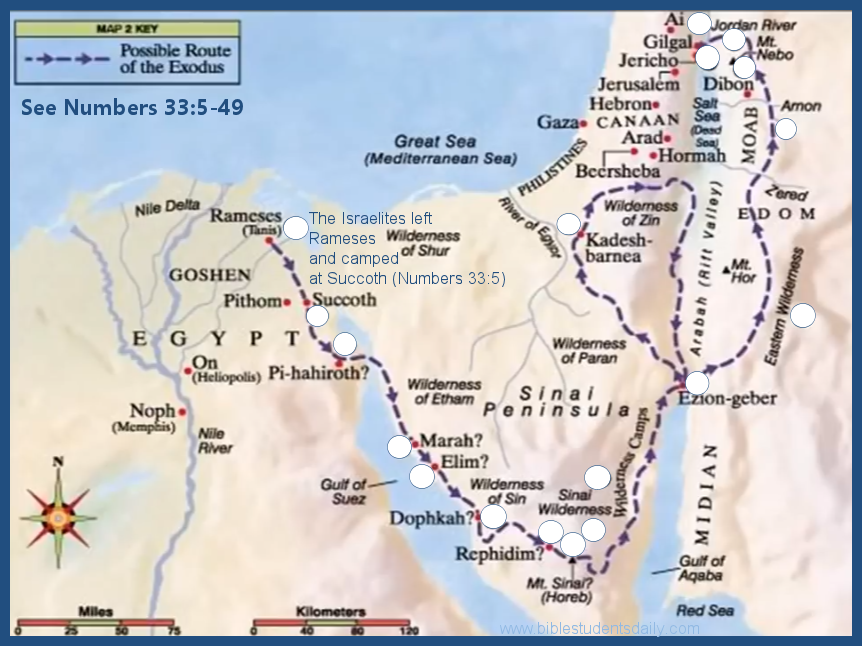
The writer reached back and cited two tragic events in the history of Israel—the nation’s complaining at Rephidim (Ex. 17:1-7) and their unbelief and disobedience at Kadesh Barnea (Num. 13-14). The Jews had seen God’s wonderful works in Egypt, especially His defeat of the Egyptian army when He opened and closed the Red Sea—but they refused to trust Him for their daily needs. No sooner were they liberated from Egypt than they complained that they were hungry, so He sent them the manna, the bread of heaven (Ex. 16). When they arrived at Rephidim, the people complained again because they were thirsty (Ex. 17:1-7). Instead of trusting God, they blamed God and His servant Moses. God graciously gave them water out of the rock, but Moses commemorated the event with two new names for the site: Meribah means “strife, quarreling, contention” and Massah means “testing.” (See also Num. 20:1-13.) Instead of trusting God, the people had contended with God and had even tempted Him by their arrogant attitude and words. He could have sent immediate judgment, and they dared Him to act.

Israel spent a year and two months at Sinai (Num. 10:11) and then departed for Kadesh Barnea, the gateway into Canaan (Num. 13-14). Here they refused to trust the Lord and obey His orders to enter the land and claim their inheritance. In spite of all they had seen Him do, the Israelites hardened their hearts and refused to do God’s will. God judged His people at Kadesh Barnea and consigned them to thirty-eight years in the wilderness while the older generation died off. It was the world’s longest funeral march. “They shall not enter into My rest” (v. 11; Num. 14:26-38). The writer of Hebrews used this event to warn Christians not to harden their hearts and thereby fail to claim what God had for them to do, to receive, and to enjoy. God has a perfect plan for each of His children (Eph. 2:10), and we claim that inheritance by faith in God’s Word, the kind of faith that leads to obedience.

In Moses’ day, God’s “rest” was the land of Canaan, where the Jews would do no more wandering (Ex. 33:14; Deut. 12:9-10; Josh. 1:13, 15). But Hebrews 4 broadens the meaning of “rest” to include the salvation rest and inheritance we have in Christ (Matt. 11:28-30; Eph. 1:3, 11,15-23) and the future eternal “Sabbath rest” in glory (Heb. 4:9; Rev. 14:13). Hebrews 1-4 is God’s admonition to the church today to live by faith, and “faith comes by hearing, and hearing by the word of God” (Rom. 10:17, nkjv). Because the Jews refused to hear His Word but hardened their hearts instead, God was disgusted with His people, and all the people twenty years old and older died during that wilderness journey. We harden our hearts when we see what God can do but refuse to trust Him so He can do it for us. We fail to cultivate a godly heart that fears and honors the Lord. It is a grievous sin to ask for the gifts (food, water, etc.) but ignore the Giver, and the consequences are painful.

What keeps us from God’s ultimate blessings (entering his “place of rest”)? Ungrateful hearts (95:2), not worshiping or submitting to him (95:6), hardening our hearts (95:8), trying God’s patience because of stubborn doubts (95:9). In Hebrews 4:5-11, we are warned not to harden our hearts, but to reject the glamour of sin and anything else that would lead us away from God.

www.Upwards.Church

Message Audio/Video and Outline: https://upwards.church/watch-now/leander-campus-videos

Watch Messages: YouTube-Upwards Church

Facebook: Upwards Church

Sources:

A Respectful Response to Royalty, Dr. Ronny Raines, D.Min., New Orleans Baptist Theological Seminary

Life Application Study Bible, (Wheaton, IL: Tyndale, 1988), WORDsearch CROSS e-book, 945.

Warren W. Wiersbe, The Bible Exposition Commentary – Wisdom and Poetry, (Colorado Springs, CO: Victor, 2004), WORDsearch CROSS e-book, 263-265.

Posted in Psalms | Tagged , , , , , , , , , | Leave a comment

God’s Forgiveness – Psalm 51

This psalm is very practical and relevant for us today like many other chapters in the Bible. The reason this chapter is so practical and relevant is the fact that it gives us insights on who we are, what our nature is, what is God like and what does God require of us?   We see how to get up when we have spiritually fallen down. The same insights tell us how to “stay up” day by day.

Psalm 51 is the story of a desperate man who has been in the fight of his life. He is bruised and he is broken by his sin, he is lost and he is ruined by the fall.

But in many ways, this is a moment of glory for David. David has a glorious limp. It was Joe Novenson who said, “If I were to ask you, ‘What is David’s greatest victory?’ probably, like me, your intuitive response would be, ‘David’s greatest victory is the slaying  the giant, Goliath.’ Or surviving the onslaught and man hunt of King Saul for over ten years, or becoming king of all twelve tribes of Israel, or conquering Jerusalem, a fortress that was inhabited by the Jebusites.  “Actually Psalm 51, Novenson said, “is David’s greatest victory.” This is the greatest victory of David, given to him by God, on the turf of his heart, over his sin and his past.  This can be our victory as well.

The setting is 2 Samuel chapters 11 and 12. The Israelites were off at war. David really should have been with them but he’s home and he’s in his palace and he sees a woman bathing on her rooftop, Bathsheba, and he calls for her and he impregnates her. And then to cover it up, he has her husband, Uriah the Hittite, one of his best, really most loyal soldiers, he has him killed on the battlefield. And for at least nine months, David has a quiet conscience. And in 2 Samuel chapter 12, God forces the issue and Nathan confronts him. And as a result of that confrontation, this psalm of repentance is penned by David.

If you’re bruised by your sin and you have a past, if you’re brought low by your sin, you’re dealing with guilt or shame, this psalm is for you. Psalm 51, according to Sinclair Ferguson, is “a guiding star.” It’s a guiding star to understanding the Gospel. It’s a guiding star to understanding our great sin and our great Savior.

In Psalm 51, we see a heart that was hardened and hiding become shattered and shaped by God’s grace.  We see confession.  We see repentance.  We see forgiveness from God.   And we see in this psalm that there will be at least three things that God does.

When I Ask God’s Forgiveness He…

1. Removes the Guilt within Me

David starts a plea to God’s mercy and grace, not his own goodness.

In verse 1. He says, “Have mercy on me, O God” – why? He says, “according to your steadfast love.” And so in verse 1, David turns to God’s steadfast love, this covenant word, “hesed,” the love of the God of the covenant. That if He sets His love on you, He will never ever, ever stop loving you. This covenant loyalty, this covenant faithfulness. Derek Kidner, in his famous commentary on the Psalms, says this in verse 1. He says “The opening plea is the language of one who has no claim to the favor he begs.” In other words, David comes with no bargaining chips and the basis for the mercy that he’s begging for is not his credentials, it’s not his productivity or performance or faithfulness, but the basis for the mercy that he’s begging for is something in God’s character. “Have mercy on me according to your steadfast love.” 

Then David uses all kinds of Biblical language to describe the many-sided character of his sin. He says in verse 1 it’s “transgression,” in verse 2 it’s “iniquity,” in verse 3 it’s “transgression,” verse 4 it is “evil.” And notice this, in his confessing, he’s using first person singular. And so verse 1 “my transgressions,” verse 2 “my iniquity, my sin,” verse 3 “my transgressions, my sin,” verse 4 “I sinned and have done evil in your sight.” And so you don’t have to be a Hebrew scholar in order to understand what David is getting at in the first few verses. What is he pressing on us? David is owning it. This is a personal ownership of sin. David owns it. He doesn’t give any excuses. He doesn’t clean it up. He doesn’t sterilize it. He doesn’t say, “This was a bad day.” He doesn’t say, “I hit a bump in the road.” He doesn’t say, “This was a growth area or a growth edge.” David owns his sin. This is personal ownership of sin.

And notice this is a precise confession. David says in verse 4, “Against you and you only I have sinned.” So, of course, David is not saying that he didn’t sin against Uriah, that he didn’t sin against Bathsheba or against the nation. But what he’s saying here is that the root sin, and really the sin underneath all of these other sins, is the sin, the evil sin against the character of God. This is a precise confession. David prays in verse 14, he says he has the blood of Uriah on his hands. He says, “Deliver me from bloodguilt, O God.” This is a precise confession and so David is praying, “I am false and full of sin. I am not who I want to be. I’m not how I want to be. I need Your mercy and I need it in deep, deep ways.”

In fact, look at verse 5. David says, “I was brought forth in iniquity and in sin did my mother conceive me.” So in other words, he’s saying, “I know where this came from.” He’s not blaming his mother but he’s saying, “This is not a fluke. This is not out of left field. This is not a random fumble, but there’s an explanation. Here’s the explanation – I sin because I am a sinner. Before I did sinful act number one, I had nature, I had the native twist in my heart to do it.” And so David is praying. He says, “I need grace in the deepest places, in the coldest corners, in the inner parts. There is a place in me that’s hidden, that’s pervasively twisted. There is a spiritual sickness that I cannot fix myself. I need You, God, to go there. I need Your mercy deep.

This is the first and always the hardest step – to confess what is true, to see yourself clearly, to own it, to admit that you are needy and that you are spiritually broken and bankrupt and bruised. This is step one. David no longer needs anyone else to explain his sin to him. He says in verse 3, “My sin is ever before me.” No less than eighteen times in this prayer, no less than eighteen times, David is begging God, he is pleading with God, “Have mercy on me, purge me, wash me, clean me, create in me, renew in me, uphold me, sustain me, deliver me.” This is a man at the end of his resources. This is a posture of need.

And God delivers.  God “blots out, washes away, cleanses, and renews!

When I ask God for forgiveness,  He

2. Restores My Relationship with Him

As we move onto  verses 7 to 12,  David moves to restorative language.  Verse 7, look at the cleansing language. He says, “Purge me with hyssop and I shall be clean. Wash me and I shall be whiter than snow.”

What is hyssop?  Hyssop, an herb in the mint family with cleansing, medicinal, and flavoring properties, was prolific in the Middle East and was used in a variety of ways.

Hyssop is also used symbolically in the Bible. When the Israelites marked their doorposts with lamb’s blood in order for the angel of death to pass over them, God instructed them to use a bunch of hyssop as a “paintbrush” (Exodus 12:22). This was probably because hyssop was sturdy and could withstand the brushing, but it also likely signified that God was marking His people as “pure” and not targets of the judgment God was about to deal out to the Egyptians.

And so David knows that he needs this inner washing, this inner cleansing, and so he’s praying, “God, don’t just clean me up on the inside, but be a priest to me. Sprinkle the blood of the sacrifice on me to wash me, to make me whiter than snow. I can’t clean myself, God. “Nothing but the blood of Jesus.” No other solvent will do to wash away my sin, to cleanse me from all sin, to blot out all of my iniquities.” And so David is asking not only for the removal of his guilt; he’s asking for the obliteration of his past record. He wants to be clean.

And then he moves to this restorative language. He says in verse 8, “Let me hear joy and gladness.” He says in verse 12, “Restore to me the joy of my salvation.” This is restorative language. I love this. “So God, You have removed my guilt, You have obliterated my past record, You have washed me, You have robed me in righteousness, You have made me clean.  Now joy is on the way, gladness will soon follow.  All is well.

When I ask God for forgiveness,  He also…

 3. Renews My Witness to Others

When a person gets back up on their spiritual feet and has their life right with God, there is a desire to live for Him.

David in essence was saying, “Lord, help me to get back up on my feet and I will live for you. Here is what I will do.” Notice the decisions he has made, for they are important for any person who wants to get back up after they have fallen and stay up.

I will teach transgressors you way, so sinners will turn back to youPsalm 51:13

When God gets a firm grip on your heart, there will be a desire for ministry to others. This does not necessarily mean you will be a teacher or preacher, but it does mean you will not hesitate to speak about the Lord to others, whether it is in private or public. If you are silent about what the Lord has done for you, then something is wrong. This is not normal for the dedicated Christian. If you are mute about the Lord, the problem may be the fact that you are not as dedicated to the Lord as you think.

When the Lord controls your heart, you will begin to know the heart of God. It is the heart of God that reaches out to sinners. This was David’s attitude. David had a “Rebuilder’s” attitude. He not only wanted God to rebuild his own life, but he wanted to be used of God to rebuild the lives of others as an expression of gratitude to the Lord for His love and mercy, but also out of a concern for people. He did not want people to be scarred by the destructiveness and pain of sin and make the same blunders as he made.

Victor and Mildred Goertzel did a study entitled Cradles of Eminence. It was about the home up-bringing of 300 very successful people who made it to the top. The study included folks like Franklin D. Roosevelt, Helen Keller, Winston Churchill, Albert Schweitzer, Clara Barton, Gandhi, and Einstein. The findings of the study revealed that three-fourths of the children were troubled by poverty, a broken home, or by rejecting, over possessive, or dominating parents. Physical handicaps such as blindness, deafness, or crippled limbs characterized 25 percent of these folks. Yet, they did not let their handicaps slow them down. Seventy-four of eighty-five writers of fiction or drama came from homes of intense psychological drama and conflict. Sixteen of twenty poets came from homes like this too. These people compensated for their weaknesses in one area by excelling in another area. Their brokenness brought out the best in them. It revealed their character.

God breaks us that we might be a channel of blessing to others, a light to those in darkness, a leader to those who are lost, to love to those who feel rejected, to teach lessons to those who are curious or ignorant about God’s care, to show the influence of Christ in our life and to show the loveliness of the Lord in an ugly world.

www.Upwards.Church

Message Audio/Video and Outline: https://upwards.church/watch-now/leander-campus-videos

Watch Messages: YouTube-Upwards Church

Facebook: Upwards Church

Sources:

“David’s Greatest Victory,” David Felker

Rod Mattoon, Mattoon’s Treasures – Treasures from Treasured Psalms, Volume 2, (Springfield, IL: Lincoln Land Baptist Church, n.d.), WORDsearch CROSS e-book, 150-199.

https://www.gotquestions.org/hyssop-Bible.html

Posted in Psalms | Tagged , , , , , , , , , , , , | Leave a comment

“Bad” Words in Psalm 51

There are at least four “bad” words in the bible to describe human behavior.  These are words that we don’t usually use in day to day conversations.  Psalm 51 has these four different ‘bad” words that describe human nature.   Let’s look at each of them….

Blot out my transgressions.
Wash me thoroughly from my iniquity,
And cleanse me from my sin.   Psalm 51: 2 

Most people assume the Bible has a lot to say about how messed up humans are, and that’s true. It’s also true that the Bible’s vocabulary about this topic sounds odd to modern people, using words like sin, iniquity, transgression or evil. And so the Bible’s perspective on the human condition is often ignored or treated as ancient and backwards.

This is really unfortunate because through these four different words, the biblical authors are offering us a deeply profound diagnosis of human nature.

  1.  Transgression 

“Transgression” is a fascinating word that you for sure haven’t used in conversation recently.  In Old Testament Hebrew, the noun is pesha and the verb is pasha. In the New Testament, the Greek word is paraptoma. They’re usually translated as “transgression,” sometimes as “rebellion,” and in older translations as “trespass.”

These words refer to ways that people violate the trust of others. Pesha describes the betrayal of a relationship. And since there are many kinds of relationships, a lot of different behaviors can be called pesha.

Like if two nations are in a relationship, we would call that a treaty. And pasha’ would describe the breaking of that agreement. In the biblical book of 2 Kings, we read, “After the death of king Ahab, Moab pasha’d with Israel.”1  This is usually translated, “Moab rebelled against Israel.” But in biblical Hebrew, you don’t pasha against someone, you pasha with them, that is, you break trust with that person.

The same idea appears in an Old Testament law about theft2. If an Israelite is away on a trip and somebody sneaks into their house and steals something, that’s robbery. But if the thief was your neighbor, it’s pesha because they’re someone you should be able to trust.

Or there’s a story about Jacob running away from Laban, his uncle. Laban accuses Jacob of stealing some idol statues. He searches all of Jacob’s belongings, and he finds nothing. So Jacob shouts, “What is my pesha?!3. How have I violated your trust? But the sad irony is that the statues were stolen by Jacob’s wife, who is Laban’s own daughter. Talk about breaking trust!

So pesha involves one person or group violating a relationship of trust with another. And this is a really common word in the Bible because it’s one long story about a broken relationship between God and the Israelites. At Mount Sinai, they agreed to worship only their God and to care for the poor among them, but they didn’t. And so God raised up prophets to confront them, like Micah who said, “I am full of power, with the Spirit of the Lord and with justice and courage, so I can declare to Jacob his pesha.”4

Or the prophet Amos, he accused the Israelites of pesha, specifically for idolatry and “selling the poor for a pair of sandals.”5 He also accused other nations, like Tyre who profited from capturing whole towns and then selling them into slavery6, or the Ammonites for murdering the innocent to enlarge their borders7.

For Amos these are all acts of pesha. They violate the universal trust that exists between all humans who are made in the image of God. He watched these leaders ignore or justify the mistreatment of humans in the name of national security or a strong economy. But for Amos, it was a betrayal of humanity. And it makes perfect sense why these prophets associate pesha with words like treachery8 or falsehood9.

2.  Iniquity

What does iniquity even mean? This word is all over the Bible, so let’s take a closer look at this biblical “bad” word.

Iniquity is one way the Hebrew word avon gets translated. It’s also rendered with words like wickedness, guilt, or sin. So what does avon actually mean?

The word avon is related to a Hebrew verb avah, which means “to be bent” or “crooked.”

This image of being crooked offered biblical poets a powerful metaphor to talk about people’s behavior, like Jeremiah, who said Israel has “avah’d their way” by violating their covenant with God and giving allegiance to idols.3 Or in the book of Job, a person who morally fails is someone who avah’s what is right.4 In both cases, something that’s supposed to be level or even, your choices or your conscience, has been bent out of shape, distorted.

In the Bible, avon refers to all kinds of crooked behavior––ten commandments kind of stuff, lying, murder, adultery. In Isaiah chapter 59,avon describes the corruption among Israel’s leaders who were ignoring the injustice done to the poor. The prophet cleverly adapts the metaphor, saying, “We have so much avon,” that is, crookedness, “that uprightness can’t even enter our city.” Things were so morally distorted in Jerusalem that crooked was the new straight.

Another fascinating thing about the word avon is that it refers not only to distorted behavior but also to the crooked consequences––the hurt people, the broken relationships, the cycles of retaliation. You find this idea in the biblical phrase “to punish,” which in biblical Hebrew is to “visit someone’s avon upon them,” that is, to let them sit in the consequences of their crooked choices. This is what the prophet Jeremiah said about Babylonians who were destroying other nations5. One day those nations would destroy them in return. And so Babylon’s divine punishment would be having to live in a disfigured world of its own making.

This is actually the main way biblical authors talk about God’s response to human avon––letting people experience the crooked consequences of their choices. This is the meaning of the common biblical phrase “to bear your iniquity,” or in Hebrew, “to carry your avon.” God gives people the dignity of carrying the consequences of their bad decisions.

But that’s not the only way God responds to avon in the Bible. He also offers to carry the avon of corrupt people as an act of sheer generosity. In fact, “carrying avon” is the most common Hebrew phrase for God’s forgiveness, like Psalm 32 where the poet says, “I did not hide my avon, but confessed it… and you carried the avon of my sin.” [Psalm 32:5

This idea reaches its high point in the book of Isaiah, where God appoints a figure called “the servant.” He will embody God’s forgiving love by “carrying the avon of many” and allowing it to crush him. This servant will absorb humanity’s crookedness, letting it overwhelm and destroy him. But that’s not the end of the story. The servant will emerge out the other side of death, alive and well, so he can offer his life to others. [Isaiah 53:11-12

3.  Sin

Sin is actually the most common of these “bad words” in the Bible

Sin translates the Hebrew word khata‘ and the Greek word hamartia. The most basic meaning of sin isn’t religious at all. Khata’ simply means “to fail,” or “miss the goal.” Like when the Israelite tribe of Benjamin trained a small army of slingshot experts, they could sling a stone at a hair and not khata’, that is, fail or miss1 Or there’s a biblical Proverb that warns against making hasty decisions because you’re likely to khata‘ your way, miss your destination.2

In the Bible, sin is a failure to fulfill a goal. But what’s the goal?  In Genesis 1, we learn that every human is an image of God, a sacred being who represents the Creator and is worthy of respect. And so in this way of seeing the world, sin is a failure to love God and others by not treating them with the honor they deserve.

You can see this idea in the famous code of conduct given to the Israelites, the ten commandments. Half of them identify ways you can fail at loving God, and the other half name ways you can fail at loving people. And the fact that both kinds of failure are combined shows that failing to honor God is deeply connected to failing to honor people.

This is why, in the Bible, sin against people is sin against God. Like when Joseph refuses to sleep with the wife of Potiphar, he says, “How could I sin against God?3 In Joseph’s mind, failing to honor a human made in God’s image is a failure to love God. And so sin is a failure to be truly human. But there’s more.

A fascinating thing about sin in the Bible is that most of the time that people are failing, they either don’t know it, or even worse, they think they’re succeeding, like when Pharaoh wants to build Egypt’s economy and protect national security. In his mind, this justified enslaving the Israelites. He thinks it’s good, and he’s totally unaware that it’s an epic fail.4 Or when King Saul is chasing David around the wilderness trying to kill him, he thought he was bringing a criminal to justice, until he realizes he’s the corrupt one. And he says, “I have sinned. I am the failure.5. So sin is about more than doing bad things. It describes how easily we deceive ourselves and spin illusions to redefine our bad decisions as good ones.

Let’s look at the last “bad” word, mentioned in the next verse…

For I acknowledge my transgressions,
And my sin is always before me.
Against You, You only, have I sinned,
And done this evil in Your sight—  Psalm 51:3

4. Evil

This is also a more commonly used word today.  What is the Hebrew word for evil?

Ra’ (Strong’s #H7451)  This masculine noun means evil, bad, or contrary to God’s nature.

God introduces the term as a contrast to good and associated with death. Here’s the first usage of the word, evil:

The Lord God commanded the man, saying, “From any tree of the garden you may eat freely; but from the tree of the knowledge of good and evil (ra’) you shall not eat, for in the day that you eat from it you will surely die.” (Gen 2:16-17)

In other words, “Evil” is a polar opposite of good or all things that are opposed or different than what God is or does.  Other examples of an opposites are:  “light and dark” or “good and bad” or “love and hate.”   In using the word “evil” or “bad’  in the sermon on the Mount Jesus describes all these opposing ideas or contrasts well:

But if your eye is bad/evil your whole body will be full of darkness. If then the light that is in you is darkness, how great is the darkness! No one can serve two masters; for either he will hate the one and love the other, or he will be devoted to one and despise the other. (Matt 6:23-24)

In conclusion, the whole biblical story is about God’s desire to take crooked, unfaithful, fallen and wicked people (or transgressors, doers of iniquity, sinful and evil people) and the twisted world that we’ve created and to make everything right. Through Jesus, God invites us to become whole humans once again, people who can walk upright with God and with each other.

Notice how Jesus “the servant” takes all four of these “bad” words upon himself and pays the price for each of us that have committed these “bad” things!  (Isaiah 53)

 But He was pierced for our transgressions
    He was crushed for our iniquities;
the punishment that brought us peace was on Him,
    and by His wounds we are healed.
We all, like sheep, have gone astray,
    each of us has turned to our own way;
and the Lord has laid on Him
    the iniquity of us all.

For He was cut off from the land of the living;
    for the transgression of my people He was punished.[b]
He was assigned a grave with the wicked,(or evil)
    and with the rich in His death,
though He had done no violence,
    nor was any deceit in His mouth.

10 Yet it was the Lord’s will to crush Him and cause Him to suffer,
    and though the Lord makes[c] His life an offering for sin,

12 Therefore I will give Him a portion among the great,[g]
    and He will divide the spoils with the strong,[h]
because He poured out His life unto death,
    and was numbered with the transgressors.
For He bore the sin of many,
    and made intercession for the transgressors.

Thank you Jesus!!

www.Upwards.Church

Message Audio/Video and Outline: https://upwards.church/watch-now/leander-campus-videos

Watch Messages: YouTube-Upwards Church

Facebook: Upwards Church

Scriptures: 

Transgression:

1. 2 Kings 1:1
 2. Exodus 22:7-9
 3. Genesis 31:36
 4. Micah 3:8
 5. Amos 2:6
 6. Amos 1:9
 7. Amos 1:13
 8. Isaiah 59:12
 9. Hosea 7:13
 10. Romans 5:15
 11. Isaiah 53:9, 12

Iniquity:

1. Psalm 38:6
 2. Lamentations 3:9
 3. Jeremiah 3:21
 4. Job 33:27
 5. Jeremiah 25:12

Sin: 

1. Judges 20:16
 2. Proverbs 19:2
 3. Genesis 37:9
 4. Exodus 5:16
 5. 1 Samuel 26:21
 6. Romans 5:21
 7. Romans 6:6
 8. Romans 7:15-16
 9. 1 Peter 2:22-24

Sources:

https://bibleproject.com/explore/video/pesha-transgression

https://bibleproject.com/explore/video/avon-iniquity/

https://bibleproject.com/explore/video/khata-sin/

http://helpmewithbiblestudy.org/8Sin/natureEvil.aspx

https://www.ancient-hebrew.org/studies-words/good-and-bad.htm

Posted in Psalms | Tagged , , , , , | 1 Comment

God’s Leading – Psalm 23

Psalm 23 has been memorized more than any passage of Scripture, other that the Lord’s Prayer. Charles Haddon Spurgeon called it “the pearl of psalms.” Alexander Maclaren said, “This psalm has dried many tears and supplied the mold into which many hearts have poured their peaceful faith.” Ministers like myself have used its words to comfort people who are going through severe personal trials, suffering illness, or facing death. In fact the words of this psalm have been the last that many people have uttered in this life. Max Lucado writes, “In these lines sailors have found a harbor, the frightened have found a father, and strugglers have found a friend.”  Why do is this Psalm so loved?  I believe it is because the entire song is built around the profound truth of its first five words: “THE LORD is my Shepherd.” This first lyric express the fact that God Himself  stands ready to lead and guide us through life.  Allow this truth of those five precious words sink in to the depths of your soul.

The Hebrew here that we translate as, “the Lord” is “Jehovah” or “Yahweh” and is the loftiest, most respected title a Jew could utter. The Hebrews stood in awe before it. It was so holy that they substituted some lesser title for God whenever it occurred in their public reading of sacred Scripture. “Jehovah” means “the I AM.” It refers to the self-existent being-He Who is timeless-Who was and is and is to come, Who inhabits eternity, Who has life in Himself. In F. B. Meyers’ commentary on this text he says,

“…all other life, from the aphid to the rose-leaf, to the archangel before the throne, is dependent and derived. All others waste and change and grow old; [GOD] only is unchangeably the same. All others are fires, which He supplies with fuel; He alone is self-sustained. THIS MIGHTY BEING IS OUR SHEPHERD!”

Think about it. Though God creates, He was never created. Though He makes, He was never made. Though he causes, He was never caused. As Psalm 90:2 says, “Before the mountains were born, You brought forth the earth and the world. From everlasting to everlasting You are God.” God doesn’t check the weather; He makes it. He doesn’t defy gravity; He created it. He isn’t affected by health; He has no body. And since He has no body-He has no limitations. He is equally active everywhere. Lucado writes, “Counselors can comfort you in the storm, but you need a God Who can still the storm. Friends can hold your hand at your deathbed, but you need a Yahweh Who has defeated the grave. Philosophers can debate the meaning of life, but you need a Lord Who can declare the meaning of life. You need a God Who can place 100 billion stars in our galaxy and 100 billion galaxies in the universe. You need a God Who can shape two fists of flesh into 75 to 100 billion nerve cells, each with as many as 10,000 connections to other nerve cells, place it in a skull, and call it a brain. And you need a God Who, while so mind-numbingly mighty, can come in the soft of night and touch you with the tenderness of an April snow.”

Do we grasp the wonderful message that is found in these first five words? The fact that God-the only Being in the universe with this power and tender love wants to lead our lives does bring us deep comfort no matter what we face.

The theme of this much loved Psalm is this: because THE LORD is my Shepherd, I shall not want for anything-I shall lack nothing! Or, as a little girl once put it as she misquoted these first few words, “The Lord is my Shepherd, that’s all I want.”

The word, “Shepherd.” is an amazing word to associate with God because in Israel, a shepherd’s work was considered the lowest of all works. If a family needed a shepherd, it was always the youngest son-like David-who got this unpleasant assignment.  Shepherds had to live with the sheep twenty-four hours a day and the task of caring for them was unending. If you were a shepherd, you never clocked out. Day and night, summer and winter, in fair weather and foul, they labored to nourish, guide, and protect the sheep of their flock. So, few would choose to be a shepherd. But David says that Jehovah-GOD-the GREAT I AM has made this choice. He has stooped to take just such “24-7” care of you and me.

And not only does the Old Testament proclaim this truth-the New Testament records that, as God in the flesh, Jesus applied this title to Himself. Remember, our Lord called Himself, “the Good Shepherd….Who willingly laid His life down for His sheep.”  Lets draw comfort from all the implications of this amazing truth.

God Provides Me…

 1. Enduring Peace

Peace is something that we desperately need because these days peace is not easy.. We are often anxious: about our bills-about our children-about our health-about our jobs. Did you know that panic anxiety is the number one mental-health problem for women in the US and in men it is second only to substance abuse? Stress-the absence of peace-has become a way of life. It is the rule rather than the exception for most Americans.

Thanks to our lack of peace and all the subsequent anxiety that plagues our lives; we e are all physically tired. In an effort to deal with the symptoms of this problem Americans like you and me consume lots of melatonin, sleeping pills, alcohol and then coffee.

As Max Lucado reminds us, only one other living creature has as much trouble resting as we do: not dogs-they doze, not bears-they of course hibernate. Cats invented the catnap and sloths snooze twenty hours a day. Most animals have enough sense to know how to rest-with one exception: sheep! For sheep to sleep, everything must be right: no predators, no tension in the flock, no bugs in the air attacking them, no hunger in the belly. Everything has to be just so before they can rest. But they can’t take care of all these worries on their own. This is where the shepherd comes in. He finds the best pasture-one with no poisonous plants and plenty of water. Shepherds anoint their sheep’s heads with oil that acts as a repellant to keep pesky insects away. Even then as the psalm says, they have to take each sheep’s head in their hand and make them lie down-forcing them to focus on him. This calms them and they can finally rest.

God taught David, the shepherd king, that it is the same with you and me. In order for us to have peace, we must learn to focus on our mighty Shepherd/Provider instead of on our problems. This is what Isaiah 26:3 means when it says, “He will keep him in perfect peace whose mind is stayed on Thee.” This is what David was talking about in Psalm 3:3 when he said that God was the “lifter of his head.” In other words David relied on God to lift his focus from the problems all around him to God’s limitless power and provision.

I like the way Hadden Robinson expresses this truth. He writes: “With God the calf is always the fatted calf, the robe is always the best robe, the joy is unspeakable and the peace passes understanding. There is no grudging when it comes to God’s goodness. He does not measure His goodness by drops like a druggist filling a prescription. It comes to us in floods.”

Worry is needless, with such a Savior, our Shepherd Who says, “Come TO ME, all you who are weary and burdened and I will give you rest.” (Matthew 11:28) “Peace I leave with you; My peace I give you. I do not give to you as the world gives. Do not let our hearts be troubled and do not be afraid.” (John 14:27)

The next time you feel anxiety building, read the words of this 23rd Psalm-and instead of focusing on how you are going to pay the mortgage or feed your family or deal with all those problems that are constantly attacking like a swarm of insects, stop and focus on your Almighty Shepherd: the Prince of Peace who, as Paul says, “can do exceedingly abundantly beyond all you ask or think.” (Ephesians 3:20).

And then David says that because the Lord is our Shepherd, God provides…

 2. Everlasting Security

I think another reason that God inspired this comparison of us to sheep is because-of all the animals He created-the species that most needs the most security is sheep. They also cannot see very well-less than 15 yards. And-unlike cats and dogs they have no sense of direction and so they get lost easily-even in the familiar environment of their own territory.

Sheep can’t find food or water on their own. This is because, unlike most animals, sheep have no keen sense of smell. In fact, if left on their own, sheep tend to wander into running creeks and then their wool grows heavy and they drown: hence their need for someone to guide them to STILL, QUIET, CALM WATER like David said in verse 2. Sheep have no natural defense: no claws, no horns, no fangs, not even a stink bag like a skunk. So, they are basically helpless and, like David say in verse 4, they need a guiding, guarding, shepherd with a rod and a staff to protect them.

And-no insult intended. I mean you and I are in the same boat here-but sheep on the whole are pretty dumb animals. If left to themselves, they will eat poisonous weeds and die and when one sheep does this the others will follow the leader and before long the entire flock is belly up.

All this points to the fact that-sheep need moment by moment guidance in order to survive. The uncomfortable truth is we are like that. As Isaiah 53:6 says “all of us like sheep, “…have gone astray…each of us has turned to his own way.” Every day we are faced with countless decisions-and most of the time we foolishly yield to our sinful nature and make the wrong ones. Like stupid sheep we repeat the mistakes of our peers. If you doubt this, then just watch the evening news one night and count how many stories concern people who went astray-people who made poor decisions because they went down a wrong path.

We need a Shepherd-to lovingly guide and protect us in life. That is what David says we have here in this much loved psalm. God Almighty yearns to direct us along the right path and this is great because as Isaiah 28:29 says, “The Lord of hosts…is wonderful in counsel and excellent in guidance.” He knows everything there is to know about any path that has ever been or ever will be.

The Bible defines God in terms of three OMNI’S. God is OMNIPOTENT, OMNIPRESENT, and OMNISCIENT. These three words mean that God is all-powerful-all-present (in other words there is no place that God is not-and all-knowing. God has complete knowledge.  What this word means is that God knows everything. No question can confound Him. No dilemma can confuse Him. No event can surprise Him. He has eternal, intrinsic, comprehensive, and absolutely perfect knowledge. In short, nothing is news to God. As Hebrews 4:13 puts it, “All things are naked and open to the eyes of God.” This means that God knows everything there is to know about you. There isn’t a single motivation, thought, act, or word that has slipped out of your being that has escaped the undivided attention of God. He knows which way is best for you to turn when you come to any crossroad in life-whether it concerns your career or your marriage or your children or your health. Doesn’t it comfort you to know you can have that caliber of guidance at your disposal?!

So-since THE LORD is our Shepherd-all the days of our lives-we will not want for peace or protection-but then David goes a step further and reminds us that when our lives END…  God gives

3. Eternal Provision

He says, we will “dwell in the house of the Lord forever.” This particular Psalm is frequently requested at funerals. These beloved words are quoted at the grave-sides of paupers, and carved on the headstones of kings. Those who know nothing of the Bible know this part of the Bible. People who quote no Scripture can remember this verse about the valley and the shadow and the shepherd. Why? Because as David reminds us in this psalm, we all know that we have to face death. As Hebrews 9:27 says, “Everyone must die once and after that be judged by God.”

Ecclesiastes 7:2 puts it this way, “We all must die and everyone living should think about this.”

This is why in the only Psalm attributed to him, Moses prayed, “God, teach us how short our lives really are so that we may be wise.” (Psalm 90:12) So, if we are wise we will remember the brevity of life. Exercise may buy us a few more heartbeats. Medicine may grant us a few more breaths. But in the end-there is an end. That is terrifying news but thankfully God has used David to remind us that we don’t have to face that end alone. If we let Him, God and God alone can and will guide us through the valley of the shadow of death.

Years ago a chaplain in the French army used the 23rd Psalm to encourage soldiers before battle. He would urge them to repeat the opening clause of the psalm, ticking it off, one finger at a time. The little finger represented the word, the; the ring finger represented the word LORD; the middle finger IS; the index finger my; and the thumb, Shepherd. Then he asked every solder to write the words on the palm of his hand and to repeat the verse whenever he needed strength. This chaplain placed special emphasis on the message of the index finger, MY. He reminded the soldiers that God is a PERSONAL shepherd with a PERSONAL mission-to get them home safely. Well a few days later after a fierce battle one of the young solders was found dead, and his right hand was still clutching the index finger of the left. As his life ended he clung to this comforting truth, “The Lord is MY Shepherd.”

And this brings us to a very important aspect of this popular psalm. You see to experience the PEACE that God gives-to benefit from the SECURITY He offers…to have His assurance that death is not the end-we must know the Shepherd personally. He must be our Shepherd. And, we only enter into this personal relationship with God through faith in His Son, Jesus Christ. Thanks to our sin that separates us from His loving but holy presence, there is no other way. This is why God sent His only Son into the world-to be the sacrificial lamb for all mankind. In dying on the cross, Jesus took our sins on Himself and because He did we can pray to God and ask Him to forgive us of our sin-to cleanse us from all unrighteousness, and to come into our lives as Lord and Shepherd. In that simple prayer we come to know the Shepherd personally. The familiar words of this psalm take on their true meaning because He becomes OUR Shepherd.

There was once a Shakespearian actor who was known far and wide for his one-man show of readings and recitations from the classics. He would always end his performance with a dramatic reading of the 23rd Psalm. Each night, without exception, as the actor began his recitation, “The Lord is my Shepherd, I shall not want” the crowd would listen attentively. And then, at the conclusion of the psalm, they would rise in thunderous applause in appreciation of the actor’s incredible ability to bring the verse to life. But one night, just before the actor was to offer his customary recital of Psalm Twenty-three, a young man from the audience spoke up. “Sir, do you mind if tonight I recite the Twenty-third Psalm?” The actor was quite taken back by this unusual request, but he allowed the young man to come forward and stand front and center on the stage to recite the psalm-knowing that the ability of this unskilled youth would be no match for his own talent. Well, with a soft voice, the young man began to recite the words of the Psalm. And, when he was finished, there was no applause. There was no standing ovation, as on other nights. All that could be heard was the sound of weeping. The audience had been so moved by the young man’s recitation, that every eye was full of tears. Amazed by what he had heard, the actor said to the youth, “I don’t understand. I have been performing the Twenty-third Psalm for years. I have a lifetime of experience and training. But I have never been able to move an audience as you have tonight. Tell me, what is your secret?” The young man humbly replied, “Well sir, you know the psalm….but I know the Shepherd.”

Do you know the Shepherd? I didn’t ask if you knew about the Shepherd. I asked whether or not you knew Him. If you don’t then hear this: He wants to know you! Even now He stands at the door of your life, knocking, asking to come in. He won’t force you to enter into His fold. That is your decision. Won’t you decide today to open the door and follow Jesus as your Lord and Savior and Shepherd?

And if you do know the Shepherd-if you are a Christian-then perhaps today our Good Shepherd is saying to you, “You need to stop focusing on your problems. You need to let Me lift your head so you can focus on My power and provision and then rest and have the peace that only I can bring.” He may be cautioning you to stop living according to the world’s guidance systems and let Him truly lead your through life.

www.Upwards.Church

Message Audio/Video and Outline: https://upwards.church/watch-now/leander-campus-videos

Watch Messages: YouTube-Upwards Church

Facebook: Upwards Church

Posted in Psalms | Tagged , , , , , , | Leave a comment