Covenants in the Bible – 2 Samuel 7 (David)

We don’t talk a lot about covenants today, but we should. Covenants are one of the most important themes in the Bible—they are the key to God’s redemptive plan to restore humanity to its divine calling. Starting in Genesis, God enters into one formal partnership (i.e., covenant) after another with various humans in order to rescue his world. These divine-human partnerships drive the narrative forward until it reaches its climax in Jesus. To tell the story of God redeeming humanity through Jesus is to tell the whole story of God’s covenantal relationship with humans.

So what is a covenant? And how does the covenantal story of the Bible begin?

A covenant is a relationship between two partners who make binding promises to each other and work together to reach a common goal. They’re often accompanied by oaths, signs, and ceremonies. Covenants define obligations and commitments, but they are different from a contract because they are relational and personal. Think of a marriage—a husband and wife choose to enter into a formal relationship, binding themselves to one another in lifelong faithfulness and devotion. They then work as partners to reach a common goal, like building a life or raising children together.

Covenant relationships are found all throughout the Bible. There are personal covenants between two individuals (e.g., David and Jonathan in 1 Samuel 23), political covenants between two kings or nations (e.g., King Solomon and King Hiram in 1 Kings 5), legal covenants with a nation (such as the laws about freeing Hebrew slaves), and so forth. Entering into covenants was a major part of what it meant to live in the ancient Near East. So God partnered with humans through a structure they already understood.

The Bible speaks of seven different covenants, four of which (Abrahamic, Land, Mosaic, Davidic) God made with the nation of Israel. Of those four, three are unconditional in nature; that is, regardless of Israel’s obedience or disobedience, God still will fulfill these covenants with Israel. One of the covenants, the Mosaic Covenant, is conditional in nature. That is, this covenant will bring either blessing or cursing depending on Israel’s obedience or disobedience. Three of the covenants (Adamic, Noahic, New) are made between God and mankind in general, and are not limited to the nation of Israel.

1. The Adamic Covenant can be thought of in two parts: the Edenic Covenant (innocence) and the Adamic Covenant (grace) (Genesis 3:16-19). The Edenic Covenant is found in Genesis 1:26-302:16-17. The Edenic Covenant outlined man’s responsibility toward creation and God’s directive regarding the tree of the knowledge of good and evil. The Adamic Covenant included the curses pronounced against mankind for the sin of Adam and Eve, as well as God’s provision for that sin (Genesis 3:15).

2. The Noahic Covenant was an unconditional covenant between God and Noah (specifically) and humanity (generally). After the Flood, God promised humanity that He would never again destroy all life on earth with a Flood (see Genesis chapter 9). God gave the rainbow as the sign of the covenant, a promise that the entire earth would never again flood and a reminder that God can and will judge sin (2 Peter 2:5).

3. Abrahamic Covenant (Genesis 12:1-36-713:14-171517:1-1422:15-18). In this covenant, God promised many things to Abraham. He personally promised that He would make Abraham’s name great (Genesis 12:2), that Abraham would have numerous physical descendants (Genesis 13:16), and that he would be the father of a multitude of nations (Genesis 17:4-5). God also made promises regarding a nation called Israel. In fact, the geographical boundaries of the Abrahamic Covenant are laid out on more than one occasion in the book of Genesis (12:7; 13:14-15; 15:18-21). Another provision in the Abrahamic Covenant is that the families of the world will be blessed through the physical line of Abraham (Genesis 12:322:18). This is a reference to the Messiah, who would come from the line of Abraham.

4. Land or Palestinian Covenant (Deuteronomy 30:1-10). The  Land Covenant, amplifies the land aspect that was detailed in the Abrahamic Covenant. According to the terms of this covenant, if the people disobeyed, God would cause them to be scattered around the world (Deuteronomy 30:3-4), but He would eventually restore the nation (verse 5). When the nation is restored, then they will obey Him perfectly (verse 8), and God will cause them to prosper (verse 9).

5. Mosaic Covenant (Deuteronomy 11; et al.). The Mosaic Covenant was a conditional covenant that either brought God’s direct blessing for obedience or God’s direct cursing for disobedience upon the nation of Israel. Part of the Mosaic Covenant was the Ten Commandments (Exodus 20) and the rest of the Law, which contained over 600 commands—roughly 300 positive and 300 negative. The history books of the Old Testament (Joshua–Esther) detail how Israel succeeded at obeying the Law or how Israel failed miserably at obeying the Law. Deuteronomy 11:26-28 details the blessing/cursing motif.

6. Davidic Covenant (2 Samuel 7:8-16). The Davidic Covenant amplifies the “seed” aspect of the Abrahamic Covenant. The promises to David in this passage are significant. God promised that David’s lineage would last forever and that his kingdom would never pass away permanently (verse 16). Obviously, the Davidic throne has not been in place at all times. There will be a time, however, when someone from the line of David will again sit on the throne and rule as king. This future king is Jesus (Luke 1:32-33).

7. New Covenant (Jeremiah 31:31-34). The New Covenant is a covenant made first with the nation of Israel and, ultimately, with all mankind. In the New Covenant, God promises to forgive sin, and there will be a universal knowledge of the Lord. Jesus Christ came to fulfill the Law of Moses (Matthew 5:17) and create a new covenant between God and His people. Now that we are under the New Covenant, both Jews and Gentiles can be free from the penalty of the Law. We are now given the opportunity to receive salvation as a free gift (Ephesians 2:8-9).

Do you notice how the covenants progressively build upon one another, forming a complete redemptive storyline? God preserved the world through Noah, initiated redemption through Abraham, established the nation of Israel through Moses, promised an eternal shepherd-king through David, and then fulfilled all of his covenants through Jesus. With each covenant, God’s promises and plans to save the world through the seed of the woman become clearer and clearer until we finally see that redemption can only come through King Jesus.

Jesus perfectly succeeded at every point where humanity failed. He is the guarantor and mediator of the new and better covenant (Heb. 7:22, 9:15). Now people from every nation, tribe, and tongue who trust Jesus can become a part of God’s covenant family.

In the new covenant, we receive the forgiveness of sins and God’s empowering Spirit to help us live holy lives.  Because of Jesus, we can live righteously and partner with him as he renews the world.

www.Upwards.Church

Message Audio/Video and Outline: https://upwards.church/watch-now/leander-campus-videos

Watch Messages: YouTube-Upwards Church

Facebook: Upwards Church

Sources:

https://bibleproject.com/articles/covenants-the-backbone-bible/

https://www.gotquestions.org/Bible-covenants.html


Posted in 2 Samuel - Rebellion & Mercy | Leave a comment

Worship – 2 Samuel 6

There’s an old (Reader’s Digest [7-82]) story about a church in which the choir loft sits below the eye level of the congregation. Running across the entire front of the church is a low, velvet-draped railing. Several of the more creative choir members discovered that after finishing the anthem they could crawl on hands and knees behind the railing and exit through a side door. They could then buy fresh donuts around the corner and return to the worship service undetected.

One Sunday, an elderly, distinguished-looking man made a successful exit. But on his return trip he realized that in order to reach his seat, he would have to crawl back carrying the bag of donuts between his teeth. It wasn’t until he was halfway across that he noticed the laughter spreading through the congregation. He was on the wrong side of the railing!

What a reminder that the God we worship is able to see on both sides of the railing!   It’s easy to fall into the disease of “playing church,” of going through the motions of worship without encountering God.

God created us to respond to Him in worship.

 This is a main idea from David’s bringing the ark of the covenant into Jerusalem (2 Samuel 6). David had been king now for over seven years. The kingdom, which at first was divided, was now consolidated under David’s rule. He desired to make the worship of God central in the national life. To do this, he proposed to bring the ark of the covenant, the central piece of the Mosaic Tabernacle, to Jerusalem.

God is omnipresent–present everywhere at the same time. But His presence is not realized everywhere.  When God’s people come together for worship, they ought to focus on His holy presence among them.

*GOD’S HOLY PRESENCE WAS SYMBOLIZED IN THE ARK.

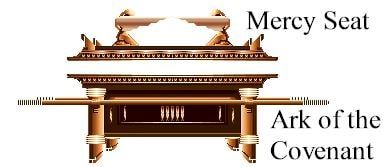
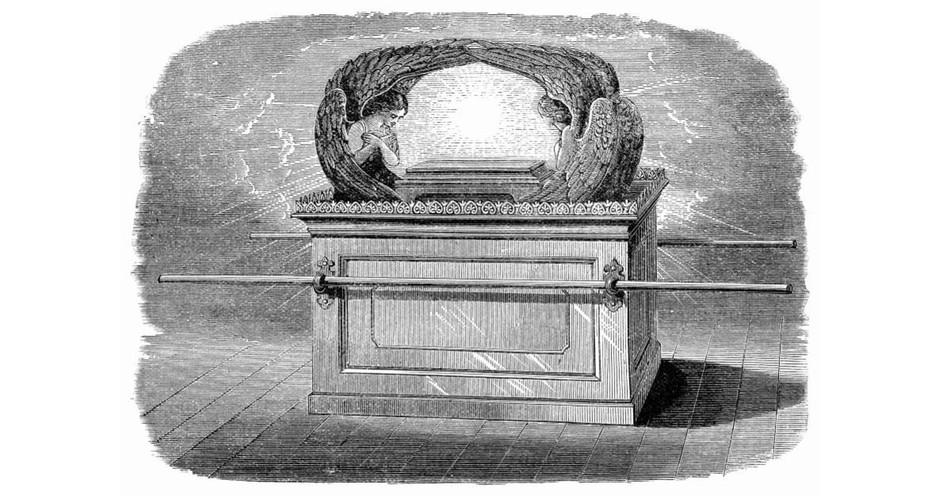
The ark was a rectangular box about 3 3/4 feet long by 2 1/4 feet wide by 2 1/4 feet high. It contained the 10 Commandments and, in earlier days, at least, Aaron’s rod which budded and a pot of manna. It was made of wood overlaid with gold. On top of the ark was the mercy seat, a solid slab of gold on which the high priest sprinkled the blood of the sacrificial lamb once a year on the Day of Atonement. The ark was kept in the Holy of Holies and was always kept covered when being moved on a journey.

The ark was the symbol of God’s meeting with His people on the basis of atonement. The Lord told Moses, “And there I will meet with you …” (Exod. 25:22). It was a type of the Lord Jesus Christ. The materials of the ark, gold and wood, typified the person of Christ as both God and man. The function of the ark as the mercy-seat typified the work of Christ as the sacrificial lamb of God.

When we gather as God’s people, we gather unto the Lord Jesus who is in our midst. It is because of His Person, God in human flesh, and His work as the satisfaction of the divine penalty for our sins, that we can draw near unto God.

The ark is described here (6:2) as “the ark of God which is called by the Name, the very name of the Lord of hosts who is enthroned above the cherubim.” The cherubim are angels who dwell in the presence of God. They are awesome in their appearance, being associated with fire and lightning and the blinding brightness of the glory of the Lord (Ezek. 1:4-14; 10:3-22). Two golden cherubim with their wings touching overshadowed the mercy seat on the ark of the covenant. The only human eyes that could view that sight were those of the high priest, and that only once a year in strict accordance with the procedures God had ordained.

As David and the people worshiped before this ark, it’s clear that they were worshiping “before the Lord” (the phrase occurs six times in this chapter: verses 5, 14, 16, 17, 21 [twice]). As we’ll see, even though they had this sense of God’s presence, they were too careless about it at first, with tragic consequences. But God made it explicitly clear that to worship in His presence is an awesome thing, not to be taken lightly.

We live in a day of flippant Christianity that has brought God down to the “good buddy in the sky” level, where we’ve lost the proper sense of awe and fear in His holy presence.

As we gather to worship, it would transform us and our worship if we would focus on the truth that we are gathering in God’s holy presence. We should not come primarily to meet with our friends, although fellowship is an important function of the church. We should come primarily to meet with God. True corporate worship involves focusing on the fact that the Holy God is here. That means that …

Reverence in God’s presence should be our response in true corporate worship.

Since the ark was the visible symbol of the presence of God in the midst of His people, you would think that there would have been a uniform response of reverence on the part of all who were in the presence of the ark. But if you go back about 75 years and trace the history of the ark, you find quite different and instructive responses to its presence.

Let’s look at some ways NOT to worship:

1.  The Israelites: “A good luck charm” (1 Sam. 4): The worship of God was a dead ritual for most of Israel at this time. The two priestly sons of Eli were corrupt, committing immorality with women at the doorway of the Tabernacle (2:22). When they encountered difficulties with the Philistines, someone got the idea, “Let’s get the ark and carry it into battle” (4:3, 5-11). They were using it as a good luck charm. God allowed them to be defeated, and the ark was captured by the Philistines.

There are churchgoers in our day who attempt to use the church as a good luck charm. They’re having problems in their lives, so they think, “I’ll go to church and try to rub God the right way and maybe He will solve my problems.” But for them, worship is nothing more than a good luck charm to try to get God on their side. They know nothing of God’s holy presence.

2. The Philistines: “A plague” (1 Sam. 5): The Philistines set up the ark next to their god, Dagon, but the Lord caused their idol to fall down and break into pieces. Next, God struck them all with tumors of some sort (some scholars have suggested hemorrhoids) and with mice (5:6; 6:4-5). As you can imagine, the Philistines wanted to get rid of the ark as quickly as possible. They were quite uncomfortable (literally) with the presence of God.    Likewise many Americans try to add, God to their “other god” and it never works! Even so, there are some who feel a plague of guilt when they come near a church where God’s presence is known. They are uncomfortable around those who manifest the presence of the Lord.

3. Abinadab: “Ho hum!” (1 Sam. 7:1-2; 2 Sam. 6:3): The Philistines sent the ark back to Israel on a cart, and it wound up in the house of Abinadab. It had been there for almost 70 years by David’s time. It is significant that we do not read of any results in Abinadab’s household for having the ark there all those years. We’ll see in a moment that it was in Obed-edom’s house for just three months and resulted in great blessing. But it was 70 years in Abinadab’s house, and nothing happened!

Some churchgoers are like that. They can come for years into a church where God is present, but it has no appreciable effect on their lives. “Huh? What’s that gold box up there on the mantle? Oh, it’s the ark of the covenant. Interesting piece of furniture, isn’t it? Ho hum.” You can be in the very presence of God and have it glance right off, if your heart isn’t seeking after Him.

4. Uzzah: “I”ll save the day and be a hero!” (2 Sam. 6:6-7): That’s what Uzzah might have said if he had lived in our day and if he had lived to say anything! As David and company moved the ark toward Jerusalem on an oxcart, the oxen stumbled and the ark almost fell to the dirt. Uzzah (whose name means “strong”) reached out his hand to steady it and God struck him dead on the spot.

Some folks think that God was a bit touchy and harsh for doing this. Even David got angry at God, as we shall see. What was so bad about what Uzzah did? After all, he was just trying to help, wasn’t he? Any wagon driver would have done the same with any valuable piece of furniture under his care, wouldn’t he?

Yes, and that was precisely Uzzah’s problem. He saw no difference between the ark and any other valuable article. He was overly familiar with that which was utterly sacred. Uzzah was the son (or grandson) of Abinadab. He had grown up with the ark in his home. It was commonplace to him: “What’s the big deal?” But he should have known that even the Levitical priests who carried the ark were not permitted to touch it, but carried it on poles inserted through rings attached to it.

Some in our day–often they are people who have grown up in the church–trifle with the things of God. God is commonplace to them.

Those who have a problem with what God did to Uzzah need to gain the Bible’s perspective on God’s absolute holiness and man’s utter sinfulness. As R. C. Sproul points out (The Holiness of God [Tyndale, p. 141), what Uzzah did was an act of arrogance. He “assumed that his hand was less polluted than the earth. But it wasn’t the ground or the mud that would desecrate the ark; it was the touch of man.” We need to take God seriously!

5. David: “Angry at God” (1 Sam. 6:8-10): David got angry at God and then he grew afraid–not a healthy fear of the Lord, but an unhealthy fear that caused him to draw back and ask, “How can the ark of the Lord come to me?” There was some pride behind David’s anger. He was embarrassed in front of the crowd. God had not done things David’s way. God had rained on David’s parade.

But the problem wasn’t that God hadn’t done things David’s way, but that David hadn’t done things God’s way. God’s Word is clear that the ark had to be carried by the Levites in a prescribed way, on their shoulders without touching it, not on an oxcart (Num. 4:15; 7:6-9). Where had they gotten the idea of an oxcart? From the Philistines (1 Sam. 6:7)! It worked in the world; why not bring it into the church?

Any time the church starts imitating the world in its worship, they can’t expect the Lord to give His blessing. And, they dare not get mad at God when He doesn’t! There are folks in the church who think that they want God’s presence, but they don’t understand God’s holiness. Or they play loose with God’s truth. When things don’t go the way they wanted, they get angry and blame God. What they ought to do is get on their faces and figure out why God’s blessing is not on their lives or on their church.

6. Michal: “You’re embarrassing me!” (6:16, 20). She was David’s wife, but here she is called the daughter of Saul to show where she’s coming from. Notice her relationship to the worship celebration: She was a spectator (6:16). Why wasn’t she a participant? She should have been down in the streets, rejoicing in the celebration. But instead she peeked out the window and got embarrassed by what she saw as David’s fanaticism. Michal loved David the warrior but she could not sympathize with David the worshiper. That embarrassed her. Her problem, like that of her father, was pride. David had dealt with his earlier pride and now he humbled himself to worship the Lord without caring what others thought (6:22). Michal was not willing to humble herself, and so the Lord humbled her with the ultimate disgrace in that society, barrenness (6:23).

  • Worship Despite Criticism

The critics of true worshipers are always proud spectators, not humble participants. They’re concerned about what others may think. It doesn’t occur to them to be concerned about what God thinks.

Now for a right response in worship:

 Worship with Enthusiasm

Obed-edom: “Delighted in God” (6:10-11). We’re not sure who Obed-edom was. He was probably a Levite who lived nearby. But he had no problem bringing the ark to his house right after Uzzah was stuck dead for touching it! Isn’t that amazing! Can’t you hear him: “Hey, this is great! Put it over there on the coffee table, guys!” Here was a man whose heart was right before the Lord. The presence of God was not a threat to him. It was a delight! He was totally comfortable living with God in the midst of his home. So the Lord blessed the man and his household (6:11). David heard about it, got his heart right with the Lord and joined Obed-edom in desiring the presence of God again. But Obed-edom had something to teach David (and us) in that he wanted the ark of the holy presence of God with him immediately after Uzzah had been struck dead for touching it.

How would you feel if,  Jesus appeared bodily and said, “I’d like to come live in your home for three months”? Would you welcome Him or would you be a bit nervous? He is there, you know! If you revere God in your personal devotions and in your corporate worship, you’d be delighted at the prospect, as Obed-edom was.

How could it be that the same ark could be one man’s delight and another man’s death? How could the same ark be one man’s pleasure and another man’s plague? How could the same ark result in seven different responses?

The difference must not lie with the ark of God’s presence, but with the hearts of the people who were in contact with the ark. If that is so, where is your heart? Do you come on Sundays expecting to meet with God? One way to answer that question is to ask another question: How carefully do you prepare your heart for that meeting?

If you were granted an audience with the president, would you prepare yourself before you went, or would you just go into his office in your work clothes? If you’re going to meet with the holy God, should you not at least spend a few minutes beforehand preparing your heart? The Hebrews didn’t have a bad idea in beginning their Sabbath at sundown the night before. That way, they were ready for worship the following day. I find it helpful to spend a portion of Saturday night getting my heart ready for meeting with the Lord corporately on Sunday morning.

Another way to answer the question of whether or not you come expecting to meet with God on Sundays is to ask, “Would you worship any differently if Christ were watching you?” One night something happened to Pastor A. J. Gordon that transformed his ministry. He dreamed he was in his pulpit ready to deliver his Sunday morning message when a stranger with a regal yet loving look attracted his attention. As he preached, his eyes kept returning to that unique guest. While the closing hymn was being sung, he decided to speak with him. But before he could get to the back door, the unknown man was gone. As the dream continued, this same person came back again at the evening service. Once more he slipped out before the minister could shake his hand.

Turning to one of his deacons, the pastor inquired, “Who was that man?” “Oh, didn’t you recognize Him? That was Jesus of Nazareth!” “You mean Christ Himself was listening to me? What did He say?” exclaimed the preacher. Before the deacon could reply, Gordon awoke with a start. It had all been so real that he could hardly believe he had been dreaming. For the first time he fully appreciated the reality that the Lord Jesus is present in a special way when His people gather for worship. This thought changed his ministry. (From “Our Daily Bread” [6/77].)

What about it? Would you sing any differently if Christ were listening? Would you worship any differently if Christ were watching? Would you listen to His Word being preached more attentively if He were in the chair next to you? He is present, of course. The question is, Are you aware of His presence? Do you come expecting Him to be present, expecting to meet with Him as we gather in His name?

www.Upwards.Church

Message Audio/Video and Outline: https://upwards.church/watch-now/leander-campus-videos

Watch Messages: YouTube-Upwards Church

Facebook: Upwards Church

Sources:

http://www.Bible.Org  – 2 Samuel Notes

The Ultimate Priority ([Moody Press], pp. 79-80) John MacArthur

My Response to God’s Presence – Steven J. Cole

 

Posted in 2 Samuel - Rebellion & Mercy | Tagged , , , , , , , , , , | Leave a comment

What is the Ark of the Covenant? – 2 Samuel 6

The Ark of the Covenant was one of the most instrumental symbols of faith and God’s presence.

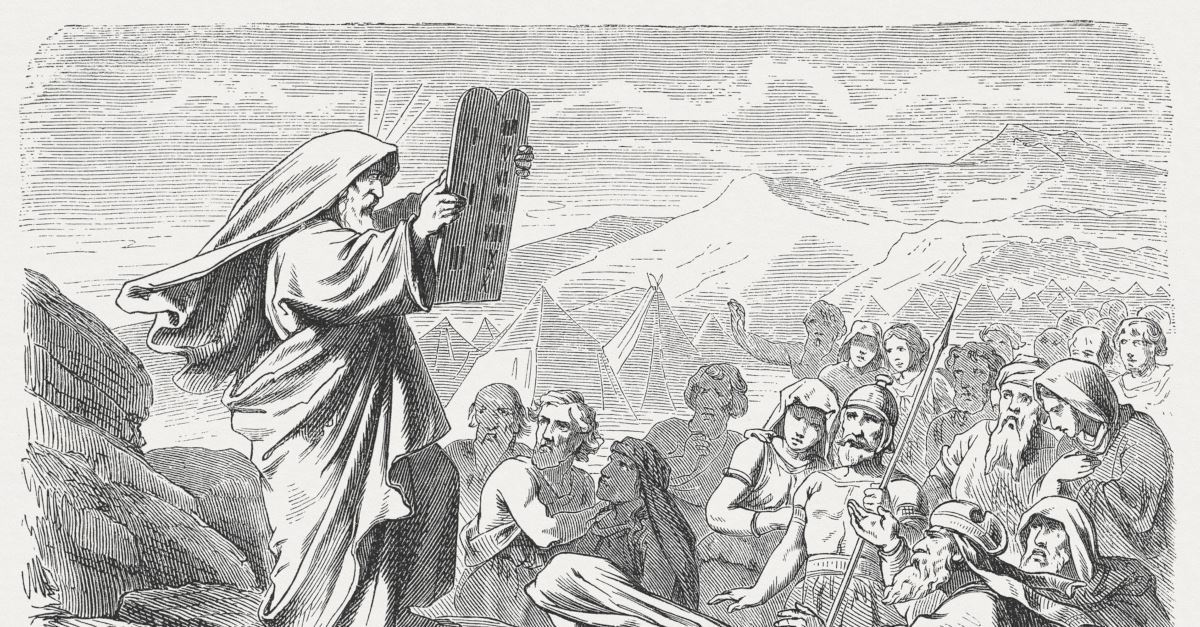
God made a covenant with the children of Israel through His servant Moses. He promised good to them and their children for generations if they obeyed Him and His laws; but He always warned of despair, punishment, and dispersion if they were to disobey. As a sign of His covenant He had the Israelites make a box according to His own design, in which to place the stone tablets containing the Ten Commandments. This box, or chest, was called an “ark” and was made of acacia wood overlaid with gold. The Ark was to be housed in the inner sanctum of the tabernacle in the desert and eventually in the Temple when it was built in Jerusalem. This chest is known as the Ark of the Covenant.

The real significance of the Ark of the Covenant was what took place involving the lid of the box, known as the “Mercy Seat.” The term ‘mercy seat’ comes from a Hebrew word meaning “to cover, placate, appease, cleanse, cancel or make atonement for.” It was here that the high priest, only once a year (Leviticus 16), entered the Holy of Holies where the Ark was kept and atoned for his sins and the sins of the Israelites. The priest sprinkled blood of a sacrificed animal onto the Mercy Seat to appease the wrath and anger of God for past sins committed. This was the only place in the world where this atonement could take place.

The Mercy Seat on the Ark was a symbolic foreshadowing of the ultimate sacrifice for all sin—the blood of Christ shed on the cross for the remission of sins. The Apostle Paul, a former Pharisee and one familiar with the Old Testament, knew this concept quite well when he wrote about Christ being our covering for sin in Romans 3:24-25: “…and are justified by his grace as a gift, through the redemption that is in Christ Jesus, whom God put forward as a propitiation by his blood, to be received by faith.” Just as there was only one place for atonement of sins in the Old Testament—the Mercy Seat of the Ark of the Covenant—so there is also only one place for atonement in the New Testament and current times—the cross of Jesus Christ. As Christians, we no longer look to the Ark but to the Lord Jesus Himself as the propitiation and atonement for our sins.

What Is the Ark of the Covenant in the Bible?

Ark of the Covenant Summary

For a tabernacle was prepared: the first part, in which was the lampstand, the table, and the showbread, which is called the sanctuary; and behind the second veil, the part of the tabernacle which is called the Holiest of All, which had the golden censer and the ark of the covenant overlaid on all sides with gold, in which were the golden pot that had the manna, Aaron’s rod that budded, and the tablets of the covenant; and above it were the cherubim of glory overshadowing the mercy seat. Of these things we cannot now speak in detail. (Hebrews 9:2-5)

The Ark originated from Exodus 25:10 when God commanded Moses to “make an ark of acacia wood.”

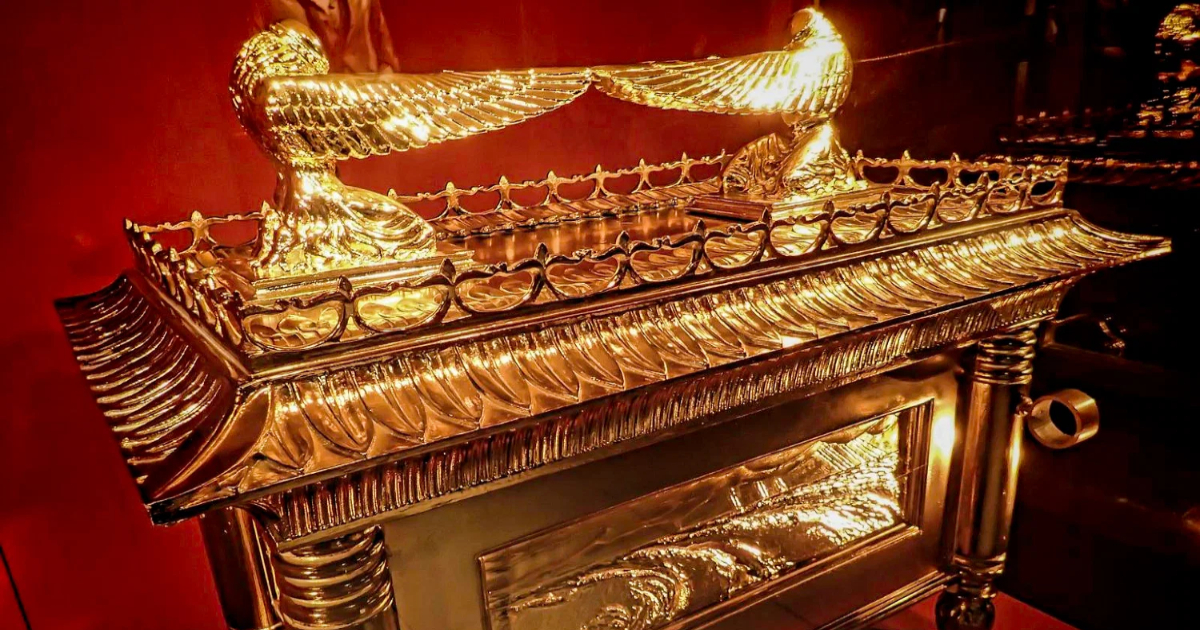
Ark of the Covenant*

*Steven Spielberg’s artistic rendition of the Ark of the Covenant from the film Indiana Jones and the Raiders of the Lost Ark. Photographed at the “Indiana Jones and the Adventure of Archaeology” exhibit at the National Geographic Museum in Washington D.C., 2015. Original image by Mary Harrsch.

The Ark of the Covenant Bible Verses

In Exodus 25:10-22, the specifics of the Ark were laid out. It needed to be two cubits and a half in length (one cubit is about 19.8-20.6 in.), a cubit and a half in breadth, and a cubit and a half in height. The Ark was overlaid inside and out with pure gold with a molding of gold around it.

For transportation, the Ark had four rings of gold with two rings on each side. A pole of acacia wood overlaid with gold was placed into the rings to carry the ark. These poles for transportation were to be permanent fixtures and never removed.

Constructing the ArkExodus 37:1-9

Bezalel made the ark of acacia wood. Two cubits and a half was its length, a cubit and a half its breadth, and a cubit and a half its height. And he overlaid it with pure gold inside and outside, and made a molding of gold around it. And he cast for it four rings of gold for its four feet, two rings on its one side and two rings on its other side. And he made poles of acacia wood and overlaid them with gold and put the poles into the rings on the sides of the ark to carry the ark. And he made a mercy seat of pure gold. Two cubits and a half was its length, and a cubit and a half its breadth. And he made two cherubim of gold. He made them of hammered work on the two ends of the mercy seat, one cherub on the one end, and one cherub on the other end. Of one piece with the mercy seat he made the cherubim on its two ends. The cherubim spread out their wings above, overshadowing the mercy seat with their wings, with their faces one to another; toward the mercy seat were the faces of the cherubim.

The Ark Brought to Jerusalem2 Samuel 6:1-4

David again gathered all the chosen men of Israel, thirty thousand. And David arose and went with all the people who were with him from Baale-judah to bring up from there the ark of God, which is called by the name of the Lord of hosts who sits enthroned on the cherubim. And they carried the ark of God on a new cart and brought it out of the house of Abinadab, which was on the hill. And Uzzah and Ahio, the sons of Abinadab, were driving the new cart, with the ark of God, and Ahio went before the ark.

The Earthly Holy PlaceHebrews 9:1-5

Now even the first covenant had regulations for worship and an earthly place of holiness. For a tent was prepared, the first section, in which were the lampstand and the table and the bread of the Presence. It is called the Holy Place. Behind the second curtain was a second section called the Most Holy Place, having the golden altar of incense and the ark of the covenant covered on all sides with gold, in which was a golden urn holding the manna, and Aaron’s staff that budded, and the tablets of the covenant. Above it were the cherubim of glory overshadowing the mercy seat. Of these things we cannot now speak in detail.

The Ark of the Covenant Outside the Tabernacle

For the Israelites, the Ark of the Covenant meant God’s presence. Throughout the Old Testament, we see stories of how God provided safety and success using the symbol of the Ark.

In the Book of Joshua, we learn of the safety the Ark provided the Israelites as they passed over the Jordan into the Promised Land. In Joshua 3:6, “Joshua said to the priests, ‘Take up the ark of the covenant and pass before the people.’”  When the priests came to the Jordan, just as was commanded, the waters were “completely cut off and the people passed over opposite Jericho” when the Ark neared.

In the sixth chapter of Joshua, the Ark was instrumental in the Battle of Jericho. The Ark was taken around the city six times in six days and was preceded by seven priests who sounded seven trumpets made of rams’ horns (Joshua 6:7). On the seventh day, the Ark with the armed men and priests did the same, but the “people shouted a great shout, and the wall fell down flat” (Joshua 6:20).

The Philistines captured the Ark when Israel summoned possession of the Ark following a brutal defeat. They felt the mere possession of the Ark would give them the favor of God. Israel suffered another defeat and lost the Ark to the Philistines, who were not intimidated by the shouts and the supposed presence of “a god” in the camp (1 Samuel 4:11).

A Cover for the Ark of the Covenant: The Mercy Seat 

The Ark required “an atonement cover,” called the Mercy Seat, to be built with pure gold and with the same dimensions in length and breadth as the Ark. There had to be one cherubim of gold on both ends of the Mercy Seat. It was important to have the cherubim spread their wings and face one another, symbolizing the angels’ attention and readiness to do God’s will.

The Mercy Seat was where God would dwell. He said, “There, above the cover between the two cherubim that are over the ark of the covenant law, I will meet with you and give you all my commands for the Israelites” (Exodus 25:22).

Unlike the statutes of gods idolized by many of the Israelites, the Ark of the Covenant served as a religious symbol where the people could meet with God. He hovered over the Ark when the priests were present. If the priests were absent, the presence of the law tablets reflected God’s presence. Thus, the Ark of the Covenant was aptly named because of the commandments written on the tablets.

Contents of the Ark of the Covenant

As God gave instructions on how to build the Ark, he also instructed Moses to put in the tablets of the 10 Commandments (the law). We see later in Numbers 17:10, “The LORD said to Moses, ‘Put back Aaron’s staff in front of the ark of the covenant law, to be kept as a sign to the rebellious.’” And Moses and Aaron already had set aside a jar of manna in it, which the Lord commanded them to put “with the tablets of the covenant law, so that it might be preserved” (Exodus 16:34).

Hebrews 9:4 confirms these three items were inside the Ark of the Covenant: “Behind the second curtain was a room called the Most Holy Place, which had the golden altar of incense and the gold-covered ark of the covenant. This ark contained the gold jar of manna, Aaron’s staff that had budded, and the stone tablets of the covenant.

10 commandments

Ark of the Covenant Symbolism and Meaning 

The Ark and the Tablets

Unlike the statutes of gods idolized by many of the Israelites, the Ark of the Covenant served as a religious symbol where the people could meet with God. He hovered over the Ark when the priests were present. If the priests were absent, the presence of the law tablets reflected God’s presence. Thus, the Ark of the Covenant was aptly named because of the commandments written on the tablets.

The Manna and Aaron’s Rod

The presence of the jar of manna symbolized God’s constant provision for His people. Aaron’s rod was dead, yet grew buds, and was placed inside the ark to symbolize God’s approval as Aaron for High Priest.

The Veil 

The Ark of the Covenant was often inside the Tabernacle behind a curtain or veil. This veil separated veil was made of blue, purple and scarlet yarns and hung on “four pillars of acacia overlaid with gold, with hooks of gold, on four bases of silver” (Exodus 26:32). It hung from clasps and served as a separation between of the “Holy Place from the Most Holy Place,” where the Ark of the Covenant and the Mercy Seat, symbolizing God’s presence, were (Exodus 26:33-34).

This veil is also significant in the New Testament. In Mark 15:37-38, we see at the moment Jesus died on the cross, “The curtain of the temple was torn in two from top to bottom.”

Hebrews 10:19-22 explains the significance of this event:

“Therefore, brothers and sisters, since we have confidence to enter the Most Holy Place by the blood of Jesus, by a new and living way opened for us through the curtain, that is, his body, and since we have a great priest over the house of God, let us draw near to God with a sincere heart and with the full assurance that faith brings, having our hearts sprinkled to cleanse us from a guilty conscience and having our bodies washed with pure water.”

Before, Israelites could not enter the Most Holy Place where the Ark of the Covenant, God’s presence, was. Now, all who believe in Christ Jesus can have the confidence to draw near to God.

The Ark of the Covenant Today

Contrary to the Indiana Jones movies, the Ark was not relocated in 1936. The last recorded mention of the Ark of the Covenant’s location in the Bible was in 2 Chronicles 35. King Josiah assigned the priests to their offices and “encouraged them in the service of the house of the Lord” (2 Chronicles 35:2). He then instructed the Levites to “put the holy ark in the house that Solomon the son of David, king of Israel, built. You need not carry it on your shoulders. Now serve the Lord your God and his people Israel” (2 Chronicles 35:3).

The fate of the Ark of the Covenant is a mystery, as its whereabouts are unknown in historical records. The Bible says that the Ark was housed in the Temple of Solomon in Jerusalem for centuries. However, it is not mentioned in the accounts of the Babylonian conquest of Jerusalem in 587 BCE, when the Temple was destroyed. Some theories suggest that the Ark was hidden or taken away before the destruction of the Temple to protect it. Others believe it may have been captured or destroyed.

One popular theory about the whereabouts of the Ark of the Covenant is that it was taken to Ethiopia. According to Ethiopian tradition, the Ark was brought to Ethiopia by Menelik I, the son of the Queen of Sheba. It is said to be kept in the Church of Our Lady Mary of Zion in Axum, Ethiopia. However, the Ark is not shown to the public, and its presence there has not been verified by independent sources.

Despite various claims and theories, the Ark’s fate remains one of the great unsolved mysteries of history.

Ark of the Covenant in Revelation

John wrote in Revelation 11:19 that after the Great White Throne Judgment, “God’s temple in heaven was opened, and the ark of his covenant was seen within his temple.” At this time, the veil over the hearts of all Christians, Jews, and Gentiles will be eliminated. This new state of the church will reveal the mysteries of the Word and its truths fully illuminated.

www.Upwards.Church

Message Audio/Video and Outline: https://upwards.church/watch-now/leander-campus-videos

Watch Messages: YouTube-Upwards Church

Facebook: Upwards Church

Sources:  https://www.christianity.com/wiki/bible/what-was-the-ark-of-the-covenant-its-meaning-and-significance.html

https://www.gotquestions.org/ark-of-the-covenant.html

Posted in 2 Samuel - Rebellion & Mercy | Tagged , , , | Leave a comment

You’re Invited! 2 Samuel Message Series

Series: 2 Samuel (Rebellion & Mercy)

Description: We all need good role models to help us live out our faith. David, a larger-than-life hero had big successes as well as big failures. He is someone that we can easily relate to; through family problems, heartbreak and rebellion, he drew close to God and experienced His mercy, direction and lasting promises. Like David through the highs and lows, the good and bad we can hold onto our faith and keep living for God.

Dates Titles (Scripture) Events:

June 23 – Honor (2 Samuel 1 -2) Communion, Worship night 06/29 6-7:30

June 30 – Worship (2 Samuel 6) Both campus potluck

July 7– Legacy (2 Samuel 7)

July 14 – Confession (2 Samuel 12) CG, Communion

July 21 – Betrayal (2 Sam. 15-18)

Introduction to 2 Samuel:

The child enters the room with long gown flowing, trailing well behind her high-heeled shoes. The wide-brimmed hat rests precariously atop her head, tilted to the right, and the long necklace swings like a pendulum as she walks. Following close is the “man.” His fingertips peek out of the coat sleeves that are already pushed upward six inches. With feet shuffling in the double-sized boots, his unsteady steps belie his confident smile. Children at play, dressing up—they copy Mom and Dad, having watched them dress and walk. Models … everyone has them … people we emulate, people who are our ideals. Unconsciously, perhaps, we copy their actions and adopt their ideas. Among all the godly role models mentioned in the Bible, probably no one stands out more than King David. Born halfway between Abraham and Jesus, he became God’s leader for all of Israel and the ancestor of the Messiah.

David was “a man after [God’s] own heart” (1 Samuel 13:14). What are the personal qualities that David possessed that pleased God? The book of 2 Samuel tells David’s story. As you read, you will be filled with excitement as he is crowned king over Judah and then king over all of Israel (5:1–5), praising God as he brings the Ark of the Covenant back to the Tabernacle (6:1–23) and exulting as he leads his armies to victory over all their enemies and completes the conquest of the Promised Land begun by Joshua (8–10). David accomplished much.

But David was human, and during dark times he stumbled and fell into sin. The record of lust, adultery, and murder is not easy to read (11–13) and reveals that even great people who try to follow God are susceptible to temptation and sin.

Godliness does not guarantee an easy and carefree life. David had family problems—his own son incited the entire nation to rebellion and crowned himself king (14:1–18:33). And greatness can cause pride, as we see in David’s sinful act of taking a census in order to glory in the strength of his nation (24:1–25).

But the story of this fallen hero does not end in tragedy. Through repentance, his fellowship and peace with God were restored, but he had to face the consequences of the sins he committed (12–20). These consequences stayed with him the rest of his life as a reminder of his sinful deeds and his need for God.

As we read 2 Samuel, look for David’s godlike characteristics—his faithfulness, patience, courage, generosity, commitment, honesty—as well as other God-honoring characteristics, such as modesty and penitence. Valuable lessons can be learned from his sins and from his repentance. You and, like David, can become a person after God’s own heart.

Purposes:

(1) to record the history of David’s reign; (2) to demonstrate effective leadership under God; (3) to reveal that one person can make a difference; (4) to show the personal qualities that please God; (5) to depict David as an ideal leader of an imperfect kingdom, and to foreshadow Christ, who will be the ideal leader of a new and perfect kingdom (chapter 7)

Author:  Unknown. Some have suggested that Nathan’s son Zabud may have been the author (1 Kings 4:5). The writings of Nathan and Gad and are found in 1 Chronicles 29:29.

Original Audience: The people of Israel and believers today.

Date: Written:930 B.C.; written soon after David’s reign, 1010–970 B.C.

Setting: The land of Israel under David’s rule

Key Verse: “And David realized that the Lord had confirmed him as king over Israel and had blessed his kingdom for the sake of his people Israel” (5:12).

Key People: David, Joab, Bathsheba, Nathan, Absalom

Special Features: This book was named after the prophet who anointed David and guided him in living for God.

Outline:

A. DAVID’S SUCCESSES (1:1–10:19)

1. David becomes king over Judah

2. David becomes king over Israel

3. David conquers the surrounding nations.  David took the fractured kingdom that Saul had left behind and built a strong, united power. Forty years later, David would turn this kingdom over to his son Solomon. David had a heart for God. He was a king who governed God’s people by God’s principles, and God blessed him greatly. We may not have David’s earthly success, but following God is, ultimately, the most successful decision we can make.

B. DAVID’S STRUGGLES (11:1–24:25)

1. David and Bathsheba

2. Turmoil in David’s family

3. National rebellion

4. The later years of David’s rule

David sinned with Bathsheba and then tried to cover his sin by having her husband killed.

Although he was forgiven for his sin, the consequences remained—he experienced trouble and distress, both with his family and with the nation. God is always ready to forgive, but we must live with the consequences of our actions. Covering up our sin will only multiply sin’s painful consequences.

I hope you can join us!

Darrell

www.Upwards.Church

Posted in 2 Samuel - Rebellion & Mercy | Tagged , , , , , , , | Leave a comment