He is Risen! Mark 16

The message of Easter doesn’t change from year to year. When it comes around we remember again, regardless of what is happening in the world that might tempt us to believe otherwise, that God is able to bring hope where there is despairjoy where there is grieflove where there is indifference, trust where there is fear, new life where there is death.

The reality of the resurrection is the foundation of our faith.  At the empty tomb three instructions were spoken to the women: “Do not fear – Come and see – Go and tell.” They apply to us today as well!

The women who come to the tomb in Mark 16 are not only grieving as some of us are today who have lost a loved one, but they are in the shock that comes in the first days of grief and loss because a relatively young person they love was killed in an act of violence. Today there are too many grieving people who find themselves in a similar place as these women. All throughout our nation and indeed the world – families of little children, teenagers, and adults are mourning the loss of loved ones who were killed by acts of violence. The women we meet that first Easter morning can relate to those who are grieving such losses.

While some of their names are probably unfamiliar to us, what do we know about these grieving women who came to the tomb – Mary Magdalene, Mary the mother of James and Joses, and Salome?

Mary Magdalene was the woman who Jesus had delivered from demon possession. The other Mary was the mother of James the less Mark 15:40) one of the twelve disciples, who in the list of disciples is identified as James the son of Alphaeus. Salome was the mother of the famed disciples James and John, and she was the wife of Zebedee. These women were very devoted to Jesus Christ. They were some of the godliest women of their time and of all times.[1]

In Mark 15:40 we see that they are present at a distance when Jesus is dying on the cross which tells us they have the courage to risk being publicly associated with Christ. Do we have similar courage to be publicly associated with Jesus in our time?

In Mark 15:41 we learn that the women, followed Jesus and provided for his needs when he was in Galilee. They have not just been casual observers in the crowd. They have committed themselves to following Jesus, serving him, and providing resources to support his ministry. Have we committed ourselves to following Jesus, seeking to serve him and sharing our resources to support the Lord’s work today?

In Mark 15:47 we discover they stayed long enough after Jesus died to see Joseph of Arimathea take down Christ’s body and they went to see the tomb where Joseph placed the remains. They care enough to stay to the end. Sometimes it isn’t possible for us to do that after someone has died, but I know how much it means to families when people come to a service and stay to go to a reception to greet the family and share their love and support. These women stay.

And in this morning’s scripture in Mark 16:1-2 the women are portrayed as going to the tomb at the first possible moment on Sunday morning to anoint Jesus’ body. In all these snapshots we see the women are examples of a desperately needed virtue in our world today – compassion.

Sharing God’s compassion and love is the primary way of living out our faith. As the women went to Jesus’ tomb early in the morning on the first day of the week, the question foremost in their minds was who would roll away the large stone blocking the entrance to the tomb so they could anoint Jesus’ dead body. They are worrying about who will roll away the stone for them because that obstacle is too large for them to move on their own, but when they arrive God has already taken care of it. Often times in life we spend many wasted hours worrying about things that never take place or that we never have to face. God has gone before us and cleared the path, made a way, or rolled away the stone.  This is a lesson of Easter morning that is often overlooked in the amazing news of Jesus’ resurrection, but it is a very important thing to remember. Rather than worrying about how we will roll away stones that are so large and heavy and seemingly immovable and getting all stressed out about it and putting pressure on ourselves to figure it out, we’re invited to learn from the women’s experience to trust God for our future.

Hannah Whitall Smith author of The Christian’s Secret of a Happy Life, wrote, “Most Christians are like a man who was toiling along the road, bending under a heavy burden, when a wagon overtook him, and the driver kindly offered to help him on his journey. He joyfully accepted the offer, but when seated, continued to bend beneath his burden, which he still kept on his shoulders. “Why do you not lay down your burden?” asked the kind-hearted driver. “Oh!” replied the man, “I feel that it is almost too much to ask you to carry me, and I could not think of letting you carry my burden too.” And so Christians, who have given themselves into the care and keeping of the Lord Jesus, still continue to bend beneath the weight of their burden, and often go weary and heavy-laden throughout the whole length of their journey.”

The women are acting in love and devotion in going to the tomb, but they are burdened with worry about the stone blocking their path. Yet God has already gone ahead of them, even as God goes ahead of us to prepare the way for us when are seeking to live in faith and obedience. If you have a stone you’re worried about rolling away this morning, I encourage you to release your burden to God and trust the Mighty One to roll it away for you.

The women are shocked not only that the stone has been rolled away but also to discover a young man robed in white who tells them not to be alarmed and then shares the unbelievable news about Jesus of Nazareth, “He has been raised; he is not here.”  The women are charged to tell the other disciples that Jesus will meet them in Galilee, just as he told them. This reminder from the messenger is meant to assure the women that Jesus had already told them what was to happen before he was crucified. Verse 8 records their response to this incomprehensible experience, “So they went out and fled from the tomb, for terror and amazement had seized them; and they said nothing to anyone, for they were afraid.”

We can understand being afraid, I’d be pretty shook up meeting a divine messenger in the early morning light of a cemetery where my loved one was supposed to be buried, wouldn’t you?

The late Dr. Ken McFarland told the story of a man who worked on the 4:00 p.m. to midnight shift at a factory, and he always walked home after work. One night the moon was shining so bright, like it was the last few nights, he decided to take a shortcut through the cemetery, which would save him a half-mile walk. It went smoothly so he began to make the shortcut through the cemetery his regular route. One night he was strolling through the cemetery, unaware that during the day a grave had been dug in the center of his path. He stepped right into the grave and immediately started desperately trying to get out. His best efforts failed him, and after a few minutes, he decided to relax and wait until morning when someone would help him out.

He sat down in the corner and was half asleep when a drunken man stumbled into the same grave. His arrival woke up the shift worker since the drunk was desperately trying to climb out of the dark grave, clawing at its sides. The worker reached out his hand to calm the frightened man. Touching him on the leg he said, “Friend, you can’t get out of here…” but he did!  It is amazing what we can do when we’re motivated.

I imagine the women fleeing from the tomb with the same speed as the drunken man in that story. Give the women credit. They are the last at the cross, the first at the tomb, and they are still looking for ways to serve Jesus. They are not portrayed as hiding in a room or going fishing to forget their troubles like some other disciples we could name. The women had the courage to go to the tomb but they fled in trembling fear and ecstasy.

There is something about Mark’s resurrection story that distinguishes it from our memories of Easter and from the other gospels. I’ll give you a hint, someone is missing and it isn’t the Easter Bunny. No Jesus!  In Matthew, Luke, and John, Jesus appears to the women or the other disciples to take away their fear and doubt and to give final instructions.  But Mark ends literally almost in mid-sentence and there is no appearance of the risen Jesus following the report of the young man that Jesus has been raised. A good study Bible will make plain in its notes that Mark’s gospel ended at verse 8. The verses that come after are a later addition. Mark ends like an interactive, unfinished story and we are invited to write the next chapter.

We are invited and challenged to become part of God’s plan to tell others the Easter story.The messenger told the women, go, tell his disciples and Peter that he is going ahead of you to Galilee, there you will see him, just as he told you.”  The message for them and for us is this: Jesus goes before us, just as he told us. Jesus goes ahead and to see him we need to keep trusting his word and keep moving forward in life. In the command of the messenger lies the promise of forgiveness, hope, and new life.

The promise of forgiveness is that Jesus doesn’t give up on us when we fail. That is why Peter is specifically mentioned. He was the leader among the disciples and the one who denied Jesus three times. Yet Jesus is looking forward to seeing him in Galilee as well. Peter will be forgiven. Forgiveness gives people second chances.  Even when we have failed Jesus, he still goes on before us telling us what to do next on our journey of life and faith, if we’re ready to resume following him with all our heart.  Part of the hope of Easter is a fresh start and renewed purpose for disciples who have denied and betrayed Jesus. We can betray our friend Jesus in many ways: when we give in to the pressures of temptations and trials, when we have spoken words or made decisions that contradict who God calls us to be; when we have forsaken our commitments, neglected the poor, ignored the lost, or failed to devote our time and resources to matters of eternal consequence.

Jesus knows how his disciples fail him then and now, yet he still goes before us, inviting us to meet him and to resume the journey together. The messenger knows who the women are looking for – they are looking for Jesus.  Who or what are you looking for today?  Where are you looking for answers to life’s most important questions? A man went to a fortuneteller, hoping that she would be able to look into her crystal ball and make some stock market or lottery predictions.  “My fee,” said the fortuneteller, “is $100. For that amount you may ask two questions.”  The client winced and said, “Wow, isn’t that a lot of money for just two questions?”  “Yes,” the fortuneteller replied.  “What’s your second question?” 

This is a year when many of us have questions. We need to hear the Easter message that God can bring resurrection out of crucifixion, hope out of hopelessness, joy out of sorrow, purpose out of a lack of direction. For Mark, the joy of Easter, comes when we share the good news of the resurrection. God can use anybody – frightened women fleeing an empty tomb or even you and me. We can be scared and still act with compassion, faith, and courage.  Courage is doing the right thing in spite of our fear. God can use us regardless of our fears, weaknesses and faults.

We are blessed to know how the story ends for Jesus, He has been raised, and he is exalted.

How will it end for us and for others God wants us to tell?  “He has been raised; he is not here,” is the message from the angel that gives new hope to all of us.  Even and especially to those who are grieving.

Like the women, may we have courage to risk being publicly associated with Christ.

Like them may we commit our selves to following Jesus, serving him, and providing resources to support his ministry.

Like the women may we experience God moving away stones that we’re worried about so that they are no longer barriers or obstacles for God’s future for us.

May God grant us faith to continue our life following Jesus as we tell others the good news that Christ is risen.

www.Upwards.Church

Message Audio/Video and Outline: https://upwards.church/watch-now/leander-campus-videos

Watch Messages: YouTube-Upwards Church

Facebook: Upwards Church

[1] John G. Butler, Analytical Bible Expositor: Mark (Clinton, IA: LBC Publications, 2008), 281.

Posted in Iconic Jesus - Gospel of Mark | Tagged , , , , , , , | Leave a comment

You’re Invited! – Iconic Jesus – Gospel of Mark

You’re invited to our new series staring on Easter Sunday, Iconic Jesus from the Gospel of Mark!

Description: Jesus is iconic, meaning He’s “widely known and acknowledged.” Join us in the book of Mark (the action gospel) to learn more about our Iconic Jesus.  He encourages his followers, heals the hurting and will return in power!  It’s “widely known” that He calls on those who would follow him to be in action as well.

 Dates           Titles           Scripture                          Events          

April 21         Jesus, He is Risen! (Mark 16)                 EASTER

April 28         Jesus the Healer (Mark 8)

May 5           Jesus is Returning (Mark 13)

Introduction to Mark

Mark’s gospel portrays Jesus as constantly on the move. The forward motion in Mark’s writing keeps the knowledgeable reader’s mind continually looking ahead to the cross and the resurrection. Thirty-nine times Mark used the word immediately, giving a sense that Jesus’s time on earth was short and that there was much to accomplish in His few years of ministry.

What’s the big idea?

While Matthew’s gospel portrays Jesus as the King, Mark reveals Him as God’s Servant. Jesus’s work was always for a larger purpose, a point clearly summarized in Mark 10:45, “For even the Son of Man did not come to be served, but to serve, and to give His life a ransom for many.” Mark filled his gospel with the miracles of Jesus, illustrating again and again both the power and the compassion of the Son of God. In these passages, Mark revealed more than Jesus as the good teacher who offered people spiritual renewal; the book also portrays Jesus as the true God and the true man, reaching into the lives of people and effecting physical and circumstantial change.

But Jesus’s life as the agent of change wasn’t without an ultimate purpose. Amid His hands-on ministry, Jesus constantly pointed to the definitive way in which He would serve humanity: His death on the cross and His resurrection from the dead. It is only through faith in these works of Jesus Christ that human beings find eternal redemption for their whole selves. Moreover, Jesus becomes our model for how to live our lives—serving others as He did.

Who Was Mark?

The Bible records more information about Mark than any of the other gospel writers aside from the apostle John. Luke mentioned Mark’s name several times in Acts. A budding Jerusalem church met in his mother’s home. Mark also started the first missionary journey with Paul and Barnabas but went home early, though he later traveled with Barnabas to Cyprus for more mission work. He became significant in the life of Paul, being one of the last people the apostle mentioned in his final letter (2 Timothy 4:11).

However, Mark’s most significant personal connection was the one he had with Peter, who was likely Mark’s source for the material in the gospel. Mark’s mother’s house was a regular enough stop for Peter that the servants recognized him by voice alone (Acts 12:12–14). And it appears that Mark was present at Gethsemane, a young man watching the proceedings from a safe distance (Mark 14:51–52), leading some scholars to believe the Last Supper took place in Mark’s home.

When Was It Written?

Because Mark offered no further comment on Jesus’s prophecy regarding the destruction of the temple—an event that occurred in AD 70—we can safely assume that Mark composed the gospel sometime before that tragic event. Also, the gospel has a distinctly Roman feel to it, particularly when compared with the Jewish emphasis of the book of Matthew. Mark chose to leave aside most comments on fulfilled prophecy (compare Matthew 21:1–6 and Mark 11:1–4), and when he felt compelled to use an Aramaic term, he interpreted it (Mark 3:17). This suggests that Mark was in Rome, writing from Peter’s recollections sometime before that apostle’s death (ca. AD 64–68), possibly composing the gospel between AD 57 and AD 59.

Events in Mark’s gospel move rapidly towards the climax:  The Last Supper, the betrayal, the Crucifixion, and the Resurrection are dramatically portrayed, along with more examples of Jesus’ teachings. Mark shows us Jesus—moving, serving, sacrificing, and saving! As we read Mark, be ready for action, be open for God’s move in our lives, and be challenged to move into the world we serve.

I hope you can join us as we celebrate the resurrected Christ and learn more about Jesus from Mark’s gospel!

Darrell

www.Upwards.Church

Message Audio/Video and Outline: https://upwards.church/watch-now/leander-campus-videos

Watch Messages: YouTube-Upwards Church

Facebook: Upwards Church

Sources:

https://www.insight.org/resources/bible/the-gospels/mark

Life Application Bible Notes (Tyndale, 2007), 1610.

Posted in Iconic Jesus - Gospel of Mark | Tagged , , , , , , , , | Leave a comment

The New Covenant – Jeremiah 31

God has always dealt with humanity by way of covenant.  A covenant is “an agreement between two or more persons.”  Covenant is often compared to contract, treaty, or alliance.

The history of God’s people is a story of covenants.  God promised to reward Adam with life if he obeyed and warned of death if Adam disobeyed (Genesis 2:16–17). God made a covenant of safety with Noah and every living creature (Genesis 9:8–17). The rainbow is a sign of God’s covenant promise that he will never again destroy the world with a flood.
God made a covenant of destiny with Abraham (Genesis 12:1–3; 15:1–21; 17:1–27). He promised to give him a land populated with descendants as numerous as the stars (15:5). God said, “This is my covenant with you: You will be the father of many nations.… I will establish my covenant as an everlasting covenant between me and you and your descendants after you” (17:4, 7). He also promised that through Abraham’s offspring all nations on earth will be blessed (22:18; cf. 12:3). For his part, Abraham was bound to obey God by circumcising every male in his household (17:9–14). Every one of these covenants was a personal bond in which God promised to bless and his people promised to obey.
In Jeremiah 31 God refers to “the covenant I made with their forefathers when I took them by the hand to lead them out of Egypt” (v. 32a). For Jeremiah, therefore, the Old Covenant meant the covenant God made with his people at Mount Sinai. The Mosaic Covenant was for a people already saved by grace. “God spoke all these words: ‘I am the LORD your God, who brought you out of Egypt, out of the land of slavery’ ” (Exodus 20:1–2). Once they were saved, God’s people had to keep God’s covenant in order to receive God’s blessing. They had to worship God alone, keep the Sabbath holy, preserve the sanctity of human life, tell the truth, and obey the rest of the Ten Commandments (vv. 3–17). The Mosaic Covenant was a good and gracious covenant.

The Broken Covenants 

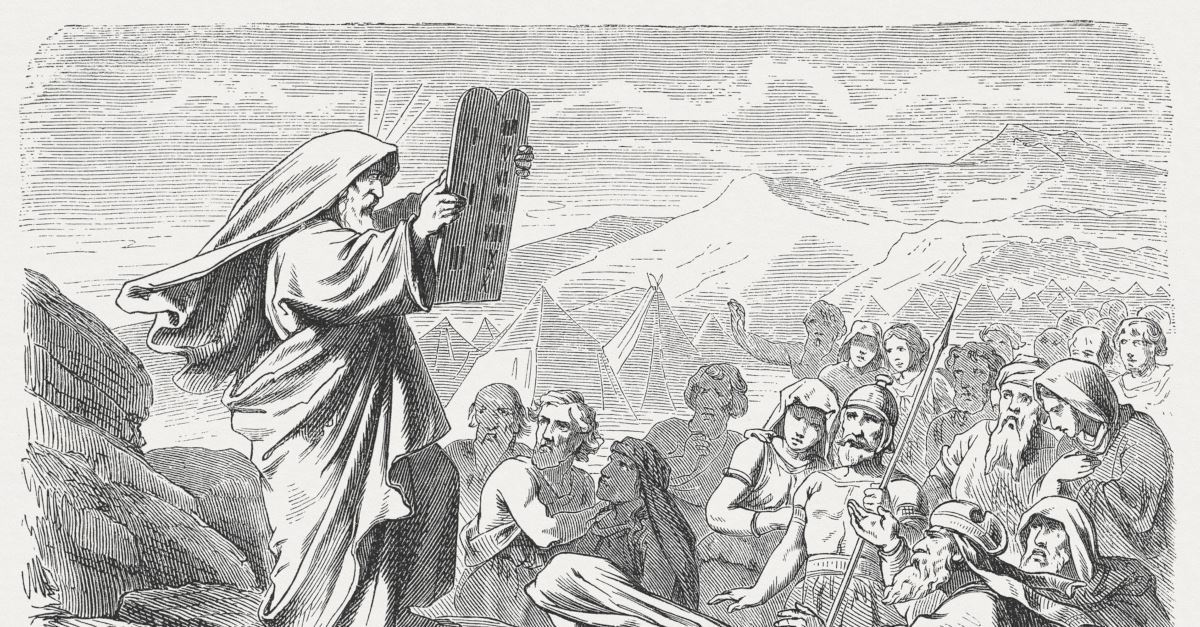
There was only one problem with the Old Covenant—sin. The covenant was broken even before it could be ratified. By the time Moses came down from the mountain, the people had cast a golden idol in the shape of a calf. “When Moses approached the camp and saw the calf and the dancing, his anger burned and he threw the tablets out of his hands, breaking them to pieces at the foot of the mountain” (Exodus 32:19).
So God reissued the covenant (Exodus 34), only to see his people break it all over again. The history of the Old Testament is one of idolatry, immorality, discontent, and disobedience.
Jeremiah rightly identified sin as the problem with the Old Covenant: “ ‘They broke my covenant, though I was a husband to them,’ declares the LORD” (31:32b).  “Jeremiah does not condemn the old covenant. He condemns Israel for breaking the covenant.”7 And not just breaking it! The first twenty-eight chapters of Jeremiah are an exhaustive record of how Judah shattered the covenant and ground the fragments into dust.
The shocking thing was that this agreement was actually a marriage covenant. More than once Jeremiah stated that God was like a husband to his people. But the day finally came when the Almighty filed for divorce. Israel “fell out of love” and committed spiritual adultery “on every high hill and under every spreading tree” (2:20b). She stood up in court to deny the charges, but God made them stick. His virgin bride had become a spiritual whore.
Here is the real shocker, however: If every sin is an act of covenant-breaking, then every sinner is a covenant-breaker. Every time you sin, you are being unfaithful in your marriage to God. That is why sin is so tawdry, cheap, and degrading. As the Apostle Paul so carefully explained, there is nothing wrong with the Law, the commandment, or the Old Covenant (Romans 7:7–13). The problem is with us. We are covenant-breakers by nature.
Failure to keep the covenant brings a curse (cf. Jeremiah 11:8, 10–11). Jeremiah cited the conventional wisdom of his day: “The fathers have eaten sour grapes, and the children’s teeth are set on edge” (31:29b). This must have been a popular saying because the prophet Ezekiel quoted it as well (Ezekiel 18:2). It is a memorable proverb. When a father bites into an unripe grape, the lips of his children pucker in disgust. This refers to the curse of the Old Covenant, in which God threatened to “punish the children for the sin of the fathers to the third and fourth generation” (Exodus 20:5).
How the people of Judah resented that curse! “While in exile the people concluded out of self-pity and fatalistic despair that they were being punished unjustly for sins of previous generations.”8  They felt sorry for themselves. The sour grapes their fathers ate left a bitter taste in their mouths. Why should they suffer for the spiritual adultery of their parents?
What the prophet Jeremiah taught them, however, was that they deserved God’s curse for their own sins as well as for those of their parents: “In those days people will no longer say, ‘The fathers have eaten sour grapes, and the children’s teeth are set on edge.’ Instead, everyone will die for his own sin; whoever eats sour grapes—his own teeth will be set on edge” (31:29–30). Corporately or individually, everyone who breaks covenant is under God’s curse. This is also true for nations—including the United States of America—that have covenanted to live under God.

The New Covenant 

If the Old Covenant ended in a curse, then the New Covenant merits investigation. Jeremiah 31 is the place to start because it is the only passage in the Old Testament that promises “a new covenant.” It is the one place in the Old Covenant that lists the promises of the New Covenant. And since a covenant is also called a “testament,” it is the passage that gives the New Testament its name.

Jeremiah listed seven promises in all.

  1. The New Covenant promised reconciliation, the bringing together of all God’s people into one redeemed race.

“The time is coming,” declares the LORD,
“when I will make a new covenant
with the house of Israel
and with the house of Judah.” (v. 31)

Because of its emphasis on personal responsibility, Jeremiah’s New Covenant is sometimes viewed as the triumph of individualism. R. K. Harrison says:

Probably the most significant contribution which Jeremiah made to religious thought was inherent in his insistence that the new covenant involved a one-to-one relationship of the spirit. When the new covenant was inaugurated by the atoning work of Jesus Christ on Calvary, this important development of personal, as opposed to corporate, faith and spirituality was made real for the whole of mankind.9

The trouble with this view is that the first promise of the New Covenant was a corporate promise, not an individual promise. It promised to end the division between the northern and southern tribes. “ ‘The days are coming,’ declares the LORD, ‘when I will plant the house of Israel and the house of Judah with the offspring of men and of animals’ ” (v. 27). God promised to plant both houses in one land.
Jeremiah first promised this reconciliation at the beginning of his book:

At that time they will call Jerusalem The Throne of the LORD, and all nations will gather in Jerusalem to honor the name of the LORD. No longer will they follow the stubbornness of their evil hearts. In those days the house of Judah will join the house of Israel, and together they will come from a northern land to the land I gave your forefathers as an inheritance.” (3:17–18)

He would repeat it at the end of his book:

“In those days, at that time,”
declares the LORD,
“the people of Israel and the people of Judah together
will go in tears to seek the LORD their God.
They will ask the way to Zion
and turn their faces toward it.
They will come and bind themselves to the LORD
in an everlasting covenant
that will not be forgotten.” (50:4–5)

Jeremiah’s promises were fulfilled with the coming of Christ. There is only one New Covenant people of God. “There is neither Jew nor Greek, slave nor free, male nor female, for you are all one in Christ Jesus” (Galatians 3:28). In the New Covenant community there is no black, no white, no brown. There is no rich, no poor. There is only one New Covenant people in Christ.

2. The New Covenant promised regeneration, the transformation of God’s people from the inside out:

This is the covenant I will make with the house
of Israel after that time,”
declares the LORD.
“I will put my law in their minds
and write it on their hearts.” (Jeremiah 31:33a)

The problem with the Mosaic Covenant was that it was written on tablets of stone (Exodus 31:18). If anything was written on the hearts of God’s people, it was only their sin:

Judah’s sin is engraved with an iron tool,
inscribed with a flint point,
on the tablets of their hearts.” (Jeremiah 17:1; cf. v. 9)

With the New Covenant, however, God solved the problem of the sinful heart by giving his children new hearts and new minds. According to Calvin, the New Covenant “penetrates into the heart and reforms all the inward faculties, so that obedience is rendered to the righteousness of God.”10
It must be emphasized that the New Covenant did not abolish the Old. Christ did not come to abolish the Law, but to fulfill it (Matthew 5:17). So, “the new covenant is not so called because it is contrary to the first covenant.”11 Both covenants demand obedience to the Law. The difference is that the New Covenant brings the law from the outside to the inside. “The distinctiveness of the ministry of law under the new covenant resides in its inward character. Rather than being administered externally, the law shall be administered from within the heart.”12

The Law written on the heart is a promise about the coming of God’s Spirit, for the book of Hebrews attributes Jeremiah’s promise to the Holy Spirit:

The Holy Spirit also testifies to us about this. First he says:

This is the covenant I will make with them
after that time, says the LORD.
I will put my laws in their hearts,
and I will write them on their minds.” (Hebrews 10:15–16)

Only the Holy Spirit can change a heart. A Christian whose heart has been regenerated by God’s Spirit knows how to please God and does not need to pull out a Bible every time a decision needs to be made. The Law written on the heart helps the Christian know what to do instantly and instinctively.
For the Christian, obedience to the Law is not a prior condition for entering the New Covenant. Rather, it is one of the promised blessings of the New Covenant. In his notes on this verse Jonathan Edwards (1703–1758) wrote, “I think the difference here pointed out between these two covenants, lies plainly here, that in the old covenant God promised to be their God upon condition of hearty obedience; obedience was stipulated as a condition, but not promised. But in the new covenant, this hearty obedience is promised.”14

3. The New Covenant promised possession. God’s people would have a claim on God, and he would have a claim on them: “I will be their God, and they will be my people” (31:33b). God’s people would no longer be their own. They would belong to God, and God would belong to them.
The promise of belonging to God in a mutual love relationship is among the most frequently repeated promises of the Old Testament:

“I will take you as my own people, and I will be your God.” (Exodus 6:7)

You have declared this day that the LORD is your God and that you will walk in his ways, that you will keep his decrees, commands and laws, and that you will obey him. And the LORD has declared this day that you are his people, his treasured possession as he promised, and that you are to keep all his commands. (Deuteronomy 26:17–18; cf. 29:12–13; Ezekiel 11:20)

“I will say to those called ‘Not my people,’ ‘You are my people’; and they will say, ‘You are my God.’ ” (Hosea 2:23b; cf. Zechariah 8:8)

Whenever God makes a covenant with his people, what he is really giving them is himself. Thus the primary blessing of the New Covenant is friendship and fellowship with the Triune God. This “is the crown and goal of the whole process of religion, namely, union and communion with God.”15

4. The fourth aspect of Jeremiah’s New Covenant promise was evangelization.

“No longer will a man teach his neighbor,
or a man his brother, saying, ‘Know the LORD,’
because they will all know me,
from the least of them to the greatest,”
declares the LORD. (31:34a)

The Bible often commands believers to teach one another to know the Lord (Deuteronomy 6:1–9; Colossians 3:16). But Jeremiah promised a day when such teaching would no longer be necessary because everyone—from the youngest babe to the oldest saint—would know God. Here the word know “carries its most profound connotation, the intimate personal knowledge which arises between two persons who are committed wholly to one another in a relationship that touches mind, emotion, and will.”16
To a limited degree, this promise has already come true in the Church. Every believer knows Jesus Christ. So although every Christian needs the gospel every day, every Christian does not need to be converted every day.
Yet the promise of the end of evangelization is especially for eternity. There will be no revival meetings in Heaven. No one will stand on the corner and pass out tracts. No one will share the Four Spiritual Laws. No one will knock on your door and ask, “If you were to die tonight, what would you say to God when he asks, ‘Why should I let you into my Heaven?’ ” There will be no evangelism because there will be no need. Everyone will know God, from the least to the greatest.

5. Fifth, the New Covenant promised forgiveness: “For I will forgive their wickedness and will remember their sins no more” (Jeremiah 31:34b). This is perhaps the best blessing of the New Covenant. The Old Covenant tried to deal with the problem of sin through the sacrifices of the Law. But in the New Covenant, sin would be dealt with once and for all. The price for sin would be paid in full; God not only forgives, but he also forgets.
The way the New Covenant deals with the problem of sin is through the death of Jesus Christ on the cross. The sins of God’s people were forgiven and forgotten at Calvary. When Jesus celebrated Passover with his disciples, “He took the cup, saying, ‘This cup is the new covenant in my blood, which is poured out for you’ ” (Luke 22:20; cf. 1 Corinthians 11:25). Jesus was claiming that all the promises of the New Covenant find their fulfillment in him. Jesus is the New Covenant. The New Covenant is established by his blood shed on the cross for our sins. All the blessings of the New Covenant are located in the crucified (and risen!) Christ.
The writer to the Hebrews was captivated by Jeremiah’s vision of the New Covenant. Again and again he speaks of “a better covenant” (7:22) or a “superior” covenant “founded on better promises” (8:6). A better covenant was needed because there was a problem with the old one. It was the same problem Jeremiah identified: “For if there had been nothing wrong with that first covenant, no place would have been sought for another. But God found fault with the people” (Hebrews 8:7–8a). God found fault not with the covenant but with the people. A better covenant was needed to deal with the problem of sin.
The better covenant in Hebrews is one and the same as the New Covenant in Jeremiah, for Hebrews quotes Jeremiah’s entire promise (8:8–12). Then the writer to the Hebrews makes this significant statement: “By calling this covenant ‘new,’ he [God] has made the first one obsolete” (v. 13a). We have already seen that the Old Covenant is not abolished but fulfilled in the New. The laws of the Old Covenant remain, now written on the heart. But the New Covenant is so much better that it is as if the Old has been done away with completely.
The reason the New Covenant is so much better is because “Christ is the mediator of a new covenant, that those who are called may receive the promised eternal inheritance—now that he has died as a ransom to set them free from the sins committed under the first covenant” (9:15; cf. 12:24). The New Covenant offers full and final satisfaction for the curse of God against every kind of covenant-breaking.

6. Sixth, Jeremiah promised that the New Covenant would be eternal:

This is what the LORD says,

he who appoints the sun
to shine by day,
who decrees the moon and stars
to shine by night,
who stirs up the sea
so that its waves roar—
the LORD Almighty is his name:
“Only if these decrees vanish from my sight,”
declares the LORD,
“will the descendants of Israel ever cease
to be a nation before me.”

This is what the LORD says:
“Only if the heavens above can be measured
and the foundations of the earth below be searched out
will I reject all the descendants of Israel
because of all they have done,”
declares the LORD. (31:35–37)

The God of creation is also the God of salvation. Therefore, the New Covenant in Christ is as reliable as the fixed laws of nature, if not more so. It is irrevocable.
Jeremiah’s pleas for God to remember his covenant have not gone unanswered (14:21). Not even the disastrous events of 587 B.C. (the ultimate fall of Jerusalem and the beginning of the Babylonian captivity) marked its end. The New Covenant is as likely to fail as the entire universe is to grind to a halt. God will no more forget his people than humanity will unravel all the mysteries of interstellar space. The New Covenant is an everlasting covenant.
The Biblical covenants often sound like contracts, as if God does his part and we do our part. But of course we never keep our end of the bargain, and so the covenant ought to be null and void. Yet the mystery of God’s grace is that he continues to keep covenant even when we break it.
The only explanation for the permanence of the covenant is that Jesus Christ keeps it on our behalf.  The New Covenant is a blood bond between God the Father and God the Son on our behalf. Jesus Christ makes and keeps the covenant for us. We are in the covenant because we are in Christ.

7. The seventh and final promise of the New Covenant was to Rebuild Jerusalem:

The days are coming,” declares the LORD, “when this city will be rebuilt for me from the Tower of Hananel to the Corner Gate. The measuring line will stretch from there straight to the hill of Gareb and then turn to Goah. The whole valley where dead bodies and ashes are thrown, and all the terraces out to the Kidron Valley on the east as far as the corner of the Horse Gate, will be holy to the LORD. The city will never again be uprooted or demolished.” (31:38–40)

There would be life after death for Jerusalem. The parts of the city that lay in ruins would be rebuilt. What had been cursed would be blessed.
All these promises came true. When Nehemiah rebuilt Jerusalem after the Exile, his engineers started at “the Tower of Hananel” (Nehemiah 3:1) and worked their way around Jeremiah’s map to make repairs “above the Horse Gate” (v. 28). That was the earthly, physical fulfillment of Jeremiah’s promise.
There is also a heavenly, spiritual fulfillment of the promise of the New Covenant. God is building his people an eternal city.   “When Christ returns, his people will see “the Holy City, the new Jerusalem, coming down out of heaven from God” (Revelation 21:2).

Bible expositions often end by applying the promises and commands of God to daily life. But after hearing the seven promises of the New Covenant, what still needs to be done?
There is nothing left to do—only believe. For all the promises of the New Covenant are things God himself undertakes: “I will make a new covenant” (Jeremiah 31:31). “I will put my law in their minds.… I will be their God” (v. 33). “I will forgive their wickedness” (v. 34). He will not “reject all the descendants of Israel” (v. 37). All the terms of the New Covenant are promises.  Will you believe them?

www.Upwards.Church

Message Audio/Video and Outline: https://upwards.church/watch-now/leander-campus-videos

Watch Messages: YouTube-Upwards Church

Facebook: Upwards Church

Sources:
1 O. Palmer Robertson, The Christ of the Covenants (Phillipsburg, NJ: Presbyterian and Reformed, 1980), p. 4.
2 John Murray, The Covenant of Grace (Phillipsburg, NJ: Presbyterian and Reformed, 1953), p. 31.
3 Robert Davidson, Jeremiah, Daily Study Bible, 2 vols., Vol. 2 (Philadelphia: Westminster, 1983), p. 88.
4 Herman Witsius, The Economy of the Covenants Between God and Man, 2 vols. (London, 1773; repr. Escondido, CA; Den Dulk Christian Foundation, 1990), I.1.9.
5 Gerhard Von Rad, Old Testament Theology, trans. D.M.G. Stalker, 2 vols., Vol. 2 (New York: Harper & Row, 1960), p. 213.
6 J. A. Thompson, The Book of Jeremiah, New International Commentary on the Old Testament (Grand Rapids, MI: Eerdmans, 1980), p. 580.
7 Robertson, The Christ of the Covenants, p. 281.
8 F. B. Huey, Jr., Jeremiah, Lamentations, New American Commentary (Nashville: Broadman, 1993), p. 279.
9 R. K. Harrison, Jeremiah and Lamentations, Tyndale Old Testament Commentaries (Downers Grove, IL: InterVarsity, 1973), p. 140.
10 John Calvin, A Commentary on Jeremiah, 5 vols., Vol. 4 (Edinburgh: Banner of Truth, 1989), p. 130.
11 Ibid., p. 126.
12 Robertson, The Christ of the Covenants, p. 190.
13 Thomas à Kempis, quoted in Urban Mission (June 1997), p. 30.
14 Jonathan Edwards, The Works of Jonathan Edwards, 2 vols., Vol. 2 (Edinburgh: Banner of Truth, 1974), p. 765.
15 Murray, The Covenant of Grace, p. 31.
16 Thompson, The Book of Jeremiah, p. 581.
17 Oliver O’Donovan, The Desire of the Nations: Rediscovering the Roots of Political Theology (Cambridge, MA: Cambridge University Press, 1996), p. 285.
18 Thomas Boston, The Complete Works of the Late Rev. Thomas Boston, Ettrick, ed. Samuel M’Millan, 12 vols., Vol. 8 (London, 1853; repr. Wheaton, IL: Richard Owen Roberts, 1980), p. 430.
Philip Graham Ryken, Jeremiah and Lamentations: From Sorrow to Hope, Preaching the Word (Wheaton, IL: Crossway Books, 2001), 464–475.
Posted in Jeremiah - A People in Crisis | Tagged , , , , , , , , , , , , , , | Leave a comment

Hope for the Future – Jeremiah 29:10-23

Do you ever wonder what God is up to? What is he doing with your life? Why won’t he answer the request you keep praying? Why is he letting you suffer? Why are there so many difficult people in your life? Why are you still struggling with the same stubborn sin? Why are you still stuck in the same boring job? What, if anything at all, is God doing with your life?

The people of God asked the same kinds of questions during the days of Jeremiah. They had been deported to Babylon. They were exiles living in a ghetto a thousand miles from home. Many had watched in horror as friends and family were murdered. So they wanted to know where God was in all of that. Why was he allowing them to suffer? Some prophets said this, and others said that, but nobody seemed to know for sure what God was up to. Why were bad things happening to God’s people?

Jeremiah 29 was written to answer that question. The chapter contains a letter from home written by Jeremiah, who was still living back in Jerusalem. The main point of the letter is that God knows what he is doing, even when it does not seem that way. His plans are always the best-laid plans.

Known Plans

One reason God’s plans are best is because God knows all about them. “ ‘For I know the plans I have for you,’ declares the Lord” (v. 11a). God’s plans are known plans.

God makes and God knows God’s plan. This fact is stressed by the grammar of Jeremiah 29:11, where the “I” is repeated in Hebrew for emphasis: “I, I know the plans I have for you.” We do not know what the plans are, but God does. These are God’s plans for us, not our plans for God, or even our plans for us. God insists on his right to know and fulfill his plans, which is why the plans are so good. They are God’s plans rather than ours.

The God who knows the plans also carries them out. In the verses that follow, Jeremiah proceeds to list all the things God will do. “I will be found by you.” “I will bring you back from captivity.” “I will gather you.” “I will bring you back to the place.” God will do the finding, the gathering, and the bringing back. (To discover how God did all of this, read the books of Ezra and Nehemiah.) Since God made the plans and knows the plans, it makes sense for him to fulfill the plans.

When God says he knows the plans he has for you, it is important to understand whom he means by “you.” Christians often apply Jeremiah’s promise to themselves individually. “Terrific!” they say. “God knows the plans he has for me.” This shows how self-centered Bible reading can be. Jeremiah’s promise should be taken more than individualistically. It is not just a private promise. It is for the entire church. The “you” in “I know the plans I have for you” refers to the whole people of God. Before thinking about what the promise means for you, think about what it means for us.

In Jeremiah’s case, the promise of return was for the whole community of exiles. In the case of the church, the promise of salvation in Christ is for the whole community of believers.

For he chose us in him before the creation of the world to be holy and blameless in his sight. In love he predestined us to be adopted as his sons through Jesus Christ, in accordance with his pleasure and will.… In him we have redemption through his blood, the forgiveness of sins, in accordance with the riches of God’s grace.… In him we were also chosen, having been predestined according to the plan of him who works out everything in conformity with the purpose of his will. (Ephesians 1:4–5, 7, 11)

This passage shows how well-known salvation in Christ has been from all eternity. God chose us and redeemed us according to plan. Actually, everything God does is according to plan, since he “works out everything in conformity with the purpose of his will.” But God especially knows every step of salvation, from beginning to end, which is why it is sometimes called “the plan of salvation.”

Ephesians 1 also shows that the plan of salvation is for the whole church. Rather than writing about his own personal predestination and redemption, the Apostle Paul continually refers to “we” and “us.” The best-laid plan of salvation in Christ is something all believers share in common. God’s well-known plans are for the redemption of all his people in Jesus Christ.

If God knows his plans for the church, then he also knows his plans for the Christian.

In the previous post, I mentioned that Jeremiah 29:11–13 is a theme passage for our family. I sometimes think of all the times we have trusted this promise together—and all the times the Lord has kept it.

If you are a Christian, then surely you have found the same thing to be true in your own life. You can look back and see how God’s hand has guided you every step of the way. You know from your own experience that “in all things God works for the good of those who love him, who have been called according to his purpose” (Romans 8:28). That promise is not trite—it is the truth. God really does work all things for the good of those who love him. He knows the plans he has for you, and he always has.

Promising Plans

The second thing Jeremiah 29 says about God’s plans is that they are promising. Very promising.

The exiles thought they had every reason to be pessimistic about their plight. They were being held captive and they had no way of escape. But God had “plans to give [them] hope and a future” (v. 11b).

Here was the plan: ‘[I] will bring you back from captivity. I will gather you from all the nations and places where I have banished you,’ declares the Lord, ‘and will bring you back to the place from which I carried you into exile’” (v. 14b). The exiles would not have to live in Babylon forever. Theirs was a fixed-term captivity. “This is what the Lord says: ‘When seventy years are completed for Babylon, I will come to you and fulfill my gracious promise to bring you back to this place’ ”(v. 10). At the end of seventy years they would get to celebrate homecoming (25:11–14).

Jeremiah may have used seventy years to represent a typical lifespan, the way Moses did: “The length of our days is seventy years” (Psalm 90:10a). Or perhaps he was using seventy years more literally. That is what Daniel assumed when he was sitting around in Babylon trying to figure out when his exile would come to an end (Daniel 9:2). The Exile did last seventy years. R. K. Harrison counts seventy years from the Babylonian victory at Carchemish in 605 b.c. to the return of the first exiles in 536 b.c.1 In any case, the point is that the Exile was not to last forever. Even though God’s people were going through the worst of times, things were still promising because God knew the plans he had for them.

If God’s plans are for the future, the Christian must not complain about the present. One of the dangers of grumbling about what God is doing is that, whatever it is, God probably is not finished doing it. By its very nature, a plan is something that will not be completed until sometime in the future. And once it is completed, it will not be a plan anymore; it will be history. If God has plans for hope and a future, you must give him enough time to work them out.

This is why the Christian always lives by faith. A Christian is someone who trusts the promises of God for the future and acts upon them in the present. In other words, the Christian acts on God’s promises before they are fulfilled. “Faith is being sure of what we hope for and certain of what we do not see” (Hebrews 11:1). To draw comfort from God’s plans for the future, one must take them by faith.

The refugees in Babylon had to live by faith. During the seventy long years of their captivity, they had to trust the promises of God. They had to live for God in the city by faith. They had to build houses, plant gardens, raise families, and pray for the welfare of the city by faith (29:5–7). Things looked promising, but only as long as they trusted God to do what he had said he would do.

Not all the exiles lived by faith. Jeremiah told the sad story of two men who were false prophets and taught lies—their names are Ahab son of Kolaiah and Zedekiah son of Maaseiah:

Therefore, hear the word of the Lord, all you exiles whom I have sent away from Jerusalem to Babylon. This is what the Lord Almighty, the God of Israel, says about Ahab son of Kolaiah and Zedekiah son of Maaseiah, who are prophesying lies to you in my name: “I will hand them over to Nebuchadnezzar king of Babylon, and he will put them to death before your very eyes.” (vv. 20–21)

These false prophets, named after two evil kings, were impatient. They were unwilling to wait seventy years for God to work his plan. They wanted him to work it out now; so they took matters into their own hands. They started a “progressive” synagogue, telling people what they wanted to hear. They were also guilty of several outrageous sins— “folly, fornication and fraud,” one commentator calls them.2 “‘For they have done outrageous things in Israel; they have committed adultery with their neighbors’ wives and in my name have spoken lies, which I did not tell them to do. I know it and am a witness to it,’ declares the Lord” (v. 23).

Most likely, the reason Nebuchadnezzar had Ahab and Zedekiah put to death is that they tried to lead a rebellion against Babylon. They were treated so disgracefully that they became swearwords among the exiles. “Because of them, all the exiles from Judah who are in Babylon will use this curse: ‘The Lord treat you like Zedekiah and Ahab, whom the king of Babylon burned in the fire” (v. 22). Literally, the Bible says Nebuchadnezzar “roasted” them, which was the appointed punishment for treason in Hammurabi’s Code. But the biggest sin Ahab and Zedekiah committed was not treason against Babylon, but treason against God. They lied saying they had a “word from God, when they did not.

If you have decided to live for Jesus, then your future looks very promising. Jesus has promised to forgive your sins, to make you a child of the living God, to send his Holy Spirit to comfort you, to prepare a place for you, and to come back so you can live with him forever. It all sounds most promising, but you must live by faith in those promises.

Good Plans

One can imagine the exiles hearing about God’s plans and thinking that, however promising they were, they were not very good, especially that part about the seventy years. Seventy years is a long, long time to wait for God to work things out. Most people would like God to work out their problems by the end of the week, not the end of the century. The exiles probably knew enough arithmetic to figure out that they would be dead by the time the Exile would be over. “Seventy years, you say, Jeremiah? Sounds great for my grandchildren, but what about me?”

The answer is that God’s plans were not only promising—they were also good. There is a hint of the goodness of these plans in verse 10, where God speaks of fulfilling his “gracious promise.” Grace is the unmerited favor of God. To receive something by grace is to receive something one does not deserve. What God’s people deserved in this case was to stay in captivity as long as God was pleased to keep them there. But God promised to give them something they did not deserve. By his grace he would bring them back home.

The Christian cannot think about gracious promises without thinking about the grace that comes through the Lord Jesus Christ. The Bible teaches that all of us are guilty sinners who deserve to be damned for our sins. God has every right to give us the death penalty. Yet “because of his great love for us, God, who is rich in mercy, made us alive with Christ even when we were dead in transgressions—it is by grace you have been saved” (Ephesians 2:4–5b). Now that is a good plan. It is God’s plan for saving sinners. We do not deserve to be rescued from sin or delivered from death. But by his grace God sent his only Son, Jesus Christ, to die on the cross for our sins. Salvation is “God’s abundant provision of grace … through the one man, Jesus Christ” (Romans 5:17).

God’s plans are not only gracious for the future, they are also gracious for the present. “ ‘For I know the plans I have for you,’ declares the Lord, ‘plans to prosper you and not to harm you’ ” (Jeremiah 29:11). God’s grace is available right now. The exiles in Babylon did not have to wait seventy years for God to do them any good. His plans included their present prosperity. The word “prosper” is the same word Jeremiah used when he said, “Seek the peace and prosperity of the city … because if it prospers, you too will prosper” (v. 7). It is the Hebrew word shalom, meaning order, stability, health, and safety. Shalom is all-encompassing peace. God promised that he would begin to give his people that kind of peace right away. He not only wanted them to work for shalom (vv. 5–7), he wanted to give it to them.

This good plan stands in contrast to God’s plan for the people who stayed back in Jerusalem. His plans for them were not good, for they were judged for their holier-than-thou attitude toward the exiles:

You may say, “The Lord has raised up prophets for us in Babylon” [namely, the lying prophets who said the exile was almost over; see vv. 8–9], but this is what the Lord says about the king who sits on David’s throne and all the people who remain in this city, your countrymen who did not go with you into exile—yes, this is what the Lord Almighty says: “I will send the sword, famine and plague against them and I will make them like poor figs that are so bad they cannot be eaten. I will pursue them with the sword, famine and plague and will make them abhorrent to all the kingdoms of the earth and an object of cursing and horror, of scorn and reproach, among all the nations where I drive them. For they have not listened to my words,” declares the Lord, “words that I sent to them again and again by my servants the prophets. And you exiles have not listened either,” declares the Lord. (vv. 15–19)

This goes back to what Jeremiah prophesied about the good figs and the bad figs in chapter 24. The people who stayed in Jerusalem were like bad figs to be thrown away. But the exiles in Babylon were good figs, and God’s plans for them were good.

A perfect example of God’s good plans for his people in Babylon is the prophet Daniel. Daniel prospered in exile. Because of his faith in God he was a star pupil in the Babylonian school system. He not only “looked healthier and better nourished” than the pagan students, but he also had “knowledge and understanding of all kinds of literature and learning” (Daniel 1:15, 17). When Daniel was able to interpret King Nebuchadnezzar’s dreams, “the king placed Daniel in a high position and lavished many gifts on him. He made him ruler over the entire province of Babylon and placed him in charge of all its wise men” (2:48). Much the same thing happened when Daniel interpreted Belshazzar’s dream. “At Belshazzar’s command, Daniel was clothed in purple, a gold chain was placed around his neck, and he was proclaimed the third highest ruler in the kingdom” (5:29).

Then Daniel’s career took a turn for the worse. Notice that Jeremiah said God’s plans were good, not easy. Christians usually want life to be easy, but often the good God wants to do can only come through suffering. That is the way it was for Daniel. God’s plans for him were not easy. They included being attacked by his coworkers, persecuted for his faith, and thrown into a den of hungry lions.

But God delivered Daniel from all his troubles, and after he emerged unscathed from the lions’ den, Jeremiah’s promise was fulfilled. “So Daniel prospered during the reign of Darius and the reign of Cyrus the Persian” (6:28). Daniel was a success. He thrived in Babylon. Of course he did! God knew the plans he had for Daniel, plans to prosper him and not to harm him.

From beginning to end, God’s plans for his people are altogether good.

His plans concerning his people are always thoughts of good, of blessing. Even if he is obliged to use the rod, it is the rod not of wrath, but the Father’s rod of chastisement for their temporal and eternal welfare. There is not a single item of evil in his plans for his people, neither in their motive, nor in their conception, nor in their revelation, nor in their consummation.4

Do you believe that? Do you believe there is not one single item of evil in God’s plans for his people? Do you believe that whatever God does is all for the best and could not possibly be any better?

Some Christians harbor a lingering suspicion that God is out to get them. When things go well, they secretly think God eventually will make them pay for their prosperity. Perhaps that is why God makes a point of saying that his plans are not harmful. “Plans to prosper you and not to harm you,” he calls them (Jeremiah 29:11b). God’s plans for his children are only good. Even if God sends suffering their way, it will be for their good. Christians who live in fear or worry need to grab hold of the goodness of God. If you are God’s child, God is not going to hurt you.

Personal Plans

The last thing Jeremiah teaches about God’s plans is that they are personal. God’s purpose in all his plans is to bring his people into intimate relationship with himself. “‘Then you will call upon me and come and pray to me, and I will listen to you. You will seek me and find me when you seek me with all your heart. I will be found by you,’ declares the Lord” (vv. 12–14a). God’s plans are not just for you—they are for you in relation to him.

This relationship was to begin right away. In this respect, the “then” at the beginning of verse 12 is somewhat misleading.5 It makes it sound as if God’s people will not find him until the end of their exile. What the Bible actually says is, “And you will call upon me.” The exiles in Babylon did not have to wait seventy years to have a relationship with God. He invited them into a personal relationship right away, in Babylon, in their suffering.

The lesson is easy to apply. We do not need to wait to call upon God. He is available to us right now. Whenever we call, he will listen. Whenever we pray, he will answer. Whoever seeks will find.

Seeking God sometimes seems like playing spiritual hide-and-seek. God’s ways are so mysterious that we sometimes despair of ever finding him. But if we do play hide-and-seek with God, it is the kind of hide-and-seek one plays with a toddler. Toddlers get scared if they have to look for very long. For a toddler, the joy of hide-and-seek is not the hiding or the seeking, but the finding. God knows how scary it is to be alone in the world without him. So his good plans are personal plans. They draw his children into the heart of a relationship with him.

Jeremiah 29:13 is a wonderful verse for anyone on a spiritual quest. God says, “You will seek me and find me when you seek me with all your heart.” Anyone who seeks God sincerely and wholeheartedly will find him. What the seeker is really looking for (even if he or she does not yet realize it) is Jesus Christ. Jesus is the way to God, the Savior of the world, and the answer to all of life’s questions.

Jesus repeats the same wonderful promise first made in Jeremiah 29. He says, “Ask and it will be given you; seek and you will find; knock and the door will be opened to you. For everyone who asks receives; he who seeks finds; and to him who knocks, the door will be opened” (Matthew 7:7–8). God’s plans really are the best-laid plans. What could be better than good, gracious, well-known plans that lead to a wonderful friendship?

In his book Spiritual Leadership, Oswald Sanders quotes this poem about the way God works out his plans:

How He bends but never breaks

When our good He undertakes;

How He uses whom He chooses

And with every purpose fuses him;

By every act induces him

To try His splendor out—

God knows what He’s about.6

Do you ever wonder what God is up to? Of course. We all do. But whatever it is, God knows what he’s about. He knows the plans he has for you. Plans to prosper and not to harm you. Plans for hope and a future.[1]

www.Upwards.Church

Message Audio/Video and Outline: https://upwards.church/watch-now/leander-campus-videos

Watch Messages: YouTube-Upwards Church

Facebook: Upwards Church

1 R. K. Harrison, Jeremiah and Lamentations, Tyndale Old Testament Commentaries (Downers Grove, IL: InterVarsity, 1973), p. 126. For a helpful discussion of the seventy years, see the excursus in Gerald L. Keown, Pamela J. Scalise, Thomas G. Smothers, Jeremiah 26–52, Word Biblical Commentary, Vol. 27 (Waco, TX: Word, 1995), pp. 73–75.
2 R. E. O. White, The Indomitable Prophet: A Biographical Commentary on Jeremiah (Grand Rapids, MI: Eerdmans, 1992), p. 108.
4 Theodore Laetsch, Bible Commentary, Jeremiah (St. Louis: Concordia, 1965), pp. 234–235.
5 See Robert Davidson, Jeremiah, Daily Study Bible, 2 vols., Vol. 2 (Philadelphia: Westminster, 1983), pp. 64–65.
6 Oswald Sanders, Spiritual Leadership (Chicago: Moody Press, 1967), p. 141.
[1] Philip Graham Ryken, Jeremiah and Lamentations: From Sorrow to Hope, Preaching the Word (Wheaton, IL: Crossway Books, 2001), 418–427.
Posted in Jeremiah - A People in Crisis | Tagged , , , , , , , , | Leave a comment