

Facing Sickness – 2 Kings 5

We all need a healing touch.  There is something in each of our lives that needs healing. What problem are you trying to conceal? What hurt are you trying to cover up? What prevents you from getting close to other people? Where do you need to be touched? What is your leprosy?
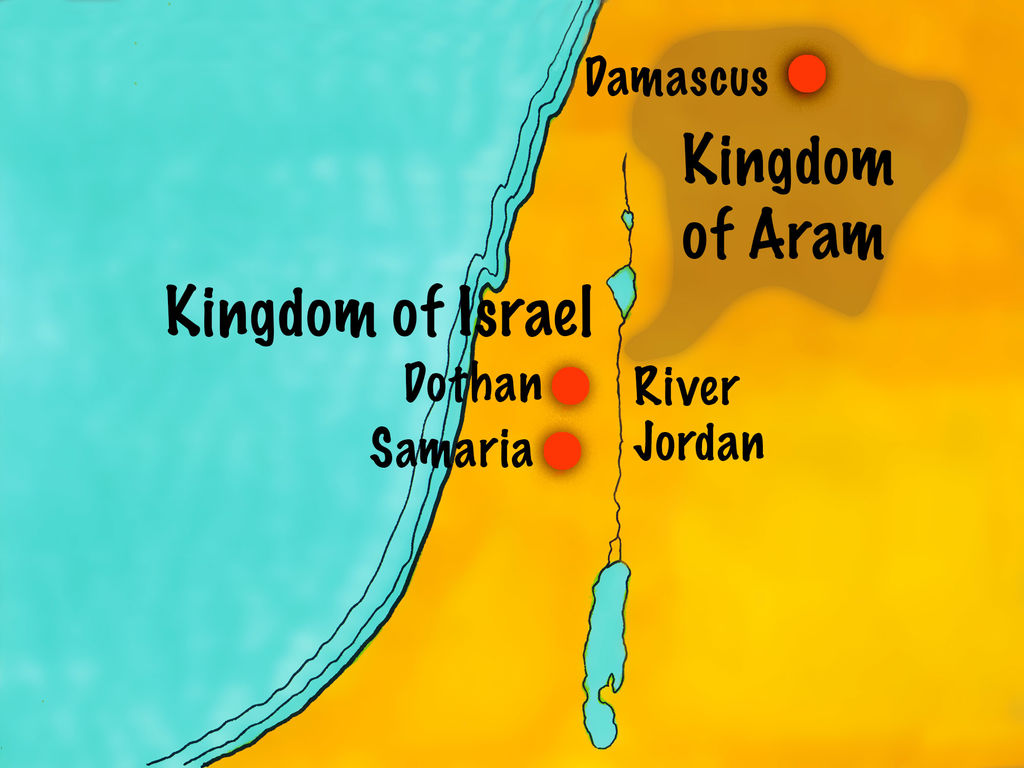
Naaman was the “Chairman of the Joint Chiefs of Staff” of his day. The military leader of one of the region’s most powerful nations, he was a definite candidate for Who’s Who in the World. He was the cream of the crop, lived among the upper crust, and caroused among the elite. The Bible says, “Naaman, commander of the army for the king of Aram, was a great man in his master’s sight and highly regarded because through him, the Lord had given victory to Aram. The man was a brave warrior . . .” (2 Kings 5:1). Did you hear those descriptive words? Don’t we all want people to use them of us? Commander. Great. Highly regarded. Victorious. Valiant. Here was a man that had power, position, and prestige. He was successful. He was a winner. He was wealthy. He was a hero. He was respected. He was admired. He was envied.

“But” – a three-letter conjunction. That small word changes everything.

Notice how first one concludes. “. . . but he had a skin disease” (2 Kings 5:1). He could think about all of his accomplishments; he could enjoy his power and position and prestige; he could admire his home and his wealth; but they all seemed to vanish as he stared into the mirror each day. Each time he looked at himself there was something looking back that defined his life. He was a leper, and nothing could change that fact.

We will all face that word at some point in our lives, “we have run tests BUT we are sorry to say that …”  Are we ready to face the bad news of sickness, disease and death?  It’s coming we must be ready.

Consider Christopher Reeve. Movie star. Wealthy. Handsome. Winner of awards and honors. Respected, loved, and admired by adoring fans. But. Once he was known as Superman with the power to melt steel, leap tall buildings, and fly into the heavens, but now an aluminum wheelchair, earthbound, defines his life. He is a paraplegic, and presently nothing can change that fact.

The fact is Naaman was a leper. Leprosy was the Coronavirus of Naaman’s day. Lepers were isolated and humiliated. They were outcasts – the original untouchables. They were forced to wear torn clothing and shout, “Unclean, unclean!” anytime they encountered an uninfected person. Leprosy was the most feared disease of the day. It was extremely contagious and, in many cases, incurable. In its worst forms, leprosy led to death. Granted, Naaman’s leprosy was probably in its infant stage or a mild form. He had concealed it, but now his clothing would not cover it up. While people treated him respectfully, now it’s very likely that nobody would touch him. The lack of touch would hurt Naaman deeply.

Like Naaman we, too, long for meaningful touch. Why is it that when I am away from my wife and child, I long for their embrace? Why is that we squeeze the widow’s hand at her husband’s funeral? Why is that we sympathetically pat the shoulder of the defeated athlete? Why do we bear hug a long-lost friend? Why is that we hold our babies? Touch brings comfort. Touch conveys acceptance. Touch promotes health. Touch imparts wholeness.

Can you imagine stumbling through life without being touched? Without someone holding your hand when you are lost? Without someone rubbing your back when it is sore? Without someone slapping you on the shoulder for a job well done? Without being embraced after being gone on a two-week business trip?

Naaman did not have to imagine. It was reality.

So what do we do? Where do we find help? Where do we go for healing? In a word, we go down: down in prayer, down in humility, down as we listen and seek advice from others.

Notice the contrasts in Naaman’s journey. Naaman, the commander-in-chief, finds direction through a captive servant – his wife’s slave. Naaman, the conqueror, finds help in a conquered nation – Israel. Naaman, the highly regarded man, learns of his treatment from a lowly prophet – Elisha. Naaman, the wealthy and valiant soldier, is cured in a dirty river – the Jordan.

What can we learn from this downward descent?

We too need humble people in our lives who can look past our: our job titles, our bank accounts, our cars, and our houses – and see our loneliness and our need and our hurt. We need people who will touch us at our point of need. We need people who will call our problems like they see them. We need people who see our blind spots. We need people in our lives who love us enough to not let us make stupid mistakes.  (v. 2-3).

As I have looked deeper into this story, this slave girl, (besides God) is the hero of the story!  She seemingly had nothing.  She was taken from her family, her country, her comfort zone and put into slavery.  She had little in earthly status but had great heavenly status!  She was not angry, vengeful, bitter but faithful, helpful and hopeful!  She could see God moving in this situation!

We don’t know the little girl’s name or much about her, but her brief word to her mistress brought healing and faith in God to a powerful Aramean captain. God had placed her for a purpose, and she was faithful. Where has God put you? No matter how humble or small your position, God can use you to spread his Word. Look for opportunities to tell others what God can do. There’s no telling who will hear your message!

This slave girl was not intimidated by Naaman’s power, position, or prestige. She saw his pain; called it by name, knew of a pain reliever and told Naaman where he could find help.

“If only my master were with the prophet who is in Samaria! For he would heal him of his leprosy.”

Her words were so convincing that the woman told her husband and he in turn informed the king. Never underestimate the power of a simple witness, for God can take words from the lips of a child and carry them to the ears of a king.

We also need places in our lives that will provide us with healing. (vv. 4-5)

The nation of Israel is present throughout the Scriptures as a metaphor for the church. The church is a healing place; a place that gives a caring touch in an uncaring world. A place that provides sanctuary – protection and comfort from those that would seek to assault, a place that extends a supportive and healing hand to those in trouble.

Israel was a safe place for Naaman. But, when Naaman first entered Israel he was in the right place, but speaking to the wrong person. He first went to the king of Israel, but the king could not help him. In fact, the king misunderstood his coming all together and thought Naaman was trying to pick a fight.   We will look more at this story in the next post.

Darrell

www.Upwards.Church

Facebook: Upwards Church


Sources:

, Life Application Study Bible, (Wheaton, IL: Tyndale, 1988), WORDsearch CROSS e-book, 574.


https://www.lifeway.com/en/articles/sermon-desperate-healing-namaan

Posted in Brave - Elisha (2 Kings) | Tagged , , , , , , , , , | Leave a comment

Facing a Need? Dig a Ditch – 2 Kings 3

Has this Coronavirus chaos changed your prayer life any?  Do you find yourself praying before you go into a store? My parents are both 77 years old and I pray for them to stay healthy.   Often our needs drive us to pray more and that’s a good thing.  Our needs become a blessing when it makes us depend on God.  Often God will allow us to have needs that cannot be met in anyone but Him so that we will seek Him.

In our story of 2 Kings 3: 16-17, we see three kings with their armies in the desert without water.   They go to Elisha who hears from the Lord this message:  “Make this valley full of ditches.

Do you really think that the God of the universe needed these guys out there digging a ditch?  No!  God could provide water in any way He wants.  God could say:  “Lake! River! Pond!” and water was there.  He didn’t need them to do that.  But instead, he is saying, “You show me your faith and I’ll show you my faithfulness.  God loves to see our faith! All through the New Testament we’ll see “When Jesus saw their faith.”  How do we see faith?  We see faith in action.  When Peter was in a boat in a storm and said, “Jesus, if that’s you, tell me to come and I’ll come.”  And Jesus said, “Come,” what did Peter do?  He got out of boat!  That’s when you see faith.    For the other 11 guys, you didn’t see any faith. I believe there are many times when God wants to see us participate in his miracle. 

In the New Testament, there’s a guy with a withered hand.  What does Jesus say to him? “Stretch out your hand.”  Jesus could have healed the man on the spot, but instead he said, “I’m going to heal you but I want to see your faith to stretch out your hand.” Another time there man paralyzed his whole life. Jesus looks at him and says, “get up, pick up your bed and walk.”  I’m going to heal you but I’m not going to pick you or your bed up. I want to see you have the faith to believe that what I said was true.  Get up.  Only God can send the water but sometimes he wants you to dig a ditch.

There was a guy who was blind from birth and Jesus goes up and picks up some dirt and he spits in it, then he rubs it, makes mud and puts it on the guy’s eyes.  Jesus says, “Go wash your eyes in the pool of Siloam.  In other words, “I’m going to do my part, I want to see you do yours.  You show me your faith, I’ll show you my faithfulness.”  “Without faith, it is impossible to please God.”

I believe there are too many people waiting for God to show them His faithfulness but they’re not showing God any faith.  We must take a step of faith.  If we want to heal a relationship that’s gone bad, we will have to forgive before someone else even asked for forgiveness.  Treat someone with love when they are being a jerk.  What’s that?  You’re digging a ditch.

If we say, “I want my kids to serve Jesus and be strong Christians.”  Open up the bible in your own home.  Share God’s word with your kids.  Pray with your kids.  Be a godly parent.  That’s digging a ditch.

People say, “I want more money; church people say this and yet, they do not tithe.  God gives us crazy principal to the human mind.  If we give him our first and our best, he will bless the rest.  And those of us who are tithers, we know that with the supernatural power of God: 90 percent with his blessings goes further than the 100 percent without!  It is crazy, but it is true.  What are we doing?  We’re digging a ditch.  When you feel like you need more, you’re actually giving unto God and you watch as he proves himself faithful.   Only God can send the water but he wants us to dig a ditch.

Someone may be praying, “send me the ideal spouse.” That’s a great prayer!  But maybe before God sends you the ideal spouse, He wants you to Be the ideal spouse.  Start digging by growing spiritually,  working out, eating right, get a good job, comb your hair. Only God can send the water but sometimes he wants you to dig a ditch.

The second principal in this story is this:  Real faith believes big but is willing to start small. I know too many people who call themselves Christ followers that are not thinking big enough.  We serve a God who can do exceedingly and abundantly more than all you can ask, think or imagine. It’s time to think big.  We serve that big of a god.

I know just as many who won’t think big and yet at the same time, they are not willing to start small.  Think about this:  How do you dig a ditch?  If you’re in the 9th century BC, how do you dig a ditch?  You take a shovel one load of dirt at a time.   What do you do?  You start small.   Zechariah 4:10 says, “Do not despise these small beginnings for the Lord rejoices to see the work begin.”  We have to start small with a big vision.

I love the faith of a member of our church named Leilani.  She wanted to feed the homeless people in Austin.  She started with a few sandwiches just her and her husband going to downtown Austin.  Then she opened it up as a Ministry Team called “Blessing Bags” at our church and people from all locations come and they pack over 450 sack lunches, bags of toiletries, clothes, and bibles bags for the homeless in Austin twice a month.  She started small but it grew!

Our church started small, no land, no building, no members just 8 people in our living room.  Now we have three pieces of property for ministry in three cities with hundreds that call us their church.

Let’s think big but be willing to start small because only God can send the water but he wants you to dig the ditches.   Say, “God, I believe you can.”  And then you start where you are.

God loves when we participate in his miracles when he can see our faith because faith without works is dead.  2 Kings 3:20 says this:  “The next morning about the time for the offering of the sacrifice” — After they faithfully dug the ditches, the bible says, “… the land was filled with water.”  Only God can send the water but sometimes he wants you to dig a ditch.

Some of you, right now, you’ve got a significant need in your life, and you think, “If only, If only God would meet that.  Our biggest need can become our biggest blessing when it drives us to depend on God.  I pray for us to think big, but start small.   I pray that we will dig the ditch believing that God will send the water.

Darrell

www.Upwards.Church

Facebook: Upwards Church


Posted in Brave - Elisha (2 Kings) | Tagged , , , , , , | 4 Comments

Facing Need – 2 Kings 3 Background

Israel and Judah held some of the most fertile land and strategic positions in the ancient Near East. It is no wonder that neighboring nations like Moab envied them and constantly attempted to seize the land. Moab lay just southeast of Israel. The country had been under Israel’s control for some time due to Ahab’s strong military leadership. When Ahab died, Mesha, the Moabite king, took the opportunity to rebel. While Israel’s next king, Ahaziah, did nothing about the revolt, his successor, Joram, decided to take action. He joined forces with Jehoshaphat, king of Judah, and went to fight the Moabites. Together

In planning their military strategy, Jehoshaphat suggested they march south instead of north through the Desert of Edom. This meant they would march in a large half-circle pattern and then launch a surprise attack from the south below the Dead Sea (2 Kings 3:8). This particular strategy of attack seemed to be brilliant, for the forces of Moab were mobilized along the northern border above the Dead Sea. Also, by going around the southern end of the Dead Sea, the army of the alliance not only would catch Moab by surprise, but they could also enlist the support of Edom. Since the alliance had to march through the land of Edom, the Edomites, with a smaller army than the alliance, would join Israel and Judah instead of fighting against them.

Although the southern strategy would be far more difficult because of having to march through the desert, the alliance adopted this strategy of assault against Moab. But after marching seven days through the desert, the alliance army faced a severe, life-threatening crisis: they ran out of water. There was no water for the soldiers or for the animals.

Note the reaction of King Joram of the Northern Kingdom: he became terrified. He complained and blamed the Lord, accusing Him of bringing the crisis upon them in order to defeat them before the power of Moab. But note the response of Jehoshaphat, who, despite some spiritual weaknesses, was a true believer in the Lord: he suggested they find a prophet who could seek the Lord on their behalf (2 Kings 3:11).

Jehoshaphat’s request for a “prophet of the Lord” shows how true worship and religious experience in both Israel and Judah had declined. In David’s day, both the high priest and the prophets gave the king advice. But most of the priests had left Israel (Northern Kingdom) and God’s prophets were seen as messengers of doom (1 Kings 22:18).

Thankfully and providentially, one of the officers of Israel knew about Elisha and informed the kings that Elisha was actually accompanying their army into battle. Furthermore, the officer informed the three kings that Elisha had been the aide of the great prophet Elijah. Obviously, the Lord had moved upon the heart of Elisha to accompany the troops and to minister to them. Facing the crisis of utter defeat due to lack of water, the three kings humbled themselves and went personally to Elisha to seek his help and godly counsel (2 Kings 3:12).

When the three kings sought Elisha, appealing for his help, Elisha boldly and sternly rebuked Joram for his idolatry. The king was following false prophets and engaging in false worship. King Joram should go to the prophets of his father and mother for help, the prophets of Ahab and the infamous Jezebel.

But note the response of King Joram: he again blamed the Lord for their severe, life-threatening crisis. He accused the Lord of having led the three kings to form an alliance in order to bring about their defeat by the king of Moab.

With disgust in his voice toward Joram, Elisha responded bluntly: he would not help them if it were not for the presence of Jehoshaphat, king of Judah. In fact, he would not even bother to look at them at all if it were not for Jehoshaphat, the only true believer associated with the alliance. But for the sake of Jehoshaphat he would seek the counsel of the Lord on behalf of the three armies of the alliance.

Note God’s wonderful promise to meet the needs of the three-nation alliance—all because of the presence of the true believer Jehoshaphat (2 Kings 3:15-19). Elisha requested a harpist to play music while he was praying. No doubt, this was for the purpose of quieting his mind and his thoughts from the disturbance of the confrontation with Joram. He needed to focus and concentrate in prayer, and the music would help him.

At some point, the Lord spoke to Elisha and gave him instructions for the three kings. Turning back to the kings, Elisha declared the Word of God to them, instructing them to dig ditches throughout the valley (2 Kings 3:16). If they would dig ditches in the dry sand of the desert—believe the promise of God—the Lord would fill the valley with water. And note: they would see neither wind nor rain; yet the valley would be filled with water for both their soldiers and their livestock (2 Kings 3:17). Furthermore, the Lord would give them victory over Moab (2 Kings 3:18).

Darrell

www.Upwards.Church

Facebook: Upwards Church


Sources:
 Life Application Study Bible, (Wheaton, IL: Tyndale, 1988), WORDsearch CROSS e-book, 570.
Preacher’s Outline and Sermon Bible – Commentary – The Preacher’s Outline & Sermon Bible – 2 Kings.
Posted in Brave - Elisha (2 Kings) | Tagged , , , , , , , , | Leave a comment

Elijah’s Ascension & Ours: Are You Ready for Christ’s Return? 

2 Kings 2:11

Ascension:  (New Testament) the rising of the body of Jesus into heaven on the 40th day after his Resurrection.  ascension, ascending (noun) the act of changing location in an upward direction. (Definition.net)

The taking up of Elijah by the LORD prefigures the ascension of the Lord Jesus, and anticipates our own meeting with Jesus in the air.

  1. Elijah’s ascension was attended by horses and chariots. As Elisha and the sons of the prophets looked on, Elijah was taken up “in a whirlwind into heaven” (2 Kings 2:11).
  2. The ascension of Jesus was attended by angels. As the disciples looked on “a cloud received (Jesus) out of their sight” (Acts 1:9-11). The angel reminded them; “This same Jesus, who has been taken from you into heaven, will come backin the same way you have seen him go into heaven.”
  3. Our own meeting with the Lord in the air will be “with a shout, with the voice of the archangel, and with the trump of God.” Believers will be “caught up together in the clouds, to meet the Lord in the air” (1 Thessalonians 4:16-17). This event is called the Rapture and is part of the Second Coming.

Second Coming of Christ

The second coming of Christ is in two parts: the Rapture which occurs sometime around the beginning of the last seven years and the Revelation which concludes at the end of the seven years.

Note the following verses that reveal a Biblical paradox concerning Christ’s second coming. In each case, the first verse describes the Rapture while the second verse describes the Revelation.

1 Thessalonians 4:17“…we will meet the Lord in the air.”

Zechariah 14:4-5“His feet will stand on the Mount of Olives.”

1 Thessalonians 5:2 and Revelation 16:15“He will come like a ‘thief in the night.’”

Revelation 1:7“Every eye will behold Him.”

Titus 2:13: “The return of Christ is a time of blessing and hope.”

2 Thessalonians 1:8-9“The return of Christ is a time of punishment and judgment.”

1 Thessalonians 4:16-17 and John 14:2-3“He will come ‘for’ His saints.’”

Zechariah 14:51 Thessalonians 3:13Revelation 19:11-16: “He will come ‘with’ His saints.”

The only way to reconcile these verses is to understand that Christ’s second coming is in two stages:

Rapture

The first stage occurs when Christ comes in the air, like a thief in the night, in great blessing and hope, for His saints to remove them to Heaven. This is called the Rapture. Rapture comes from a Latin word, Rapturo which means to catch away.

The Rapture is not without precedent (Both Enoch (Genesis 5:24Hebrews 11:5) and Elijah (2 Kings 2:1 and 11) were raptured.

Revelation

The second stage occurs at the end of the last seven-year period called the Great Tribulation when Christ comes to the ground, with every eye on Him, with His saints, to bring judgment and punishment. This is called the Revelation.

Will Christians be here? That depends upon which scenario you choose.

There are three major choices with a number of variation to consider as we attempt to pinpoint when rapture will occur during the end times:

  1. Pre-Tribulation is the view that the rapture will occur sometime before, or at the beginning, of the final seven years of the Great Tribulation. This is the view I hold.

God has rescued His people from great trouble in the past:

  • He closed the door of the ark and Noah and his family were saved from the flood.
  • He opened the Red Sea to make a way of escape for Israel when the Egyptians were on them.
  • In Daniel 3, Daniel is absent from the fiery furnace. Some believe that by missing the fire he is a pre-figure of the deliverance of Christians by the rapture.

Of course, there are numerous pictures in Revelation of Christians who are undergoing suffering. Many suppose that these are people who missed the rapture but received Christ afterwards.

  1. Mid-Tribulationis the view that the rapture will occur in the middle of the seven years when the Antichrist sets up the Abomination Of Desolation on the altar in the Temple. Like Pre-Tribulationists, Mid-Tribulationists will not experience the horrors of the last 3½ years described in Revelation.
  2. Post-Tribulationis the view that the rapture occurs after the seven-years, and that, therefore, Christians will go through the horrors described in the book of Revelation. There are verses that may support this interpretation, but I hope not. I don’t want to be anywhere around that horrible time.

How to Prepare for the End Times

  1. Be Ready.  Live for Jesus now. Prophecy is a call to live right.
  2. Be certain that you know Jesus: Believe in the Lord Jesus Christ and you will be saved.
  3. Be Prepared: Plan as though He weren’t coming for 1000 years; but live as if He were coming in the next 10 minutes.

Darrell

For more see:
https://billygraham.org/answer/what-is-the-rapture/
https://www.learnreligions.com/rapture-vs-the-second-coming-700630
Will Christians Witness the Second Coming? When Is the Rapture? And More End Times Questions Dr. Roger Barrier
https://www.christianity.com/theology/end-times/nine-reasons-why-christ-must-return-11607117.html
Posted in Brave - Elisha (2 Kings) | Tagged , , , , , , | Leave a comment