You’re Invited: Grace in Grief – Lamentations

You’re invited to our new series!

Lamentations (Grace in Grief)

 Description:  Our three-week series in Lamentations, directs us to hope in the face of extraordinary adversity. In this Old Testament book of we find the admission of sin, the need for repentance, the value of lament, and the reality of hope, all resting on the foundation of faith in the righteousness of God. Through a biblical perspective, we discover grace, trust and hope from the rubble of large-scale calamity.

Dates    Titles                                                                       Events

June 29 – The Righteousness of God (Lam 1-2)

July 6 –   The Mercy of God (Lam 3)                                     July 4th Weekend

July 13 – The Sovereignty of God (Lam 4-5)

Introduction: 

Tears are defined simply as “drops of salty fluid flowing from the eyes.” They can be caused by irritation or laughter but are usually associated with weeping, sorrow, and grief. When we cry, friends wonder what’s wrong and try to console us. Babies cry for food; children cry at the loss of a pet; adults cry when confronted with trauma and death.
Jeremiah’s grief ran deep. He is remembered as the “weeping prophet,” and his tears flowed from a broken heart. As God’s spokesman, he knew what lay ahead for Judah, his country, and for Jerusalem, the capital and “the city of God.” God’s judgment would fall and destruction would come. So Jeremiah wept. His tears were not self-centered, mourning over personal suffering or loss. He wept because the people had rejected their God—the God who had made them, loved them, and sought repeatedly to bless them. Jeremiah’s heart was broken because he knew that the selfishness and sinfulness of the people would bring them much suffering and an extended exile. Jeremiah’s tears were tears of empathy and sympathy. His heart was broken with those things that break God’s heart.
Jeremiah’s two books focus on one event—the destruction of Jerusalem. The book of Jeremiah predicts it, and Lamentations looks back on it. Known as the book of tears, Lamentations is a dirge, a funeral song written for the fallen city of Jerusalem.
What makes a person cry says a lot about that person—whether he or she is self-centered or God-centered. The book of Lamentations allows us to see what made Jeremiah sorrowful. As one of God’s choice servants, he stands alone in the depth of his emotions, broken by his care for the people, his love for the nation, and his devotion to God.
What causes your tears? Do you weep because your selfish pride has been wounded or because the people around you lead sinful lives and reject the God who loves them dearly? Do you weep because you have lost something of value or because people all around you will suffer for their sinfulness? Our world is filled with injustice, poverty, war, and rebellion against God, all of which should move us to tears and to action. Read Lamentations and learn what it means to grieve with God.

Vital Statistics

Purpose: To teach people that to disobey God is to invite disaster, and to show that God suffers when his people suffer

Author: Jeremiah

Original Audience: The exiled people of Judah

Date Written: Soon after the fall of Jerusalem in 586 B.C.

Setting: Jerusalem had been destroyed by Babylon and her people killed, tortured, or taken captive.

Key Verse: “I have cried until the tears no longer come; my heart is broken. My spirit is poured out in agony as I see the desperate plight of my people. Little children and tiny babies are fainting and dying in the streets” (2:11).

Favorite Verse! Or a Great Verse to Memorize:  22 Because of the LORD’s great love we are not consumed, for his compassions never fail. 23 They are new every morning; great is your faithfulness. Lamentations 3:22-23 (NIV)

Key People:  Jeremiah, the people of Jerusalem

Key Place: Jerusalem

Special Features:
Three strands of Hebrew thought meet in Lamentations—prophecy, ritual, and wisdom. Lamentations is written in the rhythm and style of ancient Jewish funeral songs or chants. It contains five poems corresponding to the five chapters.

Outline

1. Jeremiah mourns for Jerusalem (1:1–22)
2. God’s anger at sin (2:1–22)
3. Hope in the midst of affliction (3:1–66)
4. God’s anger is satisfied (4:1–22)
5. Jeremiah pleads for restoration (5:1–22)

Jeremiah grieves deeply because of the destruction of Jerusalem and the devastation of his nation. But in the middle of the book, in the depths of his grief, there shines a ray of hope. God’s compassion is ever present. His faithfulness is great. Jeremiah realizes that it is only the Lord’s mercy that has prevented total annihilation. This book shows us the serious consequences of sin and how we can still have hope in the midst of tragedy because God is able to turn it around for good. We see the timeless importance of prayer and confession of sin. We will all face tragedy in our life. But in the midst of our afflictions, there is hope in God.

Megatheres of  Lamentations

Destruction of Jerusalem
Lamentations is a sad funeral song for the great capital city of the Jews. The Temple has been destroyed, the king is gone, and the people are in exile. God had warned that he would destroy them if they abandoned him. Now, afterward, the people realize their condition and confess their sin.
God’s warnings are justified. He does what he says he will do. His punishment for sin is certain. Only by confessing and renouncing our sin can we turn to him for deliverance. How much better to do so before his warnings are fulfilled.

God’s Mercy
God’s compassion was at work even when the Israelites were experiencing the affliction of their Babylonian conquerors. Although the people had been unfaithful, God’s faithfulness was great. He used this affliction to bring his people back to him.
God will always be faithful to his people. His merciful, refining work is evident even in affliction. At those times, we must pray for forgiveness and then turn to him for deliverance.

Sin’s Consequences
God was angry at the prolonged rebellion by his people. Sin was the cause of their misery, and destruction was the result of their sin. The destruction of the nation shows the vanity of human glory and pride.
To continue in rebellion against God is to invite disaster. We must never trust our own leadership, resources, intelligence, or power more than God. If we do, we will experience consequences similar to Jerusalem’s.

Hope
God’s mercy in sparing some of the people offers hope for better days. One day, the people will be restored to a true and fervent relationship with God.
Only God can deliver us from sin. Without him there is no comfort or hope for the future. Because of Christ’s death for us and his promise to return, we have a bright hope for tomorrow.

I hope you can join us!

Darrell

www.Upwards.Church

Message Audio/Video and Outline: https://upwards.church/leander-campus/watch-now-message-videos

Watch Messages: YouTube-Upwards Church

Facebook: Upwards Church

Read Along Daily Bible Reading: YouVersion (https://www.bible.com/organizations/370f8a6e-16bc-464f-8c43-0b7623fd2952)

Source: Life Application Bible Notes (Tyndale, 2007), 1292–1293.

Posted in Grace in Grief - Lamentations | Tagged , , , , , , | Leave a comment

Trusting God for the Future – 2 Kings 4

In today’s passage we will see:

  • God’s Provision: The widow’s story demonstrates that even when facing overwhelming debt and lack, God can provide miraculously through seemingly insignificant means.
  • Faith and Obedience: The widow’s obedience in gathering empty jars and pouring out her small amount of oil is crucial to experiencing God’s blessing.
  • Participation in God’s Work: God often involves his people in the process of receiving His blessings, as seen in the widow’s need to gather vessels.
  •  God’s Unwavering Presence: Even in difficult situations, God is present and active, seeking to bless and care for His people.

Let’s dive into our text  2 verses just to set the context: “The wife of a man from the company of prophets cried out to Elisha, ‘your servant, my husband, is dead.  And you know that he revered the Lord but now his creditor is coming to take my two boys as his slaves.’

Elisha replied to her, “How can I help you?  Tell me, ‘what do you have in your house?’  ‘Your servant has nothing there at all,’ she said, ‘except a small jar of olive oil.’  ‘Your servant has nothing there at all except a small jar of olive oil.'”
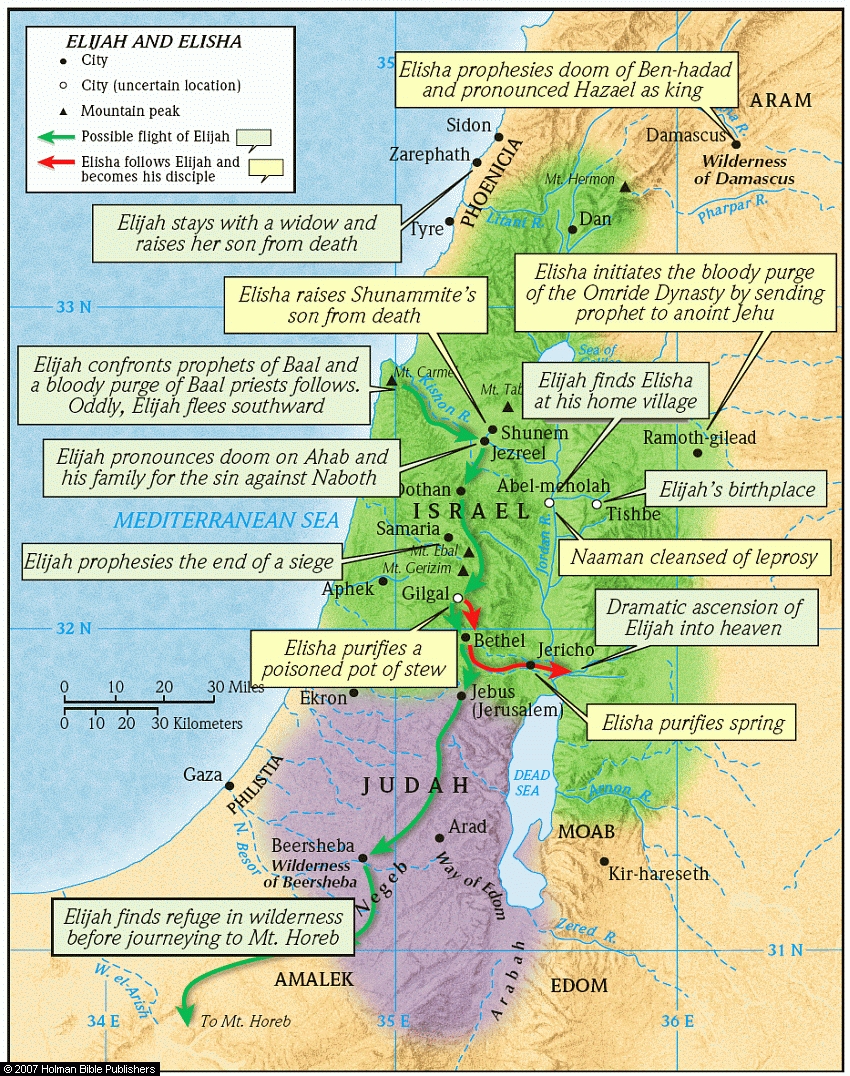
Let’s discuss these two verses because there’s a lot in them.  First, you’ll notice, we don’t know this poor widow’s name.  We don’t know who she is.  According to Jewish tradition, many believe that she was actually the wife of the prophet Obadiah.  And if this was the case, then it would be no wonder she was in financial need because Obadiah was known for protecting and providing for 50 other prophets.  So if indeed, it was Obadiah’s wife, he would have taken all the resources he had to meet the needs of other prophets.  It would not be uncommon at all for a prophet’s family to be financially struggling because they would spend the majority of their lives on the run, trying to survive and so it was very difficult to make ends meet and now that he’s dead, she doesn’t have much.

We’ve got a widow, she’s just lost her husband, she’s got little chance at meaningful employment because in this culture, women were mostly unemployable So she’s in a really devastating place.  She’s lost her husband.  And now, the creditor is coming after her two sons because the law said if you can’t pay your debts, they can take your sons as slaves, and they will be slaves until they’re released in the year of jubilee.  It doesn’t get any worse than this.  Humanly speaking, she has no hope whatsoever.  She’s lost her husband, she can’t pay her bills, and now she’s going to lose her sons.  And that’s something I always try to remember when I face what I call life’s smaller problems. It’s amazing how riled up I can get about things that are really not a big deal.  And yet it happens all the time.

For example, if you get really riled up because the G.P.S. on your phone took you to the wrong place, that’s an entry level problem.  If you’re at the restaurant and you’re just devastated because they put too much goat cheese on your salad. That is an entry level problem.  If you’re really devastated because you only got seven likes on your most recent self-y on Instagram; it’s an entry level problem.

This woman is in significant need and she expresses her need to the prophet, and what does the prophet do?  Let’s see what he doesn’t do.  He doesn’t say, “Oh, that’s a bad problem.  It stinks to be you!”  He doesn’t blow her off.  He doesn’t say, “Oh, that’s bad.  I’ll be thinking about you.”  It’s always funny to me when people say that.  If someone’s hurting, don’t tell them, “you’ll be thinking about them.”   Do something significant.

And that’s exactly what he does.  He makes himself available to her and you see this in verse 2 of 2nd Kings 4. Elisha replied to her, “How can I help you?”  Ask that question.  Anytime there is a need, even if we can’t directly meet the need, we may know someone who can.

Then he says to her something that is very profound, he respects her dignity and says, “Tell me what do you have in your house?”  In other words, he doesn’t say, “I’m here with all the answers,” but he respects her dignity and says, “Let’s start with what you have and let God meet your needs through what you have.”  She replies, “Your servant has nothing there at all.”  Isn’t it interesting that when you’re hurting and when you’re lacking, all you can see is what you don’t have and you miss all the blessings that you do have?

When we get down and we’re depressed, and we’re hurting, we get consumed with what we don’t have. “I don’t have enough money so I can never be happy.”  “I don’t have a spouse so I can’t really have a meaningful life just now.”  I’ve heard people say, “My house isn’t nice enough so we can’t host a Growth Group,” because everybody knows the Spirit of God cannot move unless it moves on top of granite kitchen countertops!    “I don’t have what I want so life doesn’t matter.”

It’s interesting how when you’re in need, all you focus on is what you don’t have.  And this is exactly where this poor woman was.  She lost everything and all she could see was her lack.  I asked the question, “What do you do when you don’t have much?”

  • Stop waiting for what you want and start working with what you have!

2nd Kings 4:2, she says this:  He says, “What do you have in your house?”  She says, “Your servant has nothing there at all except” what?   She said, Except a small jar of olive oil.”  “I don’t have anything there at all.  Oh yeah, except this one little thing.”  Stop waiting for what you want and start working with what you have.

What good is a small jar of olive oil?  Olive oil was incredibly valuable because it had lots of important uses.  Oil was used in cooking, to help lamps burn, it was used as moisturizer because you couldn’t go to Bath and Body Works.  It was used to help keep leather pliable, it was used to keep iron from rusting, it was used as an offering to God, it was used to help anoint people in religious services.  It was very valuable but she didn’t have a lot; she only had a little.

I’m so thankful that we serve a God who specializes in doing a lot with a little!  We serve a God who is absolutely capable of doing a lot with a little.  All through scripture, you’ll see it again and again.

In the New Testament whenever Jesus had taught to thousands of people, and at the end of the lesson, everybody’s hungry, and the disciples say, “Who’s going to feed these thousands of people?”  And everybody goes, “I don’t have any food.”  And a little boy came up and could have said, “I don’t have a lot but do I have a little.”  And Jesus took what he had and said, “All I have is five loaves and two fishes.”

And in the hands of the Son of God, a little bit became a lot and they fed the thousands and even had 12 basketfuls left over because we serve a God who can do a lot with a little.

In the Old Testament when a whole army was afraid of the Philistines because of one man, Goliath, who stood them down, guess who God used?  A little shepherd boy with a little bit of faith and a little stone who said, “Who are you to come against the armies of my living God?  Everyone thinks you’re too big to beat.  I think you’re too big to miss.  Somebody duck, I’m taking this guy down.”  And God used a little boy with a little faith and a little stone to take the big giant down.

And in the New Testament, Jesus said if you just have a little bit faith, not a lot. Some of you say, “I’m low on faith and all I have is a little.”  We serve a God who can do a lot with a little.  If you just have the faith of a mustard seed, you can say to this mountain, “Be removed and cast into the sea,” and you will have what you ask for.  If you just have a little bit of faith, we serve a God who can do a lot with a little.

Elisha says, “What do you have in your house?” God asked Moses one time, “what do you have in your hand?”  What’s in your house?  What’s in your house?  Notice God never said, “What do you want,” or “what do you need,” but “what do you have.”  Let’s stop waiting for what we want and start working with what you have because God has given you everything you need to do everything he wants you to do.

I learned this principal in the early years of our church when what I wanted was a bigger plot of land.  There were 25 acres for sale here by the VFW, but we could only afford 10 which is what we have in Leander.  I obsessed over the other 15.  I put what’s called a “first right of refusal in the contract” that if anyone else was going to try to buy the other 15 acres, we could make an offer too. I prayer walked, put this on our prayer list, talked about it in our early membership classes.  In 2001, I had a dream for a huge footprint in one place, to build a large complex believing God had big plans for us here.  Today, that has changed!  We now have 24 acres… but it’s in two different communities!  Now I understand that 24 acres in one place is much different than 24 acres in 2 places!  We can do ministry to thousands more people in 2 locations than one.   We are placed in  strategic places to do big things for God in multiple communities!

So many people say: we cannot because we don’t.  And I believe a person with faith says, “We can because we don’t.”  Because the limitations are often inside that gives us innovation.  If we had what we thought needed, God wouldn’t have been able to show us what we needed to see.

And that’s exactly what God did.  When the pastor friend of mine in Jarrell was moving to a different line of work and he asked us to help, we couldn’t give them money, but what we had we could give.  We had several teachers we could rotate over, we had message series planned and programs printed.  We just took what we had, which turned out to be what they needed most and it worked!    I am so thankful to my God that he taught us to do a lot with a little instead of giving me what I wanted.

I don’t know how this will speak to you, but some of you, you’re going to look at what you have and say, “I wish I had something else so I could do something more significant.”  And God’s going to say, “no no.  Stop waiting for what you want and start working with what you have.  “But I’m not a good up-front person.  I’m not that charismatic.”  I’m good behind the scenes but I’m not that good up front.”  Jesus said, “It’s the behind-the-scenes people that are the most important.”  Jesus said, “The servant is the greatest of all.”  So stop wanting something else and do the important assignment God has given you to do.  Is the person on stage more important than the person in a booth with all the power, sound and lights?  NO! Is the person who’s visible more important than a person a kid’s classroom? No!

There may be a guy in here who says, “Man, I’m not a good provider.  I don’t make a six-figure income; I wish I did.”  And God would say to you, “Hey, you’re home six nights a week with your children.  That’s important!”  Stop waiting for what you want and start working with what you have.

Guys, I’ve seen people take a six figure job only to be out of town all the time, working late and missing the most important things of all their family!  The most important thing you do may not be what you make but what impact you have on your family with your presence! When you’re a man of God to your wife and children, that is huge success!

The second thought that we learn from this awesome story is this:  We’re going to:

  • Offer God what we have and trust him to give us what we need.

Watch this come true in 2nd Kings 4:3 through 7. Elisha said, “Go around and ask all your neighbors for empty jars.”   Don’t ask for just a few.  Then go inside and shut the door behind you and your sons, pour oil into all the jars and as each is filled, put it to one side.”  Now what’s going on here?  Go get a bunch of jars.  All you have is a little bit of oil, but if you’ll trust God and pour out what you have, then put that jar aside, God will refill your jar and give you what you need, and you can keep on pouring.

When she had the faith to offer what she had, God would give her what she needed.  And that’s exactly what happened in verse 5:  “She left him and shut the door behind her and her sons, then they brought the jars to her,” and as they kept bringing on jars, what did she do?  The bible says she kept pouring.  “When all the jars were full, she said to her son, ‘Bring me another one.’  But he replied, ‘There is not a jar left.’  Then the oil stopped flowing.

As long as there was an empty jar, God would fill it but when there were no more jars, the oil stopped flowing. She went and told the man of God and he said — here’s the good news — “go sell the oil and pay your debts.  Your debt has been paid for.  You and your sons can live on what is left.”  When she offered what little she had, God gave her everything she needed.  As long as there was an empty jar, the oil kept flowing.

This is a ridiculous request, to ask her to empty out everything she has and to trust God to provide what she really needed but that is how our God works.  When we show him our faith, we get to see his faithfulness.

Again, when that pastor friend of mine in Jarrell years ago, said to me, their church could possibly close.  “Our greatest need is money. We don’t have money to pay a pastor, and if we don’t get a pastor we won’t have money to pay our bills can you help?”  They had great facilities in a great location! They had a great team of leaders and volunteers! We didn’t have much money but what we do have is have was available teachers to rotate, message series and programs which as we offered and it kept people there and kept new people coming and money came in to meet their needs. They didn’t die,  in fact they are thriving! We didn’t provide money but provided what we had, and they used what they had and God is blessing us both!

And I don’t know how that will speak to you but at some point, when you take what you have, and stop waiting for what you want, but you offer what you have, God will do something special.  He provides. And it may not be how you think. And he said, “Go get a bunch of jars.”  Notice he didn’t say what color, he didn’t say what size, he didn’t say what shape.  What did he say?  The only requirement is that the jars must be what? Empty.  It could have been any jar.  It could have been for milk or it could have been a butter tub because God can use any shape, size or color.  He just needs it to be empty.

How does this apply to you?  2nd Corinthians 4:7 in the New Testament says this:  It says, “But we have this treasure which is Christ”.  “In” what?  “In jars of clay.” What is it that referring to?  Do you know what that is? That’s our bodies; that’s what we are.  We’re clay pots.   That’s what we are.  “We have this treasure in jars of clay.”  What is God looking for?  God is looking for a few empty jars.  When we empty ourselves of self, when we empty ourselves of pride, when we empty ourselves of greed, when we empty ourselves of our own agendas, and come to God totally empty, then he fills us with oil which has always been a symbol of the Holy Spirit.  And suddenly you realize when you don’t have outwardly what you wanted, it is God that you truly needed.  And suddenly He is enough; He is sufficient in every single way.

When you are weak, He is your strength. When you’re hurting, he is your comforter.  When you’re lost, he is your guide, when you’re hungry, he is the bread of life which nourishes you.  When you are thirsty, he is living water.  When your life is unstable, he is the rock that does not move.

www.Upwards.Church

Message Audio/Video and Outline: https://upwards.church/leander-campus/watch-now-message-videos

Watch Messages: YouTube-Upwards Church

Facebook: Upwards Church

Read Along Daily Bible Reading: YouVersion (https://www.bible.com/organizations/370f8a6e-16bc-464f-8c43-0b7623fd2952)

Posted in Elijah & Elisha - A Tale of Two Prophets | Tagged , , , , , , , , , | Leave a comment

Seeking Help from God – 2 Kings 5

No matter who we are; or how strong, successful or wealthy, we all need help from God.

Do you have a need that only God can meet?  The healing of Naaman, the Leper is not just a story of the healing of a man from one of the most dreaded diseases of ancient times, but it is a story of salvation, one which illustrates the spiritual salvation we find only in Jesus Christ.  In Naaman’s healing there are a variety of people who play different parts; some good and vital to the salvation and healing of Naaman and others not so good. All illustrate the various good and evil persuasions of people that either aid or hinder bringing men to Christ.

In our passage, we are introduced to a commander of the Syrian army whose name is Naaman. Naaman was a great man and a valiant warrior.  Why he was highly regarded? Verse 1 tells us that “the Lord had given him victory over Israel.” God is against Israel at this point in Israel’s history because of their rebellion.  The Lord is blessing a Syrian commander who has been attacking and fighting against Israel. God is not blessing Israel but blessing Syria. God is not giving Israel victory but is giving Syria victory. Naaman is the perfect military hero for Syria, except he has a problem. Naaman’s problem is that he has leprosy.

  • No matter who we are, we get sick.

Verse 2 describes what the Syrians are doing. As they attack Israel, they are capturing various people. On one of those raids, they carried off a young girl from Israel who was then put into service/slavery to work for Naaman’s wife. Now this is an incredible young girl.  She is aged 10-12, but not bitter, angry or resentful, but desires the best for her captor.  She has great faith, spiritual understanding and shares a life changing nugget of information!  She tells Naaman’s wife that if Naaman could be with the prophet in Samaria, he could be cured. The servant girl is referring to Elisha. Not only does this young girl know about what Elisha can do, but she tells this Gentile, this Syrian, this invader of their land, this captor about this prophet who could heal Naaman.  Wow, no matter who we are or where we are we can be used by God in mighty ways.  I can’t put in words how impressed I am with this young girl.  May we all like her and bloom where we are planted, bring blessing and encouragement to those around us, not anger and negativity.

Naaman then goes to the king of Syria asking for permission to go find this prophet who can heal him. So Naaman sets out to find the prophet. He is bringing with him 10 talents of silver, 6000 shekels of gold, and 10 sets of clothing. This is about 750 pounds of silver and 150 pounds of gold. In terms of our money, this would be worth about 5.5 million dollars! It is an extremely excessive amount! The point is that Naaman is going to pay a big price so that he can be healed of his leprosy.

He also takes a letter with him from the king of Syria to give to the king of Israel. The letter said that the king of Syria has sent Naaman so that you will cure him of his leprosy. When Naaman arrives to the king of Israel with this letter, the king of Israel tears his robes over the impossibility of what is being asked. Listen to what he says in verse 7Am I God, to kill and to make alive, that this man sends word to me to cure a man of his leprosy? Only consider, and see how he is seeking a quarrel with me. The king’s point is that only God can do what is being asked. Therefore, the king of Syria must be picking a fight with me because no one can do what he asks.

Elisha hears that the king of Israel is outraged and sends a message to the king. Why are you upset? Send him to me so that he will know that there is a true prophet in Israel! Elisha seems to say that you had no reason to freak out. You know that I am here. So Naaman goes to Elisha’s house. Please notice how Naaman goes to Elisha’s house: with his horses and chariots. He is coming to Elisha showing how important he is with his horses and chariots. So he comes up to Elisha’s door with all his horses and chariots. But Elisha sends a messenger to Naaman instead of going outside himself. He sends a messenger with a simple message. Go wash yourself seven times in the Jordan River and your flesh will be restored and you will be clean.

This is good news. All Naaman needs to do to be healed and cleansed is to wash in the Jordan River seven times. But look at Naaman’s reaction in verse 11. Naaman went away angry. Why is Naaman angry? Is this not the answer to his prayers? No, he is angry. Look at what he says. He thought that Elisha would come out to meet him and call on the name of the Lord his God, wave his hand over the leprosy, and then he would be cured. But that is not what he expected. Elisha did not meet his expectations.

Consider this: . Naaman was told that he could be healed. All that he had to do was wash in the Jordan River seven times. Why was he so mad that he refused to do what the messenger said? Why is he upset about this good news? The reason why is because his own selfish, prideful ideas of how things should be, robbed him of the joy before him. Naaman had in his mind the way he thought his cleansing and healing should go. Because the news did not match his expectation, he does not have joy at the news but is enraged.

  •  Misunderstanding, Frustration and Anger are common.

Could Elisha have come out to greet Naaman? Sure, he could have done that. Could Elisha have waved his hand over the leprosy and made Naaman well? Of course he could have done that. So why did he not do any of these things? Why did Elisha not match Naaman’s expectations? Why did this go the way it did? One thing that we see throughout the scriptures is that God acts in such a way to defy our expectations so that we will not rely on our own wisdom but truly depend on God. Elisha does not match Naaman’s expectations. He does not take his money. He does not even meet him. The point is simple: will you trust the words that are told to you, even when they go against your expectations?

What God is doing by defying our expectations is challenging us to humble ourselves before him. You see that Naaman must humble himself if he is going to accept what Elisha has told him to do through the messenger. Remember that Naaman is an important man in Syria and a valiant man who the Lord has been using to give victory against Israel. He has come with millions of dollars to buy this healing. This is the moment where Naaman is being challenged to humble himself and accept what he is being told to do for cleansing. You can see that Naaman wrestles with this. Why can I just wash in the rivers of Damascus? They are certainly much better than all the rivers in Israel. His servants also challenge him in regards to this as well. They tell him in verse 13 that if a great word had been told to you, you would have done it. But since you were told to do a simple thing, you reject it? What sense does that make? Just go wash in the Jordan River seven times!

It is interesting how we have limited the power of God because we do not see God working through some great thing. If God heals through medicine, we think it is the medicine rather than God. If God transform our lives or changes our condition, we will neglect to consider that God did it but that it was us or a series of fortunate events. Yet God is telling us that he works through the mundane. He does not have to do a big show. In fact, he does not do a big show to see if you will trust him.

God does not feel compelled to meet our expectations of him. God goes out of his way to challenge our expectations. Saving the world by having Jesus killed challenges our expectations. The apostle Paul described this as the foolishness of the cross (1 Corinthians 1:18). God acts to destroy the wisdom of the wise (1 Corinthians 1:19). So we begin by realizing we need to reject our expectations of God. God has no reason to meet our expectations. God does not do things our way. His ways are higher and greater than ours. This is what we should expect of God. We should expect him to do things differently than us because he is not human. He is the Lord Almighty.

But once Naaman got past his anger, frustration and misunderstandings, then he could be healed. He goes and dips in the Jordan River seven times. When he does as the man of God told him, his flesh was restored and he was clean.

Now I think it is important to ask this question. If Naaman decided to dip himself in the waters in Syria, would he have been healed? If Naaman decided to dip himself in a different river in Israel, would he have been healed? Could Naaman have said that he believed in Elisha’s word but then not do what he said and really have believed? If Naaman had dipped himself in the Jordan River three times, would he have been healed? Why not? What does it really matter if Naaman does exactly what Elisha said?

It matters because it is the only way to show his faith in God’s declaration. It matters because it is the only way to show that are willing to humble yourself and do what God says. You might say that it does not matter where he dipped or how many times. Water is water, right? But it matters that we do things the way God says because God wants us to reject our expectations and our logic and simply follow what we are told to do.

We cannot come to the word of God and reject what he says and think we are going to be cleansed before him. We cannot skip repentance and think that we are going to be clean before God. We cannot skip confession Jesus with our hearts and our lips and still be saved.  We are showing that we reject our expectations and logic and are willing to follow exactly what the Lord has told us to do.

But let us go further with this. We cannot bring our expectations to the laws of God. We cannot come to the Lord’s teaching about sexual purity, the Lord’s condemnation of sexual immorality, adultery, and divorce and think that we are standing clean before God. We cannot bring our expectations about how we treat other people, doing what we want to do and think that we are standing clean before God. God told us that we have to love our neighbors as ourselves. God told us that if we love him we will keep his commands. We cannot bring our expectations of how we want to live life, defy what God has said to do, and think that we are standing clean before God. God is challenging our expectations. Holding on to your expectations on what you think life should be like or doing what you want to do or what you think God should be like will cause you to miss the joy of cleansing and healing in Jesus.

  • God heals our greatest sickness, sin.

Verse 14, beautifully illustrates what Christ does for us:  “cleansed, restored, made new” The simplicity of the gospel message of salvation in Jesus–that salvation is by faith alone in Christ alone (Ephesians 2:8-10). The invitation of the gospel is “come, purchase without money and without price . . .” (Isaiah 55:1). And how do you do that? By faith. The way of faith is the way of humiliation and repudiation of self worth, human ability, or religious works, which then casts us on the grace of God (Rev. 21:6; 22:1; Rom. 4:1-5; Eph. 2:8-9; Tit. 3:4-5). Faith is the one thing we can do without doing anything. Faith is the recognition of God’s ability.

Look at verses 17-18. Naaman understood that this cleansing meant that he was now devoted to the Lord and to no other gods. He declares that he will only offer sacrifices to the Lord and not to the other gods. Even when the king of Syria compels him to enter the house of Rimmon with him, he asks for pardon as he enters while the king worships this false god. Naaman understood that this cleansing was the transforming moment for his life. He must give himself to the Lord because he has been healed and made whole. The apostle Paul says the same thing in Romans 6:1-4 that you are now walking a new life once God has cleansed you. You have a new life. You are a new creation. You are now clean. You have a new direction. You have been moved from death to life. Honor the Lord who has saved you. Humble yourself before the Lord, believe his word, and do as he tells you to do. Reject your ideas of God and simply follow what he says. 

What are some of the key lessons we can glean from this passage?

(1) God is constantly at work to lead people to Himself, no matter how dark their condition.

(2) God uses any committed believer, no matter how ordinary or insignificant he may be. How? Because of the mighty God who indwells us. This makes us significant as His instruments of light.

(3) The grace of God cannot be bought with silver and gold or power or position. We must come to God in faith and believe His revelation in the Scripture.

(4) Two of the greatest hindrances to experiencing God’s blessing for believers and unbelievers alike are: (a) our pride–Naaman almost lost out because of his pride, and (b) our opinions–Naaman almost lost out because his thinking was contrary to Scripture.

www.Upwards.Church

Message Audio/Video and Outline: https://upwards.church/leander-campus/watch-now-message-videos

Watch Messages: YouTube-Upwards Church

Facebook: Upwards Church

Read Along Daily Bible Reading: YouVersion (https://www.bible.com/organizations/370f8a6e-16bc-464f-8c43-0b7623fd2952)

Sources:
Bible.org/Healing-Naaman-2-Kings-51-19
2 Kings 5 – Great Expectations – Bret Kercheville
Posted in Elijah & Elisha - A Tale of Two Prophets | Tagged , , , , , , , | Leave a comment

Facing Change – Part 2 – 2 Kings 2:1-15

Change or transition is hard, but we can face it bravely with God’s help. The transition in leadership from Elijah to Elisha reminds us to be ready for change, to depend on the Holy Spirit, and to courageously take up the task given us.

2 Kings 2:1-15

Today we look at the transition in leadership from Elijah and Elisha.

These two were similar in names, and also in their spectacular miracles. They performed more miracles than any prophet other than Jesus. Yet, they were quite unique as individuals. Elijah was a loner who preached repentance and brought down evil kings in sensational challenges. Elisha lived among the people and showed a deep concern for the poor and downtrodden.

Today’s scripture points to their transition. We all go through times of transition. Some of us get married, and later lose a spouse to death or divorce. We start a career, we retire. We go back to work in a different field, and we retire from that. We move from house to house, from job to job, from one level of care to another. We make friends and we lose friends. And most profoundly, we’re born and we die.

Every one of us faces transitions in life. So I wonder, can we learn anything from Elijah and Elisha about transitioning well? I think so. I want to encourage us to…

  1. Be ready for change.

This may sound obvious, but you would be surprised how often we ignore them, pretending they’re not happening. Change is hard. We don’t like it when friends move away. We don’t like saying good-bye. We have trouble facing a terminal illness. Everyone believes in heaven, but no one wants to go, at least not yet.

Elijah and Elisha faced head-on their great transition, a change of command ceremony for the lead prophet of Israel. Elijah notably went to each of the seminaries to personally say good-bye. That’s what these or schools of prophets were. They were like our modern-day seminaries. That’s what Elijah was visiting when he traveled to Gilgal and Bethel and Jericho. He was saying good-bye to all of his “sons” in the faith.

As Elisha contemplated the loss of his great mentor and friend, he was understandably a little raw in emotion. You can see it when he snapped at each group as they asked him if he knew about Elijah’s imminent departure. Change is hard, isn’t it? But the good thing is, Elisha refused to leave Elijah’s side. Elijah offered three times for Elisha to stay behind, and three times Elisha adamantly refused. Elisha wanted every possible moment left with his mentor.

Pay attention to the changes happening around you. Express appreciation to one stepping down from leadership. Build up the one taking on new tasks. Be sure to say good-bye to friends who move away. (I’m reminded of Paul’s tearful good-bye on the seashore with the elders of Ephesus, recorded in Acts 20.) Don’t ignore the changes happening; embrace them, even when they hurt, because there is love behind the hurt. And #2,

  1. Depend on the Holy Spirit. 

In verse 9, Elijah asked Elisha, “Tell me, what can I do for you before I am taken from you?” Elisha replied, “Let me inherit a double portion of your spirit.” What was he asking here? Was he selfishly wanting to upstage his master? I don’t think so. Elisha was using the language of Hebrew inheritance law. The firstborn always received a double portion over all the other kids. Elisha was basically saying, “I want to be your firstborn. If I’m going to be able to step into your shoes, I’m going to need twice as much of your spirit as anyone else would need!”

After all, who could follow Elijah? He was the man! He was the spiritual leader of Israel during a time when kings were corrupt and godless. Elijah carried the country through some very dark times. And now, to follow in those footsteps? A daunting task indeed!

Elisha knew he would need the very power of God, a double helping of the same spirit at work in Elijah’s life, the Holy Spirit himself. Perhaps you’ve been there, when you’ve been desperate for God’s strength to accomplish a task. It’s a scary place to be, but it’s also a great place to build your faith. You know you need God to see you through that health challenge. You need God’s Spirit to lead your home through turbulent times. You need God’s presence to make peace in your family. You need God’s strength to risk ministering in new ways.  And God will come through, as you depend on him.

Elijah was wise enough to say that was not his decision to make. But he told Elisha, “If you see me depart, then you know it has been granted to you.” And Elisha saw it all! One moment he was walking with his mentor and friend, and the next, he saw his friend carted off to heaven in a whirlwind by a chariot and horses of fire. Elijah became the second man after Enoch to go to heaven without having to die first. Not a bad gig! Elisha was so moved that he cried out in deep respect, in verse 12, “My father! My father! The chariots and horsemen of Israel!”

What happens next bring us to our third point, and that is, to…

  1. Take up the task given you.

Since Elisha had been able to see Elijah’s departure, he knew that the Lord had answered his request. Verses 13 and 14 record what happened next: “Elisha then picked up Elijah’s cloak that had fallen from him and went back and stood on the bank of the Jordan. He took the cloak that had fallen from Elijah and struck the water with it. ‘Where now is the Lord, the God of Elijah?’ he asked. When he struck the water, it divided to the right and to the left, and he crossed over.”

Earlier Elijah had struck the water and it parted; now Elisha, his successor, struck the water, and again it parted. God confirmed Elisha’s leadership publicly much as he did for Joshua so many years before. Remember how Moses had parted the Red Sea? After his death, God enabled his successor Joshua to part the Jordan River in the same way, as the people first entered the Promised Land. God always confirms his new leader.

Yet, Elisha had a role here, too. He had to reach down and pick up his mentor’s cloak. He had to strike the water in front of all the prophets, not knowing for sure until that moment what would happen. Elisha obeyed the prompting of God and God rewarded him publicly, stating in effect, “This is my man now. Follow him!”

When God gives you a task, take it up. Do it with all your heart, and watch God honor you for your obedience. Sure, you may be new to your responsibilities. Maybe it was never done the way you’re going to do it. But people will follow you, as you are obedient to the cause.  Many of us are now homeschoolers, house church pastors, having to stretch income, forced to be creative at home, learning new recipes and balancing new stressors in changing world.  God says, “you’ve got this!”  I have placed you on the planet at “such a time as this.!”

God did bless Elisha. Remember how he asked for a double portion of God’s Spirit? Do you know that scripture records exactly twice as many miracles attributed to him as to Elijah? And at his death, the king of Israel would shout out: “My father! My father! The chariots and horsemen of Israel!” (2 Kings 13:14). Do these words sound familiar? The very words Elisha said for his mentor and friend would later be said at his own death. The apple did not fall far from the tree.

May each of us be ready for the changes taking place around us, depend on the Holy Spirit and courageously take up the tasks given us!

Darrell

www.Upwards.Church

Message Audio/Video and Outline: https://upwards.church/leander-campus/watch-now-message-videos

Watch Messages: YouTube-Upwards Church

Facebook: Upwards Church

Read Along Daily Bible Reading: YouVersion (https://www.bible.com/organizations/370f8a6e-16bc-464f-8c43-0b7623fd2952)

Sources:
Warren W. Wiersbe, The Bible Exposition Commentary – History, (Colorado Springs, CO: Victor, 2003), WORDsearch CROSS e-book, 481.
Life Application Study Bible, (Wheaton, IL: Tyndale, 1988), WORDsearch CROSS e-book, 550.
Posted in Elijah & Elisha - A Tale of Two Prophets | Tagged , , , , , , , , , , , , , , | Leave a comment