
Numbers 10-11:3 – On the Road Again!

Those who travel, move, or face new challenges know what it is to be uprooted. Life is full of changes, and few things remain stable. The Israelites were constantly moving through the wilderness. They were able to handle change only because God’s presence in the Tabernacle was always with them. The portable Tabernacle signified God and his people moving together. For us, stability does not mean lack of change, but moving with God in every circumstance.

It has been two years since Israel left Egypt. Having received God’s travel instructions through Moses, Israel set out from Mount Sinai into the wilderness of Paran on their way toward the Promised Land.

Now it came to pass on the twentieth day of the second month, in the second year, that the cloud was taken up,” there’s that cloud going up that was mentioned in the last post, “from the tabernacle of the Testimony. And the children of Israel set out from the Wilderness of Sinai on their journeys; then the cloud settled down in the Wilderness of Paran. So they started out for the first time according to the command of the Lord by the hand of Moses.”  We’re moving into phase two of this book from organization to disorganization.
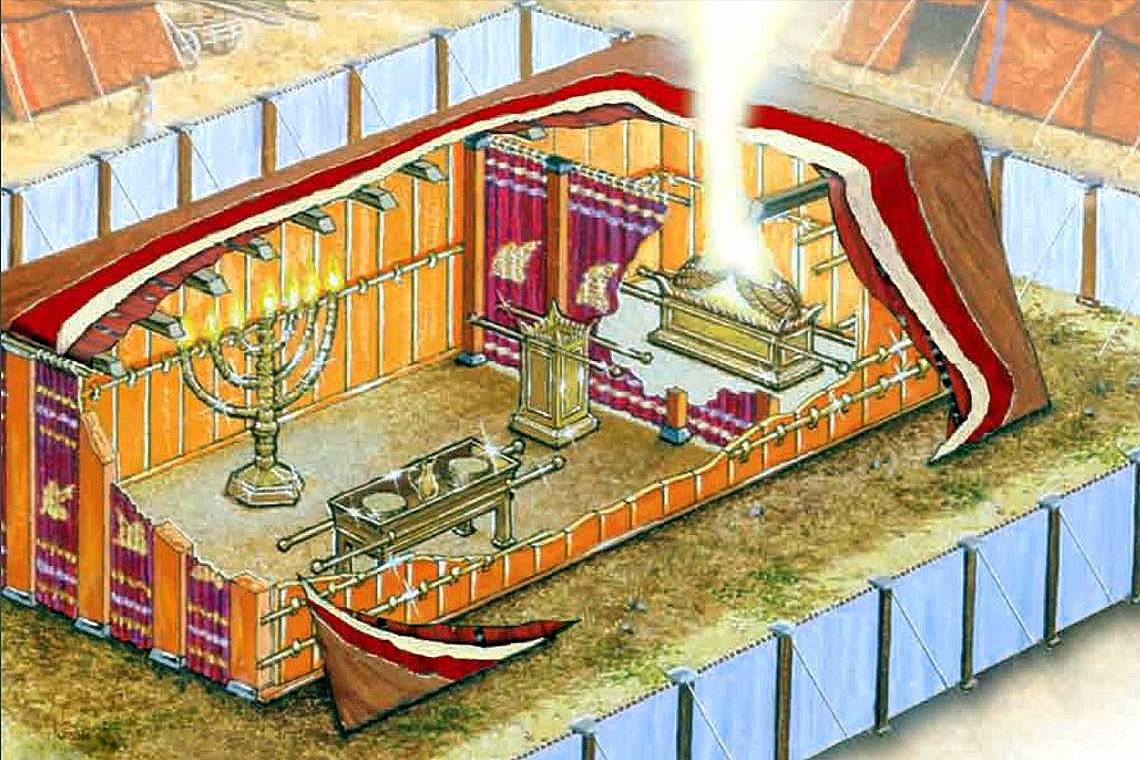
And so it was, whenever the ark set out, that Moses said,” listen to Moses’ battle cry,” ‘Rise up, O Lord! Let your enemies be scattered.’ “Remember the Lord said, “You blow that trumpet and I’m going to hear it, and I’m going to dispel your enemies.” So here’s Moses’ battle cry, “‘Rise up, O Lord! Let your enemies be scattered; let those who hate you flee before you.’ And when it rested, he said: ‘Return, O Lord, to the many thousands of Israel.’ “They start their journey, they only go three days so far, only three days.

Here’s what I love about Moses: he acknowledges that he’s going into unfamiliar territory laden with adversaries who will be his enemies and fight against him. But the Lord has given him a promise and he’s marching into the land with faith. Not going, “Lions and tigers and bears, oh my!” but, “Rise up O Lord! Let your enemies be scattered.”

He saw his future through the eyes of faith upon a promise that God had given him. May I suggest to you that when you face difficulties, battles, the future that is unknown, wilderness areas, parched deserts, you’re feeling spiritually vanquished or malnourished, that you make statements like this of faith based upon God’s promises to you. When you bring God into the picture, it changes the picture. You take God out of the picture, it’s a bleak desert. Put God into the picture—refreshment, victory, joy, because he promised it.

Chapter 11. Chapter 11 is one of the most important chapters in the book of Numbers, because there’s a change in the wind. Everything has been decent and in order in the march for three days. It doesn’t last long,  there’s going to be forty years of havoc after three days of order. The people are going to start to complain as people often do. Keep in mind there’s probably a couple million people.

Ten people in a room have ten different ways of doing one thing. Two million people in a room—how would you like to be the leader of that? Growth, physical numeric growth can be a blessing. Gosh, you look at this and you go, “Wow! This is awesome, a few million people gathered around the tabernacle. Hallelujah!” Yeah, but just zoom in and live among them for a while and listen to their conversations, you’ll get a different picture.

For example, in the book of Acts, chapter 6? It says, “And when the number of the disciples began to multiply, a murmuring arose,” from one group against another group.

It’s great to see growth and it’s great when the church grows, but with growth comes adversity, issues, problems, complaints. As our church grows, we have problems too.

And with growth comes a perceived lack of concern. At one time there were one hundred twenty people in the upper room in Jerusalem. Now there’s multitudes, it says, growing in the early church. Don’t you think there were people from that original room who were saying things like, “Oh, man, do you remember the upper room? Now that’s where the Spirit of Lord dwelt. Do you remember the songs we sang in the upper room? And do you remember those days? Peter and John, they had time for us then. Now they’re, like, studying the Bible all the time and praying all the time and. . .”

In fact, it was in this chapter where they said, “We must not forsake the word of God in order to serve tables.” So you have a lot of people, they’re God’s people, but they’re people and they start complaining.

Look what happens. “Now when the people complained, it displeased the Lord,” uh-oh, “for the Lord heard it,” as he always does, “and his anger was aroused. And so the fire of the Lord burned among them, and consumed some in the outskirts of the camp.” That’s why you always want to sit close.
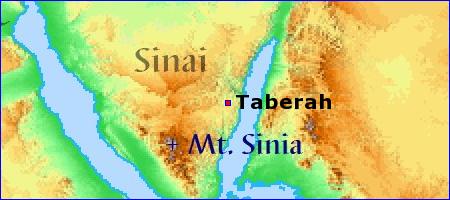
Why the outskirts? We’re not told. Maybe there were more complaints by those people who were further away from the action in the tabernacle don’t know, but it affected the population. The Lord began judging the outskirts and then moving inward. “The people cried out to Moses. Moses prayed to the Lord, the fire was quenched. So he called the name of the place Taberah, because the fire of the Lord had burned among them.” So immediately, without a whole a lot of commentary, you can understand and see plainly how God looks at complaining among his people.

Whenever the Bible says that God hates something, you want to notice what that is.  Because whatever that is, I don’t want to do those things. There’s a little list of those things in Proverbs, chapter 6. It says, “There are six things the Lord hates, yea, seven are an abomination to him: a proud look, a lying tongue, hands that shed innocent blood, a heart that is given to evil schemes, feet that are swift to do evil, a false witness who speaks lies, and,” listen to the last, “he who sows discord among the brethren.” God hates that.

There’s not a whole lot of explanation. The people complained, God didn’t like that, he heard it, and immediately started judging it.  In the next post we will look why complaining is problematic.

There are some people as soon as you begin to engage them many a conversation it doesn’t take long. They’re so predisposed to negativity that within just a few moments they’re already trash talking.  It’s a bad cycle to get into.

There was a lady that walked up to John Wesley the evangelist, and she said, “I believe I’ve discovered what my talent is, my talent, I have a talent,” she said, “for just speaking my mind.” The evangelist said in his classic, wry manner, “I believe that is one talent the Lord wouldn’t mind if you buried.” These people were just speaking their mind, they complained, and so God took action.

In the next post we will look at more reasons we should Avoid Complaining.

Darrell

www.Upwards.Church

Message Audio/Video and Outline: https://upwards.church/leander-campus/watch-now-message-videos

Watch Messages: YouTube-Upwards Church

Facebook: Upwards Church

Read Along Daily Bible Reading: You Version

Sources: Life Application Bible Notes (Tyndale, 2007), 216.

Connect Ministries, Numbers 10-11, 2014.

Posted in Numbers - Preparation for the Promise | Tagged , , , , , , , , , | Leave a comment

Numbers 1-9 Overview

As the book of Numbers opens, the Israelites had been camped near Mount Sinai for more than a year. There they had received all the laws and regulations recorded in the book of Leviticus. They had been transformed into a new nation and equipped for their task. At this time, they were ready to move out and receive their land. In preparation, Moses and Aaron were told to number all the men who were able to serve in the army. This book is named for this census, or numbering, of the people.

Chapter 1 – Census or Numbering 

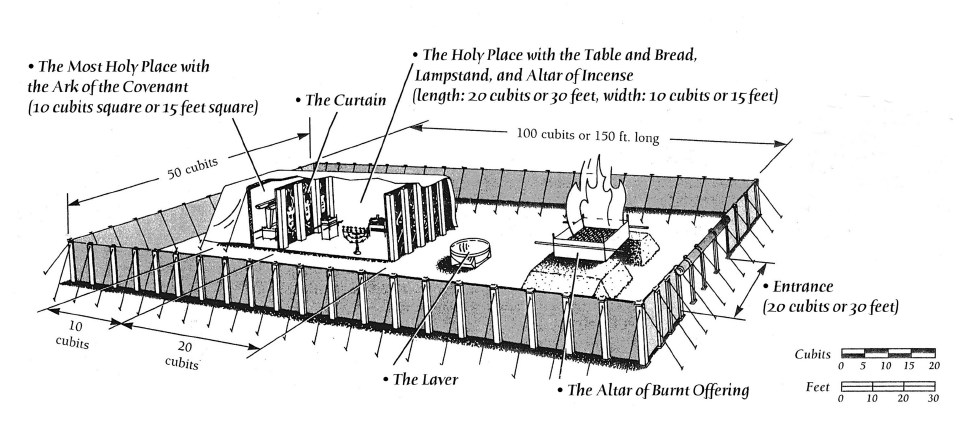
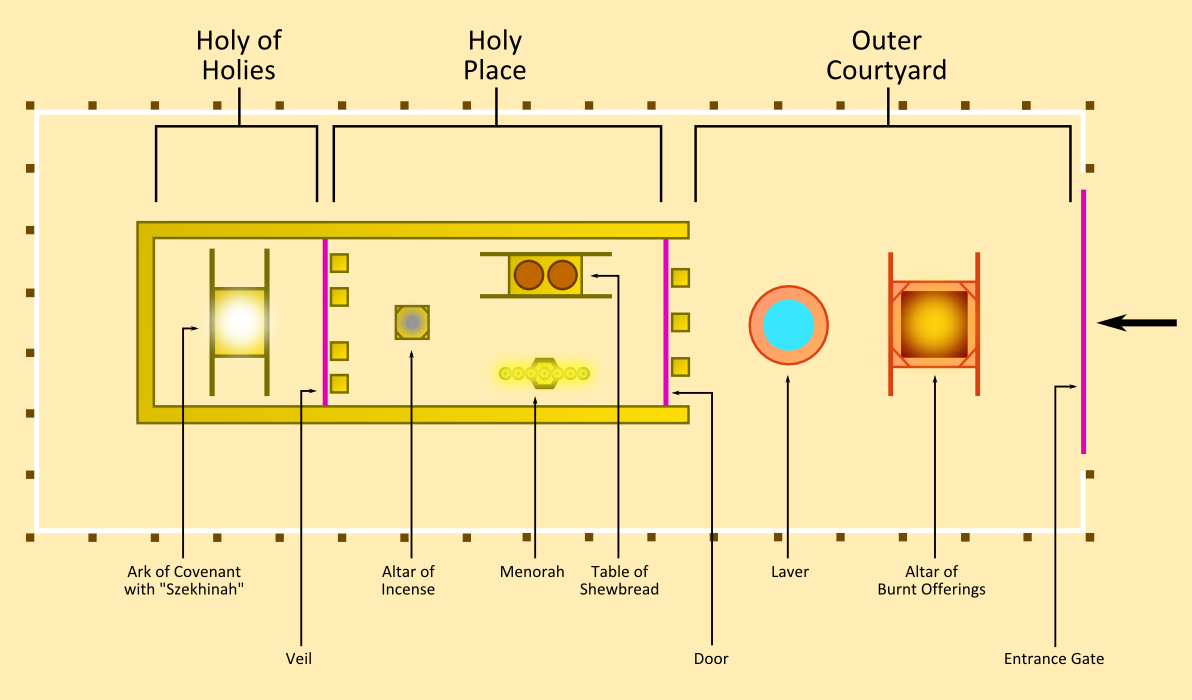
1:1 The Tabernacle contained the sanctuary (or Holy Place) in one part, and the Most Holy Place with the Ark in another part. These two parts were separated by a curtain. God revealed himself to Moses in the Most Holy Place.
Exodus 33:7 mentions the “Tent of Meeting” as the place where Moses met with God before the Tabernacle was constructed. Many believe that the Tent of Meeting in Exodus served the same function as the Tabernacle described here.
1:2–15 Taking a census was long and tedious, but it was an important task. The fighting men had to be counted to determine Israel’s military strength before entering the Promised Land. In addition, the tribes had to be organized to determine the amount of land each would need, as well as to provide genealogical records. Without such a census, the task of conquering and organizing the Promised Land would have been more difficult. Whenever we are at a crossroads, it is important to take inventory of our resources. We will serve more effectively if, before plunging in, we set aside time to take a “census” of all we have—possessions, relationships, spiritual condition, time, goals.
1:20–46 If there were 603,550 men, not counting the Levites or women and children, the total population must have numbered more than two million Israelites. How could such a large population grow from Jacob’s family of 70 who moved down to Egypt? The book of Exodus tells us that the Israelites who descended from Jacob’s family “multiplied so greatly that they became extremely powerful and filled the land” (Exodus 1:7). Because they remained in Egypt more than 400 years, they had plenty of time to grow into a large group of people. After leaving Egypt, they were able to survive in the wilderness because God miraculously provided the food and water they needed.

Chapter 2 – Organizing the Tribes

2:2 The nation of Israel was organized according to tribes for several reasons.

  1.  It was an effective way to manage and govern a large group.
  2. It made dividing the Promised Land easier.
  3. It was part of their culture and heritage (people were not known by a last name, but by their family, clan, and tribe).
  4. It made it easier to keep detailed genealogies, and genealogies were the only way to prove membership in God’s chosen nation.
  5. It made travel much more efficient. The people followed the tribe’s standard (a kind of flag) and thus stayed together and kept from getting lost.

2:34 This must have been one of the biggest campsites the world has ever seen! It would have taken about 12 square miles to set up tents for just the 600,000 fighting men—not to mention the women and children. Moses must have had a difficult time managing such a group. In the early stages of the journey and at Mount Sinai, the people were generally obedient to both God and Moses. But when the people left Mount Sinai and traveled across the rugged wilderness, they began to complain, grumble, and disobey. Soon problems erupted, and Moses could no longer effectively manage the Israelites. The books of Exodus, Leviticus, and Numbers present a striking contrast between how much we can accomplish when we obey God and how little we can accomplish when we don’t.

Chapter 3 – Levites & the Priesthood

3:4  See Leviticus 10:1, 2 for the story of Nadab and Abihu.
3:5–13 At the time of the first Passover, God instructed every Israelite family to dedicate its firstborn son to him (Exodus 13:2). They were set apart to assist Moses and Aaron in ministering to the people. This was only a temporary measure, however. Here God chose all the men from the tribe of Levi to replace the firstborn sons from every Israelite tribe (3:40–51 and 8:16). These men, called Levites, were set apart to care for the Tabernacle and minister to the people. All the priests had to belong to the tribe of Levi, but not all Levites were priests. The Levites were to be 25 years old before entering service. They probably received five years of on-the-job training before being admitted to full service at age 30.

3:10 Aaron and his descendants were appointed to the priesthood. There is a tremendous contrast between the priesthood of Aaron in the Old Testament and the priesthood of Christ in the New Testament. Aaron and his descendants were the only ones who could carry out the duties of the priests and approach God’s dwelling place. Now that Christ is our High Priest—our intermediary with God—anyone who follows him is also called a priest (1 Peter 2:5, 9). Now all Christians may come into God’s presence without fear because God’s own Son encourages his followers to do so. We can put guilt behind us and experience forgiveness when we have a special relationship with God based on what Christ has done for us.

Chapter 4 – Duties of the Priests

4:2 The Kohathites, Gershonites (4:21), and Merarites (4:29) were families of Levites who were assigned special tasks in Israel’s worship. For the jobs described in this chapter, a Levite had to be between 30 and 50 years old. He was expected to carry out his duties as described here in every detail. In fact, failure to do so would mean death (4:20). This contrasted greatly from the religious practices of the Egyptians who could purchase amulets and potions. Their idols could be handled. The God of the Hebrews was not to be handled or reduced to common elements. He is greater than anything in his creation. Worshiping our holy God must not be taken lightly.
4:27, 28 The Gershonites could receive directions from any of Aaron’s sons, but they were directly responsible to Ithamar only. The lines of authority and accountability were clearly communicated to all. As you function with others in service to God, make sure the lines of authority between you and those you work with are clearly understood. Good communication builds good relationships.

Chapter 5 – Restitution & Sactitity of Marriage

5:5–8 God included restitution, a unique concept for that day, as part of his law for Israel. When someone was robbed, the guilty person was required to restore the loss to the victim and pay an additional interest penalty. When we have wronged others, we ought to do more than apologize. We should look for ways to set matters right and, if possible, leave the victim even better off than when we harmed him or her. When we have been wronged, we should still seek restoration rather than striking out in revenge.

5:11–31 This test for adultery served to remove a jealous husband’s suspicion. Trust between husband and wife had to be completely eroded for a man to bring his wife to the priest for this type of test. Today priests and pastors help restore marriages by counseling couples who have lost faith in each other. Men and women should strengthen the bond of trust in marriage. Flirtatious and intimate communication with someone you’re not married to can build suspicion and weaken trust. Guard your heart and guard your marriage in order to maintain trust and strengthen your bond with your spouse.

Chapter 6 – Nazarite Vow and Priestly Blessing

6:1, 2 In Moses’ day, a personal vow was as binding as a written contract. It was one thing to say you would do something, but it was considered much more serious when you made a solemn vow to do it. God instituted the Nazirite vow for people who wanted to devote some time exclusively to serving him. This vow could be taken for as little as 30 days or as long as a lifetime. It was voluntary, with one exception—parents could take the vow for their young children, making them Nazirites for life.

The vow included three distinct restrictions:

  1.  He must abstain from wine and fermented drink;
  2.  the hair could not be cut, and the beard could not be shaved;
  3. Touching a dead body was prohibited. The purpose of the Nazirite vow was to raise up a group of leaders devoted completely to God. Samson, Samuel, and John the Baptist were probably Nazirites for life.

6:24–26 A blessing was one way of asking for God’s divine favor to rest upon others. The ancient blessing in these verses helps us understand what a blessing was supposed to do. Its five parts conveyed hope that God would:

  1. bless and protect them;
  2. smile on them (be pleased);
  3. be gracious (merciful and compassionate);
  4. show his favor toward them (give his approval);
  5. give peace. When you ask God to bless others or yourself, you are asking him to do these five things. The blessing you offer will not only help the one receiving it, it will also demonstrate love, encourage others, and provide a model of caring for others.

Chapter 7 – Offerings 

7:1After the Tabernacle was setup, anointed, and consecrated, the leaders of the 12 tribes brought gifts and offerings for its use and maintenance. All of the people participated—it was everyone’s Tabernacle.
7:89 Imagine hearing the very voice of God! Moses must have trembled at the sound. Yet we have God’s words recorded for us in the Bible, and we should have no less reverence and awe for them. God sometimes spoke directly to his people to tell them the proper way to live. The Bible records these conversations to give us insights into God’s character. How tragic when we take these very words of God lightly. Like Moses, we have the privilege of talking to God, but God answers us differently—through his written Word and the guidance of his Holy Spirit. To receive this guidance, we need to seek to know God as Moses did.

Chapter 8 Lamps & Levites 

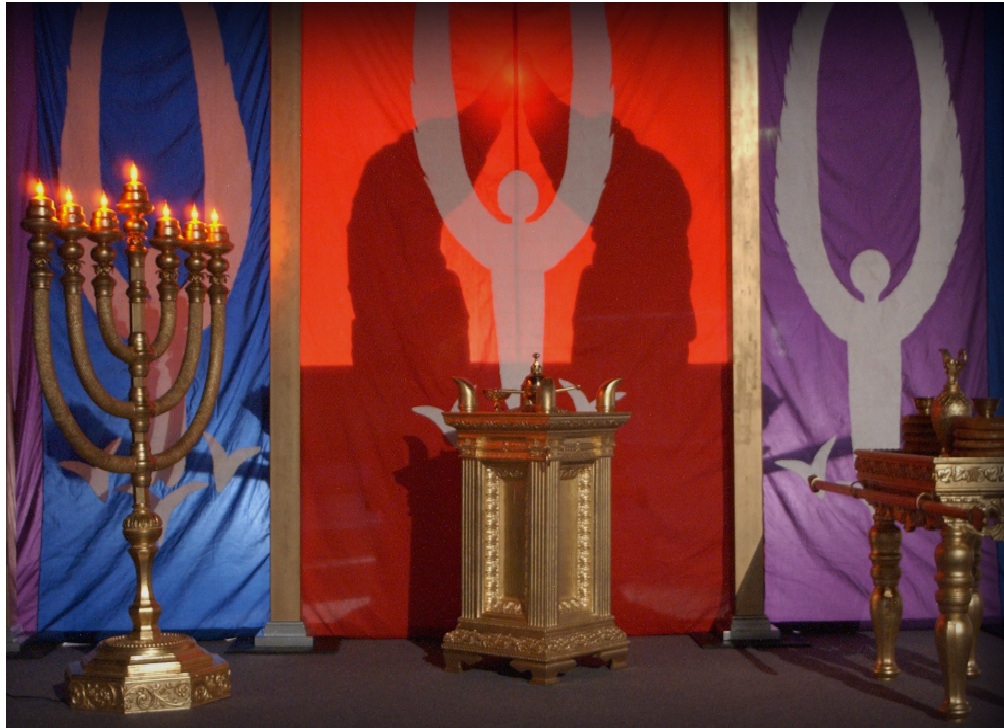
8:1–4 The lamps provided light for the priests as they carried out their duties. The light was also an expression of God’s presence. Jesus said, “I am the light of the world” (John 8:12). The golden lampstand is still one of the major symbols of the Jewish faith.

8:25, 26  Why were the Levites supposed to retire at age 50? The reasons were probably more practical than theological. (1) Moving the Tabernacle and its furniture through the wilderness required strength. The younger men were more suited for the work of lifting the heavy articles. (2) The Levites over 50 did not stop working altogether. They were allowed to assist with various light duties in the Tabernacle. This helped the younger men assume more responsibilities, and it allowed the older men to be in a position to advise and counsel them.

Chapter 9 – 2nd Passover & God’s Guidance

9:2 This is the second Passover. The first was instituted in Egypt and recorded in Exodus 12. Passover and the Festival of Unleavened Bread were an eight-day religious observance (Leviticus 23:5, 6) commemorating the Israelites’ escape from slavery in Egypt by God’s power.
9:6–12 Several men came to Moses because of the predicament they faced: They were “ceremonially defiled” because of contact with a dead body (or entering the home of a person who had died), and this prevented them from participating in the Passover meal. Notice that God did not adjust the requirements of the Passover. The standards of holiness were maintained, and the men were not allowed to participate. But God did make an exception and allowed the men to celebrate the Passover at a later date. This upheld the sacred requirements while allowing the men to participate in the feast—a duty for all Israelite men. Sometimes we face predicaments where the most obvious solution might cause us to compromise God’s standards. Like Moses, we should use wisdom and prayer to reach a workable solution.
9:14 God said regarding foreigners and the Passover, “They must follow these same decrees and regulations.” This principle designed for foreigners doesn’t mean we mandate our religion to our neighbors, but in our homes we should live out our convictions. When we have guests in our homes, whether visitors or family, we may be tempted to change or water down our Christian practices. If family devotions, attending church, and mealtime prayers are your practices, don’t change these when you have guests. Holidays such as Christmas and Easter should not be reduced to nothing more than society’s expressions. Further, you should maintain your family standards even when guests visit—for example, unmarried couples who are guests should not be allowed to sleep together. Maintain your Christian standards and principles. You never know what influence you may have on the guests in your home.
9:15–22 A pillar of cloud by day and a pillar of fire by night guided and protected the Israelites as they traveled across the wilderness. Some have said this pillar may have been a burning bowl of pitch whose smoke was visible during the day and whose fire could be seen at night. However, a bowl of pitch would not have lifted itself up and moved ahead of the people, and the Bible is clear that the cloud and fire moved in accordance with the will of God. The cloud and the fire were not merely natural phenomena; they were the vehicle of God’s presence and the visible evidence of his moving and directing his people.
9:23 The Israelites traveled and camped as God guided. When you follow God’s guidance, you know you are where God wants you, whether you’re moving or staying in one place. You are physically somewhere right now. Instead of praying, “God, what do you want me to do next?” ask, “God, what do you want me to do while I’m right here?” Direction from God is not just for your next big move. He has a purpose in placing you where you are right now. Begin to understand God’s purpose for your life by discovering what he wants you to do now.

www.Upwards.Church

Message Audio/Video and Outline: https://upwards.church/leander-campus/watch-now-message-videos

Watch Messages: YouTube-Upwards Church

Facebook: Upwards Church

Read Along Daily Bible Reading: You Version

Source: Life Application Bible Notes (Tyndale, 2007), 201–215.
Posted in Numbers - Preparation for the Promise | Tagged , , , , , , , , , , , , , , , | 1 Comment

You’re Invited! – Numbers – Preparation for the Promise

You’re invited to our new message series, “Numbers, Preparation for the Promise!”

Description: As God leads us on our faith journey from bondage to freedom, He prepares us or tests us along the way.  Each test reveals our attitudes, which can be dangerous or healthy.  Drawing from the experience of the Israelites who grumbled through the wilderness in the book of Numbers: this series will show how bad attitudes rob us of joy, blessings and are displeasing to God. Complaining, criticizing and coveting are not what our hearts were made for. They were made for thankfulness, contentment, and love. The book of Numbers is a great reminder to keep our eyes focused on Jesus; who’s with us in the wilderness! With Jesus, we can pass the tests of preparation as we await His promises.

 Dates                         Titles                          Scripture                              Events          

Jan. 4 – Avoid Complaining (Num. 10)

Jan. 11 – Avoid Coveting (Num. 11)

Jan. 18 – Avoid Criticizing (Num. 12)

Jan. 25 – Avoid Doubting (Num. 13)                                                       Communion

Feb. 1 – Avoid Rebelling (Num. 16)

Introduction to Numbers: 

Everyone knows the shrill whine of a young child—a slow, high-pitched complaint that grates on the eardrums and aggravates the soul. The tone of voice is difficult to bear, but the real irritation is the underlying cause—discontentment and disobedience. As the “children” of Israel journeyed from the foot of Mount Sinai to the land of Canaan, they grumbled, whined, and complained at every turn. They focused on their present discomforts. Faith had fled, and they added an extra 40 years to their trip.
Numbers, which records the tragic story of Israel’s unbelief, should serve as a dramatic lesson for all of God’s people. God loves us and wants the very best for us. He can and should be trusted. Numbers also gives a clear portrayal of God’s patience. Again and again he withholds judgment and preserves the nation. But his patience must not be taken for granted. His judgment will come. We must obey.
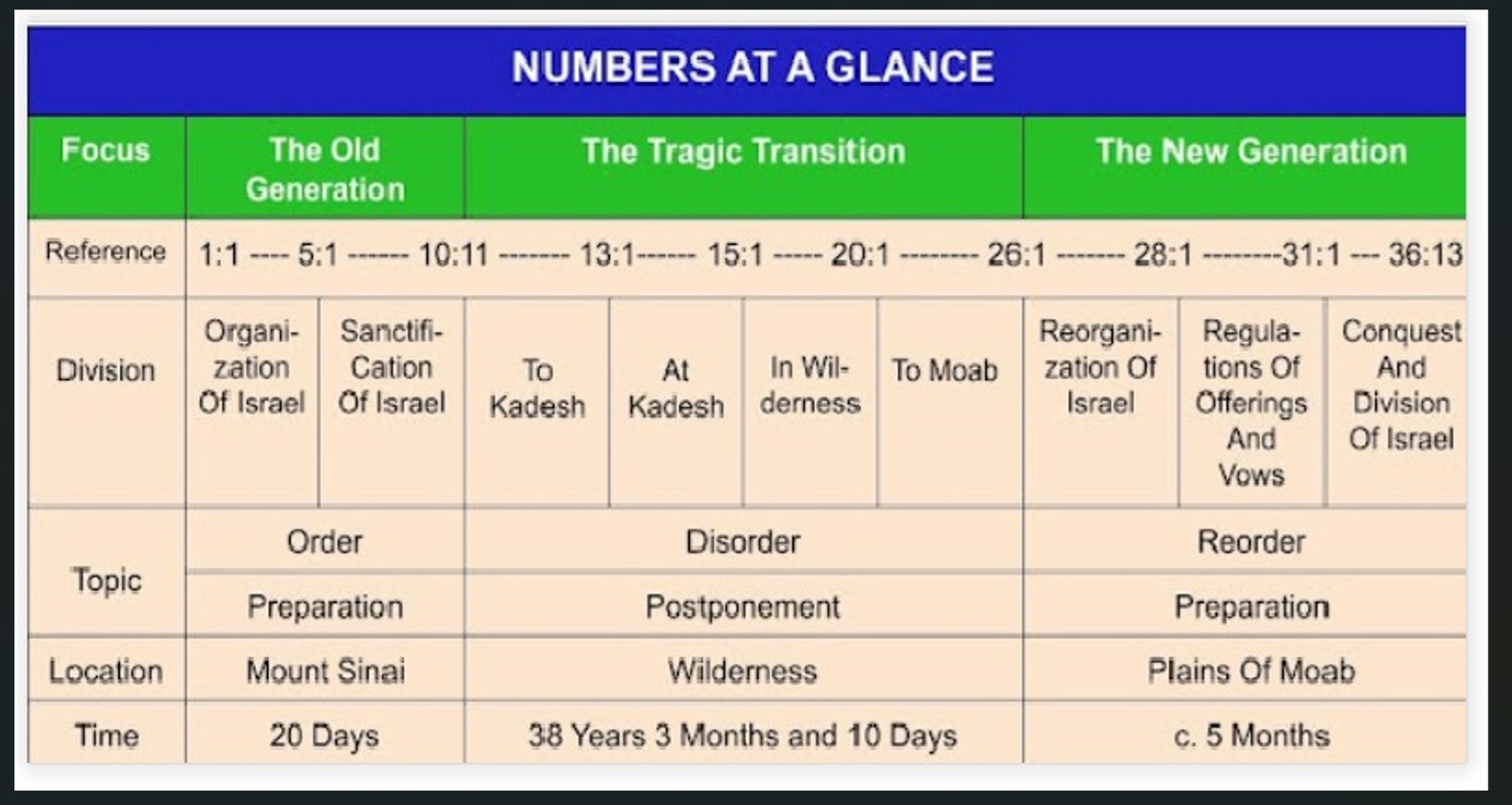
As Numbers begins, the nation of Israel was camped at the foot of Mount Sinai. The people had received God’s laws and were preparing to move. A census was taken to determine the number of men fit for military service. Next, the people were set apart for God. God was making the people, both spiritually and physically, ready to receive their inheritance.
But then the complaining began. First, the people complained about the food. Next, it was over Moses’ authority. God punished some people but spared the nation because of Moses’ prayers. The nation then arrived at Kadesh, and spies were sent into Canaan to assess its strength. Ten returned with fearful stories of giants. Only Caleb and Joshua encouraged the nation to “go at once to take the land” (13:30). The minority report fell on deaf ears full of the ominous message of the majority. Because of their unbelief, God declared that the present generation would not live to see the Promised Land. Thus the “wanderings” began. These wilderness wanderings featured a continuous pattern of grumbling, defiance, discipline, and death. How much better it would have been to have trusted God and entered his land! Then the terrible waiting began—waiting for the old generation to die off and waiting to see if the new generation could faithfully obey God.
Numbers ends as it begins, with preparation. This new generation of Israelites was numbered and sanctified. After defeating numerous armies, they settled on the east side of the Jordan River. Then they faced their greatest test: to cross the river and possess the beautiful land God had promised to them.
The lesson is clear. God’s people must trust him, moving ahead by faith if they are to claim his promised land.

Vital Statistics

Purpose: To tell the story of how Israel prepared to enter the Promised Land, how they sinned and were punished, and how they prepared to try again

Author: Moses

Original Audience: The people of Israel

Date Written: 1450–1410 B.C.

Where Written: In the wilderness during Israel’s wanderings, somewhere in the Sinai peninsula

Setting: The vast desert of the Sinai region, as well as lands just south and east of Canaan

Key Verses: Not one of these people will ever enter that land. They have all seen my glorious presence and the miraculous signs I performed both in Egypt and in the wilderness, but again and again they have tested me by refusing to listen to my voice. They will never even see the land I swore to give their ancestors. None of those who have treated me with contempt will ever see it” (14:22, 23).

Key People: Moses, Aaron, Miriam, Joshua, Caleb, Eleazar, Korah, Balaam

Key Places: Mount Sinai, Promised Land (Canaan), Kadesh, Mount Hor, plains of Moab

Outline

A. PREPARING FOR THE JOURNEY (1:1–10:10)
1. The first census of the nation
2. The role of the Levites
3. The purity of the camp
4. Receiving guidance for the journey
As part of their preparations, the Lord gave strict guidelines to the Israelites regarding purity in the camp. He wanted them to have a lifestyle distinct from the nations around them. He wanted them to be a holy people. Similarly, we should concern ourselves with purity in the church.

B. FIRST APPROACH TO THE PROMISED LAND (10:11–14:45)
1. The people complain
2. Miriam and Aaron oppose Moses
3. The scouts incite rebellion
The Israelites were prevented from entering the Promised Land because of their unbelief. Throughout history, God’s people have continued to struggle with lack of faith. We must prevent unbelief from gaining a foothold in our lives, for it will keep us from enjoying the blessings that God has promised.

C. WANDERING IN THE WILDERNESS (15:1–21:35)
1. Additional regulations
2. Many leaders rebel against Moses
3. Duties of priests and Levites
4. The new generation
When the people complained against God and criticized Moses, they were severely punished. Over 14,000 people died as a result of rebellion against Moses. As a result of Korah’s rebellion, Korah, Dathan, and Abiram and their households died, along with 250 false priests. Dissatisfaction and discontent, if allowed to remain in our lives, can easily lead to disaster. We should refrain from complaining and criticizing our leaders.

D. SECOND APPROACH TO THE PROMISED LAND (22:1–36:13)
1. The story of Balaam
2. The second census of the nation
3. Instructions concerning offerings
4. Vengeance on the Midianites
5. The Transjordan tribes
6. Camped on the plains of Moab
The Moabites and Midianites could not get Balaam to curse Israel, but they did get him to give advice on how to draw the Israelites to idol worship. Balaam knew what was right, but he gave in to the temptation of material rewards and sinned. Knowing what is right alone is never enough. We must also do what is right.

Main Ideas: 

Census – Moses counted the Israelites twice, hence the title “Numbers.” The first census organized the people into marching units to better defend themselves. The second prepared them to conquer the country east of the Jordan River.
People have to be organized, trained, and led to be effective in great movements. It is always wise to count the cost before setting out on some great undertaking. When we are aware of the obstacles before us, we can more easily avoid them. In God’s work, we must remove barriers in our relationships with others so that our effectiveness is not diminished.

Rebellion – At Kadesh, 12 scouts were sent out into the land of Canaan to report on the fortifications of the enemies. When the scouts returned, 10 said that they should give up and go back to Egypt. As a result, the people refused to enter the land. Faced with a choice, Israel rebelled against God. Rebellion did not start with an uprising, but with griping and murmuring against Moses and God.
Rebellion against God is always a serious matter. It is not something to take lightly, for God’s punishment for sin is often very severe. Our rebellion does not usually begin with all-out warfare, but in subtle ways—with griping and criticizing. Make sure your negative comments are not the product of a rebellious spirit.

Wandering – Because they rebelled, the Israelites wandered 40 years in the wilderness. This shows how severely God can punish sin. Forty years was enough time for all those who held on to Egypt’s customs and values to die off. It gave time to train up a new generation in the ways of God.
God judges sin harshly because he is holy. The wanderings in the wilderness demonstrate how serious God considers flagrant disobedience of his commands. Purging our lives of sin is vital to God’s purpose.

Canaan – Canaan is the Promised Land. It was the land God had promised to Abraham, Isaac, and Jacob—the land of the covenant. Canaan was to be the dwelling place of God’s people, those set apart for true spiritual worship.
Although God’s punishment for sin is often severe, he offers reconciliation and hope—his love is truly amazing. Just as God’s love and law led Israel to the Promised Land, God desires to give purpose and destiny to our lives.

Source: Life Application Bible Notes (Tyndale, 2007), 199–202.

Posted in Numbers - Preparation for the Promise | Tagged , , , , , , , , , , , | Leave a comment

Hope for the Future – Luke 2:21-35

Just as the story of John the Baptist’s birth began in the temple (1:5-25), so the story of Jesus’ birth culminates in the temple. In obedience to the dictates of Jewish law, Mary and Joseph presented Jesus to God (see Exodus 13:2-16) and offered a sacrifice for the ritual purification of Mary (see Leviticus 12:2-6).

In the temple, Simeon approached Jesus and delivered a prophecy, describing Jesus as “the Savior” (2:30 nlt). Anna joined in, praising God for the baby Jesus. Their testimony confirmed at least seven different prophecies surrounding Jesus’ birth (1:17, 31-33, 42-45, 68-76; 2:10-14, 28-32, 38). These prophecies, one after another, proclaim Jesus their Savior, Deliverer, and Lord. Like Anna, believers should join their voices with these witnesses, praising God for providing salvation through his beloved Son, Jesus.

2:21-24 After eight days had passed, it was time to circumcise the child; and he was called Jesus, the name given by the angel before he was conceived in the womb. When the time came for their purification according to the law of Moses, they brought him up to Jerusalem to present him to the Lord (as it is written in the law of the Lord, “Every firstborn male shall be designated as holy to the Lord”), and they offered a sacrifice according to what is stated in the law of the Lord, “a pair of turtledoves or two young pigeons.NRSV To understand these times and ceremonies, it will help to understand the background. Jewish families went through several ceremonies soon after a baby’s birth:

  1. Circumcision. Every Jewish boy was circumcised and named on the eighth day after birth (Leviticus 12:3; Luke 1:59-60). Circumcision symbolized the Jews’ separation from Gentiles and their unique relationship with God (Genesis 17:9-14). So after eight days had passed, Mary and Joseph took the child to be circumcised. They named him Jesus, the name given by the angel before he was conceived in the womb (1:31). They did not go to Jerusalem for this ceremony; instead, a local priest most likely performed it.
  2. Redemption of the firstborn. A firstborn son was presented to God one month after birth (Exodus 13:2, 11-16; Numbers 18:15-16). The ceremony included buying back—”redeeming”—the child from God through an offering. Through this, the parents would acknowledge that the child belonged to God, who alone has the power to give life. Luke explained for his Gentile audience that this command came from the law of the Lord, “Every firstborn male shall be designated as holy to the Lord” as taken from Exodus 13:2, 12, 15 and Numbers 18:15. So Mary and Joseph brought him up to Jerusalem to present him to the Lord.
  3. Purification of the mother. For forty days after the birth of a son and eighty days after the birth of a daughter, the mother was ceremonially unclean and could not enter the temple. So when the time came for their purification, that is, at the end of Mary’s time of separation, they went to the temple to present Jesus to the Lord (#2 above) and to offer a sacrifice according to what is stated in the law (as part of #3). Mary and Joseph were to bring an offering—a lamb for a burnt offering and a dove or pigeon for a sin offering. The priest would sacrifice these animals and declare the woman to be clean. If a lamb was too expensive, the parents could bring a second dove or pigeon instead. This is what Mary and Joseph did.

2:25-26 Now there was a man in Jerusalem whose name was Simeon; this man was righteous and devout, looking forward to the consolation of Israel, and the Holy Spirit rested on him. It had been revealed to him by the Holy Spirit that he would not see death before he had seen the Lord’s Messiah.NRSV Luke introduced another person who would be divinely told of the Messiah’s arrival and who would confirm the baby’s identity. His name is Simeon. He was spiritually in tune with God: righteous, devout, looking forward to the consolation of Israel, with the Holy Spirit resting on him. His occupation is unknown. He had all his life held on to God’s promise of a coming deliverer, so through the Holy Spirit, God promised that Simeon would not die before seeing the Lord’s Messiah. The “consolation of Israel” was another way of describing the Messiah. See Anna’s prophecy in 2:38 where the faithful are called those waiting for “the redemption of Jerusalem.” “Consolation” refers to the restoration of Israel as a nation; the word comes from Isaiah 40:1; 49:13; 51:3; 57:18; 66:10-11. Simeon, a righteous, devout, and Spirit-filled man who hoped in the future God had promised, stands forever in Scripture as a model of devotion and faithfulness to God.

 LIFE APPLICATION – SIMEON’S HOPE
Simeon was old and had much to ponder. No doubt he had disappointments in his life to worry over, much to bemoan, lots to regret. Rather than dwelling on life’s rough ride, Simeon, even in old age, looked to God’s future with brightness and hope. Simeon’s secret was in his worship and expectation for God. Worship and praise were natural to him; they were the center of his life.
Nothing is so bleak as a day without tomorrow. With God, however, every day has hope and good cheer. Neither old age nor grim circumstances should keep you from God’s comfort, sufficient for your needs today. Take Simeon’s example and look ahead to God’s great plan for you and the world.

2:27-32 Moved by the Spirit, he went into the temple courts. When the parents brought in the child Jesus to do for him what the custom of the Law required, Simeon took him in his arms and praised God, saying: “Sovereign Lord, as you have promised, you now dismiss your servant in peace. For my eyes have seen your salvation, which you have prepared in the sight of all people, a light for revelation to the Gentiles and for glory to your people Israel.”NIV When Mary and Joseph brought Jesus to the temple to present him to the Lord (2:22), Simeon also went into the temple courts, having been moved by the Spirit to be there on this particular day. God was ordaining this meeting, in keeping with his promise to Simeon (2:26).

Mary and Joseph arrived in the temple to do for [Jesus] what the custom of the Law required. This obedience to the Old Testament law is mentioned several times in Luke. It points out Jesus’ credentials as one who obeyed the law, even from birth, because his parents did exactly as they were commanded. At the temple, Mary and Joseph met an old man who took the baby Jesus in his arms and praised God. The Spirit led Simeon to recognize this baby as the “consolation of Israel . . . the Lord’s Messiah” (2:25-26).

Simeon’s song is often called the “Nunc Dimittis,” the first words of its Latin translation. Simeon praised God that he had done what he promised and could dismiss your servant (meaning himself) in peace. In other words, Simeon was now ready to die in peace because he had seen God’s salvation. To see Jesus is to see salvation. This salvation has been prepared in the sight of all people, a light for revelation to the Gentiles and for glory to your people Israel. Jesus Christ is the fullest manifestation of God’s “glory” that his people had ever seen. Luke, writing to Gentiles, pointed out that from the very beginning God’s plan was to offer salvation to Gentiles as well as to Jews. The mission to the Gentiles is a key theme in Luke and Acts. Even the prophets had predicted this (see, for example, Isaiah 42:6; 49:6; 52:10; 60:1-2). The Jews were well acquainted with the Old Testament prophecies that spoke of the Messiah’s blessings to their nation. They did not always give equal attention to the prophecies saying that he would bring salvation to the entire world, not just the Jews.

Many thought that Christ had come to save only his own people. Luke made sure his Greek audience understood that Jesus had come to save all who believe, Gentiles as well as Jews. If you want to know what God has to say to you, see what Christ was and is.

C. H. Spurgeon


LIFE APPLICATION – JESUS THE LIGHT
Simeon referred to Jesus as “a light for revelation.” Few metaphors capture Jesus’ mission as well. Light makes the stillness come alive; light settles fear; light reveals mystery; light enables relationships. Jesus is God in the flesh, eternal light breaking into a spiritually dark world.
Jesus is your light. He is not a distant sun, remote and driven by physics’ laws. Jesus is the light of your life—your courage, your enabler. Start each day by turning on the light—a moment of meditation on God’s Word, a prayer of dedication to live for God all day.

2:33-35 The child’s father and mother marveled at what was said about him. Then Simeon blessed them and said to Mary, his mother: “This child is destined to cause the falling and rising of many in Israel, and to be a sign that will be spoken against, so that the thoughts of many hearts will be revealed. And a sword will pierce your own soul too.NIV Here Joseph and Mary are called the child’s father and mother, which they were, although Joseph was not technically the father (as the genealogy in chapter 3 will clarify, and as the reader already knows). They marveled (were amazed) that this stranger in the temple recognized their small son and prophesied his coming as a light to all nations, not just the Jews. Simeon blessed Mary and Joseph and then prophesied that Jesus would have a paradoxical effect on Israel. He would bring light and salvation, but his coming could also cause division. Some would “fall” because of him (see Isaiah 8:14-15), while others would “rise” (see Malachi 4:2). There would not be overwhelming acceptance of the promised Messiah—in fact, many would not recognize him and would reject him altogether. With Jesus, there would be no neutral ground: people would either joyfully accept him or totally reject him. He would indeed be a sign, but he would be spoken against by many, thus revealing what was inside many people’s hearts. This would have surprised and saddened Mary. Simeon told Mary that a sword would pierce her soul. As Jesus’ mother, Mary would be grieved by the widespread rejection he would face; she would experience great pain when he died. Although she could not have known it and Simeon had only a hint of it, Mary would be the only person on earth who would witness both his birth and his death. He was God’s Son, but she would always be his mother and she would love him as dearly as any mother loves a son. The sorrow and horror he would face would affect her deeply.

 LIFE APPLICATION – OLDER AND WISER
Although Simeon and Anna were very old, they had never lost their hope that they would see the Messiah. Led by the Holy Spirit, they were among the first to bear witness to Jesus. In the Jewish culture, elders were respected; thus, because of Simeon’s and Anna’s age, their prophecies carried extra weight. Contemporary society values youthfulness over wisdom, and potential contributions by the elderly are often ignored. Christians should reverse those values wherever they can. Encourage older people to share their wisdom and experience. Listen carefully when they speak. Offer them your friendship and help them find ways to continue to serve God.

www.Upwards.Church

Message Audio/Video and Outline: https://upwards.church/leander-campus/watch-now-message-videos

Watch Messages: YouTube-Upwards Church

Facebook: Upwards Church

Read Along Daily Bible Reading: You Version

Source: Bruce B. Barton, Dave Veerman, Linda K. Taylor, Life Application Bible Commentary – Luke, (Wheaton, IL: Tyndale, 1997), WORDsearch CROSS e-book, 48-36.

Posted in The Christ Hope of the World Luke 1-2 | Tagged , , , , , , | Leave a comment