
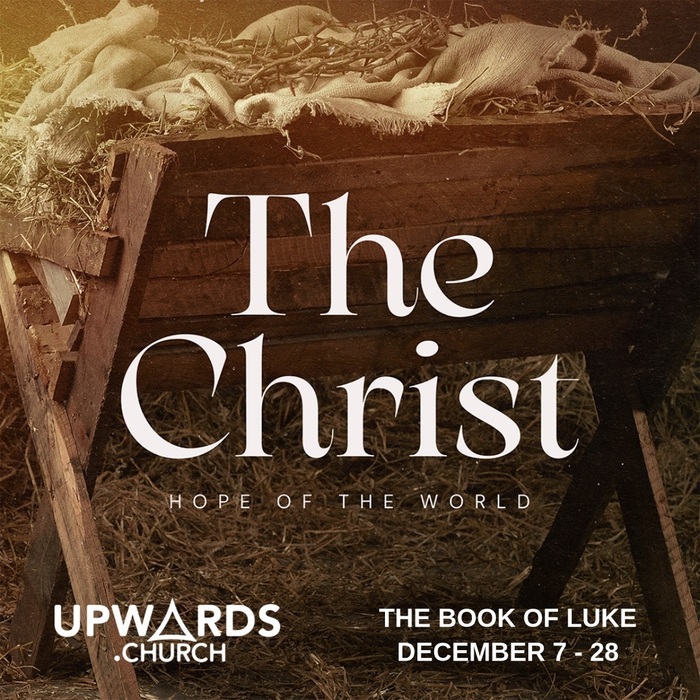
Hope is Born – Luke 2:1-8

Christmas is not all sugar plums, ho, ho, ho, and fa- la- la- la- la.

In this season of joy & merriment, more people will be lonely than at any other time of the year, more people will be depressed than at any other time of the year.  More alcohol will be consumed during December than during any other month of the year. More people will take their own lives than any other time of the year.  At Christmas there is good, there is bad and there are blessings.  We see that the very first Christmas, Mary had inconvenience and discomfort she was with out the comfort of home and couldn’t find lodging and had to give birth in a stable, but there was a blessing behind all that and other blessings as well.

Let’s dive into our text.

1 At that time the Roman emperor, Augustus, decreed that a census should be taken throughout the Roman Empire.2 (This was the first census taken when Quirinius was governor of Syria.)3 All returned to their own ancestral towns to register for this census.

In Mary’ day she was just an insignificant peasant girl, a lowly Roman subject with no rights. That who she was then, we know she was much more in God’s eyes but that was the way the world at that time viewed her.   In this post, we look at her and the birth of Jesus.

Luke tells the story for us, and he does a nice job of setting the stage—the whole stage—for the story.    He starts with the headline of the day: “In those days Caesar Augustus issued a decree that a census should be taken of the entire Roman world.”
If there had been newspapers in the ancient Mediterranean world, this would have been the front-page headline on every one of them.  In Athens, Ephesus, Damascus, Alexandria, and Jerusalem alike; the big news was this decree from the Roman emperor.   It would have been the lead story on every news broadcast and the hot topic of every roundtable discussion. It set people in motion all over the Empire, including a certain couple from Nazareth who were pledged to be married.

See how Luke begins to set the stage…Rome…not a manger, is at the center of the stage.  The Roman Emperor, not a baby, is the star of the show—or at least the character with the top billing at the start. And the prospect of some Empire-wide tax, not some anonymous birth, is the headline.
The most insignificant things swallow up the most significant thing.  I believe it was Mark Twain who said, “Those who don’t learn from history are doomed to repeat it.” As a historian, Luke identified the time period of Jesus’ birth by naming the Roman emperor and the local governor. The contrast between Jesus, the divine King of kings, and Caesar Augustus, the first Roman emperor, would have been striking to Luke’s first readers.
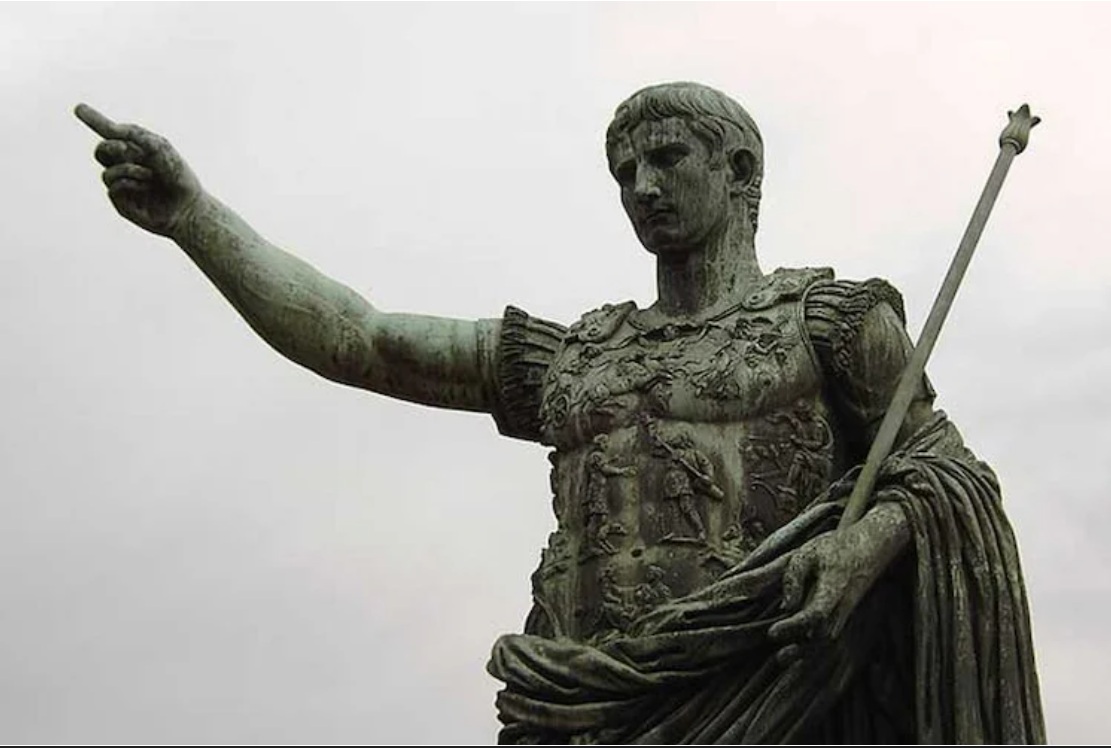
Caesar Augustus would have been on the lips of every Jew who lived in Israel and the lips of every one in the Roman Empire.  He controlled the known world.

Let me tell you about him. “Octavian (or Augustus, as he was called after 27 B.C.) was the grand nephew of Julius Caesar. (His grandmother, Julia, was the sister of Julius Caesar; his mother, Atia, was Caesar’s niece.) After Julius Caesar’s assassination on the Ides of March, 44 B.C., Octavian, then only eighteen years old, was adopted as Caesar’s son by the terms of his will. This meant that Octavian inherited much of his great-uncle’s wealth as well as his prestige and power.  During the following thirteen years (from 44 to 31 B.C.) Octavian avenged the murder of his “father” and cemented his control of Rome. This culminated in the Battle of Actium (31 B.C.) at which his forces defeated those of Cleopatra and Marc Antony. In 27 B.C. Octavian, who had been renamed Augustus (meaning “reverend”) by the Roman Senate, was the first Roman emperor, ruling all of the vast Roman Empire under his sole authority.  Augustus also had the longest reign of any Roman emperor, a term of 44 years. He reigned from 27 b.c. to a.d. 14.   Caesar Augustus was one of the greatest of all Roman rulers. The month of August was named after him—to honor him. Augustus is the emperor who began the worldwide “Pax Romana” (Roman Peace).   He was a good administrator and was fastidious about the financial accounting of his empire. Augustus ended the civil war in the land and brought peace and prosperity throughout the Empire.”  Sources: www.vroma.org and www.encyclopedia.com

In the Roman Empire they worshipped their emperors as deity and burned incense to them.
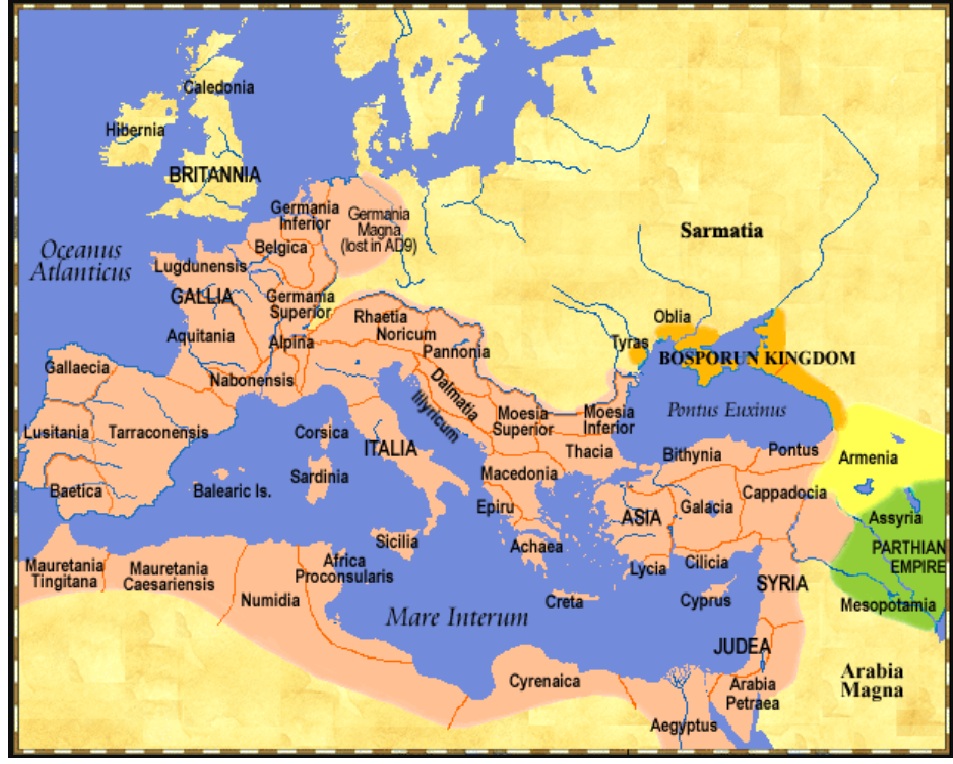
He was the bigwig in the entire world.  There was no mistaking this as the Romans controlled the world and had his image everywhere:  in statues, on their patriotic banners and flags, on their military armor and shields.  And on most every coins the Jewish people had to use.

A Roman census (registration) was taken to aid military conscription or tax collection. The Jews didn’t have to serve in the Roman army, but they could not avoid paying taxes.

These people Caesar Augustus, Quirinius, this official decree, the census, these were significant people, significant events.  If you ask anyone in the streets who Caesar was  “oh, he makes me sick! We have to go to register we have to pay these taxes!”

Then there was this peasant couple who have to find shelter in this animal pen in Bethlehem. How insignificant! They have this baby.  Who cares? And have to put him in a feeding trough.  Now everybody’s talking about Caesar, Quirinius, taxation, official decrees.  Now we live in 2005, 2005 years from what event?  This event. The taxation? No. The decree? Caesar? No its the event of this baby born in Bethlehem. When we look back what seems insignificant now? Quirinius who was he, Augustus?  Who is he?  These are just details, what is significant now Jesus or even Mary.   The point is 2000 years ago it was just the opposite. What was important back then was the bigwigs, the taxes, the empire, the travel and registration.  Who cares about a baby being born, Caesar is expanding his empire we have to pay taxes.

The most significant events were swallowed up by the insignificant events.  What a contrast: Caesar, a baby, Rome the capital of the world and Bethlehem a cow town.  Caesar is sleeping on fine linens in a palace, being waited on by servants and guards, pampered surrounded by splendor while the King of Kings is in a feed trough with smelly animals and the stench of urine.  What a contrast!  See how the insignificant swallowed up the significant.

There was prophecy given oh 8 centuries before this event given in Micah 5:2 let me read it for you, “But you, Bethlehem Ephrathah, though you are small among the clans of Judah, out of you will come for me one who will be ruler over Israel, whose origins are from of old, from ancient times.”

Centuries before Caesar met with the Senate or his royal advisers and said, “lets tax everyone, lets issue a decree issuing a census!”  God orchestrated these events that would bring Joseph and Mary from Nazareth 80 miles down to Podunk Bethlehem for the birth of Jesus.  This bigwig, Caesar thought he was in control, he was only God’s pawn, a puppet, God’s errand boy for the Prophet Micah to fulfill his will in his perfect timing!

Some things never change.  The insignificant swallows up the significant every Christmas, people say, “hey don’t forget its Jesus birthday”  “he’s the reason for the season!” but we all get caught up in the commercialization of Christmas.  Jesus is swallowed up by Elmo or cabbage patch dolls or the latest fad that will be in tomorrow’s garage sale.  This may sound bad, but I wish this only happened at Christmas.  The truth is every Sunday the insignificant swallows up the significant.  Work, hobbies, idols, and insignificant things swallow up Jesus and his kingdom.  Instead of reaching people for Christ we reach for more entertainment or comfort.  Like Caesar there is a lot of personal kingdom building.  We focus much time and energy on what will not mean a hill of beans later.

To give your income that more people can be reached for the gospel instead of buying more stuff and gadgets may not be popular in the world’s eyes.  But it will be what lasts in all eternity.  This is what Christmas reminds me that the big wigs come and go, the latest fad dies, but Jesus and anything done for his kingdom remains forever and ever.

4 And because Joseph was a descendant of King David, he had to go to Bethlehem in Judea, David’s ancient home. He traveled there from the village of Nazareth in Galilee.5 He took with him Mary, his fiancée, who was now obviously pregnant.

Luke goes on to tell how the decree from Caesar Augustus prompted Joseph to travel from Nazareth, where he lived, to Bethlehem, which was where he grew up.  A traditional nativity scene puts the manger in Bethlehem in the middle. Luke’s account reminds us, however, that Bethlehem was not only far from the center of the world’s stage, it wasn’t even at the center of Joseph’s stage. His home was Nazareth, and going to Bethlehem was going out of his way.

The government forced Joseph and Mary to make a long trip just to pay his taxes. His fiancée, who had to go with him, was pregnant and near delivery, and made the long journey back to Bethlehem. It is evident that as thousands of people were traveling for the same reason there was no room for them when they arrived. We have had a reminder of what this must have been like, the lines of cars coming out of Houston before hurricane Rita hit. Thousands of people were moving along, driving, walking, and sleeping on the side of the road. People everywhere told stories about how there was no room for them when they looked for a hotel. After a week of walking and riding, Joseph and Mary experienced the same thing.

So when they arrived in Bethlehem, they hear the bad news, “I’m sorry, the motel is full…
but you’re welcome to stay in the tool shed!”   This couple and this birth were not even a big fish in the small pond of Bethlehem.

Zig Ziglar tells about his brother who was traveling & came to a hotel & asked for a room for the night. The manager told him that they were fully booked & there were no rooms available.

Ziglar’s brother said, “Now be honest with me. If the President of the United States walked through that door just now & requested a room, would you have a place for Him to stay?” The manager replied, “Well, if the President needed a room, we’d find one for him.” Ziglar’s brother said, “That’s great. I know for a fact that he’s not coming, so I’ll take his room.”

If Mary & Joseph had been more influential, perhaps there would have been a room for them, too. But they were just common people, peasants, carpenters, laboring folks – & they had no place to stay.

Doing God’s will often takes people out of their comfort zones. Those who do God’s will are not guaranteed comfortable lives. But they are promised that everything, even their discomfort, has meaning in God’s plan. 

The Romans ruled the civilized world at this time. By contrast, Mary controlled very little. Against their better judgment and political convictions Joseph and Mary complied with the Roman order and traveled to Bethlehem. Often people feel like Mary, caught by forces larger than they are.  The Romans were in control insofar as human authority can get its way by exerting human power. But the Romans did not recognize their limitations. In reality, God controls the world. In all times and places, he works his will. God did not seem soften Mary’s bumpy road, but did strengthen her. God is in charge of your life too. He will guide you and provide all you need. Like Mary, live each day by faith, trusting that God is in charge.

 But the inconvenience continues!  One thing I’ve noticed is that babies never seem to be born at convenient times.  For both of our children, Niki wanted them born early or at least on the due date but no, they were on a different timetable.  They are not born when you say, “ok now” Babies are never born then, are they? They always wait until you’re asleep & don’t want to get up or in a car or elevator. Or they wait until you have something more pressing to do. Then they decide to make their entrance into the world. They almost always come at a most inconvenient time.   Even Jesus did. “It’s not a good time to be born, Lord. There’s no room in the inn. There’s no hospital bed. It’s not a convenient time.” But babies seem to have an ability to select those inconvenient times.  Even though they are inconvenient they are also so rewarding.

 The same is true of serving, giving and our commitment to Christ it may not be convenient to go to church to serve, or give but it is rewarding in the end.  There are times when I don’t feel like going to my small group but afterwards I am always glad I did.  The hardest things are inconvenient but most rewarding.

6 And while they were there, the time came for her baby to be born.7 She gave birth to her first child, a son. She wrapped him snugly in strips of cloth and laid him in a manger, because there was no lodging available for them.

 And while they were there indicates they were there for an undetermined number of days huddled on the floor of the animal shelter among the camel’s donkey’s and their feeding troughs.  It was a drab place that offered no birthing amenities such as the help of doctors and nurses or even the presence of her mother.  In those days, women giving birth had much support from her family and community even a midwife to assist.  Any normal young mother would like to have her mother present, but Mary had the assistance and reassurance of her new husband.

She gives birth there in the animal shelter, just think of all the maternity wards you have seen or been to with masks, rubber gloves and sterile equipment.  Think of how un-sterile, how filthy, how uncomfortable it must have been.  She gives birth to  “her first child” the Greek word is not “monogenes” or only begotten but “protokon” or first born meaning there were others, the bible does say that Mary had other children. (Matt. 12:46,Matt. 13:55 lists his brother’s names: James, Joseph, Simon and Judas, and says he had sisters, also Mark 3:31, Luke 8:19, and John 7:3)

 She wrapped him snugly in strips of cloth in some translations it says, “swaddling clothes.”  “The ancient custom was to wrap the arms, legs and body of the baby with long strips of cloth to provide warmth and security.  Parents in those days also believed that wrapping the child helped his or her bones to grow straight. God did not provide Him with royal robes or fancy clothing.  John MacArthur God in the Manger
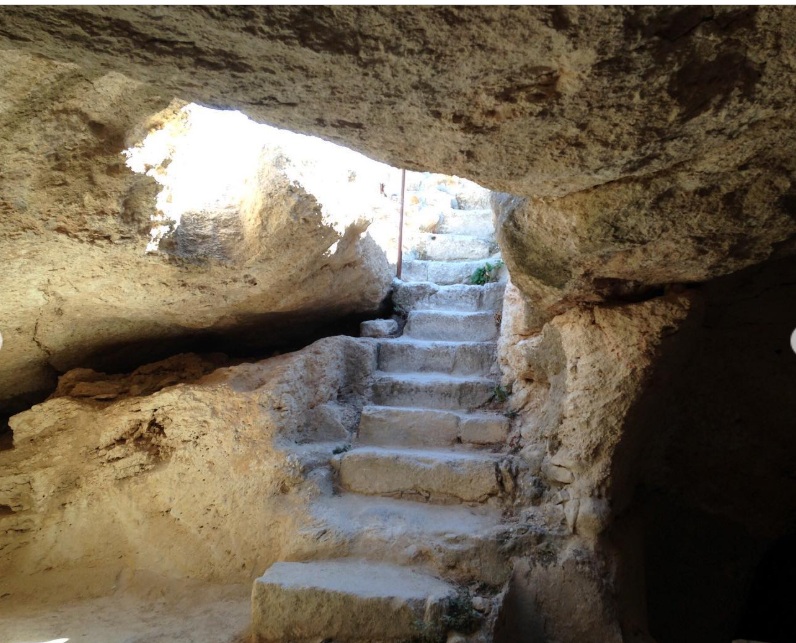
and laid him in a manger,  This is a feed trough.

When Jesus entered the world came through the smelliest, filthiest and most uncomfortable conditions.  How many of you have been to the San Antonio stock show? Or Houston Stock show?  How many of you went inside to where the animals were housed?  Do you remember the smell of urine? The smell of feed?  The smell of the animal?  This was the first breathes our Lord!

But that is just like Jesus, it says, “he humbled himself” (Phil 2:5) that is divine grace.  He did not only humble himself and be born in a smelly stable but humbled himself as a substitute for unclean sinners and bore the stench of our guilt upon the cross.  Here is the thing:  Mary was there very uncomfortable at the manger; Mary was there very uncomfortable at the foot of the cross.  Sometimes we will be uncomfortable as we follow Christ, as we serve him, this is what we see.

19 but Mary kept all these things in her heart and thought about them often.

The birth of Christ gives us a glimpse of what Jesus is like and what Jesus continues to do. Jesus didn’t come marching in through the front door, flexing His muscles, and demanding the spotlight. He could have, but He didn’t. A movie star has his or her entourage. A sports team runs onto the court or field with fanfare, cheers, and applause. A big-name performer gets a standing ovation. And the President, Prime Minister, and Queen are all welcomed by bands, red carpets, and protocol.  But the King of the Universe arrived in strips of cloth, mostly ignored by the world He had created.

And still, today, the Lord does not barge or force His way into our lives. Instead, He stands at the door and knocks, waiting for us to welcome Him in.  Have we welcomed Him in?
Take a good look at a beautiful nativity scene: Joseph and Mary, the  stable, and a manger.
Let it remind you:

2,000 years ago the Lord worked in and used the lives of insignificant and common people (Mary & Joseph)
That’s good news for you and me, because this assures us that He will willingly works in and uses our lives as well.
2,000 years ago, God came into a place (Bethlehem) that seemed small and unimportant. I’m glad to hear that, because Leander and Jarrell are small and unimportant
.
2,000 years ago, He came into a place that was dirty and unworthy of Him. (A manger)
And that’s good news for me, because my heart is dirty and unworthy, yet God is willing to come in and reside there…cleaning it up…changing the furniture around…making all things new!
We have a savior who could come bursting in, but does not.  A savior who comes in gently and unassumingly, perhaps even unnoticed at first. We have a savior who, bit by gracious bit, moves into the spotlight of our lives. He moves toward the center of our stage. And the savior, who comes into your life and mine backstage, by His mercy, becomes the star of our show. We praise you and welcome you Lord Jesus.

Merry Christmas!

Darrell

www.Upwards.Church

Message Audio/Video and Outline: https://upwards.church/leander-campus/watch-now-message-videos

Watch Messages: YouTube-Upwards Church

Facebook: Upwards Church

Read Along Daily Bible Reading: You Version
Posted in The Christ Hope of the World Luke 1-2 | Tagged , , , , , , , , , , | Leave a comment

Hope in Uncertainty – Luke 1:39-49

God knows that situations I will face in life will be difficult and often mind-boggling.  I can see even from Mary’s life that I am not alone in my circumstances.  I do not have to be strong enough.  I do not have to be wise enough.  I do not need to figure it all out.  God gives me the help I need.

Mary responded to Gabriel’s announcement with faith – yet God knew that there would probably come a million questions and doubts once she didn’t have an angel standing in front of her. Who, in the entire world, could this young teenage girl go to?  Who could understand?

Trying to explain a private angelic visit and an immaculate pregnancy even to her parents and Joseph or anyone in the small community of Nazareth would not have been a wise move.
Who would believe her when she told them? What would she do?  That’s when she thought, “Elizabeth! Of course!”  Who in the entire world could possibly accept Mary’s crazy story better than Elizabeth – who had a crazy story of her own.
With the amazing news from the angel that her cousin Elizabeth had conceived and was already 6 months pregnant when she was way past childbearing age, Mary knew instinctively that was where she was to go.

LIKE MARY I HAVE….

  • Hope From People Who Have Shared A Similar Experience

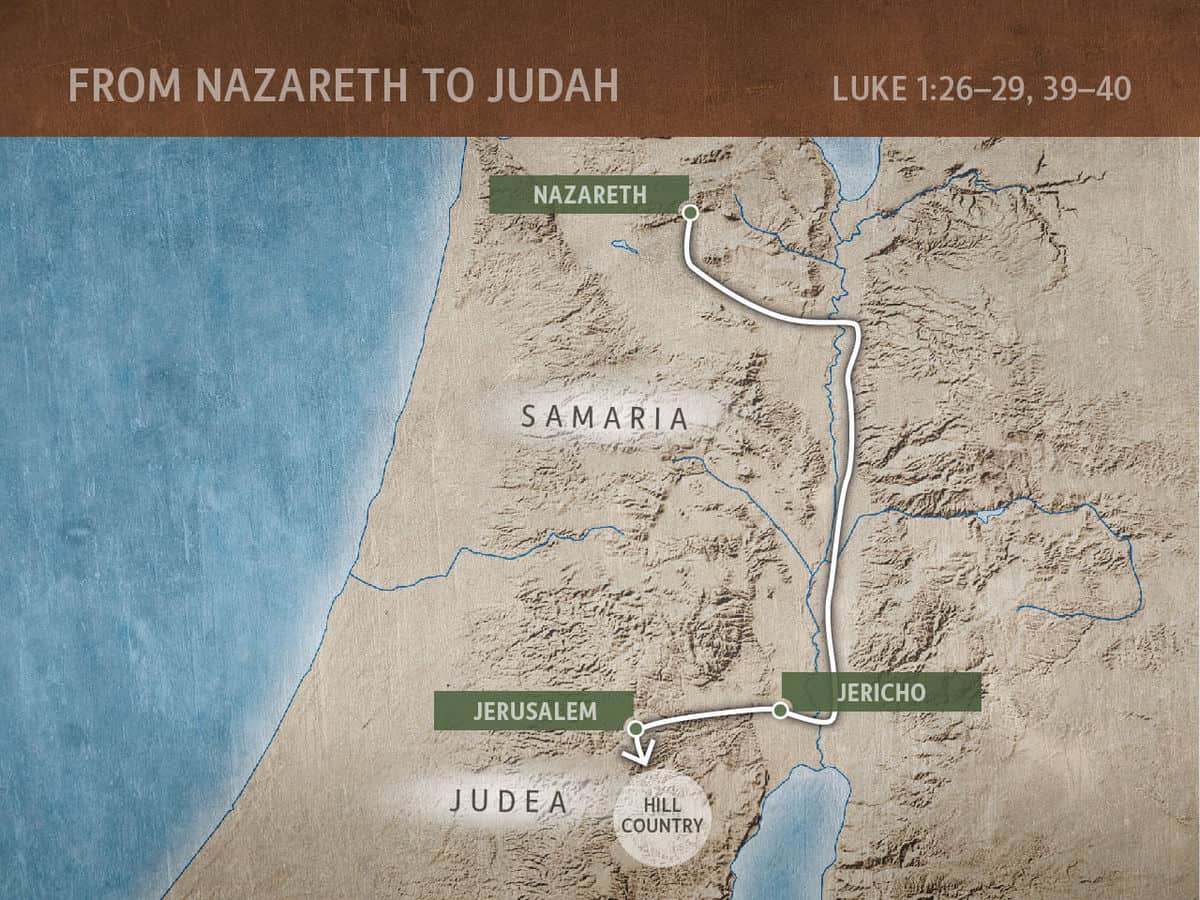
 39 At that time Mary got ready and hurried to a town in the hill country of Judea,

 We see that Mary is the type of woman who puts her faith into action. She not only says, “Lord, I am your servant”, but she also “hurries” to see God at work in the life of her relative Elizabeth. The journey to Judea that Mary undertook was not a simple drive to the next town; it was a difficult journey that would have taken at least three days at that time. Mary did not let that stop her from going to Elizabeth, rejoicing with her, and praising the Lord for fulfilling his promises.  *Next time you give an excuse like, it’s kind of far, or it’s not really convenient to go to my small group just think of Mary’ journey and time commitment.

 40 where she entered Zechariah’s home and greeted Elizabeth.

 Mary needed somebody who knew about miracles.  How many times during her journey do you think Mary practiced how she would tell Elizabeth what had happened?  As Mary had rushed off to visit her relative, she must have been wondering whether the events of the last few days were real. Elizabeth’s greeting surely strengthened her faith. Mary’s pregnancy may have seemed impossible, but her wise relative believed in the Lord’s faithfulness and rejoiced in Mary’s condition.   Imagine what it meant to Mary when Elizabeth knew that her pregnancy was real and that she was carrying the Lord in her womb! Elizabeth affirmed that what Mary had experienced was true! Elizabeth saw with the eyes of faith – and affirmed the work of God in Mary.

It’s interesting to me, that while John prepared the way for Jesus, in a real sense, Elizabeth prepared the way for Mary. Elizabeth had her own crazy and miraculous pregnancy, and so wasn’t at all skeptical of Mary’s.

In her years of barrenness, she had already experienced the disgrace and rejection of the community that Mary was likely to face when word got out. But Elizabeth had paved the way.   All her life, God had prepared her, not only to be John’s mother, but to be the example of maturity and faithfulness that Mary needed for the enormous task ahead of her.

Elizabeth extended love, acceptance, hospitality, hope and faith to a young girl in need of every bit she could offer.

The truth is this, even though Mary had a very strange circumstance, God still provided someone who had a similar circumstance for her to relate to.  What you are going through right now, is NOT unique to you, I guarantee, there is someone or several who have already gone through the same situation and they are willing to hug you, listen to you and give you encouragement.  It happens all the time in small groups.  We think we are alone in our problems only to find that someone else has been there.  Our church has small groups for this reason:  to provide you someone who will say, “Lean on Me”. But you will never have that if you do not go.  You cannot build that in one or two visits.  It takes time to build trust and friendship and relationships that matter, but get started now!  Before you find yourself in need of some encouragement but you do not know where to turn.

41 When Elizabeth heard Mary’s greeting, the baby leaped in her womb, and Elizabeth was filled with the Holy Spirit.

 Movement of a baby in its mother’s womb is certainly not abnormal in fact it’s probably one of the most exciting things to feel the baby moving before he or she is born. Almost every parent knows what it’s like to place his or her hand on the mother’s abdomen and feel the kicking and moving of the infant in the womb.   Sensing the baby’s movements is thrilling because that action indicates a new person is on the way.  But the movement of Elizabeth’s baby was far more significant than that of a normal fetus in a mother’s womb. That’s because this fetus was a prophet, and not just any prophet but the prophet who would be a forerunner for the Messiah.  His special leap was John’s first proclamation, a silent prophecy in his earliest role as prophet.  God in effect used the unborn John to make an enthusiastic prophecy of support for the coming Messiah.  God can even use the activity inside a mother’s womb to preview his plans.   Would Gabriel’s news to Mary come true? By this point in her visit to Elizabeth, an affirmative answer was coming into clearer focus.  First the testimony or encouragement of the six-month pregnant Elizabeth gave Mary confirmation of what she needed to hear.  Next came God’s miraculous evidence through the fetus leaping at the sound of Mary’s voice.  A coincidence?

  • Encouragement From People Who Care

42 In a loud voice she exclaimed: “Blessed are you among women, and blessed is the child you will bear! 43 But why am I so favored, that the mother of my Lord should come to me? 44 As soon as the sound of your greeting reached my ears, the baby in my womb leaped for joy. 45 Blessed is she who has believed that what the Lord has said to her will be accomplished!”

There are two different words in this passage that are often translated “blessed”.

In verse 42, Elizabeth tells Mary:  “Blessed are you among women, and blessed is the child you will bear!”  The word here is “eulogeo” – and you may be able to hear an English word in there: eulogy.  For us, a eulogy is a term usually reserved for funerals, but it is the time when we talk about the person’s life from as positive a perspective as possible. This isn’t the time to say, “And he never did pay me that 50 bucks he owed me, the cheapskate!” It may be true, but that’s just not what you say in a eulogy!   The word “eulogeo” is not reserved just for funerals — it means “to praise, or to speak well of, to honor.” So Elizabeth is saying, “You and that baby are just going to be the most honored people on the planet.”    In ancient Jewish culture a woman’s greatness was based on the greatness of the children she bore.  Elizabeth was telling Mary was the most blessed because she was going to give birth to the greatest child ever, the Lord Jesus.  That may not have been what this unwed pregnant teenager was feeling that moment especially after a 3 or 4 day trek through the hills of Judea.

Eventually Elizabeth’s words would come true, but they probably didn’t feel true for Mary at that moment.

The other word for blessed is used in verse 45, where Elizabeth says, 45 “Blessed is she who has believed that what the Lord has said to her will be accomplished!”  This time Luke doesn’t use “eulogeo”. He uses a word that has less to do with the words and opinions of others and more to do with being favored by God, and having the heart and attitude of one who knows that favor.

I think it indicates a lasting joy regardless of circumstances. Elizabeth is saying, “Mary, when you grab hold of God’s promises and believe them, there is a joy that is going to sustain you through this!”   Elizabeth was not speaking abstractly, but on the basis of her own experience. She’s saying, “Oh honey! I know how you may feel. I know there’s gonna’ be hard times. But when you trust Him, when you take God at His word, when you cast all your cares on Him, you’re gonna have JOY!  I’m not telling you tales, Mary, ‘cause I’ve experienced it. And you can take that to the bank.”

Again in our small groups and serving areas you will find encouragement that will be like food when you are starving, water when you are parched.   If you are not receiving encouragement then you need to go somewhere where you will.  Work may not provide it, your family will not provide it, but God has it for you. It could be a small group or a ministry.  Get plugged in somewhere and it will come.

We can see that Mary also had…

  • Comfort From A Relationship With God

 Elizabeth’s joyous affirming and encouragement to Mary released the song from Mary’s heart that has become known as “The Magnificat” from the opening words in Latin, “Magnificat anima mea Dominum,”—“My heart magnifies the Lord.”

This helps us to understand what kind of person Mary was. She truly was a special person who had a relationship with God.  She loved the Lord for he had done great things for her. She understood that she did not deserve this special privilege of being the mother of the Messiah, for she said, “He has been mindful of the humble state of his servant.” (Luke 1:48)

46 And Mary said: “My soul glorifies the Lord 47 and my spirit rejoices in God my Savior, 48 for he has been mindful of the humble state of his servant.

She says, “My spirit rejoices in God my Savior.   She had been faithful in her obedience and love for God, but still she needed a Savior. The Roman Catholic Church talks about the “immaculate conception,” and by that they are not talking about the birth of Christ, but rather the birth of Mary. They believe that she was born without original sin. They also believe that she lived a sinless life. And while we respect our Roman Catholic brothers and sisters, we believe that Mary needed a Savior like the rest of us. She did not say, “My spirit rejoices in God the Savior;” she said, “God, my Savior.” Sinless people do not need a Savior. And in spite of the fact she was just like the rest of us, God not only became her Savior, but bestowed on her the unparalleled privilege of being the one who would bring God’s Son into the world. He would not just be her Savior, but the Savior of the world. He would bring forgiveness to the human family.

Her song continues from verse 46-55 and is made up of images and references to Scriptures from Genesis, from Job, from the Psalms, and from Isaiah and highlights how steeped her thinking was in the Word of God.   Mary’s psalm of praise reveals a repeated use of the terminology and theology of the Old Testament. Virtually every commentator agrees that Mary’s song is dripping with Old Testament allusions and references.  She is quite the theologian. She really knows her scriptures.  Some may question how a simple peasant-girl may have such a grasp of the Old Testament. All Israelites from their childhood days knew by heart much of the Old Testament.  Mary was steeped in the poetical literature of her nation, and accordingly her song also bears the unmistakable signs of it.

Now the Pharisees and Sadducees were also steeped in the study of the Scriptures but Jesus later pointed out that though they studied the Scriptures that spoke about Him they refused to come to Him – instead they rejected and killed the very One they claimed to love and follow.  It reminds us that it is altogether possible to study the scriptures purely as an academic exercise as one might any other book of literature or history and completely miss the heart of the message.

Mary studied the Scriptures as a lover would passionately memorize and consume the letters from her beloved – they not only stimulated her thinking but also transformed her heart and mind and soul.   She had comfort from her relationship with God.

This song of Mary celebrates her relationship with God – it is worship.  Worship takes the attention off of us and focuses it on God – on His might, on His power, on His mercy and grace. And that environment is perfect for strengthening and deepening faith – because faith keeps its vision focused on the word and promises of God and not on the surrounding or prevailing circumstances.

We see in verse 56 that Mary stayed with Elizabeth for 3 months.  Because travel was not easy, long visits were customary. Mary must have been a great help to Elizabeth, who was experiencing the discomforts of being pregnant in her old age. In addition, Elizabeth certainly helped Mary. During these three months, Mary surely discussed with Elizabeth how to handle what would be an extremely difficult social predicament. She would have to return home and explain her pregnancy to her family and her fiancé. Hopefully, when Mary went back to her own home, three months pregnant, she was even more strengthened in her faith by Elizabeth’s faith ready to face all that the future would hold.

Like Mary, you too can have hope in uncertainty.

Darrell

www.Upwards.Church

Message Audio/Video and Outline: https://upwards.church/leander-campus/watch-now-message-videos

Watch Messages: YouTube-Upwards Church

Facebook: Upwards Church

Read Along Daily Bible Reading: You Version

Posted in The Christ Hope of the World Luke 1-2 | Tagged , , , , , , , , , | Leave a comment

Hope in the Impossible – Luke 1:27-38

When God shows up in unexpected places, changes our plans and asks us to do something difficult, what do we do?  Here’s three truths to remember:

  1. God’s Plans for Us are Greater than our own.

28 Gabriel appeared to her and said, “Greetings, favored woman! The Lord is with you! ”29 Confused and disturbed, Mary tried to think what the angel could mean.30 “Don’t be afraid, Mary,” the angel told her, “for you have found favor with God!

When Gabriel appeared to Mary, he called her a favored woman. The Latin Vulgate translate this, as “Hail Mary, full of Grace.”  No problems in this translation unless you begin to say that she has so much grace that she gives it to you when you pray to her.  Mary is blessed, she has God’s favor but she is not our mediator; nor is she co-redemptory with her divine Son. Paul tells Timothy, “There is only one God and one Mediator who can reconcile God and people. He is the man Christ Jesus” (2:5)  We shouldn’t pray to Mary, but she is worthy of honor, and we should not take her willingness to serve God lightly.

Now think about this, wouldn’t it be great to have an angel bearing a message from God come and visit you and give a message similar to v.28? Here you are confirmation, that there is a God, all questions about God answered, as you have the attention of an angel. After all, you have just being notified that you are specially chosen by God, and not just favored but “highly favored” isn’t that awesome?

  • This word “favored” or “grace” is used only twice in the New Testament, here and in Ephesians 1:6.  “We praise God for the glorious grace he has poured out on us who belong to his dear Son.
  • The same favor or grace that God showed Mary is the same favor or grace He has freely given us.
  • In order to face life’s unexpected turns, we must know we have God’s favor

Perhaps this Christmas, like Mary, you too find it surprising to believe you are favored of God. Perhaps you have endured some tremendous losses, this year, you had a rough year, and you say how can God understand my world. Perhaps you feel misled, misguided by God, let down in a big way, betrayed, how can I be favored by God, loved by Him with so much that’s wrong with my life, there isn’t much hope on the horizon?

God’s favor does not automatically bring instant success or fame. His blessing on Mary, the honor of being the mother of the Messiah, would lead to much pain: her peers would ridicule her; her fiancé would consider leaving her; her son would be rejected and murdered. But through her son would come the world’s only hope, and this is why Mary has been praised by countless generations as the young girl who “found favor with God.” Mary’s submission was part of God’s plan to bring about salvation. If sorrow weighs you down and dims your hope, think of Mary and wait patiently for God to finish working out his plan.

The central figure in our story is not Mary and not even the angel Gabriel. The central figure in our story is the gracious and loving God who gave us his Son, Jesus, whose birth is the promise of God’s redeeming love – Emmanuel – “God With Us.” And Mary was favored, chosen by God, to play a role in this redemption process.
So are we! God favors us, to tell the impossible story that God loves the world that He gave His Son to be born of a woman. Remember this as we live in this difficult world.

  1. God’s Plan is greater than we can imagine. 

31 You will conceive and give birth to a son, and you will name him Jesus.32 He will be very great and will be called the Son of the Most High. The Lord God will give him the throne of his ancestor David.33 And he will reign over Israel forever; his Kingdom will never end!”34 Mary asked the angel, “But how can this happen? I am a virgin.” 35 The angel replied…. 37 “For nothing is impossible with God.

 Mary was young, poor, female—all characteristics that, to the people of her day, would make her seem unusable by God for any major task. But God chose Mary for one of the most important acts of obedience he has ever demanded of anyone. You may feel that your ability, experience, or education makes you an unlikely candidate for God’s service. Don’t limit God’s choices. He can use you if you trust him. Take him at his word.

  • God has great things to do in us and for us. The question is never, “Can He do it?” but “Will we believe and cooperate with Him?”

3. God’s Plan calls for a Response

A young unmarried girl who became pregnant risked disaster. Unless the father of the child agreed to marry her, she would probably remain unmarried for life. If her own father rejected her, she could be forced into begging or prostitution in order to earn her living. She risked losing Joseph, her family, and her reputation. And her story about being made pregnant by the Holy Spirit risked her being considered crazy as well.   When Mary said, “Ok, God, I’m going to cooperate with your plan.  Use me.”  Do you think that was easy?”  No.  It wasn’t easy for Mary to say, “Ok, I will be an unwed mother.”  Can you imagine the gossip that went on in those days?  And whose going to believe her story?  “It’s God!”  Would you believe that?  Try having this one put on your shoulders.  Try it as an uneducated 15 year old girl betrothed to another man, knowing full well that the consequences of agreeing to this is almost certain death.  This is anything but a happy holiday for Mary.  Still Mary said, despite the risks, ”Let it be with me according to your word.” When Mary said that, she didn’t know about the tremendous opportunity she would have. She took the risk of faith; she didn’t consult with anyone else; she didn’t take time to weigh the pros and cons. She only knew that God was asking her to serve him, and she willingly obeyed. Believers need Mary’s kind of trust and responsiveness. Too many wait to see the bottom line before offering themselves to God. God wants willing servants.

 38 Mary responded, “I am the Lord’s servant. May everything you have said about me come true.” And then the angel left her.

  • Human nature is to take the easy way, to slide through life, to take the course of least resistance. Mary’s life reminds us that choosing to serve God is not the easiest way.  Serving God is difficult.  I may have to wait for the rewards.

In the last post I asked you to imagine yourself at fifteen. Who were you? What were you doing? What did your life look like?  Now imagine this angel standing before you asking you to bring the Hope of the entire earth into the world.  You know that the consequences will certainly mean being ostracized from your family, perhaps even bring about your death… How would you answer?

Would you find yourself questioning if this was possible? Would you find yourself asking why God would choose you to be the instrument of salvation for the world?

If God were to tell you that the eternity of others hung in the balance of your willingness to carry Jesus Christ, the Son of God, and share him with others, how would you answer?

This is exactly the question that God is asking us today.

It was just asked of a fifteen year old Hebrew girl first, and her task was much more difficult than any of us are likely to experience.  But the question he asks remains the same.  God has been asking people to share his Son for 2000 years now.  It started with Mary.  But the question is still the same… Are you willing to share Jesus with the world?

That hope rests today on us – will we be like her?  Will we give birth to Christ in our actions and thoughts, and deeds?  Will we obey the Lord, and walk in his ways?  Will we care enough about our neighbors to pray for them?

Will we share Christ with the world?  A survey was taken that asked the question,
“What is your greatest hindrance to sharing your faith?”  The largest groups were the 51 percent whose biggest problem was the fear of how others would react.

Why? Because no one likes to be rejected, ridiculed, or regarded as an oddball.  Sure there is some risk… But, the stakes we gamble in sharing our faith, our hope, our salvation is nothing compared to what God asked of Mary.

In bringing Christ to the world, Mary risked being shunned, an object of scorn even a public stoning.  In sharing Christ, we risk upsetting someone or being embarrassed.  They may take the invite card in your bulletin and throw it away, think you are a religious fanatic. So what?

I thank God that there was someone willing to take this risk for my sake. Thank God for my parents who set and example for me… the church I went to, taking time to teach and model for me.  Thank God there were people who thought it was worth the risk of being rejected for the sake of my salvation.  I could be dead, addicted to drugs or in jail.

I was no altar boy, but somebody cared enough to share the Gospel with me anyway.
And, it changed my life.  How about you?  Who was willing to take that risk for you?

For the last 2000 years, that is how the Gospel has been shared. One person, to another, starting with a fifteen-year-old girl on the other side of the world who spoke the words…I am the Lord’s servant. May it be to me as you have said.”  People of God, God is relying on you to continue the invitation to his table.  It is up to us now to share with others the Good News.

You know, there are a 1001 reasons each and every one of us can come up with on how someone else is better qualified, and maybe that is “reasonable,” but look who God chose to be the example, an uneducated, 15 year old girl 2000 years ago.  Those are some pretty slim qualifications if you ask me. But look what God accomplished through her just because she was willing.

Our call to share Christ is the same.  Will we trust Christ to use unlikely people from unlikely places to have unbelievable impact on the world?

Darrell

www.Upwards.Church

Message Audio/Video and Outline: https://upwards.church/leander-campus/watch-now-message-videos

Watch Messages: YouTube-Upwards Church

Facebook: Upwards Church

Read Along Daily Bible Reading: You Version

Posted in The Christ Hope of the World Luke 1-2 | Tagged , , , | 1 Comment

Hope in Unexpected Places – Luke 1:26

Can you remember what it was like to be fifteen? Fifteen. It’s an awkward time. Your body is somewhere between childhood and adulthood, Hormones are doing all sorts of weird things to your body and to your voice. And there is this great race to grow up.

Still, at fifteen you are not old enough to drive a car, vote, stay out late, or live on your own. At fifteen, there are a lot of things that you are not allowed to do. You are in High School, interested in things fifteen year olds are interested in. You are still a child living in your parent’s home.

Then, one night, there is a disturbance in another room of your house. You get up to investigate and there, In the middle of your living room stands this supernatural, and absolutely terrifying angelic presence that speaks these words to you…“You will bring the son of God into this world!” What would you do? What would be going through your mind? Would you also be wondering how fast you could get out the back door and down the street?  Would you say, “sure, no problem, I am ready for that!”

Keep this thought in mind as we examine the text today (Luke 1:26-38)

Scholars tell us that the betrothal age was between 13 and 15.  Mary was about this age.

Beginning in verse 26, we have the familiar story of the Annunciation.  The angel announces to Mary that she’s going to have a baby.

Look at verse 26, “Now in the sixth month, the angel Gabriel was sent by God to a city of Galilee named Nazareth.” Stop there. Nazareth was Mary’s hometown, Joseph’s hometown. Some would call it a hick town. Some would call it a dump. It was a nothing town. It was an insignificant town. It was the place where your kids would get bored and say to you, when I grow up, I’m leaving this town!  Nazareth is not mentioned in the Old Testament, the writings of Josephus, the Apocrypha, not mentioned in the Talmud, not mentioned in the Midrash. It’s only mentioned in the New Testament. You would have never heard of it were it not for this story.

In fact, when Nazareth is mentioned in the New Testament, it is mentioned with scorn. The classic text is in John chapter 1, when Philip tells Nathaniel, we have found the Messiah, the one that Moses and the prophets wrote about, Jesus of Nazareth. Nathaniel shot back and said, can anything good come out of Nazareth? In other words, look, that’s an unremarkable place. Surely, God’s Messiah couldn’t come from there.

Nazareth was overshadowed by another town close to it, the town of Sepphoris. Sepphoris was the Roman capital of Galilee under Herod Antipas. Sepphoris was larger. It was the business hub for the north.  Nazareth was really a bedroom community for Sepphoris.  People who lived in Nazareth would travel to Sepphoris  for work. Most scholars believe Joseph, the tekton, the carpenter or stonemason principally worked there.
In addition, most down south in Jerusalem looked down their nose at Galilee. It’s where the unsophisticated lived. It’s where the Gentiles lived. It was a mixed population base. And because of that, those down in Jerusalem regarded it as unclean.

Nazareth was an insignificant place that became Jesus’ hometown for 30 years. In fact, the title he is most known by in the New Testament, mentioned 17 times, is he is Jesus of Nazareth.

I’m guessing that some of us here harbor a kind of contempt for our own Nazareth, the place we live in, the job we’re involved in, the circumstances that are going on in our life, all of which make us think that it’s all keeping me from my real potential. What I want to suggest to us is that God might be doing his best work in places like that.  What is your Nazareth?

For some of us, our Nazareth is our job. You don’t particularly like your job. You think you’re better than that. You should have a different job. For some of you, your Nazareth is a physical disability that you have struggled with. For others of you, your Nazareth is here, your city, your state. Can anything good come out of Nazareth? For some of you, your Nazareth is your lack of education. For some of you, your Nazareth is your marriage. For others of you, your Nazareth is your singleness. It’s whatever causes you to say, can anything good come out of this? Can anything good come out of Nazareth?

I know something good that came out of Nazareth, a virgin named Mary, her young husband, and a miraculous insemination in her womb all happened in Nazareth. Insignificant town. Holy ground.  God may show up in our Nazareth as well!

Luke 1:26  tells us an angel of the Lord appeared to Mary.  *(This image is the Church of the Annunciation and a well where people think the angel appeared to Mary)

Mary was not a prophet or a priest; she was not in God’s temple performing acts of service. Instead, she was simply a young woman who was living at home and planning her wedding, for she was engaged to be married to a man named Joseph. In ancient Jewish marriages, the word “engaged” (or “betrothed”) had a different meaning than today. First, the two families would agree to the union and negotiate the betrothal, including a price for the bride that would be paid to the bride’s father. Next, a public announcement would be made. At this point, the couple was “pledged.” This is similar to engagement today, except that it was much more binding. At this point, even though the couple was not officially married, their relationship could be broken only through death or divorce. Sexual relations were not yet permitted. This second step lasted for a year. During that time, the couple would live separately, with their parents.

This waiting period would demonstrate the bride’s purity. If she were found to be pregnant during that time, the marriage could be annulled. After this waiting time, the couple would be married and begin living together. What Mary was about to hear from the angel would have significant impact on her engagement.

Here’s Mary, perhaps thinking of marriage, preparing for the big day, already pledged to be married to a man named Joe, dreaming of driving the family SUV, with kids arguing about who gets to sit in front of the camel, and being the perfect patient mom. Then an angel appeared.
 6 …God sent the angel Gabriel to Nazareth, a village in Galilee,27 to a virgin named Mary. She was engaged to be married to a man named Joseph

 Mary and Joseph were an average young couple planning to get married.  During their engagement God showed up and announced they were to have a child together before they have even had sex.  Many times things don’t go the way we plan.

Sometimes God providentially, God sovereignty changes circumstances around because He’s got another idea in mind.  And that’s obviously what happened at Christmas time about 2000 years ago.

Mary showed how a believer reacts to God’s interruptions of our plans.   Life’s unexpected curves do not have to be catastrophic to the Christian.  I hope you will use Mary’s approach to faith when life takes an unexpected turn.  How do you approach life when it turns out different than what you planned?

We will see how Mary responds in the next post.

Darrell

www.Upwards.Church

Message Audio/Video and Outline: https://upwards.church/leander-campus/watch-now-message-videos

Watch Messages: YouTube-Upwards Church

Facebook: Upwards Church

Read Along Daily Bible Reading: You Version

Posted in The Christ Hope of the World Luke 1-2 | Tagged , , , , , , , , | Leave a comment