Sharing with Joy – Philippians 1:12-26

In this post, I’ll share the commentary of  Philippians 1:12-16,  from The Life Application, Bible Commentary.

HONOR CHRIST BY LIFE OR DEATH / 1:12-26

Paul explained to the Philippians that they shouldn’t despair over his imprisonment because what had happened to him was helping to spread the gospel. Paul’s example encouraged many believers to willingly take a stand for Christ and preach the Good News regardless of the consequences. Paul himself never stopped preaching, even in his confinement. The soldiers guarding Paul heard the gospel, and they learned that he was in prison not for being a criminal, but for being a Christian. Despite the differing circumstances of Paul’s life, his goal never changed—the gospel of Christ was to be preached to as many people as possible. This, too, should be our goal. While we go about the busyness of daily living, we should remember that we are to tell others about Christ and represent him in every situation.

1:12 I want you to know, beloved, that what has happened to me has actually helped to spread the gospel.NRSV Paul called the Philippians beloved, again emphasizing his fatherly love for them, and he turned his attention to a concern expressed by the Philippian church through Epaphroditus. The Philippians were certainly concerned for Paul’s well-being (expressed by their financial gift), but they were also concerned that Paul’s imprisonment had slowed down the spread of the gospel. By the time of this writing, Paul had been in prison about two years. Paul even

 LIFE APPLICATION – PIONEERS
Missionaries of the past who boarded ships to go to foreign lands did not expect to see their homeland shores again. Their good-byes were final, in terms of earth time. Some early missionaries (from Europe to the New World) actually sold themselves into slavery in order to preach to slaves. There was no turning back for them.
Pioneering requires a high sacrifice. Paul’s passion was for others to discover the Good News of eternal life through Jesus Christ. No matter what.
Pressing through frontiers of spiritual darkness still requires pioneers today—people who will reach neglected people or new people groups. Pray for missionaries, support them, join them.

may have questioned God’s reason for his lengthy imprisonment, for it effectively put him out of commission for further traveling and preaching. But Paul had come to understand, and he wanted the Philippians to know beyond any doubt, that what has happened (that is, Paul’s imprisonment) has actually helped to spread the gospel. Although one of Christianity’s most tireless missionaries had been imprisoned, God’s work could not be slowed down. In fact, God was using Paul’s imprisonment to actually help spread the gospel to Europe. “Helped to spread” is also translated “furtherance” and comes from the Greek word meaning “to cut the way before.” The picture is of pioneers cutting through uncharted territory. Paul’s arrest and subsequent lengthy imprisonment had resulted in the gospel moving in new directions. Paul went on to explain this in the following verses.

1:13 So that it has become known throughout the whole imperial guard and to everyone else that my imprisonment is for Christ.NRSV Paul’s long arrest had allowed him to share the gospel with the very soldiers who guarded him. As a result, the whole imperial guard (the Praetorian guard, elite troops housed in the emperor’s palace) and everyone else (others in the palace, other believers, those who came to visit Paul, those in power, and members of the Jewish community—see Acts 28:17-23) knew that Paul was in prison only because of his belief in Christ and teaching of the gospel, not for being a criminal. Paul’s example, fervent love for Christ, and manner of life, even in prison, had allowed others to see the gospel in a whole new light. The custom of the time was for a prisoner to be guarded by a soldier who would be replaced every four hours. These soldiers certainly heard Paul’s words to those who visited, as well as his message spoken to them personally. Paul was confident that the message of the gospel was infiltrating the Roman army and the palace itself,  see 4:22.

How did Paul end up in chains in a Roman prison? While he was visiting Jerusalem, some Jews caused a riot and had him arrested. Eventually, Paul appealed to Caesar to hear his case (Acts 21:15-25:12). Paul was then escorted by soldiers to Rome, where he was placed under house arrest while awaiting trial—not a trial for breaking civil law, but for proclaiming the Good News of Christ. At that time, the Roman authorities did not consider this to be a serious charge. A few years later, however, Rome would take a different view of Christianity and make every effort to stamp it out of existence. Paul’s house arrest allowed him some degree of freedom. He could have visitors, continue to preach, and write letters such as this one. A brief record of Paul’s time in Rome is found in Acts 28:11-31. The Jews certainly hoped that Paul’s arrest would silence his teaching; the Romans hoped the arrest would keep the peace (Paul’s teaching sometimes infuriated his audiences to the point of rioting). However, locking up Paul only served to spread the gospel through new preachers to new audiences.

 LIFE APPLICATION  A NICE REFLECTION
Being imprisoned would cause many people to become bitter or to give up, but Paul saw it as one more opportunity to spread the Good News of Christ. He realized that his current circumstances weren’t as important as what he did with them. Turning a bad situation into a good one, Paul reached out to the Roman soldiers who made up the palace guard and encouraged those Christians who were afraid of persecution. We may not be in prison, but we still have plenty of opportunities to be discouraged—times of indecision, financial burdens, family conflict, church conflict, or the loss of our jobs. How we act in such situations will reflect what we believe. Like Paul, look for ways to demonstrate your faith, even in bad situations. Whether or not the situation improves, your faith will grow stronger.

1:14 And most of the brothers and sisters, having been made confident in the Lord by my imprisonment, dare to speak the word with greater boldness and without fear.NRSV Not only was the gospel being spread by Paul through his contacts in prison, but his efforts were being multiplied outside the prison. Paul’s faith, confidence, and patience in spite of his imprisonment helped his fellow believers become more confident in the Lord. Whatever the reason for their lack of confidence before—whether they had been afraid to speak up, whether they left all the mission work to Paul because they lacked his boldness, or whether they wondered if faith in God was worth the price—they saw Paul’s faith and it strengthened their own. They began to tell the gospel with greater boldness and without fear. With more and more believers gaining boldness in telling the gospel of Jesus Christ, more and more people heard the message and had the opportunity to accept it. This gave Paul great joy. He passed this good news on to his friends in Philippi, that they might know how God was working through his difficult situation.

1:15 It is true that some preach Christ out of envy and rivalry, but others out of goodwill.NIV Paul had been made aware that some of the brothers and sisters who had been newly emboldened to speak about Christ were doing so out of envy and rivalry. But others were preaching Christ out of goodwill—that is, with pure motives. They wanted to help others to faith and they wanted to glorify God.

 LIFE APPLICATION – ON THE FRONT LINES
On Omaha Beach, June 6, 1944, when regiments of men were pinned down in fear, desperate for confidence, a brigadier general who could have sent written orders took charge by roaming the beaches like a coach along the sidelines. His language was coarse but his courage was unmistakable. He moved the beachhead uphill, turning a disaster into victory.
Paul’s battle was spiritual, and he carried no rank except “servant of Jesus Christ.” But his bold leadership inspired many others to share the gospel. His courage dissolved others’ fear. See, his life told them, it can be done!
How can you become less inhibited about witnessing for Christ? First, watch those who do it. Second, do it yourself. And third, lead others in doing it. Your confidence will sit still as long as you do and grow as fast as you step out from behind your cover.

This comment by Paul provides an interesting look into people’s motives. All of those who preached Christ were sincere believers—they had the right doctrine and they acted upon it by sharing it with others. While the end result might be the same (people hearing the Good News), some actually had wrong motives in their preaching. Their motives stemmed from envy and rivalry. Now that the great missionary Paul had been virtually silenced in prison, some of these brothers were hoping to make a name for themselves in the vacuum that Paul left. Perhaps they hoped for great notoriety, trying to turn people’s eyes away from Paul and toward themselves. These people had no personal love for Paul. They even hoped that their planting churches and gaining converts would upset Paul and make his imprisonment even more frustrating.

 LIFE APPLICATION – CHRISTIAN COMPETITION
These Christian preachers were driven by envy and rivalry. They saw the authoritative position Paul enjoyed, and that painful awareness drove them to desire the same advantage. They were striving to equal or excel Paul’s position. Christian leaders today can fall for this same temptation: to gain leverage over another or to compete for status or position. God gives us what we really need, so Christian leaders must learn to be content with what God has given (see 4:11). Our eternal life in Christ is our greatest asset, so we should not compete against or strive with others.

1:16 The latter do so in love, knowing that I am put here for the defense of the gospel.NIV Those who preached Christ “out of goodwill” (1:15) did so in love, spreading the Good News of Christ with pure motives. They knew Paul was in prison, not because of any criminal act, but simply for his defense of the gospel (see also 1:7). Paul had landed in prison because of his devotion to Christ and his zeal to spread the gospel. Yet his fellow believers in Rome, some of whom may have been his spiritual children, fearlessly picked up where he left off, continuing and expanding his ministry.

 LIFE APPLICATION – FOR A PURPOSE
Paul could have become depressed, discouraged, or disillusioned. He could have wallowed in self-pity and despair. Instead, he regarded his imprisonment as being appointed or destined. He considered, “I am put here to fulfill God’s greater purpose.” God had used Paul’s imprisonment in Rome to bring the gospel to the Roman emperor. Do you have difficulty accepting your station in life? Do you resent where God has placed you? Although education and focused effort may enable us to take a new role or get a new job, often God puts us in a place to serve. Whether it is an actual prison or a place that feels like one, God wants you to serve him faithfully and joyfully.

1:17 The former preach Christ out of selfish ambition, not sincerely, supposing that they can stir up trouble for me while I am in chains.NIV Those who were preaching Christ “out of envy and rivalry” (1:15) were doing so because of their own selfish ambition, making their motives less than pure. These preachers were not so much interested in their message as they were in their reputation. Apparently their doctrine was sound—these were not false teachers—Paul never tolerated any kind of false teaching (see 2 Corinthians 11:4; Galatians 1:6-9). The error was in motive, not in content. These self-seeking opportunists hoped that Paul would be angered at the notoriety of new and powerful preachers who took his place while he was in prison. Little did these men understand Paul’s sincere love for God and his single-minded focus on spreading the gospel.

1:18-19 But what does it matter? The important thing is that in every way, whether from false motives or true, Christ is preached. And because of this I rejoice.NIV Paul had an amazingly selfless attitude. He knew that some were preaching to build their own reputations, taking advantage of Paul’s imprisonment to try to make a name for themselves. Regardless of the motives of these preachers, Paul rejoiced that whether from false motives or true, Christ is preached. Some Christians serve for the wrong reasons. Paul wouldn’t condone,

nor does God excuse, their motives, but we should be glad if God uses their message, regardless of their motives. Paul had no concern for his own reputation or success; he had dedicated his life to glorifying God. He understood that God was being glorified even as he sat in chains; thus, Paul could rejoice. That is the way it is in the church. It never lives by its deeds, not even by its deeds of love. Rather it lives by what it cannot see and yet believes. It sees affliction and believes deliverance.

Dietrich Bonhoeffer


Yes, and I will continue to rejoice, for I know that through your prayers and the help given by the Spirit of Jesus Christ, what has happened to me will turn out for my deliverance.NIV Paul had been able to rejoice during his two years in prison, could rejoice that good results could come from preachers with bad motives, and would continue to rejoice no matter how long he would remain in prison or how long he would live. Paul knew that all that had happened (resulting in his imprisonment, see also 1:12) would end in his deliverance.

 LIFE APPLICATION – DELIVERANCE
Paul, the prisoner, expected to be delivered, but not by a daring raid. In fact, the means of his escape are downright curious: prayer and the help of the Holy Spirit. What kind of talk is this?
Prayer—his own, no doubt, and the prayers of many Christians. Paul counts them as part of his life’s treasure.
The help of the Holy Spirit—the calm assurance that God is present and potent.
Paul may never escape detention; his shackles may never be loosened. So what? He is delivered.
Today, try prayer, and whatever your circumstances, accept the help of the Holy Spirit, the key to real freedom.

What kind of deliverance did Paul envision? While most scholars agree that Paul was quoting from Job 13:16, “Indeed, this will turn out for my deliverance” (NIV), they disagree on what Paul meant. Some scholars argue that Paul was referring to his upcoming trial, believing that he would be acquitted and freed (which did happen). However, this is unlikely because of Paul’s words in the next verse that reveal his uncertainty about the outcome of his trial. Others believe that, like Job, Paul was focusing on his relationship with God—that whether he lived or died, his stand for Christ would be vindicated. Still others think Paul was referring to his apostleship in the face of the envious preachers. As Job sought to prove his integrity, so Paul was seeking to vindicate his standing, despite his chains. A final option, and most likely, is that Paul was referring to his ultimate deliverance in salvation. That is, whether or not he would be delivered by the Roman court, he would be delivered from God’s judgment.

Paul’s confidence came from two sources: human and divine. Paul knew that the Philippians’ constant prayers had sustained him. As Paul consistently prayed for the churches (1:4-5), so he petitioned their prayers on his behalf (Romans 15:30; 2 Corinthians 1:11; Colossians 4:3; 1 Thessalonians 5:25; 2 Thessalonians 3:1-2). In addition, Paul depended upon the help given by the Spirit of Jesus Christ. The word “help” (epichoregias) carries the meaning of “support.” The “Spirit of Jesus Christ” refers to the Holy Spirit, who makes Christ’s presence real in true believers. The prayers of the church and the support of the Holy Spirit sustained Paul through a difficult trial and, in the end, no matter what the outcome, Paul would ultimately be “delivered.”

1:20 It is my eager expectation and hope that I will not be put to shame in any way, but that by my speaking with all boldness, Christ will be exalted now as always in my body, whether by life or by death.NRSV The Greek word apokaradokia, translated “eager expectation,” pictures a person straining his neck to see what is ahead. In Romans 8:19, Paul used the same word as he described looking forward to the revelation of God’s children, as God had planned from the beginning of creation. Hope and expectation are linked together. Paul looked forward to the final fulfillment. He was not concerned about the verdict of his trial, but for the testimony he would leave. Paul hoped and expected to not be put to shame in any way. He was not worried about his own humiliation, but he prayed for courage to present the gospel. When standing trial, Paul wanted to speak God’s truth courageously and not be timid or ashamed. The word “boldness” means with “sufficient courage” (NIV). Paul wanted to have openness and fearlessness when he spoke out for Christ. Whether by life or by death, he wanted only to exalt Christ. “Exalt” means to raise in status, to give dignity and honor. Paul did not say, “I will exalt Christ”; instead, he said, “Christ will be exalted.” Paul did not rely on his own boldness, but rather on the help of the Holy Spirit to produce that exaltation of Christ through Paul. Paul wanted his witness to heighten the effect of God’s power and plan. Early Christians would remember the death of Stephen (a death Paul

himself witnessed), the first martyr for the faith, who died bravely, and whose death glorified Christ and resulted in an incredible spread of the gospel (Acts 7:1-8:1). Perish all things, so that Christ be magnified.

Lord Shaftesbury


This was not Paul’s final imprisonment in Rome, but he didn’t know that. Awaiting trial, Paul knew that he could either be released or executed; however, he trusted Christ to work it out for his deliverance. If the verdict were to go against him, Christ would be glorified in Paul’s martyrdom. If Paul was to be released, he would welcome the opportunity to continue serving the Lord. As it turned out, Paul was released from this imprisonment but arrested again two or three years later. Only faith in Christ could sustain Paul in such adversity.

1:21 For to me, to live is Christ, and to die is gain.NKJV To those who don’t believe in God, life on earth is all there is, and so it is natural for them to strive for this world’s values—money, popularity, power, pleasure, and prestige. For Paul, however, to live meant to develop eternal values and to tell others about Christ, who alone could help them see life from an eternal perspective. For to me indicates Paul’s firm resolve and unshaken faith. Paul used the present tense when he said to live is Christ, thus emphasizing the process of living. For Paul, the essence of life was Christ and having a vital spiritual union with him. Everything Paul desired or attempted was inspired by his devotion for Christ. The meaning is not quite the same as Colossians 1:27: “Christ in you, the hope of glory” (niv), or Galatians 2:20: “I no longer live, but Christ lives in me” (niv). Paul wrote not so much of the indwelling Christ here as of Christ being the motive and goal for living and doing worthwhile work for the benefit of others.

Paul’s whole purpose in life was to speak out boldly for Christ and to become more like him. Those who wished to “stir up trouble” for Paul (1:17 NIV) might have thought that his anticipation of death would bring shame and fear. Instead, Paul knew that both his living and dying were the decision of God’s sovereign will. To die would not be a tragedy but, instead, a realization of Paul’s hope and expectation (1:20). On one hand, death would be a release from the toils and troubles of this life; on the other, death was the gateway to Christ’s presence. To live would continue Paul’s ministry of spreading the gospel; to die would be gain because Paul’s martyrdom would glorify Christ and bring him face-to-face with the Savior. Paul’s faithful and fearless witness even unto death would enhance the reputation of the gospel. Christ would be magnified as much as in Paul’s death as he had been in Paul’s life. In addition, Paul could confidently say that dying would be even better than living because he would be with God whom he had served and loved (1 John 3:2-3).

 LIFE APPLICATION – A LIFE-AND-DEATH SITUATION
Some people hold tightly to this life. Afraid to lose or let go, they in effect become slaves to their mortality. In contrast, those who do not fear death, seeing it as merely the door to eternal life, are free to live with purpose, meaning, and commitment to a cause. Because Paul was ready to die, he was ready to live. He belonged to Christ and was confident of his eternal destination, so he could donate his life on earth to living for Christ. Where is your hope—is it in this life or in the next? Until you are ready to die, you won’t be ready to live.


 LIFE APPLICATION – MAKING THE MOST
Paul knew that heaven would be better than this life, and he looked forward to it. Yet in obedience to Christ, Paul would work and serve as Christ saw fit. We must avoid two errors: (1) to work and lose sight of our ultimate home with Christ and (2) to desire only to be with Christ and neglect the work he has called us to do. So we must work hard now, live at our peak, serve and love those around us, help the church grow, heal someone’s wounds, write a good poem, clean up our yard, do our best at school, but we always know there’s a better day coming!
Always with one eye toward heaven, Paul made the most of each day. So should we.

www.Upwards.Church

Message Audio/Video and Outline: https://upwards.church/leander-campus/watch-now-message-videos

Watch Messages: YouTube-Upwards Church

Facebook: Upwards Church

Read Along Daily Bible Reading: YouVersion (https://www.bible.com/organizations/370f8a6e-16bc-464f-8c43-0b7623fd2952)

Posted in The Fight for Joy - Philippians | Tagged , , , , , | Leave a comment

Philippians – The Background and History

Joy is the theme of the book of Philippians! Here’s the background and historical events surrounding this great New Testament book.

AUTHOR:  Paul: apostle of Christ, courageous missionary, church planter, gifted teacher and author, articulate apologist, theologian and example for us.

In approximately A.D. 46, the believers in Antioch commissioned Barnabas and Paul to take the gospel to both Jews and Gentiles in other lands (Acts 13:1-3). Stops on this first missionary journey included Paphos (on Cyprus), Perga, Attalia, Pisidian Antioch, Iconium, Lystra, and Derbe (Acts 13:4-14:28). When word came to Jerusalem of the ministry among the Gentiles, a controversy arose over whether non-Jewish converts had to be circumcised and had to obey the law of Moses (Acts 15:1). So Paul and Barnabas, along with other believers, were sent to Jerusalem to see the apostles and elders in order to settle the dispute (Acts 15:2-4). After hearing their testimony, the Jerusalem Council affirmed the ministry to the Gentiles (Acts 15:12-35).

1b 2nd Missionary JourneyA few months later, in approximately A.D. 50, Paul and Barnabas discussed a second trip, to visit the churches they had established on their first missionary journey (Acts 15:36). But because of a disagreement over Mark, they went separate ways: Barnabas and Mark sailed for Cyprus, while Paul and Silas went through Syria and Cilicia (Acts 15:37-41). On this trip, Paul and Silas visited the believers at Derbe, Lystra, and Iconium. Then, passing through the region of Phrygia and Galatia, they journeyed to Troas. There, through a vision, God told Paul to travel to Macedonia (Acts 16:1-10). Obeying the Holy Spirit, Paul and Silas sailed to Samothrace and then to Neapolis. From there they traveled to Philippi, where they ministered for several days (Acts 16:11-40). Upon leaving Philippi, Paul and Silas traveled through Amphipolis and Apollonia to Thessalonica. Next they went to Berea, and then to Athens and Corinth, where they stayed for some time (Acts 17:1-18:18). Leaving Macedonia, they traveled to Ephesus. Then they sailed to Caesarea and made their way back to Antioch.

SETTING

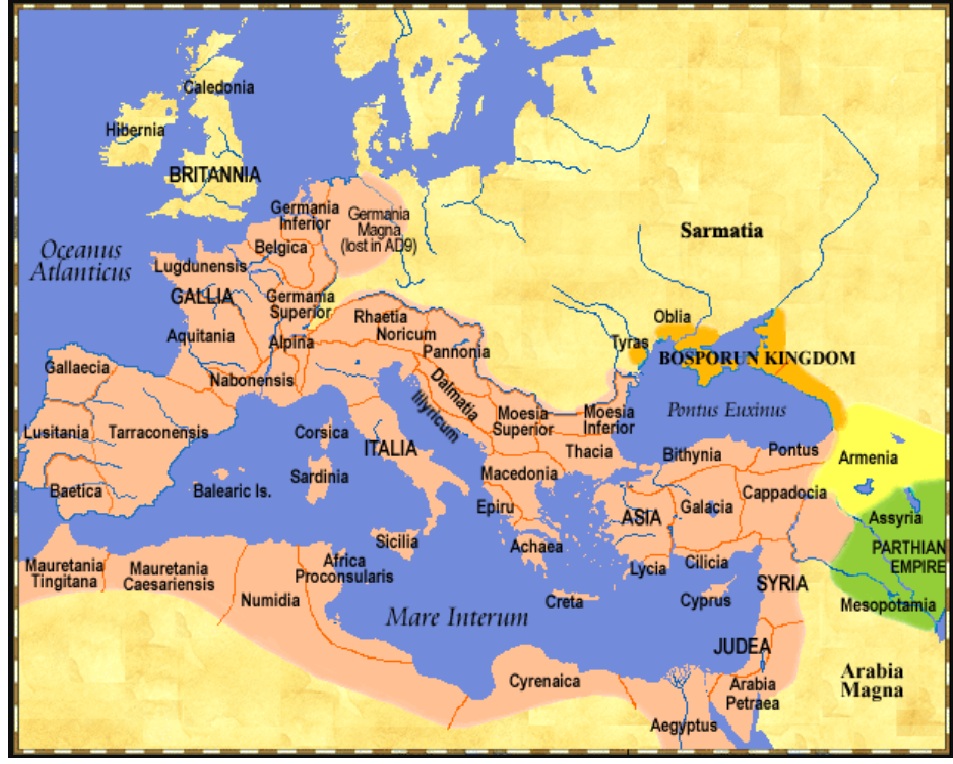
Written from prison in Rome in approximately A.D. 61 Paul wanted to get to Rome (Acts 19:21), not only to teach and fellowship with the believers there (Romans 1:8-13), but also because Rome stood as the center of the civilized world. It was a strategic city for the spread of the gospel. To reach the Roman Empire, the gospel had to reach Rome.

In God’s sovereign plan, Paul did sail to Rome, but not as a prominent citizen, missionary statesman, or even itinerant preacher. He arrived, rather, as a prisoner, in chains (Acts 28:11-16). Even as a prisoner, however, Paul was free to teach, preach, and write (Acts 28:17-31). During these years of house arrest, Paul wrote what have come to be known as the “Prison Epistles”—Ephesians, Philippians, Colossians, and Philemon.

It is clear that Paul was a Roman prisoner when he wrote this letter because of his words in 1:12-17. He wrote of being “in chains” (1:13, 17) and of being a witness for Christ to the “whole palace guard” (1:13 NIV).

AUDIENCE :  The believers in Philippi

3b Excavations of PhilippiThe Macedonian (northern Greece today) city of Philippi was named after Philip of Macedon (the father of Alexander the Great). Surrounded by mountains and close to the sea, Philippi became a strategic city in the Greek empire. In 167 B.C. it became part of the Roman Empire, but it did not achieve real importance until after 31 B.C. when Octavian defeated Antony at the battle of Actium. After that decisive battle, Philippi received a number of Italian colonists who had favored Antony and had been dispossessed of their property. The colony was then renamed Colonia Iulia Philippensis to honor Julius Caesar. Later, in 27 B.C., when Octavian was designated Augustus, the colony’s name was changed again to Colonia Augusta Iulia (Victrix) Philippensium, equating the cause of Augustus with that of Caesar. At that time, Philippi was given the right to the Law of Italy together with many rights and privileges, including immunity from taxation. The residents of Philippi were very conscious and proud of their Roman citizenship and heritage (see Acts 16:20-21). Philippi also boasted a fine school of medicine.

2b Egnatian WayPaul visited Philippi on his second missionary journey, in A.D. 51, about ten years previous to this letter. By the time of Paul’s visit, Philippi had become a thriving commercial center because of its strategic location as the first city on the Egnatian Way, an important ancient highway linking the Aegean and Adriatic Seas. Travelers to Rome would cross the Adriatic and then continue up to Rome on the Appian Way. Thus, Philippi was the gateway to the East. Although thoroughly colonized by the Romans after 31 B.C., Philippi was still more Greek in culture than Roman. Luke refers to Philippi as “a Roman colony and the leading city of that district of Macedonia” (Acts 16:12 NIV). Although Philippi was not the capital city of the region (subprovince of Macedonia), it certainly was the “leading city.” Luke’s statement also reflects civic pride in his hometown.

The church at Philippi in ancient Macedonia was the first European church founded by Paul. It represents the first major introduction of the gospel into Gentile territory (see Philippians 4:14-15).

Acts 16:9-40 tells how the church began. 5b Gangitus RiverIn every city, Paul and his party would go to the synagogue to share the gospel with the Jews. So on their first Sabbath in Philippi, Paul and Silas probably looked for a synagogue. Instead, they found a group of women who had gathered outside the city on the banks of a river. The fact that Philippi had no synagogue indicates that there were few Jews in that city. From its inception, the church at Philippi consisted mainly of Gentiles. Acts 16:14-34 tells of two of the first converts in Philippi: Lydia, a businesswoman who may have been a Jew or a Jewish proselyte; and a Roman jailer. The response of these three provided clear demonstration that God’s Good News was for all classes, sexes, races, and nationalities.

OLYMPUS DIGITAL CAMERA

OLYMPUS DIGITAL CAMERA

Luke also mentions that when Lydia responded to Paul’s message, so did the members of her household (Acts 16:15). The same was true for the jailer—his family responded with him (Acts 16:34). No other specific converts are mentioned in this account in Acts, but the chapter concludes with: “After leaving the prison they [Paul and Silas] went to Lydia’s home; and when they had seen and encouraged the brothers and sisters, they departed” (Acts 16:40 NRSV). “Brothers and sisters” seems to indicate that a small but vital group of believers had been forged. Clement, Euodia, and Syntyche may have been won to Christ during this time (see 4:2-3).

When Paul and Silas departed from Philippi, they left Luke there, in his hometown, to carry on the ministry. A few years later, at the end of his third missionary trip, Paul visited Philippi prior to spending the winter in Corinth. When Paul wrote this epistle, the church in Philippi was thriving, and he felt very close to the believers there.

OCCASION AND PURPOSE FOR WRITING

To thank the Philippians for their gift and to strengthen the believers in their faith

This is a very personal epistle. It is obvious from Paul’s opening comments that he enjoyed a close friendship with the Philippian believers: “I thank my God every time I remember you. In all my prayers for all of you, I always pray with joy because of your partnership in the gospel from the first day until now” (1:3-5  NIV). During their visit to Philippi, Paul and Silas had witnessed immediate and dramatic response to their message. And despite the fact that they were attacked and imprisoned, they had seen the church begin and then grow into a strong core of believers (Acts 16:40). During the course of Paul’s ministry, the Philippian believers had continually come to his assistance through their gifts (4:15-18). At this time, nearly ten years later, the Philippians had again sent a gift to Paul to help him in his time of need: “I rejoice greatly in the Lord that at last you have renewed your concern for me. . . . It was good of you to share in my troubles” (4:10, 14 NIV). Perhaps their donated funds were helping to pay for the rented house to which Paul was confined (Acts 28:30). In response to this gift and to their relationship over the years, Paul wrote to express his deep appreciation for their love, faithfulness, and generosity.

Paul also took the opportunity of this letter to deal with important issues in the church. He had heard of divisive rivalry and selfish ambition (2:3-4), so he gave strong counsel and even named names (4:2). So he warned his beloved Christian brothers and sisters, encouraging and challenging them to continue to stand strong and united and to live for Christ (1:27; 4:1, 4-9).

Paul’s sensitivity to the needs at Philippi stands as a great example. He didn’t wait for a crisis; instead, he confronted potential problems early, before they could fester and infect the whole body.

I hope to see you on Sunday,

Darrell

www.Upwards.Church

Message Audio/Video and Outline: https://upwards.church/leander-campus/watch-now-message-videos

Watch Messages: YouTube-Upwards Church

Facebook: Upwards Church

Read Along Daily Bible Reading: YouVersion (https://www.bible.com/organizations/370f8a6e-16bc-464f-8c43-0b7623fd2952)

Posted in The Fight for Joy - Philippians | Tagged , , , , , , , , , , | Leave a comment

Praying with Joy – Philippians 1:1-10 Commentary

In spite of his difficult circumstances as a prisoner in Rome, Paul is rejoicing. The secret of his joy is the single mind; he lives for Christ and the Gospel. (Christ is named eighteen times in Philippians 1, and the Gospel is mentioned six times.) “For to me to live is Christ, and to die is gain” (Phil. 1:21). But what really is “the single mind”? It is the attitude that says, “It makes no difference what happens to me, just as long as Christ is glorified and the Gospel shared with others.” Paul rejoiced in spite of his circumstances, because his circumstances strengthened the fellowship of the Gospel (Phil. 1:1-11), promoted the furtherance of the Gospel (Phil. 1:12-26), and guarded tine faith of the Gospel (Phil. 1:27-30).

The word fellowship simply means “to have in common.” But true Christian fellowship is really much deeper than sharing coffee and pie, or even enjoying a golf game together. Too often what we think is “fellowship” is really only acquaintanceship or friendship. You cannot have fellowship with someone unless you have something in common; and for Christian fellowship, this means the possessing of eternal life within the heart. Unless a person has trusted Christ as his Savior, he knows nothing of “the fellowship of the Gospel.” In Philippians 2:1, Paul writes about “the fellowship of the Spirit,” because when a person is born again he receives the gift of the Spirit (Rom. 8:9). There is also “the fellowship of His sufferings” (Phil. 3:10). When we share what we have with others, this is also fellowship (Phil. 4:15, translated “communicate” in kjv).

So, true Christian fellowship is much more than having a name on a church roll or being present at a meeting. It is possible to be close to people physically and miles away from them spiritually. One of the sources of Christian joy is this fellowship that believers have in Jesus Christ. Paul was in Rome, his friends were miles away in Philippi, but their spiritual fellowship was real and satisfying. When you have the single mind, you will not complain about circumstances because you know that difficult circumstances will result in the strengthening of the fellowship of the Gospel.

Paul uses three thoughts in Philippians 1:1-11 that describe true Christian fellowship: I have you in my mind (Phil. 1:3-6), I have you in my heart (Phil. 1:7-8), I have you in my prayers (Phil. 1:9-11).

I Have You in My Mind (Phil. 1:3-6)

Isn’t it remarkable that Paul is thinking of others and not of himself? As he awaits his trial in Rome, Paul’s mind goes back to the believers in Philippi, and every recollection he has brings him joy. Read Acts 16; you may discover that some things happened to Paul at Philippi, the memory of which could produce sorrow. He was illegally arrested and beaten, was placed in the stocks, and was humiliated before the people. But even those memories brought joy to Paul, because it was through this suffering that the jailer found Christ! Paul recalled Lydia and her household, the poor slave girl who had been demon-possessed, and the other dear Christians at Philippi; and each recollection was a source of joy. (It is worth asking, “Am I the kind of Christian who brings joy to my pastor’s mind when he thinks of me?”)

It is possible that Philippians 1:5 is talking about their financial fellowship with Paul, a topic he picks up again in Philippians 4:14-19. The church at Philippi was the only church that entered into fellowship with Paul to help support his ministry. The “good work” of Philippians 1:6 may refer to the sharing of their means; it was started by the Lord and Paul was sure the Lord would continue it and complete it.

But we will not go astray if we apply these verses to the work of salvation and Christian living. We are not saved by our good works (Eph. 2:8-9). Salvation is the good work God does in us when we trust His Son. In Philippians 2:12-13 we are told that God continues to work in us through His Spirit. In other words, salvation includes a threefold work:

  • the work God does for us—salvation;
  • the work God does in us—sanctification;
  • the work God does through us—service.

This work will continue until we see Christ, and then the work will be fulfilled. “We shall be like Him, for we shall see Him as He is” (1 John 3:2).

It was a source of joy to Paul to Know that God was still working in the lives of his fellow-believers at Philippi. After all, this is the real basis for joyful Christian fellowship, to have God at work in our lives day by day.

“There seems to be friction in our home,” a concerned wife said to a marriage counselor. “I really don’t know what the trouble is.”

“Friction is caused by one of two things,” said the counselor, and to illustrate he picked up two blocks of wood from his desk. “If one block is moving and one is standing still, there’s friction. Or, if both are moving but in opposite directions, there’s friction. Now, which is it?”

“I’ll have to admit that I’ve been going backward in my Christian life, and Joe has really been growing,” the wife admitted. “What I need is to get back to fellowship with the Lord.”

I Have You in My Heart (Phil. 1:7-8)

Now we move a bit deeper, for it is possible to have others in our minds without really having them in our hearts. (Someone has observed that many people today would have to confess, “I have you on my nerves!”) Paul’s sincere love for his friends was something that could not be disguised or hidden.

Christian love is “the tie that binds.” Love is the evidence of salvation: “We know that we have passed from death unto life, because we love the brethren” (1 John 3:14). It is the “spiritual lubrication” that keeps the machinery of life running smoothly. Have you noticed how often Paul uses the phrase “you all” as he writes? There are at least nine instances in this letter. He does not want to leave anyone out! (Some translations read, “You have me in your heart” in Phil. 1:7, but the basic truth is the same.)

How did Paul evidence his love for them? For one thing, he was suffering on their behalf. His bonds were proof of his love. He was “the prisoner of Jesus Christ for you Gentiles” (Eph. 3:1). Because of Paul’s trial, Christianity was going to get a fair hearing before the officials of Rome. Since Philippi was a Roman colony, the decision would affect the believers there. Paul’s love was not something he merely talked about; it was something he practiced. He considered his difficult circumstances an opportunity for defending and confirming the Gospel, and this would help his brethren everywhere.

But how can Christians learn to practice this kind of love? “I get along better with my unsaved neighbors than I do my saved relatives!” a man confided to his pastor. “Maybe it takes a diamond to cut a diamond, but I’ve just about had it!” Christian love is not something we work up; it is something that God does in us and through us. Paul longed for his friends “in the bowels [love] of Jesus Christ” (Phil. 1:8). It was not Paul’s love channeled through Christ; it was Christ’s love channeled through Paul. “God has poured out His love into our hearts by the Holy Spirit, whom He has given us” (Rom. 5:5, niv). When we permit God to perform His “good work” in us, then we grow in our love for one another.

How can we tell that we are truly bound in love to other Christians? For one thing, we are concerned about them. The believers at Philippi were concerned about Paul and sent Epaphroditus to minister to him. Paul was also greatly concerned about his friends at Philippi, especially when Epaphroditus became ill and could not return right away (Phil. 2:25-28). “My little children, let us not love in word, neither in tongue; but in deed and in truth” (1 John 3:18).

Another evidence of Christian love is a willingness to forgive one another. “And above all things have fervent charity [love] among yourselves: for charity [love] shall cover the multitude of sins” (1 Peter 4:8).

“Tell us some of the blunders your wife has made,” a radio quizmaster asked a contestant.

“I can’t remember any,” the man replied.

“Oh, surely you can remember something!” the announcer said.

“No, I really can’t,” said the contestant. “I love my wife very much, and I just don’t remember things like that.” First Corinthians 13:5 states that “love keeps no record of wrongs” (niv).

Christians who practice love always experience joy; both come as a result of the presence of the same Holy Spirit. “The fruit of the Spirit is love, joy” (Gal. 5:22).

I Have You in My Prayers (Phil. 1:9-11)

Paul found joy in his memories of the friends at Philippi and in his growing love for them. He also found joy in remembering them before the throne of grace in prayer. The high priest in the Old Testament wore a special garment, the ephod, over his heart. On it were twelve stones with the names of the twelve tribes of Israel engraved on them, a jewel for each tribe (Ex. 28:15-29). He carried the people over his heart in love, and so did Paul. Perhaps the deepest Christian fellowship and joy we can experience in this life is at the throne of grace, praying with and for one another.

This is a prayer for maturity, and Paul begins with love. After all, if our Christian love is what it ought to be, everything else should follow. He prays that they might experience abounding love and discerning love. Christian love is not blind! The heart and mind work together so that we have discerning love and loving discernment. Paul wants his friends to grow in discernment, in being able to “distinguish the things that differ.”

The ability to distinguish is a mark of maturity. When a baby learns to speak, it may call every four-legged animal a “bow-wow,” But then the child discovers that there are cats, white mice, cows, and other four-legged creatures. To a little child, one automobile is just like another, but not to a car-crazy teenager! He can spot the differences between models faster than his parents can even name the cars! One of the sure marks of maturity is discerning love.

Paul also prays that they might have mature Christian character, “sincere and without offense.” The Greek word translated “sincere” may have several meanings. Some translate it “tested by sunlight.” The sincere Christian is not afraid to “stand in the light!”

Sincere may also mean “to whirl in a sieve,” suggesting the idea of a winnowing process that removes chaff. In both cases the truth is the same: Paul prays that his friends will have the kind of character that can pass the test. (Our English word sincere comes from a Latin word that means “unadulterated, pure, unmixed.”)

Paul prays for them to have mature Christian love and character, “without offense till the day of Christ” (Phil. 1:10). This means that our lives do not cause others to stumble, and that they are ready for the Judgment Seat of Christ when He returns (see 2 Cor. 5:10; 1 John 2:28). Here are two good tests for us to follow as we exercise spiritual discernment: (1) Will it make others stumble? (2) Will I be ashamed if Jesus should return?

Paul also prays that they might have mature Christian service. He wants them filled and fruitful (Phil. 1:11). He is not interested simply in “church activities,” but in the kind of spiritual fruit that is produced when we are in fellowship with Christ. “Abide in Me, and I in you. As the branch cannot bear fruit of itself, except it abide in the vine; no more can ye, except ye abide in Me” (John 15:4). Too many Christians try to “produce results” in their own efforts instead of abiding in Christ and allowing His life to produce the fruit.

What is the “fruit” God wants to see from our lives? Certainly He wants the “fruit of the Spirit” (Gal. 5:22-23), Christian character that glorifies God. Paul compares winning lost souls to Christ to bearing fruit (Rom. 1:13), and he also names “holiness” as a spiritual fruit (Rom. 6:22). He exhorts us to be “fruitful in every good work” (Col. 1:10), and the writer to the Hebrews reminds us that our praise is the “fruit of the lips” (Heb. 13:15).

The fruit tree does not make a great deal of noise when it produces its crop; it merely allows the life within to work in a natural way, and fruit is the result. “He that abideth in Me, and I in him, the same bringeth forth much fruit: for without Me ye can do nothing” (John 15:5).

The difference between spiritual fruit and human “religious activity” is that the fruit brings glory to Jesus Christ. Whenever we do anything in our own strength, we have a tendency to boast about it. True spiritual fruit is so beautiful and wonderful that no man can claim credit for it; the glory must go to God alone.

This, then, is true Christian fellowship—a having-in-common that is much deeper than mere friendship. “I have you in my mind… I have you in my heart… I have you in my prayers.” This is the kind of fellowship that produces joy, and it is the single mind that produces this kind of fellowship!

www.Upwards.Church

Message Audio/Video and Outline: https://upwards.church/leander-campus/watch-now-message-videos

Watch Messages: YouTube-Upwards Church

Facebook: Upwards Church

Read Along Daily Bible Reading: YouVersion (https://www.bible.com/organizations/370f8a6e-16bc-464f-8c43-0b7623fd2952)

Source: Bible Exposition Commentary (BE Series) – New Testament – The Bible Exposition Commentary – New Testament, Volume 2.

Posted in The Fight for Joy - Philippians | Tagged , , , , | Leave a comment

You’re Invited! – The Fight for Joy – Philippians

Description:  Has life got you down?  Are you in a place you don’t want to be?  Join us and find joy in your troubled time.  Sitting in a dark Roman prison cell, Paul writes of hope and joy.  We’ll discover solid biblical principles from the New Testament book of Philippians to help us: Pray with Joy, Share with Joy, Grow with Joy, Live with Joy, and Give with Joy. No matter where you are, you can have Joy and “strength for any season.”

Philippians (The Fight for Joy) 6 weeks

 Dates             Titles Scriptures                Events

Sep. 14 – Praying with Joy (Phil 1:3-11)         *25 Years Celebration for Upwards Church

Sep. 21 – Sharing with Joy (Phil. 1: 12-21)
Sep. 28 – Following with Joy (Phil. 2)

Oct. 5 – Growing with Joy (Phil. 3)

Oct. 12 – Living with Joy (Phil. 4:4-9)

Oct. 19 – Giving with Joy (Phil. 4:10-20)                          Communion

Introduction:

The word happiness evokes visions of unwrapping gifts on Christmas morning, strolling hand in hand with the one you love, being surprised on your birthday, responding with unbridled laughter to a comedian, or vacationing in an exotic locale. Everyone wants to be happy; we make chasing this elusive ideal a lifelong pursuit: spending money, collecting things, and searching for new experiences. But if happiness depends on our circumstances, what happens when the toys rust, loved ones die, health deteriorates, money is stolen, and the party’s over? Often happiness flees and despair sets in.
In contrast to happiness stands joy. Running deeper and stronger, joy is the quiet, confident assurance of God’s love and work in our lives—that he will be there no matter what! Happiness depends on happenings, but joy depends on Christ.
Philippians is Paul’s joy letter. The church in that Macedonian city had been a great encouragement to Paul. The Philippian believers had enjoyed a very special relationship with him, so he wrote them a personal expression of his love and affection. They had brought him great joy (4:1). Philippians is also a joyful book because it emphasizes the real joy of the Christian life. The concept of rejoicing or joy appears sixteen times in four chapters, and the pages radiate this positive message, culminating in the exhortation to “always be full of joy in the Lord. I say it again—rejoice!” (4:4).
In a life dedicated to serving Christ, Paul had faced excruciating poverty, abundant wealth, and everything in between. He even wrote this joyful letter from prison. Whatever the circumstances, Paul had learned to be content (4:11, 12), finding real joy as he focused all of his attention and energy on knowing Christ (3:8) and obeying him (3:12, 13).
Paul’s desire to know Christ above all else is wonderfully expressed in the following words: “Yes, everything else is worthless when compared with the infinite value of knowing Christ Jesus my Lord. For his sake I have discarded everything else, counting it all as garbage, so that I could gain Christ and become one with him.… I want to know Christ and experience the mighty power that raised him from the dead. I want to suffer with him, sharing in his death” (3:8–10). May we share Paul’s aspiration and seek to know Jesus Christ more and more. Rejoice with Paul in Philippians, and rededicate yourself to finding joy in Christ.

Vital Statistics

Purpose: To thank the Philippians for the gift they had sent Paul and to strengthen these believers by showing them that true joy comes from Jesus Christ alone

Author: Paul

Original Audience: The Christians at Philippi

Date Written: Approximately A.D. 61, from Rome during Paul’s imprisonment there

Setting: Paul and his companions began the church at Philippi on his second missionary journey (Acts 16:11–40). This was the first church established on the European continent. The Philippian church had sent a gift with Epaphroditus (one of their members) to be delivered to Paul (4:18). Paul was in a Roman prison at the time. He wrote this letter to thank them for their gift and to encourage them in their faith.

Key Verse: “Always be full of joy in the Lord. I say it again—rejoice!” (4:4)

Key People: Paul, Timothy, Epaphroditus, Euodia, and Syntyche

Key Place: Philippi

Outline

1. Joy in suffering (1:1–30)
2. Joy in serving (2:1–30)
3. Joy in believing (3:1–4:1)
4. Joy in giving (4:2–23)

Although Paul was writing from prison, joy is a dominant theme in this letter. The secret of his joy is grounded in his relationship with Christ. People today desperately want to be happy but are tossed and turned by daily successes, failures, and inconveniences. Christians are to be joyful in every circumstance, even when things are going badly, even when we feel like complaining, even when no one else is joyful. Christ still reigns, and we still know him, so we can rejoice at all times.

Major Themes of Philippians

Humility 
Christ showed true humility when he laid aside his rights and privileges as God to become human. He poured out his life to pay the penalty we deserve. Laying aside self-interest is essential to all our relationships.
We are to take Christ’s attitude in serving others. We must renounce personal recognition and merit. When we give up our self-interest, we can serve with joy, love, and kindness.
Self-Sacrifice
Christ suffered and died so we might have eternal life. With courage and faithfulness, Paul sacrificed himself for the ministry. He preached the gospel even while he was in prison.
Christ gives us power to lay aside our personal needs and concerns. To utilize his power, we must imitate those leaders who show self-denying concern for others. We dare not be self-centered.
Unity
In every church, in every generation, there are divisive influences (issues, loyalties, and conflicts). In the midst of hardships, it is easy to turn on one another. Paul encouraged the Philippians to agree with one another, stop complaining, and work together.
As believers, we should not contend with one another but unite against a mutual enemy. When we are unified in love, Christ’s strength is most abundant. Keep before you the ideals of teamwork, consideration of others, and unselfishness.
Christian Living
Paul shows us how to live successful Christian lives. We can become mature by being so identified with Christ that his attitude of humility and self-sacrifice becomes ours. Christ is both our source of power and our guide.
Developing our character begins with God’s work in us. But growth also requires self-discipline, obedience to God’s Word, and concentration on our part.
Joy
Believers can have profound contentment, serenity, and peace no matter what happens. This joy comes from knowing Christ personally and from depending on his strength rather than our own.
We can have joy, even in hardship. Joy does not come from outward circumstances but from inward strength. As Christians, we must not rely on what we have or what we experience to give us joy but on Christ within us.

www.Upwards.Church

Message Audio/Video and Outline: https://upwards.church/leander-campus/watch-now-message-videos

Watch Messages: YouTube-Upwards Church

Facebook: Upwards Church

Read Along Daily Bible Reading: YouVersion (https://www.bible.com/organizations/370f8a6e-16bc-464f-8c43-0b7623fd2952)

Source: Life Application Bible Notes (Tyndale, 2007), 2012–2013.

Posted in The Fight for Joy - Philippians | Tagged , , , | Leave a comment