Invitation & Introduction – Silence – Habakkuk

You’re invited to our new series, Silence from the book of Habakkuk!

Description: How we can trust God when he seems silent and distant? Habakkuk, one of the Minor Prophets, faced many of the same questions and objections that we still face today: Where is God in the midst of injustice? Why doesn’t God do something about wickedness and suffering? How can I still trust God when what I believe in my heart doesn’t match what I see with my eyes?  As God reveals his divine work, Habakkuk must let go off his own expectations and wait patiently for God to fulfill his divine purposes in his timing and ways. In the end, Habakkuk’s complaint gives away to a beautiful trust in God that is not based upon his circumstances.

Dates           Titles                      Scripture                                    Events

Mar. 16 – When God is Silent (Hab. 1)                  Communion/Spring Break

Mar. 23 – When God is Slow (Hab. 2)
Mar. 30 – When God is Savior (Hab. 3)                       Potluck

Introduction:

From innocent childhood queries to complex university discussions, life is filled with questions. Asking how and why and when, we probe beneath the surface to find satisfying answers. But not all questions have answers wrapped and neatly tied. These unanswered interrogations create more questions and nagging, spirit-destroying doubt. Some choose to live with their doubts, ignoring them and moving on with life. Others become cynical and hardened. But many reject those options and continue to ask, looking for answers.
Habakkuk was a man who sought answers. Troubled by what he observed, he asked difficult questions. These questions were not merely intellectual exercises or bitter complaints. Habakkuk saw a dying world, and it broke his heart. Why is there evil in the world? Why do the wicked seem to be winning? He boldly and confidently took his complaints directly to God. And God answered with an avalanche of proof and prediction.
The prophet’s questions and God’s answers are recorded in this book. As we turn the pages, we are immediately confronted with his urgent cries, “How long, O LORD, must I call for help? But you do not listen! ‘Violence is everywhere!’ I cry, but you do not come to save” (1:2). In fact, most of the first chapter is devoted to his questions. As chapter two begins, Habakkuk declares that he will wait to hear God’s answers to his complaints. Then God begins to speak, telling the prophet to write his answer plainly so that all will see and understand. It may seem, God says, as though the wicked triumph, but eventually they will be judged, and righteousness will prevail. Judgment may not come quickly, but it will come. God’s answers fill chapter two. Then Habakkuk concludes his book with a prayer of triumph. With questions answered and a new understanding of God’s power and love, Habakkuk rejoices in who God is and in what he will do. “Yet I will rejoice in the LORD! I will be joyful in the God of my salvation! The Sovereign LORD is my strength! He makes me as surefooted as a deer, able to tread upon the heights” (3:18, 19).
Listen to the profound questions that Habakkuk boldly brings to God, and realize that you can also bring your complaints and inquiries to him. Listen to God’s answers and rejoice that he is at work in the world and in your life.

Vital Statistics

Purpose: To show that God is still in control of the world despite the apparent triumph of evil

Author: Habakkuk

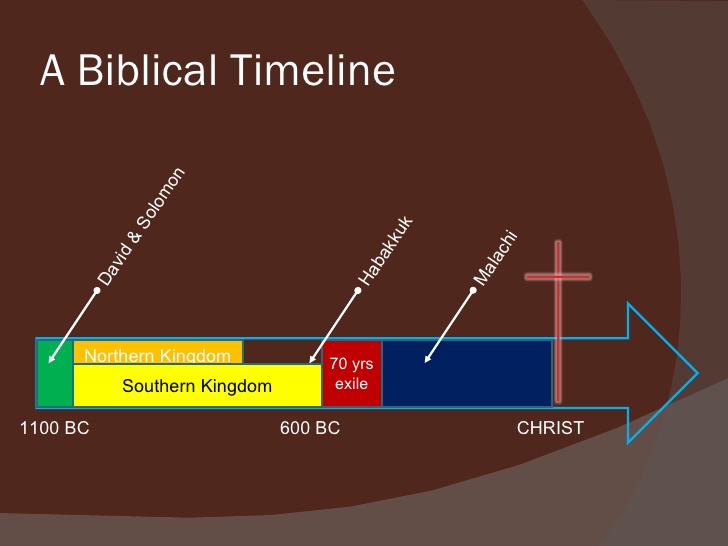
Original Audience: The people of Judah (the southern kingdom)

Date Written: Between 612 and 589 B.C.

Setting: Babylon was becoming the dominant world power and Judah would soon feel Babylon’s destructive force.

Key Verses: “But the just shall live by his faith.” Habakkuk 2:4

I have heard all about you, LORD. I am filled with awe by your amazing works. In this time of our deep need, help us again as you did in years gone by. And in your anger, remember your mercy” (3:2).

Key People: Habakkuk, the Babylonians

Key Place: Judah

Outline:

1. Habakkuk’s complaints (1:1–2:20)
2. Habakkuk’s prayer (3:1–19)

When Habakkuk was troubled, he brought his concerns directly to God. After receiving God’s answers, he responded with a prayer of faith. Habakkuk’s example is one that should encourage us as we struggle to move from doubt to faith. We don’t have to be afraid to ask questions of God. The problem is not with God and his ways but with our limited understanding of him.

Themes of the Book:  

Struggle and Doubt –
Habakkuk asked God why the wicked in Judah were not being punished for their sin. He couldn’t understand why a just God would allow such evil to exist. God promised to use the Babylonians to punish Judah. When Habakkuk cried out for answers in his time of struggle, God answered him with words of hope.
God wants us to come to him with our struggles and doubts. His answers may not be what we expect, however. God sustains us by revealing himself to us. Trusting him leads to quiet hope, not bitter resignation.

God’s Sovereignty –
Habakkuk asked God why he would use the wicked Babylonians to punish his people. God said that he would also punish the Babylonians after they had fulfilled his purpose.
God is still in control of this world in spite of the apparent triumph of evil. God doesn’t overlook sin. One day he will rule the whole earth with perfect justice.

Hope –
God is the Creator; he is all-powerful. He has a plan, and he will carry it out. He will punish sin. He is our strength and our place of safety. We can have confidence that he will love us and guard our relationship with him forever.
Hope means going beyond our unpleasant daily experiences to the joy of knowing God. We live by trusting in him, not by the benefits, happiness, or success we may experience in this life. Our hope comes from God.

I hope you can join us!

Darrell

www.Upwards.Church

Message Audio/Video and Outline: https://upwards.church/leander-campus/watch-now-message-videos

Watch Messages: YouTube-Upwards Church

Facebook: Upwards Church

Read Along Daily Bible Reading: YouVersion (https://www.bible.com/organizations/370f8a6e-16bc-464f-8c43-0b7623fd2952)
Source: Life Application Bible Notes (Tyndale, 2007), 1482–1483.

Posted in Silence - Habakkuk | Tagged , , , , , , , , | Leave a comment

God’s Armor – Ephesians 6:10-20

Ephesians 6:10- 20  – Armor of God

Paul closes his letter with the truth that  there will be inevitable clashes with evil, and the church must be ready to stand and fight. In the Christian life, we battle against rulers and authorities (the powerful evil forces of fallen angels headed by Satan, who is a vicious fighter, see 1 Peter 5:8). To withstand their attacks, we must depend on God’s strength and use every piece of his armor. Paul was not only giving this counsel to the church, the body of Christ, but to all individuals within the church. The whole body needs to be armed. As you battle against evil, fight in the strength of the church, whose power comes from the Holy Spirit. What can our church do to be a Christian armory?

6:10 Be strong with the Lord’s mighty power refers to strength derived from God, not strength we humans have to somehow obtain. The words “be strong” describe continual empowering of the Christian community. God’s strength and power are part of the Kingdom blessings available to God’s people. The power that raised Christ from the dead empowers God’s people as they prepare for the spiritual battle they must face on this earth.

6:11 God empowers his people, but he does not send them into battle unarmed. God’s people must put on all of God’s armor (see also Romans 13:12). The panoplia, or full armor, means complete equipment, head-to-toe protection, both defensively and offensively. This gear was for hand-to-hand combat. This “armor of God” was mentioned in the Old Testament. Isaiah 59:17 describes God as wearing the breastplate of righteousness and the helmet of salvation. Paul wrote this letter while chained to a Roman soldier. Certainly the soldier’s armor must have brought this metaphor to mind. Paul described a divine and complete “outfit” that God gives believers in order to provide all we need to stand firm against all strategies and tricks of the Devil. The Devil rules the world of darkness, the kingdom opposed to God. “Stand against” was a military term meaning to resist the enemy, hold the position, and offer no surrender. The Devil will not fight fair; he uses subtle tricks and schemes. Our ability to stand firm depends on our use of the armor.

6:12 Christians are fighting against evil—describing hand-to-hand combat. But we are not in an earthly military campaign—our battle is not against people made of flesh and blood. Instead, we battle the demons over whom Satan has control. Demons work to tempt people to sin. They were not created by Satan because God is the Creator of all. Rather, the demons are fallen angels who joined Satan in his rebellion and thus became perverted and evil. The descriptive words reveal the characteristics of these enemies as well as their sphere of operations. Rulers and authorities are cosmic powers, or demons, mentioned in 1:21. These spiritual beings have limited power. They are invisible to us, operating in the unseen world. The mighty powers refers to those spiritual powers who aspire to world control. They are evil (of the darkness) and they currently rule this world. The wicked spirits in the heavenly realms refers to the demons’ dwellings, planets and stars, from which the demons control the lives of people. Paul used the names of groups of evil powers not so much to establish classes or distinguish demonic powers as to show the full extent of Satan’s warfare.

Here is a host of spiritual forces arrayed against us, requiring us to use God’s full armor. These are real and powerful beings, not mere fantasies. Believers must not underestimate them. The Ephesians had practiced magic and witchcraft (Acts 19:19), so they were well aware of the power of the darkness. We face a powerful army whose goal is to defeat Christ’s church. When we believe in Christ, the satanic beings become our enemies, and they try every device to turn us away from him and back to sin. Although believers are assured of victory, we must engage in the struggle until Christ returns because Satan constantly battles against all who are on God’s side.

6:13 Believers’ response to the reality of this warfare should be to use every piece of God’s armor. The armor is available, but the believer-soldier must use it. We would be neglectful to do otherwise, for the battle is real, and we are Satan’s targets. Only with the armor will believers be able to be standing firm, a word describing standing against great opposition; indeed, it would be impossible to stand on our strength alone. Christian soldiers must be able to hold their ground and not flee or surrender under Satan’s attacks. The time of evil refers to the hours of trial that have within themselves the seeds of the last and greatest trial. Christians must be prepared for every day’s conflicts with the forces of evil.

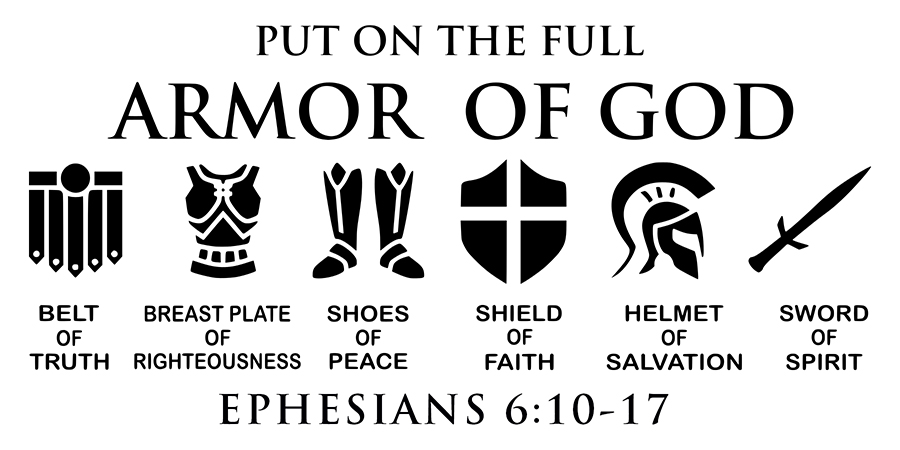
6:14 In order to stand their ground in the heat of battle, believers need every piece of God’s armor. The order of the pieces listed in the following verses is the order in which a soldier would put them on. First, fasten the sturdy belt of truth around your waist. This belt, also called a girdle, was about six inches wide. Probably made of leather, it held together the clothing underneath as well as holding the other pieces of armor in place, such as the breastplate and the sheath for the sword. It may have contained a “breechclout,” an apron that protected the lower abdomen. It may have also braced the back in order to give strength. When the belt was fastened, the soldier was “on duty,” ready to fight. A slackened belt meant “off duty.” Christians, however, must face each day with a fastened belt, ready to fight the battle when needed. As the belt formed the foundation of the soldier’s armor, the truth is the foundation of the Christian life. When the enemy, the father of lies (John 8:44), attacks with his lies, half-truths, and distortions, we believers can stand firm in the truth.

Next, the soldier must put on the body armor of God’s righteousness. The body armor was a large leather, bronze, or chain-mail piece that protected the body from the neck to the thighs. Protecting the vital organs, no soldier would go into battle without his body armor. Often this had a back piece too, protecting the body from hits from behind. Righteousness provides a significant defense; it gives the evidence that we have been made right with God and that this righteousness has been given us by the Holy Spirit. Satan seeks to thwart righteous living. When the enemy, the accuser (Revelation 12:10), tries to convince us that we are not really saved, that we just keep on disappointing God, and that we’re “poor excuses” for Christians, we can stand up to him because of the righteousness we have been promised through our faith in Jesus Christ.

6:15 A soldier wore special sandals or military shoes that protected his feet without slowing him down. Roman soldiers had special shoes made of soft leather with studded soles. This allowed them to march farther and faster as well as giving them facility of motion in battle—they could dig in and hold their ground when in hand-to-hand combat.

Believers also need special shoes—peace that comes from the Good News. Believers can stand firm, with peace, even in hand-to-hand combat, because they know that they are doing right and that they are on the winning side. Christians are in the battle both with the inner peace Christ has already given and the desire to produce that peace in the hearts of others. This can only happen as they share this “gospel of peace” with those who have not yet heard and accepted it. When the enemy, the deceiver (Revelation 12:9), offers false ways to peace or tries to get us to focus on our concerns and fears, we Christian soldiers can stand up to him.

6:16 The soldier needed to also carry extra protection in the form of a shield. The image was taken from the Roman shield, a large oblong or oval piece, approximately four feet high by two feet wide, made of wood and leather, often with an iron frame. Sometimes the leather would be soaked in water to help extinguish fiery arrows. The ancient “flaming arrow” or “fire dart” was made of cane with a flammable head that was lighted and then shot so as to set fire to wooden shields, cloth tents, etc. For Christians, this shield is faith—complete reliance on God. Faith means total dependence on God and willingness to do his will. It is not something we put on for a show for others. It means believing in his promises even though we don’t see those promises materializing yet. When the enemy, the ruler of this world (John 12:31), sends his fiery arrows of temptation, doubt, wrath, lust, despair, vengeance, problems, and trials into our lives, we can hold up our shields and stop them. Faith gives us the strength to stand against Satan with firm courage, even when he uses his most fearsome weapons.

6:17 The helmet protected the soldier’s head. Helmets were made of leather and brass, or sometimes bronze and iron—no sword could pierce a good helmet. Isaiah 59:17 describes God wearing a helmet of salvation. Believers’ salvation, already accomplished, will be consummated when Christ comes to claim his own. With the assurance of salvation protecting their minds, Christians can stand against Satan’s attacks. As a blow to the head often means death, so a person without hope of salvation will be easily defeated by the enemy. When the enemy, the Devil (1 Peter 5:8), seeks to devour and destroy God’s people with empty or evil thoughts, trying to get us to doubt our salvation, we can trust in the protection of the helmet. Our salvation will be accomplished, for God has promised it.

Finally, the soldier takes the sword of the Spirit—the only offensive weapon mentioned. This refers to the short sword used in dose combat. The sharp, short sword was one of Rome’s great military innovations. The Roman army was called the “short swords” because of its use of the short swords in winning battles. The sword’s double edges made it ideal for “cut and thrust” strategy. The Spirit makes the word of God effective as we speak it and receive it. The Spirit gives the word its penetrating power and sharp edge. Jesus’ use of God’s word in his temptation prompts our use of it against Satan (Matthew 4:4, 7, 10). With the Holy Spirit within, believers have the constant reminder of God’s word to use against Satan’s temptations. When the enemy, the tempter (Matthew 4:3–4; 1 Thessalonians 3:5), tries to tempt us to do evil, we have the power to send him away with the word of God. The Spirit will bring the words to mind.

6:18 This verse, although not naming another “weapon” in the believer’s armor, does continue the thought of 6:17. As we take the sword of the Spirit, God’s word, we must also pray at all times and on every occasion in the power of the Holy Spirit. Praying in the Spirit means that the Spirit helps us when we pray (Romans 8:26); the Spirit prays on our behalf (Romans 8:27); the Spirit makes God accessible (Ephesians 2:18); the Spirit gives us confidence when we pray (Romans 8:15–16; Galatians 4:6). He inspires and guides us when we pray. He helps us communicate with God and also brings God’s response to us.

Paul was not calling prayer a weapon; instead, he was giving the how-to’s for taking up the armor described in the previous verses. We must not underestimate Satan’s forces. He will strike in different ways at different people; thus, we need to pray “all kinds” of prayers, allowing for all kinds of requests. Satan will attack at various times, but he will always be attacking someone. Satan will attack when we least expect it, so we need to stay alert to prayer needs when they arise. Satan will rarely let up if he thinks he can win the battle, so believers must be persistent in praying, no matter how long it takes. No believer is exempt from being Satan’s target—Satan demands battle against his enemies (believers). Thus all Christians everywhere need our prayer support.

How can anyone pray at all times? Make quick, brief prayers your habitual response to every situation you meet throughout the day. Order your life around God’s desires and teachings so that your very life becomes a prayer. You can make prayer your life and your life a prayer while living in a world that needs God’s powerful influence.

www.Upwards.Church

Message Audio/Video and Outline: https://upwards.church/leander-campus/watch-now-message-videos

Watch Messages: YouTube-Upwards Church

Facebook: Upwards Church

Read Along Daily Bible Reading: YouVersion (https://www.bible.com/organizations/370f8a6e-16bc-464f-8c43-0b7623fd2952)

Source: [1] Bruce Barton et al., Life Application New Testament Commentary (Wheaton, IL: Tyndale, 2001), 829–835.

Posted in Masterpiece - Ephesians | Tagged , , , , , , , , , , , , , , , , | Leave a comment

Satanic Convention – Ephesians 6:11

Put on the full armor of God, so that you can take your stand against the devil’s schemes. Ephesians 6:11

What are the devil’s schemes?   One illustration notes….

Satan called a worldwide convention of demons. In his opening address he said, “We can’t keep from forming an intimate relationship with their savior.” “Once they gain that connection with Jesus, our power over them is broken.”

“This is what I want you to do”, said the devil:

  1. “Distract them from gaining hold of their Savior and maintaining that vital connection throughout their day!” “
  2. “Keep them busy in the nonessentials of life and invent innumerable schemes to occupy their minds,” he answered.
  3. “Tempt them to spend, spend, spend, and borrow, borrow, borrow.”
  4. “Persuade the wives to go to work for long hours and the husbands to work 6-7 days each week, 10-12 hours a day, so they can afford their empty lifestyles.”
  5. “Keep them from spending time with their children.” “As their families fragment, soon, their homes will offer no escape from the pressures of work!”
  6. “Over-stimulate their minds so that they cannot hear that still, small voice.”
  7. “Entice them to play their tablets, phones, TVs or radios whenever they drive.” “To keep the TV, VCR, CDs and their PCs going constantly in their home and see to it that every store and restaurant in the world plays non-biblical music constantly.” “This will jam their minds and break that union with Christ.”
  8. “Fill every dead space with ads to make them feel like their missing something “
  9. “Pound their minds with the news, especially bad or fearful 24 hours a day.”
  10. “Invade their driving moments with billboards.” “Flood their mailboxes with junk mail, mail order catalogs, sweepstakes, and every kind of newsletter and promotional offering free products, services and false hopes.”
  11. “Keep skinny, beautiful models on the magazines and TV so their husbands will believe that outward beauty is what’s important, and they’ll become dissatisfied with their wives.”
  12. “Keep the wives too tired to love their husbands at night.” “Give them headaches too!” “If they don’t give their husbands the love they need, they will begin to look elsewhere.” “That will fragment their families quickly!
  13. “Give them Santa Claus to distract them from teaching their children the real meaning of Christmas.” “Give them an Easter bunny so they won’t talk about his resurrection and power over sin and death.”
  1. “Even in their recreation, let them be excessive.” “Have them return from their recreation exhausted.” “Keep them busy to not reflect on God’s creation.”
  2. “Send them to amusement parks, sporting events plays, concerts, and movies instead.” “Keep them busy, busy, busy!”
  3. “And when they meet for spiritual fellowship, involve them in gossip and small talk so that they leave with troubled consciences.”
  4. “Crowd their lives with so many good causes they have no time to seek power from Jesus.” “Soon they will be working in their own strength, sacrificing their health and family for the good of the cause.” “It will work!” “It will work!”

It was quite a plan! The demons went eagerly to their assignments causing Christians everywhere to get more busy and more rushed, going here and there. Having little time for their Christ or their families.

Having no time to tell others about the power of Jesus to change lives. Has the devil been successful at his scheme?

Does “busy” mean:

B-eing U-nder S-atan’s Y-oke?


www.Upwards.Church

Message Audio/Video and Outline: https://upwards.church/leander-campus/watch-now-message-videos

Watch Messages: YouTube-Upwards Church

Facebook: Upwards Church

Read Along Daily Bible Reading: YouVersion (https://www.bible.com/organizations/370f8a6e-16bc-464f-8c43-0b7623fd2952)

Posted in Masterpiece - Ephesians | Tagged , , , , , | Leave a comment

Parenting Principles – Ephesians 6:1-4 Commentary

If our faith in Christ is real, it will usually prove itself at home, in our relationships with those who know us best. Children and parents have a responsibility to each other. The fact that Paul took the time to directly address those who were regarded by some as the “lower” and “less important” members of society (wives, children, and servants) shows that he raised them to a level of importance and responsibility in the body of Christ. All Christians are to be responsible in their positions, living as Christ would have them live.

6:1 Children, obey your parents in the Lord, for this is right.NKJV Continuing the theme of Christian submission, Paul turned next to children. He assumed that children would be in the congregation of believers as this letter was read. By even addressing them—a segment of society that was considered to be virtually without rights—Paul elevated them and invested them with dignity and worth unheard of in the Roman world at the time. His command to them is simple: Obey your parents in the Lord. This is not an absolute command; when a parent tells a child to do something unbiblical, immoral, or unethical, the law of God supersedes the will of the parent. But aside from those extremes, children are to obey their mothers and fathers. This is the way God intends it. It’s easy to see the immediate practical benefits of this for both children and parents because parents usually really do know best.

The Greek word for children (tekna) refers to young children living at home (see also Colossians 3:20, where the same word is used). The word “obey” conveys a stronger demand than the submission required of wives (5:22). God requires children to obey because children need to rely on the wisdom of their parents. Jesus himself submitted to the authority of his earthly parents, despite his authority as the Messiah (Luke 2:51). All young children will, at times, disobey and test their parents’ limits. As they get older, they will understand why God wants them to obey. Obedience that recognizes parents’ authority can carry over into recognizing God’s authority. God’s plan for his people includes solid family relationships where there exists respect, obedience, submission, and love for one another. When both parents and children love God, all of them will seek to obey and please him.

 LIFE APPLICATION – PARENTS AND CHILDREN
The parent-child relationship is the arena in which the child is to learn to submit to and respect his elders and those in authority over him—including God. Do you require your children to obey you? Do you help other parents by setting a good example for them in this area? Don’t be misled or dissuaded by the media or our permissive culture. Let the Bible be the voice of wisdom that cuts through the noise of our society. If you love your children, teach them the value and blessings of obedience.

6:2-3 “Honor your father and mother,” which is the first commandment with promise: “that it may be well with you and you may live long on the earth.”NKJV Paul added the authority of the revealed law to the natural law described in 6:1, quoting the fifth commandment, recorded in Exodus 20:12, Honor your father and mother. Obeying and honoring are different. To obey means to do what another says to do; to honor means to respect and love. Children are to obey while under their parents’ care, but they must honor their parents for life. Paul described this as the first commandment with promise, that of prolonged life, which he quoted in the remainder of the verse. How is this the first commandment with a promise? It is neither the first commandment, nor the first with a promise, since the second commandment carries a promise with it. Commentators offer many explanations. Two are most helpful: (1) This is the first commandment (after the first four, which are general commandments) that deals with social involvements and codes for behavior. (2) More likely, this is the first or primary commandment for children to follow, but it holds a promise applicable to them.

 LIFE APPLICATION – HONOR
Paul instructed children not only to obey their parents but to honor them as well. It is entirely possible to obey without honor—who hasn’t seen a child do what he or she is told, but with clenched fists and teeth and an “I’m only doing this because you’re making me” attitude? To honor is to go beyond obedience. It is to show respect and esteem for someone and to treat him or her with dignity. Children do not always agree with their parents (and that holds true for children of all ages), but they can always treat them with respect. It is incumbent upon parents to teach this to their children and to make it easier for them to do so by acting in respectable, honorable ways.

The promise should not be the main motive for honoring parents; rather, the main motive should be to do God’s will, and the promise that accompanies the command indicates this. Paul adapted the promise recorded in Exodus 20:12 and Deuteronomy 5:16. As children obey the command to honor their parents, they show an attitude of love and respect that they carry over into their relationship with God. Such an attitude provides a community that helps provide for and protect the aged. On the individual level, as each person cares for older people, the elderly live longer, and the younger people help pass the values down to the next generation.

The word “honor” also refers to the attitude of slaves toward masters (1 Timothy 6:1), of husbands toward wives (1 Peter 3:7), and general attitude toward others, especially those in leadership (Romans 13:7). Jesus made this an unconditional demand (Mark 7:10-13). Some societies honor their elders. They respect their wisdom, defer to their authority, and pay attention to their comfort and happiness. Christians should act this way. Where elders are respected, long life becomes a blessing, not a burden to them. Paul instructed the church to be a community that cares for older people. This will be especially important as people in North America age. By the year 2021, one in six people will be over sixty-five years of age. Honoring our aging parents will be crucial as our Christian duty.

CHART: CHILDREN AND THEIR PARENTS

The Scriptures have much to say about how children should treat their parents.

Who said it Where it’s said Do Don’t
Moses in the Law Exodus 20:12; Deuteronomy 5:16 Honor and
respect them
Exodus 21:15 Attack them
Exodus 21:17; Leviticus 20:9 Curse them
Deuteronomy 21:18-21 Obey them Rebel against them
Solomon in the Proverbs Proverbs 23:22 Listen to them
Proverbs 28:24 Rob them
Proverbs 30:11 Curse them
Proverbs 30:17 Mock them
Jesus in the Gospels Matthew 15:4-6; Mark 7:10-13 Honor and provide for them Curse and neglect them
Matthew 19:19 Honor them
Mark 10:19 Honor them
Luke 14:26 Honor them above God
Paul in the Epistles Ephesians 6:1 Obey them
Ephesians 6:2 Honor them

6:4 And, fathers, do not provoke your children to anger, but bring them up in the discipline and instruction of the Lord.NRSV Parental discipline should help children learn, not exasperate and provoke them to anger. In Colossians 3:21, Paul gave the same advice, adding that if children are disciplined in unloving and irresponsible ways, they may become discouraged and resentful. In families of Paul’s day, the father had full legal rights over his children and often ran his household with rigid control. In Jewish families, the fathers were responsible for the education of the children. Paul did not have to establish the fathers’ authority; rather, his aim was to set the limits on harsh treatment. Parenting is not easy—it takes lots of patience to raise children in a loving, Christ-honoring manner. But frustration and anger should not be causes for discipline. Parents can remove the exasperating effect of their discipline by avoiding nagging, labeling, criticizing, or dominating. Don’t goad your children into resenting you. Paul wrote specifically to fathers because, in that culture, fathers were the absolute head of the home, with complete control and authority. For Paul to say that they needed to treat their children as human beings and consider their feelings was revolutionary. As Christ changed the way husbands and wives related, so he changed the way parents and children related.

 LIFE APPLICATION –  THE BALANCE
As he did with his instructions to husbands and wives, Paul now struck a balance with his advice to children by addressing their parents, especially fathers. Fathers (and mothers) are to teach their children to honor and obey, yes, but they are to do so in a way that does not “provoke [their] children to anger.” We may remember what it feels like to be exasperated or angered by an unreasonable or even cruel or abusive parent or parent figure. Paul warns parents not to do that to their own children. Teach them obedience and respect, yes, but do it in such a way as not to drive them to rage or despair. Martin Luther, whose own father was very strict, once wrote: “Spare the rod and spoil the child—that is true. But beside the rod keep an apple to give him when he has done well.” Check yourself: Do you try to encourage and praise at least as often as you scold or correct?

Parents ought not provoke their children, and neither should they abandon their responsibility to guide, correct, and discipline them. Parents still have a job to do for their children—to bring them up in the discipline and instruction of the Lord. The words “bring up” imply nourishing and cherishing. “Discipline” includes punishment for wrongdoing combined with persistent love (see Proverbs 13:24; 22:6, 15; 23:14), all as part of the instruction of a child. We must explain appropriate behavior to our children, correct them as they disobey, and encourage them when they obey. Both discipline and instruction are focused in “the Lord,” for God-fearing parents desire God-fearing children. Thus, discipline and instruction are given in the context of the parents’ relationship with the Lord, as described in the Old Testament:

  • Love the Lord your God with all your heart and with all your soul and with all your strength. These commandments that I give you today are to be upon your hearts. Impress them on your children. Talk about them when you sit at home and when you walk along the road, when you lie down and when you get up. Tie them as symbols on your hands and bind them on your foreheads. Write them on the doorframes of your houses and on your gates. (Deuteronomy 6:5-9 niv)

Discipline and instruction in the Lord form the foundation for bringing up children.

 LIFE APPLICATION – TEACH
After the negative command (“Do not provoke your children to anger”), Paul adds an affirmative one: “Bring them up in the discipline and instruction of the Lord.” We must also be diligent to give them the instruction and encouragement so vital to their upbringing. William Hendrickson put it this way: “The heart of Christian nurture is to bring the heart of the child to the heart of his Savior.” Do you read the Bible to your children? Do you tell them the great stories of the heroic men and women of the faith who’ve gone before? Do you pray for and with them daily? Do you take them to worship, Vacation Bible School or kid’s classes, and let them see how important your involvement in the church is to you? Can they see the difference Christ makes in your life?

www.Upwards.Church

Message Audio/Video and Outline: https://upwards.church/leander-campus/watch-now-message-videos

Watch Messages: YouTube-Upwards Church

Facebook: Upwards Church

Read Along Daily Bible Reading: YouVersion (https://www.bible.com/organizations/370f8a6e-16bc-464f-8c43-0b7623fd2952)

Source:

Bruce B. Barton et al., Life Application Bible Commentary – Ephesians, (Wheaton, IL: Tyndale, 1996), WORDsearch CROSS e-book, Under: “EPHESIANS 6”.

Posted in Masterpiece - Ephesians | Tagged , , , , , , , | Leave a comment