Esther- God Remembers – Invitation & Introduction

Your Invited! 

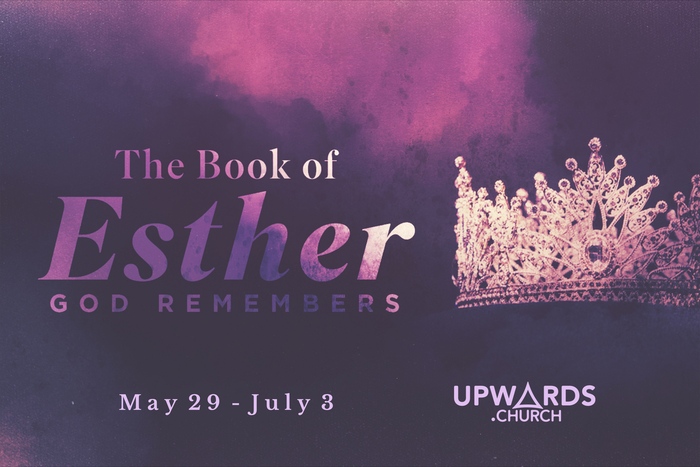
Series:  Esther (God Remembers) 6 weeks

Description:  What if everything in our seemingly ordinary lives are leading toward an extraordinary display of God’s plan?  You and I are not where we are by accident, luck or coincidence.  God has a plan and we’re in the middle of the action! The book of Esther gives hope and confidence to anyone who needs to know that God is present, powerful and personal.  He has strategically positioned each of us as part of His Kingdom to bring salvation to those around us. We hope you can join us!

 Dates           Titles (Scriptures)                                 Events

May 29         God Plans Ahead (Esther 1-2)                 Memorial Day Weekend 

June 5          God’s People in Peril (Esther 3-4)
June 12         God Gives Courage (Esther 5)

June 19          God is In Control (Esther 6)                   Father’s Day, Kid’s Camp 

June 26         God’s Victory (Esther 7-8)

July 3             God’s Completed Work (Esther 9-10)     Youth Camp 

Esther Introduction: 

Drama, power, romance, intrigue—this is the stuff of which best-selling novels are made. But far from a modern piece of fiction, those words describe a true story, lived and written centuries ago. More than entertaining reading, it is a story of the profound interplay of God’s sovereignty and human will. God prepared the place and the opportunity, and his people, Esther and Mordecai, chose to act.

The book of Esther begins with Queen Vashti refusing to obey an order from her husband, King Xerxes. She was subsequently banished, and the search began for a new queen. The king sent out a decree to gather together all the beautiful young women in the empire and bring them into the royal harem. Esther, a young Jewish woman, was one of those chosen. King Xerxes was so pleased with Esther that he made her his queen.

Meanwhile, Mordecai, Esther’s older cousin, became a government official and during his tenure foiled an assassination plot. But the ambitious and self-serving Haman was appointed second-in-command in the empire. When Mordecai refused to bow in reverence to him, Haman became furious and determined to destroy Mordecai and all the Jews along with him.

To accomplish his vengeful deed, Haman deceived the king and persuaded him to issue an edict condemning the Jews to death. Mordecai told Queen Esther about this edict, and she decided to risk her life to save her people. Esther asked King Xerxes and Haman to be her guests at a banquet. During the feast, the king asked Esther what she really wanted, and he promised to give her anything. Esther simply invited both men to another banquet the next day.

That night, unable to sleep, the king was flipping through some records in the royal archives when he read of the assassination plot that Mordecai had thwarted. Surprised to learn that Mordecai had never been rewarded for this deed, the king asked Haman what should be done to properly thank a hero. Haman thought the king must be talking about him, and so he described a lavish reward. The king agreed, but to Haman’s shock and utter humiliation, he learned that Mordecai was the person to be so honored.

During the second banquet, the king again asked Esther what she desired. She replied that someone had plotted to destroy her and her people, and she named Haman as the culprit. Immediately the king sentenced Haman to die on the impaling pole that he had set up for Mordecai.

In the final act of this true-life drama, Mordecai was appointed to Haman’s position, and the Jews were guaranteed protection throughout the land. To celebrate this historic occasion, the Festival of Purim was established.

Because of Queen Esther’s courageous act, a whole nation was saved. Seeing her God-given opportunity, she seized it! Her life made a difference. Read Esther and watch for God at work in your life. Perhaps he has prepared you to act in “such a time as this” (4:14).

Vital Statistics

Purpose: To demonstrate God’s sovereignty and his loving care for his people

Author: Unknown. Possibly Mordecai (9:29). Some have suggested Ezra or Nehemiah because of the similarity of the writing style.

Original Audience: The people of Israel

Date Written: Approximately 470 B.C. (Esther became queen in 479.)

Setting: Although Esther follows Nehemiah in the Bible, its events are about 30 years prior to those recorded in Nehemiah. The story is set in the Persian Empire, and most of the action takes place in the king’s palace in Susa, the Persian capital.

Key Verse: “If you keep quiet at a time like this, deliverance and relief for the Jews will arise from some other place, but you and your relatives will die. Who knows if perhaps you were made queen for just such a time as this?” (4:14)

Key People: Esther, Mordecai, King Xerxes I, Haman

Key Place: The king’s palace in Susa, Persia

Special Features: Esther is one of only two books named for women (Ruth is the other). The book is unusual in that in the original version no name, title, or pronoun for God appears. This caused some church fathers to question the book’s inclusion in Scripture. But God’s presence is clear throughout the book.

The Blueprint

  1. Esther becomes queen (1:1-2:23)
  2. The Jews are threatened (3:1-4:17)
  3. Esther intercedes for the Jews (5:1-8:17)
  4. The Jews are delivered (9:1-10:3)

The book of Esther is an example of God’s divine guidance and care over our lives. God’s sovereignty and power are seen throughout this book. Although we may question certain circumstances in our lives, we must have faith that God is in control, working through both the pleasant and difficult times so that we can serve him effectively.

MEGATHEMES
THEME EXPLANATION IMPORTANCE
God’s Sovereignty The book of Esther tells of the circumstances that were essential to the survival of God’s people in Persia. These “circumstances” were not the result of chance but of God’s grand design. God is sovereign over every area of life. With God in charge, we can take courage. He can guide us through the circumstances we face in our lives. We should expect God to display his power in carrying out his will. As we unite our life’s purposes to God’s purpose, we benefit from his sovereign care.
Racial Hatred The Jews in Persia had been a minority since their deportation from Judah 100 years earlier. Haman was a descendant of King Agag, an enemy of the Jews. Lust for power and pride drove Haman to hate Mordecai, Esther’s cousin. Haman convinced the king to kill all the Jews. Racial hatred is always sinful. We must never condone it in any form. Every person on earth has intrinsic worth because God created people in his own image. Therefore, God’s people must stand against racism whenever and wherever it occurs.
Deliverance In February or March, the Jews celebrate the Festival of Purim, which symbolizes God’s deliverance. Purim means “lots,” such as those used by Haman to set the date for the extermination of all Jews from Persia. But God overruled, using Queen Esther to intercede on behalf of the Jews. Because God is in control of history, he is never frustrated by any turn of events or human action. He is able to save us from the evil of this world and deliver us from sin and death. Because we trust God, we are not to fear what people may do to us; instead, we are to be confident in God’s control.
Action Faced with death, Esther and Mordecai set aside their own fear and took action. Esther risked her life by asking King Xerxes to save the Jews. When outnumbered and powerless, it is natural for us to feel helpless. Esther and Mordecai resisted this temptation and acted with courage. It is not enough to know that God is in control; we must act with self-sacrifice and courage to follow God’s guidance.
Wisdom The Jews were a minority in a world hostile to them. It took great wisdom for Mordecai to survive. Serving as a faithful official of the king, Mordecai took steps to understand and work within the Persian law. Yet he did not compromise his integrity. It takes great wisdom to survive in a non-believing world. In a setting which is for the most part hostile to Christianity, we can demonstrate wisdom by giving respect to what is true and good and by humbly standing against what is wrong.

www.Upwards.Church

Watch Messages: YouTube-Upwards Church

Facebook: Upwards Church

Source: Life Application Study Bible, (Wheaton, IL: Tyndale, 1988), WORDsearch CROSS e-book, 767-768.

Posted in Esther - God Remembers | Tagged , , , , | Leave a comment

Growth and Opposition – Acts 19

A definition for a Christian that I like is one who is:

Completely fearless,
Continually cheerful, and
Constantly in trouble.

Surely nothing could better describe the Apostle Paul in his ministry to the world of his day. He was — by faith, not by nature — completely fearless, continually cheerful, and certainly constantly in trouble. That is indicative of an inherent quality of Christian life. Christianity is a faith that can get us into trouble.  If you do not think so, you have not begun to live it. We are followers of one who said, “In this world you will have tribulation; but be of good cheer, I have overcome the world.” John 16:33

When Paul came to Ephesus, as recorded in  Acts 19:11-20 he found that city locked into pagan superstition, the people miserable and depraved, practicing black magic, voodoo, and other occult arts, ridden by fear, by demonism, by darkness, the sordid powers of evil entrenched in a stronghold over the city, holding it in bondage. Paul attacked that stronghold with the most powerful weapons ever known — the weapons of truth, of love, of righteous behavior, and of faith expressed in prayer. Almost single-handedly at first, before the little band of Christians gathered around him began to swell and to spread all through the province of Asia, he began to attack this formidable stronghold. And within two years it was demolished!

The result was that they had a great bonfire in Ephesus, to which the people brought their books on black magic and their astrological charts and horoscopes and Ouija boards and burned them in a public square in the center of the city. It looked as if Paul’s work there were over. “So the message about the Lord spread widely and had a powerful effect.” Acts 19:20

But as the work of God advances, the enemy brings opposition!

About that time there arose no little stir concerning the Way. For a man named Demetrius, a silversmith, who made silver shrines of Artemis, brought no little business to the craftsmen. These he gathered together, with the workmen of like occupation, and said, “Men, you know that from this business we have our wealth. And you see and hear that not only at Ephesus but almost throughout all Asia this Paul has persuaded and turned away a considerable company of people, saying that gods made with hands are not gods. And there is danger not only that this trade of ours may come into disrepute but also that the temple of the great goddess Artemis may count for nothing and that she may even be deposed from her magnificence, she whom all Asia and the world worship.” Acts 19:23-27

The silversmiths at Ephesus had been organized into a trade union. And they found that they were being hit hard in the most sensitive part of the human anatomy — the pocketbook.

There’s the story of a man asked his friend, “What’s the matter?” The friend said, “My wife has just made me a millionaire.” He said, “Well, what’s wrong with that?” The friend answered, “I used to be a multi-millionaire!” Anything that hits us in the financial area always strikes home.

These silversmiths, who made little silver souvenirs of the goddess Artemis, found their business tremendously diminished because so many people were becoming Christians that nobody wanted their shrines anymore. Demetrius, the president of the union, cared nothing for the real welfare of the hundreds who had become Christians and had found freedom and peace and joy in Christ. He saw only the red ink in the profit and loss columns of his books, and he was very concerned about that. It is interesting that archaeologists have found in the ruins of Ephesus an inscription bearing the name of the man, Demetrius. The problem, of course, was that the vested interests in Ephesus were being threatened.

This sounds very familiar in our day, because there always have been profiteers who care nothing for the fact that lives are destroyed, so long as they make a fast buck. This was the problem here in Ephesus. Profiteering is nothing new.

There is a profound revelation of mob psychology in the account Luke gives us. You cannot arouse a mob to defend your interests if all you can say is that you haven’t been making as much as you used to. That may interest you, but it does not interest others. They do not care whether you made any money or not. Yet the lack of revenue was what stirred up these silversmiths. They were disturbed by their loss of income. Since no one will defend you on that basis, Demetrius had to add another charge, emotionally loaded, deliberately introduced, in order to arouse the citizenry.

The charge was that the religion of the city was threatened, that Artemis, the goddess the city worshipped, was insulted by this loss of income and was in danger of losing her stature in the eyes of the world. Artemis was the goddess enshrined in the great temple outside Ephesus, which was known as one of the seven great wonders of the world. She was carved, apparently, from a meteorite, because, later on, the town clerk reminds them that this image had fallen from the sky. According to some of the copies that have been excavated, she was the figure of a many-breasted woman, enshrined as the goddess representing Mother. So, in attacking Artemis, they were attacking Mother. When you attack Mother and apple pie, you are really striking to the heart of a deeply involved emotional issue. And these men knew it.

These riot engineers in Ephesus, and those of any other day, know exactly what emotional issues will arouse people. They well knew that they could stir up the whole city with this one, for this was the season of the year when Ephesus gave itself over to a whole month of feasting, revelry, and debauchery centering on the worship of Artemis. They called this festival the “Artemesian.” It had the characteristics of the Mardis Gras in New Orleans. The city was packed with people who had come for this special occasion. There are two very interesting and revealing things about this speech by Demetrius:

First, he evidently was quite unaware how ridiculous his charge really sounds. If Artemis is so great that the whole world worships her, then why is she not able to defend herself against this attack? If her power is so great that she commands the worship of men, why does she need the support of the city of Ephesus to defend her? No one ever seems to face that kind of a question when raising an issue such as this. Second, he was obviously blind to the significance of the way by which his trade had been ruined. It had not been openly attacked by Christians. Paul had never said a thing against the religion of Ephesus. He had never denounced the temple, and had in no way tried to attack this pagan superstition. In fact, the town clerk will openly admit that, “these were not blasphemers of the goddess, nor robbers of the temple.”

These early Christians did not go around faulting paganism; they simply introduced a positive new faith of such tremendous power and such fantastic reality that, when anyone experienced it, the old way of life was wiped out. The old was devitalized by the appearance of the new, and there was no need for attack. The Christians simply declared Jesus Christ and his availability to man. And men and women, sunken in darkness and superstition, gripped by fear, found him so loving, so genuine, so joyful, that all their empty paganism simply was lost by comparison. It never seems to have dawned upon Demetrius that this was what had happened and that therefore there was no possible way of defending against it. If the Christians had attacked this pagan philosophy, then a defense could have been erected, but they said nothing about it. It was simply “the expulsive power of a new affection.”  Luke continues his account of the mob and its actions in Verse 28:

When they heard this they were enraged, and cried out, “Great is Artemis of the Ephesians!” So the city was filled with the confusion; and they rushed together into the theater, dragging with them Gaius and Aristarchus, Macedonians who were Paul’s companions in travel. Paul wished to go in among the crowd, but the disciples would not let him; some of the City Leaders also, who were friends of his, sent to him and begged him not to venture into the theater. Now some cried one thing, some another; for the assembly was in confusion, and most of them did not know why they had come together. Acts 19:28-32

That sounds familiar, does it not? How little human nature has changed in two thousand years! Here was a crowd, excited by a false emotional issue, which surged together into the theater. If you visit the site of Ephesus today you find that this theater has been excavated. It is the only sizable part of the city which still stands. It was a huge theater, able to seat about twenty thousand people, so this was a vast crowd. These people were very responsive to this appeal, although there were many who did not know what it was all about.

Paul wanted to go in and speak to them. What an insight into the fearless bravery of this man of God, who did not hesitate a moment to take on a crowd like this. But his friends recognized that the mood of the crowd was ugly. Even the political rulers of the province of Asia, responsible to the Romans, who were friends of Paul, were concerned and sent word to him not to venture into the theater. That is very revealing. Paul had made friends among these rulers. They understood and were impressed by the message of Christ. Though Luke does not say they were Christians, nevertheless they were favorably inclined and tried to protect Paul from this wild and raging mob. Luke then goes on to show how impossible it would have been for Paul to have done anything to quiet them:

Some of the crowd prompted Alexander, whom the Jews had put forward. And Alexander motioned with his hand, wishing to make a defense to the people. But when they recognized that he was a Jew, for about two hours they all with one voice cried out, “Great is Artemis of the Ephesians!” Acts 19:33-34

Again that sounds familiar. Here is a wild mob that has no argument other than simply to chant, over and over again, this slogan which aroused their pride and fed their egos and ministered to their emotions. The Jews were very concerned, doubtless because they had lived in this city for many years and were known to be opposed to the worship of idols. They had a synagogue there and had made it clear that they were not idol worshipers and did not approve the practice, but they had no effect upon the populace. They stood for the right cause, but without any power to affect others. Nevertheless they were afraid that they might be implicated in this disturbance and so they prompted Alexander, one of their number, to stand up and explain their attitude and to make clear that they were not the ones who had prompted the riot.

This very likely is the same Alexander to whom Paul refers in his letter to Timothy, who had become, by the time Paul wrote pastor of the church at Ephesus, “Beware of Alexander the coppersmith who did me great harm…” 2 Timothy 4:14.

But the crowd refuses to hear Alexander and drowns out his words with a chant they continue for more than two hours, over and over, monotonously again and again, “Great is Artemis of the Ephesians!” When a crowd gets to the point where its emotions have been so short-circuited that its reasoning power is lost, it is in a very dangerous state. These city leaders were quite correct in their concern for the apostle because, with just the slightest suggestion, this crowd could have been sent raging through the streets, demolishing everything in its path. But it was finally quieted by the town clerk, whose office in those Greek cities corresponded to that of mayor. Luke tells us what happened:

And when the town clerk had quieted the crowd, he said, “Men of Ephesus, what man is there who does not know that the city of the Ephesians is temple keeper of the great Artemis, and of the sacred stone that fell from the sky? Seeing then that these things cannot be contradicted, you ought to be quiet and do nothing rash. For you have brought these men here who are neither sacrilegious nor blasphemers of our goddess. If therefore Demetrius and the craftsmen with him have a complaint against any one, the courts are open, and there are proconsuls; let them bring charges against one another. But if you seek anything further, it shall be settled in the regular assembly. For we are in danger of being charged with rioting today, there being no cause that we can give to justify this commotion.” And when he had said this, he dismissed the assembly. Acts 19:35-41

This town clerk, whose name is not given to us, is an admirable politician and orator. He intervenes at precisely the right psychological moment. The crowd, having exhausted itself with its senseless roaring of the slogan for two hours now, is ready to listen at last. So he stands up to speak, setting forth three logical points.

These were his points

1. “Yes, Artemis is great; therefore there is no need to shout. We can count on her to defend herself, so why worry? Nobody is going to be able to overthrow a goddess as great as ours, so we don’t need all this commotion.

2. “The men that you are charging have really done nothing provocative. They have not blasphemed the goddess; no such charge has been brought against them. They have not robbed the temple, nor been sacrilegious in any way; therefore why handle this matter any differently than through ordinary channels? The courts are open, and if that doesn’t satisfy you, the legislature is available. The normal channels of protest are open to you, so why don’t you use them?

3. “We are seriously in danger of losing the freedom of this city as a result of this indiscretion.” For he well knew that the Romans would tolerate anything except civil disorder. If an unexplained riot occurred they were in danger of losing their status as a free city, unencumbered by Roman rule. This is the telling point. You can see that this town clerk has nothing more in mind than that which would normally concern a politician — keeping the peace. He really does not care about the issues. He does not want to examine them. He wants only to keep everything orderly. So he puts a suppressing hand upon the unruliness. Now, that is the way men think. But, in that, God was overruling the wildness of this mob, calming the emotional passions which were surging in the hearts of so many people and were creating this uncontrollable situation. God quieted all this through the use of governmental channels. In the opening verse of Chapter 20, you have the final sentence of this story:

After the uproar ceased, Paul sent for the disciples and having exhorted them took leave of them and departed for Macedonia. Acts 20:1

Paul is anxious to explain this whole affair to the Christians. There is something about it he does not want them to miss, so he calls them together and exhorts them before he leaves. Luke does not tell us what that exhortation consisted of, but I believe that Paul does. There is a passage in his second letter to the Corinthians which may refer to this occasion. Paul says,

For we do not want you to be ignorant, brethren, of the affliction we experienced in Asia; for we were so utterly, unbearably crushed that we despaired of life itself. 2 Corinthians 1:8

Put yourself back with the apostle into the midst of this tremendous uproar. It was a very threatening circumstance. It had appeared for a while that the gospel had so triumphed in Ephesus that Paul could think of leaving and going on to other places. Then this riot suddenly occurred, seeming to threaten the entire cause of Christ, and putting the Christians in great jeopardy and danger. Paul is crushed and very distressed. In fact, he says his very life is in danger. This crowd is so wild, so uncontrollable that for a few hours it looks as though they might just sweep through the city and wipe out every Christian in Ephesus. Paul expresses it in these terms:

we were so utterly, unbearably crushed that we despaired of life itself. Why, we felt that we had received the sentence of death…2 Corinthians 1:8b-9a

He could not see any way out. It looked as if he had reached the end of the road.

...but that was to make us rely not on ourselves but on God who raises the dead. 2 Corinthians 1:9

That is the very heart of the Christian message, as Paul will go on to explain in this letter. “Our sufficiency is not of ourselves,” he says 2 Corinthians 3:5. “It is not as though anything is coming from us; our sufficiency is from God. God alone is able. God without anything else, without any reckoning on any human resources, is able.” And his explanation to these young converts in Ephesus was unquestionably along this line. He was saying to them, “God has sent this event, has allowed it to happen, in order to teach us that he is able to handle things when they get far beyond any human control. When our circumstances get way out of order, far beyond the resources to which we ordinarily look, God is able. And he has taught us this so that we will not rely on ourselves but upon him who raises the dead, who works in us to do exceedingly abundantly above all that we could ask or think, according to the power at work within us. He goes on to refer to this deliverance:

he delivered us from so deadly a peril, and he will deliver us; on him we have set our hope that he will deliver us again. 2 Corinthians 1:10

What an awareness this apostle had of the fantastic strength of the body of Christ working together, praying together, supporting one another, upholding each other in prayer and thus calling into action the mighty power of the God of resurrection, who can work through the most unexpected instruments to quiet a situation, to hold a crowd in restraint, to stop the surging emotionalism of people whose reasoning has been short-circuited, to hold them within limits and bounds, and to bring the whole affair to nothing! This is the might of our God.

This is what Paul particularly wants us to learn from this very situation, as we too come into times of danger and pressure and trouble. The difficulties which strike suddenly in our lives, the pressures through which we must go, the sudden catastrophes that come roaring in unexpectedly out of the blue — these are sent in order that we might rely not on ourselves but on God who raises the dead.

www.Upwards.Church

Watch Messages: YouTube-Upwards Church

Facebook: Upwards Church

 

Adapted from: https://www.raystedman.org/new-testament/acts


Posted in Acts - To the Ends of the Earth | Tagged , , , , , , , , , , | Leave a comment

Are we Saved by Keeping the Law? – Acts 15

The progress of the Gospel has often been hindered by legalistic people who stand in front of open doors and block the way for others. In 1786, when William Carey had a burden of mission work in India, he met resistance from church leaders who said, ‘when God pleases to convert the heathen, He will do it without your aid or mine!” Those who desire to share the good news of Jesus will face opposition, and surprisingly from religious leaders.

Paul and his associates faced this same challenge at the Jerusalem Conference about twenty years after Pentecost. Courageously, they defended both the truth of the Gospel and the missionary outreach of the church. There were three stages in this event.

  1. The Disagreement (Acts 15:1-5)

It all started when some legalistic Jewish teachers came to Antioch and taught that the Gentiles, in order to be saved, had to be circumcised and obey the Law of Moses. These men were associated with the Jerusalem congregation but not authorized by it (Acts 15:24). Identified with the Pharisees (Acts 15:5), these teachers were “false” and wanted to “enslave us” and take away our freedom in Christ (Gal. 2:1-10).

It is not surprising that there were people in the Jerusalem church who were strong advocates of the Law of Moses but ignorant of the relationship between Law and grace. These people were Jews who had been trained to respect and obey the Law of Moses; and, after all, Romans, Galatians, and Hebrews had not yet been written! There was a large group of priests in the Jerusalem assembly (Acts 6:7), as well as people who still followed some of the Old Testament practices (see Acts 21:20-26). It was a time of transition, and such times are always difficult.

What were these legalists actually doing and why were they so dangerous? They were attempting to mix Law and grace and to pour the new wine into the ancient brittle wineskins (Luke 5:36-39). They were stitching up the ripped temple veil (Luke 23:45) and blocking the new and living way to God that Jesus had opened when He died on the cross (Heb. 10:19-25). They were rebuilding the wall between Jews and Gentiles that Jesus had torn down on the cross (Eph. 2:14-16). They were putting the heavy Jewish yoke on Gentile shoulders, they were saying, “A Gentile must first become a Jew before he can become a Christian! It is not sufficient for them simply to trust Jesus Christ. They must also obey Moses!”

Another issue involved was the nature of the church’s missionary program. If these legalists (we call them “the Judaizers”) were correct, then Paul and Barnabas had been all wrong in their ministry. Along with preaching the Gospel, they should have been teaching the Gentiles how to live as good Jews. No wonder Paul and Barnabas debated and disputed with these false teachers! (Acts 15:2, 7) The Antioch believers were being “troubled” and “subverted” (Acts 15:24), and this same confusion and disruption would soon spread to the Gentile churches Paul and Barnabas had founded. This was a declaration of war that Paul and Barnabas could not ignore.

God gave Paul a revelation instructing him to take the whole matter to the Jerusalem church leaders (Gal. 2:2), and to this the Antioch assembly agreed (“they” in Acts 15:2). The gathering was not a “church council” in the denominational sense, but rather a meeting of the leaders who heard the various groups and then made their decision. Though the “mother church” in Jerusalem did have great influence, each local church was autonomous.

  1. The Discussion (Acts 15:6-18)

It appears that at least four different meetings were involved in this strategic conference: (1) a public welcome to Paul and his associates, Acts 15:4; (2) a private meeting of Paul and the key leaders, Galatians 2:2; (3) a second public meeting at which the Judaizers presented their case, Acts 15:5-6 and Galatians 2:3-5; and (4) the public discussion described in Acts 15:6. In this public discussion, four key leaders presented the case for keeping the doors of grace open to the lost Gentiles.

Peter reviewed the past (vv. 6-11). We get the impression that Peter sat patiently while the disputing (“questioning”) was going on, waiting for the Spirit to direct him. “He who answers a matter before he hears it, it is folly and shame to him” (Prov. 18:13, NKJV). Peter reminded the church of four important ministries that God had performed for the Gentiles, ministries in which he had played an important part.

First, God made a choice that Peter should preach the Gospel to the Gentiles (Acts 15:7). Jesus had given the keys of the kingdom to Peter (Matt. 16:19), and he had used them to open the door of faith to the Jews (Acts 2), the Samaritans (Acts 8:14-17), and the Gentiles (Acts 10). Note that Peter made it clear that Cornelius and his household were saved by hearing and believing, not by obeying the Law of Moses.

Second, God gave the Holy Spirit to the Gentiles to bear witness that they truly were born again (Acts 15:8). Only God can see the human heart; so, if these people had not been saved, God would never have given them the Spirit (Rom. 8:9). But they did not receive the Spirit by keeping the Law, but by believing God’s Word (Acts 10:43-46. Peter’s message was “whoever believes in Him will receive remission of sins” (Acts 10:43, NKJV), not “whoever believes and obeys the Law of Moses.”

Ever since the work of Christ on Calvary, God has made no difference between Jews and Gentiles as far as sin (Rom. 3:9) or salvation (Rom. 10:9-13) are concerned. Sinners can have their hearts purified only by faith in Christ; salvation is not by keeping the Law (Acts 15:9). We would expect Peter to conclude his defense by saying, “They [the Gentiles] shall be saved even as we Jews,” but he said just the reverse! “We [Jews] shall be saved, even as they!”

God’s fourth ministry—and this was Peter’s strongest statement—was the removing of the yoke of the Law (Acts 15:10). The Law was indeed a yoke that burdened the Jewish nation, but that yoke has been taken away by Jesus Christ (see Matt. 11:28-30). After all, the Law was given to the Jewish nation to prepare them to bring the Messiah into the world. The Law cannot purify the sinner’s heart, impart the gift of the Holy Spirit, or give eternal life. What the Law could not do, God did through His own Son (Rom. 8:1-4). Those who have trusted Christ have the righteousness of God’s Law in their hearts and, through the Spirit, obey His will.

Paul and Barnabas reported on the present (v. 12). Peter’s witness made a great impact on the congregation because they sat in silence after he was finished. Then Paul and Barnabas stood up and told the group what God had done among the Gentiles through their witness. Dr. Luke devoted only one summary sentence to their report since he had already given it in detail in Acts 13-14. Paul and Barnabas were greatly respected by the church (and their testimony carried a great deal of weight.

Their emphasis was on the miracles that God had enabled them to perform among the Gentiles. These miracles were proof that God was working with them. They had preached grace, not Law; and God had honored this message.

Peter reviewed God’s ministries to the Gentiles in the past, and Paul and Barnabas reported on God’s work among the Gentiles in that present day. James was the final speaker and he focused on the future.

James related it all to the future (vv. 13-18). James was a brother to Jesus (Matt. 13:55; and the writer of the Epistle of James. He and his brethren were not believers in Christ until after the Resurrection (1 Cor. 15:7; Acts 1:14). James had strong leanings toward the Law (there are at least ten references to law in his epistle), so he was most acceptable to the legalistic party in the Jerusalem church.

The key idea in James’ speech is agreement. First, he expressed his full agreement with Peter that God was saving the Gentiles by grace. It must have startled the Judaizers when James called these saved Gentiles “a people for His [God’s] name.”

James stated that the prophets also agreed with this conclusion, and he cited Amos 9:11-12 to prove his point. Note that he did not state that what Peter, Paul, and Barnabas had said was a fulfillment of this prophecy. He said that what Amos wrote agreed with their testimony. A careful reading of Amos 9:8-15 reveals that the prophet is describing events in the end times, when God will regather His people Israel to their land and bless them abundantly.

The Decision (Acts 15:19-35)

The leaders and the whole church (Acts 15:22), directed by the Holy Spirit (Acts 15:28), made a twofold decision; a doctrinal decision about salvation, and a practical decision about how to live the Christian life.

The doctrinal decision we have already examined. The church concluded that Jews and Gentiles are all sinners before God and can be saved only by faith in Jesus Christ. But all doctrine must lead to duty. James emphasized this in his epistle (James 2:14-26), and so did Paul in his letters. It is not enough for us simply to accept a biblical truth; we must apply it personally in everyday life. Church problems are not solved by passing resolutions, but by practicing the revelations God gives us from His Word.

James advised the church to write to the Gentile believers and share the decisions of the conference. This letter asked for obedience to two commands and a willingness to agree to two personal concessions. The two commands were that the believers avoid idolatry and immorality, sins that were especially prevalent among the Gentiles (see 1 Cor. 8-10). The two concessions were that they willingly abstain from eating blood and meat from animals that had died by strangulation. The two commands do not create any special problems, for idolatry and immorality have always been wrong in God’s sight, both for Jews and Gentiles. But what about the two concessions concerning food?

Keep in mind that the early church did a great deal of eating together and practicing of hospitality. Most churches met in homes, and some assemblies held a “love feast” in conjunction with the Lord’s Supper (1 Cor. 11:17-34). It was probably not much different from our own potluck dinners. If the Gentile believers ate food that the Jewish believers considered “unclean,” this would cause division in the church.

It is beautiful to see that this letter expressed the loving unity of people who had once been debating with each other and defending opposing views. The legalistic Jews willingly gave up insisting that the Gentiles had to be circumcised to be saved, and the Gentiles willingly accepted a change in their eating habits. It was a loving compromise that did not in any way affect the truth of the Gospel. As every married person and parent knows, there are times in a home when compromise is wrong, but there are also times when compromise is right. The person who is always right, and who insists on having his or her own way, is difficult to live with happily.

What did this decision accomplish in a practical way? At least three things. First, it strengthened the unity of the church and kept it from splitting into two extreme “Law” and “grace” groups.

Second, this decision made it possible for the church to present a united witness to the lost Jews (Acts 15:21). For the most part, the church was still identified with the Jewish synagogue; and it is likely that in some cities, entire synagogue congregations believed on Jesus Christ—Jews, Gentile proselytes, and Gentile “God-fearers” together.

Third, this decision brought blessing as the letter was shared with the various Gentile congregations. Paul and Barnabas, along with Judas and Silas, took the good news to Antioch; and the church rejoiced and was encouraged because they did not have to carry the burdensome yoke of the Law (Acts 15:30-31). On his second missionary journey, Paul shared the letter with the churches he had founded on his first missionary journey. The result was a strengthening of the churches’ faith and an increase of their number.

We today can learn a great deal from this difficult experience of the early church. To begin with, problems and differences are opportunities for growth just as much as temptations for dissension and division. We need to work together and take time to listen, love, and learn. How many hurtful fights and splits could have been avoided if only some of God’s people had given the Spirit time to speak and to work.

Most divisions are caused by “followers” and “leaders.” A powerful leader gets a following, refuses to give in on even the smallest matter, and before long there is a split. Most church problems are not caused by doctrinal differences but by different viewpoints on practical matters. What color shall we paint the church kitchen? Can we change the order of the service? Should worship music by traditional or contemporary?

We all need to learn the art of loving compromise. We need to have our priorities in order so we know when to fight for what is really important in the church. It is sinful to follow some impressive member of the church who is fighting to get his or her way on some minor issue that is not worth fighting about?

As we deal with our differences, we must ask, “How will our decisions affect the united witness of the church to the lost?” Jesus prayed that His people might be united so that the world might believe on Him (John 17:20-21). Unity is not uniformity, for unity is based on love and not law. There is a great need in the church for diversity in unity (Eph. 4:1-17), for that is the only way the body can mature and do its work in the world.

God has opened a wonderful door of opportunity for us to take the Gospel of God’s grace to a condemned world. But there are forces in the church even today that want to close that door.

Help keep that door open—and lets reach as many as we can!


www.Upwards.Church

Watch Messages: YouTube-Upwards Church

Facebook: Upwards Church
 

Adapted from: Warren W. Wiersbe, The Bible Exposition Commentary – New Testament, Volume 1, (Colorado Springs, CO: Victor, 2001), WORDsearch CROSS e-book, 461-465.

Posted in Acts - To the Ends of the Earth | Tagged , , , , , , , , , , , | 1 Comment

Priscilla- Teacher of Teachers – Acts 18

Scripture ReferencesActs 18:2, 18, 26; Romans 16:3; 1 Corinthians 16:19; 2 Timothy 4:19

Name Meaning—Priscilla means “worthy, or venerable,” as belonging to the good old time. This name is also found as a family name in the earliest Roman annals, and appears in the form “Prisca” in Paul’s Second Epistle to Timothy (2 Timothy 4:19). It is also interesting to note that Aquila, Priscilla’s husband, had the family name of the commander of a legion, for it means “eagle”—emblem of the Roman army. Both names are Roman. From the prominence given in Roman inscriptions and legends to the name Prisca it is concluded that she belonged to a distinguished Roman family.

Family Connections—Like her husband, she was born in Pontus. Both were Jews of Asia-Minor, and as such were expelled by Claudius from Rome, and in Corinth, Priscilla and Aquila became the honored and much-loved friends of Paul. In fact, they were the most distinguished among his fellow-helpers in the cause of Christ.

As Priscilla is always paired with her husband, Aquila, their two hearts beat as one. Harmoniously, they labored together in the service of the church. They walked as one for they had mutually agreed to put Christ first. In the seven references where both are mentioned, the name of Priscilla comes first in most instances.  They are never mentioned apart. Is there any significance attached to the fact that Aquila is not named first every time? A number of conjectures have been put forth why Priscilla comes first at all in the references to them both. Some writers suggest that she was the more energetic of the two, and perhaps had the stronger character. Dinsdale Young thinks that Priscilla may have been a believer before her husband, and that she won him for the Lord by her “chaste conversation,” or that perhaps hers was a primacy of character and service, or a more conspicuous intellectual ability, or that she may have been of nobler birth and social quality than Aquila.

If, Priscilla outshone Aquila, he must have praised God for such a precious gifted wife. Let’s look at the many fascinating facets of the union existing between these two godly people.

They Were One in the Lord

Paul first discovered this godly pair when he came to Corinth from Athens where they had been driven by the edict of Claudius against the Jews. What an interesting phrase, “Paul found a certain Jew named Aquila … with his wife Priscilla” (Acts 18:2). What a find that was!  Just when Aquila and Priscilla became the Lord’s, Scripture does not say. The inference is that when Paul met them they were firmly established in the Christian faith, and that in them he found two saintly souls after his own heart. Both Aquila and Priscilla as Hebrews were drenched in Old Testament Scriptures and had found in the promised Messiah, their Saviour and Lord, and were thus able to enter into Paul’s remarkable ministry during his stay in Corinth. With honored Paul as their guest, what times the three of them must have had together in prayer and meditation upon the Word. What spiritual knowledge Aquila and Priscilla must have acquired from the Early Church’s greatest Bible teacher. Theirs must have been a thorough theological course.

They Were One in Occupation

Luke informs us that “by their occupation they were tentmakers” (Acts 18:3). This must have added to Paul’s delight in living with Aquila and Priscilla for he was of the same craft, and at times supported himself in this way (Acts 20:34; 1 Thessalonians 2:9; 2 Thessalonians 3:8). When not preaching and teaching we can imagine Paul, Aquila and Priscilla sitting together in Aquila’s shop as they plied their needles and fashioned or repaired tents. Aquila and Priscilla shared the duties of their workshop. They were not ashamed of manual toil. Proud of their craft, we can believe that the product of their joint labors was known for its excellent quality. The tents from their establishment made of honest goat’s hair, sewn with honest thread, seamed and disposed of at an honest price, gave Aquila and Priscilla a wide reputation. They were in the tent business first of all, for the glory of God.

As Jews, Paul, Aquila and Priscilla were taught the tent trade when they were young, for the teaching of rabbis was that the father who failed to teach his son a trade educated him to be a thief. Jesus Himself was taught a trade and was thus known not only as “the carpenter’s son” but also as, “the Carpenter.” So we are shown the dignity of labor. The craft of Aquila and Priscilla may have been a common one, but it was approached in an uncommon spirit. Their toil was honorable and they honored God in their toil, even as Jesus did when for long years He worked at the bench. Do we turn our particular craft to good account for the Lord? “A particular craft will throw one into association with a particular class of persons, and if one is alert and always about the Master’s business, he may find in his particular calling a special opportunity for testimony from which others, not of the same craft, are circumstantially excluded.”

They Were One in Their Friendship for Paul

As we read the references to Aquila and Priscilla we cannot fail to be impressed with the affection they had for Paul, and of the way he held them in high esteem. Of all the Apostle’s co-workers none were to prove themselves as loyal and helpful as these two. As a lonely man, and in constant need of friendship and comfort, none cared for Paul as that home-making couple provided for him. Their oneness in spiritual things made Aquila and Priscilla so precious to the heart of Paul who designated them “my fellow-workers in Christ Jesus” (Romans 16:3, asv). They were workers not shirkers in the divine vineyard, and their labors with and for the Apostle were not in vain, seeing they wrought “in Christ Jesus.” They shared Paul’s itinerant ministry. They went to Ephesus and to Rome assisting their friend in every way. As missionaries they scattered the good seed of the Gospel wherever they went (Acts 18:18; Romans 16:3; 2 Timothy 4:19).

This is why Paul was generous in his recognition and acknowledgment of indebtedness to these godly souls, who, for love of Christ labored with him so devotedly in the Gospel. When Paul left Corinth after a residence of a year and a half in the home of Priscilla and Aquila, they left with him for Ephesus. After some time he “left them there,” and sailed to Jerusalem. Being “left there” was in the providence of God as we shall see when we come to their contact with Apollos there. In the furtherance of the Gospel Paul tells us that Priscilla and Aquila laid down their own necks for his sake, earning thereby not only his heartfelt gratitude, but also that of all the Gentile churches which Paul had founded. Moule translates this passage, “For my life’s sake submitted their own throats to the knife” (Romans 16:3, 4)—referring to some stern crisis otherwise utterly unknown to us but well-known in heaven. In some way or another, possibly during the great Ephesian riots, they had saved the man whom the Lord consecrated to the service of the Gentile world.

The way Paul describes their readiness to sacrifice themselves on his behalf conveys the thought that they had been exposed to martyrdom for his sake. He never forgot the self-sacrifice of Priscilla and Aquila who, for the most part of their lives worked at their trade as tentmakers but who were capable of noble deeds equal to the occasion. In perilous circumstances they exhibited a martyr-like self-sacrifice, and thereby emulated the example of the Master whom they so faithfully served. Can we say that we are ready to lay down our necks for the cause of Christ?

While the last mention of Aquila and Priscilla is to be found in Paul’s Second Epistle to Timothy where they were back at Ephesus about the year a.d. 66 (2 Timothy 4:19), there is a tradition to the effect that they ultimately laid down their lives for Christ’s sake. The 8th of July is the day set apart for them in the martyrology of the Roman Church when it is said the faithful couple were led out beyond the walls and beheaded.

They Were One in Their Profound Knowledge of Scripture

One of the most impressive aspects of the spiritual influence of Priscilla and Aquila was the way in which these two simple souls with a deep knowledge of Christian truth were used to open the eyes of a great Alexandrian divine to the reality of the Gospel. The eloquent and fervent Apollos with all his brilliance and power suffered a sorry limitation as a preacher. He knew only “the baptism of John” (Acts 18:25, 26). He knew nothing of salvation through the cross and the accompaniments of salvation. The larger truths of the Gospel of Redemption were as yet unknown to him. Priscilla and Aquila followed the crowds who went to hear this most popular and persuasive preacher.

As they listened, Priscilla and her husband detected the negative defects of the preaching of Apollos. He taught no positive error, denied no essential of the faith. What he preached was true as far as it went. Apollos knew the truth, but not all the truth, and so in the quiet way, with all humility, Priscilla and Aquila set about correcting the apparent deficiency of Apollos. Inviting him to their home they passed no word of criticism on what they had heard him preach but with consummate tact instructed him Biblically in the truth of the crucified, risen and glorified Saviour. “They expounded unto him the way of God more carefully” (asv)

What was the result of that Bible course which Apollos received from those two godly, Spirit-enlightened believers? Why, Apollos became so mighty in the Gospel that he was called an apostle. In fact, he became so effective as a true gospel preacher that some of the Corinthians put him before Peter and Paul. But all that Apollos became he owed, under God, to the quiet instruction of Priscilla and Aquila. In Apollos, Christ gained a preacher whose spiritual influence was second only to Paul himself. Says Alexander Whyte in his chapter dealing with Aquila, Priscilla and Apollos.

If we cannot be great, by God’s grace we may be the means of making others great. Quiet, unobtrusive Andrew little knew when he brought his brother Peter to Christ that he would become the mighty Apostle to the Jews. As husband and wife, and humble tentmakers, Aquila and Priscilla greatly enriched the ministries of Paul and Apollos whom God, in turn, used to establish churches.

They Were One in the Service of the Church

Paul gives us a still fuller insight into the passionate desire of Aquila and Priscilla to bind the saints together in fellowship. To the Corinthians he wrote, “Aquila and Priscilla salute you much in the Lord, with the church in their house.” In Romans, the Apostle sent his greetings to them and to “the church that is in their house.” At stated times they gathered the followers of Christ for worship, prayer, the Lord’s Supper and the ministry of the Word of God.

Priscilla the Author of Hebrews?

Many scholars now believe that the author of Hebrews was one of Paul’s pupils or associates, citing stylistic differences between Hebrews and the other Pauline epistles.[1] Recent scholarship has favored the idea that the author was probably a leader of a predominantly Jewish congregation to whom he or she was writing.[2]  Its vastly different style, different theological focus, different spiritual experience, different Greek vocabulary – all are believed to make Paul’s authorship of Hebrews increasingly indefensible. At present, modern scholarship does not ascribe Hebrews to Paul.[3][4][5]

A.J. Gordon ascribes the authorship of Hebrews to Priscilla, writing that “It is evident that the Holy Spirit made this woman Priscilla a teacher of teachers”. Later proposed by Adolf von Harnack in 1900,[7] Harnack’s reasoning won the support of prominent Bible scholars of the early twentieth century. Harnack believes the letter was written in Rome – not to the Church, but to the inner circle. In setting forth his evidence for Priscillan authorship, he finds it amazing that the name of the author was blotted out by the earliest tradition. Citing Chapter 13, he says it was written by a person of “high standing and apostolic teacher of equal rank with Timothy”. If Luke, Clement, Barnabas, or Apollos had written it, Harnack believes their names would not have been obliterated.[8]

Donald Guthrie’s commentary The Letter to the Hebrews (1983) mentions Priscilla by name as a suggested author.[9]

Believing the author to have been Priscilla, Ruth Hoppin posits that the name was omitted either to suppress its female authorship, or to protect the letter itself from suppression.[10]

Also convinced that Priscilla was the author of Hebrews, Gilbert Bilezikian, professor of biblical studies at Wheaton College, remarks on “the conspiracy of anonymity in the ancient church,” and reasons: “The lack of any firm data concerning the identity of the author in the extant writings of the church suggests a deliberate blackout more than a case of collective loss of memory.”[11] 

As we say farewell  to Priscilla and Aquila we remind ourselves that in the history of Christianity the truly great characters have always been simple and humble men and women.  Paul, ever conscious of his indebtedness to inconspicuous persons, paid just tribute to Aquila and Priscilla. Whether we are prominent or otherwise, may we be found serving God to the limit of our ability. How much we owe to the quiet and useful lives of the world’s Aquilas and Priscillas, we shall never know this side of heaven!

www.Upwards.Church

Watch Messages: YouTube-Upwards Church

Facebook: Upwards Church

 Sources

  1. ab c Fonck, Leopold. “Epistle to the Hebrews”. The Catholic Encyclopedia.  7. New York: Robert Appleton Company, 1910. Web: 30 Dec. 2009.
  2. ^Rhee, Victor (Sung-Yul) (June 2012). Köstenberger, Andreas (ed.). “The Author of Hebrews as a Leader of the Faith Community” (PDF). Journal of the Evangelical Theological Society. 2. 55: 365–75. ISSN 0360-8808. Retrieved 2012-11-17.
  3. ^Attridge, Harold W.Hebrews. Hermeneia; Philadelphia: Fortress, 1989, pp. 1–6.
  4. ^Ellingworth, Paul (1993). The New International Greek Testament Commentary: The Epistle to the Hebrews. Grand Rapids, MI: Wm. B. Eardmans Publishing Co. p. 3.
  5. ^Ehrman, Bart D. (2011). Forged: Writing in the Name of God–Why the Bible’s Authors Are Not Who We Think They Are. HarperOne. p. 22. ISBN 978-0-06-207863-6.
  6. ^Ehrman 2011: “The anonymous book of Hebrews was assigned to Paul, even though numbers of early Christian scholars realized that Paul did not write it, as scholars today agree.”
  7. ^Adolph von Harnack, “Probabilia uber die Addresse und den Verfasser des Habraerbriefes, ” Zeitschrift für die Neutestamentliche Wissenschaft und die Kunde der älteren Kirche (E. Preuschen, Berlin: Forschungen und Fortschritte, 1900), 1:16–41.
  8. ^See Lee Anna Starr, The Bible Status of Woman. Zarephath, N.J.: Pillar of Fire, 1955, pp 187–82.
  9. ^Donald Guthrie, The Letter to the HebrewsTyndale New Testament Commentaries, Grand Rapids, Mich.: Eerdmans, 1983, reprinted 1999, p. 21
  10. ^Hoppin, Ruth. Priscilla’s Letter: Finding the Author of the Epistle to the Hebrews.Lost Coast Press, 2009. ISBN 978-1882897506
  11. ^Hoppin, Ruth; Bilezikian, Gilbert (2000). Priscilla’s Letter. Lost Coast Press. ISBN1882897501.

Also adapted from:  Resources  Lockyer’s All the Women of the Bible  Chapter 2. Alphabetical Exposition of Named Bible Women  P  Priscilla

Posted in Acts - To the Ends of the Earth | Tagged , , , , , , , , , , , , | Leave a comment